Moist Blueberry Shortcake Recipe
Experience the perfect balance of sweet and tart with this Moist Blueberry Shortcake recipe. Featuring tender, buttery biscuits studded with fresh blueberries and topped with luscious whipped cream, it is the ultimate crowd-pleasing dessert for any gathering.
20 minutes
18 minutes
38 minutes
6-8 servings
Dessert
Baking
American
Vegetarian
There is something undeniably magical about the arrival of berry season. While strawberries often steal the spotlight in the world of shortcakes, the humble blueberry deserves a standing ovation of its own. This Moist Blueberry Shortcake recipe is a celebration of summer’s bounty, transforming simple pantry staples into a dessert that is both rustic and refined. Unlike the dry, crumbly cakes you might find in a grocery store package, these homemade shortcakes are engineered to be incredibly tender, buttery, and moist. The secret lies in the delicate handling of the dough and the high fat content from cold butter and heavy cream, which creates layers of flakiness that practically melt in your mouth.
Imagine pulling a tray of golden-brown biscuits from the oven, the scent of toasted butter and vanilla filling your kitchen. As you slice them open, steam escapes, revealing a soft, pillowy interior that acts as the perfect sponge for the juicy blueberry compote. We don’t just toss raw berries on top; we macerate them with a touch of sugar and lemon zest to draw out their natural syrups, creating a vibrant purple sauce that seeps into the biscuit’s crumb. Topped with a dollop of freshly whipped, clouds-of-heaven cream, every bite is a symphony of textures and temperatures—warm biscuit, cool cream, and bursting berries. Whether you are hosting a backyard barbecue, a bridal shower, or simply craving a sweet treat on a Tuesday night, this recipe captures the essence of comfort baking. It is approachable enough for novice bakers but impressive enough to serve at a dinner party, making it a staple recipe you will return to year after year.
History & Origins
The concept of ‘shortcake’ dates back centuries, with its roots firmly planted in the culinary traditions of the United Kingdom. The term ‘short’ in baking doesn’t refer to the height of the cake, but rather to the texture. In Old English culinary terminology, ‘short’ meant crisp or crumbly, a texture achieved by adding a high proportion of fat—usually butter or lard—to flour. The earliest iterations of shortcake essentially resembled a sweetened scone or a biscuit. By the time the concept crossed the Atlantic to the Americas, it began to evolve. The first recorded recipe for ‘Strawberry Shortcake’ appeared in an American cookbook in 1847, and by the mid-19th century, ‘shortcake parties’ became a fashionable summer trend across the United States to celebrate the berry harvest.
While strawberries became the poster child for this dessert, blueberries have a deep and rich history in North American cuisine, particularly in New England and the Pacific Northwest where they grow wild and abundant. Native Americans used blueberries for centuries, not just for food but for medicinal purposes, calling them ‘star berries’ due to the five-point star shape formed at the blossom end of the berry. Combining the European technique of biscuit-making with the indigenous American blueberry created a regional variation of the classic shortcake that is beloved today. In the late 19th and early 20th centuries, as baking powder became more commercially available, the shortcake transitioned from a yeasted cake to the chemically leavened biscuit style we know today. This shift allowed home cooks to whip up the dessert much faster, cementing its status as a quick, reliable, and utterly delicious American classic.
Why This Recipe Works
This recipe succeeds where others fail because it meticulously addresses the most common complaint about shortcakes: dryness. Many recipes result in a biscuit that is too dense or scone-like, requiring gallons of cream to make it palatable. Our approach focuses on hydration and fat distribution. By using a combination of cold, cubed butter and heavy cream (or full-fat buttermilk) within the dough, we create a structure that is rich and tender. The cold butter creates steam pockets as it melts during baking, providing lift and flakiness, while the liquid dairy ensures the crumb remains soft and moist long after it cools.
Furthermore, the flavor profile is carefully balanced. Blueberries can range from intensely sweet to quite tart. By incorporating lemon zest into both the biscuit dough and the berry filling, we add a layer of brightness that cuts through the richness of the cream and butter. We also employ a technique called ‘maceration’ for the fruit filling. Instead of cooking the berries down into a jam, which can make the dessert feel heavy, we toss fresh berries with sugar and let them sit. This draws out the juices naturally, preserving the fresh texture of the fruit while creating a syrup that soaks into the bottom half of the shortcake, ensuring that every bite is moist and flavorful. The addition of a coarse sugar sprinkle on top of the biscuits before baking adds a necessary textural crunch to contrast the soft interior.
Why You’ll Love This Recipe
- ✓Incredibly moist and tender crumb texture
- ✓Perfect balance of sweet berries and zesty lemon
- ✓Ready in under 45 minutes from start to finish
- ✓Uses simple, wholesome pantry ingredients
- ✓A visually stunning dessert perfect for entertaining
Equipment You’ll Need
- ✓Large mixing bowl
- ✓Pastry blender or food processor
- ✓Baking sheet
- ✓Parchment paper
- ✓Electric hand mixer or stand mixer
- ✓Biscuit cutter (2.5 or 3 inch)
- ✓Microplane or zester
- ✓Wire cooling rack
Ingredients
- ✓2 cups All-Purpose Flour
- ✓1/4 cup Granulated Sugar (plus 2 tbsp for berries)
- ✓1 tbsp Baking Powder
- ✓1/2 tsp Salt
- ✓1/2 cup Unsalted Butter, very cold and cubed
- ✓3/4 cup Heavy Cream (plus extra for brushing)
- ✓1 tsp Vanilla Extract
- ✓1 tbsp Lemon Zest
- ✓3 cups Fresh Blueberries
- ✓1 tbsp Lemon Juice
- ✓Coarse Sanding Sugar (for topping)
- ✓1 cup Heavy Whipping Cream (for topping)
- ✓2 tbsp Powdered Sugar (for topping)
Instructions
- Preheat your oven to 400°F (200°C) and line a baking sheet with parchment paper.
- In a medium bowl, combine the fresh blueberries, 2 tablespoons of granulated sugar, and lemon juice. Stir gently to coat and set aside to macerate while you make the biscuits.
- In a large mixing bowl, whisk together the flour, 1/4 cup sugar, baking powder, salt, and lemon zest.
- Add the cold, cubed butter to the flour mixture. Use a pastry blender or your fingers to cut the butter into the flour until the mixture resembles coarse crumbs with some pea-sized pieces of butter remaining.
- Make a well in the center of the dry ingredients. Pour in the 3/4 cup heavy cream and vanilla extract.
- Stir gently with a fork or spatula just until the dough comes together. Do not overmix.
- Turn the dough onto a lightly floured surface. Gently pat it into a rectangle about 1 inch thick. Fold the dough over itself once or twice to create layers.
- Use a biscuit cutter to cut out rounds. Press straight down without twisting the cutter to ensure high rising biscuits. Gather scraps gently and re-roll once to cut more biscuits.
- Place the biscuits on the prepared baking sheet, spacing them about 2 inches apart. Brush the tops with a little extra heavy cream and sprinkle generously with coarse sanding sugar.
- Bake for 15-20 minutes, or until the tops are golden brown and the biscuits have risen tall.
- Remove from the oven and transfer to a wire rack to cool slightly. They are best served warm.
- While biscuits cool, whip the remaining 1 cup heavy cream with powdered sugar until soft peaks form.
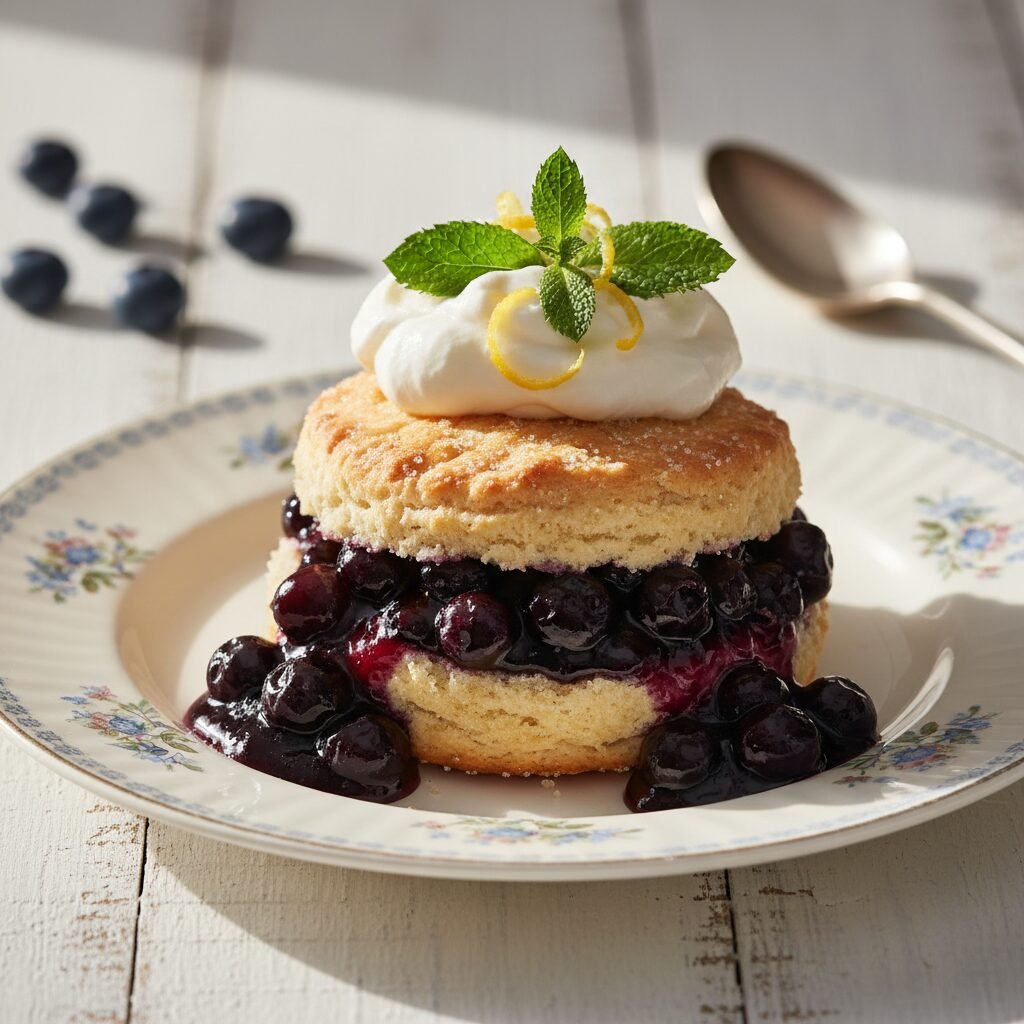
- To assemble, slice the warm biscuits in half horizontally. Spoon the macerated blueberries and their juices onto the bottom half. Top with a generous dollop of whipped cream and place the top half of the biscuit on the cream. Serve immediately.
Expert Cooking Tips
- ✓Keep your butter extremely cold; this is crucial for flaky layers.
- ✓When using a biscuit cutter, press straight down and pull up. Twisting seals the edges and prevents the biscuit from rising fully.
- ✓Don’t overwork the dough. Handle it as little as possible to keep the biscuits tender.
- ✓If your kitchen is warm, chill the cut biscuits in the fridge for 10 minutes before baking.
- ✓Wash and thoroughly dry your blueberries before macerating to avoid watering down the juice.
- ✓For extra flavor, infuse the sugar with lemon zest by rubbing them together with your fingers before adding to the flour.
Substitutions and Variations
This recipe is quite versatile and can accommodate several dietary needs or pantry limitations. If you do not have heavy cream for the biscuit dough, full-fat buttermilk is an excellent substitute that adds a lovely tang, though the texture will be slightly softer and less rich. For a dairy-free version, use a high-quality plant-based butter stick (not tub margarine) and full-fat coconut milk or oat milk, though the rising power may diminish slightly. If fresh blueberries are out of season, frozen blueberries can be used for the filling; simply thaw them first and drain excess liquid, or simmer them briefly with a teaspoon of cornstarch to thicken the juices. Gluten-free all-purpose flour blends (specifically those containing xanthan gum) work reasonably well in this recipe, resulting in a slightly more crumbly but still delicious shortcake. You can also swap the sugar for coconut sugar or a baking sweetener like erythritol, but keep in mind that the browning and texture might vary.
Common Mistakes to Avoid
The most common mistake when making shortcakes is overmixing the dough. Once the liquid hits the flour, gluten begins to develop. If you stir too vigorously, you will end up with tough, rubbery pucks instead of tender biscuits. Stop mixing as soon as the dough holds together. Another frequent error is using warm butter. If the butter melts before the biscuits hit the oven, you lose the steam pockets that create flakiness. Always cube your butter and put it back in the fridge until the very second you need it. Regarding the fruit, assembling the shortcakes too early leads to a soggy disaster. The juice from the berries will break down the bottom biscuit if left to sit for more than 15-20 minutes. Always assemble right before serving. Finally, twisting the biscuit cutter seals the layers of the dough shut; always press straight down for that tall, professional rise.
Serving Suggestions
These shortcakes are best served warm, straight from the oven or reheated slightly. While they are a dessert, they are substantial enough to serve as a sweet brunch item. For a sophisticated plating, place the shortcake in a shallow bowl rather than a flat plate to catch all the delicious blueberry juices and melting cream. Garnish with a sprig of fresh mint or lemon balm for a pop of color. If you want to elevate the dish, drizzle a little high-quality balsamic glaze or honey over the berries before adding the cream. Beverage pairings include a cold glass of milk, iced lemon tea, or a sparkling prosecco if serving at a brunch or dinner party. A scoop of vanilla bean ice cream can also replace the whipped cream for a richer, ‘à la mode’ experience.
Storage and Reheating Tips
Shortcakes are best enjoyed the day they are baked. However, if you have leftovers, store the biscuit components separately from the berry filling and whipped cream. The baked biscuits can be stored in an airtight container at room temperature for up to 2 days. To refresh them, pop them in a 350°F oven for 5-8 minutes until warm and crisp. The macerated blueberries should be stored in the refrigerator and will last for 3 days; they make excellent toppings for yogurt or oatmeal as well. The whipped cream is best made fresh, but stabilized whipped cream can be stored in the fridge for 24 hours. You can also freeze the unbaked cut biscuits on a baking sheet and then transfer them to a freezer bag. Bake them directly from frozen, adding a few extra minutes to the cooking time.
Nutrition Facts (Estimated)
| Serving Size | 1 Shortcake with topping |
| Calories | 480 |
| Fat | 26g |
| Saturated Fat | 16g |
| Unsaturated Fat | 8g |
| Trans Fat | 0g |
| Cholesterol | 85mg |
| Sodium | 320mg |
| Carbohydrates | 52g |
| Fiber | 3g |
| Sugar | 28g |
| Protein | 6g |
Frequently Asked Questions
Can I make the dough ahead of time?
Yes! You can prepare the dough, cut out the biscuits, and freeze them on a baking sheet. Once frozen solid, transfer to a bag. Bake from frozen, adding 3-5 minutes to the bake time.
Why are my shortcakes flat?
This usually happens if the leavening agents (baking powder) are expired, or if you twisted the biscuit cutter, sealing the edges. It can also happen if the butter was too warm.
Can I use strawberries instead?
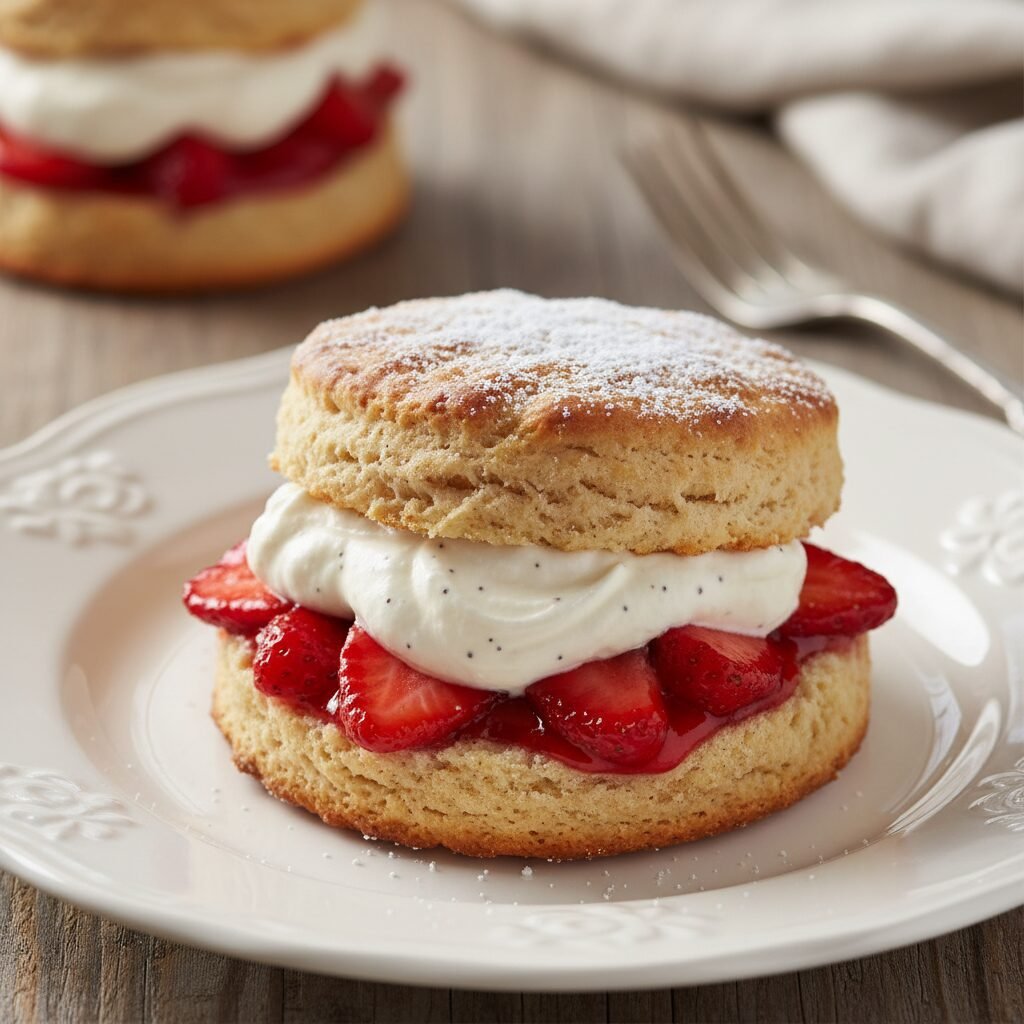
Absolutely. This biscuit base is a universal canvas for any fruit. Strawberries, peaches, blackberries, or a mix of berries all work wonderfully.
Is there a difference between a scone and a shortcake?
They are very similar. Scones often contain eggs and are denser, while shortcakes rely on cream and butter for a lighter, flakier texture meant to soak up fruit juices.
How do I make the whipped cream stable for a party?
Add a tablespoon of vanilla instant pudding mix or a teaspoon of gelatin dissolved in water to the whipping cream while beating. This helps it hold its shape for hours.
My dough is too sticky to handle, what should I do?
Shortcake dough should be slightly sticky, but if it’s unmanageable, dust your hands and the surface with a little more flour. Avoid adding too much flour into the dough itself to prevent dryness.
Can I use salted butter?
Yes, but reduce the added salt in the recipe to 1/4 teaspoon to maintain the correct flavor balance.
What if I don’t have a biscuit cutter?
You can use a clean, sharp-edged drinking glass dipped in flour, or simply cut the dough into squares using a sharp knife. Squares actually result in zero waste/scraps!
Conclusion
This Moist Blueberry Shortcake recipe is more than just a dessert; it’s a heartwarming invitation to slow down and savor the flavors of the season. With its golden, sugary crust, tender interior, and the bright burst of lemon-kissed blueberries, it promises to be a hit with anyone lucky enough to snag a serving. Whether you are an experienced baker or trying your hand at biscuits for the first time, the rustic nature of this dish ensures success. So, grab your apron, head to the market for the freshest berries you can find, and get ready to bake a new family favorite. Don’t forget to pin this recipe for your next summer gathering!