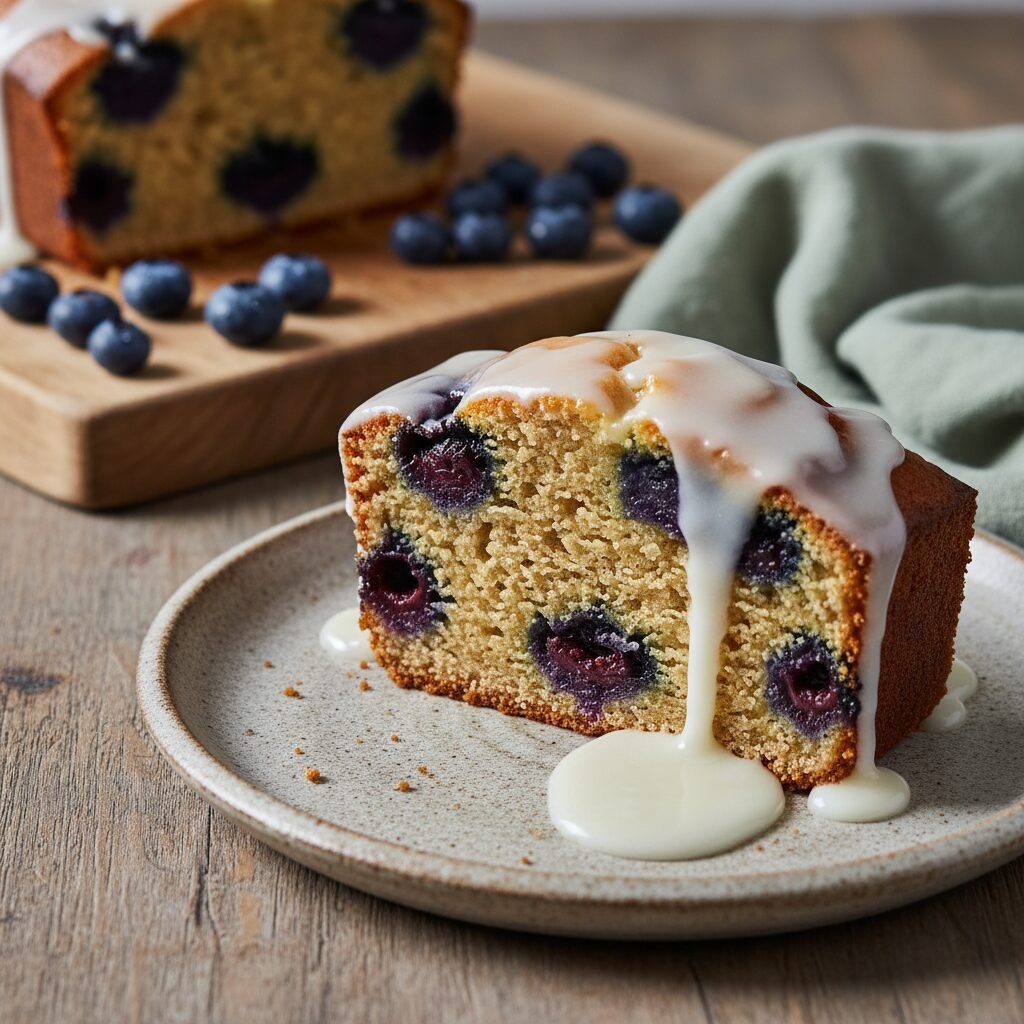
Moist Blueberry Loaf Cake Recipe
Bursting with juicy blueberries and bright lemon zest, this incredibly moist blueberry loaf cake is the ultimate comfort bake. It comes together easily in one bowl and is topped with a sweet, tangy glaze that makes it perfect for breakfast, brunch, or dessert.
15 minutes
55 minutes
1 hour 10 minutes
1 Loaf (10 Slices)
Dessert
Baking
American
Vegetarian
There is something undeniably comforting about a loaf cake. Unlike its delicate cousin, the cupcake, or the sometimes fussy layer cake, a loaf cake is sturdy, reliable, and deeply nostalgic. It invites you to slice off a thick piece, brew a fresh pot of coffee, and sit down for a moment of quiet indulgence. This Moist Blueberry Loaf Cake is the absolute pinnacle of that experience. It represents the perfect marriage of dense, buttery crumb and the bright, popping freshness of summer berries.
While many blueberry cakes suffer from being too dry or having all the fruit sink to the bottom, this recipe has been meticulously tested to ensure a tender, velvety texture that stays moist for days. The secret lies in the balance of fat and acidity, using rich sour cream to tenderize the gluten strands and keep the crumb soft. Every bite offers a burst of sweet, jammy blueberries, perfectly offset by the aromatic oils of lemon zest rubbed directly into the sugar. Whether you are looking for a show-stopping addition to a Sunday brunch spread or simply a sweet treat to have on the counter for after-school snacking, this loaf cake delivers on every level. It’s rustic yet elegant, simple yet sophisticated, and guaranteed to become a staple in your baking repertoire.
History & Origins
The concept of the loaf cake, or ‘pound cake’ as it is historically known, traces its roots back to Northern Europe in the early 1700s. Originally, the recipe was incredibly simple to remember for a largely illiterate population: one pound each of flour, butter, eggs, and sugar. This resulted in a dense, heavy cake that was delicious but lacked the lightness we prefer today. As baking powder and baking soda were introduced in the 19th century, bakers began to experiment with leavening agents, transforming the heavy brick-like cakes into lighter, airier loaves.
The inclusion of blueberries is a distinctly North American twist. Blueberries are one of the few fruits native to North America, cherished by Indigenous peoples for centuries before European settlers arrived. They were originally gathered wild (lowbush varieties) and used in pemmican, stews, and puddings. It wasn’t until the early 20th century, thanks to the work of Elizabeth White and botanist Frederick Coville in New Jersey, that blueberries were successfully domesticated for highbush farming. This agricultural breakthrough made blueberries widely available for home bakers. By the mid-20th century, the blueberry muffin and the blueberry coffee cake became icons of the American breakfast table. This recipe honors that lineage, combining the European tradition of the butter cake with the wild, vibrant spirit of the American blueberry harvest.
Why This Recipe Works
This recipe succeeds where others fail due to three specific scientific principles: acidity, fat ratios, and suspension mechanics. First, the inclusion of full-fat sour cream (or Greek yogurt) is non-negotiable. The acidity in the sour cream reacts with the baking powder to create a better lift, but more importantly, it shortens the gluten strands in the flour. This results in a crumb that is tender and ‘melt-in-your-mouth’ rather than chewy or bread-like.
Secondly, we use a combination of solid fat (butter) and liquid fat (the fat content in the sour cream and eggs). Butter provides that undeniable, rich flavor that oil simply cannot replicate, while the sour cream ensures the cake remains moist even days after baking. A cake made solely with butter can sometimes dry out once it cools, but the dairy solids here trap moisture effectively.
Finally, the ‘sinking berry’ phenomenon is addressed through batter density and a simple coating technique. By tossing the blueberries in a tablespoon of flour before folding them in, we create friction between the fruit and the batter. Furthermore, this batter is intentionally thick—almost like a cookie dough—which physically holds the heavy berries in place as the cake rises, ensuring an even distribution of fruit from top to bottom.
Why You’ll Love This Recipe
- ✓Stays moist for up to 4 days thanks to the sour cream.
- ✓Bursting with fresh fruit in every single bite.
- ✓Easy preparation with no fancy equipment required.
- ✓Versatile: Works with fresh or frozen blueberries.
- ✓Freezer-friendly for meal prepping breakfasts.
- ✓The lemon glaze adds a professional bakery finish.
Equipment You’ll Need
- ✓9×5 inch Loaf Pan
- ✓Large Mixing Bowl
- ✓Medium Mixing Bowl
- ✓Whisk
- ✓Rubber Spatula
- ✓Microplane or Zester
- ✓Cooling Rack
- ✓Parchment Paper
Ingredients
- ✓1 1/2 cups All-Purpose Flour
- ✓1 tsp Baking Powder
- ✓1/2 tsp Sea Salt
- ✓1/2 cup Unsalted Butter, softened to room temperature
- ✓1 cup Granulated Sugar
- ✓2 Large Eggs, room temperature
- ✓1 tsp Pure Vanilla Extract
- ✓1/2 cup Full-Fat Sour Cream or Plain Greek Yogurt
- ✓1 tbsp Lemon Zest (approx 1 lemon)
- ✓1 1/2 cups Blueberries (fresh or frozen)
- ✓1 tbsp Flour (for coating berries)
- ✓Glaze: 1/2 cup Powdered Sugar
- ✓Glaze: 1-2 tbsp Fresh Lemon Juice
Instructions
- Preheat your oven to 350°F (175°C). Grease a 9×5 inch loaf pan generously with butter or cooking spray and line it with parchment paper, leaving an overhang on the sides for easy removal.
- In a medium bowl, whisk together the 1 1/2 cups of flour, baking powder, and salt until well combined. Set aside.
- In a small bowl, toss the blueberries with the separate 1 tablespoon of flour. This coating prevents them from sinking to the bottom of the cake.
- In a large mixing bowl or stand mixer, combine the granulated sugar and lemon zest. Rub the zest into the sugar with your fingertips until the sugar is fragrant and looks like wet sand. This releases the essential oils.
- Add the softened butter to the lemon-sugar mixture and beat on medium-high speed until pale and fluffy (about 3-4 minutes). This creaming step is crucial for aeration.
- Add the eggs one at a time, beating well after each addition. Scrape down the sides of the bowl. Mix in the vanilla extract and the sour cream until combined.
- Reduce the mixer speed to low. Gradually add the dry flour mixture to the wet ingredients. Mix only until the flour has just disappeared. Do not overmix.
- Using a rubber spatula, gently fold the flour-coated blueberries into the batter by hand. Be careful not to crush the berries, especially if using fresh ones.
- Pour the batter into the prepared loaf pan and smooth the top with the spatula. Bake for 55-65 minutes, or until a toothpick inserted into the center comes out clean or with just a few moist crumbs attached.
- If the top of the cake is browning too quickly before the center is cooked (check around the 40-minute mark), loosely tent the pan with aluminum foil.
- Remove from the oven and let the cake cool in the pan for about 15 minutes. Then, use the parchment paper handles to lift it out onto a wire cooling rack to cool completely.
- While the cake cools, whisk together the powdered sugar and lemon juice in a small bowl to make the glaze. Adjust consistency by adding more juice or sugar as needed.
- Drizzle the glaze over the completely cooled cake before slicing.
Expert Cooking Tips
- ✓Room temperature ingredients are key. Cold eggs or butter will result in a curdled batter and an uneven bake.
- ✓Do not overmix the batter once the flour is added. Overmixing develops gluten, resulting in a tough, rubbery loaf.
- ✓Rubbing the lemon zest into the sugar is a professional pastry chef trick that significantly amplifies the citrus flavor.
- ✓If using frozen blueberries, do not thaw them beforehand, as they will bleed into the batter and turn your cake grey.
- ✓Check your baking powder expiration date; old leavening agents are the number one cause of dense cakes.
- ✓Tent with foil! Loaf cakes take a long time to bake, and the top often burns before the middle is done without protection.
Substitutions and Variations
This recipe is quite forgiving if you need to make swaps. For the dairy, full-fat Greek yogurt is the best substitute for sour cream, though buttermilk can work in a pinch (the batter will be thinner). If you are out of butter, you can use a neutral oil like vegetable or canola oil, though the flavor profile will change slightly, becoming less rich but potentially staying moist longer. For a gluten-free version, use a high-quality 1:1 gluten-free baking flour blend that includes xanthan gum; almond flour alone will not work here as it lacks structure. You can substitute the blueberries for raspberries, blackberries, or even diced strawberries, just keep the volume the same. If you don’t have lemons, orange zest and juice make a fantastic alternative flavor profile.
Common Mistakes to Avoid
The most common mistake is overbaking the loaf. Because loaf pans are deep, it can be tricky to tell when it’s done. Relying solely on the timer is risky; always use a skewer or toothpick. Conversely, underbaking leads to a sunken center. Another frequent error is overmixing the batter, which yields a tough cake. Stop mixing the moment you no longer see streaks of dry flour. Finally, adding the glaze while the cake is still hot is a mistake—it will simply melt and soak into the cake, making it soggy rather than creating that beautiful white drizzle on top. Patience is key; let it cool completely.
Serving Suggestions
This cake is incredibly versatile. Serve a thick slice slightly warmed with a pat of salted butter for a decadent breakfast. It pairs beautifully with a hot cup of Earl Grey tea or a dark roast coffee. For a dessert presentation, serve a slice with a dollop of whipped cream or a scoop of vanilla bean ice cream. If you are hosting a brunch, arrange slices on a wooden board garnished with fresh mint leaves and extra fresh berries for a stunning visual centerpiece.
Storage and Reheating Tips
To store, wrap the cooled cake tightly in plastic wrap or store it in an airtight container. It will keep at room temperature for up to 3 days. For longer storage, keep it in the refrigerator for up to 1 week, though this may dry it out slightly, so microwave slices for 10 seconds before eating to revive the texture. To freeze, wrap individual slices or the whole loaf in plastic wrap followed by a layer of aluminum foil. It freezes beautifully for up to 3 months. Thaw on the counter for a few hours before serving.
Nutrition Facts (Estimated)
| Serving Size | 1 Slice |
| Calories | 340 |
| Fat | 16g |
| Saturated Fat | 9g |
| Unsaturated Fat | 6g |
| Trans Fat | 0g |
| Cholesterol | 65mg |
| Sodium | 180mg |
| Carbohydrates | 46g |
| Fiber | 2g |
| Sugar | 24g |
| Protein | 5g |
Frequently Asked Questions
Why did my blueberries sink to the bottom?
This usually happens because the batter was too thin or the berries weren’t coated in flour. The flour coating provides friction, helping them stay suspended. Also, ensure you are using the thick sour cream batter as written, not modifying it with milk.
Can I reduce the sugar in this recipe?
You can reduce the sugar by about 1/4 cup without ruining the structure, but keep in mind that sugar provides moisture as well as sweetness. Reducing it too much will result in a drier, bread-like texture.
My cake is too brown on top but raw in the middle. What happened?
Your oven might be running hot. Use an oven thermometer to verify the temperature. Also, tenting the cake with aluminum foil halfway through baking is a standard technique for loaf cakes to prevent burning.
Can I use frozen blueberries?
Yes, absolutely. Do not thaw them first. Add them to the batter frozen. You may need to add 2-4 minutes to the baking time as the frozen berries lower the batter temperature.
How do I know when the cake is perfectly done?
Insert a toothpick into the very center of the crack on top. It should come out clean or with a few moist crumbs. If you see raw batter, it needs more time.
Can I make this into muffins instead?
Yes! This batter makes excellent muffins. Bake them at 400°F for 5 minutes, then reduce to 350°F for another 13-15 minutes. This yields a nice high dome.
Can I use olive oil instead of butter?
You can, and it will make a lovely cake, but the flavor will be distinctively different. If you use olive oil, choose a mild variety unless you want that savory note.
Why is my cake dense and rubbery?
This is almost always caused by overmixing the flour. Once the wet and dry ingredients meet, mix gently and stop as soon as they are combined.
Do I need a stand mixer for this?
No, a hand mixer works perfectly. You can even do it by hand with a whisk and some elbow grease, just make sure the butter is very soft.
Can I skip the lemon zest?
You can, but the lemon zest elevates the blueberry flavor. If you dislike lemon, try adding a pinch of cinnamon or nutmeg instead for a warmer flavor profile.
Conclusion
This Moist Blueberry Loaf Cake is more than just a recipe; it’s a reliable friend in the kitchen. Whether you’re a novice baker or a seasoned pro, the simple techniques used here guarantee a result that looks like it came from a high-end bakery. The interplay of the tart lemon, the sweet berries, and the rich, buttery crumb creates a flavor profile that is timeless. We hope this cake brings a little slice of joy to your kitchen. Don’t forget to pin this recipe to your favorite Pinterest board so you can find it whenever the craving strikes!