Moist Blueberry Cake With Fresh Berries On Top Recipe
Experience the perfect balance of sweet and tart with this incredibly moist blueberry cake. Packed with juicy berries on the inside and piled high with fresh fruit on top, this recipe uses sour cream and lemon zest to create a tender crumb that melts in your mouth.
20 minutes
55 minutes
1 hour 15 minutes
10-12 servings
Dessert
Baking
American
Vegetarian
There is something undeniably magical about the combination of baked goods and fresh fruit, particularly when blueberries are the star of the show. This Moist Blueberry Cake with Fresh Berries on Top is not just a dessert; it is a celebration of texture, flavor, and the simple joy of homemade baking. Unlike dry, crumbly sponges that require a gallon of tea to wash down, this cake boasts a dense, custard-like tenderness thanks to the inclusion of rich sour cream and high-quality butter.
The first thing you will notice is the aroma. As it bakes, the kitchen fills with the scent of warm vanilla, zesty lemon, and bursting sweet berries, evoking memories of lazy summer mornings and rustic country kitchens. The lemon zest is the secret weapon here; it doesn’t make the cake sour, but rather lifts the heavy sweetness of the batter, providing a bright, aromatic backdrop that makes the blueberry flavor pop.
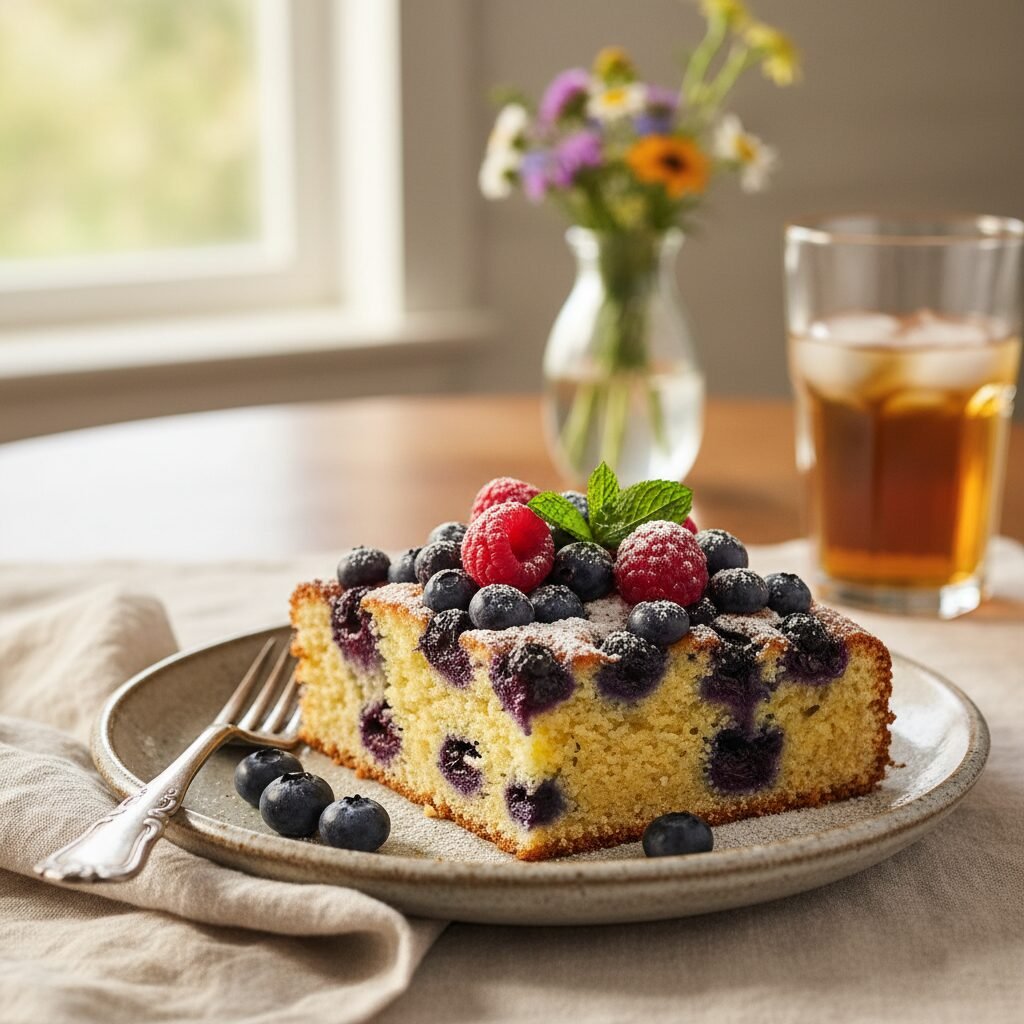
What sets this specific recipe apart is the dual-berry approach. We fold a generous amount of blueberries into the batter, where they burst into pockets of jammy goodness during baking. Then, after the cake cools, we crown it with a mountain of fresh, raw berries. This contrast between the warm, cooked fruit and the crisp, fresh topping creates a dynamic mouthfeel that is sophisticated yet comforting. Whether you are serving this for a decadent Sunday brunch, a specialized afternoon tea, or simply as a treat to get you through the midweek slump, this cake delivers on every level. It is sturdy enough to hold its shape when sliced, yet soft enough to eat with a spoon. Get ready to add a new favorite to your baking repertoire.
History & Origins
The history of the blueberry cake is deeply rooted in the agricultural and culinary history of North America. Blueberries are one of the few fruits native to North America, and for centuries before European colonization, Indigenous peoples were harvesting ‘star berries’ (named for the five-pointed star shape on the blossom end of the berry). They used them fresh, dried them for winter, and mixed them into pemmican. When European settlers arrived, they brought with them recipes for steamed puddings and heavy fruitcakes, but they lacked the native ingredients they were accustomed to. They quickly adopted the blueberry, incorporating it into their baking traditions.
However, the light, fluffy blueberry cake we know today is a relatively modern invention. Early American ‘cakes’ were often yeast-leavened and bread-like. It wasn’t until the mid-19th century, with the commercialization of baking soda and baking powder, that the ‘chemically leavened’ butter cake became a household staple. This innovation allowed for a lighter crumb and a quicker rise, moving away from the dense, yeast-heavy doughs of the past.
The concept of the ‘coffee cake’ or ‘snack cake’—a single-layer cake often made with fruit and intended to be eaten without frosting—gained massive popularity in the 20th century. As the domestication of high-bush blueberries succeeded in the early 1900s (thanks to the work of Elizabeth White and Frederick Coville), blueberries became more accessible to the average home baker, moving from a wild-foraged treat to a grocery store staple. This recipe pays homage to that evolution, combining the rustic simplicity of early fruit breads with the refined, tender texture of modern cake chemistry.
Why This Recipe Works
This recipe succeeds where many others fail due to a specific interplay of ingredients that guarantees moisture and flavor distribution. The primary challenge with fruit cakes is avoiding a dry crumb and preventing the fruit from sinking to the bottom. To combat dryness, this recipe utilizes sour cream. Sour cream is acidic and has a high fat content; the acid tenderizes the gluten strands in the flour, preventing the cake from becoming tough, while the fat adds a richness that oil or milk simply cannot replicate. This results in a cake that stays moist for days, rather than drying out within hours of baking.
Secondly, the structural integrity of the cake is managed by the ‘creaming method,’ where butter and sugar are beaten until airy before adding eggs. This incorporates mechanical leavening (air bubbles) which expands during baking. To solve the ‘sinking berry’ issue, the recipe calls for tossing the blueberries in a small amount of flour before folding them into the batter. This creates friction between the surface of the berry and the batter, suspending the fruit evenly throughout the cake rather than letting it pool at the bottom. Finally, the decision to use lemon zest rather than juice inside the batter provides the essential citrus oil flavor without altering the liquid ratio, ensuring the batter remains thick enough to support the fruit.
Why You’ll Love This Recipe
- ✓Incredibly moist texture due to sour cream and butter.
- ✓Dual-texture experience with baked and fresh berries.
- ✓Bright lemon zest notes enhance the blueberry flavor.
- ✓Simple preparation with no fancy decorating skills required.
- ✓Freezes beautifully for future treats.
- ✓Perfect for both breakfast and dessert.
Equipment You’ll Need
- ✓9-inch Springform Pan or Round Cake Pan
- ✓Stand Mixer or Electric Hand Mixer
- ✓Large Mixing Bowl
- ✓Medium Mixing Bowl
- ✓Rubber Spatula
- ✓Microplane or Zester
- ✓Wire Cooling Rack
- ✓Measuring Cups and Spoons
Ingredients
- ✓2 cups All-Purpose Flour
- ✓1 teaspoon Baking Powder
- ✓1/2 teaspoon Baking Soda
- ✓1/2 teaspoon Salt
- ✓1/2 cup Unsalted Butter, softened to room temperature
- ✓1 cup Granulated Sugar
- ✓2 Large Eggs, room temperature
- ✓1 teaspoon Pure Vanilla Extract
- ✓1 tablespoon Fresh Lemon Zest
- ✓1 cup Full-Fat Sour Cream (or Greek Yogurt)
- ✓1 1/2 cups Fresh Blueberries (for the batter)
- ✓1 tablespoon Flour (for coating berries)
- ✓1 cup Fresh Mixed Berries (Blueberries, Raspberries, Blackberries) for topping
- ✓Powdered Sugar for dusting (optional)
Instructions
- 1. Preheat your oven to 350°F (175°C). Grease a 9-inch springform pan generously with butter and line the bottom with parchment paper for easy removal.
- 2. In a medium bowl, whisk together the 2 cups of flour, baking powder, baking soda, and salt. Set this dry mixture aside.
- 3. In a large bowl or the bowl of a stand mixer, beat the softened butter and granulated sugar on medium-high speed for about 3-4 minutes. The mixture should look pale, fluffy, and aerated.
- 4. Add the eggs one at a time, beating well after each addition. Scrape down the sides of the bowl. Mix in the vanilla extract and lemon zest.
- 5. Reduce the mixer speed to low. Add half of the flour mixture, followed by the sour cream, and then the remaining flour mixture. Mix only until just combined and no streaks of flour remain. Do not overmix.
- 6. In a small bowl, toss the 1 1/2 cups of blueberries with 1 tablespoon of flour. This coating helps prevent them from sinking.
- 7. Gently fold the flour-coated blueberries into the thick batter using a rubber spatula. Be careful not to crush the berries.
- 8. Pour the batter into the prepared pan and smooth the top with your spatula. Tap the pan on the counter once to release large air bubbles.
- 9. Bake for 50-60 minutes, or until a toothpick inserted into the center comes out clean or with just a few moist crumbs. If the top browns too quickly, tent it loosely with aluminum foil after 30 minutes.
- 10. Allow the cake to cool in the pan for 15-20 minutes. Then, run a knife around the edges and remove the ring. Transfer to a wire rack to cool completely.
- 11. Once fully cooled, top generously with the remaining fresh mixed berries and dust with powdered sugar before serving.
Expert Cooking Tips
- ✓Room Temperature Ingredients: Ensure your butter, eggs, and sour cream are at room temperature. This allows them to emulsify properly, creating a smoother batter and better rise.
- ✓Don’t Overmix: Once you add the flour, mix gently. Overworking the gluten will result in a tough, rubbery cake instead of a tender one.
- ✓Coat the Berries: Do not skip tossing the berries in flour. This is the number one trick to ensure you have berries in every bite, not just at the bottom crust.
- ✓Check Your Oven: Ovens vary. Start checking for doneness at the 50-minute mark. The cake is done when it springs back lightly to the touch.
- ✓Zest First: Zest your lemon before you slice it or juice it for other recipes. It is much harder to zest a squishy lemon.
- ✓Cooling is Key: Let the cake cool significantly before adding the fresh topping; otherwise, the heat from the cake will make the fresh berries mushy.
- ✓Springform Pan: Using a springform pan makes this cake much easier to release without damaging the delicate sides.
Substitutions and Variations
This recipe is quite forgiving and allows for several substitutions if you find your pantry lacking. If you do not have sour cream, full-fat plain Greek yogurt is an excellent 1:1 substitute that maintains the moisture and tang. In a pinch, buttermilk can work, though the batter will be thinner, and you may need to reduce the liquid slightly. For the flour, you can use a high-quality 1:1 Gluten-Free baking flour blend if you are catering to dietary restrictions; just ensure the blend contains xanthan gum. If fresh blueberries are out of season or too expensive, frozen blueberries work perfectly fine for the batter. Do not thaw them before adding; simply toss them in flour frozen and fold them in. Note that frozen berries might bleed slightly, creating purple streaks, and may require an extra 5 minutes of baking time. For the fat, while butter provides the best flavor, you can use a neutral oil (like vegetable or canola) for an even softer crumb, though you will lose the buttery taste. You can also swap the lemon zest for orange zest for a warmer, citrus profile.
Common Mistakes to Avoid
The most common mistake with this cake is over-baking. Because it is a moist, dense cake, it can be tricky to tell when it is done. Relying solely on a timer rather than the toothpick test can lead to a dry cake. Another frequent error is using cold ingredients. When cold eggs hit creamed butter, the fat solidifies and the batter looks curdled; while it will still bake, the texture won’t be as fine. Additionally, skipping the step of lining the pan with parchment paper often leads to heartbreak when the bottom of the cake sticks to the pan. Finally, be wary of using ‘wild’ blueberries versus cultivated ones without adjusting; wild blueberries are smaller and have less water content, which is fine, but if you use giant cultivated berries, they release more water, potentially making the batter soggy if you don’t ensure the cake is baked thoroughly.
Serving Suggestions
This cake is stunningly versatile in how it can be served. For a breakfast or brunch setting, serve it slightly warm with a pat of salted butter or a dollop of crème fraîche. It pairs beautifully with dark roast coffee or Earl Grey tea. If you are serving this as a dessert, elevate it by adding a scoop of vanilla bean ice cream or a generous mound of homemade whipped cream flavored with a hint of cardamom or cinnamon. For a summer garden party, garnish with fresh mint leaves and a drizzle of lemon glaze (powdered sugar and lemon juice) instead of the plain powdered sugar dusting. The fresh berries on top can also be macerated in a little sugar and Grand Marnier for an adult twist before spooning them over the cake.
Storage and Reheating Tips
To store this cake, keep it covered at room temperature for up to 2 days. The high moisture content means it can spoil faster than drier cakes if left out too long in humid weather. For longer storage, place it in an airtight container in the refrigerator for up to 5 days; allow it to come to room temperature before eating for the best texture. This cake also freezes exceptionally well. You can freeze the whole cake (without the fresh berry topping) or individual slices. Wrap tightly in plastic wrap and then aluminum foil. It will keep in the freezer for up to 3 months. Thaw overnight in the refrigerator or on the counter for a few hours.
Nutrition Facts (Estimated)
| Serving Size | 1 slice |
| Calories | 380 |
| Fat | 18g |
| Saturated Fat | 10g |
| Unsaturated Fat | 7g |
| Trans Fat | 0g |
| Cholesterol | 85mg |
| Sodium | 210mg |
| Carbohydrates | 48g |
| Fiber | 2g |
| Sugar | 24g |
| Protein | 5g |
Frequently Asked Questions
Can I use frozen blueberries for this recipe?
Yes, absolutely. Do not thaw them before adding to the batter, as this will cause them to become mushy and bleed too much color into the cake. Toss them in flour while frozen and add them at the very end. You may need to add 3-5 minutes to the baking time.
Why did my berries sink to the bottom?
This usually happens if the batter is too thin or the berries weren’t coated in flour. The flour coating provides friction. Also, ensure you are using the thick sour cream batter as described, not a thin runny batter.
Can I make this cake dairy-free?
Yes. Substitute the butter for a high-quality vegan butter block (not a spread) and use a dairy-free sour cream alternative or a thick coconut yogurt. The texture may vary slightly but will still be delicious.
My cake is browning too fast on top but is raw in the middle. What do I do?
This is common with dense cakes. Simply cover the top of the pan loosely with a sheet of aluminum foil. This deflects the direct heat, allowing the center to continue cooking without burning the crust.
Can I bake this in a bundt pan?
You can, but you must grease the pan incredibly well. Blueberries have a tendency to stick to the intricate designs of bundt pans. Also, the baking time might need to be adjusted to 45-55 minutes depending on the pan’s thickness.
What other fruits can I use?
This base recipe works wonderful with raspberries, chopped strawberries, blackberries, or even chopped peaches. Just keep the volume of fruit roughly the same.
Is the lemon zest necessary?
It is not strictly necessary for the chemistry, but it is highly recommended for the flavor profile. Without it, the cake is just sweet; the lemon adds a dimension that cuts through the sugar and fat.
How do I know when the cake is fully cooled?
Touch the bottom of the pan (if using a springform). If it feels warm, it’s not ready. The internal temperature should be ambient room temperature. This usually takes at least 2 hours.
Can I reduce the sugar?
You can reduce the sugar by about 1/4 cup without ruining the texture, but sugar is structural in baking—it holds moisture. Reducing it too much will result in a drier, tougher cake.
Can I make this into muffins instead?
Yes! This batter makes excellent muffins. Line a muffin tin and bake at 400°F for 5 minutes, then reduce to 350°F for another 15-18 minutes. This yields a high domed muffin.
Conclusion
This Moist Blueberry Cake with Fresh Berries on Top is the epitome of rewarding baking. It requires minimal effort but yields a centerpiece-worthy result that looks as good as it tastes. The combination of the tender, lemony crumb, the burst of baked blueberries, and the fresh, juicy topping creates a symphony of textures that is hard to beat. Whether you are a novice baker or a seasoned pro, this recipe is a reliable classic that you will find yourself returning to season after season. So, grab your mixing bowl, find the freshest berries you can, and treat yourself to a slice of homemade happiness.