Moist Espresso Chocolate Cake Recipe
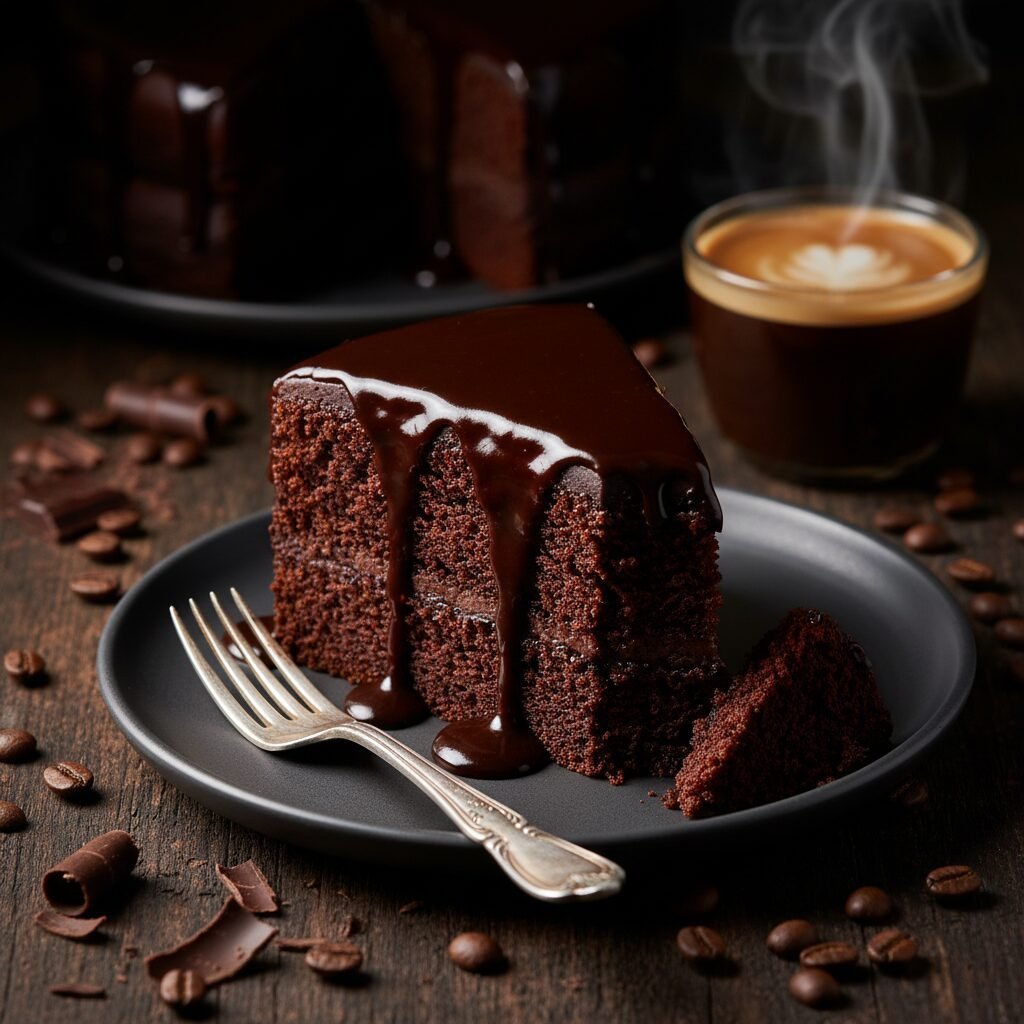
This is the only chocolate cake recipe you will ever need. Infused with freshly brewed espresso to intensify the cocoa flavor, this cake is impossibly moist, rich, and topped with a decadent chocolate ganache that melts in your mouth.
20 minutes
35 minutes
55 minutes
12 servings
Dessert
Baking
American
Vegetarian
There are few things in the culinary world as universally comforting and indulgent as a perfectly baked chocolate cake. But not all chocolate cakes are created equal. We have all experienced the disappointment of a dry, crumbly slice that relies too heavily on frosting to provide moisture. This Moist Espresso Chocolate Cake is the antithesis of those experiences. It is a celebration of deep, complex flavors and luxurious textures. The secret weapon here is the addition of hot espresso. Many home bakers worry that adding coffee will make their dessert taste like a morning brew, but in reality, coffee and chocolate are best friends. The coffee acts as a flavor enhancer, deepening the chocolate notes and making them sing without imparting an overpowering coffee taste. The result is a cake that tastes more like chocolate than chocolate itself. As you take your first bite, you will notice the crumb is incredibly soft, almost fudge-like, yet it retains the structure of a classic cake. It is dark, mysterious, and sophisticated enough for a dinner party, yet simple enough for a Tuesday night craving. We pair this dark beauty with a glossy, silky chocolate ganache that drapes over the cake like a velvet cloak. This recipe is designed for the chocolate purist who demands intensity and moisture in every forkful. Whether you are baking for a birthday, an anniversary, or simply because you made it through the week, this cake promises to deliver a moment of pure, unadulterated bliss. Get your apron ready, because your kitchen is about to smell like the finest European patisserie.
History & Origins
The history of chocolate cake is a journey from a drink to a solid dessert, evolving through centuries of culinary innovation. In the 17th and 18th centuries, chocolate was primarily consumed as a beverage in Europe, a luxury reserved for the wealthy elite. It wasn’t until 1828, when Coenraad van Houten discovered a way to treat cocoa beans with alkaline salts and extract the cocoa butter, that ‘Dutch cocoa’ was born, making it easier to blend with water and eventually flour. The first recipes for chocolate cake as we know it began appearing in cookbooks in the late 19th century, specifically in the United States. The famous ‘Devil’s Food Cake’ emerged around the early 1900s, distinguished by its reddish hue caused by the reaction between cocoa powder and baking soda. This recipe represents a modern evolution of those early classics. The specific technique of adding hot liquid—in this case, espresso—to the batter has roots in the mid-20th century when home economists discovered that ‘blooming’ cocoa powder with heat released its essential oils, resulting in a more potent flavor. The integration of coffee into chocolate desserts became particularly popular in the 1990s with the rise of coffee culture in America. Bakers realized that just as salt enhances sweet flavors, the bitterness and acidity of coffee balance the sugar and fat in chocolate cake, providing a more rounded profile. This Moist Espresso Chocolate Cake stands on the shoulders of these historical developments, combining the chemical mastery of the past with the modern palate’s desire for intense, less cloying sweetness.
Why This Recipe Works
This recipe succeeds where others fail due to a few key chemical interactions and ingredient choices. First and foremost is the use of oil instead of butter. While butter provides flavor, it contains water which evaporates during baking, and milk solids which can dry out the crumb. Oil, being 100% fat, remains liquid at room temperature, ensuring the cake stays moist for days. Secondly, the inclusion of buttermilk is crucial. The acidity in buttermilk reacts with the baking soda to create carbon dioxide bubbles, giving the cake a tender, airy lift despite its rich density. It also breaks down the long strands of gluten, preventing the cake from becoming tough. The star technique, however, is the ‘blooming’ of the cocoa powder. By pouring hot espresso directly over the cocoa and sugar mixture, we dissolve the cocoa solids instantly and release flavor compounds that would otherwise remain locked away. This hot liquid also begins to activate the leavening agents immediately, giving the batter a head start before it even hits the oven. Finally, the ratio of sugar to flour is carefully balanced to ensure the cake is structurally sound but fudgy. The hygroscopic nature of sugar helps retain moisture, locking it into the crumb structure.
Why You’ll Love This Recipe
- ✓Intense chocolate flavor amplified by hot espresso.
- ✓Stays moist for days thanks to vegetable oil and buttermilk.
- ✓Simple one-bowl mixing method for easy cleanup.
- ✓Rich, glossy ganache topping requires only two ingredients.
- ✓Perfect balance of sweetness and dark cocoa depth.
Equipment You’ll Need
- ✓Two 9-inch round cake pans
- ✓Large mixing bowl
- ✓Whisk
- ✓Measuring cups and spoons
- ✓Parchment paper
- ✓Wire cooling rack
- ✓Small saucepan (for ganache)
Ingredients
- ✓2 cups granulated sugar
- ✓1 3/4 cups all-purpose flour
- ✓3/4 cup unsweetened cocoa powder (high quality)
- ✓1 1/2 teaspoons baking powder
- ✓1 1/2 teaspoons baking soda
- ✓1 teaspoon salt
- ✓2 large eggs, room temperature
- ✓1 cup whole milk or buttermilk
- ✓1/2 cup vegetable oil or canola oil
- ✓2 teaspoons pure vanilla extract
- ✓1 cup freshly brewed hot espresso (or strong hot coffee)
- ✓8 oz semi-sweet chocolate chips or chopped chocolate (for ganache)
- ✓1 cup heavy cream (for ganache)
Instructions
- Preheat your oven to 350°F (175°C). Grease two 9-inch round cake pans and line the bottoms with parchment paper for easy removal.
- In a large mixing bowl, whisk together the sugar, flour, cocoa, baking powder, baking soda, and salt until well combined and no lumps remain.
- Add the eggs, buttermilk, oil, and vanilla extract to the dry ingredients. Beat with a whisk or electric mixer on medium speed for about 2 minutes. The batter should look smooth and glossy.
- Stir in the hot espresso by hand. Pour it in slowly while whisking to prevent scrambling the eggs. The batter will be very thin and liquid; this is normal and essential for the moisture.
- Pour the batter evenly into the prepared pans. Tap the pans gently on the counter to release any large air bubbles.
- Bake for 30 to 35 minutes. Test for doneness by inserting a wooden toothpick into the center of the cake; it should come out clean or with just a few moist crumbs attached.
- Cool the cakes in the pans for 10 minutes, then remove them from the pans to a wire rack to cool completely before frosting.
- To make the ganache: Place the chocolate chips in a heatproof bowl. Heat the heavy cream in a small saucepan until it just begins to simmer (do not boil).
- Pour the hot cream over the chocolate and let it sit for 5 minutes without touching it. Then, gently whisk from the center outwards until the mixture is smooth and glossy.
- Let the ganache cool slightly until it reaches a spreadable consistency, or pour it warm over the cake for a glazed look.
Expert Cooking Tips
- ✓Do not overmix the batter once the flour is added, but ensure the liquid ingredients are fully incorporated.
- ✓Use high-quality cocoa powder; Dutch-processed cocoa will give a darker color and mellower flavor.
- ✓Ensure your baking powder and soda are fresh; expired leaveners result in a dense, flat cake.
- ✓If you don’t have buttermilk, make a substitute by adding 1 tablespoon of vinegar or lemon juice to 1 cup of milk and letting it sit for 5 minutes.
- ✓The hot espresso is key—do not let it cool down before adding it to the batter.
- ✓Let the cake cool completely before adding the ganache, otherwise, the frosting will slide right off.
- ✓Weighing ingredients on a kitchen scale is always more accurate than using volume cups.
Substitutions and Variations
Baking is a science, but there is room for flexibility with ingredients. If you need to make this gluten-free, a high-quality 1:1 gluten-free all-purpose flour blend works exceptionally well in this recipe because the moisture content is so high. For a dairy-free version, you can substitute the buttermilk with almond milk mixed with a teaspoon of apple cider vinegar, and use coconut oil instead of vegetable oil. The ganache can be made with full-fat coconut milk and dairy-free chocolate chips. If you are sensitive to caffeine, decaf espresso or strong decaf coffee works perfectly fine; the goal is the depth of flavor, not the buzz. You can also substitute the espresso with hot water if you absolutely dislike coffee, though the chocolate flavor will be slightly less intense. For the oil, melted coconut oil or grapeseed oil are excellent alternatives to vegetable oil.
Common Mistakes to Avoid
The most common mistake with this cake is overbaking. Because the batter is dark, it is hard to see when it browns. Rely on the toothpick test and start checking at the 30-minute mark. Another error is using cold ingredients. Ensure your eggs and buttermilk are at room temperature so they emulsify properly with the oil. Adding the hot coffee too quickly without stirring can sometimes cook the eggs slightly, so pour slowly and whisk constantly. Finally, do not skip the parchment paper. This cake is very tender and moist, and it can stick to the pan easily if not properly lined. Trying to frost the cake while it is still warm is a recipe for disaster; the ganache will melt and run off the sides, leaving you with a messy pool of chocolate.
Serving Suggestions
This cake is rich, so it pairs beautifully with something to cut the intensity. A dollop of lightly sweetened whipped cream or a scoop of vanilla bean ice cream provides a perfect temperature and flavor contrast. Fresh berries, particularly raspberries or strawberries, add a tart brightness that complements the dark chocolate and espresso notes. For an elegant finish, garnish with chocolate shavings, a dusting of cocoa powder, or even a few chocolate-covered espresso beans. Serve it with a glass of cold milk or, if you are doubling down, a hot cappuccino.
Storage and Reheating Tips
This cake stores incredibly well due to its oil base. It can be kept at room temperature in an airtight container for up to 3 days. In fact, many find it tastes even better the next day as the flavors meld. If you live in a very hot or humid climate, it is safer to store it in the refrigerator for up to 5 days; just let it come to room temperature before serving for the best texture. The cake layers can also be frozen unfrosted. Wrap them tightly in plastic wrap and then aluminum foil, and freeze for up to 3 months. Thaw in the refrigerator overnight before assembling.
Nutrition Facts (Estimated)
| Serving Size | 1 slice |
| Calories | 450 |
| Fat | 24g |
| Saturated Fat | 8g |
| Unsaturated Fat | 15g |
| Trans Fat | 0g |
| Cholesterol | 45mg |
| Sodium | 320mg |
| Carbohydrates | 58g |
| Fiber | 4g |
| Sugar | 35g |
| Protein | 6g |
Frequently Asked Questions
Can I taste the coffee in the cake?
Generally, no. The coffee enhances the chocolate flavor, making it richer and deeper. Unless you have a very sensitive palate, it will not taste like a coffee cake.
Why is my batter so runny?
Do not panic! This recipe produces a very thin, liquid batter. This is intentional and ensures the steam created during baking results in a super moist crumb.
Can I use instant coffee instead of brewed espresso?
Yes, absolutely. Dissolve 2 teaspoons of instant coffee or espresso powder into 1 cup of boiling water and use it exactly as the recipe directs.
Can I make this as cupcakes?
Yes, this batter makes excellent cupcakes. Fill muffin liners 2/3 full and bake for 18-22 minutes. It should yield about 24 cupcakes.
Why did my cake sink in the middle?
This usually happens if the oven door was opened too early, causing a temperature drop, or if the cake was underbaked. Check your leavening agents for freshness as well.
Can I use olive oil?
You can, but olive oil has a strong flavor. If you enjoy the combination of olive oil and chocolate, go for it. Otherwise, stick to a neutral oil like canola or vegetable.
Do I have to use Dutch-processed cocoa?
No, you can use natural cocoa powder. However, Dutch-processed cocoa has lower acidity and provides a darker color and fudgier taste.
How do I get the ganache so shiny?
The shine comes from the emulsion of fat and liquid. Adding a teaspoon of corn syrup or a small pat of butter to the ganache can enhance the glossiness.
Conclusion
Creating a bakery-quality chocolate cake at home does not require a degree in pastry arts; it simply requires the right balance of ingredients and a little bit of patience. This Moist Espresso Chocolate Cake is a testament to how simple pantry staples can transform into something truly spectacular. By understanding the role of hot liquid and acidity, you have unlocked the secret to the moistest cake you will ever bake. Whether you are sharing this with loved ones or keeping it all to yourself (we won’t judge!), this recipe is sure to become a cherished favorite in your collection. Enjoy the process, savor the aroma, and most importantly, delight in every decadent bite.