Moist Espresso Chocolate Cake With Coffee Glaze Recipe
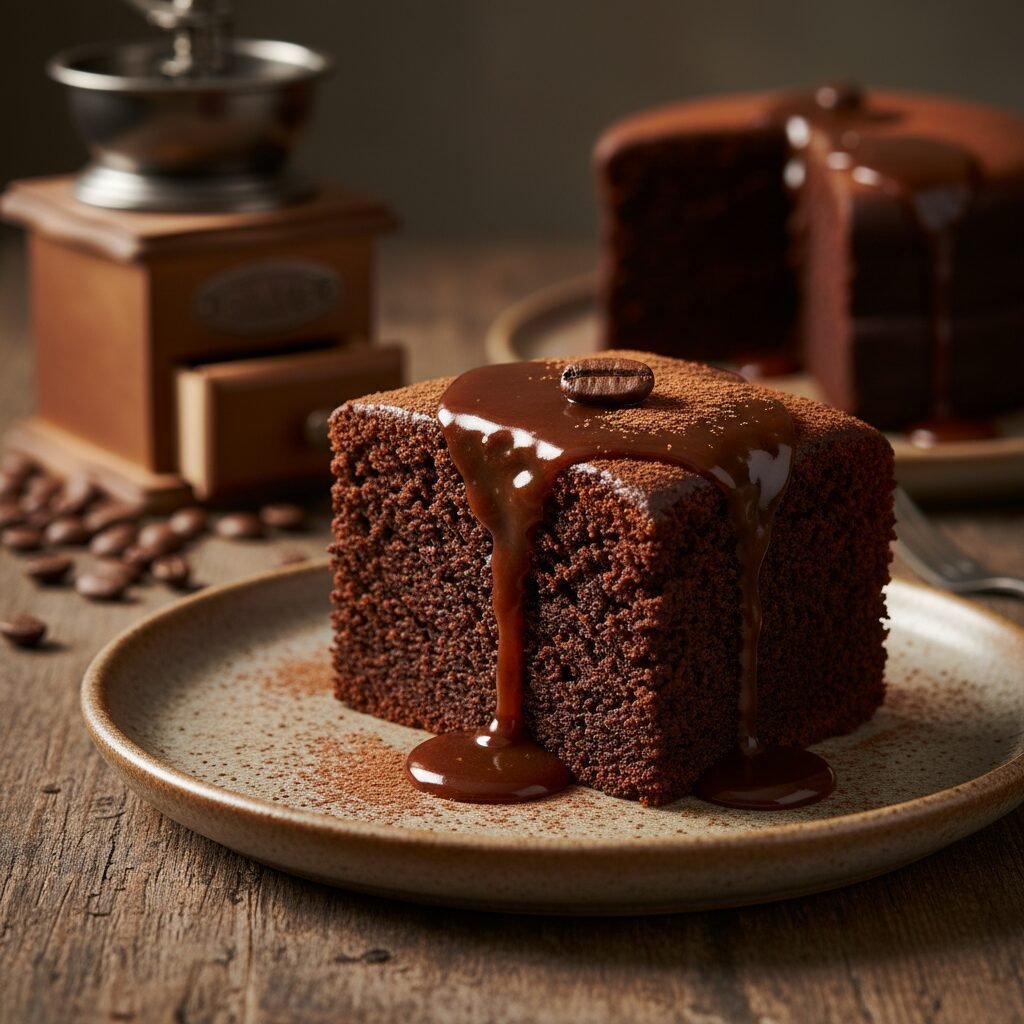
Experience the ultimate marriage of rich cocoa and bold coffee in this incredibly moist espresso chocolate cake. Topped with a silky, sweet coffee glaze, this dessert is a sophisticated twist on a classic that creates a fudgy, deep flavor profile perfect for any coffee lover.
20 minutes
35 minutes
55 minutes
12 servings
Dessert
Baking
American
Vegetarian
There are few culinary partnerships as harmonious and enduring as that of chocolate and coffee. While they are distinct in their origins and processing, when brought together in the right proportions, they create a symphony of flavor that is far greater than the sum of its parts. This Moist Espresso Chocolate Cake with Coffee Glaze is the embodiment of that synergy. It is not merely a chocolate cake with a hint of coffee, nor is it an overwhelming caffeine bomb; rather, it is a sophisticated dessert where the espresso acts as a catalyst, deepening the roasted notes of the cocoa and cutting through the sweetness with a subtle, earthy bitterness. The texture of this cake is paramount to its success. We have moved away from the dry, crumbly sponge cakes of the past to create a crumb that is undeniably moist, almost bordering on the texture of a fudge brownie, yet light enough to be eaten with a fork. This moisture is achieved through a careful balance of fats and liquids, specifically the use of oil rather than butter, and the addition of hot brewed espresso which ‘blooms’ the cocoa powder, releasing its full aromatic potential before it even hits the oven. The crowning glory is the coffee glaze—a simple yet transformative addition. Unlike a heavy buttercream frosting which can sometimes mask the delicate flavors of the cake, the glaze provides a sweet, glossy shell that cracks slightly upon the first bite, delivering a concentrated burst of coffee flavor that lingers on the palate. Whether you are serving this as the finale to an elegant dinner party or enjoying a slice with your mid-afternoon brew, this cake promises to be a showstopper that requires surprisingly little effort to execute.
History & Origins
The history of chocolate cake is a journey that mirrors the evolution of chocolate processing itself. In the mid-18th century, specifically around 1764, Dr. James Baker discovered how to make chocolate by grinding cocoa beans between massive circular millstones. However, for nearly a century, ‘chocolate cake’ referred to a yellow or white cake meant to be drunk with a chocolate beverage, rather than a cake containing chocolate in the batter. It wasn’t until the late 19th century, with the innovation of cocoa powder processing by the Van Houten family in the Netherlands, that baking with chocolate became accessible and consistent. The specific lineage of this espresso-infused version can be traced back to the emergence of ‘Devil’s Food Cake’ in the United States around 1902. Devil’s Food was distinct from standard chocolate cakes of the era due to its reddish hue—a reaction between the baking soda and the cocoa—and its incredibly moist texture, often achieved by using boiling water as a primary liquid ingredient. The integration of coffee into chocolate cake is a more modern twist, likely gaining traction in the mid-20th century as instant coffee became a pantry staple and home bakers realized that coffee intensifies the flavor of chocolate without necessarily imparting a strong coffee taste. The ‘mocha’ flavor profile, named after the beans from the port of Mocha in Yemen which were known for their chocolatey undertones, became a bakery standard. Today, the use of high-quality espresso powder and brewed coffee in baking represents the third wave of coffee culture influencing home baking, turning a simple pantry cake into a gourmet experience.
Why This Recipe Works
This recipe relies on several key food science principles to ensure superior texture and flavor depth. First and foremost is the technique of ‘blooming’ the cocoa. By mixing the cocoa powder with hot espresso at the very beginning (or adding hot liquid to the batter), we dissolve the cocoa butter and release flavor compounds that are otherwise locked inside the dry powder. This results in a chocolate flavor that is robust and three-dimensional rather than flat. Secondly, the choice of fat is crucial. While butter provides flavor, it contains water and milk solids that can lead to a drier crumb once the cake cools. Vegetable oil, on the other hand, remains liquid at room temperature, which guarantees that the cake stays soft and moist for days after baking. The addition of buttermilk provides the necessary acidity to react with the baking soda, creating carbon dioxide bubbles that give the cake its lift and tender crumb structure. This acidity also helps to tenderize the gluten strands in the flour, preventing the cake from becoming tough. Finally, the glaze works because it relies on a saturation principle; by pouring the glaze over the cake while it is still slightly warm, or by allowing the glaze to set into a semi-hard shell, we create a textural contrast between the soft interior and the sugary exterior that enhances the overall mouthfeel.
Why You’ll Love This Recipe
- ✓Intense chocolate flavor amplified by hot espresso.
- ✓Stays incredibly moist for up to 4 days due to oil-based batter.
- ✓Simple one-bowl mixing method requires no electric mixer.
- ✓The coffee glaze adds a professional, glossy finish.
- ✓Perfect balance of sweetness and roasted coffee bitterness.
Equipment You’ll Need
- ✓Bundt pan or 9×13 inch baking pan
- ✓Large mixing bowl
- ✓Medium mixing bowl
- ✓Whisk
- ✓Rubber spatula
- ✓Measuring cups and spoons
- ✓Wire cooling rack
- ✓Sifter or fine-mesh sieve
Ingredients
- ✓2 cups all-purpose flour
- ✓2 cups granulated sugar
- ✓3/4 cup unsweetened cocoa powder (Dutch-processed preferred)
- ✓2 teaspoons baking soda
- ✓1 teaspoon baking powder
- ✓1 teaspoon salt
- ✓2 large eggs, room temperature
- ✓1 cup buttermilk, room temperature
- ✓1/2 cup vegetable oil or canola oil
- ✓2 teaspoons pure vanilla extract
- ✓1 cup hot, strong-brewed espresso or coffee
- ✓For the Glaze: 1 1/2 cups powdered sugar
- ✓For the Glaze: 3-4 tablespoons brewed espresso or strong coffee, cooled
- ✓For the Glaze: 1/2 teaspoon vanilla extract
Instructions
- 1. Preheat your oven to 350°F (175°C). Generously grease a Bundt pan or a 9×13 inch baking pan with butter or cooking spray and dust with cocoa powder to prevent sticking.
- 2. In a large mixing bowl, sift together the all-purpose flour, granulated sugar, cocoa powder, baking soda, baking powder, and salt. Whisk well to ensure all dry ingredients are evenly distributed.
- 3. In a separate medium bowl, whisk together the eggs, buttermilk, vegetable oil, and vanilla extract until combined and smooth.
- 4. Pour the wet ingredients into the dry ingredients. Using a spatula or whisk, mix until just combined. Do not overmix at this stage.
- 5. Carefully pour the hot espresso (or strong coffee) into the batter. Whisk gently until the water is fully incorporated. The batter will be very thin and liquid; this is normal and essential for the moist texture.
- 6. Pour the batter into the prepared baking pan. Tap the pan gently on the counter once to release any large air bubbles.
- 7. Bake for 30-35 minutes (if using a 9×13 pan) or 40-50 minutes (if using a Bundt pan), or until a wooden toothpick inserted into the center comes out clean or with just a few moist crumbs attached.
- 8. Remove the cake from the oven and place the pan on a wire rack. Allow it to cool in the pan for about 15 minutes before inverting it onto the rack to cool completely.
- 9. While the cake cools, prepare the glaze. In a small bowl, whisk together the powdered sugar, vanilla extract, and 3 tablespoons of brewed espresso. Add more espresso one teaspoon at a time until you reach a thick but pourable consistency.
- 10. Once the cake is fully cooled, drizzle the coffee glaze over the top, allowing it to drip down the sides. Let the glaze set for 10-15 minutes before slicing and serving.
Expert Cooking Tips
- ✓Use high-quality cocoa powder; Dutch-processed cocoa will give a darker color and smoother flavor.
- ✓Ensure your buttermilk and eggs are at room temperature to allow for better emulsification of the batter.
- ✓Don’t skip the hot liquid step; it blooms the cocoa and ensures a lump-free batter.
- ✓If you don’t have buttermilk, make a substitute by adding 1 tablespoon of vinegar or lemon juice to 1 cup of milk and letting it sit for 5 minutes.
- ✓Grease your pan thoroughly, especially if using a Bundt pan with intricate designs, to ensure a clean release.
- ✓Check the cake a few minutes before the timer goes off; ovens vary, and you want to avoid overbaking to maintain moisture.
- ✓Sifting the powdered sugar for the glaze prevents white lumps from ruining the glossy finish.
Substitutions and Variations
This recipe is quite resilient and allows for several substitutions depending on dietary needs or pantry availability. For a gluten-free version, you can substitute the all-purpose flour with a high-quality 1:1 gluten-free baking flour blend that contains xanthan gum; the texture remains surprisingly similar due to the high moisture content. If you are out of buttermilk, you can use a mixture of milk and vinegar (sour milk) or thin out plain Greek yogurt or sour cream with a little milk. For the oil, melted coconut oil or melted butter can be used, though vegetable or canola oil yields the moistest result. If you are sensitive to caffeine, you can absolutely use a strong brew of decaffeinated coffee; the flavor profile will remain largely the same. For the glaze, if you prefer a creamier topping, you can substitute the coffee liquid with heavy cream or milk, though you will lose that double-coffee punch.
Common Mistakes to Avoid
The most common mistake with this cake is overbaking. Because the batter is dark, it is hard to visually tell when it is done. Rely on the toothpick test, but pull it out when there are still a few moist crumbs clinging to it; if the toothpick is bone dry, the cake might be dry too. Another error is adding the hot coffee too quickly or while the eggs are unmixed, which could theoretically scramble the eggs, though mixing the eggs with the buttermilk and oil first usually protects them. Using cold ingredients is another pitfall; cold eggs or buttermilk can cause the oil to seize or the batter to not emulsify properly, leading to an uneven bake. Finally, glazing the cake while it is too hot will cause the glaze to simply melt and soak into the cake rather than sitting on top. While this tastes good, you lose the beautiful presentation.
Serving Suggestions
This cake is rich and decadent, so it pairs beautifully with items that cut through the sweetness. A dollop of unsweetened or lightly sweetened whipped cream is a classic choice. Fresh berries, particularly raspberries or strawberries, add a tart contrast and a pop of color that looks stunning against the dark chocolate. For an extra indulgent treat, serve a slice slightly warm with a scoop of vanilla bean ice cream or coffee gelato. If you are serving this at a brunch, it pairs exceptionally well with a hot latte or a cold brew coffee. A dusting of cocoa powder or chocolate shavings on top of the glaze adds a professional finishing touch.
Storage and Reheating Tips
This cake stores exceptionally well and often tastes even better the next day as the flavors meld. It can be kept at room temperature in an airtight container or under a cake dome for up to 3 days. If you live in a particularly hot or humid climate, it is safer to store it in the refrigerator, where it will last for up to 5 days; just be sure to let it come to room temperature before serving to soften the crumb. This cake also freezes beautifully. You can freeze individual slices wrapped tightly in plastic wrap and then foil for up to 3 months. Thaw slices on the counter for an hour before eating. If freezing the whole cake, do so without the glaze, and add the glaze fresh after thawing.
Nutrition Facts (Estimated)
| Serving Size | 1 Slice |
| Calories | 420 |
| Fat | 18g |
| Saturated Fat | 4g |
| Unsaturated Fat | 12g |
| Trans Fat | 0g |
| Cholesterol | 45mg |
| Sodium | 310mg |
| Carbohydrates | 62g |
| Fiber | 3g |
| Sugar | 38g |
| Protein | 5g |
Frequently Asked Questions
Can I use instant coffee instead of brewed espresso?
Yes, absolutely. Dissolve 2-3 teaspoons of instant espresso powder or high-quality instant coffee granules into 1 cup of boiling water. This works perfectly and is often more convenient.
Will this cake taste strongly of coffee?
The cake itself has a subtle coffee undertone that mostly serves to enhance the chocolate flavor. The glaze, however, has a distinct coffee taste. If you want less coffee flavor, use milk instead of coffee for the glaze.
Can I bake this in round cake pans?
Yes, this recipe yields enough batter for two 8-inch or 9-inch round cake pans. Reduce the baking time to approximately 25-30 minutes and check for doneness early.
Why is the batter so runny?
The batter is intentionally thin because of the high liquid content (buttermilk, oil, and hot coffee). This ensures the cocoa hydrates fully and the final cake is extremely moist. Do not add more flour.
Can I make this recipe as cupcakes?
Yes, this batter makes excellent cupcakes. It will yield about 22-24 cupcakes. Bake them at 350°F for 18-22 minutes.
What is Dutch-processed cocoa and do I have to use it?
Dutch-processed cocoa has been treated with an alkalizing agent to reduce acidity. It is darker and smoother. You can use natural cocoa powder, but your cake will be lighter in color and slightly more acidic in flavor.
Can I use butter instead of oil?
You can, but the texture will be different. Butter-based cakes tend to be denser and dry out faster. If you want the butter flavor, try using half butter and half oil.
My glaze is too runny, how do I fix it?
Simply add more powdered sugar, a tablespoon at a time, whisking until you reach your desired thickness. If it’s too thick, add drops of coffee or milk.
Conclusion
The Moist Espresso Chocolate Cake with Coffee Glaze is more than just a dessert; it is a testament to the power of simple ingredients coming together to create something luxurious. Whether you are a seasoned baker or a novice in the kitchen, this recipe offers a high reward for minimal effort. The deep, complex flavors of the chocolate enriched by the espresso make it a standout dish that is sure to impress guests or comfort you after a long day. We hope this cake finds a permanent spot in your recipe rotation. Happy baking!