Moist Almond Coffee Cake Recipe
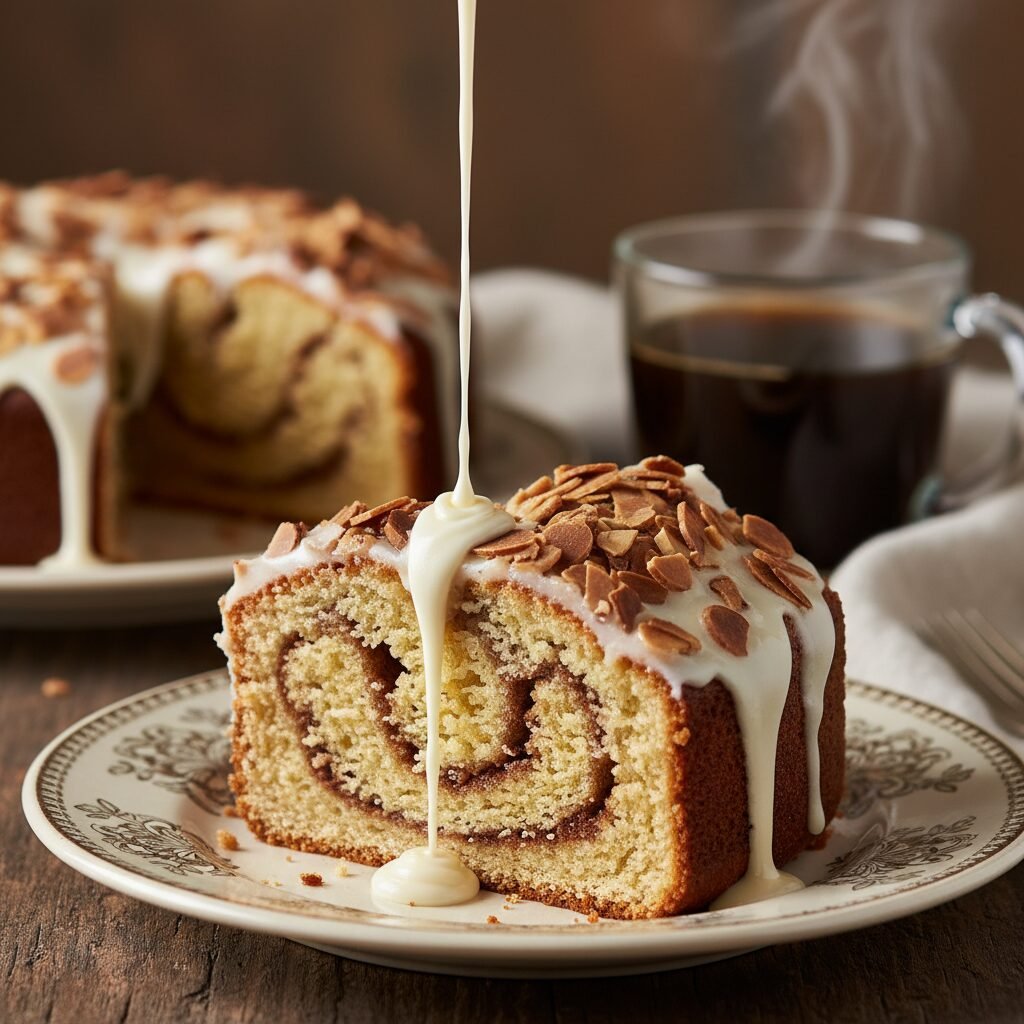
This incredibly moist almond coffee cake features a tender, buttery crumb infused with pure almond extract and a ribbon of cinnamon-sugar nut filling. Topped with crunchy toasted almonds and a sweet amaretto glaze, it is the perfect companion for your morning brew or an elegant afternoon tea.
20 minutes
50 minutes
1 hour 10 minutes
12 servings
Breakfast / Dessert
Baking
American / European Inspired
Vegetarian
There are few things in the culinary world more comforting than the aroma of a freshly baked coffee cake wafting through the kitchen on a lazy weekend morning. But this is not just any coffee cake; this is the ultimate Moist Almond Coffee Cake, a recipe designed to elevate your brunch game to professional bakery standards. While many coffee cakes rely heavily on cinnamon and walnuts, this variation champions the sophisticated, aromatic profile of almonds. The magic lies in the texture. We have all suffered through dry, crumbly cakes that require a gallon of coffee to wash down. This recipe, however, promises a crumb so tender and moist that it practically melts in your mouth, thanks to the strategic inclusion of full-fat sour cream and carefully creamed butter. The flavor profile is a delicate balance of sweet and nutty, with the warmth of vanilla bean paste rounding out the sharp, distinct notes of almond extract. What truly sets this cake apart is the textural contrast. You have the soft, dense velvet of the cake itself, interrupted by a hidden layer of cinnamon-spiced almond streusel running through the center, and finally crowned with a generous scattering of toasted sliced almonds and a drizzling of sweet, milky amaretto glaze. Whether you are hosting a holiday brunch, looking for a potluck showstopper, or simply treating yourself to a slice of luxury with your Tuesday morning espresso, this almond coffee cake delivers on every level. It is rustic enough to feel homemade but elegant enough to serve at a dinner party. Once you try this method, you will likely retire your old coffee cake recipes for good.
History & Origins
The term ‘coffee cake’ is something of a misnomer that often confuses those outside of the United States. Historically, coffee cake does not actually contain coffee as an ingredient. Instead, it traces its lineage back to the coffeehouse culture of Northern and Central Europe in the 17th century. In Germany, ‘Kaffekuchen’ refers to a specific style of sweet bread or cake intended to be eaten alongside a cup of coffee. These early iterations were often yeast-based sweet doughs, rich with dried fruits, nuts, and spices, bearing a closer resemblance to brioche or babka than the chemically leavened cakes we know today. As European immigrants, particularly those from Germany and Scandinavia, settled in America, they brought their ‘kaffeeklatsch’ traditions with them—social gatherings centered around coffee and conversation. Over time, American bakers adapted these recipes. With the invention of baking powder and baking soda in the mid-19th century, the yeast was replaced by chemical leaveners, transforming the dish from a sweet bread into the quick-bread style cake we recognize now. The introduction of sour cream into the batter is a distinctly American innovation, likely popularized in the mid-20th century when home bakers discovered that acidic dairy products resulted in a significantly more tender crumb. The almond variation specifically nods to the ‘Financier’ and other almond-based pastries of French patisserie, bringing a level of nutty sophistication to the humble, rustic American coffee cake. Today, this dish represents a beautiful melting pot of European tradition and American ingenuity.
Why This Recipe Works
This recipe succeeds where many others fail due to the precise balance of fat, acid, and flour. The primary secret weapon here is sour cream. Scientifically, the acidity in the sour cream does two things: it weakens the gluten strands in the flour, preventing the cake from becoming tough or rubbery, and it activates the baking soda for a superior rise. Furthermore, because sour cream has a high fat content, it adds a richness that milk or water simply cannot achieve, ensuring the cake stays moist for days rather than drying out after cooling. Another reason this recipe works so well is the ‘creaming method.’ By beating the butter and sugar together until pale and fluffy, you are mechanically trapping air into the fat. When this air expands in the oven, it creates a light, lofty structure that counteracts the density of the almond meal and sour cream. We also use a combination of almond extract and vanilla. Almond extract is potent and can be harsh on its own; the vanilla mellows it out, creating a rounder, more pleasant flavor profile. Finally, the double-application of almonds—ground slightly in the filling and sliced on top—provides a necessary textural variation. Without the crunch of the nuts, the soft texture of the cake would be one-dimensional. This interplay of soft cake, gritty sugar filling, and crisp topping makes every bite interesting.
Why You’ll Love This Recipe
- ✓Incredibly moist crumb thanks to sour cream and butter.
- ✓Rich, aromatic almond flavor without being overpowering.
- ✓Features a crunchy cinnamon-almond swirl inside and on top.
- ✓Freezes beautifully for make-ahead breakfasts.
- ✓Elegant enough for holidays, easy enough for weekends.
- ✓The amaretto glaze adds a professional bakery finish.
Equipment You’ll Need
- ✓9-inch Springform pan or Bundt pan
- ✓Stand mixer or electric hand mixer
- ✓Large mixing bowl
- ✓Medium mixing bowl
- ✓Small bowl for glaze
- ✓Rubber spatula
- ✓Wire cooling rack
- ✓Measuring cups and spoons
Ingredients
- ✓2 cups All-purpose flour
- ✓1 teaspoon Baking powder
- ✓1/2 teaspoon Baking soda
- ✓1/2 teaspoon Salt
- ✓1/2 cup Unsalted butter, softened to room temperature
- ✓1 cup Granulated white sugar
- ✓2 large Eggs, room temperature
- ✓1 cup Full-fat sour cream
- ✓1 1/2 teaspoons Pure almond extract
- ✓1 teaspoon Vanilla extract
- ✓FILLING & TOPPING: 3/4 cup Light brown sugar, packed
- ✓1 cup Sliced almonds (divided use)
- ✓1 teaspoon Ground cinnamon
- ✓GLAZE: 1/2 cup Powdered sugar
- ✓1 tablespoon Milk or almond milk
- ✓1 teaspoon Amaretto liqueur (optional, or use 1/4 tsp almond extract)
Instructions
- 1. Preheat your oven to 350°F (175°C). Grease a 9-inch springform pan or a Bundt pan generously with butter and dust with flour, or use baking spray.
- 2. Prepare the Filling/Topping: In a small bowl, combine the packed brown sugar, cinnamon, and 1/2 cup of the sliced almonds. Crush the almonds slightly with your hands as you mix. Set this mixture aside.
- 3. Mix Dry Ingredients: In a medium bowl, whisk together the all-purpose flour, baking powder, baking soda, and salt until well combined.
- 4. Cream Butter and Sugar: In the bowl of a stand mixer fitted with the paddle attachment (or a large bowl with a hand mixer), beat the softened butter and granulated sugar on medium-high speed for about 3-4 minutes until the mixture is pale, fluffy, and light.
- 5. Add Wet Ingredients: Lower the mixer speed to medium. Add the eggs one at a time, beating well after each addition and scraping down the sides of the bowl. Mix in the almond extract and vanilla extract.
- 6. Combine: Reduce mixer speed to low. Add about one-third of the flour mixture, followed by half of the sour cream. Repeat, ending with the last of the flour mixture. Mix only until just combined and no streaks of flour remain. Do not overmix.
- 7. Layer the Cake: Pour half of the batter into the prepared pan and smooth it out with a spatula. Sprinkle half of the brown sugar/almond mixture evenly over the batter. Top with the remaining batter, spreading it gently to cover the filling. Finally, sprinkle the remaining brown sugar mixture and the remaining 1/2 cup of uncrushed sliced almonds over the top.
- 8. Bake: Place in the preheated oven and bake for 45-55 minutes. The cake is done when a toothpick inserted into the center comes out clean or with just a few moist crumbs attached. If the top browns too quickly, tent loosely with aluminum foil after 30 minutes.
- 9. Cool: Remove from the oven and let the cake cool in the pan for 15-20 minutes. Then, gently remove the sides of the springform pan or invert the Bundt pan onto a wire rack to cool completely.
- 10. Glaze: Whisk together the powdered sugar, milk, and Amaretto (or almond extract) until smooth. Drizzle over the cooled cake before serving.
Expert Cooking Tips
- ✓Room temperature ingredients are non-negotiable. Cold eggs or sour cream can cause the butter to seize, ruining the emulsion and resulting in a denser cake.
- ✓Toast your almonds beforehand for the topping if you want extra depth of flavor, but watch them closely in the oven so they don’t burn.
- ✓When measuring flour, use the ‘spoon and level’ method. Scooping directly with the cup packs the flour down and can lead to a dry cake.
- ✓Do not overmix the batter once the flour is added. Overmixing develops gluten, which makes the cake tough instead of tender.
- ✓If using a Bundt pan, ensure you grease every nook and cranny thoroughly to prevent sticking.
- ✓Check the cake at the 40-minute mark. All ovens vary, and you don’t want to dry out the almond topping.
- ✓For a stronger almond kick, you can substitute a portion of the all-purpose flour (about 1/4 cup) with almond flour.
Substitutions and Variations
This recipe is quite versatile if you need to make swaps. If you don’t have sour cream, full-fat plain Greek yogurt is an excellent 1:1 substitute that yields very similar results. You can also use buttermilk, though the batter will be slightly thinner. For the flour, a high-quality 1:1 Gluten-Free baking flour blend (like King Arthur or Bob’s Red Mill) works wonderfully for those with gluten sensitivities. If you are out of almonds or simply prefer a different nut profile, pecans, walnuts, or even pistachios make delicious alternatives. Regarding the Amaretto in the glaze, it adds a lovely adult kick, but it is entirely optional. You can swap it for milk, orange juice for a citrus twist, or just a drop of almond extract. If you want to reduce the sugar, you can cut the sugar in the cake batter by about 1/4 cup without disastrous effects, though the texture may be slightly less tender.
Common Mistakes to Avoid
The most common mistake with coffee cake is overbaking. Because of the dense batter and the moisture from the sour cream, it can be tricky to tell when it is done. Relying solely on the timer rather than the toothpick test often leads to a dry cake. Another frequent error is using a pan that is too small. This cake rises significantly; using a standard 8-inch round pan might cause overflow. Always use a 9-inch springform or a standard Bundt pan. Additionally, adding the filling too close to the edges of the pan can cause the sugar to caramelize against the metal, making the cake stick and burn in those spots. Keep the filling centered. Finally, do not glaze the cake while it is hot. The glaze will simply melt into the cake and disappear rather than sitting beautifully on top.
Serving Suggestions
This Moist Almond Coffee Cake shines brightest when served slightly warm. A slice pairs perfectly with a dark roast coffee or a cappuccino, as the bitterness of the coffee cuts through the sweetness of the cake. For an afternoon treat, serve it alongside Earl Grey tea; the bergamot complements the almond flavor beautifully. If you are serving this for dessert rather than breakfast, elevate it with a dollop of freshly whipped cream or a scoop of vanilla bean ice cream. Fresh berries, particularly raspberries or blackberries, also make a wonderful accompaniment, adding a tart freshness that balances the rich, buttery crumb.
Storage and Reheating Tips
To store this coffee cake, keep it in an airtight container at room temperature for up to 3 days. The high fat content helps it stay moist. If you live in a particularly hot or humid climate, you may want to refrigerate it, but bring it back to room temperature before eating for the best texture. This cake also freezes exceptionally well. You can wrap individual slices tightly in plastic wrap and then foil, or freeze the whole cake. It will keep in the freezer for up to 3 months. To reheat, simply unwrap a frozen slice and microwave it for 20-30 seconds, or warm it in a toaster oven to revive the crispness of the almond topping.
Nutrition Facts (Estimated)
| Serving Size | 1 slice |
| Calories | 420 |
| Fat | 22g |
| Saturated Fat | 10g |
| Unsaturated Fat | 10g |
| Trans Fat | 0g |
| Cholesterol | 65mg |
| Sodium | 210mg |
| Carbohydrates | 52g |
| Fiber | 2g |
| Sugar | 28g |
| Protein | 6g |
Frequently Asked Questions
Can I make this cake ahead of time?
Yes, absolutely. In fact, many people find that the flavors meld and the moisture distributes even better the day after baking. Just be sure to store it in an airtight container so the cut edges don’t dry out.
Why did my filling sink to the bottom?
If the batter is too thin or if you put too much filling in one spot, it can sink. Ensure your batter is thick (don’t let the butter melt before mixing) and spread the filling evenly.
Can I use almond paste instead of extract?
Almond paste is very dense and sweet. While delicious, it requires a different mixing method to incorporate smoothly. It’s best to stick to extract for this specific recipe, or crumble small bits of paste into the filling layer.
My cake came out dry. What happened?
The most likely culprits are overbaking or measuring flour incorrectly. If you scoop the flour cup into the bag, you pack it down and get too much flour. Always spoon and level. Also, check your oven temperature with an external thermometer.
Can I bake this in a loaf pan?
Yes, but you will likely need two loaf pans for this amount of batter. The baking time will also need to be adjusted, likely reduced to 35-45 minutes. Check frequently.
Is the Amaretto liqueur necessary?
No, it is completely optional. It adds a nice depth of flavor, but you can substitute it with milk and a drop of almond extract, or vanilla extract, for a non-alcoholic version.
Can I use salted butter?
Yes, you can. If you use salted butter, simply reduce the added salt in the recipe to 1/4 teaspoon to maintain the right flavor balance.
Why do I need to use room temperature eggs?
Room temperature eggs mix much better with the butter and sugar, creating a stable emulsion that traps air. Cold eggs can shock the butter, causing the batter to look curdled and resulting in a heavier cake.
Can I add fruit to this recipe?
Yes! A cup of fresh or frozen raspberries, blueberries, or chopped cherries can be folded into the batter before baking. Just toss them in a teaspoon of flour first to prevent sinking.
How do I know when the cake is perfectly done?
Insert a wooden skewer or toothpick into the thickest part of the cake. It should come out clean or with a few moist crumbs. If it has wet batter on it, it needs more time.
Conclusion
Baking is an act of love, and this Moist Almond Coffee Cake is one of the most delicious ways to show it. From the satisfying crunch of the toasted almond topping to the tender, buttery depths of the cake itself, every forkful is a testament to the power of simple, high-quality ingredients coming together. Whether you are a seasoned baker or a novice in the kitchen, this recipe is forgiving, rewarding, and guaranteed to fill your home with the most inviting scents imaginable. So brew a fresh pot of coffee, invite some friends over, and enjoy the timeless comfort of a homemade cake that tastes like it came straight from a high-end bakery.