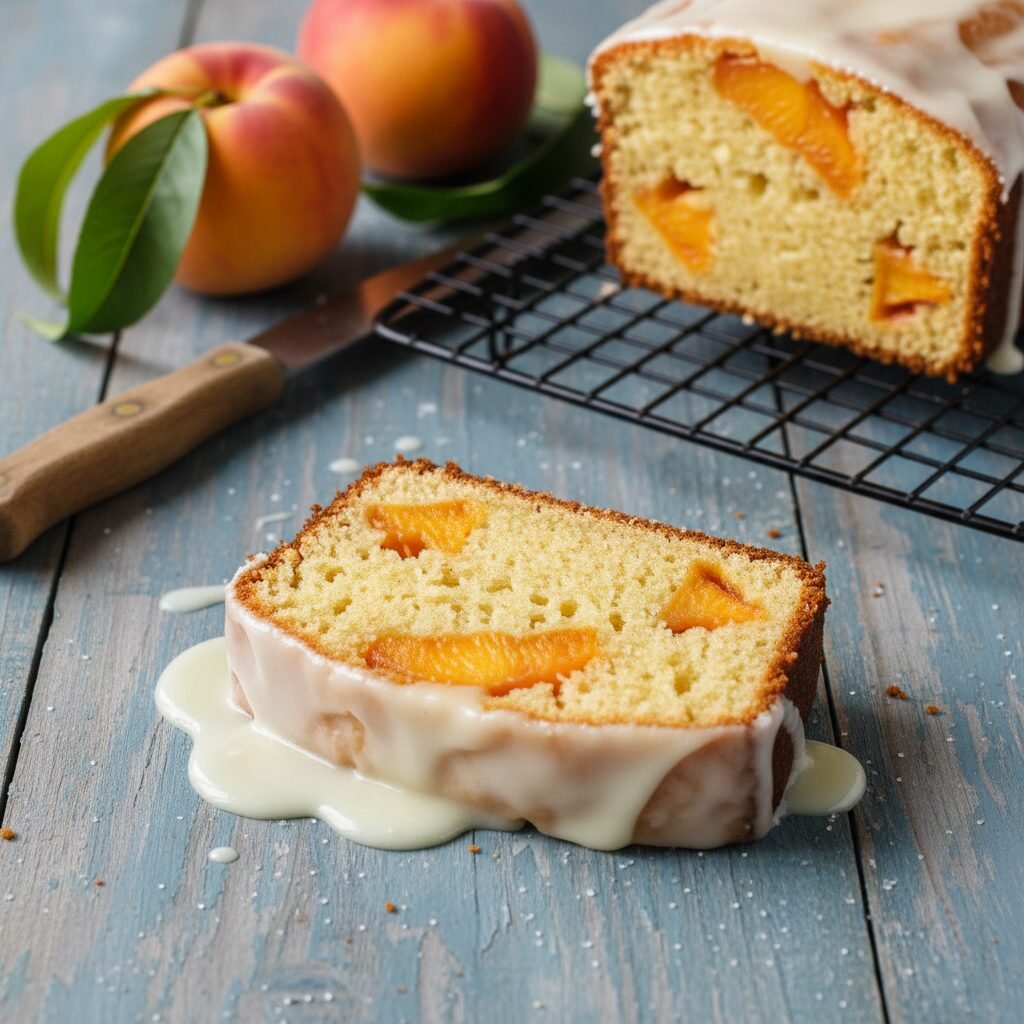
Moist Peach Loaf Cake Recipe
Bursting with juicy chunks of fresh summer peaches and topped with a sweet vanilla bean glaze, this Moist Peach Loaf Cake is the quintessential summer treat. It offers a tender, melt-in-your-mouth crumb that is perfect for a decadent breakfast or a cozy afternoon tea.
20 minutes
55 minutes
1 hour 15 minutes
1 Loaf (10 Slices)
Dessert
Baking
American
Vegetarian
There is something undeniably magical about the arrival of stone fruit season. The moment the markets are flooded with blushing, fuzzy peaches, my oven goes into overdrive. This Moist Peach Loaf Cake is a love letter to that specific time of year when the days are long and the fruit is at its peak sweetness. Unlike a standard pound cake, which can sometimes lean towards being overly dense or dry, this recipe focuses entirely on texture and hydration. We are aiming for a crumb that is incredibly soft, almost pudding-like around the fruit chunks, yet structured enough to hold a slice without crumbling apart.
The beauty of a loaf cake lies in its simplicity and its rustic charm. It doesn’t require the architectural engineering of a layer cake or the finicky timing of a soufflé. It is a forgiving, comforting bake that fills your kitchen with the intoxicating aroma of cinnamon, vanilla, and roasting fruit. This particular recipe bridges the gap between a breakfast bread and a dessert. Serve it slightly warm with a smear of salted butter alongside your morning coffee, or dress it up with a dollop of whipped cream and the vanilla glaze for an after-dinner treat. The balance of spices—just a hint of cinnamon and nutmeg—complements the floral notes of the peaches without overpowering them, allowing the natural fruit flavor to shine as the star of the show. Whether you are an experienced baker or a novice looking to impress, this peach loaf delivers high-impact flavor with minimal effort, making it a staple in my summer baking rotation.
History & Origins
The history of the peach loaf cake is a fascinating journey that intertwines the ancient origins of the fruit with the evolution of Western baking. The peach, *Prunus persica*, originated in Northwest China, where it was first domesticated and cultivated along the Yangzi River roughly 4,000 years ago. It was revered not just for its flavor, but as a symbol of immortality and longevity. From China, the peach traveled the Silk Road to Persia (modern-day Iran), which is where it gained its botanical name, and eventually made its way to Europe. Spanish explorers brought the fruit to the Americas in the 16th century, and by the 18th century, peaches were thriving in the warm, humid climates of the American South, particularly in Georgia and South Carolina.
The culinary concept of the ‘loaf cake’ or ‘quick bread’ is a more recent innovation in food history. For centuries, most cakes were leavened with yeast, requiring long rise times and significant labor. The game-changer was the invention of chemical leaveners—baking soda and baking powder—in the mid-19th century. This allowed home cooks to produce cakes and breads that rose reliably in the oven without the need for yeast, giving birth to the category of ‘quick breads.’ As American pioneers settled across the country, fruit-studded quick breads became a popular way to utilize seasonal bounties. The peach loaf is essentially a descendant of the English pound cake, adapted by American cooks who incorporated local fruits and the newly available chemical leaveners to create a lighter, moister, and more fruit-forward confection that celebrated the local harvest.
Why This Recipe Works
This recipe succeeds where many fruit cakes fail due to a few key scientific principles regarding fat ratios and moisture retention. First and foremost is the choice of fat: vegetable oil instead of butter. While butter provides a distinct flavor, it is roughly 80% fat and 20% water. Vegetable oil is 100% fat. In baking, oil coats the flour proteins more thoroughly than butter, inhibiting gluten formation. This results in a significantly more tender crumb that stays moist for days, whereas butter-based cakes can dry out once they return to room temperature.
Secondly, the inclusion of sour cream is non-negotiable. Sour cream is acidic, and that acidity reacts with the baking soda to create carbon dioxide, helping the cake rise. More importantly, the acid tenderizes the gluten strands, contributing to that velvety texture we desire.
Third, we address the common issue of ‘sinking fruit.’ Peaches are heavy and full of water. By tossing the diced peaches in a small amount of flour before folding them into the batter, we create friction. This flour coating helps the fruit grip the batter as it bakes, suspending the chunks evenly throughout the loaf rather than allowing them to plummet to the bottom. Finally, the baking temperature is set to 350°F (175°C), which allows the dense batter to cook through to the center without burning the exterior, ensuring a perfectly golden crust and a fully cooked interior.
Why You’ll Love This Recipe
- ✓Incredibly moist texture thanks to sour cream and oil.
- ✓Bursting with fresh, seasonal peach flavor.
- ✓Easy ‘mix-and-bake’ method with no mixer required.
- ✓Freezes beautifully for up to 3 months.
- ✓Versatile: perfect for breakfast, brunch, or dessert.
- ✓Uses pantry staple ingredients.
Equipment You’ll Need
- ✓9×5 inch Loaf Pan
- ✓Large Mixing Bowl
- ✓Medium Mixing Bowl
- ✓Whisk
- ✓Rubber Spatula
- ✓Wire Cooling Rack
- ✓Parchment Paper
Ingredients
- ✓2 cups All-Purpose Flour
- ✓1 teaspoon Baking Powder
- ✓1/2 teaspoon Baking Soda
- ✓1/2 teaspoon Salt
- ✓1 teaspoon Ground Cinnamon
- ✓1/4 teaspoon Ground Nutmeg
- ✓1 cup Granulated Sugar
- ✓2 large Eggs, room temperature
- ✓1/2 cup Vegetable Oil (or Canola Oil)
- ✓1/2 cup Sour Cream, room temperature
- ✓1 teaspoon Pure Vanilla Extract
- ✓2 cups Fresh Peaches, peeled and diced (approx. 2-3 peaches)
- ✓1 tablespoon Flour (for tossing peaches)
- ✓1/2 cup Powdered Sugar (for glaze)
- ✓1 tablespoon Milk or Cream (for glaze)
- ✓1/2 teaspoon Vanilla Bean Paste (for glaze)
Instructions
- Preheat your oven to 350°F (175°C). Grease a 9×5 inch loaf pan generously with non-stick spray or butter, and line the bottom with parchment paper for easy removal.
- In a medium bowl, whisk together the dry ingredients: 2 cups flour, baking powder, baking soda, salt, cinnamon, and nutmeg. Set this mixture aside.
- In a large mixing bowl, whisk together the granulated sugar and eggs until the mixture is pale and slightly frothy (about 1-2 minutes).
- Slowly pour in the vegetable oil, sour cream, and vanilla extract into the egg mixture. Whisk until completely combined and smooth.
- Gently pour the dry ingredients into the wet ingredients. Using a rubber spatula, fold the batter just until no flour streaks remain. Do not overmix.
- In a small bowl, toss the diced peaches with the reserved 1 tablespoon of flour. This coating prevents them from sinking.
- Gently fold the flour-coated peaches into the batter, being careful not to crush the fruit.
- Pour the batter into the prepared loaf pan and smooth the top with the spatula. Tap the pan on the counter once to release any large air bubbles.
- Bake for 50-60 minutes, or until a toothpick inserted into the center comes out clean or with just a few moist crumbs attached. If the top browns too quickly, tent loosely with aluminum foil after 40 minutes.
- Remove from the oven and let the cake cool in the pan for 15 minutes. Then, carefully transfer it to a wire rack to cool completely.
- While the cake cools, prepare the glaze. Whisk together powdered sugar, milk, and vanilla bean paste until smooth. Drizzle over the completely cooled cake before slicing.
Expert Cooking Tips
- ✓Room Temperature Ingredients: Ensure your eggs and sour cream are at room temperature to allow them to emulsify properly into the batter.
- ✓Don’t Overmix: Once you add the flour, stop mixing as soon as the white streaks disappear. Overmixing develops gluten and leads to a tough, rubbery loaf.
- ✓Peeling Peaches: If your peaches are very soft, you can peel them easily. If they are firm, you can leave the skin on for added texture and color, though peeling is generally recommended for a smoother cake.
- ✓Tent with Foil: Loaf cakes take a long time to bake. If you see the top getting dark brown but the center is still wiggly, cover the top loosely with foil to stop the browning while it finishes baking.
- ✓Cool Completely: Do not glaze the cake while it is warm, or the glaze will simply melt and slide right off. Patience is key!
- ✓Use a Serrated Knife: To get clean slices without squishing the soft cake, use a serrated bread knife and a gentle sawing motion.
Substitutions and Variations
This recipe is quite adaptable to various dietary needs and pantry limitations. If you do not have sour cream, you can substitute it with an equal amount of plain full-fat Greek yogurt or buttermilk; however, the batter might be slightly thinner with buttermilk. For the oil, melted coconut oil or melted butter can be used, though vegetable oil yields the moistest result. If fresh peaches are out of season, you can use canned peaches (drained thoroughly and patted dry) or frozen peaches (do not thaw, just toss in flour and add a few minutes to bake time). For a gluten-free version, use a high-quality 1:1 gluten-free flour blend that contains xanthan gum. You can also swap the vanilla glaze for a lemon glaze by using fresh lemon juice instead of milk for a zestier finish.
Common Mistakes to Avoid
The most common mistake with this loaf is underbaking. Because of the high moisture content from the peaches and oil, the center takes a while to set. A toothpick test is essential; don’t just rely on the visual golden crust. Another frequent error is not tossing the fruit in flour, resulting in a ‘soggy bottom’ layer of peaches and a plain cake on top. Additionally, using unripe, hard peaches will result in a crunchy texture lacking sweetness, while over-ripe, mushy peaches may release too much liquid and make the cake gummy. Aim for peaches that are ripe but still firm enough to hold their shape when diced.
Serving Suggestions
This Moist Peach Loaf Cake shines when served in thick slices. For a warm, comforting treat, toast a slice lightly and slather it with salted honey butter. It pairs beautifully with a hot cup of Earl Grey tea or a dark roast coffee in the morning. For a more elegant dessert presentation, serve a slice with a scoop of vanilla bean ice cream or a dollop of mascarpone cheese whipped with a little honey. In the summer, fresh berries on the side add a nice pop of acidity to balance the sweetness.
Storage and Reheating Tips
Proper storage is key to maintaining the moisture of this loaf. At room temperature, store the cake in an airtight container or wrap it tightly in plastic wrap for up to 3 days. The moisture from the fruit actually makes the cake taste even better on day two. For longer storage, keep it in the refrigerator for up to 1 week. To freeze, wrap the cooled loaf (or individual slices) in plastic wrap followed by a layer of aluminum foil. It will keep in the freezer for up to 3 months. Thaw overnight in the refrigerator or on the counter before serving.
Nutrition Facts (Estimated)
| Serving Size | 1 slice |
| Calories | 320 |
| Fat | 14g |
| Saturated Fat | 3g |
| Unsaturated Fat | 10g |
| Trans Fat | 0g |
| Cholesterol | 35mg |
| Sodium | 180mg |
| Carbohydrates | 45g |
| Fiber | 1.5g |
| Sugar | 24g |
| Protein | 4g |
Frequently Asked Questions
Can I use frozen peaches for this recipe?
Yes, you can use frozen peaches. Do not thaw them before adding to the batter, as this releases too much liquid. Simply toss the frozen chunks in flour and fold them in. You may need to add 5-10 minutes to the baking time.
Why did my peach bread sink in the middle?
Sinking usually happens if the cake is underbaked or if the leavening agents (baking soda/powder) are expired. Ensure the center is fully cooked with a toothpick test before removing from the oven, and check your pantry staples for freshness.
Can I make this recipe into muffins?
Absolutely! This batter works great for muffins. Line a muffin tin with paper liners and fill them 3/4 full. Bake at 375°F (190°C) for 18-22 minutes.
Do I have to peel the peaches?
It is a matter of personal preference. Peeling yields a smoother texture inside the cake. However, the skin of peaches is thin and edible, so if you don’t mind a bit of rustic texture and color, you can leave it on.
Can I use nectarines instead of peaches?
Yes, nectarines are a perfect 1:1 substitution for peaches in this recipe. You generally do not need to peel nectarines as their skin is smoother and thinner.
My batter seems very thick, is that normal?
Yes, quick bread batter should be thick. It needs to be sturdy enough to suspend the fruit. If it were too runny, the fruit would sink immediately.
How do I ripen peaches quickly?
Place your hard peaches in a brown paper bag with a banana or an apple. The ethylene gas released by the other fruit will speed up the ripening process. Check them after 24 hours.
Can I reduce the sugar in this recipe?
You can reduce the sugar by about 1/4 cup without significantly affecting the structure. However, sugar contributes to moisture and tenderness, so reducing it too much may result in a drier, bread-like texture.
Conclusion
There is truly no better way to celebrate the abundance of summer stone fruit than with this Moist Peach Loaf Cake. It captures the essence of the season in every bite—sweet, floral, and incredibly comforting. Whether you are baking for a family gathering, a potluck, or just a quiet weekend at home, this recipe is guaranteed to become a favorite. The combination of the tender, spiced crumb and the pockets of jammy fruit creates a texture that is simply irresistible. Don’t forget to pin this recipe to your favorite dessert board on Pinterest so you can find it every time peach season rolls around. Happy baking!