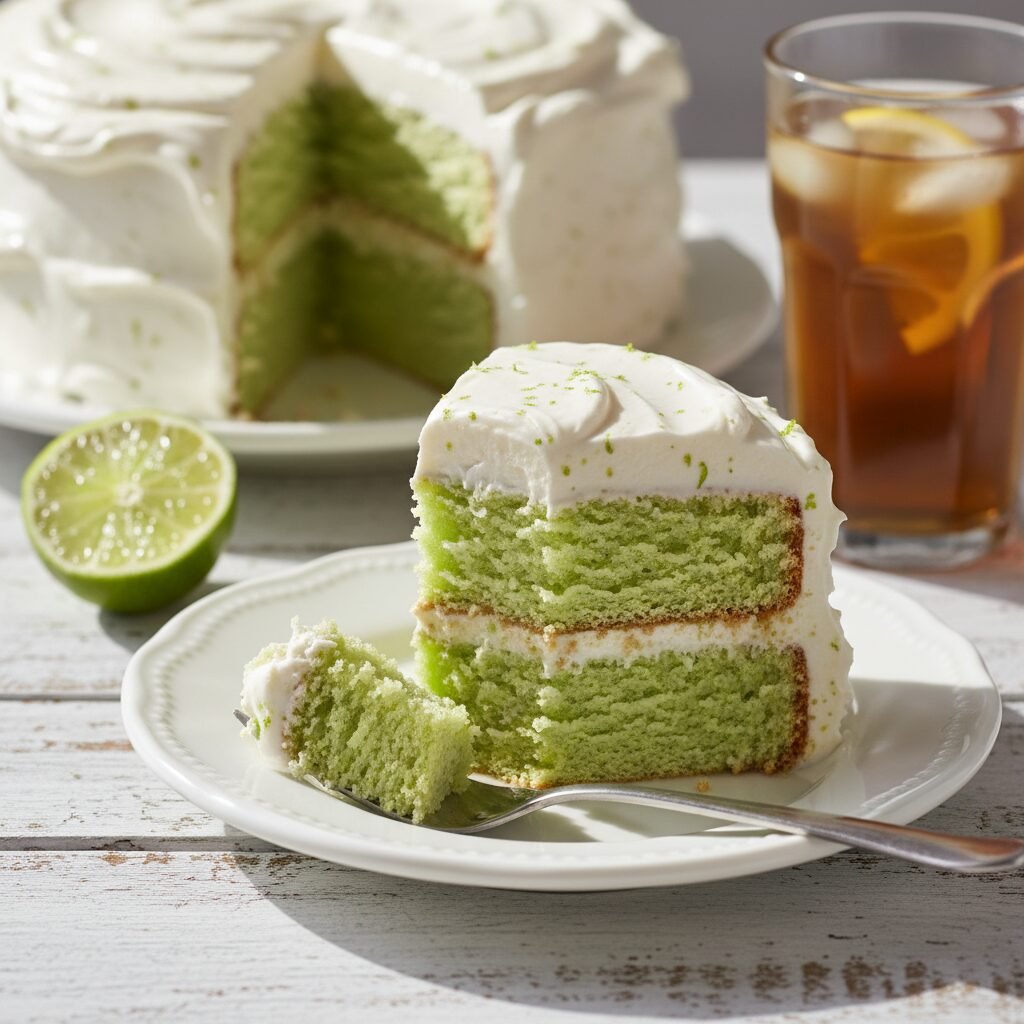
Moist Lime Layer Cake Recipe
Experience the perfect balance of tangy and sweet with this incredibly moist lime layer cake. Bursting with fresh citrus flavor and topped with a velvety lime cream cheese frosting, this recipe is a refreshing showstopper guaranteed to brighten any dessert table.
45 minutes
35 minutes
1 hour 20 minutes (plus cooling)
12-14 Servings
Dessert
Baking
American
Vegetarian
There is something profoundly uplifting about citrus desserts. While chocolate often claims the crown for comfort, and vanilla for nostalgia, citrus—specifically lime—brings a vibrancy that awakens the palate and feels like a burst of sunshine on a plate. This Moist Lime Layer Cake is the result of years of tweaking and testing to find that elusive perfect balance: a crumb that is tender and plush without being heavy, and a flavor profile that is undeniably zesty without puckering your lips. Unlike many fruit-flavored cakes that rely on artificial extracts, this recipe derives its bold character entirely from fresh zest and juice, ensuring an authentic, aromatic experience from the moment it hits the oven.
The magic of this cake lies in its texture. We often find citrus cakes to be on the drier side, perhaps due to the acidity interfering with the structure if not balanced correctly. However, by incorporating both buttermilk and a touch of oil alongside the butter, we achieve a ‘stay-fresh’ quality that keeps every slice moist for days. The frosting is the crowning glory: a whipped cream cheese buttercream speckled with vibrant green zest that cuts through the sweetness of the sugar, mirroring the tang of the cake layers. Whether you are baking for a summer garden party, a bridal shower, or simply to chase away the winter blues, this lime layer cake is a celebration of fresh flavors and comforting textures.
History & Origins
The history of citrus cakes is as rich and layered as the dessert itself, tracing its roots back to the age of exploration when citrus fruits were a luxury commodity. While lemons and oranges have long been staples in Mediterranean baking, the lime has a more specific trajectory, often associated with tropical climates and the seafaring trade. In the 18th and 19th centuries, British sailors consumed limes to prevent scurvy, leading to the nickname ‘limeys,’ but culinary applications were initially limited to preservation and savory dishes.
The evolution of the modern layer cake began in the mid-19th century with the invention of baking powder and the availability of refined white flour. Before this, cakes were leavened with yeast or beaten eggs, resulting in denser, bread-like textures. As chemical leaveners became standard in American kitchens, the ‘butter cake’ was born—light, fluffy, and stackable. The specific popularity of lime in American desserts is heavily tied to the Florida Keys and the famous Key Lime Pie, which gained prominence in the early 20th century thanks to the availability of sweetened condensed milk.
However, translating that tart, custard-like flavor into a fluffy cake was a culinary challenge that gained traction in Southern U.S. cooking circles in the mid-20th century. Southern bakers are renowned for their ‘flavor-first’ approach, often incorporating acidic ingredients like buttermilk and citrus to tenderize gluten. This Moist Lime Layer Cake is a descendant of those classic Southern citrus cakes, evolving from simple glazed bundts to the elegant, frosted multi-layer confections we adore today. It represents a fusion of Victorian sponge techniques with the bold, bright flavors of the American tropics.
Why This Recipe Works
This recipe succeeds where others fail because it meticulously manages the chemistry between acidic ingredients and leavening agents. Limes are highly acidic, and while this flavor is desirable, too much acid can weaken the gluten structure, leading to a dense or collapsed cake. To counter this, we use a specific ratio of baking powder and baking soda. The baking soda neutralizes some of the acid from the lime juice and buttermilk, creating carbon dioxide bubbles that lift the cake, while the baking powder provides a reliable, secondary rise.
Furthermore, the ‘moist’ factor is achieved through a dual-fat strategy. Butter provides that classic, rich flavor and sturdy structure necessary for a layer cake, while vegetable oil ensures the crumb stays soft even when refrigerated. Butter is solid at room temperature, but oil remains liquid, coating the flour proteins and preventing them from forming tough gluten networks. We also utilize the ‘reverse creaming’ method—or a modified version thereof—where we ensure the dry ingredients are fully coated before the liquids are introduced. Finally, the inclusion of lime zest rubbed directly into the sugar releases the essential oils (limonene) before mixing begins, infusing the entire batter with a floral citrus aroma that juice alone cannot provide. This technique amplifies the flavor without adding excess liquid that could throw off the baking ratios.
Why You’ll Love This Recipe
- ✓Incredibly moist crumb thanks to a blend of butter, oil, and buttermilk.
- ✓Authentic citrus flavor using fresh lime zest and juice—no extracts required.
- ✓Sturdy enough to stack but tender enough to melt in your mouth.
- ✓Tangy cream cheese frosting provides the perfect counterpoint to the sweet sponge.
- ✓Beautiful natural presentation with lime zest speckles.
- ✓Keeps fresh for days, making it perfect for make-ahead celebrations.
Equipment You’ll Need
- ✓Three 8-inch round cake pans
- ✓Stand mixer with paddle attachment or electric hand mixer
- ✓Large mixing bowls
- ✓Microplane or fine zester
- ✓Citrus juicer
- ✓Whisk
- ✓Rubber spatula
- ✓Wire cooling rack
- ✓Offset spatula for frosting
- ✓Parchment paper
Ingredients
- ✓3 cups (360g) cake flour, sifted
- ✓1 tsp baking powder
- ✓1/2 tsp baking soda
- ✓1/2 tsp salt
- ✓1 cup (226g) unsalted butter, softened to room temperature
- ✓2 cups (400g) granulated sugar
- ✓1/4 cup vegetable oil (or canola oil)
- ✓4 large eggs, room temperature
- ✓1 tbsp fresh lime zest (approx. 2-3 limes)
- ✓1/4 cup fresh lime juice
- ✓1 cup buttermilk, room temperature
- ✓1 tsp pure vanilla extract
- ✓— For the Frosting —
- ✓8 oz (226g) full-fat cream cheese, slightly cold
- ✓1/2 cup (113g) unsalted butter, softened
- ✓4-5 cups powdered sugar, sifted
- ✓1 tbsp fresh lime juice
- ✓1 tsp fresh lime zest
- ✓Pinch of salt
Instructions
- 1. Preheat your oven to 350°F (175°C). Grease three 8-inch round cake pans with butter or cooking spray, line the bottoms with parchment paper rounds, and grease the parchment. Dust with flour and tap out excess.
- 2. In a medium bowl, whisk together the sifted cake flour, baking powder, baking soda, and salt. Set aside.
- 3. In the bowl of a stand mixer fitted with the paddle attachment, combine the granulated sugar and lime zest. Rub the zest into the sugar with your fingertips until the sugar is fragrant and moist (this releases the oils).
- 4. Add the softened butter to the sugar-zest mixture and beat on medium-high speed for about 3-4 minutes until pale and fluffy. Pour in the vegetable oil and vanilla extract, mixing until combined.
- 5. Add the eggs one at a time, beating well after each addition and scraping down the sides of the bowl to ensure everything is incorporated.
- 6. In a small measuring cup, whisk together the buttermilk and fresh lime juice. The mixture may curdle slightly; this is normal.
- 7. Reduce the mixer speed to low. Add the dry ingredients in three batches, alternating with the buttermilk mixture in two batches, starting and ending with the dry ingredients. Mix only until just combined—do not overmix.
- 8. Divide the batter evenly among the three prepared cake pans. Smooth the tops with a spatula.
- 9. Bake for 30-35 minutes, or until a toothpick inserted into the center comes out clean or with a few moist crumbs. The edges should be slightly pulling away from the pan.
- 10. Remove from the oven and let the cakes cool in the pans for 10 minutes. Then, carefully invert them onto a wire rack to cool completely before frosting.
- 11. To make the frosting: In a clean mixing bowl, beat the butter and cream cheese on medium-high speed until smooth and creamy (about 3 minutes).
- 12. Gradually add the powdered sugar, one cup at a time, mixing on low speed. Once incorporated, add the lime juice, lime zest, and salt. Whip on high speed for 2 minutes until fluffy.
- 13. Assemble the cake: Place one layer on a cake stand or serving plate. Spread a thick layer of frosting over the top. Repeat with the second and third layers. Use the remaining frosting to coat the top and sides of the cake.
- 14. Garnish with extra lime zest, thin lime slices, or edible flowers if desired. Chill for 20 minutes to set the frosting before slicing.
Expert Cooking Tips
- ✓Room temperature ingredients are non-negotiable. Cold eggs or buttermilk can cause the batter to curdle, resulting in an uneven bake.
- ✓Rubbing the lime zest into the sugar is a pro tip that significantly amplifies the citrus aroma without adding extra liquid.
- ✓Do not overmix the batter once the flour is added. Overmixing develops gluten, which will make your cake tough instead of tender.
- ✓Use fresh lime juice, not bottled. Bottled juice often has preservatives that alter the flavor profile.
- ✓If you don’t have cake flour, you can make a substitute: measure 1 cup of all-purpose flour, remove 2 tablespoons, and replace with 2 tablespoons of cornstarch. Sift together twice.
- ✓Chill the cake layers wrapped in plastic wrap for 30 minutes before frosting; this reduces crumbs in your icing (crumb coating is easier).
- ✓Weigh your flour if possible. Scooping directly with a measuring cup often packs the flour, leading to a dry cake.
Substitutions and Variations
Baking is a science, so substitutions should be made with care. If you cannot find cake flour, the cornstarch-and-all-purpose flour hack mentioned in the tips works well. For the fat, you can use canola oil, grapeseed oil, or melted coconut oil instead of vegetable oil, though coconut oil may impart a slight flavor. If buttermilk is unavailable, you can make a ‘sour milk’ substitute by adding 1 tablespoon of white vinegar or lemon juice to a cup of whole milk and letting it sit for 5 minutes. Greek yogurt or sour cream can also be substituted for buttermilk in a 1:1 ratio, though the batter will be thicker. For the frosting, if you prefer a less tangy icing, you can omit the cream cheese and make a standard American buttercream using just butter, sugar, and lime juice, or a Swiss Meringue Buttercream infused with lime curd.
Common Mistakes to Avoid
The most common mistake with this cake is over-baking. Citrus cakes can dry out quickly if left in the oven too long, so start checking for doneness at the 30-minute mark. Another frequent error is using cold ingredients; if your butter is soft but your eggs and buttermilk are cold, the emulsion will break, leading to a greasy or dense cake. Many bakers also neglect to scrape down the bowl during mixing; this leaves streaks of butter or unincorporated flour that create holes or dense spots in the finished cake. Finally, putting frosting on a warm cake is a recipe for disaster—the butter in the frosting will melt, causing the layers to slide. Ensure the cake is completely cool to the touch.
Serving Suggestions
This cake is a stunning centerpiece on its own, but it pairs beautifully with a few thoughtful accompaniments. Serve thick slices with a dollop of unsweetened whipped cream to cut the sweetness, or a scoop of vanilla bean ice cream for a decadent treat. A side of fresh berries—raspberries or blackberries work particularly well—adds a nice color contrast and tartness. For beverages, this cake pairs elegantly with an Earl Grey tea, which has citrus notes of bergamot, or a cold glass of prosecco for a celebratory brunch. If serving at a summer party, a garnish of candied lime slices or fresh mint leaves adds a professional touch.
Storage and Reheating Tips
Because of the cream cheese frosting, this cake should be stored in the refrigerator. It can be left out at room temperature for up to 2 hours (unless it’s very hot), but for longer storage, place it in an airtight cake carrier or cover the cut sections with plastic wrap to prevent drying. It will keep in the fridge for up to 5 days. The cake is actually best served at room temperature, so remove slices from the fridge 30-60 minutes before eating to allow the butter in the cake and frosting to soften. For freezing, wrap individual slices tightly in plastic wrap and then foil; they can be frozen for up to 3 months. Thaw in the fridge overnight before serving.
Nutrition Facts (Estimated)
| Serving Size | 1 slice |
| Calories | 580 |
| Fat | 28g |
| Saturated Fat | 16g |
| Unsaturated Fat | 10g |
| Trans Fat | 0g |
| Cholesterol | 95mg |
| Sodium | 310mg |
| Carbohydrates | 76g |
| Fiber | 1g |
| Sugar | 42g |
| Protein | 6g |
Frequently Asked Questions
Can I bake this in a 9×13 pan instead of layers?
Yes, you can bake this in a greased 9×13 inch pan. You will likely need to increase the baking time to 35-45 minutes. Keep an eye on it and test with a toothpick.
Can I use Key Limes instead of regular Persian limes?
Absolutely! Key limes are more aromatic and tart, which makes for a delicious cake. However, they are much smaller and harder to zest, so prep time will increase.
Why did my cake sink in the middle?
Sinking usually happens if the oven door was opened too early (releasing heat before the structure set) or if there was too much leavening (baking powder/soda). Ensure your oven temperature is accurate using an oven thermometer.
Can I make the cake layers ahead of time?
Yes. Bake the layers, let them cool completely, wrap them tightly in plastic wrap, and store them in the fridge for up to 2 days or freeze for up to a month before assembling.
My frosting is too runny, what do I do?
If the frosting is too soft, chill it in the fridge for 15-20 minutes. If it’s still runny, add more sifted powdered sugar, 1/4 cup at a time. Avoid adding more liquid.
Can I use lemon instead of lime?
Yes, this recipe works perfectly as a lemon cake. Simply swap the lime zest and juice for lemon zest and juice in equal quantities.
Is the cake very sour?
No, it is not sour like a lemon bar. It has a distinct lime flavor and fragrance, but the sugar and fats balance the acidity, resulting in a sweet cake with a zesty kick.
Why do I need both butter and oil?
Butter provides flavor, while oil provides moisture. Oil stays liquid at room temperature (and in the fridge), ensuring the cake doesn’t feel dry or hard when chilled.
Conclusion
This Moist Lime Layer Cake is more than just a dessert; it’s a bright, flavorful experience that brings people together. Whether you are an experienced baker looking to perfect your crumb or a novice wanting to try something beyond a box mix, this recipe offers a rewarding process and an even more rewarding result. The combination of the tender, aromatic sponge and the creamy, tangy frosting is truly irresistible. Don’t be intimidated by the steps—take your time, use quality ingredients, and enjoy the process of creating something beautiful. We hope this cake becomes a new favorite in your recipe repertoire, bringing a slice of zest and joy to your kitchen.