Moist Peach Cake With Brown Sugar Glaze Recipe
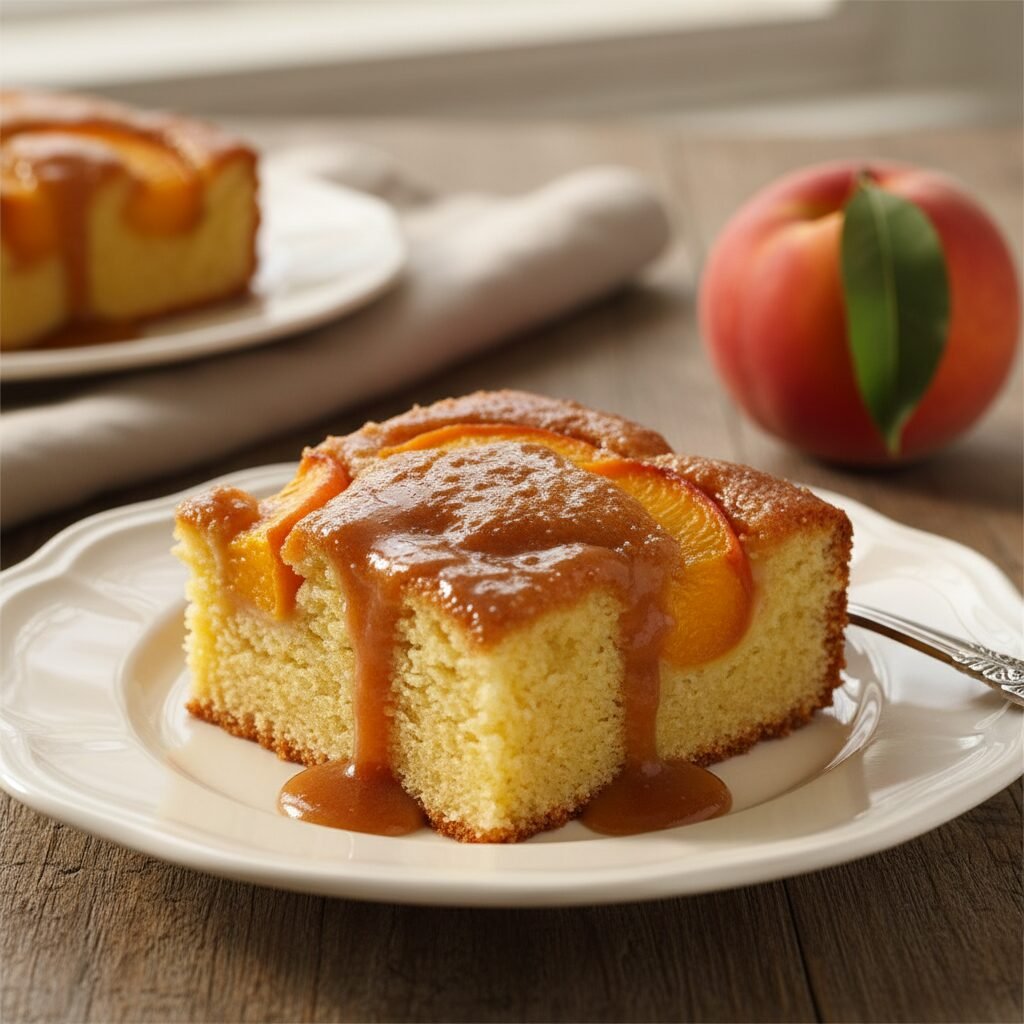
Bursting with juicy, fresh peaches and topped with a decadent, crackling brown sugar glaze, this moist peach cake is the quintessential summer dessert. It is an easy-to-make, one-bowl wonder that perfectly balances the natural tartness of stone fruit with rich, caramel-like sweetness.
20 minutes
45 minutes
1 hour 15 minutes
12-15 servings
Dessert
Baking
American (Southern)
Vegetarian
There is something undeniably magical about the arrival of peach season. The air gets warmer, the days get longer, and the sweet, floral aroma of ripe stone fruit fills the kitchen. This Moist Peach Cake with Brown Sugar Glaze is my absolute favorite way to celebrate that abundance. Unlike fussy layer cakes or delicate pastries that require hours of precision, this recipe embraces the rustic, comforting nature of home baking. It is the kind of cake that beckons you to cut a slice straight from the pan while it is still warm, standing at the kitchen counter with a fork in hand. The texture is the real star here; the crumb is incredibly tender and dense enough to hold the fruit, yet light enough to melt in your mouth, thanks to the inclusion of buttermilk and vegetable oil. But what truly elevates this dish from a simple snack cake to a showstopping dessert is the brown sugar glaze. Poured over the cake while both are still warm, the glaze seeps slightly into the top layer before setting into a fudge-like, crackly shell that provides the perfect textural contrast to the soft, fruit-studded interior. Every bite offers a burst of juicy peach followed by the deep, molasses warmth of the brown sugar. It is versatile enough to serve as a sweet brunch item alongside coffee, yet decadent enough to finish a dinner party, perhaps topped with a scoop of vanilla bean ice cream. Whether you are an experienced baker or a complete novice, this recipe promises high-reward results with minimal effort, making it a staple in my summer recipe rotation.
History & Origins
The history of the peach cake is deeply intertwined with the agricultural history of the peach itself and the evolution of American home baking. Peaches, or Prunus persica, originated in Northwest China, where they were first cultivated along the Yangtze River over 4,000 years ago. They were revered not just for their flavor but as symbols of immortality and longevity. The fruit traveled the Silk Road to Persia (modern-day Iran), eventually reaching Europe and, later, the Americas via Spanish explorers in the 16th century. By the 18th and 19th centuries, peach cultivation was thriving in the American South, particularly in Georgia and South Carolina, cementing the fruit’s status as a Southern icon. This specific style of cake—often referred to as a ‘sheet cake’ or ‘snack cake’—gained immense popularity in the mid-20th century. During the post-war era, the rise of community cookbooks and the availability of convenience ingredients like baking soda and baking powder revolutionized home baking. Housewives looked for recipes that were economical, could feed a crowd at church potlucks, and utilized seasonal produce. The concept of a ‘poured icing’ or boiled glaze, which is used in this recipe, traces its roots back to early American fudge and praline recipes. It was a practical way to frost a cake without waiting for it to cool completely, sealing in moisture and adding a preservation layer. Over decades, this rustic combination of a simple, buttermilk-based fruit batter and a boiled sugar topping has remained a beloved classic, representing the intersection of agricultural bounty and the ingenuity of American home cooks.
Why This Recipe Works
This recipe succeeds where many fruit cakes fail because of a few key scientific principles regarding moisture retention and structural integrity. First, the decision to use vegetable oil instead of butter in the batter is intentional. While butter adds flavor, it is 20% water and solidifies at room temperature, which can lead to a drier crumb over time. Oil remains liquid at room temperature, coating the flour proteins and ensuring the cake stays sensationally moist for days. Secondly, the inclusion of buttermilk is crucial. The acidity in the buttermilk reacts with the baking soda, creating carbon dioxide bubbles that lift the heavy batter, ensuring the cake is fluffy rather than dense or gummy. This acidity also helps to tenderize the gluten in the flour, resulting in a soft, velvety texture. Regarding the fruit, fresh peaches add water content. To prevent the ‘soggy bottom’ phenomenon often seen in fruit cakes, the batter is thick enough to suspend the fruit pieces, and the high oven temperature ensures a good rise before the fruit can sink. Finally, the brown sugar glaze works because of temperature timing. By pouring the hot glaze over the warm cake, a bond is formed. The heat causes the glaze to spread effortlessly, and as it cools, the sugar recrystallizes into that signature crinkly shell that offers a satisfying snap against the soft cake.
Why You’ll Love This Recipe
- ✓Incredibly moist crumb that stays fresh for days thanks to the oil and buttermilk base.
- ✓The brown sugar glaze creates a delicious, fudge-like crust that contrasts with the soft fruit.
- ✓Requires no fancy equipment—just a couple of bowls and a whisk.
- ✓Perfect way to use up slightly bruised or overripe summer peaches.
- ✓Versatile enough for breakfast, brunch, or a late-night dessert.
- ✓Can be made with fresh, frozen, or canned peaches for year-round enjoyment.
Equipment You’ll Need
- ✓9×13 inch baking pan
- ✓Large mixing bowl
- ✓Medium mixing bowl
- ✓Whisk
- ✓Rubber spatula
- ✓Small saucepan (for glaze)
- ✓Measuring cups and spoons
- ✓Knife and cutting board
Ingredients
- ✓2 cups granulated sugar
- ✓2 cups all-purpose flour
- ✓1 teaspoon baking soda
- ✓1/2 teaspoon salt
- ✓1 teaspoon ground cinnamon
- ✓1/2 teaspoon ground nutmeg
- ✓2 large eggs, room temperature
- ✓1/2 cup vegetable oil (or canola oil)
- ✓1 cup buttermilk, shaken
- ✓1 teaspoon pure vanilla extract
- ✓3 cups fresh peaches, peeled, pitted, and diced (approx. 4-5 peaches)
- ✓FOR THE GLAZE: 1/2 cup unsalted butter
- ✓FOR THE GLAZE: 1/2 cup light brown sugar, packed
- ✓FOR THE GLAZE: 3 tablespoons milk or heavy cream
- ✓FOR THE GLAZE: 1/2 teaspoon vanilla extract
- ✓FOR THE GLAZE: 1 cup powdered sugar, sifted
Instructions
- 1. Preheat your oven to 350°F (175°C). Grease a 9×13 inch baking pan with non-stick spray or butter, ensuring the corners are well-coated.
- 2. In a large mixing bowl, whisk together the dry ingredients: granulated sugar, flour, baking soda, salt, cinnamon, and nutmeg until well combined and free of lumps.
- 3. In a separate medium bowl, whisk together the wet ingredients: eggs, vegetable oil, buttermilk, and vanilla extract until the mixture is smooth and emulsified.
- 4. Pour the wet ingredients into the bowl with the dry ingredients. Use a rubber spatula or wooden spoon to stir gently. Mix just until the flour streaks disappear; do not overmix.
- 5. Gently fold in the diced peaches, distributing them evenly throughout the batter.
- 6. Pour the batter into the prepared baking pan and smooth the top with your spatula.
- 7. Bake in the preheated oven for 40-45 minutes, or until a toothpick inserted into the center comes out clean or with just a few moist crumbs attached. The top should be golden brown.
- 8. About 5 minutes before the cake is done baking, begin making the glaze. In a small saucepan over medium heat, melt the butter and brown sugar together. Stir constantly until the sugar has dissolved and the mixture begins to bubble gently.
- 9. Remove the saucepan from the heat. Whisk in the milk and vanilla extract. Then, gradually whisk in the powdered sugar until the glaze is smooth and glossy. If it is too thick, add a teaspoon more milk.
- 10. Remove the cake from the oven. Immediately pour the hot glaze over the warm cake, using a spatula to spread it to the edges if necessary. The heat helps the glaze spread evenly.
- 11. Allow the cake to cool in the pan for at least 30-45 minutes before slicing. This allows the glaze to set and the cake’s structure to firm up.
Expert Cooking Tips
- ✓Use room temperature ingredients (eggs and buttermilk) to ensure the batter emulsifies properly, leading to a better rise.
- ✓If using particularly juicy or overripe peaches, toss them in a tablespoon of flour before folding them into the batter to prevent them from sinking to the bottom.
- ✓Don’t skip the salt; it is essential to balance the sweetness of the sugar and the glaze.
- ✓Sift your powdered sugar before adding it to the glaze to avoid white lumps in your smooth caramel topping.
- ✓Watch the glaze carefully while boiling the butter and brown sugar; it can burn quickly if left unattended.
- ✓For a rustic look, leave the skins on the peaches, but for a smoother texture, peel them.
- ✓If the top of the cake is browning too quickly in the oven but the center is still raw, tent it loosely with aluminum foil.
Substitutions and Variations
This recipe is quite forgiving and allows for several substitutions. If you do not have buttermilk, you can make a ‘sour milk’ substitute by adding one tablespoon of lemon juice or white vinegar to a cup of regular milk and letting it sit for 5 minutes. For a dairy-free version, use almond milk combined with vinegar for the buttermilk, and use a plant-based butter and milk for the glaze. You can substitute the vegetable oil with melted coconut oil or even applesauce for a lower-fat version, though applesauce will change the texture slightly, making it denser. If fresh peaches are out of season, you can use canned peaches (drained very well and patted dry) or frozen peaches. If using frozen, do not thaw them before adding to the batter, but you may need to add 5 minutes to the baking time. The flour can be swapped for a 1:1 gluten-free baking flour blend if you are avoiding gluten. Spice-wise, cardamom or ginger are excellent alternatives or additions to the cinnamon and nutmeg.
Common Mistakes to Avoid
The most common mistake with this cake is overmixing the batter. Once the wet and dry ingredients meet, you want to mix only until combined. Overmixing develops the gluten, resulting in a tough, rubbery cake rather than a tender one. Another frequent error is cutting into the cake too soon. While it is tempting to eat it hot, the cake needs time to set; cutting it too early will result in a messy, crumbly slice. Regarding the glaze, waiting too long to pour it is a mistake. The glaze sets quickly as it cools. It must be poured hot onto the warm cake to spread evenly and create that perfect shell. Lastly, using peaches that are too hard and under-ripe will result in crunchy fruit pockets that don’t meld with the soft cake; ensure your fruit is yielding to the touch.
Serving Suggestions
This cake is fabulous on its own, but it pairs beautifully with a variety of accompaniments. Serve it slightly warm with a scoop of vanilla bean or cinnamon ice cream for a classic ‘peaches and cream’ experience. A dollop of freshly whipped cream with a hint of bourbon or amaretto adds a sophisticated touch. For breakfast, it pairs wonderfully with a strong cup of black coffee or an Earl Grey tea, which complements the citrusy notes of the peach. You can also garnish the plate with fresh mint leaves or a few slices of fresh peach for a pop of color and freshness.
Storage and Reheating Tips
Because this cake contains fresh fruit, it is best stored in the refrigerator if you plan to keep it for more than 2 days, especially in humid climates. However, it can be kept at room temperature in an airtight container for up to 48 hours. The glaze may soften slightly in the fridge. To reheat, simply microwave a slice for 10-15 seconds to revive that fresh-baked warmth and texture. The cake also freezes exceptionally well. Wrap individual slices tightly in plastic wrap and then in aluminum foil. They can be frozen for up to 3 months. Thaw overnight in the refrigerator or on the counter for a few hours before serving.
Nutrition Facts (Estimated)
| Serving Size | 1 slice |
| Calories | 340 |
| Fat | 14g |
| Saturated Fat | 3g |
| Unsaturated Fat | 10g |
| Trans Fat | 0g |
| Cholesterol | 35mg |
| Sodium | 180mg |
| Carbohydrates | 52g |
| Fiber | 2g |
| Sugar | 28g |
| Protein | 4g |
Frequently Asked Questions
Can I use frozen peaches instead of fresh?
Yes, absolutely. Do not thaw the peaches before adding them to the batter, as this releases too much liquid. Simply fold them in frozen and add about 5-8 minutes to the baking time.
Why did my peaches sink to the bottom of the cake?
This happens when the fruit is heavy and the batter is too thin, or the fruit is too wet. Try tossing your diced peaches in a tablespoon of flour before folding them in; this friction helps them adhere to the batter.
Can I make this cake in a bundt pan?
It is possible, but you must grease the pan extremely well. The baking time will likely increase to 55-65 minutes. Also, wait to glaze the cake until after you have inverted it out of the pan.
My glaze is too grainy, what went wrong?
A grainy glaze usually means the sugar didn’t dissolve completely or the powdered sugar wasn’t sifted. Ensure you boil the butter and brown sugar long enough to dissolve the granules, and always sift powdered sugar.
Can I reduce the sugar in this recipe?
You can reduce the sugar in the cake batter by about 1/4 cup without ruining the texture, but reducing it further may affect the moisture. The glaze relies on sugar for structure, so it is best left as is.
How do I peel peaches easily?
The blanching method is best. Cut a small ‘X’ on the bottom of the peach, boil for 30-60 seconds, then immediately plunge into an ice bath. The skins should slip right off.
Can I use other fruits in this recipe?
Yes! This batter works wonderfully with other stone fruits like nectarines, plums, or apricots. It also works well with apples or pears in the fall.
Why is my cake dry?
Dry cake is usually a result of overbaking or measuring flour incorrectly. Spoon and level your flour rather than scooping the cup into the bag, which packs it down.
Do I have to use nuts?
This recipe does not call for nuts, but pecans or walnuts are a popular addition. If you add them, toast them first and fold them in with the peaches.
Conclusion
This Moist Peach Cake with Brown Sugar Glaze is more than just a dessert; it is a slice of summer comfort that brings people together. Whether you are baking for a family gathering, a church potluck, or just a quiet weekend at home, this recipe delivers on every front—flavor, texture, and simplicity. The way the rich, caramel-like glaze cracks to reveal the soft, peach-filled sponge is an experience that you will want to replicate time and time again. I hope this cake becomes a cherished tradition in your kitchen just as it is in mine. Don’t forget to share your baking results on social media and tag us—we love seeing your delicious creations!