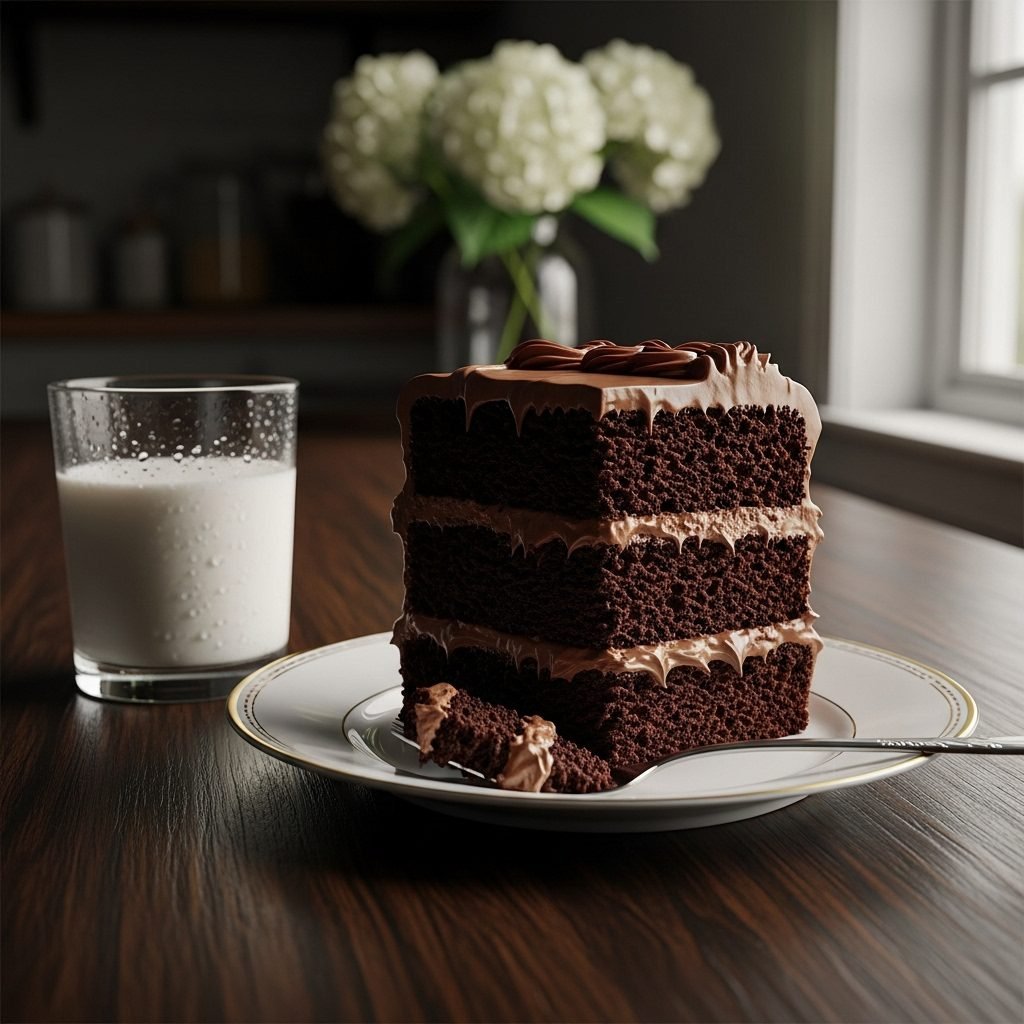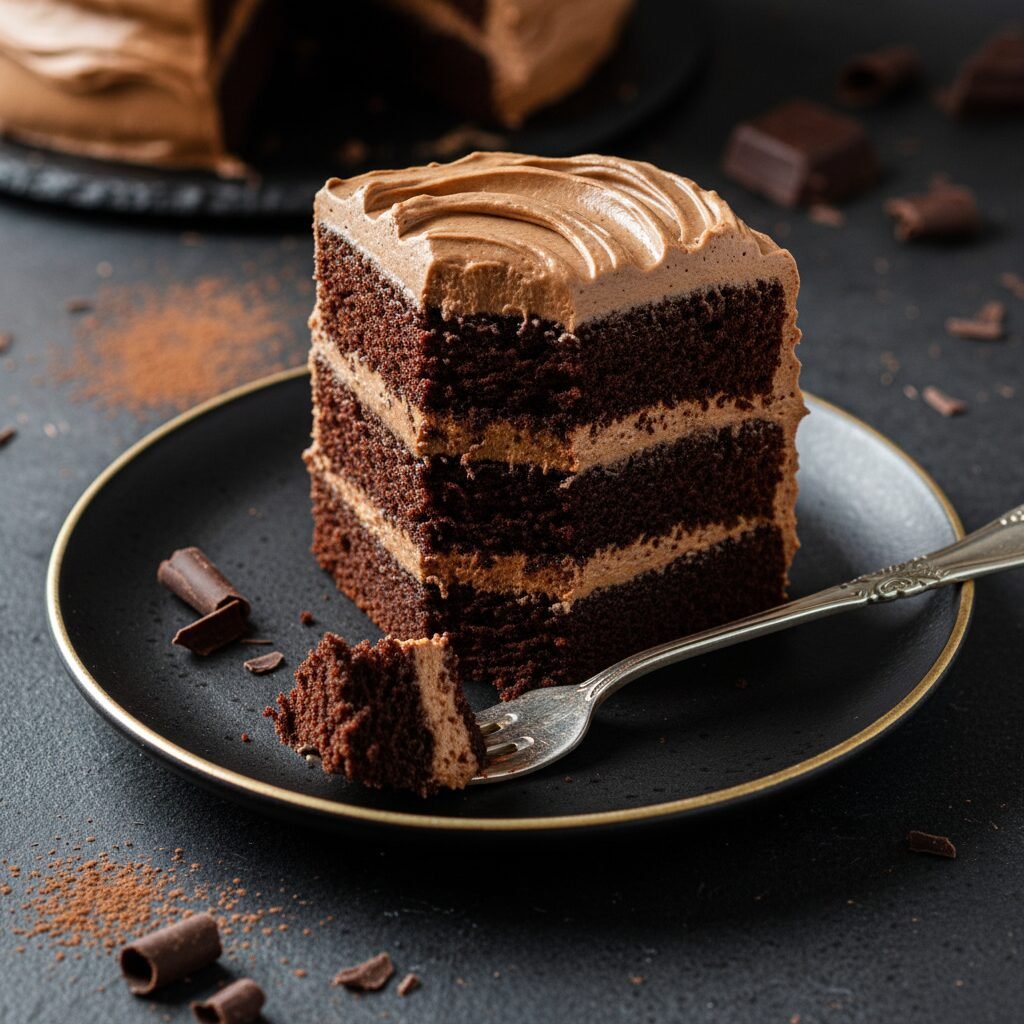
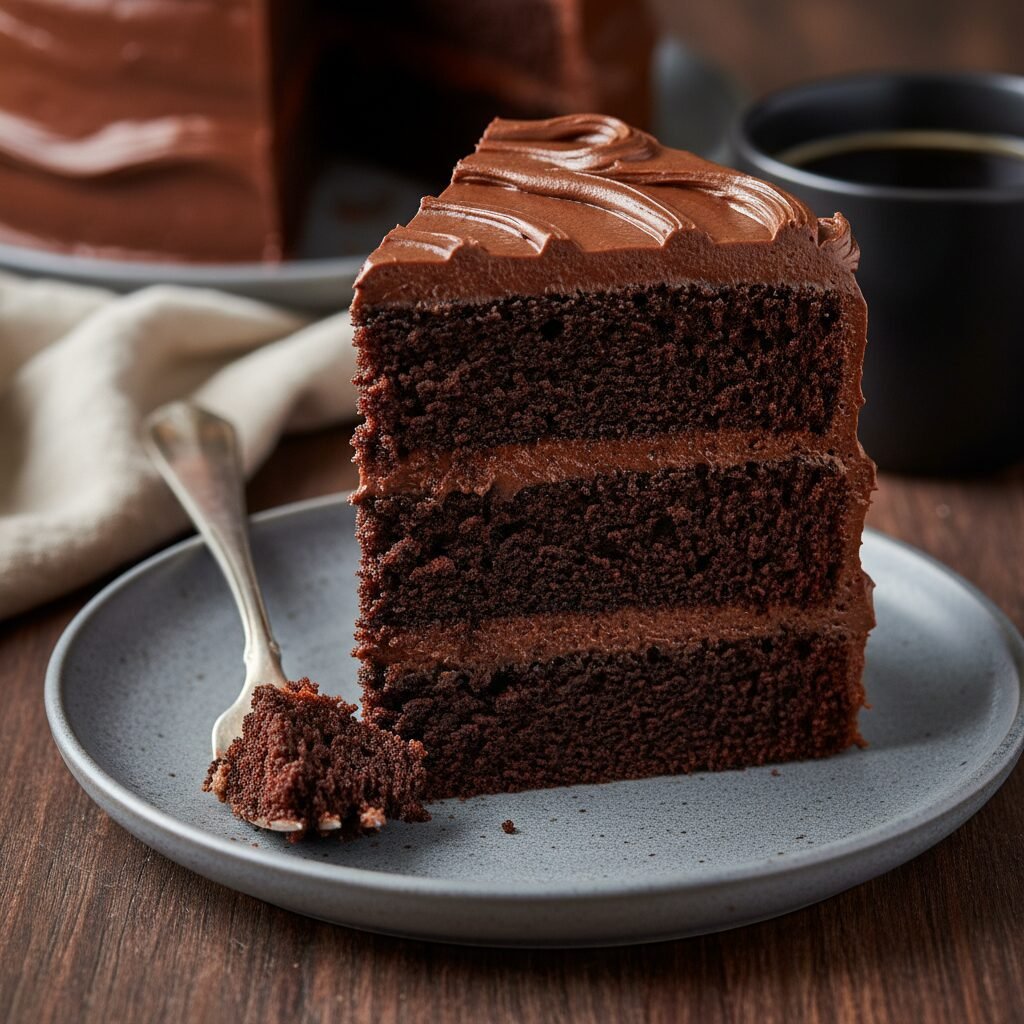
Moist Chocolate Fudge Cake With Sour Cream Recipe
Discover the secret to the most decadent, melt-in-your-mouth chocolate cake you will ever bake. This foolproof recipe uses sour cream and hot coffee to create an intensely fudgy crumb that stays moist for days, topped with a silky chocolate buttercream.
25 minutes
35 minutes
1 hour
12-14 servings
Dessert
Baking
American
Vegetarian
There is a profound difference between a good chocolate cake and a life-changing one. We have all experienced the disappointment of a beautiful-looking slice that turns out to be dry, crumbly, or lacking in that deep, resonant cocoa punch. This recipe for Moist Chocolate Fudge Cake with Sour Cream is the antidote to those baking sorrows. It is the result of years of testing, tweaking, and tasting to find the perfect equilibrium between a light, airy sponge and a dense, fudgy brownie.
The secret weapon here is, undeniably, the full-fat sour cream. While many recipes rely solely on milk or buttermilk, sour cream brings a richness and a specific acidity that tenderizes the gluten strands in the flour, resulting in a crumb that is incredibly soft yet sturdy enough to hold up to layers of frosting. When paired with hot coffee—which blooms the cocoa powder to release its full flavor potential—the result is a batter that transforms into a dark, velvet-textured masterpiece.
This cake is not just a dessert; it is a centerpiece for celebrations, a comfort food for rainy days, and a reliable friend when you need to impress without stress. The beauty of this recipe lies in its simplicity. It is a ‘one-bowl’ style method that requires no creaming of butter and sugar, meaning you can have the batter in the oven in under 20 minutes. Whether you are a seasoned pastry chef or a home baker looking for that one ‘signature’ recipe, this chocolate fudge cake will earn a permanent spot in your repertoire. Prepare for your kitchen to smell like a high-end chocolatier and for your guests to ask for seconds before they have even finished their first slice.
History & Origins
The history of chocolate cake is a fascinating journey that mirrors the evolution of baking technology and ingredient availability. Before the mid-19th century, chocolate was primarily consumed as a beverage. It wasn’t until 1828, when Coenraad van Houten learned how to mechanically extract fat from cacao liquor to produce cocoa butter and cocoa powder, that chocolate became a viable ingredient for baking. However, early ‘chocolate cakes’ were often yellow cakes served with chocolate frosting, or mahogany cakes that used only a whisper of cocoa.
The true ancestor of this fudge cake is the ‘Devil’s Food Cake,’ which first appeared in American cookbooks around 1902. The name was allegedly derived from its stark contrast to the snowy white ‘Angel Food Cake,’ but also referenced the reddish hue the cake would take on when baking soda reacted with the natural cocoa powder available at the time. As the 20th century progressed, American home bakers began experimenting with ingredients to increase moisture and shelf-life.
The introduction of cultured dairy products like buttermilk and sour cream into cake batters became popular in the rural United States, particularly in the South and Midwest, where dairy was abundant. By the 1950s, with the rise of convenience cooking, mayonnaise (which is essentially oil and egg) and sour cream became ‘secret ingredients’ in community cookbook recipes to ensure cakes didn’t dry out. This specific iteration—combining the convenience of oil-based cakes with the tang and richness of sour cream—represents the modern pinnacle of that historical evolution, prioritizing texture and intense flavor above all else.
Why This Recipe Works
This recipe succeeds where others fail due to a few key scientific principles of baking. First and foremost is the role of **Sour Cream**. Sour cream is high in fat and acidity. The acid reacts with the baking soda, creating carbon dioxide bubbles that give the cake a lofty rise. More importantly, the acid breaks down gluten strands, preventing the cake from becoming tough or chewy. The high fat content adds creaminess and richness that milk simply cannot provide.
Secondly, we use **Vegetable Oil** instead of butter for the sponge. While butter tastes great, it contains water and solids, and it solidifies at room temperature. Oil remains liquid at room temperature, which translates directly to a cake that feels moister on the palate. We save the butter for the frosting, where its flavor can truly shine.
Thirdly, the **Hot Coffee** is crucial. Cocoa powder is hydrophobic and can be difficult to incorporate. Pouring boiling hot coffee over the cocoa ‘blooms’ it, dissolving the powder instantly and releasing flavor compounds that are otherwise locked away. This doesn’t make the cake taste like coffee; rather, the coffee notes amplify the chocolate, making it taste more like itself. Finally, the use of both **Baking Powder and Baking Soda** ensures a consistent rise despite the heavy, wet batter.
Why You’ll Love This Recipe
- ✓Incredibly moist texture that lasts for 3-4 days.
- ✓Deep, intense chocolate flavor enhanced by hot coffee.
- ✓Simple preparation: no electric mixer required for the batter.
- ✓Versatile: can be made as layers, a sheet cake, or cupcakes.
- ✓The sour cream adds a subtle tang that cuts through the sugar.
- ✓Perfect for beginners and experts alike.
Equipment You’ll Need
- ✓Two 8-inch or 9-inch round cake pans
- ✓Large mixing bowl
- ✓Whisk
- ✓Rubber spatula
- ✓Measuring cups and spoons
- ✓Wire cooling rack
- ✓Parchment paper
- ✓Electric mixer (for the frosting only)
Ingredients
- ✓2 cups granulated sugar
- ✓1 3/4 cups all-purpose flour
- ✓3/4 cup unsweetened cocoa powder (high quality preferred)
- ✓1 1/2 teaspoons baking powder
- ✓1 1/2 teaspoons baking soda
- ✓1 teaspoon salt
- ✓2 large eggs, room temperature
- ✓1 cup full-fat sour cream, room temperature
- ✓1/2 cup vegetable oil (or canola oil)
- ✓2 teaspoons pure vanilla extract
- ✓1 cup boiling hot coffee (or boiling water)
- ✓FOR THE FROSTING:
- ✓1 cup unsalted butter, softened
- ✓3/4 cup unsweetened cocoa powder
- ✓4 cups powdered sugar
- ✓3-4 tablespoons heavy cream
- ✓1 teaspoon vanilla extract
- ✓Pinch of salt
Instructions
- Preheat your oven to 350°F (175°C). Grease two 9-inch round cake pans with butter or cooking spray. Line the bottoms with parchment paper and dust the sides with a little cocoa powder or flour to prevent sticking.
- In a large mixing bowl, whisk together the dry ingredients: granulated sugar, flour, cocoa powder, baking powder, baking soda, and salt. Ensure there are no large lumps of cocoa.
- In a separate medium bowl, whisk together the eggs, sour cream, vegetable oil, and vanilla extract until completely combined and smooth.
- Pour the wet ingredient mixture into the large bowl with the dry ingredients. Mix briefly with a whisk or spatula until just combined—do not overmix yet.
- Gradually pour the boiling hot coffee into the batter. Whisk gently as you pour. The batter will become very thin and liquid; this is completely normal and essential for the moisture of the cake.
- Divide the batter evenly between the two prepared cake pans. Tap the pans gently on the counter to release any large air bubbles.
- Bake in the preheated oven for 30 to 35 minutes. Test for doneness by inserting a wooden toothpick into the center of the cake; it should come out clean or with just a few moist crumbs attached.
- Remove the cakes from the oven and let them cool in the pans for about 10-15 minutes. This allows them to set. Then, run a knife around the edges and invert them onto a wire rack to cool completely before frosting.
- Make the frosting: In a large bowl using a handheld or stand mixer, beat the softened butter until creamy. Add the cocoa powder and beat until smooth.
- Gradually add the powdered sugar, one cup at a time, alternating with a tablespoon of heavy cream. Mix on low speed until incorporated, then increase to high speed and whip for 2 minutes until fluffy. Add vanilla and salt.
- Once the cakes are completely cool, frost the top of one layer, place the second layer on top, and frost the top and sides of the entire cake.
Expert Cooking Tips
- ✓Room Temperature Ingredients: Ensure your eggs and sour cream are at room temperature. This prevents the batter from seizing when the hot coffee is added and ensures a smooth emulsion.
- ✓Quality Cocoa: Since chocolate is the main flavor, use the best quality cocoa powder you can afford. Dutch-processed cocoa will give a darker color and mellower flavor, while natural cocoa provides a classic reddish tint.
- ✓Don’t Overbake: Chocolate cake is hard to judge by eye because it creates a dark crust. Rely on the toothpick test. If you overbake, you lose the moisture provided by the sour cream.
- ✓Parchment is Key: This is a tender cake. Always line the bottom of your pans with parchment paper to guarantee the cakes release perfectly without breaking.
- ✓Cool Completely: Do not attempt to frost the cake while it is even slightly warm, or your buttercream will melt and slide right off.
- ✓Weigh Your Flour: If possible, use a kitchen scale. If using cups, use the ‘spoon and level’ method to avoid packing the flour, which leads to a dry cake.
Substitutions and Variations
This recipe is quite robust, but here are some tested substitutions. If you do not have **sour cream**, full-fat plain Greek yogurt is an excellent 1:1 substitute that provides similar acidity and texture. You can also use full-fat buttermilk, though the batter will be slightly thinner. For the **vegetable oil**, melted coconut oil or canola oil works perfectly; avoid olive oil as the flavor is too strong. If you want to avoid **coffee**, simply use boiling water. You will lose a bit of depth in the chocolate flavor, but the texture will remain the same. For a **gluten-free** version, use a high-quality 1:1 gluten-free all-purpose flour blend that contains xanthan gum. The texture may be slightly different, but it still works well. For the **frosting**, you can substitute heavy cream with milk, but use less of it as milk is thinner.
Common Mistakes to Avoid
The most common mistake is **over-mixing the batter** once the flour is added. Over-mixing develops gluten, which makes the cake tough and chewy rather than tender and fudgy. Mix only until the dry streaks disappear. Another error is **opening the oven door too early**. This can cause the temperature to drop and the cake to collapse in the center. Wait until at least 25 minutes have passed before checking. Finally, **using cold ingredients** is a frequent pitfall. If you pour hot coffee into cold eggs and sour cream, the mixture can curdle or shock, leading to an uneven bake. Take your dairy out of the fridge 30 minutes to an hour before you start.
Serving Suggestions
This rich cake pairs beautifully with contrasting textures and temperatures. Serve a slice slightly warmed with a scoop of vanilla bean ice cream for a classic treat. Fresh berries, such as raspberries or strawberries, provide a tart freshness that cuts through the rich chocolate. A dollop of unsweetened whipped cream and a dusting of espresso powder is an elegant option for dinner parties. For a festive touch, drizzle with salted caramel sauce or sprinkle with crushed pistachios.
Storage and Reheating Tips
Because of the sour cream and oil, this cake stays moist for days. Store the frosted cake at room temperature in an airtight cake carrier for up to 3 days. If your kitchen is very hot, or after 3 days, move it to the refrigerator where it will keep for up to a week. Note that the cold will harden the butter in the frosting, so let slices come to room temperature before eating for the best texture. To freeze, wrap unfrosted cake layers tightly in plastic wrap, then foil, and freeze for up to 3 months. Thaw in the refrigerator overnight before frosting.
Nutrition Facts (Estimated)
| Serving Size | 1 slice |
| Calories | 580 |
| Fat | 32g |
| Saturated Fat | 14g |
| Unsaturated Fat | 16g |
| Trans Fat | 0g |
| Cholesterol | 85mg |
| Sodium | 320mg |
| Carbohydrates | 72g |
| Fiber | 4g |
| Sugar | 45g |
| Protein | 6g |
Frequently Asked Questions
Can I make this recipe as cupcakes?
Yes! This batter makes excellent cupcakes. Line a muffin tin with liners and fill them 2/3 full. Bake at 350°F for 18-22 minutes. This recipe yields approximately 24-28 cupcakes.
Why is the batter so thin?
The batter is supposed to be very thin and liquid, largely due to the cup of hot coffee. Do not add more flour! The liquid evaporates during baking, creating steam that helps the cake rise and stay moist.
Can I use Dutch-process cocoa powder?
Yes, you can use Dutch-process or natural cocoa powder. Dutch-process will yield a darker, fudgier cake with a more mellow flavor, while natural cocoa reacts more vigorously with the baking soda for a slightly taller, airier crumb.
My cake sank in the middle. What happened?
Sinking usually happens if the oven door was opened too early, if the oven wasn’t fully preheated, or if there was too much leavening agent (baking soda/powder). Ensure your oven temperature is accurate using an oven thermometer.
Can I reduce the sugar?
Sugar provides moisture and structure, not just sweetness. Reducing it significantly will alter the texture, making the cake drier and denser. We recommend sticking to the recipe for the sponge, but you can use a less sweet frosting.
Do I have to use coffee?
No, you can use boiling water. However, we highly recommend the coffee. It enhances the chocolate flavor without imparting a distinct coffee taste. Decaf coffee works perfectly well too.
Can I use a bundt pan?
This batter is very wet and may stick to intricate bundt designs. If using a bundt pan, grease it incredibly well and dust with cocoa. Bake for 45-55 minutes, checking frequently.
Can I use salted butter for the frosting?
Yes, salted butter is actually delicious in chocolate frosting as it balances the sweetness. If you use salted butter, omit the extra pinch of salt called for in the frosting recipe.
Conclusion
This Moist Chocolate Fudge Cake with Sour Cream is more than just a recipe; it is a reliable companion for all of life’s sweet moments. The combination of simple pantry staples and the magic of chemistry results in a dessert that feels luxurious and tastes professionally made. Whether you are celebrating a birthday, an anniversary, or just making it through a Tuesday, this cake delivers comfort in every forkful. Don’t forget to pin this recipe for later and share your baking triumph with us—we love seeing your creations!