Moist Peach Cake With Coconut Topping Recipe
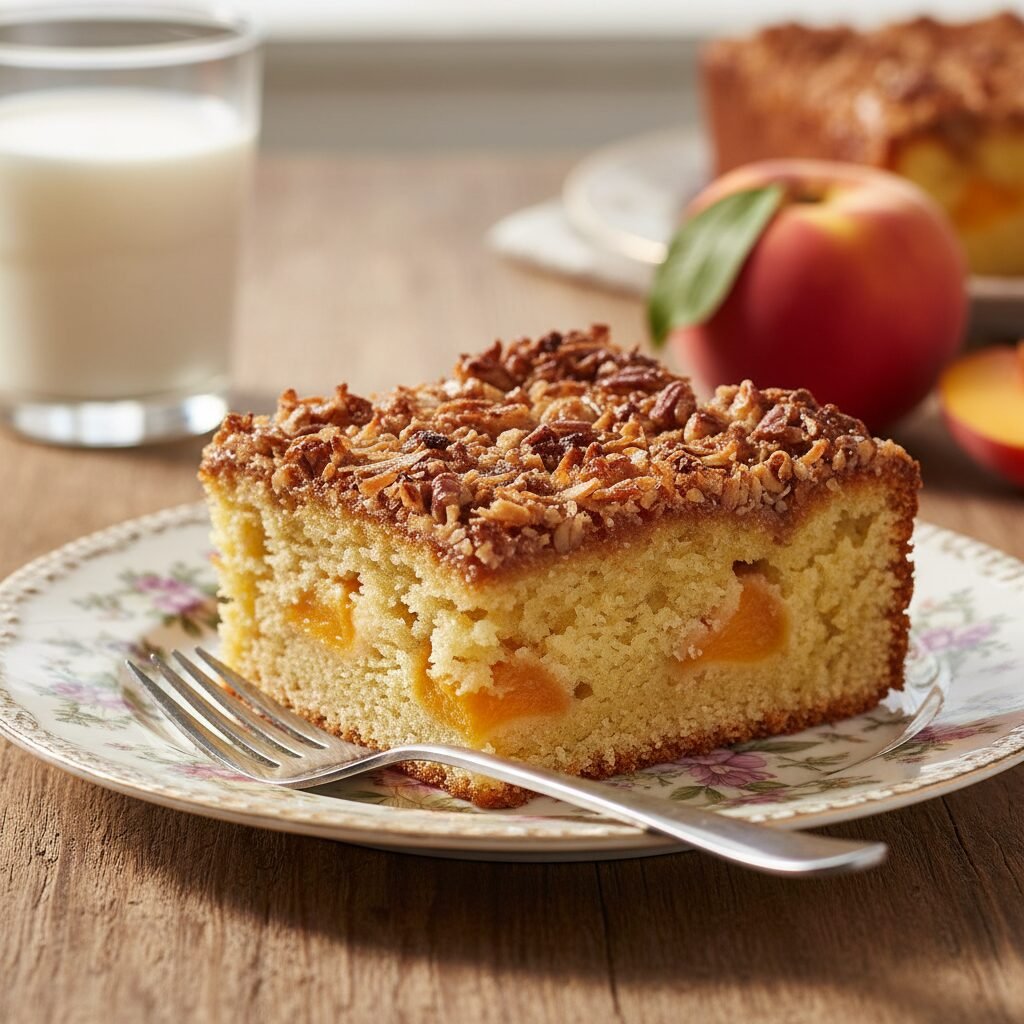
This incredible Moist Peach Cake features a tender, fruit-infused crumb topped with a caramelized, chewy coconut and pecan glaze. It is a nostalgic, crowd-pleasing dessert that perfectly balances the sweetness of summer peaches with the nutty richness of toasted coconut.
15 minutes
45 minutes
1 hour
12-15 servings
Dessert
Baking
American / Southern
Vegetarian
There are certain recipes that instantly transport you back to a sun-drenched kitchen in the middle of July, where the air hangs heavy with the scent of ripening fruit and caramelized sugar. This Moist Peach Cake with Coconut Topping is exactly that kind of recipe. It is an unpretentious, rustic dessert that prioritizes flavor and texture over intricate decoration. Unlike a standard sponge cake that might rely heavily on butter or oil for moisture, this cake derives its incredible, pudding-like tenderness from the inclusion of crushed peaches and their syrup directly into the batter. The result is a crumb that is dense yet fluffy, incredibly moist, and infused with the floral sweetness of stone fruit in every single bite.
But the true magic happens with the topping. While the cake itself is a masterpiece of simplicity, the coconut topping elevates it to a level of decadence that makes it suitable for everything from Sunday potlucks to holiday tables. Reminiscent of the frosting found on a German Chocolate Cake or the classic mid-century Lazy Daisy cake, this topping is a mixture of butter, brown sugar, cream, and shredded coconut (often with nuts added for crunch). When spread over the warm cake and returned to the oven, it bubbles and caramelizes, creating a crisp, golden crust that shatters slightly when you cut into it, revealing the soft, peach-laden cake beneath. This contrast—between the gooey, sweet topping and the mellow, fruity cake—is what makes this recipe a timeless favorite. Whether you serve it warm with a scoop of vanilla bean ice cream melting into the crevices or enjoy a slice with your morning coffee, this peach cake is guaranteed to become a permanent fixture in your baking repertoire.
History & Origins
The lineage of this Moist Peach Cake with Coconut Topping can be traced back to the heart of American home baking during the mid-20th century, a time when ‘convenience cooking’ began to merge with traditional Southern hospitality. The base of the cake bears a strong resemblance to the ‘Depression-era’ cakes or ‘Wacky Cakes’ which often omitted eggs or butter due to rationing or scarcity, relying instead on chemical reactions between baking soda and acidic ingredients. However, this specific variation, often found in community cookbooks from the 1950s and 60s under names like ‘Baltimore Peach Cake’ or simply ‘Crushed Peach Cake,’ utilizes the entire contents of a can of peaches—juice and all—as the primary liquid and moisture agent. This was a hallmark of post-war innovation, where canned goods were celebrated for their consistency and shelf stability.
The topping, however, likely draws its inspiration from the ‘Lazy Daisy Cake,’ a hot-milk sponge cake that became a staple in American households starting in the 1930s. The defining feature of a Lazy Daisy Cake is its broiled icing made of brown sugar, butter, and coconut. Home bakers, known for their ingenuity, began swapping the simple vanilla sponge for a denser, fruit-based cake, realizing that the nutty, caramel notes of the broiled coconut topping perfectly complemented the bright acidity of peaches. This fusion created a dessert that straddled the line between a cobbler and a cake. Over the decades, this recipe has remained a beloved secret in many Southern families, often passed down on handwritten recipe cards, proving that the marriage of peaches and coconut is a timeless culinary pairing deeply rooted in the history of American comfort food.
Why This Recipe Works
This recipe succeeds where many fruit cakes fail due to the specific chemistry involved in using undrained crushed peaches. In baking, moisture retention is usually the job of fats like butter or oil. However, in this recipe, the heavy syrup and the fruit pulp from the peaches provide a massive amount of hydrocolloidal moisture. The pectin in the fruit helps to hold water, ensuring the cake remains soft and tender for days after baking, rather than drying out. Furthermore, the acidity present in the peaches reacts with the baking soda, creating carbon dioxide bubbles that leaven the cake, giving it a lift despite the heavy fruit content. This prevents the cake from becoming a dense brick, resulting instead in a texture that is moist and substantial but still light enough to be called a cake.
The topping works on the principle of the Maillard reaction and caramelization. By mixing butter and sugar with coconut and exposing it to direct heat after the cake is mostly baked, you create a ‘praline’ effect. The fat in the butter conducts heat to the coconut flakes, toasting them to bring out their nutty essential oils, while the sugar melts into a glass-like, chewy glaze. This provides a crucial textural contrast. A soft, wet cake needs a crunchy, chewy element to prevent the eating experience from being one-dimensional or ‘mushy.’ The coconut topping provides that necessary bite, while the salt in the butter cuts through the sweetness of the peaches, creating a perfectly balanced flavor profile.
Why You’ll Love This Recipe
- ✓Incredibly moist texture that stays fresh for days.
- ✓No fancy equipment required; can be made with a simple hand mixer.
- ✓Perfect balance of fruity sweetness and nutty, caramelized crunch.
- ✓Uses pantry staples and canned peaches for year-round baking.
- ✓A nostalgic, comfort-food dessert that feeds a crowd.
- ✓The broiled coconut topping eliminates the need for traditional frosting.
Equipment You’ll Need
- ✓9×13 inch baking pan
- ✓Large mixing bowl
- ✓Medium mixing bowl
- ✓Electric hand mixer or whisk
- ✓Rubber spatula
- ✓Measuring cups and spoons
- ✓Saucepan (for topping)
Ingredients
- ✓2 cups all-purpose flour
- ✓2 cups granulated sugar
- ✓2 teaspoons baking soda
- ✓2 large eggs, room temperature
- ✓1 teaspoon vanilla extract
- ✓1 (20 ounce) can crushed peaches in heavy syrup (do not drain)
- ✓1/2 cup chopped pecans or walnuts (optional for batter)
- ✓— For the Coconut Topping —
- ✓2/3 cup granulated sugar or light brown sugar
- ✓1/3 cup unsalted butter, melted
- ✓1/3 cup evaporated milk (or heavy cream)
- ✓1 cup sweetened shredded coconut
- ✓1/2 cup chopped pecans or walnuts
Instructions
- Preheat your oven to 350°F (175°C). Grease and flour a 9×13 inch baking pan, or spray it generously with non-stick baking spray containing flour.
- In a large mixing bowl, whisk together the all-purpose flour, 2 cups of granulated sugar, and baking soda until well combined and free of lumps.
- Make a well in the center of the dry ingredients. Add the eggs, vanilla extract, and the entire can of crushed peaches (including the syrup). Do not drain the peaches.
- Using an electric mixer on medium speed, beat the mixture until the batter is thoroughly combined. This should take about 1-2 minutes. If adding nuts to the cake batter, fold them in now by hand.
- Pour the batter into the prepared baking pan and spread it out evenly with a spatula.
- Bake in the preheated oven for 35-40 minutes. A toothpick inserted into the center should come out clean or with just a few moist crumbs attached. The top should be golden brown.
- While the cake is baking, prepare the topping. In a medium bowl or saucepan, combine the 2/3 cup sugar, melted butter, evaporated milk, shredded coconut, and chopped nuts. Mix well until it forms a thick, sticky paste.
- Once the cake is done baking, remove it from the oven. Do not turn the oven off.
- Immediately spread the coconut topping mixture evenly over the hot cake. It will melt slightly, making it easier to spread to the edges.
- Return the cake to the oven and bake for an additional 5-10 minutes, or until the topping is bubbly and the coconut is toasted golden brown. Watch carefully to ensure it does not burn.
- Remove the cake from the oven and place it on a wire rack. Allow it to cool for at least 20-30 minutes before slicing. This allows the topping to set and the cake structure to firm up.
Expert Cooking Tips
- ✓Do not drain the peaches! The syrup is essential for the liquid content of the batter.
- ✓Toast the nuts slightly before adding them to the topping for a deeper, nuttier flavor.
- ✓Watch the cake closely during the final baking stage; coconut burns very quickly once it starts to brown.
- ✓If you don’t have evaporated milk, heavy cream or half-and-half works as a perfect substitute for the topping.
- ✓Ensure your baking soda is fresh. Since this recipe relies on the reaction between the acidic peaches and the soda for lift, old soda will result in a flat, dense cake.
- ✓Grease the pan very well. The high sugar content in the fruit makes this cake sticky and prone to clinging to the pan corners.
Substitutions and Variations
This recipe is quite forgiving and allows for several substitutions. If you cannot find crushed peaches, you can use sliced canned peaches and pulse them a few times in a food processor or chop them finely by hand; just be sure to use the syrup as well. For a fresh peach version, peel and chop 3-4 ripe peaches and mix them with 1/2 cup of sugar and 1/4 cup of water or apple juice, letting them sit for an hour to release their juices before using. Regarding the sugar, you can reduce the sugar in the cake batter to 1.5 cups if you prefer a less sweet dessert, as the topping adds significant sweetness. For the topping, brown sugar can be swapped for white sugar to add a deeper molasses flavor, which pairs beautifully with the peaches. If you have a nut allergy, simply omit the pecans or walnuts; you can add extra coconut or even rolled oats for texture. For a dairy-free version, use margarine or coconut oil in place of butter, and full-fat canned coconut milk instead of evaporated milk for the topping.
Common Mistakes to Avoid
The most common mistake with this cake is over-baking the base before adding the topping. Remember that the cake goes back into the oven for another 10 minutes with the topping, so if you bake it until it is bone-dry during the first stage, the final result will be tough. Pull it out when the toothpick is just clean. Another error is draining the peaches; this recipe is formulated to use the liquid from the can. Without it, you will have a dry, crumbly mess. Finally, be careful when spreading the topping. If you dump it all in the center and try to push it out, you might tear the delicate surface of the hot cake. Instead, drop spoonfuls of the topping all over the surface and gently connect them with a spatula.
Serving Suggestions
This Moist Peach Cake is versatile enough to be served warm, at room temperature, or even chilled. However, it is absolute perfection when served slightly warm, plated with a generous scoop of high-quality vanilla bean ice cream or a dollop of freshly whipped cream. The cool creaminess contrasts beautifully with the warm, spiced fruit and crunchy coconut. For a brunch setting, serve squares of the cake alongside hot coffee or an Earl Grey tea. If you want to dress it up for a dinner party, garnish the plate with a few slices of fresh peach and a sprig of mint to add a pop of color and freshness.
Storage and Reheating Tips
Because this cake is so moist and contains fruit, it is best stored in the refrigerator if you plan to keep it for more than 24 hours. For short-term storage (up to 1 day), it can be kept at room temperature in an airtight container or covered tightly with plastic wrap. In the refrigerator, it will stay fresh for up to 5 days. When serving from the fridge, you can microwave a slice for 15-20 seconds to revive that ‘fresh-baked’ warmth and softness. This cake also freezes surprisingly well. Wrap individual squares tightly in plastic wrap and then foil, and freeze for up to 3 months. Thaw overnight in the refrigerator before reheating.
Nutrition Facts (Estimated)
| Serving Size | 1 slice |
| Calories | 340 |
| Fat | 14g |
| Saturated Fat | 7g |
| Unsaturated Fat | 6g |
| Trans Fat | 0g |
| Cholesterol | 35mg |
| Sodium | 210mg |
| Carbohydrates | 52g |
| Fiber | 2g |
| Sugar | 32g |
| Protein | 4g |
Frequently Asked Questions
Can I use fresh peaches instead of canned?
Yes, but you need to replicate the liquid content. Peel and chop about 2 cups of fresh peaches, mix with 1/2 cup sugar, and let sit until juicy. You may need to add a splash of water or juice to equal the volume of a 20oz can.
Why did my cake sink in the middle?
This usually happens if the cake was underbaked or if the oven door was opened too early. The heavy fruit batter needs sustained heat to set the structure.
Can I make this in a bundt pan?
It is not recommended. The batter is very sticky and heavy, and the topping is designed to be broiled on top. A 9×13 pan or a sheet pan works best.
Is the coconut topping necessary?
While the cake is delicious on its own, the topping is what defines this specific recipe. Without it, it’s just a simple peach sponge. A cream cheese frosting could be a good alternative if you dislike coconut.
Can I use reduced-sugar canned peaches?
Yes, you can use peaches in light syrup or juice. The cake might be slightly less sweet, but the texture should remain largely the same.
Can I use gluten-free flour?
Yes, a high-quality 1:1 gluten-free all-purpose flour blend usually works well in this recipe because the eggs and fruit provide plenty of structure.
My topping burned, what happened?
The sugar and coconut in the topping are very sensitive to heat. If your oven runs hot or if you placed the rack too high, it can burn. Keep an eye on it constantly during the final bake.
Can I use other fruits?
Absolutely! Canned crushed pineapple creates a ‘Do Nothing Cake’ variation, and canned pears or fruit cocktail also work wonderfully.
Conclusion
The Moist Peach Cake with Coconut Topping is a testament to the idea that the best desserts don’t need to be complicated to be memorable. It brings together the humble, comforting flavors of a grandmother’s kitchen with a texture that is simply irresistible. Whether you are looking to use up a can of peaches from the pantry or searching for the perfect potluck dessert that travels well, this recipe is a winner. The golden, crunchy coconut layer sitting atop the plush, fruity cake is a combination that will have your family and friends asking for the recipe after the very first bite. Preheat your oven and get ready to enjoy a slice of Southern-inspired heaven.