Moist Almond Pound Cake Recipe
This ultra-moist almond pound cake features a velvety, dense crumb and an intense almond flavor that is impossible to resist. Enveloped in a sweet amaretto glaze and topped with toasted almonds, it is the perfect elegant dessert for holidays, brunch, or a cozy afternoon tea.
20 minutes
1 hour 15 minutes
1 hour 45 minutes
12 servings
Dessert
Baking
American
Vegetarian
There is something profoundly comforting about a classic pound cake, but this Moist Almond Pound Cake takes that comfort to a level of sophisticated indulgence. If you are a fan of that distinct, sweet, and nutty aroma of almond extract, this recipe is going to become your new gold standard. Unlike many sponge cakes that rely on fluffiness and air, this pound cake embraces a luxurious, dense texture that melts in your mouth, reminiscent of the high-end loaves you might find in a European bakery. The secret lies in the balance of fats—specifically the inclusion of cream cheese—which ensures the cake stays incredibly moist for days, rather than drying out after the first slice.
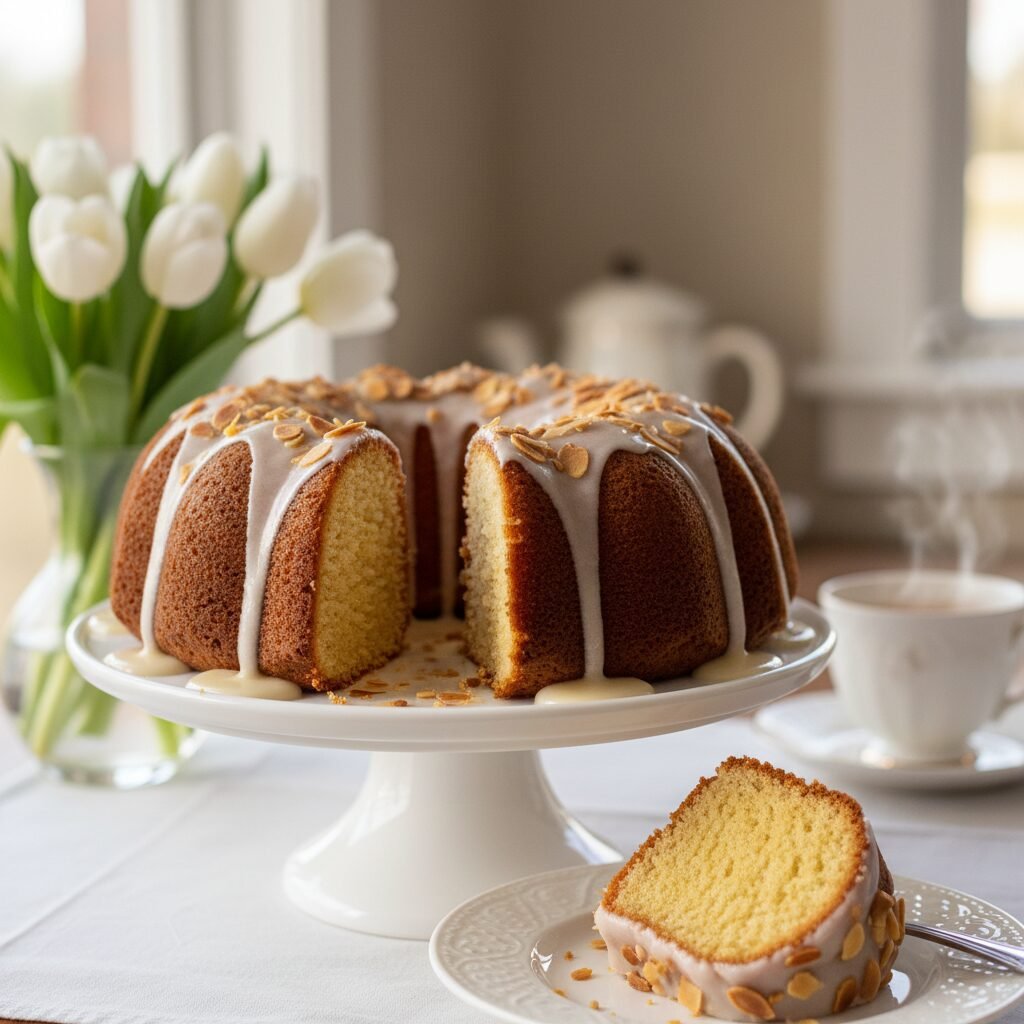
Imagine slicing into a golden-brown crust to reveal a tight, tender yellow crumb that is rich with butter and speckled with the essence of pure almond. The flavor profile is deepened by a splash of vanilla, but make no mistake: almond is the star here. To finish it off, we don’t just dust it with sugar; we drizzle it with a thick, glossy glaze made with milk and a hint of amaretto liqueur (or almond extract for a non-alcoholic version), then shower it with toasted sliced almonds for a satisfying crunch. This cake is sturdy enough to be wrapped up as a thoughtful homemade gift, yet elegant enough to serve as the centerpiece at a bridal shower or Easter brunch. It pairs beautifully with a dark roast coffee or an Earl Grey tea, cutting through the richness with every sip. Whether you are a seasoned baker or a novice in the kitchen, this recipe is designed to be foolproof, delivering bakery-quality results right from your home oven.
History & Origins
The history of the pound cake is as rich as the dessert itself, dating back to the early 1700s in Northern Europe. The name ‘pound cake’ was originally a literal recipe instruction: it called for one pound each of flour, butter, eggs, and sugar. This 1:1:1:1 ratio made it easy for illiterate bakers to remember the recipe without the need for written instructions. In those days, there were no chemical leavening agents like baking powder or baking soda. The lift in the cake came entirely from the air whipped into the batter during the arduous process of creaming the butter and beating the eggs—a task that could take over an hour by hand.
As the recipe migrated to America, specifically taking root in Southern cuisine, it evolved. Bakers began adding milk, sour cream, or cream cheese to alter the texture, making it moister and more tender. The flavor profile also expanded beyond simple vanilla or lemon. The inclusion of almond in baking has deep roots in European traditions, particularly in Scandinavia and Germany, where marzipan and almond paste are staples. By the mid-20th century, almond extract became a popular pantry staple in American households, offering a way to mimic the complex flavors of European pastries without the expense of ground nuts. This specific iteration of the Almond Pound Cake marries the structural integrity of the traditional English pound cake with the moist, tangy richness of American Southern baking (thanks to the cream cheese) and the aromatic elegance of continental European almond desserts.
Why This Recipe Works
This recipe succeeds where many others fail because it meticulously addresses the two biggest complaints about pound cake: dryness and lack of flavor. First, let’s talk about the texture. Traditional pound cakes can sometimes be heavy in a bad way—bricky and dry. We solve this by using a combination of high-fat unsalted butter and full-fat cream cheese. The cream cheese adds acidity and a different type of fat structure that breaks up the gluten strands in the flour, resulting in a crumb that is ‘short’ (tender) rather than tough. Furthermore, the cream cheese retains moisture much better than butter alone, ensuring the cake remains soft for days.
Secondly, the flavor engineering in this recipe is precise. Many almond cakes taste artificial because they rely solely on cheap extracts. We use a high ratio of pure almond extract paired with a background note of vanilla bean paste or extract. The vanilla acts as a flavor enhancer, rounding out the sharp, floral notes of the almond so it tastes warm and nutty rather than chemical. We also start the baking process in a cold oven or use a moderate temperature (325°F) to allow the dense batter to rise slowly and evenly without burning the crust before the center is cooked. This slow-bake method ensures a uniform, golden exterior and a perfectly cooked interior. Finally, the glaze isn’t just for looks; it seals the top of the cake while it’s still slightly warm, trapping steam inside and infusing the crust with an extra layer of sweetness and almond aroma.
Why You’ll Love This Recipe
- ✓Incredibly moist texture due to the addition of cream cheese.
- ✓Intense, authentic almond flavor without being overpowering.
- ✓Stays fresh for up to 5 days at room temperature.
- ✓Versatile batter that works in a Bundt pan or loaf pans.
- ✓Freezes beautifully for make-ahead meal prep.
Equipment You’ll Need
- ✓Stand mixer or electric hand mixer
- ✓10-12 cup Bundt pan
- ✓Silicone spatula
- ✓Cooling rack
- ✓Measuring cups and spoons
- ✓Whisk
Ingredients
- ✓1 1/2 cups (3 sticks) unsalted butter, softened to room temperature
- ✓8 oz cream cheese, softened to room temperature
- ✓3 cups granulated sugar
- ✓6 large eggs, room temperature
- ✓1 tablespoon pure almond extract
- ✓1 teaspoon pure vanilla extract
- ✓3 cups all-purpose flour
- ✓1/2 teaspoon baking powder
- ✓1/2 teaspoon salt
- ✓1/4 cup whole milk, room temperature (optional, for thinner batter)
- ✓— For the Glaze —
- ✓1 1/2 cups powdered sugar
- ✓2-3 tablespoons milk or Amaretto liqueur
- ✓1/2 teaspoon almond extract
- ✓1/3 cup sliced almonds, toasted (for garnish)
Instructions
- Preheat your oven to 325°F (163°C). Thoroughly grease and flour a 10-12 cup Bundt pan, ensuring every crevice is coated to prevent sticking. Alternatively, use a baking spray containing flour.
- In the bowl of a stand mixer fitted with the paddle attachment, beat the softened butter and cream cheese on medium-high speed until smooth and creamy (about 2 minutes).
- Gradually add the granulated sugar to the butter mixture. Continue beating on medium-high speed for 5-7 minutes. This step is crucial; the mixture should become very pale, fluffy, and aerated.
- Reduce the mixer speed to low/medium. Add the eggs one at a time, mixing just until the yellow disappears after each addition. Scrape down the sides and bottom of the bowl with a spatula as needed to ensure even mixing.
- Stir in the almond extract and vanilla extract.
- In a separate bowl, whisk together the flour, baking powder, and salt. With the mixer on the lowest speed, gradually add the flour mixture to the wet ingredients.
- Mix only until the flour streaks have just disappeared. Do not overmix at this stage, or the cake will be tough. If the batter seems too stiff, you can stir in the 1/4 cup of milk, but the batter should be thick.
- Pour the batter into the prepared Bundt pan and smooth the top with a spatula. Tap the pan on the counter gently a few times to release any large air bubbles.
- Bake for 75 to 90 minutes. The baking time can vary greatly depending on your oven. Start checking at 70 minutes. The cake is done when a long skewer inserted into the deepest part comes out clean or with just a few moist crumbs attached.
- Remove from the oven and let the cake cool in the pan for exactly 10-15 minutes. Then, invert the cake onto a wire cooling rack to cool completely.
- While the cake cools, prepare the glaze. Whisk together the powdered sugar, almond extract, and milk (or Amaretto) until smooth. The consistency should be thick enough to coat the back of a spoon but pourable.
- Once the cake is cool, drizzle the glaze over the top, allowing it to drip down the sides. Immediately sprinkle with the toasted sliced almonds before the glaze sets.
Expert Cooking Tips
- ✓Room temperature ingredients are non-negotiable. Cold eggs or butter will cause the batter to curdle and result in a greasy cake.
- ✓Cream the butter and sugar for the full time listed. This incorporates air, which is the primary leavening agent for a dense pound cake.
- ✓Measure flour correctly by spooning it into the measuring cup and leveling it off, rather than scooping directly from the bag, to avoid a dry cake.
- ✓Toast the almonds for the topping in a dry skillet for 2-3 minutes to release their essential oils and enhance the flavor.
- ✓If the top of the cake is browning too quickly in the oven but the center is raw, tent it loosely with aluminum foil.
- ✓Do not let the cake cool in the pan for too long. If it sits longer than 15 minutes, the sugars will solidify and the cake may stick to the pan.
Substitutions and Variations
This recipe is quite adaptable, though the core fat ratios should remain similar for the best texture. If you do not have cream cheese, you can substitute it with an equal weight of mascarpone cheese for a similar richness, or full-fat sour cream, though sour cream will result in a slightly tangier and lighter crumb. For the flour, Cake Flour can be used instead of All-Purpose Flour if you prefer an even lighter, more velvety texture; use 3 cups plus 2 tablespoons if making this swap. If you need to make this gluten-free, use a high-quality ‘Cup-for-Cup’ gluten-free flour blend that contains xanthan gum; almond flour alone will not work as a direct substitute here as it lacks the structural integrity to hold the heavy fats. For the glaze, if you prefer to avoid alcohol, simply use whole milk or heavy cream instead of Amaretto. You can also swap the almond extract for lemon extract and add lemon zest to the batter for a citrus variation.
Common Mistakes to Avoid
The most common mistake with pound cake is rushing the creaming process. Many bakers stop mixing the butter and sugar after 2 minutes, but it really needs 5 to 7 minutes to create the necessary air pockets. Another frequent error is opening the oven door too often. Every time you open the door, the temperature drops, which can cause the heavy batter to collapse or ‘fall’ in the center. Only open the door after the 70-minute mark to check for doneness. Additionally, under-greasing the Bundt pan is a tragedy waiting to happen. Bundt pans have intricate designs where cake loves to stick. Use a pastry brush to ensure your butter or shortening gets into every nook and cranny, or use a baking spray specifically designed with flour in it. Finally, adding the eggs too quickly can break the emulsion; take your time and add them one by one.
Serving Suggestions
This Moist Almond Pound Cake is stunning enough to be served on its own, but it pairs wonderfully with various accompaniments. For a fresh contrast, serve slices with a side of macerated strawberries or raspberries; the acidity of the fruit cuts through the buttery richness of the cake. A dollop of freshly whipped cream or a scoop of vanilla bean ice cream turns a slice into a decadent dessert course. For breakfast or brunch, it is perfection alongside a hot cup of black coffee or an almond milk latte. If you are serving this at a party, consider garnishing the platter with edible flowers or fresh mint leaves for a pop of color.
Storage and Reheating Tips
Pound cake is one of the few cakes that actually tastes better the next day as the flavors meld and the moisture redistributes. To store at room temperature, keep the cake in an airtight cake carrier or wrap it tightly in plastic wrap; it will stay fresh for 4 to 5 days. If you live in a very hot or humid climate, you may want to store it in the refrigerator, but be aware that refrigeration can dry out the crumb slightly, so bring it to room temperature before serving. This cake freezes exceptionally well. You can freeze the whole cake (unglazed is best for freezing) by wrapping it in two layers of plastic wrap and one layer of foil for up to 3 months. Alternatively, slice the leftovers and wrap individual slices for a quick grab-and-go treat. Thaw frozen cake on the counter for 2-3 hours before serving.
Nutrition Facts (Estimated)
| Serving Size | 1 slice |
| Calories | 480 |
| Fat | 26g |
| Saturated Fat | 15g |
| Unsaturated Fat | 9g |
| Trans Fat | 0.5g |
| Cholesterol | 110mg |
| Sodium | 180mg |
| Carbohydrates | 54g |
| Fiber | 1g |
| Sugar | 32g |
| Protein | 7g |
Frequently Asked Questions
Why did my pound cake fall in the middle?
This usually happens if the oven door was opened too early during baking, causing a temperature drop, or if the cake was underbaked. It can also result from over-creaming the butter and sugar (incorporating too much air that the structure can’t support) or using too much baking powder.
Can I make this in loaf pans instead of a Bundt pan?
Yes, absolutely. This recipe yields enough batter for two standard 9×5 inch loaf pans. You will need to adjust the baking time; start checking the loaves at around 55-60 minutes.
Why is my cake dry?
Dryness is usually caused by overbaking or measuring the flour incorrectly. Always spoon and level your flour. Also, ensure you used full-fat ingredients; substituting low-fat cream cheese or margarine will affect moisture.
Can I add fruit or chocolate chips to the batter?
Yes! You can add up to 1 cup of mix-ins like dried cranberries, chocolate chips, or blueberries. Toss the mix-ins in a tablespoon of flour before folding them into the batter to prevent them from sinking to the bottom.
How do I know when the cake is truly done?
Because pound cake is dense, the toothpick test can sometimes be misleading if you hit a pocket of fat. Use a long wooden skewer and insert it into the thickest part of the cake. It shouldn’t just be wet batter; it should come out clean or with a few moist crumbs. The internal temperature should be around 210°F.
Can I reduce the sugar in this recipe?
Sugar is not just for sweetness; it provides moisture and tenderness. Reducing the sugar significantly will result in a tougher, drier cake. You can reduce it by about 1/2 cup without disastrous results, but the texture will change.
Do I really need to use room temperature eggs?
Yes. Cold eggs added to creamed butter will cause the fat to seize and curdle, breaking the emulsion. This leads to an uneven bake and a greasy texture. If you forgot to take them out, place the eggs in a bowl of warm water for 5-10 minutes.
What is the best way to grease a detailed Bundt pan?
The most effective method is using ‘baking spray’ (which contains oil and flour). If using butter, melt it and brush it into every crevice with a pastry brush, then dust with flour, tapping out the excess. Do not let pools of butter sit in the corners.
Conclusion
This Moist Almond Pound Cake is truly a testament to the magic of simple, high-quality ingredients coming together to create something spectacular. It is a recipe that demands a little patience—waiting for the butter to soften, the mixture to cream, and the cake to bake slowly—but the reward is absolutely worth it. The aroma that fills your kitchen will bring everyone to the table, and the first bite of that dense, almond-infused crumb will keep them there. Whether you are baking for a special occasion or just treating yourself to a slice of comfort, this recipe is sure to become a cherished favorite in your collection. Don’t forget to pin this recipe for later and share your baking success photos with us!