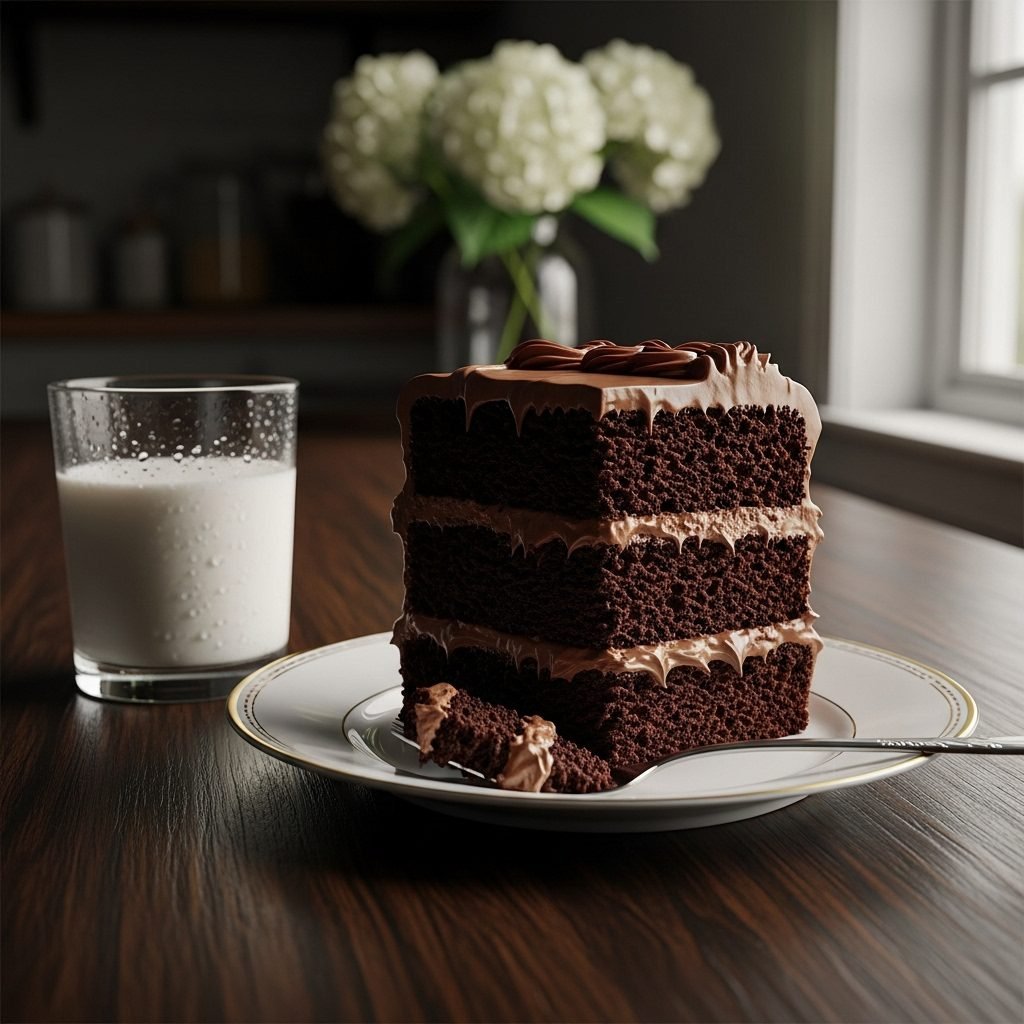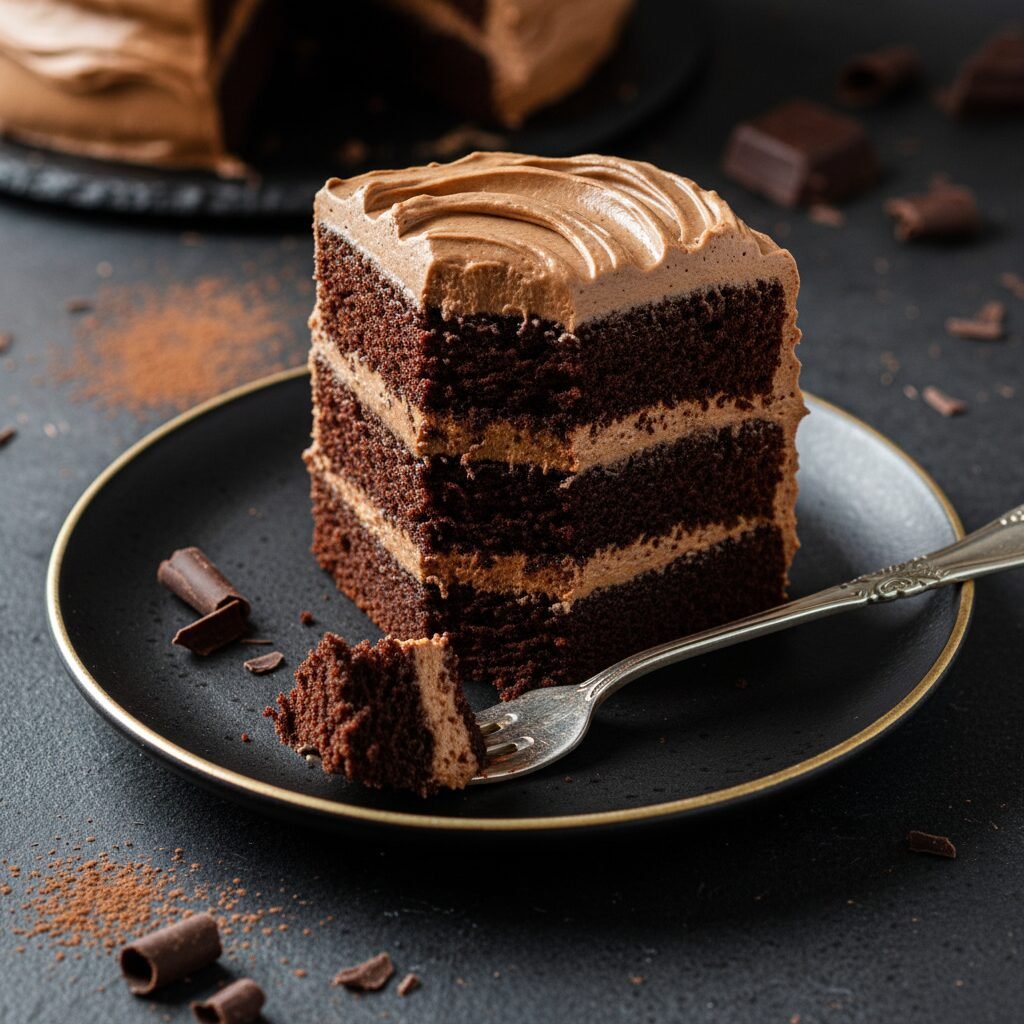
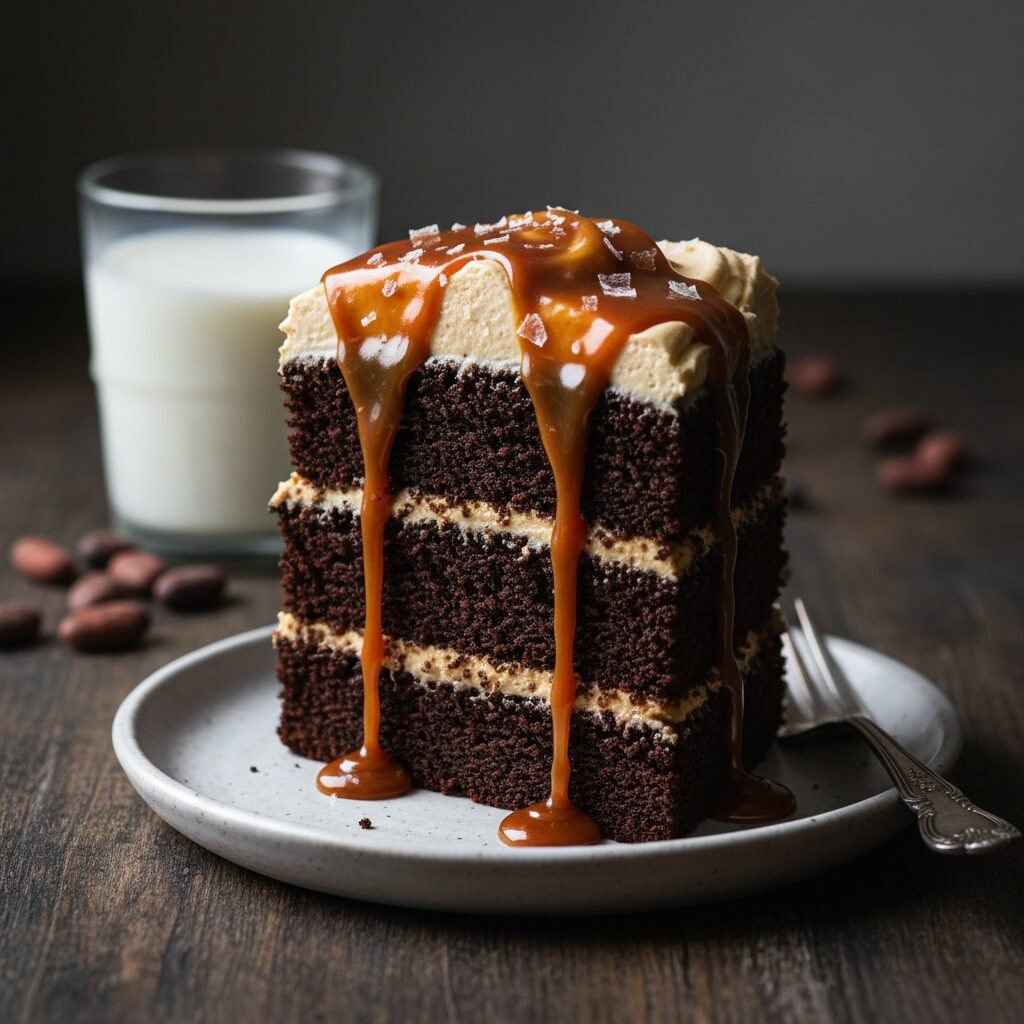
Moist Dark Chocolate Cake With Salted Caramel Frosting Recipe
Discover the perfect balance of decadent richness and savory sweetness with this Moist Dark Chocolate Cake featuring a luxurious Salted Caramel Frosting. This fail-proof recipe guarantees a tender, fudgy crumb every time, making it the ultimate showstopper for birthdays, holidays, or any chocolate lover’s dream dessert.
45 minutes
35 minutes
2 hours 30 minutes
12-14 servings
Dessert
Baking
American
Vegetarian
If there is one recipe that every home baker needs in their arsenal, it is a foolproof, absolutely die-for chocolate cake. But we aren’t talking about just any chocolate cake here. We are talking about a cake so dark, so moist, and so incredibly rich that it borders on a truffle-like experience. This Moist Dark Chocolate Cake with Salted Caramel Frosting is the culmination of years of testing to find the perfect balance between structure and tenderness. The cake base itself is deeply chocolatey, utilizing the ‘blooming’ method with hot coffee to awaken the cocoa powder’s most intense notes. It is not overly sweet, which is intentional, because the magic truly happens when it meets the frosting. The frosting is a masterpiece of flavor engineering: a homemade salted caramel sauce whipped into a fluffy American buttercream. The result is a sophisticated interplay of bitter dark chocolate and buttery, salty-sweet caramel that dances on the palate. Whether you are a seasoned pastry pro or a novice in the kitchen, this recipe is designed to be approachable yet impressive. It is the kind of cake that silences a dinner party after the first bite, leaving only the sound of forks scraping plates. We are diving deep into the science of moisture retention, the art of caramelization, and the joy of assembling a layer cake that looks as good as it tastes. Prepare your stand mixer and clear your countertop, because this is about to become your signature dessert.
History & Origins
The history of chocolate cake is a journey from a gritty beverage to the fluffy confection we know today. While chocolate has been consumed for millennia, primarily by Mesoamerican cultures and later European aristocracy as a drink, the concept of a chocolate ‘cake’ didn’t solidify until the mid-19th century. In 1828, Coenraad van Houten discovered a way to treat cocoa beans with alkaline salts to remove the bitterness (Dutch processing) and created a press to separate cocoa butter from roasted cocoa beans to make cocoa powder. This was the game-changer. However, early chocolate cakes were actually yellow cakes with chocolate frosting. It wasn’t until the 20th century, specifically with the release of The Duff Company’s molasses-based Devil’s Food Cake mixes in the mid-1900s, that the deep, dark cakes became a staple. The addition of boiling water—a technique used in this recipe—hearkens back to old-fashioned ‘wacky cake’ or depression-era recipes where ingredients were scarce, and bakers learned that hot liquid helped disperse cocoa solids more effectively. On the other side of this pairing is Salted Caramel. While caramel is ancient, ‘Salted Caramel’ (Caramel au Beurre Salé) is a relatively modern icon, popularized by French chocolatier Henri Le Roux in Brittany, France, in the late 1970s. He wanted to differentiate his candies using the region’s famous salted butter. The flavor profile exploded in the United States around 2008, becoming a culinary phenomenon. This recipe marries the 20th-century American obsession with moist Devil’s Food style cake with the sophisticated, late-century French innovation of salted caramel.
Why This Recipe Works
This recipe succeeds where many others fail due to three specific chemical interactions: the fat source, the liquid temperature, and the acidity. First, we use vegetable oil instead of butter for the cake batter. While butter adds flavor, it contains water and milk solids that can lead to a drier texture once the cake cools. Oil is 100% fat and remains liquid at room temperature, ensuring the cake stays incredibly moist and soft for days. Second, the addition of boiling hot coffee is non-negotiable. The heat ‘blooms’ the cocoa powder, dissolving the particles completely and releasing flavor compounds that are otherwise trapped. This results in a deeper, more intense chocolate flavor without the chalky texture sometimes found in cocoa-based cakes. The coffee acidity also complements the chocolate without making the cake taste like coffee. Third, the interaction between the acidic buttermilk and the baking soda creates a robust leavening reaction. This provides the necessary lift to support the heavy, wet batter, resulting in a crumb that is dense and fudgy but not heavy or gummy. Finally, the frosting uses a ‘wet caramel’ technique incorporated into the buttercream, which stabilizes the sugar structure, preventing the frosting from weeping while delivering a punch of authentic caramel flavor that extracts simply cannot mimic.
Why You’ll Love This Recipe
- ✓Incredibly moist crumb that stays soft for days.
- ✓Deep, intense chocolate flavor enhanced by hot coffee.
- ✓Homemade salted caramel sauce elevates the buttercream.
- ✓One-bowl batter method for easy cleanup.
- ✓Perfect balance of salty and sweet.
- ✓Stable structure suitable for layer cakes.
Equipment You’ll Need
- ✓Two 8-inch round cake pans
- ✓Stand mixer with paddle attachment or electric hand mixer
- ✓Large mixing bowl
- ✓Medium saucepan (for caramel)
- ✓Whisk
- ✓Wire cooling rack
- ✓Parchment paper
- ✓Offset spatula
- ✓Kitchen scale (highly recommended)
Ingredients
- ✓2 cups (400g) granulated sugar
- ✓1 3/4 cups (220g) all-purpose flour
- ✓3/4 cup (65g) dark unsweetened cocoa powder
- ✓1 1/2 teaspoons baking powder
- ✓1 1/2 teaspoons baking soda
- ✓1 teaspoon fine sea salt
- ✓2 large eggs, room temperature
- ✓1 cup (240ml) whole milk or buttermilk, room temperature
- ✓1/2 cup (120ml) vegetable oil or canola oil
- ✓2 teaspoons pure vanilla extract
- ✓1 cup (240ml) boiling hot coffee (strong brew)
- ✓FOR THE SALTED CARAMEL:
- ✓1 cup (200g) granulated sugar
- ✓6 tablespoons (85g) salted butter, cubed, room temperature
- ✓1/2 cup (120ml) heavy cream, room temperature
- ✓1 teaspoon flaky sea salt (like Maldon)
- ✓FOR THE FROSTING:
- ✓1 cup (226g) unsalted butter, softened to room temperature
- ✓1/2 cup of the prepared salted caramel sauce (cooled)
- ✓3-4 cups (360g-480g) powdered sugar, sifted
- ✓1-2 tablespoons heavy cream (if needed for consistency)
Instructions
- 1. Preheat your oven to 350°F (175°C). Grease two 8-inch round cake pans with butter or cooking spray, line the bottoms with parchment paper, and grease the paper. Dust with a little cocoa powder and tap out the excess.
- 2. In the bowl of a stand mixer or a large bowl, whisk together the sugar, flour, cocoa powder, baking powder, baking soda, and salt until well combined and no lumps remain.
- 3. Add the eggs, buttermilk, oil, and vanilla extract. Beat on medium speed for about 2 minutes. The batter should look smooth and creamy.
- 4. Reduce the mixer speed to the lowest setting. Carefully pour in the boiling hot coffee. Mix just until combined. The batter will be very thin and liquid—this is normal! Do not overmix.
- 5. Divide the batter evenly between the two prepared cake pans. bake for 30-35 minutes, or until a wooden toothpick inserted into the center comes out clean or with just a few moist crumbs attached.
- 6. Remove cakes from the oven and let them cool in the pans for 10 minutes. Then, run a knife around the edges and invert them onto a wire rack to cool completely before frosting.
- 7. While cakes cool, make the caramel. Heat 1 cup granulated sugar in a medium saucepan over medium heat, stirring constantly with a rubber spatula or wooden spoon. The sugar will form clumps and eventually melt into a thick brown, amber-colored liquid as you continue to stir. Be careful not to burn it.
- 8. Once the sugar is completely melted and amber in color, immediately add the 6 tablespoons of butter. Be careful—the mixture will bubble rapidly. Stir until the butter is completely melted and combined (about 2-3 minutes).
- 9. Slowly drizzle in the 1/2 cup of heavy cream while stirring. Since the heavy cream is colder than the caramel, the mixture will rapidly bubble again. Allow the mixture to boil for 1 minute. Remove from heat and stir in the 1 teaspoon of salt. Let cool completely before using in frosting.
- 10. To make the frosting: Beat the softened butter on medium speed until creamy (about 2 minutes). Add 1/2 cup of the cooled salted caramel sauce and beat until combined.
- 11. Gradually add the powdered sugar, one cup at a time, beating on low speed. Once incorporated, increase to high speed and beat for 2-3 minutes until fluffy. If the frosting is too stiff, add a tablespoon of heavy cream. If too soft, add more powdered sugar.
- 12. Assemble the cake: Place one cake layer on your serving stand. Spread a thick layer of frosting over the top. Place the second cake layer on top. Frost the top and sides of the cake. Drizzle with any remaining caramel sauce and sprinkle with extra sea salt flakes if desired.
Expert Cooking Tips
- ✓Use a kitchen scale to weigh your flour and cocoa powder; scooping with a cup often leads to over-measuring and a dry cake.
- ✓Ensure your coffee is boiling hot when you add it; this is crucial for blooming the cocoa.
- ✓Do not open the oven door before the 25-minute mark, or the cakes may sink in the middle.
- ✓Make sure the caramel sauce is completely cool (room temperature) before adding it to the butter, otherwise, it will melt the butter and ruin the frosting.
- ✓If using store-bought buttermilk, shake the container well before measuring.
- ✓Use high-quality cocoa powder (like Valrhona or Ghirardelli) for the best flavor payoff.
- ✓Chill the cake layers for 20 minutes before frosting to reduce crumbs getting into your buttercream.
Substitutions and Variations
Baking is a science, but there is some room for flexibility in this recipe. For the flour, you can use a high-quality 1:1 gluten-free baking flour blend (one that contains xanthan gum) to make this gluten-free. If you do not have buttermilk, you can make a ‘sour milk’ substitute by adding 1 tablespoon of white vinegar or lemon juice to a measuring cup and filling it the rest of the way with whole milk; let it sit for 5 minutes before using. For the oil, melted coconut oil or melted butter can be used, though vegetable or canola oil yields the moistest texture. If you are sensitive to caffeine or serving this to children, you can use decaffeinated coffee or simply boiling water. The coffee flavor is subtle, but boiling water works fine if necessary. For the frosting, if you find American buttercream too sweet, you could fold the cooled caramel into a Swiss Meringue Buttercream instead for a silkier, less sugary finish.
Common Mistakes to Avoid
The most common mistake with this cake is over-baking. Because the batter is dark, it is hard to see visual cues of doneness. Rely on the toothpick test and check at the 30-minute mark. Another frequent error is adding the coffee when it is lukewarm; it must be hot to interact properly with the cocoa. regarding the caramel, walking away from the stove is a recipe for disaster; sugar goes from amber to burnt in seconds. Watch it like a hawk. When making the frosting, if your butter is too soft or melted, the frosting will be soupy. If the caramel is still warm, it will also melt the butter. Patience is key—ensure all components are at the correct temperature. Finally, do not try to frost a warm cake. The layers will slide off, and the frosting will dissolve into a glaze.
Serving Suggestions
This cake is rich, so thin slices go a long way. It is best served at room temperature where the frosting is soft and the cake is most tender. A scoop of high-quality vanilla bean ice cream cuts through the richness perfectly. For a sophisticated touch, serve with a shot of hot espresso or a glass of cold milk. You can garnish the cake with chocolate shavings, pretzels for extra crunch, or a drizzle of extra caramel sauce right before serving. If serving for a holiday, edible gold leaf placed gently on the caramel drizzle adds a stunning festive touch.
Storage and Reheating Tips
Because of the sugar content and fat, this cake keeps surprisingly well. You can store the frosted cake at room temperature in a cake keeper or under a glass dome for up to 3 days. If your kitchen is particularly hot, or if you want to keep it longer, store it in the refrigerator for up to 5 days. However, always let the cake sit on the counter for at least an hour before serving to bring the buttercream back to a creamy consistency. For freezing, you can freeze individual slices wrapped tightly in plastic wrap and then foil for up to 2 months. Thaw in the fridge overnight or on the counter for an hour. Unfrosted cake layers can be wrapped in plastic and frozen for up to 3 months.
Nutrition Facts (Estimated)
| Serving Size | 1 slice |
| Calories | 680 |
| Fat | 34g |
| Saturated Fat | 14g |
| Unsaturated Fat | 18g |
| Trans Fat | 0g |
| Cholesterol | 85mg |
| Sodium | 420mg |
| Carbohydrates | 88g |
| Fiber | 4g |
| Sugar | 52g |
| Protein | 6g |
Frequently Asked Questions
Can I use Dutch-process cocoa powder?
Yes, but natural cocoa powder reacts better with the baking soda in this recipe to provide lift. If you use Dutch-process, the cake might be slightly denser but darker in color.
Why is my batter so runny?
This is completely normal! The high liquid content (milk, oil, coffee) ensures a moist cake. Do not add more flour; trust the recipe.
Can I make this into cupcakes?
Absolutely. This recipe yields about 24-28 cupcakes. Bake them at 350°F for 18-22 minutes.
My caramel crystallized (became grainy). What happened?
This usually happens if undissolved sugar crystals on the side of the pot get mixed into the melting sugar. To prevent this, you can brush the sides of the pot with a wet pastry brush while the sugar melts, and avoid stirring too vigorously once it starts boiling.
Can I use store-bought caramel sauce?
You can, but store-bought sauces are often thinner and sweeter. If you do, try to find a ‘thick’ jarred caramel or dulce de leche so it doesn’t make the frosting too runny.
Do I have to use coffee?
You don’t have to, but it is highly recommended for the best chocolate flavor. You can substitute it with boiling water, and the cake will still be delicious.
Can I bake this in a 9×13 pan?
Yes, grease a 9×13 pan and bake for approximately 35-45 minutes. Check with a toothpick starting at 35 minutes.
Why did my cake sink in the middle?
This is usually caused by opening the oven door too early (releasing heat) or under-baking. It can also happen if your baking powder/soda is expired.
How do I fix broken (curdled) buttercream?
If the frosting looks curdled, the butter was likely too cold or the caramel too cold. Keep beating on high speed; it often comes back together. If not, warm the bowl slightly with a hairdryer while mixing.
Is the raw egg in the batter safe?
The eggs are fully cooked during the baking process, so the final cake is perfectly safe to eat.
Conclusion
There is something profoundly comforting about a slice of homemade chocolate cake. It is a universal language of care and celebration. This Moist Dark Chocolate Cake with Salted Caramel Frosting is more than just a dessert; it is a reliable friend that you can call upon for birthdays, anniversaries, or simply a Tuesday night that needs a little lifting. The contrast of the dark, coffee-infused sponge with the buttery, salty sweetness of the caramel is a flavor profile that never gets old. We hope this recipe brings as much joy to your kitchen as it has to ours. Don’t be intimidated by the caramel or the boiling water—follow the steps, trust the process, and get ready to enjoy the best chocolate cake you have ever tasted. Happy baking!