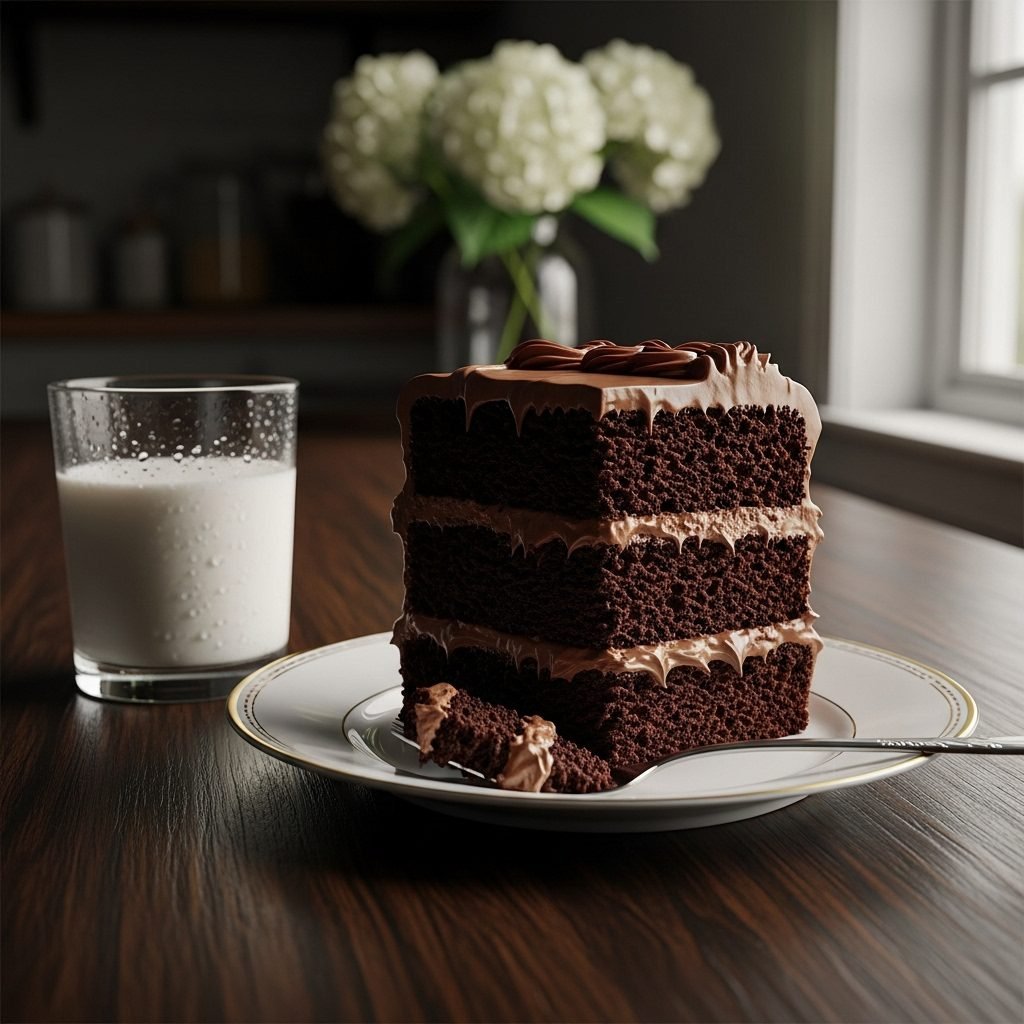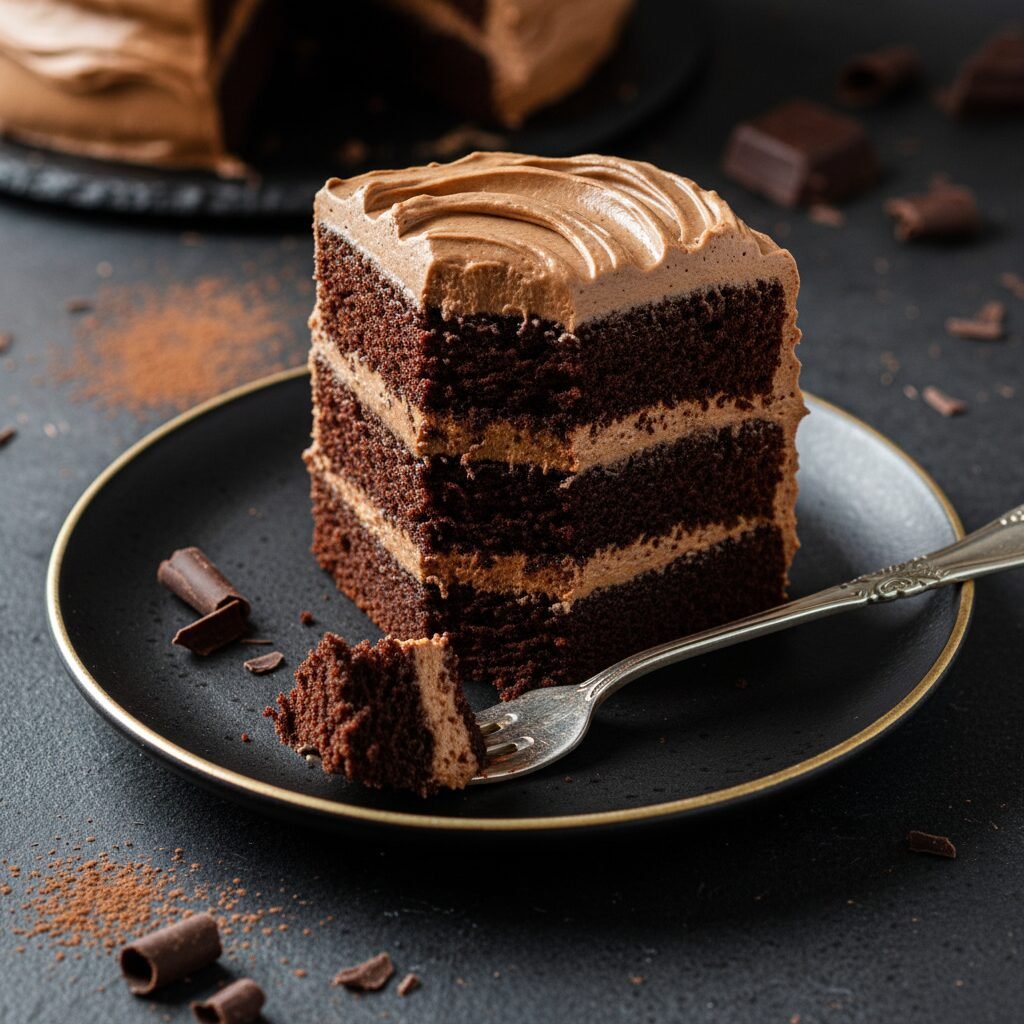
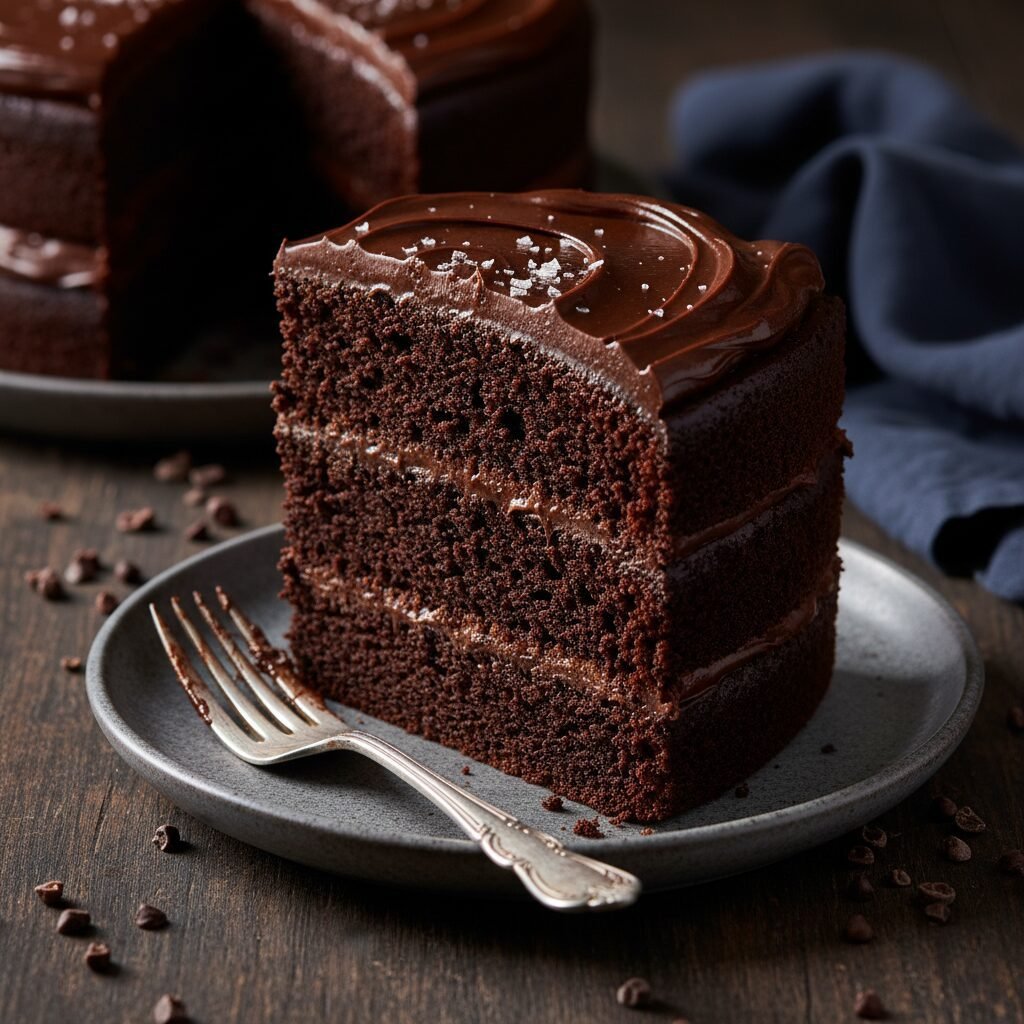
Moist Dark Chocolate Cake With Sour Cream Recipe
Unlock the secret to the richest, most velvety chocolate cake you will ever taste. This recipe utilizes full-fat sour cream to ensure every bite is incredibly moist and decadent, making it the undisputed centerpiece for birthdays, anniversaries, or any chocolate lover’s dream dessert.
20 minutes
35 minutes
55 minutes
12-14 servings
Dessert
Baking
American
Vegetarian
There is something undeniably magical about a truly great chocolate cake. It is the quintessential comfort food, a symbol of celebration, and often the yardstick by which home bakers measure their prowess. However, the quest for the perfect chocolate cake is often fraught with disappointment—dry crumbs, lackluster flavor, or a texture that feels more like bread than a decadent dessert. Enter the Moist Dark Chocolate Cake with Sour Cream. This isn’t just another recipe; it is a masterclass in texture and depth of flavor. The addition of sour cream is the game-changer here, transforming a standard batter into a luxurious, fudgy masterpiece that melts in your mouth.
When you take your first bite, you are greeted with an intense hit of dark chocolate, not overly sweet, but deeply complex. This is quickly followed by the sensation of the crumb—tender, springy, and undeniably moist without being heavy or dense. It bridges the gap between a light sponge and a dense brownie, offering the best of both worlds. The beauty of this recipe lies not just in the eating, but in the baking process itself. As the batter comes together, glossy and rich, and the aroma of blooming cocoa fills your kitchen, you know you are creating something special. Whether you are a seasoned baker looking to update your repertoire or a novice wanting to impress guests with a bakery-quality creation, this cake delivers every single time. It pairs perfectly with a simple ganache or a fluffy buttercream, but honestly, the cake itself is so flavorful it could stand alone. Prepare to ruin all other chocolate cakes for yourself, because once you try this sour cream version, there is simply no going back.
History & Origins
The history of chocolate cake is a journey that mirrors the evolution of modern baking technology and the availability of ingredients. While chocolate has been consumed as a beverage for millennia, starting with Mesoamerican civilizations, the concept of a ‘chocolate cake’ as we know it is a relatively recent invention. Until the mid-19th century, chocolate was primarily a drink. It wasn’t until 1828, when Coenraad van Houten learned how to mechanically extract fat from cacao liquor to produce cocoa butter and cocoa powder, that baking with chocolate became feasible.
The earliest chocolate cakes were actually yellow cakes with chocolate frosting. It wasn’t until the late 1800s and early 1900s that recipes for ‘Devil’s Food Cake’ began to appear in American cookbooks. These early iterations were distinct from the sponge cakes of the time, utilizing baking soda and hot liquid to create a darker, reddish hue and a softer texture. The inclusion of cultured dairy products like sour cream and buttermilk became particularly popular in the United States during the mid-20th century.
This shift was driven partly by the influence of Eastern European immigrants who brought a tradition of baking with soured dairy, and partly by the widespread availability of refrigeration. Home economists and food companies in the 1940s and 50s began marketing ‘sour cream chocolate cakes’ as a way to use up leftover dairy and ensure a moist product that stayed fresh longer. This era solidified the sour cream chocolate cake as an American classic, turning it into a staple for church potlucks, diners, and birthday parties across the nation. Today, it remains a testament to the power of simple chemistry in the kitchen, proving that an acidic dairy ingredient is the key to unlocking the perfect crumb.
Why This Recipe Works
The science behind why this specific recipe yields such superior results lies in the chemical interaction between the ingredients, specifically the role of fat and acidity. First and foremost, sour cream is the hero ingredient. It has a high fat content, which shortens gluten strands. In baking terms, ‘shortening’ gluten prevents the cake from becoming tough or chewy, resulting in that tender, melt-in-your-mouth texture we all crave. Furthermore, sour cream is acidic. This acidity is crucial because it reacts vigorously with the baking soda. This reaction produces carbon dioxide gas, which creates lift and leavening, ensuring the cake rises beautifully despite its heavy, rich ingredients.
Secondly, this recipe uses oil instead of butter for the cake batter. While butter provides flavor, it is about 20% water and solidifies at room temperature. Vegetable oil is 100% fat and remains liquid at room temperature. This means the cake stays sensationally moist and soft for days, whereas butter-based cakes can dry out faster. Finally, the inclusion of hot coffee is not to make the cake taste like java, but to ‘bloom’ the cocoa powder. Pouring hot liquid over cocoa dissolves the particles more effectively and releases flavor compounds that are otherwise locked away, resulting in a chocolate flavor that is robust, deep, and intense rather than dusty or mild. The combination of these three factors—acidic tenderizing, oil-based moisture, and thermal flavor release—creates a foolproof formula for perfection.
Why You’ll Love This Recipe
- ✓Uses sour cream for an impossibly moist and tender crumb.
- ✓Hot coffee blooms the cocoa for an intense, deep chocolate flavor.
- ✓Stays fresh and soft for days thanks to the oil-based batter.
- ✓Simple one-bowl mixing method requires no creaming of butter.
- ✓Versatile base that pairs with ganache, buttercream, or fruit.
Equipment You’ll Need
- ✓Two 9-inch round cake pans
- ✓Large mixing bowl
- ✓Whisk
- ✓Electric Hand Mixer or Stand Mixer
- ✓Rubber Spatula
- ✓Measuring cups and spoons
- ✓Wire cooling rack
- ✓Parchment paper
Ingredients
- ✓2 cups granulated sugar
- ✓1 3/4 cups all-purpose flour
- ✓3/4 cup dark unsweetened cocoa powder
- ✓1 1/2 teaspoons baking powder
- ✓1 1/2 teaspoons baking soda
- ✓1 teaspoon salt
- ✓2 large eggs, room temperature
- ✓1 cup full-fat sour cream, room temperature
- ✓1/2 cup vegetable oil (or canola oil)
- ✓2 teaspoons pure vanilla extract
- ✓1 cup boiling hot strong coffee (decaf is fine)
Instructions
- Preheat your oven to 350°F (175°C). Grease two 9-inch round cake pans with butter or cooking spray and line the bottoms with parchment paper for easy removal.
- In a large mixing bowl (or the bowl of a stand mixer), whisk together the sugar, flour, cocoa powder, baking powder, baking soda, and salt until well combined and no lumps remain.
- Add the eggs, sour cream, vegetable oil, and vanilla extract to the dry ingredients.
- Mix on medium speed with an electric mixer for about 2 minutes. The batter will be thick and glossy at this stage.
- Reduce the mixer speed to low and carefully pour in the boiling hot coffee. Mix just until combined. Note: The batter will be very thin and liquid; this is completely normal and essential for moisture.
- Divide the batter evenly between the two prepared cake pans.
- Bake in the preheated oven for 30 to 35 minutes. Test for doneness by inserting a wooden toothpick into the center of the cake; it should come out clean or with just a few moist crumbs attached.
- Remove the cakes from the oven and let them cool in the pans for about 10 minutes. This allows them to set slightly before moving.
- Run a knife around the edges to loosen, then carefully invert the cakes onto a wire cooling rack to cool completely before frosting.
Expert Cooking Tips
- ✓Do not over-bake! Start checking the cake at the 30-minute mark. Over-baking is the number one cause of dry cake.
- ✓Use room temperature eggs and sour cream. This ensures they emulsify properly into the batter for a uniform texture.
- ✓Sift your cocoa powder if it looks lumpy. Clumps of dry cocoa can create bitter pockets in the final cake.
- ✓Don’t skip the hot coffee. If you absolutely cannot use coffee, use boiling water, but the coffee truly enhances the chocolate flavor without adding a coffee taste.
- ✓Let the cakes cool completely before frosting. If they are even slightly warm, your frosting will slide right off.
- ✓Use high-quality cocoa powder. Since chocolate is the main flavor, a premium Dutch-processed or dark cocoa makes a huge difference.
Substitutions and Variations
This recipe is quite robust, but there are some substitutions you can make if necessary. If you don’t have sour cream, full-fat plain Greek yogurt is the best alternative as it mimics the acidity and thickness closely. You can also use buttermilk; however, since buttermilk is thinner, you may need to slightly reduce the amount of coffee/water by a tablespoon or two to maintain batter consistency. For the oil, melted coconut oil or melted butter can work, but remember that butter will make the cake slightly denser and it may dry out faster than oil-based cakes. If you are avoiding caffeine, decaf coffee works perfectly, or you can simply use boiling water. However, the depth of flavor provided by the coffee will be missed. For a gluten-free version, substitute the all-purpose flour with a high-quality 1:1 gluten-free baking flour blend that contains xanthan gum.
Common Mistakes to Avoid
The most common mistake with this recipe is panicking when the batter looks runny. After adding the hot liquid, the batter will be very thin, almost like a soup. Many bakers instinctively want to add more flour, thinking something went wrong. Do not add more flour! The thin batter allows the steam to escape slowly and creates that ultra-moist texture. Another mistake is opening the oven door too early. This can cause the temperature to drop and the cakes to sink in the middle. Wait until at least 25 minutes have passed before peeking. Finally, using cold ingredients is a frequent error. Cold eggs and sour cream don’t mix as easily with the oil, leading to a batter that isn’t properly emulsified, which can result in an uneven bake.
Serving Suggestions
This cake is incredibly versatile in how it can be served. For a classic approach, frost it with a dark chocolate ganache or a silky chocolate buttercream. If you want to cut through the richness, a tangy cream cheese frosting pairs beautifully with the dark chocolate. For a lighter dessert, simply dust the cooled cake with powdered sugar and serve slices with a dollop of freshly whipped cream and fresh raspberries or strawberries. A scoop of vanilla bean ice cream is also a fantastic accompaniment, especially if you warm the slice slightly in the microwave for 10 seconds before serving.
Storage and Reheating Tips
Because this cake is oil-based and contains sour cream, it has excellent staying power. You can store the frosted cake at room temperature, covered with a cake dome, for up to 3 days. If your kitchen is particularly hot or humid, or if you use a cream cheese frosting, store it in the refrigerator for up to 5 days. Allow refrigerated slices to come to room temperature before eating for the best texture and flavor release. To freeze, wrap unfrosted cake layers tightly in plastic wrap, followed by a layer of aluminum foil. They can be frozen for up to 3 months. Thaw in the refrigerator overnight before frosting.
Nutrition Facts (Estimated)
| Serving Size | 1 slice |
| Calories | 480 |
| Fat | 28g |
| Saturated Fat | 9g |
| Unsaturated Fat | 18g |
| Trans Fat | 0g |
| Cholesterol | 65mg |
| Sodium | 320mg |
| Carbohydrates | 58g |
| Fiber | 4g |
| Sugar | 35g |
| Protein | 6g |
Frequently Asked Questions
Can I use regular milk instead of sour cream?
No, regular milk is too thin and lacks the acidity required to react with the baking soda properly. If you are out of sour cream, make a homemade buttermilk substitute by adding a tablespoon of vinegar or lemon juice to a cup of milk and letting it sit for 5 minutes.
Will the cake taste like coffee?
Not at all. The coffee serves to intensify the chocolate flavor. The final product will just taste like very rich, high-quality chocolate. Even people who dislike coffee love this cake.
Why did my cake sink in the middle?
Cakes usually sink because they were underbaked (the structure didn’t set), the oven door was opened too early, or there was too much leavening agent (baking soda/powder) measured. Ensure your oven temperature is accurate using an oven thermometer.
Can I make this recipe into cupcakes?
Yes! This batter makes excellent cupcakes. Line a muffin tin with liners and fill them about 2/3 full. Bake at 350°F for 18-22 minutes. This recipe yields approximately 24-30 cupcakes.
Can I use Dutch-processed cocoa powder?
Yes, you can. This recipe uses both baking powder and baking soda, so it generally works well with both natural and Dutch-processed cocoa. Dutch-processed will give a darker color and a more mellow, fudgy flavor.
How do I get the cake out of the pan without it sticking?
The most reliable method is to grease the pan, place a parchment paper circle in the bottom, and then grease the parchment and sides. Dusting with cocoa powder instead of flour also prevents white streaks on your dark cake.
Can I reduce the sugar amount?
Sugar provides moisture and structure, not just sweetness. Reducing it significantly will alter the texture, making the cake drier and denser. You could reduce it by maybe 1/4 cup, but any more is risky.
Why is my cake dry?
Dry cake is almost always a result of over-baking or measuring flour incorrectly. Always spoon your flour into the measuring cup and level it off, rather than scooping directly from the bag, which packs the flour down.
Conclusion
In the world of desserts, few things are as universally loved as a perfect slice of chocolate cake. This Moist Dark Chocolate Cake with Sour Cream recipe is more than just a set of instructions; it’s a guarantee of dessert success. From the ease of the one-bowl preparation to the sophisticated depth of flavor achieved by the coffee and sour cream, every element is designed to delight. Whether you are celebrating a major milestone or simply treating yourself after a long week, this cake brings a sense of warmth and indulgence that store-bought desserts simply cannot match. Bake it once, and you will likely find yourself designated as the official cake baker for all future family gatherings. Enjoy the process, savor the aroma, and most importantly, enjoy every decadent bite.