Moist Almond Cake With Nut Crumble Topping Recipe
Experience the perfect marriage of a tender, buttery crumb and a satisfyingly crunchy nut topping with this Moist Almond Cake recipe. Perfectly sweetened and infused with aromatic almond extract, this cake is an ideal companion for your morning coffee or an elegant afternoon tea. It comes together in under an hour and stays incredibly moist for days.
20 minutes
40 minutes
60 minutes
1 9-inch cake (8-10 servings)
Dessert / Coffee Cake
Baking
American / European Fusion
Vegetarian
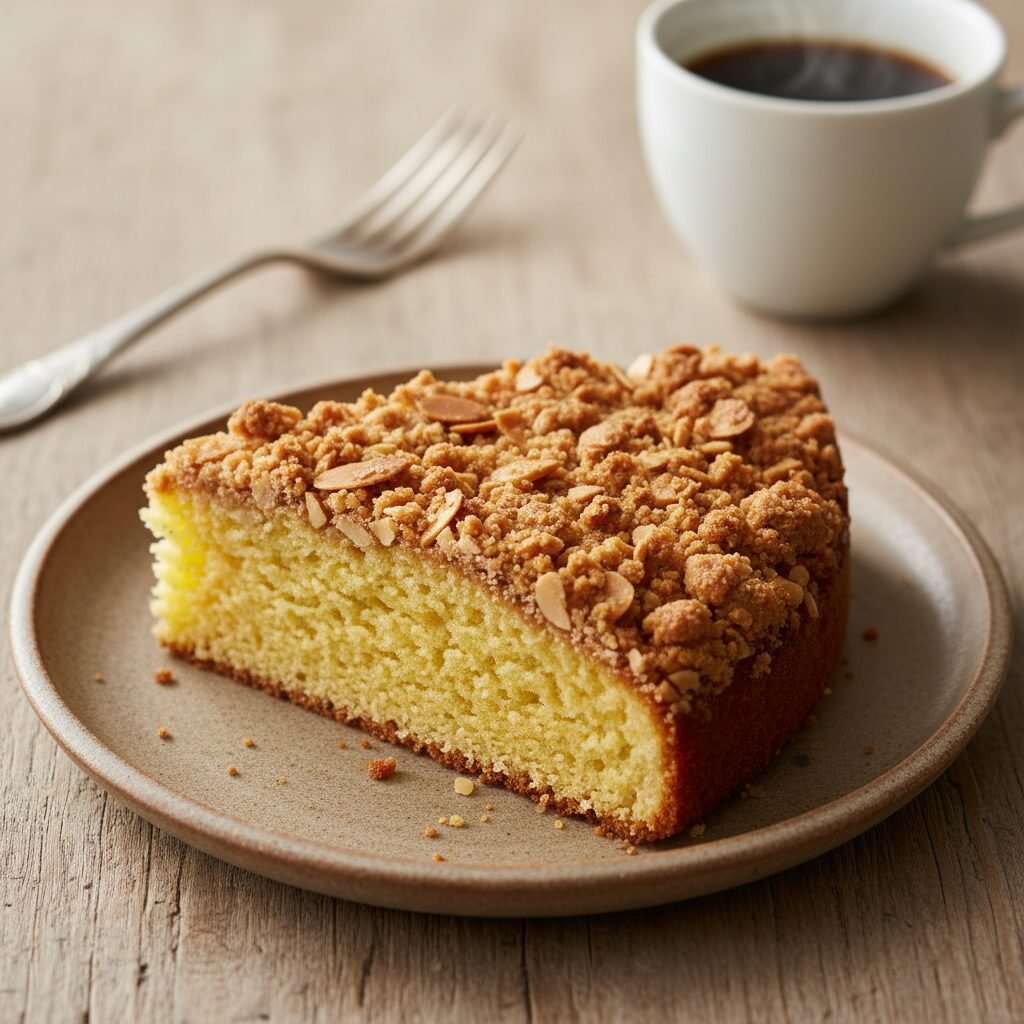
There is something profoundly comforting about a cake that doesn’t require layers of frosting or complex assembly to steal the show. This Moist Almond Cake with Nut Crumble Topping is the epitome of understated elegance and rustic charm. It is the kind of recipe that fills your kitchen with the intoxicating aroma of toasted nuts, butter, and warm vanilla, instantly making a house feel like a home. The beauty of this cake lies in its texture. We often overuse the word ‘moist’ in the baking world, but here, it is the only descriptor that fits. Thanks to the inclusion of almond flour and sour cream in the batter, the crumb achieves a dense, velvety tenderness that melts in your mouth, distinct from the airy dryness of a standard sponge. But a great cake is all about contrast. To offset that soft interior, we top it with a generous layer of nut crumble—a rugged terrain of chopped almonds, brown sugar, and butter that bakes into a golden, shattering crust. This isn’t just a dessert; it’s a versatile treat that bridges the gap between a decadent breakfast pastry and a sophisticated after-dinner sweet. Whether you are an experienced baker looking for a reliable staple or a novice wanting to impress without stress, this recipe delivers high-impact flavor with surprisingly simple technique. It captures the essence of European coffee house culture, bringing a slice of luxury right to your kitchen table.
History & Origins
The tradition of using almonds in baking is ancient and storied, tracing its roots back to the Middle East where almonds were first cultivated. As trade routes expanded, almonds became a prized ingredient in Mediterranean cuisine, particularly in Spain and Italy. In the Middle Ages, almond milk and almond meal were staples in aristocratic kitchens, often used as thickeners or bases for rich desserts. This specific style of almond cake draws inspiration from several European classics. It shares DNA with the French ‘Financier,’ a small almond cake named for its resemblance to a gold bar, and the Spanish ‘Tarta de Santiago,’ a gluten-free almond cake marked with the cross of St. James. However, the addition of a ‘crumble’ or ‘streusel’ topping is a distinctly Central European contribution, popularized in German baking traditions with ‘Streuselkuchen.’ When these traditions migrated to the United States, they evolved into what we now affectionately call ‘coffee cake’—not necessarily containing coffee, but designed to be eaten alongside it. The American evolution of this dish saw the introduction of chemical leaveners like baking powder and the addition of dairy products like sour cream or buttermilk to ensure a shelf-stable moistness that the denser, egg-heavy European originals sometimes lacked. This recipe represents a modern fusion of these histories: the nutty richness of the Mediterranean, the textured topping of the German bakery, and the tender, moist crumb beloved in American home baking.
Why This Recipe Works
This recipe succeeds where many others fail due to a precise balance of fat, acidity, and protein structure. First, the use of almond flour alongside all-purpose flour is critical. Almond flour is high in fat and low in gluten; when mixed into the batter, it physically interrupts the gluten strands formed by the wheat flour. This ensures the cake cannot become tough or rubbery, even if slightly over-mixed, resulting in a consistently tender bite. Secondly, the inclusion of sour cream is a game-changer. The acidity in the sour cream reacts with the baking soda to create carbon dioxide, giving the cake a superior lift, while the extra fat content coats the flour particles, locking in moisture for days. Unlike milk, which evaporates quickly during baking, the heavy creaminess of sour cream remains in the crumb. Finally, the crumble topping works because of the ‘cold butter’ technique. By cutting cold butter into the sugar and nuts rather than melting it, we ensure that the topping maintains its structural integrity in the oven. Instead of melting into a greasy puddle, the butter steams within the flour and sugar mixture, creating pockets of air that result in that desirable jagged, crunchy texture that contrasts so perfectly with the soft cake beneath.
Why You’ll Love This Recipe
- ✓Incredibly moist texture that lasts for days thanks to sour cream and almond flour.
- ✓A crunchy, buttery nut topping that eliminates the need for frosting.
- ✓Simple preparation using standard pantry staples and basic equipment.
- ✓Versatile enough for breakfast, brunch, or dessert.
- ✓Freezes beautifully for make-ahead meal prep.
- ✓Rich, aromatic almond flavor without being overpowering.
Equipment You’ll Need
- ✓9-inch Springform Pan or Round Cake Pan
- ✓Stand Mixer or Hand Mixer
- ✓Large Mixing Bowl
- ✓Medium Mixing Bowl
- ✓Whisk
- ✓Rubber Spatula
- ✓Measuring Cups and Spoons
- ✓Wire Cooling Rack
Ingredients
- ✓1.5 cups All-Purpose Flour
- ✓1 cup Super-Fine Almond Flour
- ✓1 tsp Baking Powder
- ✓0.5 tsp Baking Soda
- ✓0.5 tsp Salt
- ✓0.5 cup Unsalted Butter, softened
- ✓1 cup Granulated Sugar
- ✓2 Large Eggs, room temperature
- ✓1 tsp Pure Almond Extract
- ✓1 tsp Vanilla Extract
- ✓0.5 cup Full-Fat Sour Cream or Greek Yogurt
- ✓FOR THE TOPPING: 0.5 cup Chopped Raw Almonds
- ✓0.3 cup Light Brown Sugar, packed
- ✓2 tbsp All-Purpose Flour
- ✓2 tbsp Cold Unsalted Butter, cubed
- ✓0.5 tsp Ground Cinnamon
Instructions
- 1. Preheat your oven to 350 degrees F (175 degrees C). Grease a 9-inch springform pan generously with butter and line the bottom with parchment paper for easy removal.
- 2. In a medium bowl, whisk together the 1.5 cups all-purpose flour, 1 cup almond flour, baking powder, baking soda, and salt. Ensure there are no clumps of almond flour. Set aside.
- 3. In the bowl of a stand mixer fitted with the paddle attachment (or a large bowl with a hand mixer), beat the softened butter and granulated sugar on medium-high speed for 3-4 minutes until pale and fluffy. This aeration step is crucial for a light cake.
- 4. Add the eggs one at a time, beating well after each addition. Scrape down the sides of the bowl. Mix in the almond extract and vanilla extract.
- 5. Reduce the mixer speed to low. Add half of the flour mixture to the wet ingredients, mixing just until combined.
- 6. Add the sour cream and mix until incorporated. Then, add the remaining flour mixture, mixing only until no streaks of dry flour remain. Do not overmix.
- 7. Pour the thick batter into the prepared pan and smooth the top with a rubber spatula.
- 8. Prepare the topping: In a small bowl, combine the chopped almonds, brown sugar, 2 tablespoons flour, and cinnamon. Cut in the cold cubed butter using your fingers or a fork until the mixture resembles coarse crumbs.
- 9. Sprinkle the nut crumble evenly over the top of the cake batter.
- 10. Bake for 35-45 minutes, or until a toothpick inserted into the center comes out clean or with just a few moist crumbs attached. The top should be golden brown.
- 11. Allow the cake to cool in the pan for 10 minutes, then run a knife around the edge and release the springform ring. Transfer to a wire rack to cool completely before slicing.
Expert Cooking Tips
- ✓Use room temperature ingredients (eggs, sour cream, butter) for the cake batter to ensure an emulsion forms properly, which leads to a better rise.
- ✓Toast the nuts for the topping briefly in a dry pan before mixing them with sugar for a deeper, nuttier flavor profile.
- ✓Do not skip the parchment paper; almond flour cakes can be slightly stickier than regular cakes.
- ✓If the top is browning too quickly before the center is set, tent the cake loosely with aluminum foil for the last 10 minutes of baking.
- ✓Use ‘super-fine’ almond flour rather than almond meal for a lighter, less gritty texture.
Substitutions and Variations
This recipe is quite adaptable to various dietary needs and pantry limitations. If you do not have sour cream, full-fat plain Greek yogurt is an excellent 1:1 substitution that provides the same tang and moisture. For a dairy-free version, you can use a high-quality plant-based butter and a coconut yogurt or dairy-free sour cream alternative. While almond extract gives the signature flavor, you can double the vanilla extract if you prefer a milder taste or have a nut allergy (assuming you omit the nuts in the topping as well). For the flour, a gluten-free 1:1 baking flour blend works remarkably well in this recipe because the almond flour already reduces the reliance on gluten structure. If you don’t have almonds for the topping, pecans, walnuts, or even hazelnuts make delicious alternatives. Brown sugar in the topping can be swapped for coconut sugar or granulated sugar, though brown sugar yields the best crunch.
Common Mistakes to Avoid
The most common mistake with this cake is over-mixing the batter after adding the flour. Once the wet and dry ingredients meet, gluten begins to develop. If you mix too vigorously, the cake will become tough and dense rather than tender. Stop mixing as soon as the white flour streaks disappear. Another frequent error is using melted butter instead of softened butter for the creaming stage; melted butter will not trap air bubbles, resulting in a flat, greasy cake. Similarly, using melted butter for the crumble topping will cause it to spread and flatten; the butter must be cold and cubed to create those distinct crunchy crumbs. Finally, avoid opening the oven door frequently during the first 20 minutes of baking, as the fluctuation in temperature can cause the cake to sink in the middle.
Serving Suggestions
This cake is best served slightly warm or at room temperature. It pairs exceptionally well with a dollop of lightly sweetened whipped cream or a scoop of vanilla bean ice cream for dessert. For a breakfast or brunch setting, serve it alongside a strong espresso or a cup of Earl Grey tea to cut through the richness. A dusting of powdered sugar right before serving adds a professional bakery finish. If you want to elevate the presentation for a dinner party, add a side of fresh berries or a warm apricot glaze brushed over the crumble topping.
Storage and Reheating Tips
Because of the high moisture content from the almond flour and sour cream, this cake stores beautifully. Keep it in an airtight container at room temperature for up to 3 days; it often tastes even better on the second day as the flavors meld. For longer storage, refrigerate for up to 1 week, though bring it to room temperature before eating for the best texture. To freeze, wrap individual slices or the whole cooled cake tightly in plastic wrap, followed by a layer of aluminum foil. It can be frozen for up to 3 months. Thaw overnight in the refrigerator or on the counter for a few hours before serving.
Nutrition Facts (Estimated)
| Serving Size | 1 slice |
| Calories | 380 |
| Fat | 24g |
| Saturated Fat | 10g |
| Unsaturated Fat | 12g |
| Trans Fat | 0g |
| Cholesterol | 65mg |
| Sodium | 180mg |
| Carbohydrates | 36g |
| Fiber | 3g |
| Sugar | 22g |
| Protein | 8g |
Frequently Asked Questions
Can I use almond meal instead of almond flour?
Yes, but the texture will be different. Almond meal includes the skins of the almonds, resulting in a darker, coarser, and denser cake. Super-fine blanched almond flour is recommended for a fluffy, light crumb.
Why did my crumble topping sink into the cake?
This usually happens if the batter is too thin or if the topping pieces are too heavy and large. Ensure your batter is thick (spoonable, not pourable) and chop your nuts into manageable pieces. Also, don’t press the topping down; just sprinkle it lightly.
Can I make this cake in a loaf pan?
Absolutely. A 9×5 inch loaf pan works well. You will likely need to increase the baking time to 50-60 minutes since the batter is deeper. Check for doneness with a toothpick.
Is this recipe gluten-free?
Not as written, because it uses all-purpose wheat flour. However, you can successfully substitute the AP flour with a high-quality Gluten-Free 1-to-1 Baking Flour blend.
Can I reduce the sugar in this recipe?
You can reduce the sugar in the cake batter by about 1/4 cup without ruining the structure, but reducing it further may affect the moisture and tenderness. The sugar in the topping is essential for the crunch.
What if I don’t have a springform pan?
A standard 9-inch round cake pan or even a square 8×8 inch baking dish works fine. Just be sure to line it with parchment paper leaving an overhang so you can lift the cake out easily.
Can I use oil instead of butter?
It is not recommended for this specific recipe. The creaming of butter and sugar provides essential aeration. Oil would make the cake denser and you would lose the buttery flavor profile.
How do I know when the cake is exactly done?
The top should be golden brown and spring back slightly when pressed. A toothpick inserted into the center should come out clean or with a few moist crumbs, but no wet batter.
Conclusion
In a world of complicated confections and multi-step patisserie projects, this Moist Almond Cake with Nut Crumble Topping stands out as a beacon of simplicity and satisfaction. It proves that you don’t need fancy techniques to create something truly spectacular. The interplay of the tender, almond-scented crumb with the sweet, jagged crunch of the topping creates a sensory experience that is hard to beat. Whether you are baking for a holiday gathering, a casual brunch, or just a quiet moment of self-care, this recipe promises to deliver comfort in every bite. We hope this cake becomes a cherished part of your baking repertoire, bringing warmth and sweetness to your table for years to come.