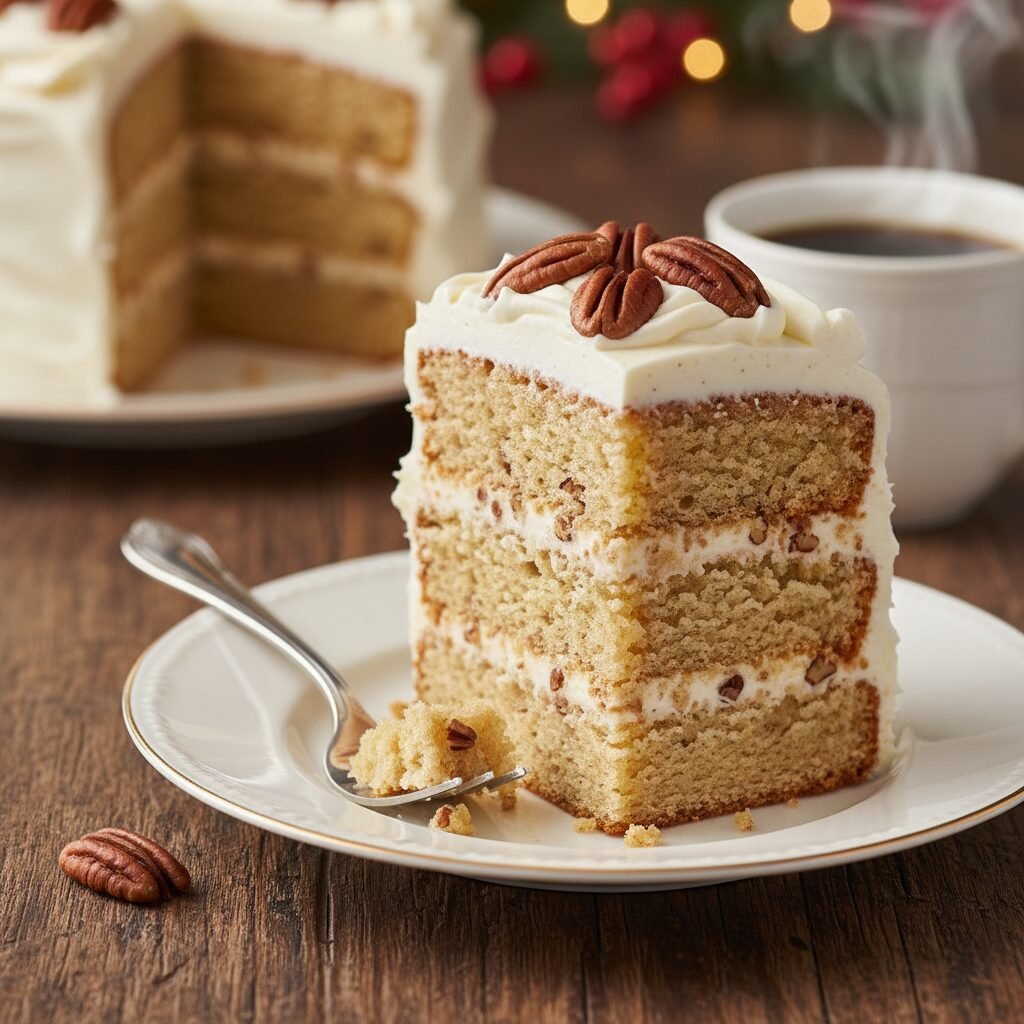
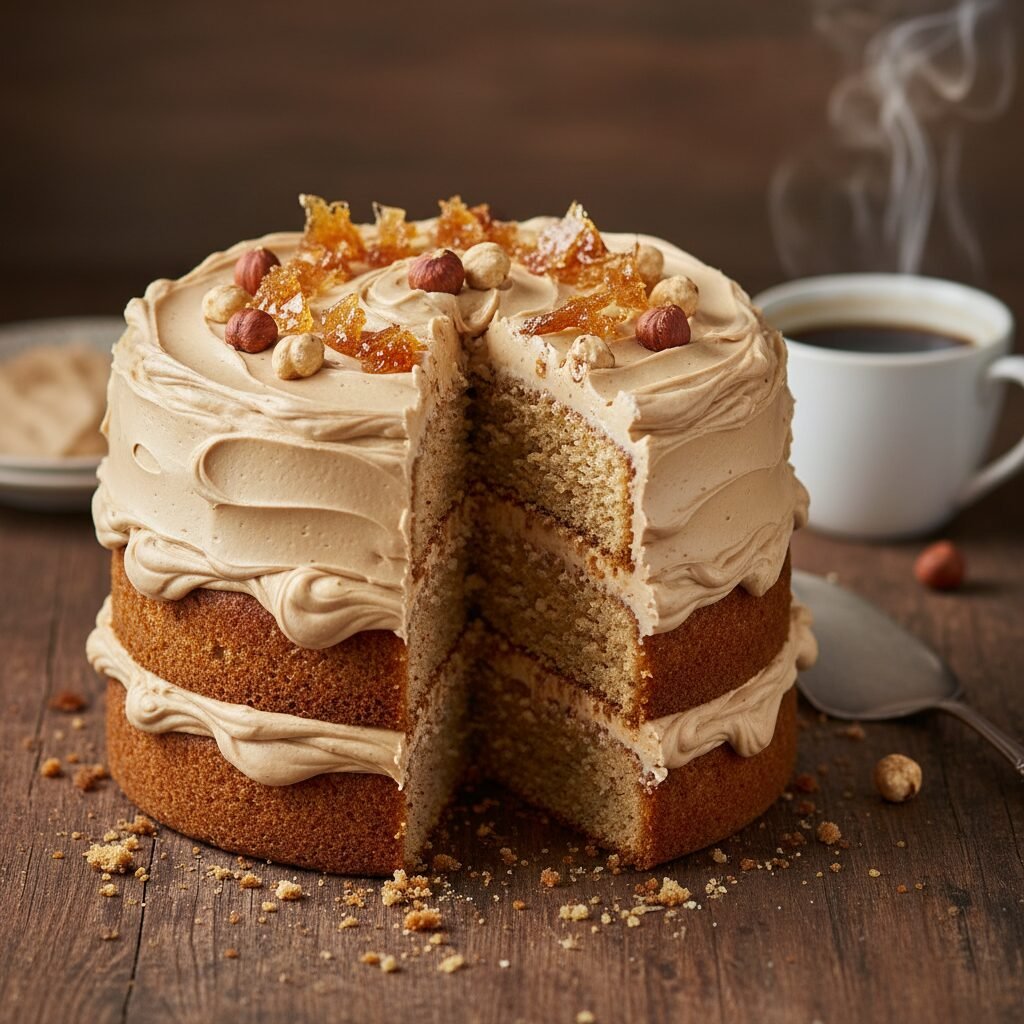
Moist Hazelnut Layer Cake Recipe
Experience the perfect harmony of nutty richness and tender crumb with this Ultimate Moist Hazelnut Layer Cake. Infused with toasted hazelnut meal and topped with a silky praline buttercream, this show-stopping dessert is the definition of comfort meets elegance.
45 minutes
35 minutes
2 hours 30 minutes
12-14 servings
Dessert
Baking
American / European Fusion
Vegetarian
If there is one flavor profile that screams ‘cozy sophistication,’ it is undoubtedly the hazelnut. While often relegated to a supporting role alongside chocolate, the hazelnut deserves center stage, and this Moist Hazelnut Layer Cake is its magnum opus. Imagine a cake that strikes the elusive balance between dense, moist richness and a fluffy, airy crumb. This isn’t just a vanilla cake with a few nuts thrown in; it is a celebration of the filbert in its purest form. The batter is enriched with freshly ground, toasted hazelnut meal, which provides not only a speckled, rustic beauty but also a natural oil content that guarantees a moist texture for days.
Every bite offers a symphony of textures: the soft, tender sponge, the crunch of caramelized praline garnish, and the cloud-like embrace of the buttercream. We’ve specifically designed this recipe to avoid the common pitfall of nut-based cakes becoming too heavy or greasy. Instead, by balancing the nut flour with cake flour and using sour cream for acidity, we achieve a lift that is truly remarkable. Whether you are baking for a holiday table, a birthday celebration, or simply because you crave something decadent to pair with your afternoon espresso, this cake delivers. It captures the essence of European patisserie traditions while remaining accessible enough for the home baker to master in a standard American kitchen. Get ready to fill your home with the intoxicating aroma of toasted nuts and browned butter.
History & Origins
The culinary history of the hazelnut, or ‘filbert,’ is as rich and layered as the cake we are baking today. Native to the temperate regions of the Northern Hemisphere, hazelnuts have been a staple food source since the Mesolithic era. However, their elevation into the world of fine desserts is largely credited to European baking traditions, particularly those of Italy and Austria. In the Piedmont region of Italy, the ‘Tonda Gentile’ hazelnut is legendary, protected by IGP status and considered the gold standard for confectionery. It was here that the famous ‘Torta di Nocciole’ was born—a flourless cake made almost entirely of ground hazelnuts, sugar, and eggs, created partly out of necessity during times when wheat flour was scarce or expensive.
Similarly, in Austria and Germany, ground nuts have long been used to replace or supplement wheat flour in tortes, such as the Linzer Torte, dating back to the 17th century. These cultures understood early on that nuts provided a fat and moisture content that butter alone could not achieve. As European immigrants brought these techniques to the Americas, the recipes evolved. The American layer cake, with its distinct separation of sponge and frosting, began to incorporate these Old World techniques. This specific recipe is a modern hybrid; it takes the structural integrity and height of a classic American butter cake and marries it with the dense, flavorful nut-meal traditions of a European torte. It represents centuries of baking evolution, moving from simple sustenance to a refined indulgence enjoyed across the globe.
Why This Recipe Works
This recipe succeeds where many other nut cakes fail because of a precise understanding of baking chemistry and ingredient interaction. First, the inclusion of ‘hazelnut meal’ (finely ground toasted hazelnuts) is the game-changer. Unlike wheat flour, hazelnut meal is high in fat and lacks gluten. This fat coats the flour proteins, inhibiting gluten formation, which results in an incredibly tender, melt-in-the-mouth crumb. However, too much nut meal can cause a cake to collapse. We solve this by using a ratio of all-purpose flour to nut meal that provides enough structure to hold the layers up while retaining that signature moistness.
Secondly, we utilize ‘brown sugar’ in addition to granulated sugar. Brown sugar contains molasses, which is hygroscopic—meaning it attracts and retains water. This ensures the cake stays moist long after it has cooled. We also incorporate ‘sour cream’ into the wet ingredients. The acidity in the sour cream reacts with the baking soda to create carbon dioxide, giving the heavy batter the lift it needs to be fluffy rather than brick-like. Finally, the ‘reverse creaming method’ or a very thorough standard creaming process ensures that plenty of air is incorporated into the butter and sugar before the heavy nut meal is added, creating a lattice of air pockets that expand in the oven for a perfect rise.
Why You’ll Love This Recipe
- ✓Incredibly moist texture due to hazelnut oil and sour cream.
- ✓Deep, roasted nutty flavor profile without being overpowering.
- ✓Versatile recipe that pairs well with chocolate, coffee, or fruit.
- ✓Sturdy enough for stacking multiple layers.
- ✓Elegant presentation perfect for holidays and special occasions.
- ✓Keeps fresh for days thanks to the high fat content of the nuts.
Equipment You’ll Need
- ✓3 x 8-inch round cake pans
- ✓Stand mixer with paddle attachment
- ✓Food processor (for grinding nuts)
- ✓Parchment paper
- ✓Wire cooling rack
- ✓Offset spatula
- ✓Large mixing bowls
- ✓Kitchen scale
Ingredients
- ✓2 cups (280g) raw hazelnuts, skinned
- ✓2 1/2 cups (315g) all-purpose flour
- ✓1 tbsp baking powder
- ✓1/2 tsp baking soda
- ✓1 tsp salt
- ✓1 cup (226g) unsalted butter, room temperature
- ✓1 cup (200g) granulated sugar
- ✓3/4 cup (150g) light brown sugar, packed
- ✓4 large eggs, room temperature
- ✓1 tbsp pure vanilla extract
- ✓1 cup (240g) full-fat sour cream, room temperature
- ✓1/2 cup (120ml) whole milk, room temperature
- ✓FOR THE FROSTING: 1.5 cups (340g) unsalted butter, softened
- ✓4 cups (480g) powdered sugar, sifted
- ✓1/4 cup (60ml) heavy cream
- ✓1/2 cup hazelnut praline paste or Nutella
- ✓Pinch of sea salt
Instructions
- 1. Toast the Hazelnuts: Preheat your oven to 350°F (175°C). Spread the raw hazelnuts on a baking sheet and toast for 10-12 minutes until fragrant and golden. Remove from oven. If skins are present, rub them in a clean kitchen towel to remove. Let them cool completely.
- 2. Prep the Pans: Grease three 8-inch cake pans with butter and line the bottoms with parchment paper. Dust the sides with flour and tap out the excess.
- 3. Grind the Nuts: Place the cooled hazelnuts in a food processor along with 1/4 cup of the all-purpose flour (this prevents them from turning into butter). Pulse until finely ground into a meal. Be careful not to over-process.
- 4. Mix Dry Ingredients: In a medium bowl, whisk together the hazelnut meal, remaining flour, baking powder, baking soda, and salt. Set aside.
- 5. Cream Butter and Sugars: In the bowl of a stand mixer fitted with the paddle attachment, beat the room temperature butter, granulated sugar, and brown sugar on medium-high speed for about 3-5 minutes until pale and fluffy.
- 6. Add Eggs: Reduce speed to medium and add the eggs one at a time, mixing well after each addition and scraping down the sides of the bowl as needed. Stir in the vanilla extract.
- 7. Combine Wet and Dry: In a small jug, whisk together the sour cream and milk. With the mixer on low speed, add the dry ingredients in three parts, alternating with the sour cream mixture in two parts, starting and ending with the dry ingredients. Mix only until just combined. Do not overmix.
- 8. Bake: Divide the batter evenly among the three prepared pans. Smooth the tops with a spatula. Bake for 30-35 minutes, or until a toothpick inserted into the center comes out clean or with just a few moist crumbs.
- 9. Cool: Allow the cakes to cool in the pans for 10 minutes, then turn them out onto a wire rack to cool completely before frosting.
- 10. Make the Frosting: Beat the softened butter on medium-high speed for 5 minutes until pale. Gradually add powdered sugar, one cup at a time. Add the heavy cream, hazelnut paste/Nutella, and salt. Whip on high for 3-4 minutes until airy and creamy.
- 11. Assembly: Place one cake layer on a stand. Spread a generous layer of frosting. Repeat with the second and third layers. Frost the outside of the cake with the remaining buttercream. Garnish with chopped toasted hazelnuts if desired.
Expert Cooking Tips
- ✓Cool Your Nuts: Ensure the toasted hazelnuts are completely cool before grinding. If they are warm, the heat will release oils too quickly, turning your meal into hazelnut butter.
- ✓Room Temperature Ingredients: It is critical that your butter, eggs, sour cream, and milk are at room temperature. This creates an emulsion that traps air, leading to a fluffy cake.
- ✓Weigh Your Flour: For the most accurate results, use a kitchen scale. Cup measurements can vary significantly, and too much flour will dry out the cake.
- ✓Don’t Overmix: Once the flour is added, mix gently. Overworking the batter develops gluten, which creates a tough, rubbery texture instead of a tender crumb.
- ✓Checking Doneness: Hazelnut cakes can be deceptive. Use the toothpick test, but also gently press the center of the cake; it should spring back immediately.
- ✓Frosting Consistency: If your kitchen is warm and the frosting is too soft, chill it for 10 minutes before whipping again.
- ✓Enhance Flavor: Add a teaspoon of espresso powder to the batter to deepen the roasted notes without making it taste like coffee.
Substitutions and Variations
This recipe is quite adaptable, though substitutions may alter texture. If you cannot find **hazelnuts**, you can substitute with almonds or pecans for a different flavor profile; the fat content is similar enough to work. For a **gluten-free version**, replace the all-purpose flour with a high-quality 1:1 gluten-free baking flour blend that contains xanthan gum. If you don’t have **sour cream**, full-fat Greek yogurt is an excellent 1:1 substitute that provides similar acidity and moisture. **Buttermilk** can also be used, though the batter will be slightly thinner. For the **frosting**, if you find buttercream too sweet, a Swiss Meringue Buttercream base is less sweet and very stable. You can also swap the hazelnut praline paste for melted chocolate or simply use vanilla bean paste for a classic contrast.
Common Mistakes to Avoid
The most common mistake with nut cakes is **grinding the nuts into a paste**. When processing the hazelnuts, pulse them in short bursts and always include a portion of the flour in the processor to absorb the oil. Another error is **using cold ingredients**. Cold eggs and dairy will cause the butter to seize and curdle, breaking your emulsion and resulting in a dense, uneven bake. **Opening the oven door too early** is also detrimental; the rush of cool air can cause the cake to collapse in the center before the structure has set. Finally, **skipping the skin removal** on the hazelnuts can lead to a bitter aftertaste. While a few skins are fine for rustic appeal, too many will impact the delicate sweetness of the cake.
Serving Suggestions
This Moist Hazelnut Layer Cake is rich, so it pairs beautifully with beverages that have a bit of acidity or bitterness to cut through the fat. Serve thin slices with a hot cup of dark roast coffee, an espresso, or a robust Earl Grey tea. For an adult dinner party, a glass of Frangelico liqueur or a dessert wine like Vin Santo makes for a sophisticated pairing. On the plate, a dollop of unsweetened whipped cream and a handful of fresh raspberries or blackberries add a refreshing tartness that balances the sweet praline frosting. If you want to be extra fancy, a drizzle of warm dark chocolate ganache over the slice right before serving is divine.
Storage and Reheating Tips
Because of the dairy in the frosting and the moisture in the cake, this cake is best stored in an airtight container. It can stay at cool room temperature for up to 2 days, but for longer storage, keep it in the refrigerator for up to 5 days. However, **always bring the cake to room temperature** before serving; cold butter cake tastes dry and the frosting will be hard. You can also freeze the cake layers (unfrosted) for up to 3 months. Wrap each layer tightly in plastic wrap, then foil. Thaw overnight in the fridge before assembling. Frosted slices can also be frozen in airtight containers for a quick treat later.
Nutrition Facts (Estimated)
| Serving Size | 1 slice |
| Calories | 650 |
| Fat | 42g |
| Saturated Fat | 18g |
| Unsaturated Fat | 22g |
| Trans Fat | 0.5g |
| Cholesterol | 110mg |
| Sodium | 320mg |
| Carbohydrates | 62g |
| Fiber | 3g |
| Sugar | 45g |
| Protein | 8g |
Frequently Asked Questions
Can I use store-bought hazelnut flour instead of grinding my own?
Yes, you can use store-bought hazelnut meal or flour. However, store-bought meal is often drier than freshly ground nuts. If using store-bought, consider adding an extra tablespoon of milk to the batter to compensate for the moisture difference.
Why did my cake sink in the middle?
Sinking usually happens for two reasons: underbaking or opening the oven door too early. Ensure the center is fully set before removing it. It could also result from too much leavening (baking powder/soda), causing the cake to rise too fast and then collapse.
Can I make this cake as cupcakes?
Absolutely! This batter works well for cupcakes. Line a muffin tin with liners and fill them 2/3 full. Reduce the baking time to approximately 18-22 minutes. This recipe should yield about 24-30 cupcakes.
How do I skin hazelnuts easily?
The roasting method works best. Roast them at 350°F for 10-15 minutes. While they are still warm, wrap them in a clean kitchen towel and rub vigorously. The friction will cause most of the skins to flake off. Don’t worry if some stubborn bits remain.
Is this cake overly sweet?
The cake sponge itself is moderately sweet, balanced by the nutty, savory notes of the hazelnut. The frosting is sweeter. If you prefer a less sweet dessert, opt for a Swiss Meringue Buttercream or a Cream Cheese frosting instead of the standard American buttercream listed.
Can I bake this in a 9×13 pan?
Yes, you can bake this as a sheet cake in a 9×13 inch pan. You will likely need to increase the baking time to 40-50 minutes. Keep an eye on it and use the toothpick test.
What if I am allergic to hazelnuts?
If you have a specific hazelnut allergy but can tolerate other nuts, almonds or walnuts are great substitutes. If you have a general nut allergy, this recipe is not suitable as the nut meal is integral to the structure. You would be better off finding a standard butter cake recipe.
Can I make the cake layers ahead of time?
Yes, this is actually recommended! Baking the layers a day ahead allows the crumb to settle, making them easier to stack and frost. Wrap the cooled layers in plastic wrap and store them at room temperature overnight or freeze them if making them more than 24 hours in advance.
Conclusion
There is something truly magical about baking with nuts, and this Moist Hazelnut Layer Cake is the perfect testament to that magic. It transforms humble ingredients into a masterpiece of texture and flavor that feels both rustic and regal. Whether you are an experienced baker looking for your next project or a novice wanting to impress, this recipe guides you to a foolproof, delicious result. The combination of the tender, nutty sponge with the creamy, sweet frosting creates a dessert experience that your friends and family won’t soon forget. So, preheat that oven, grab your hazelnuts, and get ready to bake the best cake of your life. Don’t forget to pin this recipe for your next celebration!