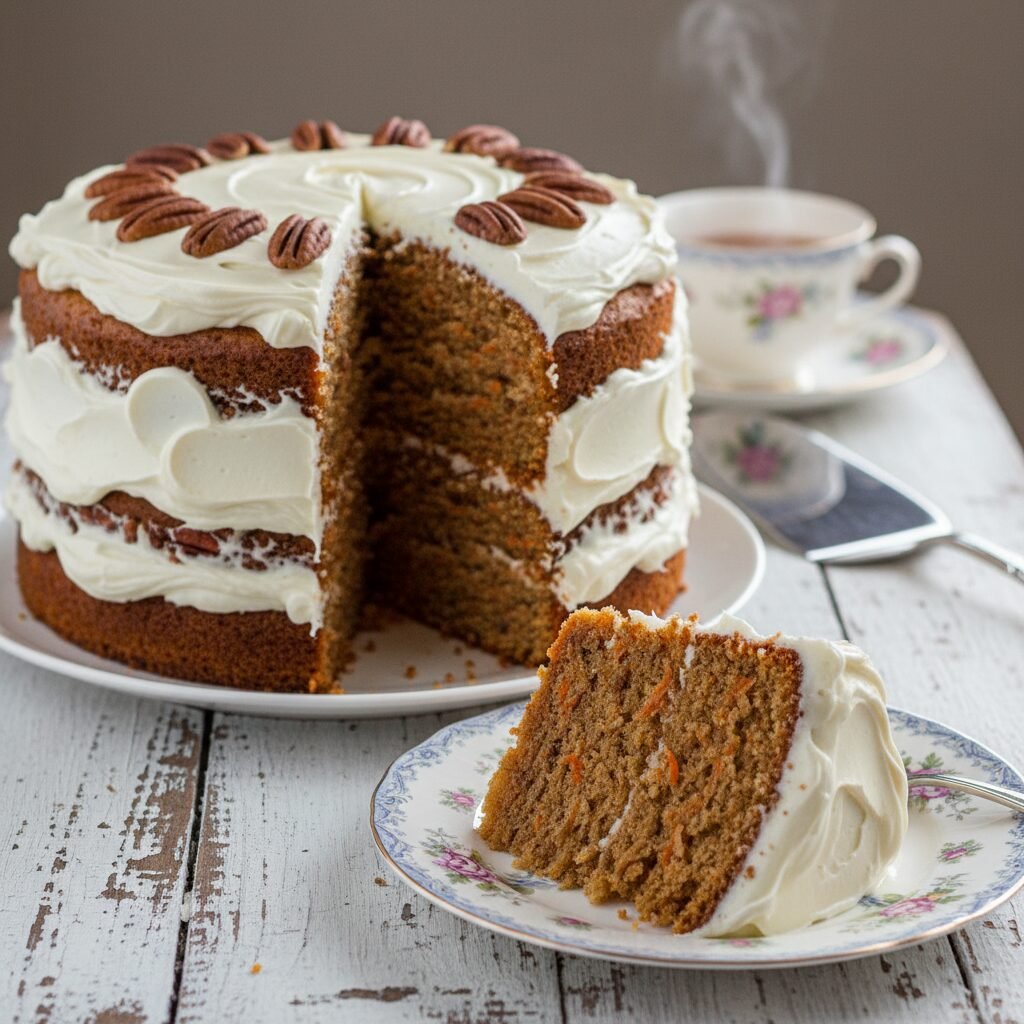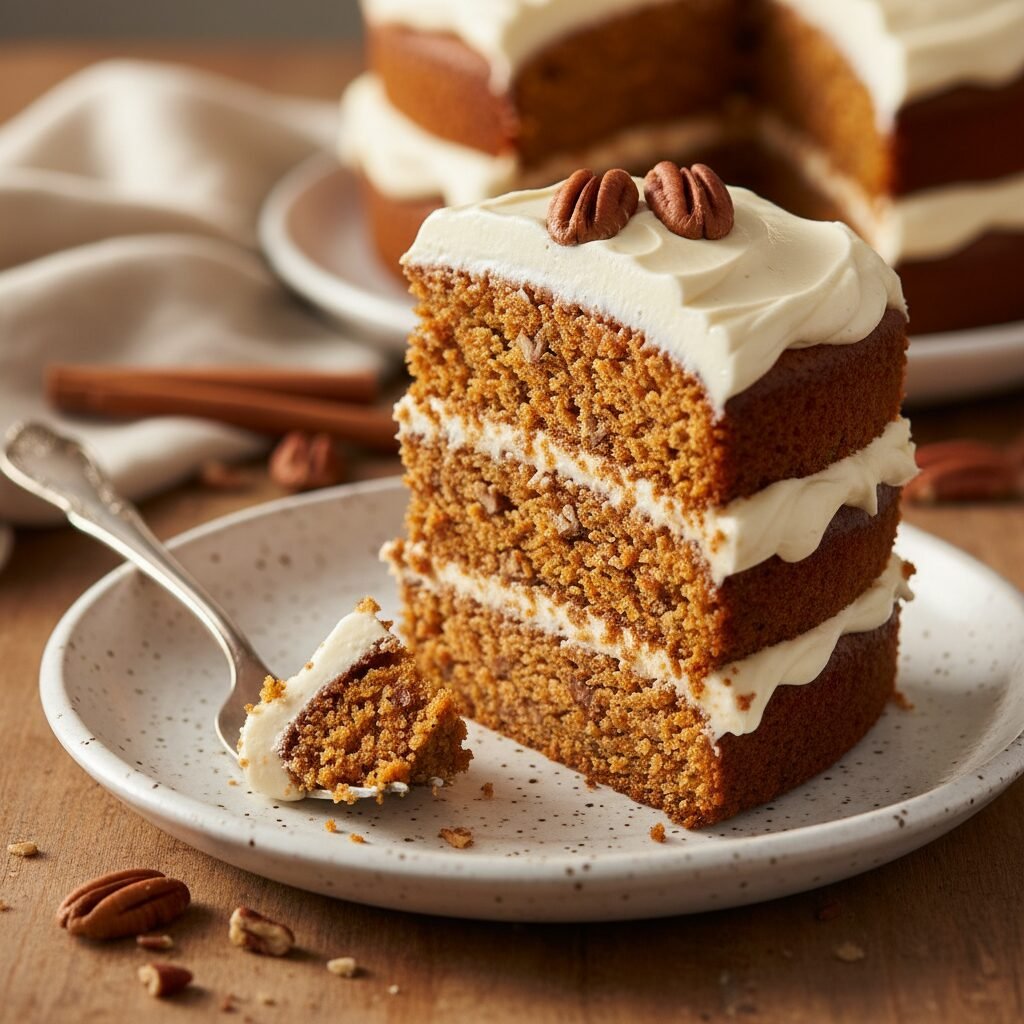
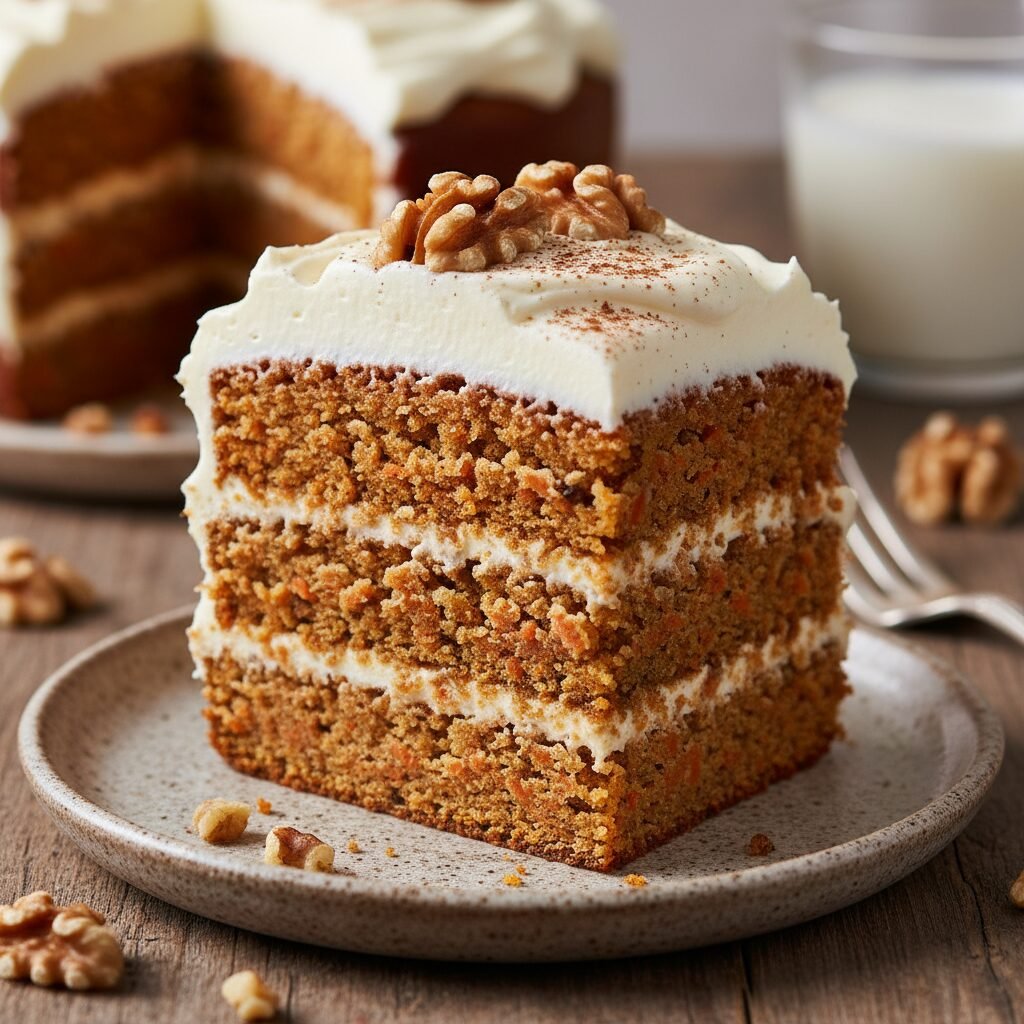
Moist Carrot Layer Cake With Walnuts Recipe
Experience the perfect balance of warm spices and sweetness with this incredibly moist carrot layer cake. Packed with freshly grated carrots, crunchy toasted walnuts, and smothered in a velvety, tangy cream cheese frosting, this recipe is the gold standard for celebration desserts.
45 minutes
35 minutes
1 hour 20 minutes
12-16 Servings
Dessert
Baking
American
Vegetarian
There are few desserts as universally beloved and comforting as a classic carrot cake, but finding the perfect recipe—one that balances density with fluffiness and sweetness with spice—can be a challenge. This Moist Carrot Layer Cake with Walnuts is the result of years of tweaking and testing to achieve the absolute pinnacle of texture and flavor. Unlike dry, crumbly versions or those that are overly dense and oily, this cake hits the sweet spot. It possesses a tender, melt-in-your-mouth crumb that remains soft for days, thanks to a specific blend of sugars and fats.
The magic begins with the aroma. As the cake bakes, your kitchen will fill with the intoxicating scents of cinnamon, nutmeg, and ginger, evoking a sense of warmth and nostalgia. But the true star is the texture. By using freshly grated carrots (never pre-shredded bags!), we ensure that the vegetable releases its natural moisture directly into the batter during baking, steaming the cake from the inside out. The addition of toasted walnuts provides a necessary textural contrast, offering a savory, nutty crunch that breaks up the richness of the crumb.
And then, there is the frosting. A carrot cake is only as good as its topping, and we pair this spiced masterpiece with a generous coating of tangy, whipped cream cheese frosting. It is not too sweet, allowing the tang of the cheese to cut through the sugar and spices of the cake layers. Whether you are baking for a birthday, a holiday gathering, or simply a weekend treat, this cake commands attention. It is rustic yet elegant, simple yet sophisticated, and guaranteed to be the slice your guests ask to take home.
History & Origins
The origins of carrot cake are somewhat debated, but food historians generally trace its lineage back to the Middle Ages in Europe. During this period, sugar was a rare and expensive luxury imported from distant lands. To sweeten their puddings and baked goods, medieval cooks turned to vegetables with high natural sugar content, specifically carrots and parsnips. These early iterations were more akin to a steamed pudding or a dense, sweet bread rather than the fluffy layer cakes we recognize today.
The modern evolution of the carrot cake began to take shape in the 18th and 19th centuries. A recipe for ‘Gâteau de Carottes’ appeared in a French cookbook published in England in 1827, and another for carrot cake was featured in a Swiss housekeeping school’s curriculum in the late 19th century. However, it was the Second World War that truly cemented the carrot’s place in baking. During wartime rationing in the United Kingdom, sugar was strictly limited. The British government promoted recipes using carrots as a sweetener to keep morale high and children nourished, leading to a surge in carrot-based cakes and biscuits.
In the United States, the carrot cake boom arrived later, primarily in the 1960s and 1970s. Ironically, it was initially embraced by the ‘health food’ movement. Because the cake contained a vegetable, whole wheat flour (sometimes), and nuts, it was perceived as a ‘guilt-free’ alternative to chocolate cake, despite its high oil and sugar content. It was during this era that the now-iconic pairing with cream cheese frosting became standard, likely popularized by American cafeterias and the rise of Philadelphia Cream Cheese marketing. Today, it stands as a staple of American baking, celebrated not for its health benefits, but for its irresistible flavor profile.
Why This Recipe Works
This recipe succeeds where others fail primarily due to the choice of fat and the treatment of the carrots. Many cakes rely on butter for flavor, but in a carrot cake, butter can lead to a drier texture once the cake cools because saturated fats solidify at room temperature. This recipe uses a neutral oil (like canola or vegetable oil), which remains liquid at room temperature. This ensures that the cake stays incredibly moist and tender, even if you store it in the refrigerator.
Furthermore, the use of both granulated white sugar and dark brown sugar is crucial. The white sugar helps aerate the batter during mixing, providing lift, while the brown sugar introduces molasses. The acidity in the molasses reacts with the baking soda to create a better rise, and its hygroscopic nature draws moisture from the air, keeping the cake soft for days.
We also insist on hand-grating the carrots. Pre-packaged shredded carrots found in supermarkets are often coated with cornstarch or preservatives to keep them dry and separate. These dry carrots act like sponges, sucking moisture *out* of your batter. Freshly grated carrots, however, are wet and release water as they bake, effectively steaming the cake from within. Finally, the spices are bloomed in the flour mixture, ensuring even distribution, and the walnuts are toasted beforehand to release their essential oils, preventing them from tasting waxy or raw inside the finished cake.
Why You’ll Love This Recipe
- ✓Stays moist for up to 5 days thanks to the oil-based batter.
- ✓Perfectly balanced spice blend of cinnamon, ginger, and nutmeg.
- ✓Rich, tangy cream cheese frosting that isn’t overly sweet.
- ✓Crunchy toasted walnuts add texture and nutty depth.
- ✓Freshly grated carrots ensure a tender, soft crumb.
- ✓Can be made ahead of time—flavor improves after 24 hours.
Equipment You’ll Need
- ✓Two 9-inch round cake pans
- ✓Stand mixer or electric hand mixer
- ✓Large mixing bowls
- ✓Box grater or food processor (shredding disk)
- ✓Rubber spatula
- ✓Wire cooling rack
- ✓Offset spatula for frosting
- ✓Parchment paper
Ingredients
- ✓2 cups (250g) all-purpose flour
- ✓2 teaspoons baking soda
- ✓1/2 teaspoon fine sea salt
- ✓2 teaspoons ground cinnamon
- ✓1 teaspoon ground ginger
- ✓1/4 teaspoon ground nutmeg
- ✓1 1/4 cups (300ml) canola or vegetable oil
- ✓1 cup (200g) granulated sugar
- ✓1 cup (200g) packed dark brown sugar
- ✓1 teaspoon pure vanilla extract
- ✓4 large eggs, room temperature
- ✓3 cups (300g) grated fresh carrots (approx. 5-6 medium carrots)
- ✓1 cup (100g) chopped walnuts, toasted
- ✓1/2 cup (75g) raisins (optional)
- ✓FOR THE FROSTING:
- ✓16 oz (450g) full-fat brick cream cheese, softened room temperature
- ✓1 cup (227g) unsalted butter, softened room temperature
- ✓4 cups (480g) powdered sugar, sifted
- ✓1 1/2 teaspoons pure vanilla extract
- ✓Pinch of salt
Instructions
- 1. Preheat oven to 350°F (175°C). Grease two 9-inch round cake pans with butter or cooking spray. Line the bottoms with parchment paper rounds and grease the paper. This ensures the cakes release perfectly.
- 2. Spread the chopped walnuts on a baking sheet and toast in the preheating oven for 5-7 minutes until fragrant. Watch closely so they don’t burn. Remove and let cool.
- 3. In a medium bowl, whisk together the flour, baking soda, salt, cinnamon, ginger, and nutmeg until thoroughly combined and no lumps of spices remain.
- 4. In a large bowl (or stand mixer bowl), whisk the oil, granulated sugar, brown sugar, and vanilla extract until combined. Add the eggs one at a time, whisking well after each addition until the mixture is smooth.
- 5. Switch to a rubber spatula. Gradually pour the dry ingredients into the wet mixture. Fold gently until just combined and no flour streaks are visible. Do not overmix.
- 6. Fold in the grated carrots and the cooled toasted walnuts (and raisins if using). Mix until the carrots are evenly distributed throughout the batter.
- 7. Divide the batter evenly between the two prepared cake pans. Bake for 35-45 minutes, or until a toothpick inserted into the center comes out clean or with just a few moist crumbs attached.
- 8. Remove cakes from the oven and let them cool in the pans for 15 minutes. Then, run a knife around the edges and invert them onto a wire rack to cool completely. They must be 100% cool before frosting.
- 9. While cakes cool, make the frosting. In a large bowl using a handheld or stand mixer fitted with a paddle attachment, beat the cream cheese and butter together on medium-high speed until smooth and creamy (about 2-3 minutes).
- 10. Reduce speed to low and gradually add the powdered sugar and salt. Once incorporated, add the vanilla. Increase speed to high and beat for 2 minutes until fluffy and creamy.
- 11. To assemble, place one cake layer on your serving stand. Spread a thick layer of frosting over the top. Place the second cake layer on top. Use the remaining frosting to cover the top and sides of the cake. Garnish with extra walnut halves if desired.
Expert Cooking Tips
- ✓Use room temperature eggs to ensure they emulsify properly with the oil, creating a smoother batter.
- ✓Grate your own carrots using the medium holes of a box grater. Pre-shredded carrots are too dry and thick.
- ✓Toast your walnuts before adding them to the batter to amplify their nutty flavor and keep them crunchy.
- ✓Do not overmix the batter once the flour is added; this can develop gluten and make the cake tough.
- ✓Cool the cakes completely before frosting. Even a slightly warm cake will melt the butter in the frosting, causing it to slide off.
- ✓Weigh your flour using a kitchen scale for accuracy. If using cups, spoon and level the flour rather than scooping.
- ✓If the frosting feels too soft, refrigerate it for 20 minutes before spreading to firm it up.
Substitutions and Variations
This recipe is quite resilient and allows for several modifications. For the flour, you can substitute a high-quality 1:1 Gluten-Free baking flour blend if you are catering to gluten sensitivities; the texture remains surprisingly similar. If you have a nut allergy, simply omit the walnuts or replace them with sunflower seeds or pepitas for crunch. Pecans are a classic and excellent 1:1 substitute for walnuts if you prefer their sweeter flavor profile. For the oil, melted coconut oil works well and adds a subtle tropical note, or you can use applesauce for half of the oil quantity to reduce the fat content, though the cake will be slightly denser. If you don’t have dark brown sugar, light brown sugar works perfectly fine, though the color of the cake will be lighter. Finally, for the frosting, you can add a tablespoon of maple syrup or a pinch of cinnamon for a spiced twist on the classic cream cheese topping.
Common Mistakes to Avoid
The most common mistake is using pre-packaged shredded carrots. These are often dry and hard, leading to a cake with crunchy vegetable bits rather than a melting crumb. Always grate fresh. Another error is over-baking. Because the cake is dark in color due to the spices and brown sugar, it can be hard to tell when it’s done by sight. Rely on the toothpick test; if it comes out with wet batter, it needs more time, but moist crumbs are perfect. Don’t wait for the toothpick to be bone dry. Many bakers also fail to bring their cream cheese and butter to room temperature before making the frosting. This results in lumpy frosting that is impossible to smooth out. Lastly, do not try to reduce the sugar significantly; sugar provides structural integrity and moisture, not just sweetness. Reducing it too much will result in a rubbery cake.
Serving Suggestions
This rich cake is best served in thin slices, as it is quite filling. It pairs beautifully with a hot cup of black coffee or an Earl Grey tea, which helps cut through the richness of the cream cheese frosting. For a dessert course, serve it alongside a small scoop of vanilla bean ice cream or a dollop of unsweetened whipped cream. If you want to dress it up for a holiday table, garnish the top with candied carrot ribbons, edible flowers, or a ring of chopped walnuts and a dusting of cinnamon. It is excellent served slightly chilled, but the flavors truly shine when it has sat out at room temperature for 20 minutes before eating.
Storage and Reheating Tips
Because of the cream cheese frosting, this cake must be stored in the refrigerator. However, it is best to let it set in the fridge for at least an hour before covering it to avoid smudging the frosting. Store it in an airtight cake carrier or wrap slices individually in plastic wrap. It will keep well in the fridge for up to 5-6 days. In fact, the flavor often improves on the second day as the spices meld. For long-term storage, you can freeze the cake. You can freeze the unfrosted layers wrapped tightly in plastic wrap and foil for up to 3 months. Alternatively, you can freeze individual slices of the frosted cake. Place slices on a baking sheet to freeze until solid (about 1 hour), then wrap them tightly in plastic wrap and foil. Thaw overnight in the refrigerator before serving.
Nutrition Facts (Estimated)
| Serving Size | 1 slice |
| Calories | 680 kcal |
| Fat | 42g |
| Saturated Fat | 14g |
| Unsaturated Fat | 26g |
| Trans Fat | 0g |
| Cholesterol | 85mg |
| Sodium | 340mg |
| Carbohydrates | 72g |
| Fiber | 3g |
| Sugar | 52g |
| Protein | 8g |
Frequently Asked Questions
Can I bake this in a 9×13 inch pan instead of layers?
Yes, absolutely. Pour the batter into a greased 9×13 inch pan and bake for approximately 40-50 minutes. The baking time may increase slightly, so keep an eye on it and use the toothpick test.
Why did my carrot cake sink in the middle?
Sinking usually happens for one of three reasons: underbaking (the center structure wasn’t set), opening the oven door too early (causing a temperature drop), or using too much leavening (baking soda) which causes it to rise too fast and then collapse.
Can I use butter instead of oil for the cake batter?
You can, but we don’t recommend it. Oil coats the flour proteins better than butter in this specific type of batter, preventing gluten formation and keeping the cake soft. Butter-based carrot cakes tend to be drier and firmer when refrigerated.
Do I need to drain the carrots after grating?
No, do not drain them. The moisture inside the carrots is essential for the cake’s texture. The only exception is if you are adding pineapple; that should be drained, but the carrots should go in fresh and wet.
Can I make this recipe into cupcakes?
Yes! This recipe will make approximately 24 standard cupcakes. Bake them at 350°F (175°C) for 18-22 minutes. Check for doneness early.
Is it necessary to sift the powdered sugar for the frosting?
Yes, sifting is highly recommended. Powdered sugar clumps easily, and once those clumps are in the frosting, they are very difficult to beat out without over-mixing the frosting and making it runny.
Can I add pineapple or coconut to this recipe?
Certainly. Many people love a ‘loaded’ carrot cake. You can add 1/2 cup of crushed, drained pineapple or 1/2 cup of sweetened shredded coconut. If adding both, you may need to bake the cake for an extra 5-10 minutes to account for the extra moisture and volume.
Why is my frosting runny?
Runny frosting is usually caused by using butter or cream cheese that was too warm (melting), or over-beating the mixture after adding the sugar. Ensure your ingredients are cool room temperature, not warm. If it’s runny, chill it for 20 minutes.
Conclusion
Making a carrot cake from scratch is a rewarding experience that yields results far superior to anything you can buy at a bakery. The combination of the spiced, moist crumb and the tangy, rich frosting creates a dessert that feels like a celebration in every bite. Whether you are a seasoned baker or a novice, this Moist Carrot Layer Cake with Walnuts is forgiving and reliable. We hope this recipe becomes a cherished part of your baking repertoire, bringing warmth and sweetness to your table for years to come. Don’t forget to share a slice with someone you love!