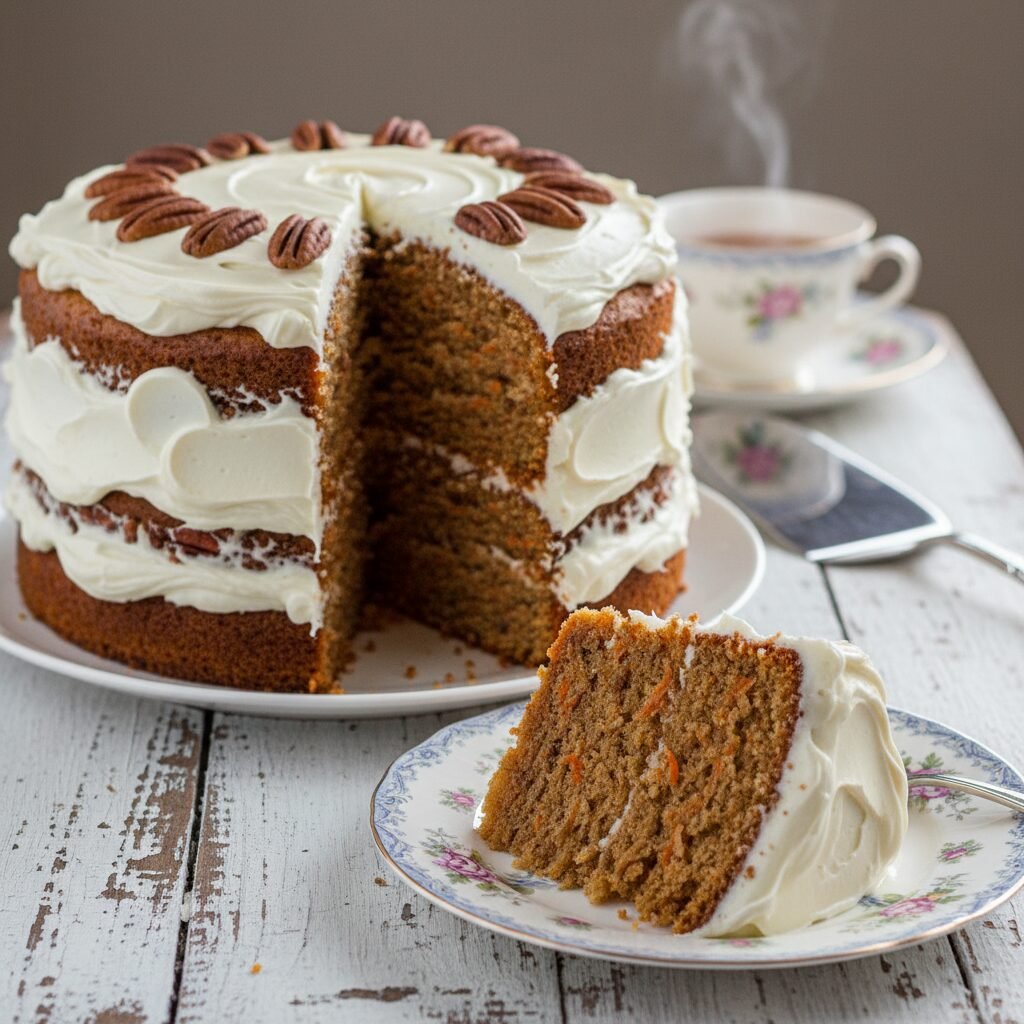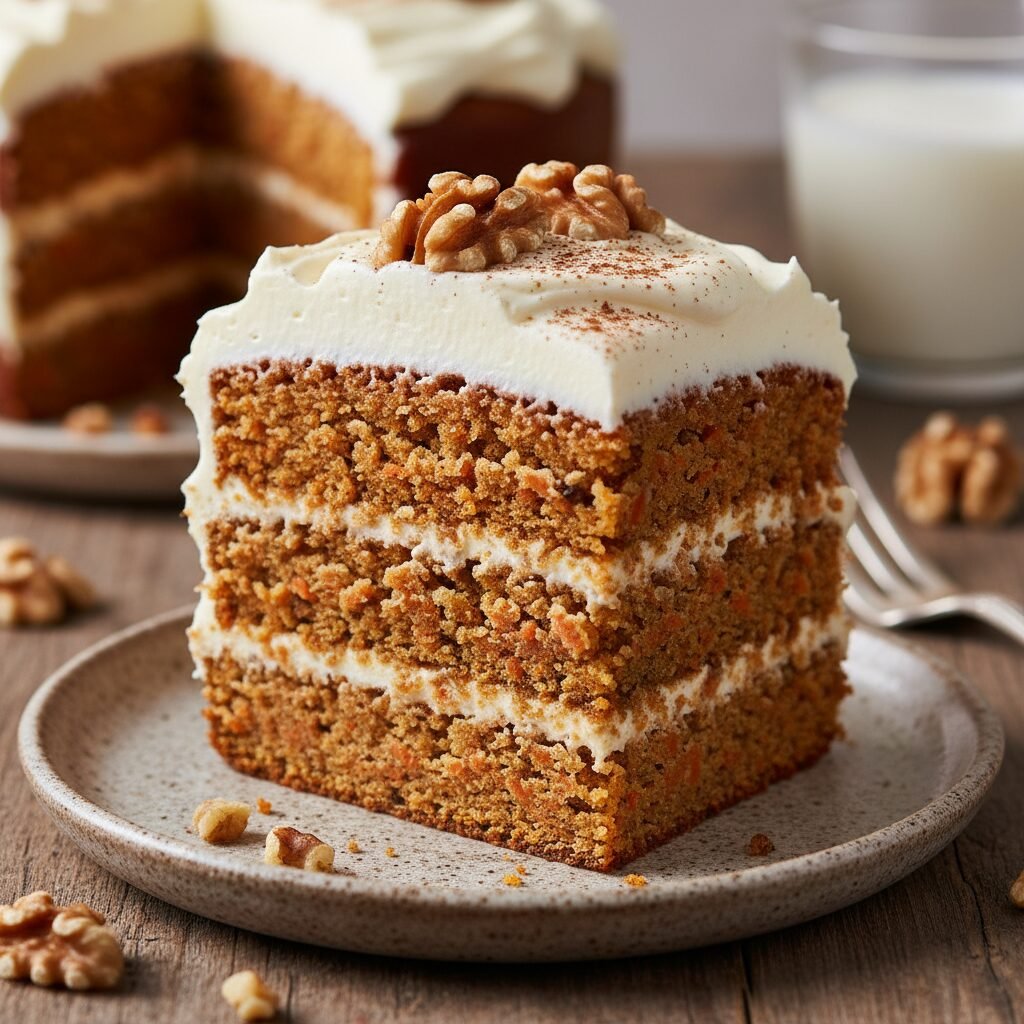
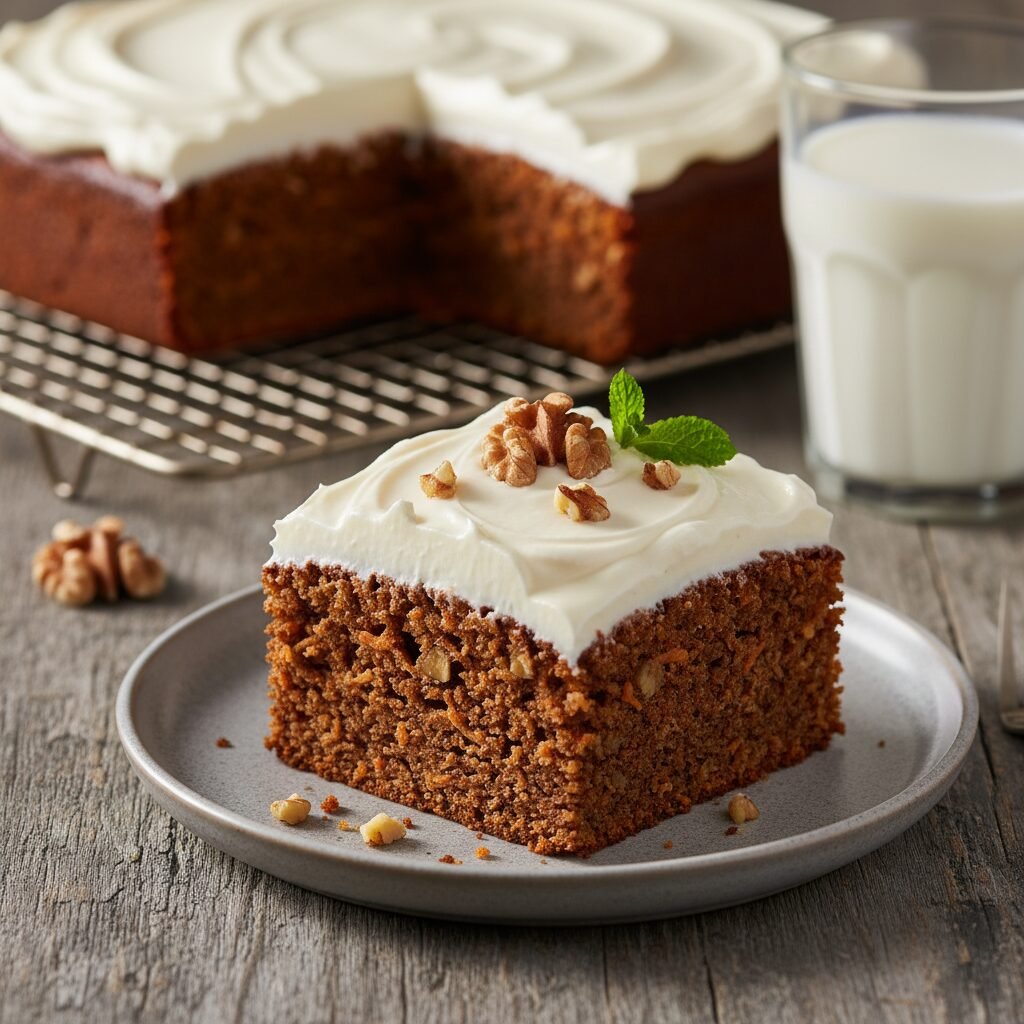
Moist Carrot Sheet Cake With Walnuts Recipe
Discover the perfect balance of spice and sweetness with this incredibly moist carrot sheet cake. Topped with a tangy cream cheese frosting and crunchy toasted walnuts, this crowd-pleasing dessert is easier to make than a layer cake and twice as delicious.
25 minutes
35 minutes
1 hour 15 minutes (includes cooling)
12-15 servings
Dessert
Baking
American
Vegetarian
There is something undeniably comforting about a classic carrot cake. It is one of those timeless desserts that manages to bridge the gap between a humble afternoon snack and a show-stopping celebration centerpiece. But let’s be honest: sometimes, the effort required to stack, level, and crumb-coat a multi-layer cake is just too much for a busy weeknight or a casual potluck. Enter the carrot sheet cake—the unsung hero of the baking world. This recipe takes everything you love about the traditional version and simplifies it into a single, glorious 9×13 pan. The result is a cake that is impossibly moist, deeply spiced, and textured with the perfect amount of crunch from toasted walnuts.
What sets this specific recipe apart is the meticulous attention to moisture and flavor balance. We aren’t just throwing ingredients into a bowl; we are building layers of taste. The warmth of cinnamon and nutmeg plays against the deep molasses notes of dark brown sugar, while the freshly grated carrots provide natural sweetness and that signature dense-yet-fluffy crumb. And then there is the frosting. A thick, swooping layer of tangy cream cheese frosting is the non-negotiable partner to the spiced sponge. When you take that first bite, you get the creamy tang, the soft cake, and the earthy crunch of walnuts all at once. It is pure bliss.
This cake is also incredibly forgiving. Unlike delicate sponges that might deflate if you look at them wrong, this batter is robust and reliable. It is the kind of recipe you can turn to when you need a guaranteed win, whether you are baking for a holiday table, a birthday party, or just because you have a surplus of carrots in the crisper drawer. So, grab your grater and let’s get baking!
History & Origins
The history of carrot cake is a fascinating journey that traces back much further than the 1970s health food craze often associated with it. Historians generally agree that carrot cake evolved from ‘carrot pudding,’ a dish popular in Medieval Europe. During the Middle Ages, sugar and other sweeteners were rare and prohibitively expensive commodities for the average person. Carrots, however, were abundant and known to contain a high natural sugar content—second only to sugar beets among vegetables. Cooks learned to utilize this sweetness in steamed puddings, which were often served as a substantial part of the meal rather than a light dessert.
Fast forward to the 20th century, and we see the resurgence of the carrot in baking during World War II. In Great Britain, rationing limited the availability of luxury ingredients like sugar and butter. The Ministry of Food disseminated recipes using carrots as a sweetener to stretch rations, helping to cement the vegetable’s place in the sweet treat lexicon. However, the carrot cake as we know it today—leavened with baking soda and topped with cream cheese frosting—is largely an American innovation.
It wasn’t until the 1960s and 1970s that carrot cake exploded in popularity across the United States. It was often marketed as a ‘healthy’ alternative to chocolate or vanilla cakes, thanks to the inclusion of a vegetable, whole wheat flour, and sometimes raisins or nuts. While the ‘health’ aspect is debatable given the amount of oil and sugar involved, the flavor profile was undeniable. It became a staple in cafes and bakeries nationwide. Today, it remains a beloved classic, having shed its ‘health food’ pretense to be embraced simply as a decadent, spice-laden comfort food that connects us to centuries of culinary ingenuity.
Why This Recipe Works
This recipe succeeds where many others fail because it prioritizes moisture retention without sacrificing structure. First and foremost, we use oil instead of butter for the cake base. While butter adds flavor, it contains water which evaporates during baking, and it solidifies at room temperature, often leading to a drier crumb. Oil remains liquid at room temperature, ensuring the cake stays soft and moist for days. We combine this with a high ratio of dark brown sugar, which contains molasses. The acidity in the molasses reacts with the baking soda for a better rise, while its hygroscopic nature draws moisture from the air into the cake.
Secondly, the method of incorporating the carrots is crucial. We insist on freshly grating the carrots at home rather than buying pre-shredded bags. Pre-shredded carrots are often dry and coated with cornstarch to prevent clumping, which can throw off the hydration of your batter. Freshly grated carrots release their juices into the batter as it bakes, steaming the cake from the inside out. Finally, the sheet pan format itself is a secret weapon. By baking in a 9×13 pan, the heat distributes more evenly across the batter compared to a deep round tin, preventing the common problem of a cake that is burnt on the edges but raw in the middle. The result is a consistent texture from corner to center.
Why You’ll Love This Recipe
- ✓Incredibly moist crumb that stays fresh for days.
- ✓Rich, warm spice profile with cinnamon, nutmeg, and vanilla.
- ✓Tangy, smooth cream cheese frosting that balances the sweetness.
- ✓Easy preparation with no complicated layering or leveling required.
- ✓Toasted walnuts add a satisfying crunch and nutty depth.
Equipment You’ll Need
- ✓9×13 inch baking pan
- ✓Box grater or food processor
- ✓Large mixing bowl
- ✓Medium mixing bowl
- ✓Whisk
- ✓Rubber spatula
- ✓Electric mixer (hand or stand)
- ✓Measuring cups and spoons
Ingredients
- ✓2 cups all-purpose flour
- ✓2 teaspoons baking soda
- ✓1/2 teaspoon fine sea salt
- ✓2 teaspoons ground cinnamon
- ✓1/2 teaspoon ground nutmeg
- ✓1/4 teaspoon ground ginger
- ✓1 1/4 cups vegetable oil or canola oil
- ✓1 cup granulated sugar
- ✓1 cup dark brown sugar, packed
- ✓1 teaspoon vanilla extract
- ✓4 large eggs, room temperature
- ✓3 cups grated carrots (approx. 5-6 medium carrots)
- ✓1 cup chopped walnuts, toasted
- ✓8 oz cream cheese, softened (for frosting)
- ✓1/2 cup unsalted butter, softened (for frosting)
- ✓3 cups powdered sugar (for frosting)
- ✓1 teaspoon vanilla extract (for frosting)
- ✓Pinch of salt (for frosting)
Instructions
- Preheat your oven to 350°F (175°C). Grease a 9×13 inch baking pan with non-stick spray or butter, and line the bottom with parchment paper for easy removal.
- Spread the chopped walnuts on a small baking sheet and toast in the oven for 5-7 minutes until fragrant. Watch them closely so they don’t burn. Remove and let cool.
- In a medium bowl, whisk together the flour, baking soda, salt, cinnamon, nutmeg, and ginger until well combined and no lumps remain.
- In a large bowl, whisk together the oil, granulated sugar, brown sugar, and vanilla extract until the mixture is smooth and combined.
- Add the eggs one at a time to the wet mixture, whisking well after each addition until fully incorporated.
- Gradually add the dry ingredients to the wet ingredients. Switch to a rubber spatula and mix gently until just combined. Do not overmix.
- Fold in the grated carrots and 3/4 cup of the toasted walnuts (reserve 1/4 cup for topping) until evenly distributed throughout the batter.
- Pour the batter into the prepared baking pan and smooth the top with the spatula.
- Bake for 35-45 minutes, or until a toothpick inserted into the center comes out clean or with just a few moist crumbs attached.
- Remove the cake from the oven and place the pan on a wire rack. Let the cake cool completely in the pan before frosting. This is crucial to prevent the frosting from melting.
- While the cake cools, make the frosting. In a large bowl using an electric mixer, beat the softened cream cheese and butter together on medium-high speed until smooth and creamy (about 2-3 minutes).
- Reduce the speed to low and gradually add the powdered sugar, one cup at a time. Add the vanilla and pinch of salt. Once incorporated, increase speed to high and whip for 2 minutes until fluffy.
- Spread the frosting generously over the completely cooled cake. Sprinkle the remaining toasted walnuts on top.
- Slice into squares and serve.
Expert Cooking Tips
- ✓Always grate your own carrots. Pre-bagged shreds are too dry and thick.
- ✓Toast your nuts to release their essential oils and enhance flavor.
- ✓Ensure your eggs, cream cheese, and butter are at room temperature for a smooth emulsion.
- ✓Do not overmix the batter once the flour is added to avoid a tough, rubbery cake.
- ✓Let the cake cool completely; even a slightly warm cake will cause the frosting to slide off.
- ✓Weigh your flour if possible (approx. 125g per cup) to avoid a dense cake.
- ✓Use dark brown sugar for a deeper caramel flavor compared to light brown sugar.
Substitutions and Variations
This recipe is quite versatile if you need to make swaps. For the oil, you can substitute melted coconut oil or applesauce for a lighter version, though applesauce will change the texture slightly, making it more spongy and less rich. If you have a nut allergy, simply omit the walnuts or replace them with sunflower seeds or pumpkin seeds for crunch. You can also swap walnuts for pecans if you prefer a sweeter nut flavor. For the flour, a 1:1 gluten-free baking flour blend works remarkably well; just look for one that contains xanthan gum. If you don’t have dark brown sugar, light brown sugar is perfectly fine, or you can make your own by mixing 1 cup of white sugar with 1 tablespoon of molasses. Regarding the spices, if you don’t have nutmeg or ginger, simply increasing the cinnamon will still yield a delicious result.
Common Mistakes to Avoid
The most common mistake when making carrot cake is using pre-shredded carrots from the grocery store. These carrots are dry, hard, and often treated with preservatives that prevent them from softening properly during baking, resulting in crunchy vegetable bits in your cake. Another frequent error is overmixing the batter. Once the flour hits the liquid, gluten begins to form. Too much agitation creates a tough, bread-like texture rather than a tender crumb. Additionally, rushing the cooling process is a recipe for disaster. Cream cheese frosting is very sensitive to heat; if the cake is even slightly warm, the butter in the frosting will melt, turning your beautiful topping into a greasy glaze. Finally, measuring flour by scooping the cup directly into the bag often packs it down, leading to too much flour and a dry cake. Spoon the flour into the cup and level it off instead.
Serving Suggestions
This moist carrot sheet cake is rich enough to stand on its own, but it pairs beautifully with a hot cup of coffee or a spiced chai tea, which complements the cinnamon and nutmeg notes in the cake. For a dessert spread, serve it alongside a scoop of vanilla bean ice cream or a dollop of lightly sweetened whipped cream to cut through the richness. If you are serving this for a brunch or afternoon tea, cut the pieces slightly smaller and garnish each square with a candied carrot curl or a sprinkle of extra cinnamon for an elegant presentation. It is best served at room temperature, where the frosting is creamy and the cake is softest.
Storage and Reheating Tips
Because of the cream cheese frosting, this cake should be stored in the refrigerator. Cover the pan tightly with plastic wrap or foil, or transfer slices to an airtight container. It will keep well in the fridge for up to 5 days. In fact, many people find that the flavor improves on the second day as the spices have more time to meld. If you want to freeze the cake, you can do so frosted or unfrosted. To freeze frosted slices, place them on a baking sheet in the freezer for an hour to harden the frosting, then wrap them individually in plastic wrap and store in a freezer bag for up to 3 months. Thaw in the refrigerator overnight before eating. Let the cake sit on the counter for 15-20 minutes before serving to take the chill off.
Nutrition Facts (Estimated)
| Serving Size | 1 slice (1/15 of cake) |
| Calories | 450 |
| Fat | 28g |
| Saturated Fat | 8g |
| Unsaturated Fat | 18g |
| Trans Fat | 0g |
| Cholesterol | 45mg |
| Sodium | 210mg |
| Carbohydrates | 48g |
| Fiber | 2g |
| Sugar | 32g |
| Protein | 5g |
Frequently Asked Questions
Can I bake this in round cake pans instead of a sheet pan?
Yes, you can divide the batter between two 9-inch round cake pans. You will need to reduce the baking time to approximately 25-30 minutes. Keep an eye on them and use the toothpick test.
Do I have to peel the carrots before grating?
Yes, it is highly recommended to peel the carrots. The skin can sometimes be bitter and tough, which can affect the texture and flavor of the delicate cake crumb.
Why did my carrot cake sink in the middle?
Sinking usually happens if the oven door was opened too early, causing a sudden temperature drop, or if the cake was underbaked. It can also happen if there was too much leavening (baking soda) or liquid in the batter.
Can I add raisins or pineapple to this recipe?
Absolutely. You can add up to 1/2 cup of raisins or well-drained crushed pineapple. If adding pineapple, be aware it adds extra moisture, so you might need a slightly longer bake time.
How do I grate carrots quickly?
The fastest way is to use the grating attachment on a food processor. It takes seconds. If you don’t have one, a standard box grater works fine; use the medium holes for the best texture.
Is the frosting necessary?
While the cake is delicious on its own, the tangy cream cheese frosting provides a crucial balance to the sweetness and spice of the cake. If you want less sugar, you can do a ‘naked’ style thin layer or just dust with powdered sugar.
Can I reduce the sugar in the recipe?
You can reduce the granulated sugar by about 1/4 cup without ruining the structure, but be careful reducing the brown sugar as it provides moisture. Reducing sugar too much will result in a drier, less tender cake.
Why is my frosting runny?
Runny frosting usually means the butter or cream cheese was too warm (melting) or you didn’t add enough powdered sugar. If it’s too soft, refrigerate it for 20 minutes to firm up before spreading.
Can I make this cake ahead of time?
Yes, carrot cake is one of the best cakes to make ahead. You can bake the cake 1-2 days in advance and store it covered in the fridge. It stays incredibly moist.
Conclusion
There you have it—the only carrot sheet cake recipe you will ever need. It strikes that elusive balance between being sophisticated enough for guests yet simple enough for a Tuesday night baking session. The combination of the moist, spice-infused sponge with the luxurious tang of cream cheese frosting and the earthy crunch of walnuts is truly a match made in dessert heaven. Whether you are a seasoned baker or a novice in the kitchen, this recipe promises results that will have everyone asking for seconds (and the recipe!). So, preheat that oven, grate those carrots, and get ready to enjoy a slice of pure comfort. Happy baking!