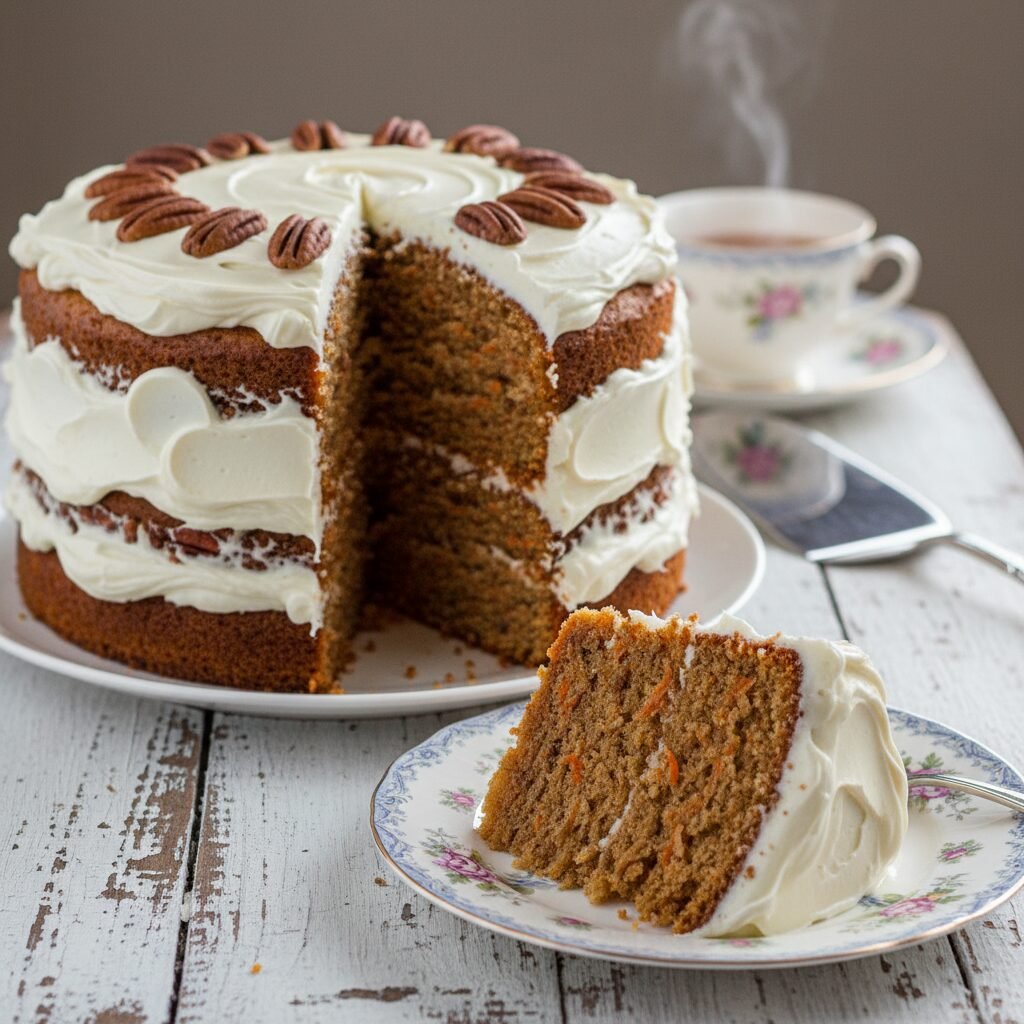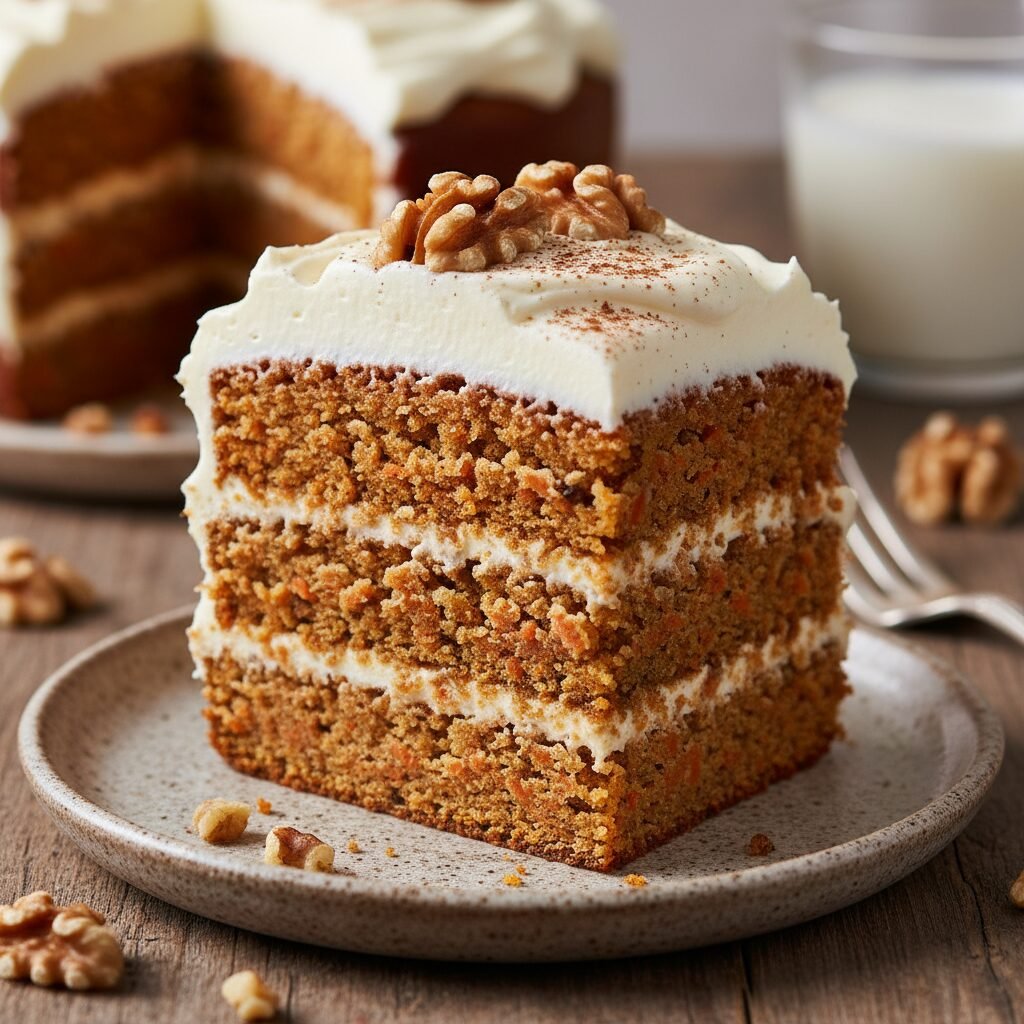
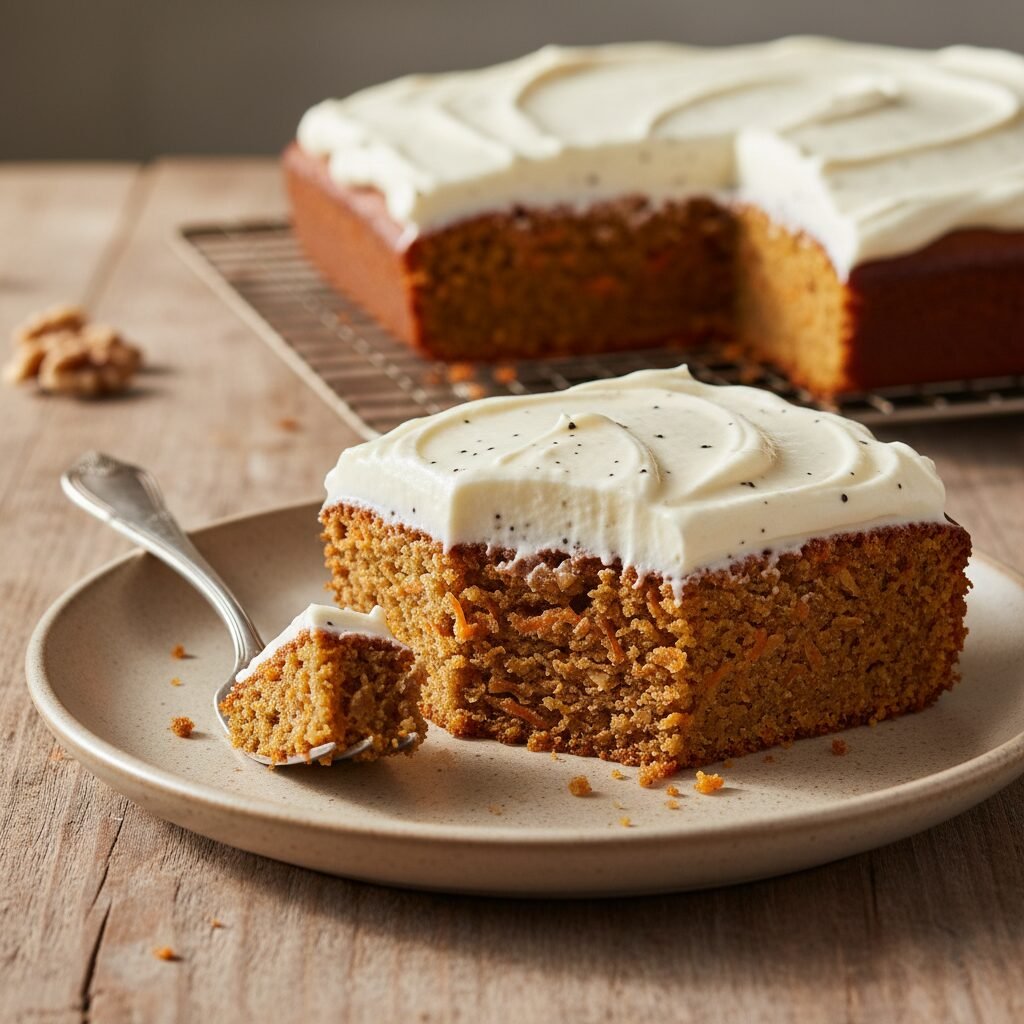
Moist Carrot Sheet Cake With Vanilla Frosting Recipe
Discover the easiest way to feed a crowd with this incredibly moist carrot sheet cake. Topped with a fluffy, cloud-like whipped vanilla frosting, this recipe ditches the fuss of layering for pure, simple indulgence that stays soft for days.
25 minutes
35 minutes
1 hour 15 minutes
15-20 servings
Dessert
Baking
American
Vegetarian
There is something undeniably comforting about a classic carrot cake, but let’s be honest: the process of stacking, leveling, and crumb-coating a layer cake can be a daunting task for a busy weeknight or a casual gathering. Enter the carrot sheet cake—a rustic, no-fuss champion of the dessert world that delivers all the spicy, warm flavors you crave without the structural engineering required for a tiered confection. This recipe was born out of a desire to maximize moisture and flavor while minimizing kitchen stress. By baking this in a standard 9×13 pan or a jelly roll pan, you ensure an even bake and a perfect frosting-to-cake ratio in every single bite.
What sets this specific version apart is the texture. We are talking about a crumb that is impossibly tender, bordering on creamy, thanks to a precise balance of oil, brown sugar, and freshly grated carrots. While many carrot cakes rely heavily on the tang of cream cheese frosting, we are taking a luxurious detour with a Whipped Vanilla Buttercream. This frosting is light, airy, and sweet, allowing the complex spices of cinnamon, nutmeg, and ginger in the cake to truly shine without fighting for dominance. It is the kind of dessert that tastes like home—perfect for potlucks, Easter brunches, or just a Tuesday night when you need a slice of happiness. Whether you are a seasoned baker or a novice, this sheet cake is forgiving, reliable, and guaranteed to disappear seconds after you set the pan down.
History & Origins
The origins of carrot cake are as rich and layered as the dessert itself, tracing back much further than the 1960s health food craze that popularized it in America. Historians believe the concept originated in the Middle Ages with ‘carrot pudding.’ During this period, sugar and other sweeteners were rare and prohibitively expensive commodities for the average person. Carrots, however, were abundant and naturally high in sugar—second only to sugar beets among vegetables. Cooks learned that steaming or boiling carrots and mixing them into batter added necessary sweetness and moisture to their confections.
The modern evolution of carrot cake saw a significant resurgence during World War II in Great Britain. With strict rationing on sugar, the Ministry of Food distributed recipes utilizing carrots as a sweetener to help families enjoy treats despite the shortages. This cemented the vegetable’s role in baking across the UK. However, it wasn’t until the post-war era, specifically the 1960s and 70s in the United States, that carrot cake morphed into the dense, spice-laden cake we recognize today. It became a staple in cafes and restaurants, often marketed somewhat ironically as a ‘healthier’ dessert option due to the vegetable content. While the traditional American version is almost exclusively paired with cream cheese frosting, earlier iterations and European variations often used simple glazes or vanilla-based icings, which is the tradition we are honoring with this vanilla-frosted sheet cake version.
Why This Recipe Works
This recipe succeeds where others fail primarily due to the fat source and the treatment of the carrots. Many cake recipes use butter as the primary fat, which is delicious but contains water and milk solids. For a carrot cake, however, we use neutral oil. Oil is 100% fat and remains liquid at room temperature, which coats the flour proteins more effectively than butter. This inhibits the formation of excessive gluten, ensuring the cake remains tender and soft rather than tough or bready. Furthermore, oil-based cakes retain their moisture significantly longer than butter-based cakes, meaning this sheet cake is just as good, if not better, on day two or three.
Secondly, the spices are bloomed in the batter. By mixing the cinnamon, nutmeg, and ginger with the wet ingredients and sugar before adding the flour, the flavor compounds are evenly distributed and intensified. Finally, the sheet pan format is crucial for texture. Because the batter is spread thinner than in a round cake pan, it bakes more evenly and quickly. This prevents the edges from drying out before the center is cooked—a common pitfall in dense fruit or vegetable cakes. The result is a uniform, velvety crumb from edge to center.
Why You’ll Love This Recipe
- ✓Incredibly moist texture that stays soft for days.
- ✓No-fuss sheet pan method eliminates stacking and leveling.
- ✓Whipped vanilla frosting offers a lighter, sweeter alternative to cream cheese.
- ✓Perfectly spiced with a blend of cinnamon, nutmeg, and ginger.
- ✓Ideal for feeding large crowds at potlucks or parties.
- ✓Uses simple pantry staples and fresh carrots.
Equipment You’ll Need
- ✓9×13 inch baking pan
- ✓Box grater or food processor
- ✓Large mixing bowl
- ✓Medium mixing bowl
- ✓Whisk
- ✓Rubber spatula
- ✓Electric hand mixer or stand mixer
- ✓Measuring cups and spoons
- ✓Wire cooling rack
Ingredients
- ✓2 cups all-purpose flour
- ✓2 tsp baking soda
- ✓1 tsp baking powder
- ✓1/2 tsp salt
- ✓2 tsp ground cinnamon
- ✓1/2 tsp ground nutmeg
- ✓1/4 tsp ground ginger
- ✓1 1/4 cups neutral oil (canola, vegetable, or grapeseed)
- ✓1 cup granulated white sugar
- ✓1 cup packed light brown sugar
- ✓4 large eggs, room temperature
- ✓1 tsp vanilla extract
- ✓3 cups finely grated fresh carrots (approx. 5-6 medium carrots)
- ✓1/2 cup chopped walnuts or pecans (optional)
- ✓1 cup unsalted butter, softened (for frosting)
- ✓3-4 cups powdered sugar (for frosting)
- ✓2-3 tbsp heavy cream or milk (for frosting)
- ✓2 tsp vanilla bean paste or high-quality vanilla extract (for frosting)
- ✓Pinch of salt (for frosting)
Instructions
- Preheat your oven to 350°F (175°C). Grease a 9×13 inch baking pan with non-stick spray or line it with parchment paper for easy removal.
- Wash, peel, and grate the carrots. Use the fine or medium holes of a box grater for the best texture. Do not use pre-shredded store-bought carrots as they are too dry. Set aside.
- In a medium bowl, whisk together the flour, baking soda, baking powder, salt, cinnamon, nutmeg, and ginger until well combined and lump-free.
- In a large bowl, whisk together the oil, granulated sugar, and brown sugar until the mixture is smooth and no brown sugar lumps remain.
- Add the eggs one at a time to the sugar mixture, whisking well after each addition. Stir in the vanilla extract.
- Gently fold the dry ingredients into the wet ingredients using a rubber spatula. Mix only until just combined and no streaks of flour are visible. Do not overmix.
- Fold in the grated carrots (and nuts if using) until evenly distributed throughout the batter.
- Pour the batter into the prepared baking pan and smooth the top with an offset spatula.
- Bake for 30-35 minutes, or until a toothpick inserted into the center comes out clean or with just a few moist crumbs attached.
- Remove the cake from the oven and place the pan on a wire rack. Allow the cake to cool completely in the pan before frosting. This is critical to prevent the frosting from melting.
- While the cake cools, prepare the frosting. In a large bowl or stand mixer, beat the softened butter on medium-high speed for 5 minutes until it is very pale and creamy.
- Gradually add the powdered sugar, one cup at a time, mixing on low speed until incorporated. Scrape down the sides of the bowl as needed.
- Add the vanilla bean paste, salt, and 2 tablespoons of heavy cream. Whip on high speed for another 3-4 minutes until the frosting is light and airy. Add more cream if needed for spreadability.
- Spread the frosting generously over the cooled cake. Slice into squares and serve.
Expert Cooking Tips
- ✓Grate your own carrots manually. Pre-bagged shredded carrots are hard and dry, which will ruin the texture of the cake.
- ✓Ensure all refrigerated ingredients, especially eggs and butter, are at room temperature to create a smooth emulsion.
- ✓Do not drain the liquid from the grated carrots; that moisture is essential for the cake’s tenderness.
- ✓Bloom your spices by ensuring they are well-mixed; you can even whisk them into the oil/sugar mixture first for a stronger flavor profile.
- ✓Watch the bake time carefully. Sheet cakes bake faster than deep round cakes, so check it at the 30-minute mark.
- ✓Sift your powdered sugar before making the frosting to avoid gritty lumps in your buttercream.
- ✓If you want a decorative finish, reserve some chopped nuts to sprinkle on top of the white frosting for contrast.
Substitutions and Variations
This recipe is quite versatile if you need to make adjustments. For the flour, you can substitute a high-quality 1:1 Gluten-Free Baking Flour blend if you are catering to gluten sensitivities; the moisture in the cake helps gluten-free flour perform well. If you are looking to reduce the fat content, you can substitute half of the oil with unsweetened applesauce, though the cake may be slightly denser. For the sugar, coconut sugar can replace brown sugar for a lower glycemic index option, but it will alter the flavor slightly. If you prefer a different nut, pecans and walnuts are interchangeable, or you can omit them entirely for a nut-free version. Raisins or dried cranberries can also be added if you enjoy chewy textures. For the frosting, if you absolutely miss the tang, you can swap half the butter for cream cheese, but the pure vanilla buttercream provides a lovely, sweet contrast to the spice.
Common Mistakes to Avoid
The most common mistake with carrot cake is using pre-shredded carrots from the grocery store. These are often treated with preservatives and are very dry, leading to a crunchy, dry cake. Always grate fresh. Another error is overmixing the batter once the flour is added. Overmixing develops gluten, which turns a tender cake into a rubbery one. Fold gently. Regarding the frosting, impatience is the enemy. If you try to frost the cake while it is even slightly warm, the butter in the frosting will melt, causing it to slide off or become greasy and translucent. Finally, accurate measuring of flour is key; use the spoon-and-level method rather than scooping the cup directly into the flour bag, which packs it down and leads to a dry cake.
Serving Suggestions
This Moist Carrot Sheet Cake is versatile enough for both casual and elegant settings. Serve it at room temperature to ensure the frosting is soft and the cake is moist. It pairs beautifully with a hot cup of dark roast coffee or a spiced chai latte, which complements the cinnamon and nutmeg notes in the cake. For a dessert spread, serve squares on white ceramic plates with a garnish of fresh mint or a dusting of extra cinnamon. If you are serving this for a birthday or celebration, you can pipe the vanilla frosting using a star tip for a more festive look. A side of vanilla bean ice cream is never a bad idea if you want to make it extra indulgent.
Storage and Reheating Tips
Because this cake is incredibly moist and contains fresh vegetables, it is best stored in the refrigerator, especially if your kitchen is warm. Cover the pan tightly with plastic wrap or foil, or transfer slices to an airtight container. It will keep well in the fridge for up to 5-7 days. However, cold cake can taste less sweet and firm, so let the slices sit at room temperature for 15-20 minutes before eating for the best experience. This cake also freezes beautifully. You can freeze the unfrosted cake wrapped in plastic wrap and foil for up to 3 months. Thaw it in the fridge overnight before frosting. You can also freeze frosted slices; place them on a baking sheet to freeze the frosting solid, then wrap them individually.
Nutrition Facts (Estimated)
| Serving Size | 1 slice |
| Calories | 420 |
| Fat | 22g |
| Saturated Fat | 8g |
| Unsaturated Fat | 12g |
| Trans Fat | 0g |
| Cholesterol | 45mg |
| Sodium | 210mg |
| Carbohydrates | 52g |
| Fiber | 2g |
| Sugar | 32g |
| Protein | 4g |
Frequently Asked Questions
Can I make this cake ahead of time?
Yes, absolutely. In fact, carrot cake often tastes better the next day as the spices have time to meld and the moisture distributes evenly. You can bake it one day before serving and keep it covered in the fridge.
Why did my carrot cake sink in the middle?
Sinking usually happens if the cake was underbaked or if the oven door was opened too early, causing a sudden temperature drop. It can also happen if there was too much leavening (baking soda/powder) for the structure to hold.
Can I use baby carrots?
Technically yes, but it is not recommended. Baby carrots are often harder and harder to grate than full-sized carrots. They also tend to be less flavorful. Stick to large, whole carrots for the best results.
My frosting is too runny, what do I do?
If your kitchen is hot or the butter was too soft, the frosting might be runny. Put the bowl in the fridge for 10-15 minutes to firm up, then whip it again. You can also add a bit more powdered sugar to stiffen it.
Can I bake this in round cake pans?
Yes, this recipe yields enough batter for two 8-inch or 9-inch round cake pans. You will need to adjust the baking time to approximately 35-45 minutes and check for doneness.
Is it necessary to peel the carrots?
It is highly recommended. Carrot skins can be slightly bitter and tough. Peeling them ensures a sweet, uniform texture and a bright orange color in your cake crumbs.
Can I add pineapple to this recipe?
Many people love pineapple in carrot cake! You can add about 1/2 cup of crushed pineapple (well-drained) to the batter. It adds extra acidity and sweetness, though it may make the cake slightly denser.
Why is my cake green?
This is a rare chemical reaction that can happen between the baking soda and the pigments in the carrots or walnuts if they aren’t dispersed well. It is completely harmless and safe to eat, just a bit visually odd.
Conclusion
This Moist Carrot Sheet Cake with Vanilla Frosting is the ultimate answer to the craving for a homemade, spice-infused treat without the labor-intensive process of a layered cake. It brings together the nostalgic warmth of cinnamon and nutmeg with the fresh sweetness of carrots, all topped with a cloud of vanilla perfection. Whether you are baking for a holiday, a potluck, or simply to treat your family, this recipe delivers consistent, mouth-watering results. So grab your box grater, preheat the oven, and get ready to fill your kitchen with the most inviting aroma imaginable. Happy baking!