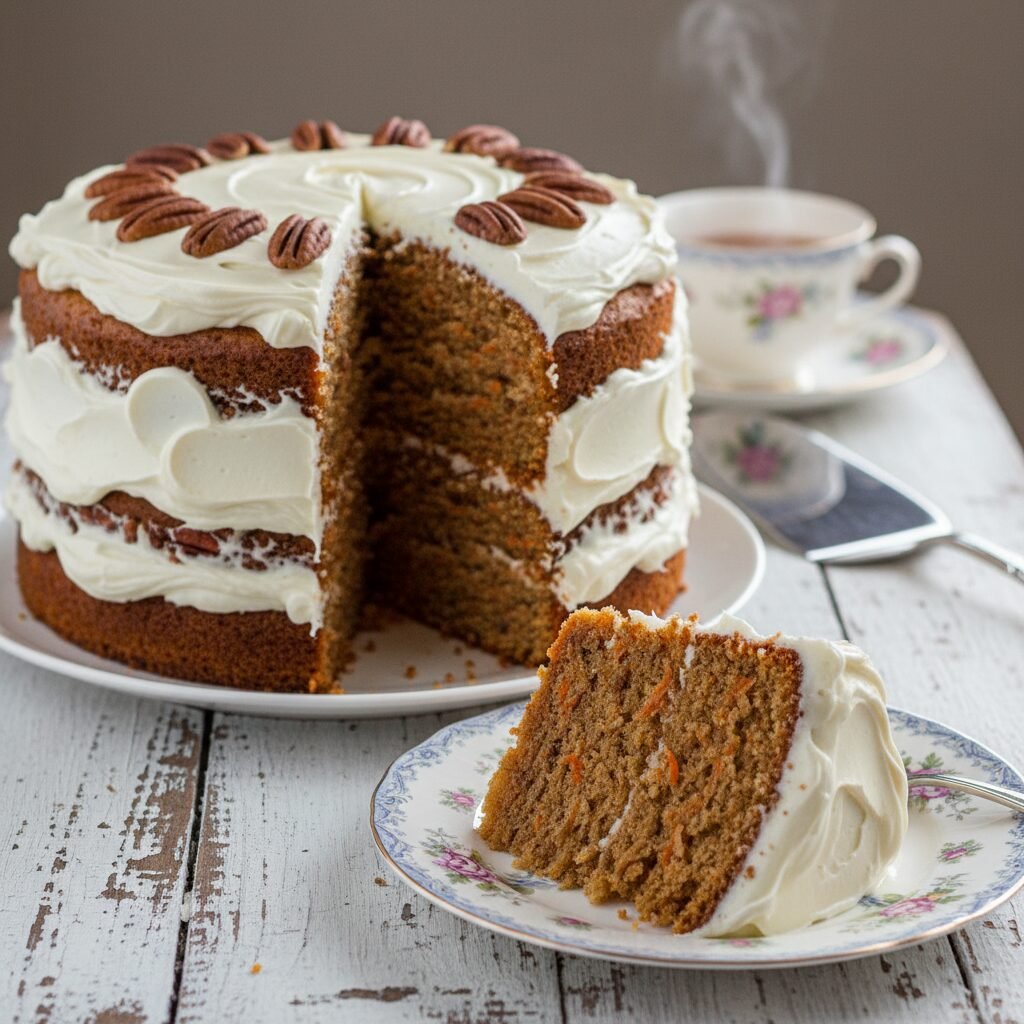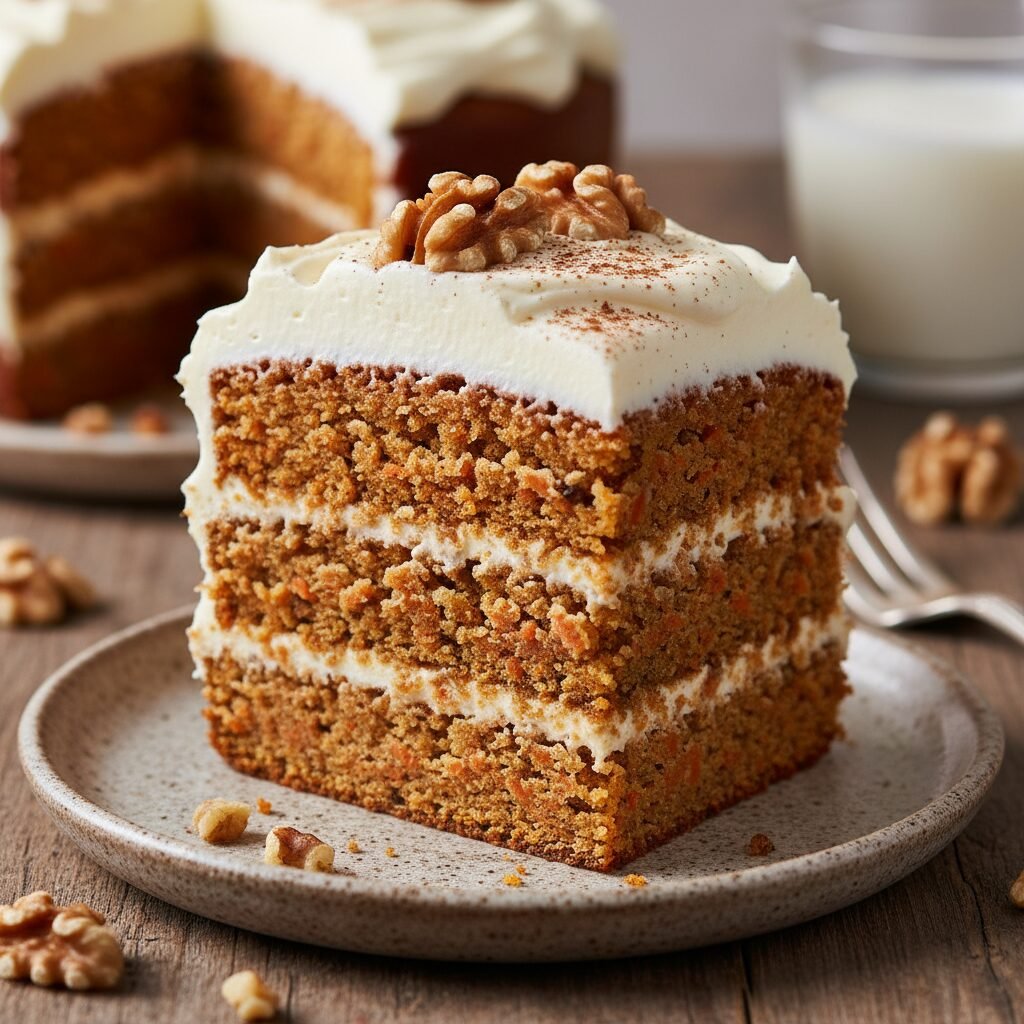
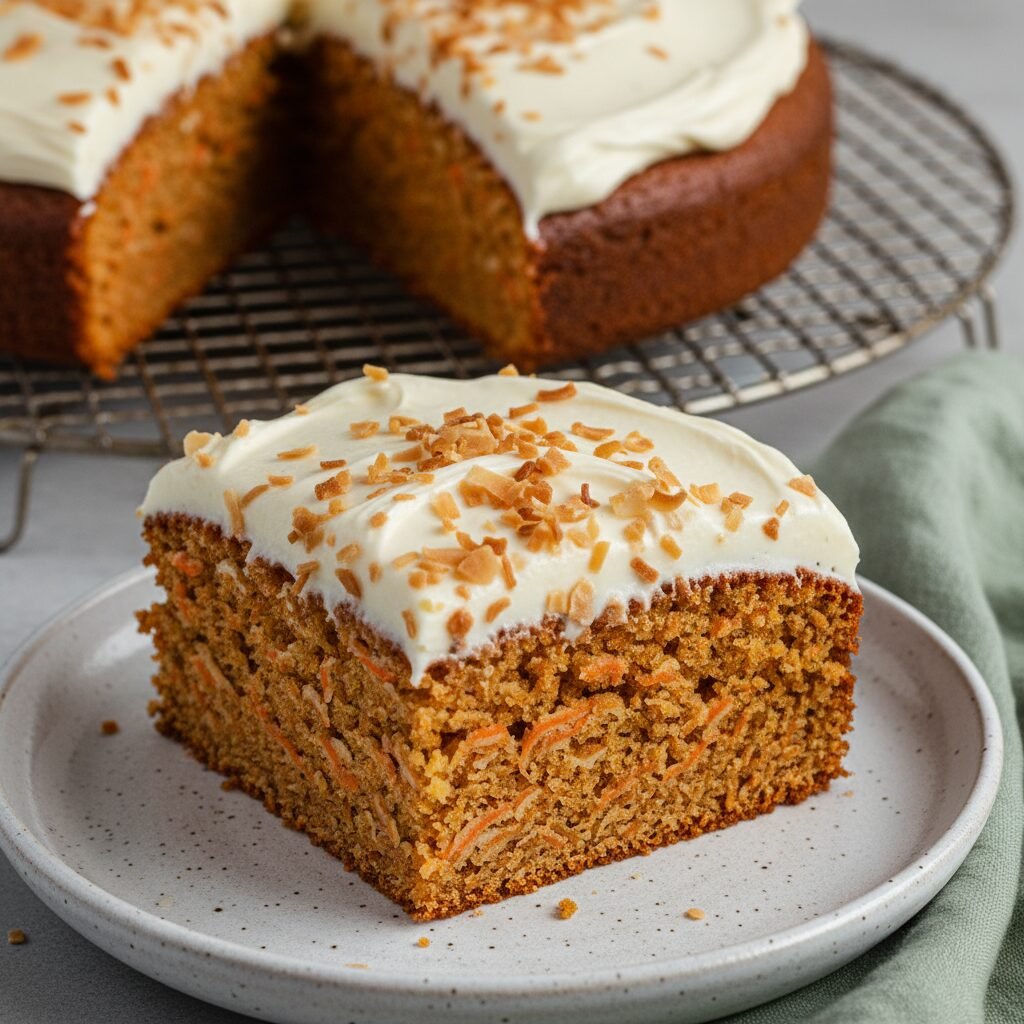
Moist Carrot Snack Cake With Coconut Recipe
This isn’t your average dry carrot cake; it is an incredibly moist, single-layer snack cake packed with fresh carrots and sweet shredded coconut. Topped with a tangy cream cheese frosting and toasted coconut flakes, it is the perfect easy dessert for afternoon tea, a potluck, or a quick sweet treat that comes together in just one bowl.
20 minutes
35 minutes
55 minutes
12-16 servings
Dessert
Baking
American
Vegetarian
There is something undeniably comforting about a snack cake. Unlike its towering, multi-layered cousins that require structural engineering and hours of chilling, a snack cake is humble, accessible, and ready to be devoured straight from the pan. This Moist Carrot Snack Cake with Coconut is the epitome of that comfort. It bridges the gap between a breakfast loaf and a decadent dessert, offering a texture that is impossibly soft and a flavor profile that is warm, spiced, and slightly tropical. The magic lies in the combination of ingredients. While traditional carrot cake is a classic for a reason, the addition of sweetened shredded coconut elevates the texture, adding a delightful chewiness that contrasts beautifully with the tender crumb. The natural sweetness of the carrots pairs effortlessly with the nutty aroma of the coconut, while a blend of cinnamon, ginger, and nutmeg provides that signature warmth we all crave during the cooler months—though this cake is sunny enough for summer baking too. What truly sets this recipe apart is its moisture content. By utilizing both oil and brown sugar, we ensure the cake stays soft for days, never drying out or becoming crumbly. And let us not forget the crowning glory: a thick, swoops-and-swirls layer of tangy cream cheese frosting. We finish it off with a sprinkling of toasted coconut, which adds a satisfying crunch and a visual flair that makes this simple sheet cake look like it came from a bakery. Whether you are a seasoned baker or a novice in the kitchen, this recipe is designed to be foolproof, yielding a rich, flavorful cake that demands a second slice.
History & Origins
The history of carrot cake is a fascinating journey that spans centuries and continents, evolving from a medieval necessity to a modern-day staple. Its origins can be traced back to the Middle Ages in Europe. During this time, sugar was a rare and expensive luxury, often imported and heavily taxed. To sweeten their puddings and desserts, cooks turned to vegetables with high natural sugar content, specifically carrots and parsnips. These early iterations were more akin to a steamed carrot pudding than the fluffy cakes we know today. They were dense, hearty, and often served as a source of sustenance rather than a delicate treat. As time progressed, the recipe evolved. One of the earliest printed recipes for a ‘Gateau de Carottes’ appeared in a French cookbook in the early 19th century, gaining popularity in Switzerland as a specialty cake. However, the carrot cake’s true rise to prominence occurred during World War II in the United Kingdom. With strict rationing of sugar and other baking staples, the British Ministry of Food disseminated recipes using carrots as a sweetener to encourage nutritious eating during scarce times. This solidified the carrot’s place in the baking world. In the United States, carrot cake remained relatively obscure until the 1960s and 1970s. Ironically, it exploded in popularity during the ‘health food’ craze of that era. Because the primary ingredient was a vegetable, many consumers perceived it as a ‘guilt-free’ or healthier alternative to chocolate cake, despite the generous amounts of oil and sugar involved. It was during this American boom that the now-iconic cream cheese frosting became the standard pairing, replacing simpler glazes or plain presentations. The addition of coconut and pineapple (often called ‘Hummingbird’ style variations) also became popular in the Southern United States, adding moisture and texture. Today, this snack cake version honors that long lineage, combining the medieval practicality of vegetable-based sweetness with the mid-century American love for rich, frosted comfort desserts.
Why This Recipe Works
This recipe succeeds where many others fail because it meticulously balances moisture retention with structural integrity. The primary reason this cake is so moist is the use of neutral oil instead of butter. While butter adds flavor, it is about 20% water and solidifies at room temperature, which can lead to a drier, firmer crumb once the cake cools. Oil, on the other hand, remains liquid at room temperature, coating the flour proteins and preventing the formation of tough gluten networks. This results in a sensation of moistness that lasts for days. Furthermore, we use a high ratio of brown sugar to white sugar. Brown sugar contains molasses, which is hygroscopic, meaning it attracts and holds onto water molecules from the air, further ensuring the cake stays soft. The inclusion of shredded coconut does double duty here: it adds a unique textural contrast—a pleasant chewiness amidst the soft crumb—and its high fat content contributes to the overall richness. We also employ a specific method for the carrots: freshly grated, never pre-packaged. Pre-shredded carrots are often dry and coated in cornstarch to prevent clumping, which can dry out the batter. Freshly grated carrots release their own moisture during the baking process, effectively steaming the cake from the inside out. Finally, the spices are bloomed in the fat during the mixing process, ensuring that the cinnamon, ginger, and nutmeg permeate every single bite, rather than sitting on the surface of the flavor profile.
Why You’ll Love This Recipe
- ✓Incredibly moist texture that stays soft for up to 4 days.
- ✓One-bowl mixing method requires minimal cleanup.
- ✓The combination of coconut and carrot creates a complex, satisfying flavor.
- ✓Tangy cream cheese frosting perfectly offsets the sweet cake.
- ✓No layering or stacking required—just bake and frost in the pan.
- ✓Versatile recipe that allows for nut or raisin additions.
Equipment You’ll Need
- ✓9×13 inch baking pan
- ✓Large mixing bowl
- ✓Medium mixing bowl
- ✓Box grater
- ✓Whisk
- ✓Rubber spatula
- ✓Electric hand mixer or stand mixer (for frosting)
Ingredients
- ✓2 cups all-purpose flour
- ✓2 teaspoons baking soda
- ✓1 teaspoon baking powder
- ✓1/2 teaspoon salt
- ✓2 teaspoons ground cinnamon
- ✓1/2 teaspoon ground ginger
- ✓1/4 teaspoon ground nutmeg
- ✓1 cup granulated sugar
- ✓1 cup light brown sugar, packed
- ✓1 cup vegetable oil or canola oil
- ✓4 large eggs, room temperature
- ✓1/2 cup sour cream or plain Greek yogurt
- ✓2 teaspoons vanilla extract
- ✓3 cups freshly grated carrots (approx. 5-6 medium carrots)
- ✓1 cup sweetened shredded coconut
- ✓1/2 cup chopped walnuts or pecans (optional)
- ✓8 oz cream cheese, softened
- ✓1/2 cup unsalted butter, softened
- ✓3 cups powdered sugar
- ✓1/2 cup toasted coconut flakes (for topping)
Instructions
- 1. Preheat your oven to 350°F (175°C). Grease a 9×13 inch baking pan with non-stick spray or line it with parchment paper for easy removal.
- 2. In a medium bowl, whisk together the flour, baking soda, baking powder, salt, cinnamon, ginger, and nutmeg until well combined. Set aside.
- 3. In a large bowl, whisk together the granulated sugar, brown sugar, oil, eggs, sour cream, and vanilla extract until the mixture is smooth and emulsified.
- 4. Gradually add the dry ingredients to the wet ingredients, stirring gently with a spatula just until the flour streaks disappear. Do not overmix.
- 5. Fold in the grated carrots and shredded coconut (and nuts if using) until evenly distributed throughout the batter.
- 6. Pour the batter into the prepared baking pan and smooth the top with your spatula.
- 7. Bake for 30-35 minutes, or until a toothpick inserted into the center comes out clean or with just a few moist crumbs attached.
- 8. Remove the cake from the oven and place the pan on a wire rack to cool completely. The cake must be fully cool before frosting, otherwise the frosting will melt.
- 9. While the cake cools, make the frosting. In a large bowl using a hand mixer or stand mixer, beat the softened cream cheese and butter together on medium-high speed until smooth and creamy (about 2-3 minutes).
- 10. Reduce the speed to low and gradually add the powdered sugar and vanilla extract. Once incorporated, increase speed to high and whip for 2 minutes until fluffy.
- 11. Spread the frosting generously over the cooled cake. Top with the toasted coconut flakes.
- 12. Slice into squares and serve.
Expert Cooking Tips
- ✓Grate your own carrots using the medium holes of a box grater. Pre-shredded carrots are too dry and hard.
- ✓Ensure your eggs, sour cream, butter, and cream cheese are at room temperature to ensure a smooth batter and lump-free frosting.
- ✓Toast the coconut for the topping in a dry skillet over medium heat for 2-3 minutes, watching closely as it burns quickly.
- ✓Do not overmix the batter once the flour is added; overmixing develops gluten and makes the cake tough.
- ✓If the top of the cake is browning too quickly in the oven, loosely tent it with aluminum foil for the last 10 minutes.
Substitutions and Variations
This recipe is quite forgiving and allows for several substitutions. For the flour, you can use a 1:1 gluten-free baking flour blend if you are catering to gluten sensitivities; the moisture in the cake helps avoid the gritty texture often associated with GF baking. If you are out of sour cream, plain Greek yogurt or even buttermilk works as a fantastic substitute to provide that necessary acidity and tenderness. For the oil, melted coconut oil is a great alternative that enhances the coconut flavor profile, though it makes the cake slightly denser when chilled. You can swap the walnuts for pecans, hazelnuts, or omit them entirely for a nut-free version. If you prefer a less sweet cake, you can reduce the granulated sugar by 1/4 cup, but keep the brown sugar amount the same to maintain moisture. For the frosting, mascarpone cheese can be used in place of cream cheese for a richer, less tangy flavor.
Common Mistakes to Avoid
The most common mistake people make with carrot cake is using pre-packaged shredded carrots. These are convenient, but they are dry and thick, leading to crunchy bits of raw carrot in your cake rather than them melting into the crumb. Another error is frosting the cake while it is still warm. Even a slightly warm cake will cause the butter and cream cheese in the frosting to separate and slide right off the edges. Over-measuring flour is also a culprit for dry cake; always spoon your flour into the measuring cup and level it off, rather than scooping directly from the bag which packs it down. Finally, failing to beat the cream cheese and butter enough before adding sugar can result in a lumpy frosting.
Serving Suggestions
This snack cake is versatile enough to be served at various times of the day. It is perfect for a mid-morning coffee break, served alongside a hot latte or a cup of Earl Grey tea. For dessert, it pairs wonderfully with a glass of cold milk to cut through the richness of the frosting. If you want to elevate the plating for a dinner party, serve a square on a dessert plate with a garnish of candied ginger and a dollop of extra whipped cream. It is also excellent for picnics or potlucks because it travels well in the pan.
Storage and Reheating Tips
Because of the cream cheese frosting, this cake should be stored in the refrigerator. Cover the pan tightly with plastic wrap or aluminum foil, or transfer slices to an airtight container. It will keep well in the fridge for up to 5 days. In fact, many people find the flavor improves on the second day as the spices meld. If you want to freeze the cake, you can do so frosted or unfrosted. To freeze frosted slices, place them on a baking sheet in the freezer for an hour until the frosting is hard, then wrap them individually in plastic wrap and place in a freezer bag for up to 3 months. Thaw in the refrigerator overnight before serving. Allow the cake to sit at room temperature for 15-20 minutes before eating for the best texture.
Nutrition Facts (Estimated)
| Serving Size | 1 square |
| Calories | 380 |
| Fat | 22g |
| Saturated Fat | 8g |
| Unsaturated Fat | 12g |
| Trans Fat | 0g |
| Cholesterol | 45mg |
| Sodium | 210mg |
| Carbohydrates | 42g |
| Fiber | 2g |
| Sugar | 28g |
| Protein | 4g |
Frequently Asked Questions
Can I add pineapple to this recipe?
Yes! You can add 1/2 cup of crushed pineapple (drained well) to the batter. If you do this, you may need to bake the cake for an extra 5 minutes as the pineapple adds extra moisture.
Why did my cake sink in the middle?
Sinking usually happens if the oven door was opened too early, causing a temperature drop, or if the cake was underbaked. It can also happen if there is too much leavening (baking soda/powder) relative to the structure.
Can I make this into cupcakes?
Absolutely. This batter will make approximately 24 cupcakes. Bake them at 350°F for 18-22 minutes. Check for doneness with a toothpick.
Do I have to use coconut?
If you dislike coconut or have an allergy, you can omit it entirely. You might want to add an extra 1/2 cup of nuts or raisins to compensate for the volume, but the cake works fine without it.
Can I use whole wheat flour?
You can substitute up to 50% of the all-purpose flour with whole wheat flour. Using 100% whole wheat flour will result in a much denser and heavier cake.
How do I toast coconut flakes?
Spread the coconut flakes in a single layer on a baking sheet and bake at 325°F for 5-7 minutes, stirring halfway through. Alternatively, toast them in a dry skillet over medium heat, stirring constantly until golden brown.
Can I reduce the sugar?
You can reduce the white sugar by about 1/4 cup without ruining the texture. However, reducing sugar too much will affect the moisture and shelf-life of the cake.
Is this cake dairy-free?
The cake batter contains sour cream, but you can use a dairy-free yogurt. The frosting is dairy-based, but you can use vegan butter and vegan cream cheese alternatives to make the whole recipe dairy-free.
Conclusion
This Moist Carrot Snack Cake with Coconut is truly a keeper of a recipe. It manages to strike the perfect balance between a wholesome, spice-filled treat and a decadent, creamy dessert. Whether you are baking for a crowd, prepping a treat for your family’s lunchboxes, or simply satisfying a late-night craving, this cake delivers every time. The ease of the one-bowl method means you are never far from a warm, homemade cake. We hope this becomes a staple in your kitchen just as it has in ours. Happy baking!