Moist Carrot Snack Cake With Cream Cheese Frosting Recipe
This incredibly moist, single-layer carrot snack cake is the epitome of easy comfort baking. Loaded with fresh carrots, warm spices, and topped with a thick, tangy cream cheese frosting, it’s the perfect treat for any time of day without the fuss of a tiered layer cake.
20 minutes
35 minutes
55 minutes
12 servings
Dessert
Baking
American
Vegetarian
There is something profoundly comforting about a snack cake. Unlike its high-maintenance cousin, the multi-tiered layer cake, a snack cake is humble, approachable, and ready to be eaten straight from the pan with a fork on a lazy Tuesday afternoon. This Moist Carrot Snack Cake with Cream Cheese Frosting is the absolute gold standard of the genre. It bridges the gap between a morning coffee cake and a decadent dessert, offering a texture that is dense enough to be satisfying but tender enough to melt in your mouth.
The magic of this recipe lies in its unpretentious nature. It doesn’t require advanced piping skills or hours of chilling time. It celebrates the natural sweetness of carrots, elevated by a symphony of warming spices like cinnamon, nutmeg, and a whisper of ginger. But let’s be honest: a carrot cake is only as good as its frosting. We’ve paired this spiced sponge with a generous layer of silky, tangy cream cheese frosting that cuts through the richness of the cake perfectly. Whether you are a seasoned baker looking for a reliable classic or a novice wanting to impress without stress, this recipe delivers high-impact flavor with minimal effort. It’s the kind of cake that sits on the counter under a glass dome and mysteriously disappears, slice by sliver-thin slice, until only crumbs remain.
History & Origins
The origins of carrot cake are somewhat murky, but culinary historians generally agree that it evolved from medieval carrot puddings. In the Middle Ages, sugar and other sweeteners were rare and prohibitively expensive for the common family, so carrots—which contain more natural sugar than almost any other vegetable besides sugar beets—were used to sweeten desserts. These early iterations were boiled or steamed, similar to a plum pudding, rather than baked.
The modern evolution of the carrot cake began to take shape during World War II in the United Kingdom. Due to strict rationing of sugar, the Ministry of Food disseminated recipes that utilized carrots as a sweetener to keep morale high and treats available. However, the carrot cake as we know it today—rich, spiced, and slathered in cream cheese frosting—is largely an American phenomenon that exploded in popularity during the 1960s and 1970s.
During this era, there was a growing interest in “health foods,” and despite being a cake loaded with oil and sugar, the presence of a vegetable allowed people to perceive it as a healthier option. It became a staple in cafes and restaurants across the United States. The pairing with cream cheese frosting is often attributed to the Philadelphia Cream Cheese company, which printed recipes on their packaging in the 1980s to boost sales, cementing the duo as an inseparable culinary classic.
Why This Recipe Works
This recipe succeeds where many others fail because of the specific balance of fat and moisture. Many dry cakes are the result of using butter as the primary fat; while butter offers flavor, it contains water which evaporates, and it solidifies at room temperature. By using a neutral oil (like vegetable or canola) instead of butter, we ensure the cake remains incredibly soft and moist for days, even when refrigerated. Oil coats the flour proteins more effectively than butter, inhibiting gluten formation and resulting in a more tender crumb.
Furthermore, we rely strictly on freshly grated carrots rather than pre-packaged shreds. Freshly grated carrots release water during the baking process, essentially steaming the cake from the inside out. We also use a combination of granulated white sugar and brown sugar. The molasses in the brown sugar is hygroscopic, meaning it attracts and holds onto moisture, adding a depth of flavor and a chewiness to the texture that white sugar alone cannot achieve. Finally, the frosting ratio is designed to be stable yet spreadable, with enough cream cheese to provide a tangy counterpoint to the sweet cake without becoming soupy.
Why You’ll Love This Recipe
- ✓Incredibly moist texture that stays soft for days.
- ✓Easy one-pan method—no stacking or leveling required.
- ✓Perfect balance of warm spices: cinnamon, nutmeg, and ginger.
- ✓Rich, tangy cream cheese frosting that isn’t too sweet.
- ✓Versatile: Add nuts, raisins, or pineapple if desired.
- ✓Ideal for potlucks, picnics, or afternoon snacking.
Equipment You’ll Need
- ✓9×13 inch baking pan
- ✓Large mixing bowl
- ✓Medium mixing bowl
- ✓Box grater or food processor
- ✓Whisk
- ✓Rubber spatula
- ✓Electric hand mixer or stand mixer
- ✓Measuring cups and spoons
Ingredients
- ✓2 cups all-purpose flour
- ✓2 tsp baking soda
- ✓1/2 tsp fine sea salt
- ✓2 tsp ground cinnamon
- ✓1/2 tsp ground nutmeg
- ✓1/4 tsp ground ginger
- ✓1 1/4 cups neutral oil (canola, vegetable, or grapeseed)
- ✓1 cup granulated sugar
- ✓1 cup packed light brown sugar
- ✓1 tsp vanilla extract
- ✓4 large eggs, room temperature
- ✓3 cups grated fresh carrots (approx. 5-6 medium carrots)
- ✓1 cup chopped pecans or walnuts (optional)
- ✓8 oz brick cream cheese, softened to room temperature
- ✓1/2 cup unsalted butter, softened to room temperature
- ✓3 cups powdered sugar
- ✓1 tsp vanilla extract (for frosting)
- ✓Pinch of salt (for frosting)
Instructions
- Preheat your oven to 350°F (175°C). Grease a 9×13 inch baking pan with non-stick spray or butter, and line with parchment paper for easy removal.
- In a medium bowl, whisk together the flour, baking soda, salt, cinnamon, nutmeg, and ginger until well combined. Set aside.
- In a large mixing bowl, whisk together the oil, granulated sugar, brown sugar, and vanilla extract until the mixture is smooth and no lumps of brown sugar remain.
- Add the eggs one at a time, whisking vigorously after each addition until the mixture is emulsified.
- Gradually add the dry ingredients to the wet ingredients. Switch to a rubber spatula and fold gently until just combined. Do not overmix.
- Fold in the grated carrots (and nuts/raisins if using) until evenly distributed throughout the batter.
- Pour the batter into the prepared baking pan and smooth the top with the spatula.
- Bake for 35-45 minutes, or until a toothpick inserted into the center comes out clean or with just a few moist crumbs attached.
- Remove from the oven and allow the cake to cool completely in the pan on a wire rack. It is crucial the cake is cool before frosting.
- While the cake cools, make the frosting. In a large bowl using a hand mixer or stand mixer, beat the softened cream cheese and butter together on medium-high speed until smooth and creamy (about 2-3 minutes).
- Reduce speed to low and gradually add the powdered sugar, vanilla, and a pinch of salt. Once the sugar is incorporated, increase speed to high and beat for another 2 minutes until fluffy.
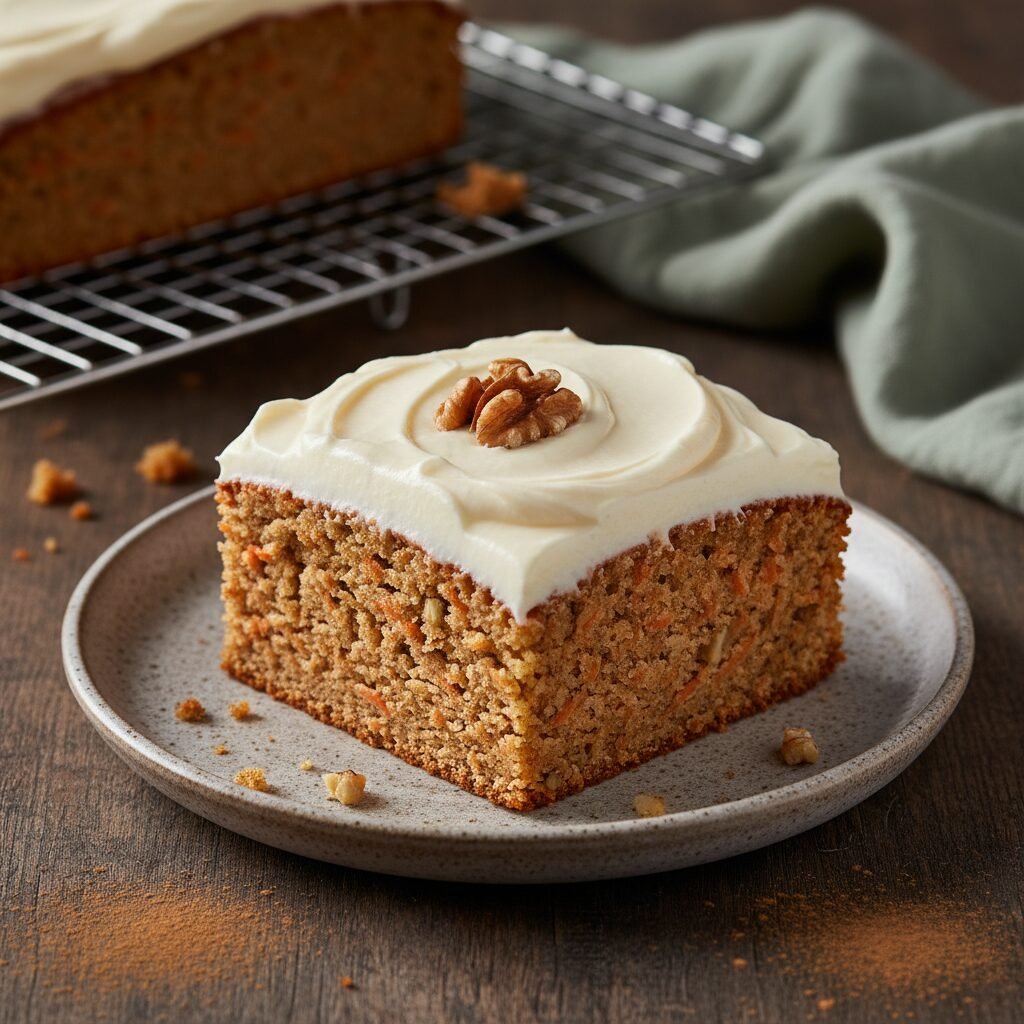
- Spread the frosting generously over the cooled cake. Slice into squares and serve.
Expert Cooking Tips
- ✓Grate your own carrots: Store-bought pre-shredded carrots are too dry and thick. Use the medium holes of a box grater for the best texture.
- ✓Room temperature ingredients: Ensure your eggs, butter, and cream cheese are at room temperature to prevent a lumpy batter or curdled frosting.
- ✓Don’t overmix: When combining wet and dry ingredients, stop as soon as the flour streaks disappear to keep the cake tender.
- ✓Weigh your flour: If possible, use a scale (240g flour). If using cups, spoon and level the flour to avoid packing it down.
- ✓Cool completely: If you frost the cake while it’s even slightly warm, the cream cheese frosting will melt and slide off.
- ✓Toast the nuts: If adding pecans or walnuts, toast them in a dry pan for 5 minutes first to unlock their flavor.
Substitutions and Variations
This recipe is quite forgiving and adaptable. For a gluten-free version, substitute the all-purpose flour with a high-quality 1:1 gluten-free baking flour blend containing xanthan gum. If you are looking to reduce the oil, you can swap half of the oil (approx. 2/3 cup) with unsweetened applesauce; this will keep the cake moist but slightly denser. For the sugar, you can use dark brown sugar instead of light brown for a deeper molasses flavor. If you have a nut allergy, simply omit the pecans or walnuts, or swap them for pumpkin seeds for crunch. For the frosting, if you don’t have cream cheese, a standard vanilla buttercream or a mascarpone frosting works beautifully, though the classic tang will be different.
Common Mistakes to Avoid
The most common mistake is using pre-bagged shredded carrots. These are coated in preservatives and are very dry, which will result in a dry cake with crunchy carrot bits. Always grate fresh. Another mistake is over-baking. Carrot cake is dark due to the spices and brown sugar, so visual cues can be tricky. Rely on the toothpick test; if it comes out bone dry, you may have baked it too long—a few moist crumbs are desirable. Finally, rushing the cooling process is a disaster for cream cheese frosting. The fats in the frosting have a low melting point, so the cake must be room temperature or colder.
Serving Suggestions
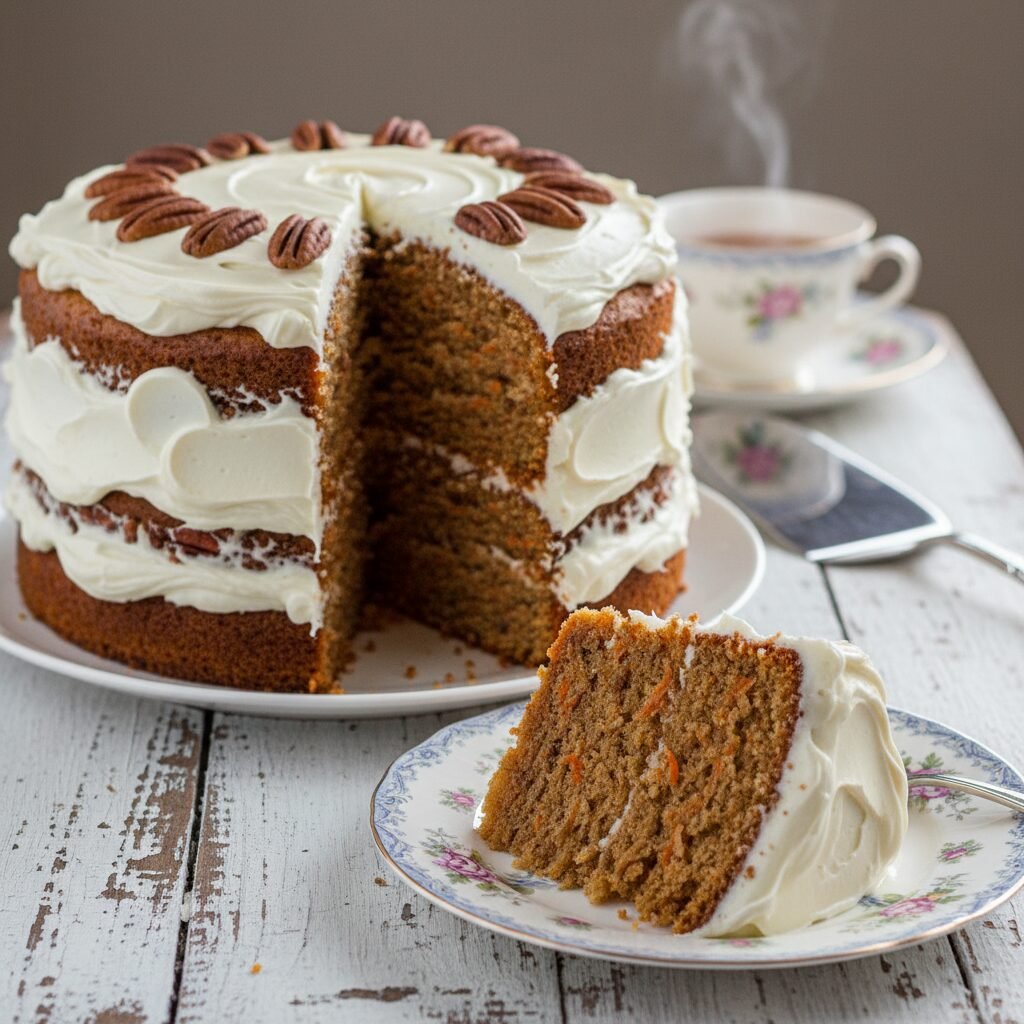
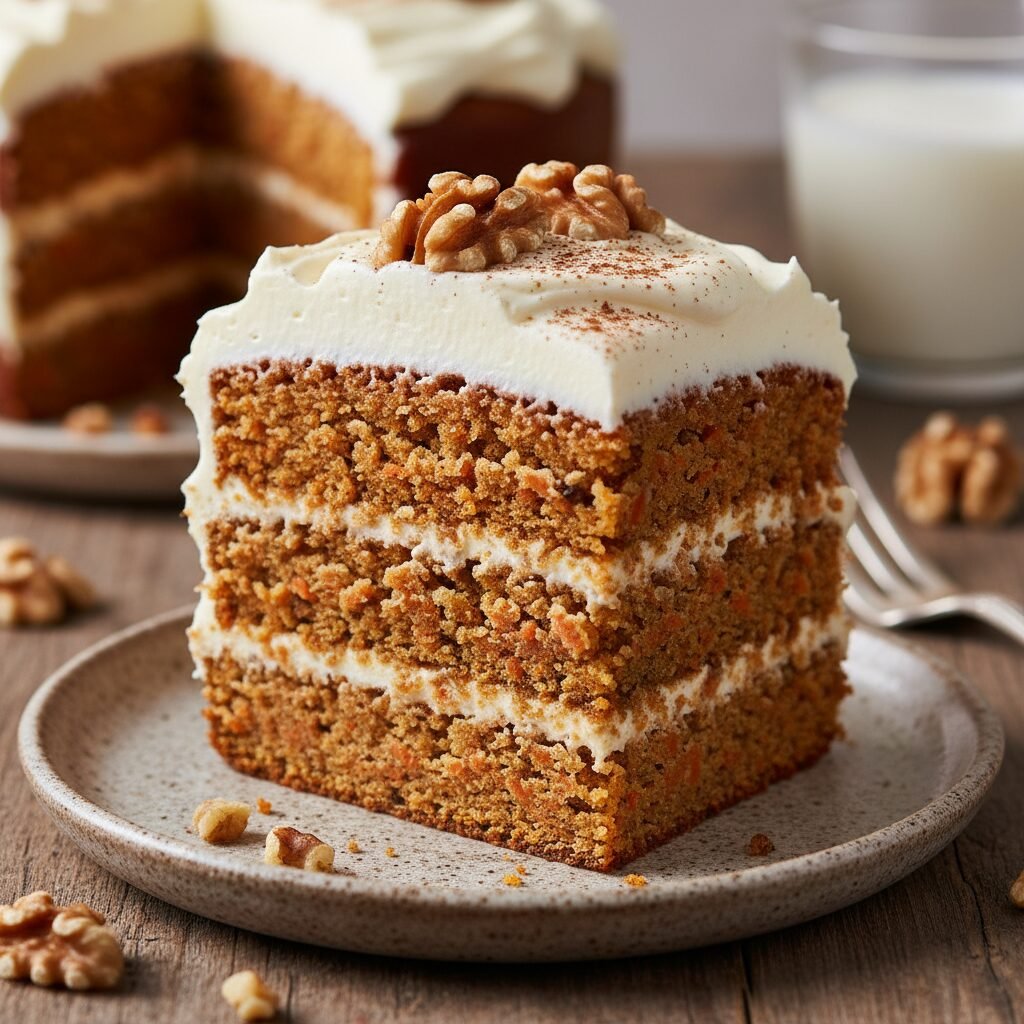
This snack cake is versatile enough for various settings. For a casual brunch, serve squares on simple white plates with a side of fresh fruit or berries to cut the richness. For an afternoon treat, it pairs exceptionally well with a hot cup of black coffee or Earl Grey tea. If you want to dress it up for a dinner party, garnish the top with whole pecan halves, a dusting of extra cinnamon, or even candied carrot ribbons. It’s best served slightly chilled or at room temperature.
Storage and Reheating Tips
Because of the cream cheese frosting, this cake should be stored in the refrigerator. Cover the pan tightly with plastic wrap or transfer slices to an airtight container. It will keep well in the fridge for up to 5-6 days. In fact, many people find the flavor improves on the second day as the spices meld. You can also freeze the cake. Flash freeze the slices on a baking sheet until the frosting is hard, then wrap each slice individually in plastic wrap and foil. Thaw in the refrigerator overnight before eating.
Nutrition Facts (Estimated)
| Serving Size | 1 square |
| Calories | 420 |
| Fat | 24g |
| Saturated Fat | 8g |
| Unsaturated Fat | 15g |
| Trans Fat | 0g |
| Cholesterol | 45mg |
| Sodium | 280mg |
| Carbohydrates | 48g |
| Fiber | 2g |
| Sugar | 34g |
| Protein | 4g |
Frequently Asked Questions
Can I bake this in round pans for a layer cake?
Yes! This batter fits into two 9-inch round cake pans. Reduce the baking time to approximately 25-30 minutes and check for doneness early.
Why did my carrot cake sink in the middle?
Sinking usually happens if the oven door was opened too early, causing a temperature drop, or if the batter was over-mixed, incorporating too much air that collapsed during cooling.
Can I add pineapple or coconut?
Absolutely. You can add 1/2 cup of drained crushed pineapple or 1/2 cup of shredded coconut. If adding pineapple, reduce the oil by about 2 tablespoons to account for the extra moisture.
Do I have to peel the carrots before grating?
It is highly recommended. While the skins are edible, they can be slightly bitter and tough. Peeling ensures the sweetest, softest texture.
My frosting is too runny, how do I fix it?
If the frosting is too soft, refrigerate it for 20 minutes to firm up the butter. If it’s still runny, add more powdered sugar, 1/4 cup at a time.
Can I make the cake ahead of time?
Yes, carrot cake is actually one of the best cakes to make ahead. You can bake the cake 1-2 days in advance and keep it covered in the fridge before frosting.
Is this recipe dairy-free?
The cake base is dairy-free (uses oil, not butter). However, the frosting contains butter and cheese. You would need to use vegan butter and vegan cream cheese for the frosting.
Can I use baby carrots?
It’s not recommended. Baby carrots are harder to grate and often hold more water, which can throw off the texture. Whole carrots are easier to handle and yield better results.
Conclusion
There are few things in the baking world as reliably satisfying as a homemade carrot cake. This Moist Carrot Snack Cake with Cream Cheese Frosting takes all the best elements of the classic dessert—the spice, the moisture, the tang—and packages them into an accessible, easy-to-make format. It’s a recipe that asks for very little but gives back so much in terms of flavor and comfort. Whether you are baking for a crowd, a family gathering, or just for yourself, this cake is guaranteed to become a requested favorite in your kitchen rotation. So grab your box grater, preheat the oven, and get ready to enjoy the best slice of carrot cake you’ve ever had.