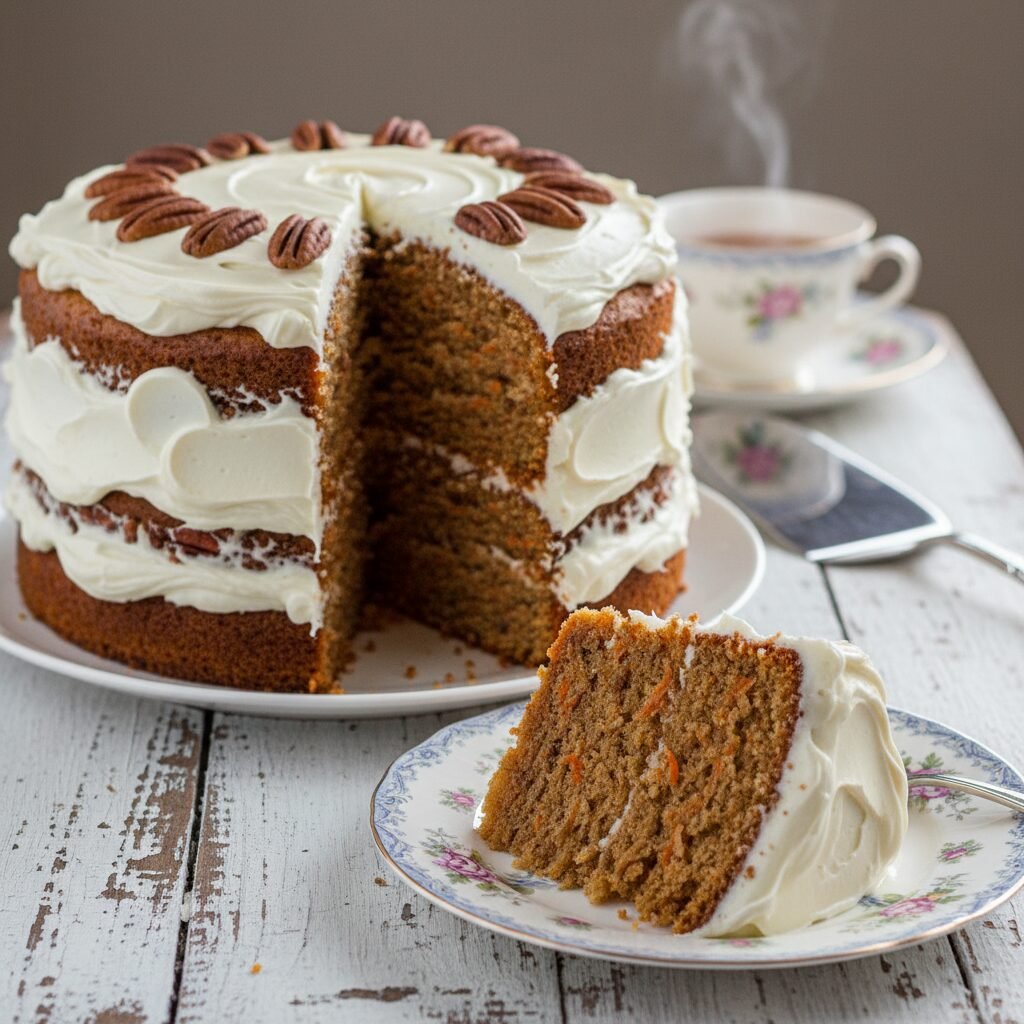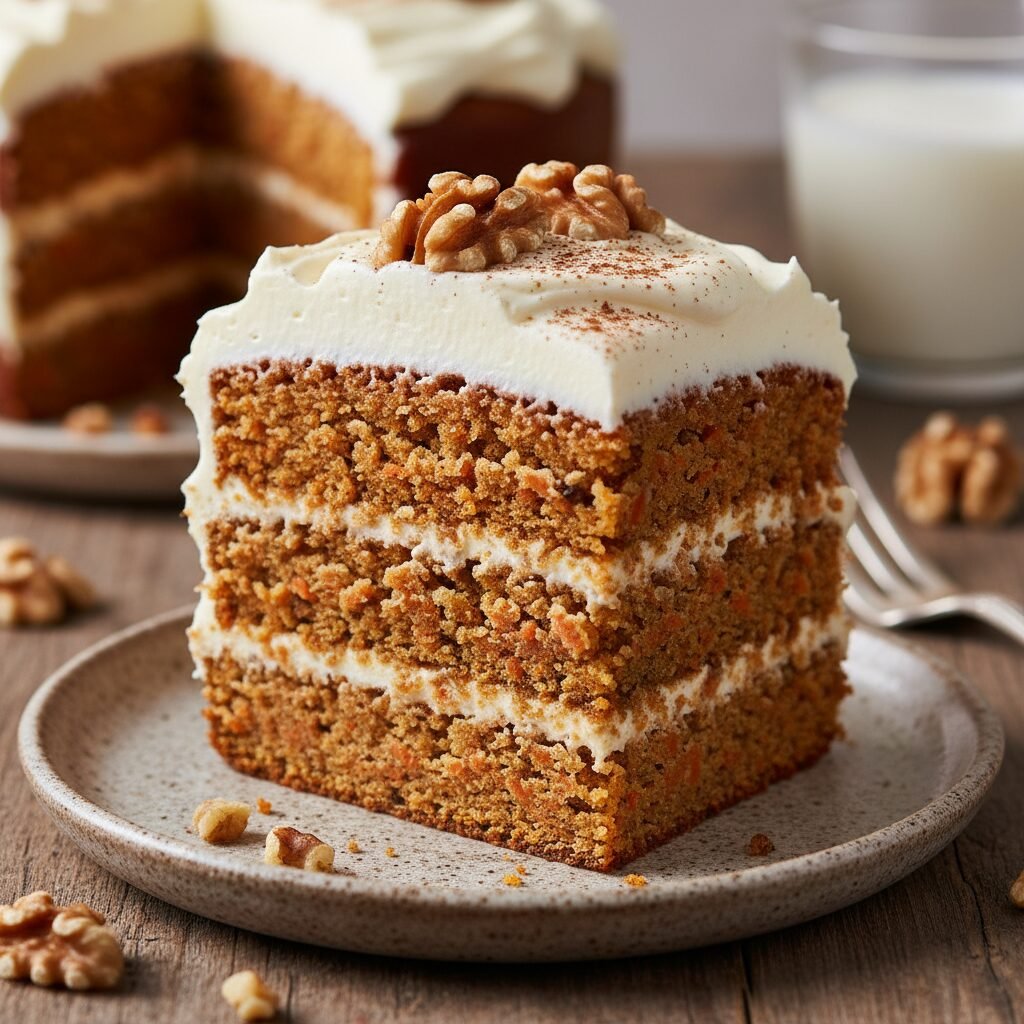
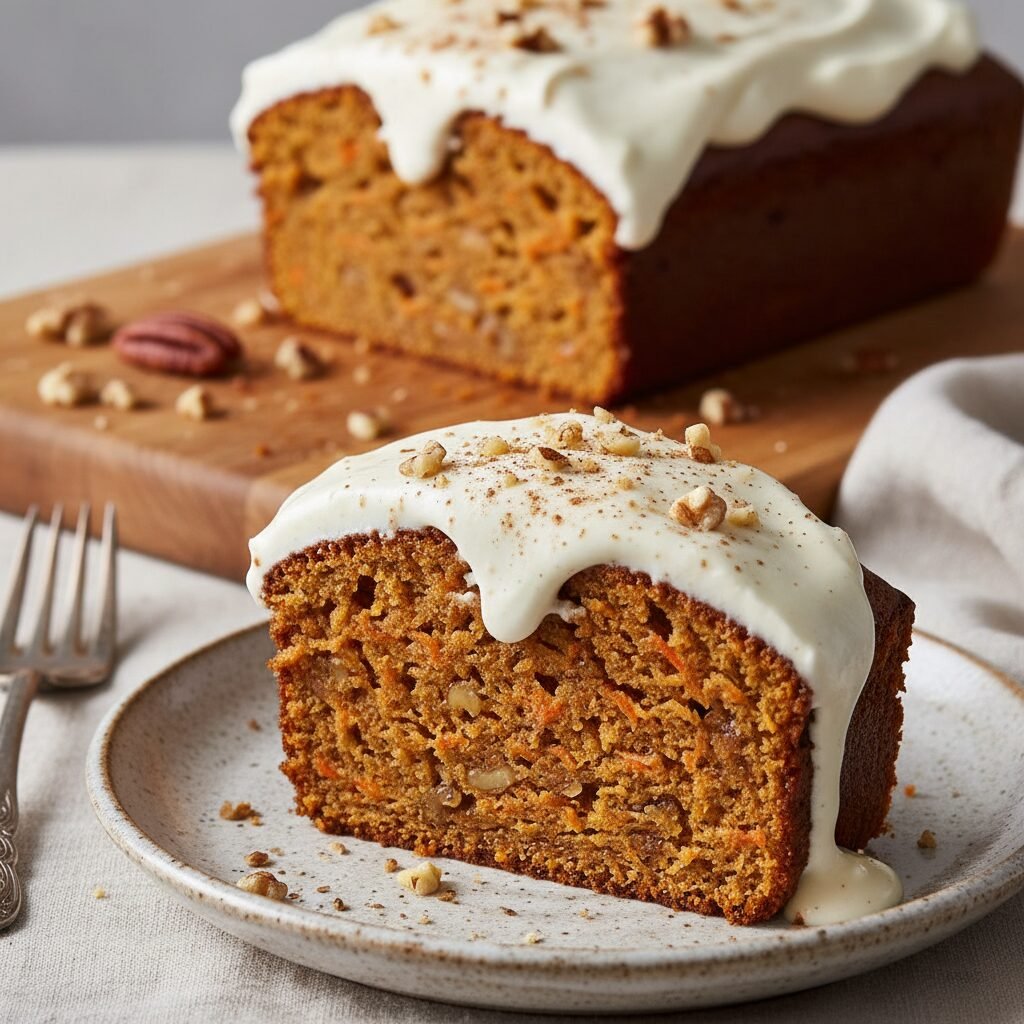
Moist Carrot Loaf Cake Recipe
Discover the secret to the most tender, spice-infused carrot loaf cake you will ever bake. This recipe combines the classic warmth of cinnamon and nutmeg with a ridiculously moist crumb, topped off with a tangy, velvety cream cheese frosting that makes every bite unforgettable.
20 minutes
55 minutes
1 hour 15 minutes
1 Loaf (10-12 slices)
Dessert
Baking
American
Vegetarian
There are few things in the baking world as universally comforting as a slice of homemade carrot cake, but sometimes the effort of constructing a multi-layer masterpiece feels daunting for a casual weekend treat. Enter the carrot loaf cake: the laid-back, effortlessly chic cousin of the traditional layer cake. This recipe is not just another iteration of the classic; it is a meticulously tested formula designed to deliver maximum moisture and flavor with minimal fuss. We are talking about a crumb so tender it practically melts in your mouth, infused with a robust blend of warming spices that perfume your entire kitchen as it bakes. The magic lies in the balance of ingredients—using oil instead of butter ensures the cake stays soft for days, while a mix of brown and white sugars creates a depth of flavor that caramelizes beautifully against the edges of the loaf pan. Unlike dry, bread-like versions you might find at a coffee shop, this loaf embraces the density and richness of a premium dessert. It is substantial enough to satisfy a craving but light enough to pair perfectly with your morning coffee or afternoon tea. Whether you are a seasoned baker looking for a reliable staple or a novice wanting to impress friends at a brunch, this moist carrot loaf cake serves as the perfect canvas. We finish it with a generous swooping layer of tangy cream cheese frosting, offering that quintessential contrast between the spiced, sweet cake and the cool, creamy topping. Get ready to add a new favorite to your recipe box, because once you try this, you will never look at carrots the same way again.
History & Origins
The history of carrot cake is a fascinating journey that dates back much further than the 1960s health food craze often associated with it. Most food historians agree that carrot cake likely evolved from medieval carrot puddings. In the Middle Ages, sugar was a rare and expensive luxury, difficult for the average household to obtain. Carrots, however, were abundant and known to contain more natural sugar than almost any other vegetable, second only to sugar beets. resourceful cooks began using sweet vegetables to sweeten their desserts and steamed puddings. These early iterations were more akin to dense, steamed concoctions than the fluffy cakes we know today. As baking technology advanced and leavening agents became more accessible in the 19th century, these puddings began to transform into baked goods. The modern concept of carrot cake saw a significant resurgence during World War II in the United Kingdom. With strict rationing of sugar, the government promoted recipes that utilized the natural sweetness of carrots to create treats for children and families. However, it wasn’t until the post-war era, specifically the 1960s and 70s in the United States, that carrot cake truly exploded in popularity. It became a staple of American cafes and restaurants, often marketed as a ‘healthier’ alternative to chocolate or vanilla cakes, despite being laden with oil and sugar. The addition of cream cheese frosting, now inseparable from the cake itself, is largely an American innovation that solidified the dessert’s legendary status. The loaf format is a more recent, domestic adaptation, favoring simplicity and ease of serving for the modern home baker.
Why This Recipe Works
This recipe succeeds where many others fail primarily due to the fat source and the moisture content management. First and foremost, we use a neutral oil (like vegetable or canola) instead of butter. While butter adds flavor, it is about 20% water and solidifies at room temperature, which can lead to a drier, firmer texture once the cake cools. Oil remains liquid at room temperature, coating the flour proteins and preventing gluten over-development, ensuring the cake remains incredibly soft and moist for days. Secondly, we utilize a high ratio of dark brown sugar. Brown sugar contains molasses, which is hygroscopic—meaning it attracts and holds onto moisture from the air. This keeps the crumb tender long after it has left the oven. Another critical factor is the treatment of the carrots. We insist on freshly grating them rather than buying pre-shredded bags. Pre-shredded carrots are often dry and coated in cornstarch to prevent clumping, which robs the cake of essential moisture. By grating them fresh, you release the carrots’ natural juices into the batter, acting as a natural steamer from the inside out as the cake bakes. Finally, the spice blend is calibrated to cut through the sweetness, providing a warmth that elevates the flavor profile without overpowering the delicate carrot taste.
Why You’ll Love This Recipe
- ✓Stays moist for up to 5 days due to oil-based batter.
- ✓Rich depth of flavor from dark brown sugar and toasted pecans.
- ✓Tangy cream cheese frosting balances the sweetness perfectly.
- ✓No mixer required for the cake batter—just a whisk and bowl.
- ✓Freezes beautifully for make-ahead meal prep.
Equipment You’ll Need
- ✓9×5 inch Loaf Pan
- ✓Large Mixing Bowl
- ✓Medium Mixing Bowl
- ✓Box Grater or Food Processor
- ✓Whisk
- ✓Rubber Spatula
- ✓Wire Cooling Rack
- ✓Measuring Cups and Spoons
Ingredients
- ✓1 1/2 cups All-Purpose Flour
- ✓1 tsp Baking Powder
- ✓1/2 tsp Baking Soda
- ✓1 1/2 tsp Ground Cinnamon
- ✓1/2 tsp Ground Ginger
- ✓1/4 tsp Ground Nutmeg
- ✓1/2 tsp Salt
- ✓3/4 cup Vegetable Oil or Canola Oil
- ✓1/2 cup Granulated White Sugar
- ✓1/2 cup Dark Brown Sugar, packed
- ✓2 large Eggs, room temperature
- ✓1 tsp Vanilla Extract
- ✓1 1/2 cups Freshly Grated Carrots (approx. 3-4 medium carrots)
- ✓1/2 cup Chopped Pecans or Walnuts (optional)
- ✓FOR THE FROSTING: 4 oz Cream Cheese, softened
- ✓2 tbsp Unsalted Butter, softened
- ✓1 cup Powdered Sugar
- ✓1/2 tsp Vanilla Extract
- ✓1 tbsp Milk or Heavy Cream (if needed)
Instructions
- 1. Preheat your oven to 350°F (175°C). Grease a 9×5 inch loaf pan generously with non-stick spray or butter, and line it with parchment paper leaving an overhang on the sides for easy removal.
- 2. In a medium bowl, whisk together the flour, baking powder, baking soda, cinnamon, ginger, nutmeg, and salt until well combined. Set this dry mixture aside.
- 3. In a large mixing bowl, whisk together the vegetable oil, granulated sugar, and brown sugar until the mixture is smooth and no lumps of brown sugar remain.
- 4. Add the eggs one at a time to the sugar-oil mixture, whisking vigorously after each addition. Stir in the vanilla extract.
- 5. Gradually pour the dry ingredients into the wet ingredients. Switch to a rubber spatula and gently fold the batter just until no flour streaks remain. Do not overmix.
- 6. Fold in the freshly grated carrots and the chopped nuts (if using) until they are evenly distributed throughout the batter.
- 7. Pour the batter into the prepared loaf pan and smooth the top with the spatula.
- 8. Bake in the center rack of the oven for 50 to 60 minutes. Test for doneness by inserting a toothpick into the center; it should come out clean or with just a few moist crumbs attached.
- 9. Remove the loaf from the oven and let it cool in the pan for about 15 minutes. Then, lift it out using the parchment paper handles and transfer it to a wire rack to cool completely before frosting.
- 10. While the cake cools, make the frosting. In a medium bowl, beat the softened cream cheese and butter together until smooth and creamy. Gradually add the powdered sugar and vanilla extract, beating until fluffy. Add milk only if the frosting is too stiff.
- 11. Once the cake is entirely cool, spread the frosting generously over the top. Slice and serve.
Expert Cooking Tips
- ✓Grate your carrots using the medium holes of a box grater for the best texture; too fine and it becomes mushy, too thick and they stay crunchy.
- ✓Ensure all your refrigerated ingredients, especially eggs and cream cheese, are at room temperature to ensure a smooth emulsion.
- ✓Do not overmix the batter once the flour is added; overmixing develops gluten and leads to a tough, rubbery loaf.
- ✓If the top of the loaf is browning too quickly before the center is cooked, loosely tent the pan with aluminum foil around the 40-minute mark.
- ✓Toast your pecans or walnuts in a dry skillet for 2-3 minutes before adding them to the batter to unlock a deeper, nuttier flavor.
- ✓Let the cake cool completely before frosting; otherwise, the cream cheese topping will melt and slide right off.
Substitutions and Variations
This recipe is quite forgiving and allows for several substitutions to cater to different dietary needs or pantry staples. If you are out of vegetable oil, you can substitute melted coconut oil or a light olive oil, though coconut oil will impart a slight coconut flavor. For a healthier twist, you can replace half of the oil with unsweetened applesauce, which maintains moisture while reducing fat. Gluten-free all-purpose flour blends (specifically those with xanthan gum) work wonderfully as a 1:1 replacement for regular wheat flour. If you don’t have dark brown sugar, light brown sugar works fine, or you can make your own by mixing white sugar with a tablespoon of molasses. For the mix-ins, walnuts and pecans are classic, but you can also use raisins, golden sultanas, or even shredded coconut. If you are dairy-free, the cake batter is naturally dairy-free, and you can use a vegan cream cheese and butter alternative for the frosting.
Common Mistakes to Avoid
The most common mistake people make with carrot cake is using pre-shredded carrots from the grocery store. These are too dry and thick, leading to a dry cake with hard vegetable bits. Always grate fresh. Another frequent error is measuring flour incorrectly; scooping the flour directly with the measuring cup packs it down, resulting in too much flour and a dense, dry loaf. Instead, use the ‘spoon and level’ method or weigh your flour (approx. 120g per cup). Under-baking is also a risk with moist cakes; because this batter is heavy and wet, it needs the full baking time. If you pull it out too early, the center will sink and be raw. Trust the toothpick test. Lastly, rushing the cooling process is a disaster for the frosting. If the cake is even slightly warm, the butter in the frosting will melt, creating a greasy, runny mess instead of a thick, luscious layer.
Serving Suggestions
This moist carrot loaf cake is versatile enough to be served at various times of the day. For a decadent breakfast or brunch, serve a thick slice alongside a hot cup of coffee or a chai latte; the spices in the drink complement the cake beautifully. It also makes for a stunning afternoon tea accompaniment. If you are serving this as a dessert after a dinner party, consider plating it with a side of candied pecans and a drizzle of caramel sauce to elevate the presentation. For a lighter summer option, skip the heavy frosting and serve the loaf plain with a dollop of Greek yogurt and a drizzle of honey.
Storage and Reheating Tips
Because of the cream cheese frosting and the high moisture content of the cake, it is best to store the frosted loaf in the refrigerator. Place it in an airtight container or wrap it tightly in plastic wrap; it will keep well for up to 5 days. In fact, the flavors often meld and improve on the second day. If you have not frosted the cake yet, the plain loaf can be stored at room temperature for 2-3 days in an airtight container. For long-term storage, this cake freezes exceptionally well. You can freeze the whole loaf or individual slices (without frosting is best, but frosted works too if flash-frozen first). Wrap the cake in a layer of plastic wrap followed by a layer of aluminum foil to prevent freezer burn. It can be frozen for up to 3 months. Thaw overnight in the refrigerator before serving.
Nutrition Facts (Estimated)
| Serving Size | 1 slice |
| Calories | 380 |
| Fat | 22g |
| Saturated Fat | 6g |
| Unsaturated Fat | 15g |
| Trans Fat | 0g |
| Cholesterol | 45mg |
| Sodium | 210mg |
| Carbohydrates | 42g |
| Fiber | 2g |
| Sugar | 28g |
| Protein | 5g |
Frequently Asked Questions
Can I use baby carrots for this recipe?
It is not recommended. Baby carrots are often dried out and lack the flavor of full-sized carrots. They are also harder to grate. Stick to whole, medium-sized carrots for the best moisture and flavor.
Why did my carrot cake sink in the middle?
Sinking usually happens if the cake was under-baked or if the oven door was opened too early, causing a sudden temperature drop. Ensure the toothpick comes out clean before removing it from the oven.
Can I bake this in a muffin tin instead?
Yes! This batter makes excellent muffins. Bake them at the same temperature (350°F) but reduce the cooking time to 18-22 minutes.
Is it necessary to peel the carrots?
Yes, peeling the carrots removes the bitter outer skin and ensures a brighter color and cleaner flavor in your cake. Wash and peel them before grating.
Can I reduce the sugar in this recipe?
You can reduce the sugar by about 1/4 cup without significantly affecting the texture, but keep in mind that sugar also contributes to the moisture and shelf-life of the cake, not just the sweetness.
What is the best way to grate carrots without a food processor?
A standard box grater works perfectly. Use the medium holes (not the smallest, not the slicing side). It takes a bit of elbow grease but yields the perfect texture.
Why is my cake greasy?
A greasy cake usually means the oil was not fully emulsified into the egg and sugar mixture, or too much oil was measured. Be sure to whisk the wet ingredients thoroughly.
Can I add pineapple to this loaf?
Yes, crushed pineapple is a popular addition. If you add it, ensure it is very well drained, or the excess liquid will make the batter too wet and it may not bake through properly.
Conclusion
This Moist Carrot Loaf Cake is truly a testament to the idea that the best desserts don’t need to be complicated. With its humble ingredients and straightforward method, it delivers a gourmet experience that feels like a warm hug on a plate. The combination of the spiced, tender crumb and the tangy, rich cream cheese frosting is a timeless duo that never fails to delight. Whether you are baking for a special occasion, a holiday gathering, or just a Tuesday night craving, this recipe is guaranteed to deliver consistent, delicious results. We hope this loaf becomes a cherished part of your baking repertoire, bringing a touch of sweetness and spice to your kitchen for years to come. Happy baking!