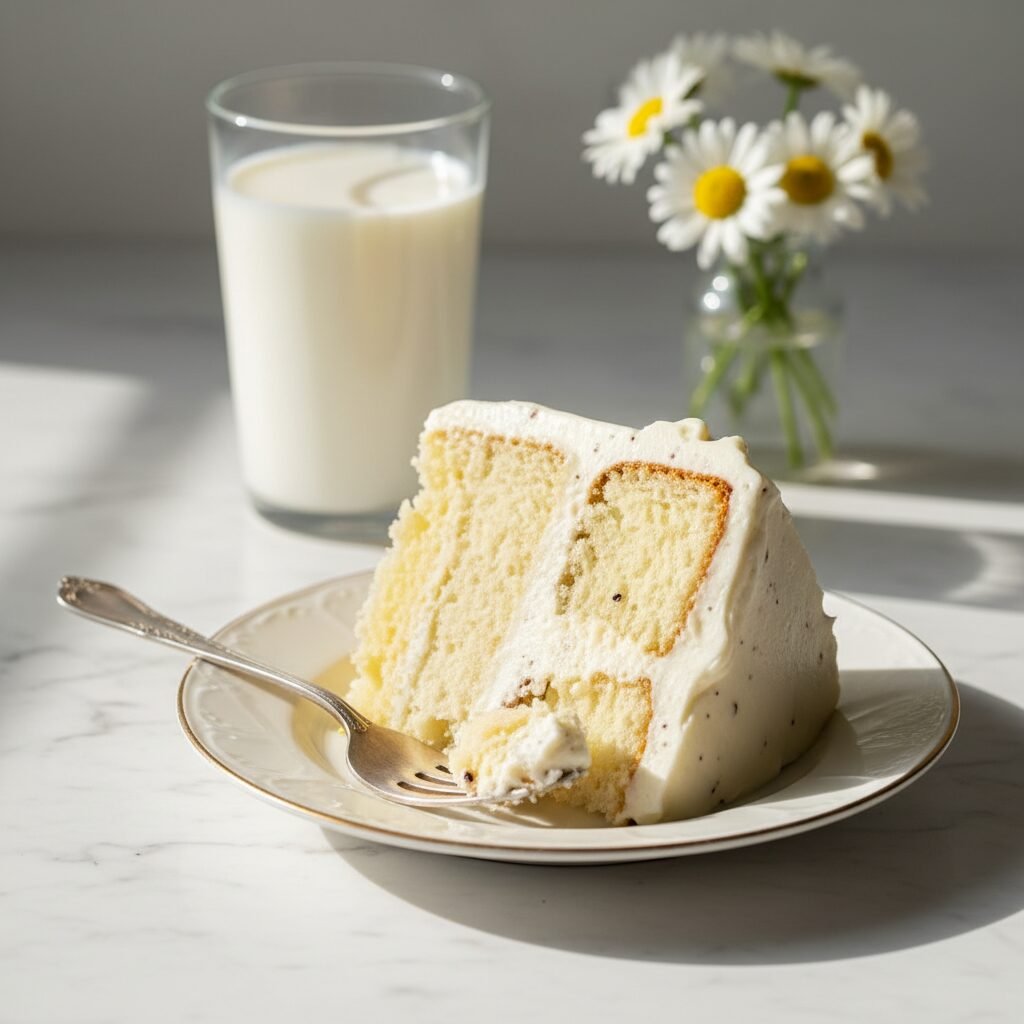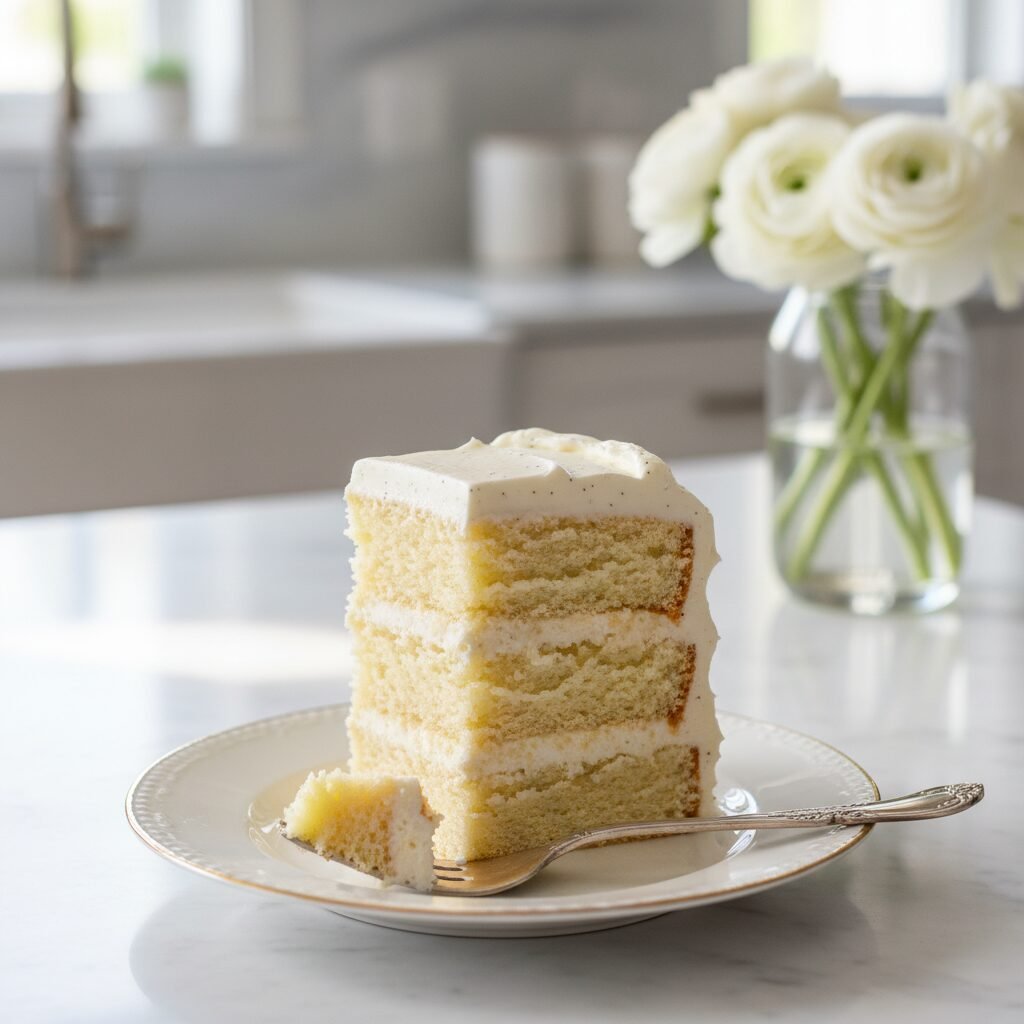

Moist Vanilla Birthday Cake With Chocolate Frosting Recipe
This is the quintessential birthday cake experience: tender, buttery vanilla layers paired with a luscious, fudgy chocolate frosting that melts in your mouth. It’s nostalgic, foolproof, and guaranteed to be the star of any celebration.
45 minutes
30 minutes
1 hour 15 minutes
12-14 servings
Dessert
Baking
American
Vegetarian
There is something undeniably magical about a classic vanilla birthday cake slathered in rich chocolate frosting. It is a dessert that transcends trends, evoking childhood memories of blowing out candles and the anticipation of that first perfect bite. This isn’t just another sponge cake; it is the result of years of testing to achieve the holy grail of baking: a crumb that is incredibly moist yet sturdy enough to hold up to generous swirls of frosting.
The flavor profile here is a delicate balance. The cake itself sings with pure vanilla bean notes and a buttery undertone that provides a comforting, warm base. It avoids the common pitfall of being too dry or airy; instead, it possesses a velvety texture that practically dissolves on the tongue. Contrasting this is the chocolate frosting—a deep, dark, and creamy concoction that strikes the perfect chord between sweet and bittersweet. We use high-quality cocoa powder and a touch of espresso to deepen the chocolate flavor, ensuring it pairs beautifully with the sweet vanilla sponge without being cloying.
Whether you are baking for a milestone birthday, a casual weekend treat, or simply because you crave comfort, this recipe delivers. It captures the essence of what a celebration cake should be: impressive to look at, joyous to eat, and filled with love. Forget the box mixes; once you taste the difference of homemade layers combined with silky ganache-style buttercream, you will never go back. Get ready to bake the best birthday cake of your life.
History & Origins
The tradition of the birthday cake has deep historical roots, tracing back much further than the modern sugary confections we know today. Historians often point to the ancient Greeks, who baked round cakes to honor Artemis, the goddess of the moon, placing lit candles on top to make them glow like the moon itself. However, the specific concept of a cake to celebrate a birthdate is widely attributed to the German ‘Kinderfest’ in the Middle Ages. These celebrations for children featured a cake topped with candles—one for each year of life plus one for hope—creating the ‘birthday’ ritual we recognize.
For centuries, cakes were yeast-based and more bread-like. The shift toward the light, fluffy texture we adore today began in the 17th century with advancements in baking technology and ingredient availability, but it truly revolutionized in the mid-19th century with the invention of baking powder. This allowed for the creation of ‘butter cakes’ and ‘pound cakes’ that didn’t rely solely on whipped eggs for lift.
The classic combination of yellow vanilla cake and chocolate frosting became a staple in American households in the 20th century. With the industrial revolution making ingredients like white flour, sugar, and cocoa powder affordable, this pairing became the definitive ‘birthday cake’ flavor in the United States. It represents a democratization of dessert—a luxury that became accessible to everyone, cementing its place as the centerpiece of American celebratory culture.
Why This Recipe Works
Achieving the perfect texture in a vanilla cake is a science. Many recipes rely solely on butter, which offers great flavor but can lead to a dry crumb if slightly overbaked or refrigerated. Conversely, oil-based cakes are incredibly moist but often lack that rich, buttery taste. This recipe employs a ‘hybrid method,’ utilizing both unsalted butter and neutral vegetable oil. The butter provides the structural integrity and distinct flavor, while the oil ensures the cake stays soft and moist for days.
Furthermore, the inclusion of buttermilk is non-negotiable. The acidity in buttermilk reacts with the baking soda to tenderize the gluten strands, resulting in a plush, velvety crumb that is never tough. We also use a technique called ‘reverse creaming’ or a modified mixing method where dry ingredients are mixed with the fat first before liquid is added. This coats the flour particles in fat, inhibiting gluten formation and guaranteeing a melt-in-your-mouth texture.
For the frosting, we opt for a chocolate buttercream that leans heavily on cocoa fat and heavy cream. By whipping the butter until pale and airy before adding the sugar and cocoa, we create a matrix that holds air bubbles, making the frosting light yet intensely flavorful. A pinch of salt and a splash of strong coffee in the frosting amplify the chocolate notes without adding coffee flavor, making the chocolate taste more like itself.
Why You’ll Love This Recipe
- ✓Hybrid butter-oil method for maximum moisture and flavor.
- ✓Uses buttermilk for a tender, velvety crumb.
- ✓Frosting is whipped to perfection, resembling a fudge mousse.
- ✓Stays soft and fresh for up to 4 days.
- ✓Perfect structural integrity for stacking layers.
- ✓Classic, nostalgic flavor profile loved by all ages.
Equipment You’ll Need
- ✓Two 9-inch round cake pans
- ✓Stand mixer or electric hand mixer
- ✓Large mixing bowls
- ✓Whisk
- ✓Rubber spatula
- ✓Wire cooling rack
- ✓Offset spatula
- ✓Parchment paper
- ✓Measuring cups and spoons
Ingredients
- ✓2 1/2 cups all-purpose flour (spooned and leveled)
- ✓2 cups granulated sugar
- ✓2 1/2 tsp baking powder
- ✓1/2 tsp baking soda
- ✓1 tsp salt
- ✓3 large eggs, room temperature
- ✓1 cup buttermilk, room temperature
- ✓1/2 cup unsalted butter, melted and slightly cooled
- ✓1/2 cup vegetable oil (or canola oil)
- ✓1 tbsp pure vanilla extract
- ✓1 1/2 cups unsalted butter, softened (for frosting)
- ✓1 cup unsweetened cocoa powder (Dutch-processed preferred)
- ✓4-5 cups powdered sugar
- ✓1/4 cup heavy cream
- ✓1 tsp espresso powder (optional, for frosting)
- ✓Rainbow sprinkles (optional)
Instructions
- Preheat your oven to 350°F (175°C). Grease two 9-inch round cake pans with butter and dust with flour, or line the bottoms with parchment paper for easy removal.
- In a large bowl, whisk together the flour, sugar, baking powder, baking soda, and salt until well combined. Set aside.
- In a separate medium bowl or large measuring cup, whisk together the eggs, buttermilk, melted butter, vegetable oil, and vanilla extract until the mixture is smooth and emulsified.
- Pour the wet ingredients into the dry ingredients. Using a whisk or a mixer on low speed, mix just until the batter comes together and no large lumps of flour remain. Do not overmix.
- Divide the batter evenly between the two prepared cake pans. Tap the pans gently on the counter to release any trapped air bubbles.
- Bake for 28-32 minutes, or until a toothpick inserted into the center comes out clean or with just a few moist crumbs attached. The tops should spring back when lightly touched.
- Remove the cakes from the oven and let them cool in the pans for 10 minutes. Then, run a knife around the edges and invert them onto a wire rack to cool completely before frosting.
- While the cakes cool, make the frosting. In a stand mixer fitted with the paddle attachment, beat the softened butter on medium-high speed for about 5 minutes until it is very pale and creamy.
- Sift the cocoa powder and espresso powder (if using) into the butter. Mix on low speed until combined.
- Gradually add the powdered sugar, one cup at a time, alternating with a tablespoon of heavy cream, mixing on low until incorporated. Add the vanilla extract and a pinch of salt.
- Once all ingredients are added, increase the speed to medium-high and whip for another 3-4 minutes until the frosting is fluffy and airy.
- To assemble, place one cake layer on your serving stand. Spread a generous layer of frosting over the top. Place the second cake layer on top, flat side up.
- Use an offset spatula to cover the top and sides of the cake with the remaining frosting. Decorate with sprinkles if desired.
Expert Cooking Tips
- ✓Room temperature ingredients are crucial for a smooth batter and proper emulsification.
- ✓Do not overmix the batter after adding the wet ingredients; stop as soon as the flour disappears to keep the cake tender.
- ✓Weigh your flour if possible; adding too much flour is the number one cause of dry cakes.
- ✓Use Dutch-processed cocoa for a darker color and smoother, less acidic chocolate flavor in the frosting.
- ✓If the frosting is too stiff, add more cream one teaspoon at a time; if too soft, add more powdered sugar.
- ✓Chill the cake layers for 20 minutes before frosting to reduce crumbs getting caught in the icing.
- ✓Tap the pans on the counter before baking to remove large air pockets that can cause uneven baking.
Substitutions and Variations
If you do not have buttermilk, you can make a quick substitute by adding one tablespoon of white vinegar or lemon juice to a cup of whole milk and letting it sit for 5 minutes until curdled. For a gluten-free version, substitute the all-purpose flour with a high-quality 1:1 gluten-free baking flour blend that includes xanthan gum. If you prefer a less sweet frosting, you can swap the milk chocolate notes for a dark chocolate ganache. Vegetable oil can be replaced with melted coconut oil, though this may impart a slight coconut flavor. For an egg-free version, commercial egg replacers or unsweetened applesauce (1/4 cup per egg) can work, though the texture will be denser.
Common Mistakes to Avoid
The most common mistake is scooping flour directly with the measuring cup, which packs it down and leads to a dry, dense cake; always spoon the flour into the cup and level it off. Another error is opening the oven door too early, which can cause the cake to sink in the middle due to a sudden drop in temperature. Using cold ingredients prevents the batter from emulsifying properly, leading to a greasy or uneven texture. Finally, frosting the cake before it is completely cool will cause the butter in the frosting to melt, resulting in a sliding, messy cake layer disaster.
Serving Suggestions
This cake is a showstopper on its own, but it pairs wonderfully with a scoop of high-quality vanilla bean ice cream or a dollop of freshly whipped cream to cut the richness. Serve it on a colorful cake stand to enhance the celebratory vibe. For an adult twist, pair a slice with a glass of cold milk, a hot espresso, or even a glass of port wine or stout beer, which complements the chocolate frosting beautifully. Fresh berries, such as raspberries or strawberries, can also be served on the side to add a fresh, acidic contrast to the sweet frosting.
Storage and Reheating Tips
Store the frosted cake at room temperature in an airtight cake carrier for up to 3 days; the sugar and fat act as preservatives. If your kitchen is particularly hot or humid, you may store it in the refrigerator for up to 5 days, but be sure to let it come to room temperature before serving for the best texture and flavor. To freeze, wrap individual slices tightly in plastic wrap followed by aluminum foil; they can be frozen for up to 3 months. Thaw frozen slices in the refrigerator overnight or on the counter for an hour.
Nutrition Facts (Estimated)
| Serving Size | 1 slice |
| Calories | 580 |
| Fat | 30g |
| Saturated Fat | 18g |
| Unsaturated Fat | 12g |
| Trans Fat | 0g |
| Cholesterol | 85mg |
| Sodium | 320mg |
| Carbohydrates | 72g |
| Fiber | 3g |
| Sugar | 45g |
| Protein | 6g |
Frequently Asked Questions
Can I make this cake ahead of time?
Yes, absolutely. The cake layers can be baked, cooled, wrapped tightly in plastic wrap, and stored at room temperature for 1 day or frozen for up to a month before frosting. The frosting can also be made a few days ahead and stored in the fridge; just let it come to room temperature and re-whip it before using.
Why did my cake sink in the middle?
Sinking usually happens if the oven door was opened too early, releasing heat before the cake structure set. It can also be caused by over-leavening (too much baking powder/soda) or under-baking.
Can I use salted butter instead of unsalted?
You can, but you should reduce the added salt in the recipe by half to maintain the correct flavor balance. Unsalted butter is generally preferred in baking to control sodium levels.
How do I get my frosting super smooth?
Ensure your butter is perfectly softened but not melted. Sifting the powdered sugar and cocoa powder is critical to avoid lumps. Also, mixing the frosting on low speed at the very end for a minute helps pop large air bubbles.
Can I turn this into cupcakes?
Yes! This batter works great for cupcakes. Line a muffin tin with liners and bake at 350°F for 18-22 minutes. This recipe yields approximately 24 standard cupcakes.
Why is my cake dry?
Dry cake is often the result of over-measuring flour or over-baking. Check the cake a few minutes before the timer goes off. Also, ensure you didn’t overmix the batter, which can toughen the gluten.
Do I have to use coffee in the frosting?
No, the espresso powder is optional. However, it doesn’t make the frosting taste like coffee; it simply enhances the richness of the cocoa. You can omit it without changing the texture.
What size pans should I use?
This recipe is optimized for two 9-inch round pans. You can use three 8-inch pans for a taller cake, but you will need to reduce the baking time by about 5-8 minutes.
Conclusion
There is no gesture more loving than baking a birthday cake from scratch. This Moist Vanilla Birthday Cake with Chocolate Frosting is more than just a recipe; it is a reliable companion for your most cherished celebrations. With its tender, golden crumb and decadent, swoops of fudge frosting, it promises to deliver happiness in every bite. We hope this cake becomes a tradition in your home, just as it has in ours. Happy baking!