
Moist Vanilla Birthday Cake For 8 Inch Pan Recipe
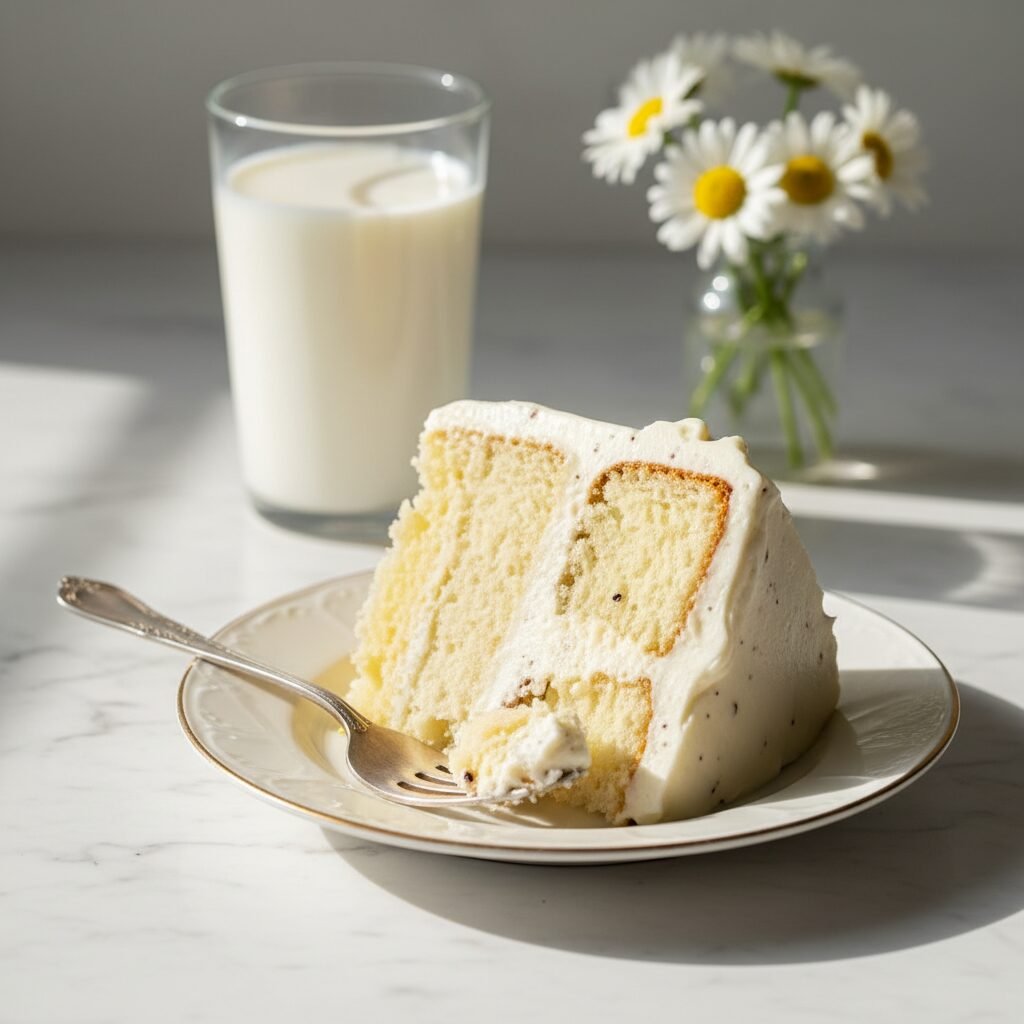
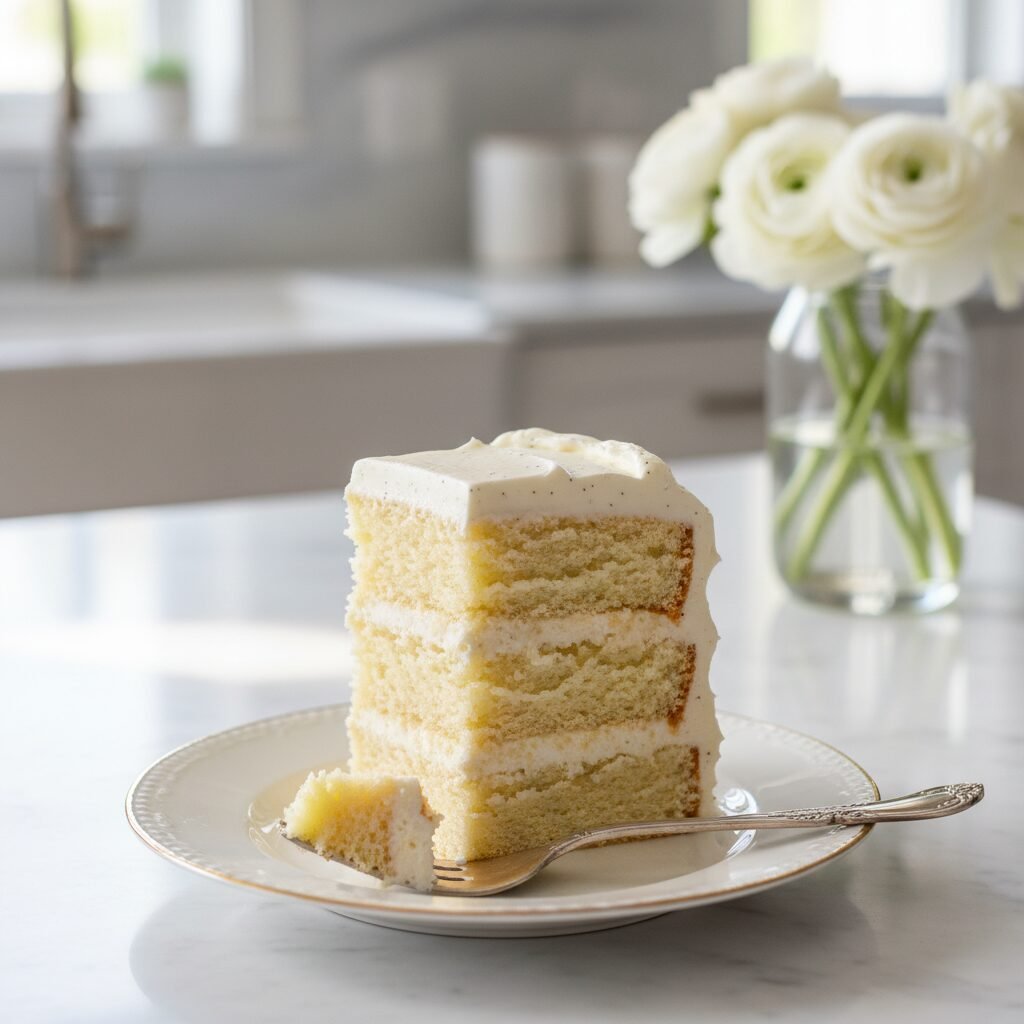
Discover the secret to the perfect crumb with this foolproof recipe for a moist vanilla birthday cake designed specifically for an 8-inch pan. Bursting with pure vanilla flavor and a tender, melt-in-your-mouth texture, this cake is the quintessential centerpiece for any celebration.
30 minutes
35 minutes
1 hour 5 minutes
One 2-layer 8-inch cake (approx. 12 servings)
Dessert
Baking
American
Vegetarian
There is something profoundly nostalgic and undeniably magical about a classic vanilla birthday cake. It is the culinary protagonist of our childhood memories, the centerpiece of our most cherished celebrations, and the comfort food that transcends generations. However, finding the ‘perfect’ vanilla cake is often a pursuit fraught with disappointment. Too often, they turn out dry, dense, or lacking in that distinct, aromatic vanilla punch we crave. This recipe is the result of years of testing, tweaking, and tasting to solve those exact problems. We are moving away from the bland, box-mix imitations and embracing a scratch-made marvel that balances structural integrity with a cloud-like softness. This isn’t just a cake; it is a celebration of texture and flavor. The crumb is tight yet tender, sturdy enough to hold up layers of buttercream yet soft enough to melt on your tongue. We utilize a specific blend of fats—butter for that rich, creamy mouthfeel and oil to ensure the cake stays moist for days, not just hours. Whether you are a seasoned baker looking for a reliable staple or a novice attempting your first birthday bake, this recipe is designed to be approachable and forgiving. We will explore the nuances of temperature, the importance of high-quality vanilla extract, and the science behind why this specific 8-inch formulation works so flawlessly. Get ready to fill your kitchen with the intoxicating aroma of sweet butter and vanilla bean, setting the stage for a birthday party that won’t soon be forgotten.
History & Origins
The concept of the birthday cake has a rich and varied history that dates back centuries, evolving significantly to become the sugary confection we know today. The origins can be traced back to the ancient Greeks, who baked round cakes using honey to honor Artemis, the goddess of the moon. They would light candles on the cake to make it glow like the moon, a tradition that likely birthed the modern practice of birthday candles. However, the birthday cake as a celebration for children finds its stronger roots in Germany during the Middle Ages with a tradition called ‘Kinderfest.’ On the morning of a child’s birthday, they would receive a cake topped with lit candles—one for every year of life plus one for good luck—which would burn all day until the cake was eaten after dinner. For a long time, the ingredients for these cakes were expensive, making them a luxury reserved for the wealthy. It wasn’t until the Industrial Revolution that mass-produced ingredients and baking utensils made cakes accessible to the general public. The vanilla cake specifically rose to prominence as vanilla beans became more widely traded and available in the West. Before the mid-19th century, yeast was the primary leavening agent, resulting in a denser, bread-like texture. The invention of baking powder in the 1840s revolutionized baking, allowing for the light, airy, and spongy texture that characterizes the modern American birthday cake. This recipe pays homage to that evolution, combining the celebratory spirit of Kinderfest with the chemical precision of modern food science to create a timeless classic.
Why This Recipe Works
The success of this vanilla cake recipe lies in the meticulous balance of ingredients and the ‘reverse creaming’ inspired method we use to ensure tenderness. Most standard recipes call for creaming butter and sugar first, which can sometimes lead to over-aeration and a dry cake if not done carefully. However, the true secret weapon here is the combination of fats. We use unsalted butter for that unmistakable, rich dairy flavor that defines a high-quality cake, but we supplement it with a neutral oil. Butter is roughly 80% fat and 20% water; while delicious, the water evaporates during baking, which can dry out the crumb. Oil is 100% fat and remains liquid at room temperature, coating the flour proteins and preventing them from bonding too strongly with the water from the eggs and buttermilk. This inhibits gluten formation, resulting in a significantly more tender and moist cake that stays soft even after refrigeration. Furthermore, the use of buttermilk introduces acidity, which reacts with the leavening agents for a better rise and breaks down long gluten strands for a finer crumb. Finally, using cake flour instead of all-purpose flour lowers the protein content, ensuring the structure is delicate rather than bready. This synergy of science and ingredients guarantees a cake that is structurally sound for stacking but luxuriously soft to eat.
Why You’ll Love This Recipe
- ✓Uses a blend of butter and oil for maximum flavor and lasting moisture.
- ✓Specifically scaled for 8-inch pans to ensure thick, tall layers.
- ✓Incorporates buttermilk for a tender crumb and subtle tang.
- ✓Sturdy enough for fondant or heavy decorations but soft enough to eat plain.
- ✓Requires simple, pantry-staple ingredients with no obscure additives.
- ✓Freezes beautifully, allowing for advanced preparation.
Equipment You’ll Need
- ✓Two 8-inch round cake pans
- ✓Stand mixer with paddle attachment or electric hand mixer
- ✓Large mixing bowls
- ✓Kitchen scale (highly recommended)
- ✓Sifter or fine-mesh sieve
- ✓Rubber spatula
- ✓Cooling rack
- ✓Parchment paper
Ingredients
- ✓2 1/2 cups (300g) cake flour, sifted
- ✓2 teaspoons baking powder
- ✓1/2 teaspoon baking soda
- ✓1 teaspoon salt
- ✓3/4 cup (170g) unsalted butter, room temperature
- ✓1/4 cup (60ml) vegetable or canola oil
- ✓1 3/4 cups (350g) granulated sugar
- ✓4 large eggs, room temperature
- ✓1 tablespoon pure vanilla extract
- ✓1 cup (240ml) buttermilk, room temperature
Instructions
- Preheat your oven to 350°F (175°C). Grease two 8-inch round cake pans with butter or baking spray, line the bottoms with parchment paper rounds, and grease the paper. Dust with a little flour and tap out the excess.
- In a medium bowl, sift together the cake flour, baking powder, baking soda, and salt. Whisk to ensure the leavening agents are evenly distributed. Set aside.
- In the bowl of a stand mixer fitted with the paddle attachment (or a large bowl with a hand mixer), beat the room temperature butter, oil, and granulated sugar on medium-high speed for about 5 minutes. The mixture should look pale, fluffy, and aerated.
- Reduce the mixer speed to medium-low. Add the eggs one at a time, beating well after each addition to ensure they are fully emulsified. Scrape down the sides and bottom of the bowl with a rubber spatula as needed.
- Stir in the vanilla extract. The batter may look slightly curdled at this stage; this is normal.
- Reduce the speed to low. Add the dry ingredients in three parts, alternating with the buttermilk in two parts, starting and ending with the flour mixture (Flour -> Buttermilk -> Flour -> Buttermilk -> Flour).
- Mix only until the flour streaks have just disappeared. Do not overmix. Stop the mixer and give the batter a final fold by hand with a spatula to catch any unmixed ingredients at the bottom.
- Divide the batter evenly between the two prepared cake pans. Use a kitchen scale for precision if available.
- Bake for 30-35 minutes, or until a toothpick inserted into the center comes out clean or with just a few moist crumbs attached. The tops should be golden brown and spring back lightly when touched.
- Remove from the oven and let the cakes cool in the pans for 10-15 minutes. Then, carefully invert them onto a wire rack to cool completely before frosting.
Expert Cooking Tips
- ✓Room temperature ingredients are non-negotiable; cold eggs or milk will seize the butter and break the emulsion.
- ✓Weigh your flour using a digital scale for the most accurate results, as compacting flour in a cup is the leading cause of dry cakes.
- ✓Do not open the oven door before the 25-minute mark, as the rush of cold air can cause the cake to collapse in the center.
- ✓Tap the cake pans on the counter a few times before baking to release large air bubbles.
- ✓If you don’t have cake flour, you can make a substitute by removing 2 tablespoons of all-purpose flour per cup and replacing it with cornstarch.
- ✓Use clear vanilla extract if you want a stark white cake crumb, though pure brown vanilla extract offers superior flavor.
- ✓Wrap the warm cake layers in plastic wrap and freeze them for an hour before frosting to lock in moisture and make handling easier.
Substitutions and Variations
Baking is chemistry, so substitutions should be made with caution, but there are some flexible options. If you do not have cake flour, you can use all-purpose flour, though the texture will be slightly more bread-like; for every cup of all-purpose flour, remove two tablespoons and replace them with cornstarch to mimic the protein content of cake flour. If buttermilk is unavailable, you can create a ‘sour milk’ alternative by adding one tablespoon of white vinegar or lemon juice to a cup of whole milk and letting it sit for 5-10 minutes until it thickens. For the fat, while we recommend the butter/oil blend, you can use all butter for a denser, richer cake, or all oil for a lighter, moister, but less flavorful cake. Gluten-free 1:1 baking flour blends usually work well in this recipe, but ensure the blend contains xanthan gum. For a dairy-free version, use high-quality vegan butter sticks and a plant-based milk mixed with vinegar (soy milk works best for curdling).
Common Mistakes to Avoid
The most common mistake is overmixing the batter after the flour has been added. Once the flour hits the wet ingredients, gluten begins to form. Overworking the batter develops too much gluten, leading to a tough, rubbery cake with tunneling (large holes). Another frequent error is inaccurate oven temperature. Most home ovens are not calibrated correctly; using an external oven thermometer can ensure you are baking at the true 350°F. Additionally, failing to prep the pans correctly often leads to heartbreak when the cake sticks to the bottom. Always use parchment paper; grease alone is often not enough for delicate cakes. Finally, measuring flour by volume (scooping with the cup) rather than weight often leads to adding up to 20% more flour than necessary, resulting in a dry, crumbly disaster.
Serving Suggestions
This versatile vanilla cake is a blank canvas perfect for any frosting or filling. It pairs exceptionally well with a classic American vanilla buttercream for a nostalgic birthday feel, or a Swiss Meringue Buttercream for a less sweet, silkier finish. For a fresh twist, fill the layers with lemon curd, raspberry jam, or fresh sliced strawberries and whipped cream. Serve at room temperature; cold cake tends to taste dry and the butter solidifies, masking the flavor. If serving at a party, accompany it with a scoop of vanilla bean ice cream or a fresh berry compote to cut through the sweetness. A glass of cold milk or a hot cup of coffee provides the perfect beverage pairing.
Storage and Reheating Tips
To keep the cake fresh, store it in an airtight cake carrier at room temperature for up to 3 days. The sugar and fat content act as preservatives. If you are in a hot or humid climate, you may need to refrigerate it, but be sure to bring it back to room temperature before serving for the best texture. For longer storage, wrap individual unfrosted layers tightly in plastic wrap, then in aluminum foil, and freeze for up to 3 months. Frosted cake slices can also be frozen; place them on a baking sheet to freeze the frosting solid, then wrap them tightly. Thaw frozen cakes in the refrigerator overnight before bringing to room temperature.
Nutrition Facts (Estimated)
| Serving Size | 1 slice (1/12 of cake) |
| Calories | 450 |
| Fat | 22g |
| Saturated Fat | 10g |
| Unsaturated Fat | 11g |
| Trans Fat | 0g |
| Cholesterol | 85mg |
| Sodium | 280mg |
| Carbohydrates | 58g |
| Fiber | 1g |
| Sugar | 35g |
| Protein | 5g |
Frequently Asked Questions
Can I bake this in a 9-inch pan instead?
Yes, you can use two 9-inch pans, but the layers will be thinner. You will need to reduce the baking time by about 5-8 minutes. Keep a close eye on them to prevent drying out.
Why did my cake sink in the middle?
Sinking usually happens because the cake was underbaked (the center structure wasn’t set), the oven door was opened too early, or there was too much leavening agent used. Ensure your baking powder is fresh and measured correctly.
Can I make this into cupcakes?
Absolutely. This batter makes approximately 24 standard cupcakes. Bake them at 350°F for 18-22 minutes.
Why is my cake dense?
Density often results from not creaming the butter and sugar long enough (it should be very pale and fluffy) or from cold ingredients preventing a proper emulsion.
Can I double this recipe?
Yes, this recipe doubles well. Ensure you have a mixer bowl large enough to accommodate the batter without overflowing, or make it in two batches.
Do I really need both butter and oil?
Technically no, but for the ‘ultimate’ texture described, yes. The butter provides flavor while the oil provides moisture. Using only butter can lead to a drier cake after a day.
How do I get flat layers without doming?
You can use cake strips (damp fabric strips wrapped around the pan) to insulate the edges, helping the cake bake more evenly. Alternatively, simply trim the domes off with a serrated knife after cooling—a tasty snack for the baker!
Can I add sprinkles to the batter for a funfetti cake?
Yes! Fold in about 1/2 cup of ‘jimmies’ (cylinder sprinkles) at the very end. Avoid nonpareils (round balls) as they tend to bleed color into the batter.
Conclusion
Mastering the art of the vanilla birthday cake is a milestone for any home baker. It is a recipe that speaks of love, celebration, and the simple joy of sharing food with family and friends. With this recipe, you are equipped with the knowledge and the technique to produce a bakery-quality cake right in your own kitchen. No more dry, lackluster cakes—only moist, flavorful, and tender slices that will have your guests asking for seconds. Whether it is for a first birthday, a golden anniversary, or just a Tuesday night craving, this Moist Vanilla Birthday Cake for 8-Inch Pan is ready to become your new family tradition. Happy baking!