
Moist Yellow Sheet Cake For 8 Inch Pan Recipe
Discover the ultimate comfort dessert scaled down for smaller gatherings. This incredibly moist yellow sheet cake for an 8-inch pan delivers that classic, buttery birthday cake flavor with a tender crumb, topped with a luscious chocolate fudge frosting.
20 minutes
30 minutes
50 minutes
9 squares
Dessert
Baking
American
Vegetarian
There is something undeniably nostalgic about a classic yellow sheet cake. It is the quintessential birthday cake of American childhoods—golden, buttery, and usually slathered in a rich chocolate frosting. However, most standard recipes are designed to feed a crowd, calling for a massive 9×13-inch pan or multiple round layers. While we love a party, sometimes you just need a cake for a Tuesday night, a small family gathering, or a celebration for two. That is where this Moist Yellow Sheet Cake for an 8-Inch Pan shines. It is not just a halved recipe; it is a carefully re-engineered formula designed specifically for the thermodynamics of a smaller square pan.
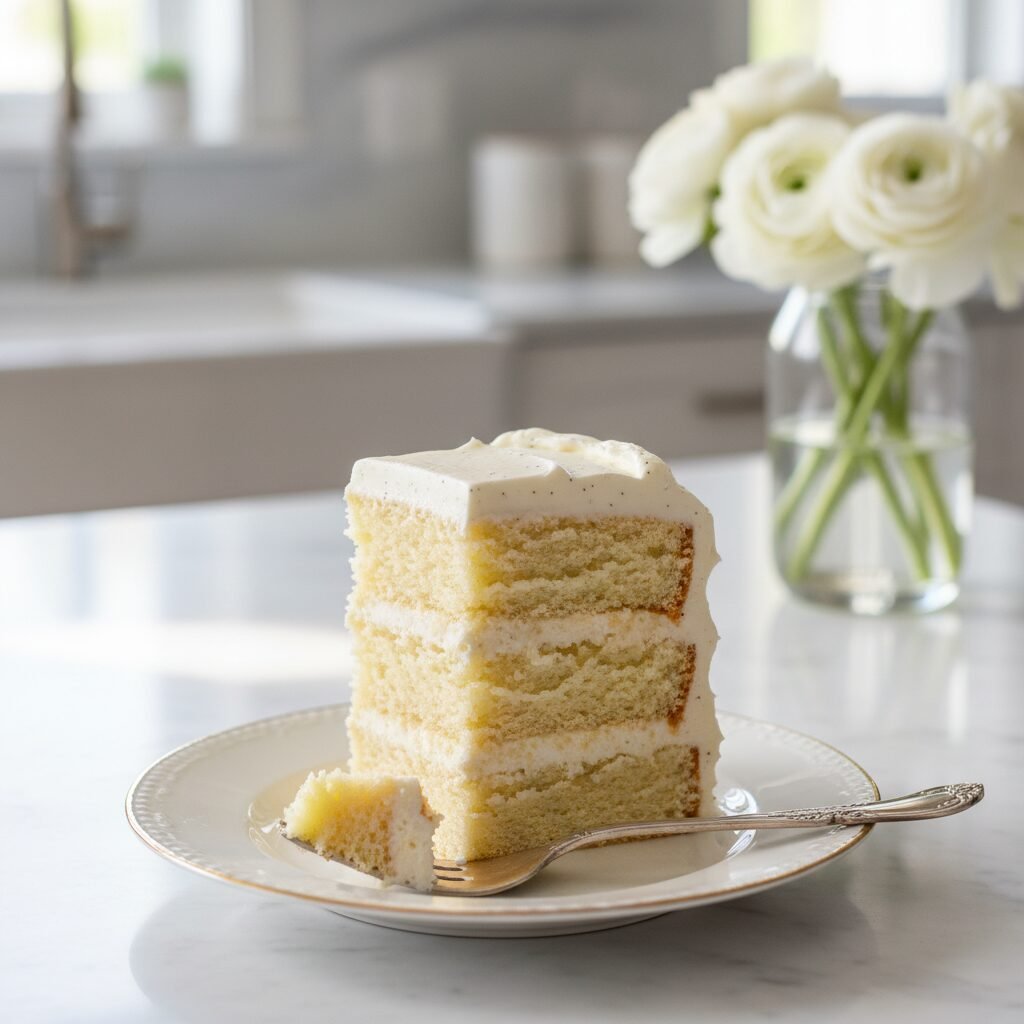
This cake boasts a crumb that is tight yet tender, sturdy enough to hold up to frosting but soft enough to melt in your mouth. The flavor profile is pure vanilla and butter, without the chemical aftertaste that often accompanies boxed mixes. By using a combination of butter for flavor and oil for lasting moisture, we achieve a texture that stays fresh for days. Whether you are celebrating a small victory or just craving a slice of nostalgia, this recipe brings the bakery experience right into your kitchen without the overwhelming leftovers. It is simple, unpretentious, and utterly delicious—the kind of baking that feels like a warm hug.
History & Origins
The history of the yellow cake is deeply intertwined with the evolution of American baking. Before the 19th century, cakes were often leavened with yeast, similar to breads. The game-changer was the invention of chemical leaveners like pearl ash and eventually baking powder in the mid-1800s. This allowed home bakers to create lighter, fluffier cakes with less effort. The ‘yellow’ cake specifically diverges from ‘white’ or ‘silver’ cakes based on the use of eggs. While white cakes utilize only egg whites for an angelic appearance, yellow cakes embrace the richness of the yolk, resulting in a golden hue and a custard-like depth of flavor.
In the late 19th and early 20th centuries, the ‘1-2-3-4 cake’ (1 cup butter, 2 cups sugar, 3 cups flour, 4 eggs) became the standard template for yellow cakes across America. However, the cultural solidification of yellow cake as the ‘standard’ birthday cake really took hold in the post-WWII era. General Mills and Pillsbury introduced cake mixes that promised consistent results for the modern housewife. The ‘Yellow Cake with Chocolate Frosting’ combination became iconic during this period, representing the ideal suburban celebration. While boxed mixes standardized the flavor, they often sacrificed the density and richness of scratch baking. Today, we are seeing a renaissance of scratch baking, where the goal is to recapture that mid-century magic using high-quality ingredients and modern techniques.
Why This Recipe Works
This recipe succeeds where many small-batch adaptations fail because it balances the fat-to-flour ratio specifically for a smaller surface area. In larger cakes, the edges can dry out before the center is done, but in an 8-inch square pan, heat distribution is more uniform. To ensure the cake is exceptionally moist, we use a ‘hybrid fat’ method. Butter is essential for that distinct, creamy flavor that oil simply cannot replicate. However, butter is about 18% water, which evaporates during baking. Vegetable oil is 100% fat and remains liquid at room temperature, coating the flour proteins and preventing gluten formation. By using both, we get the flavor of butter with the lasting tenderness of oil.
Furthermore, the inclusion of sour cream (or buttermilk) provides acidity. This acidity reacts with the baking soda to create a lift, but more importantly, it tenderizes the gluten strands, resulting in a velvety crumb rather than a chewy bread-like texture. We also utilize egg yolks in addition to a whole egg. The extra fat and emulsifiers in the yolk contribute to a richer structure and that signature golden color without making the cake heavy. Finally, using cake flour instead of all-purpose flour lowers the protein content, ensuring the cake remains light and airy despite the rich ingredients.
Why You’ll Love This Recipe
- ✓Perfect portion size for small families or couples.
- ✓Hybrid butter-oil method ensures maximum moisture and flavor.
- ✓No mixer required—can be made with just a whisk and a bowl.
- ✓Stays soft and fresh on the counter for up to 4 days.
- ✓Pairs perfectly with chocolate buttercream or cream cheese frosting.
Equipment You’ll Need
- ✓8×8 inch square baking pan
- ✓Parchment paper
- ✓Large mixing bowl
- ✓Medium mixing bowl
- ✓Whisk
- ✓Rubber spatula
- ✓Wire cooling rack
- ✓Measuring cups and spoons
Ingredients
- ✓1 and 1/4 cups Cake flour (spooned and leveled)
- ✓3/4 cup Granulated sugar
- ✓1/2 tsp Baking powder
- ✓1/4 tsp Baking soda
- ✓1/2 tsp Salt
- ✓1/4 cup Unsalted butter, melted and slightly cooled
- ✓1/4 cup Vegetable oil (or canola oil)
- ✓1 Large egg, room temperature
- ✓1 Large egg yolk, room temperature
- ✓1/2 cup Sour cream (full fat), room temperature
- ✓2 tsp Pure vanilla extract
- ✓1/4 cup Whole milk, room temperature
Instructions
- Preheat your oven to 350°F (175°C). Grease an 8×8 inch square pan with butter or cooking spray and line the bottom with parchment paper for easy removal.
- In a medium bowl, whisk together the cake flour, baking powder, baking soda, and salt. Ensure there are no lumps and set aside.
- In a large mixing bowl, whisk together the melted butter, vegetable oil, and granulated sugar until the mixture looks glossy and combined (about 1 minute).
- Add the whole egg, egg yolk, and vanilla extract to the wet ingredients. Whisk vigorously until the mixture is pale and slightly thickened.
- Whisk in the sour cream until fully incorporated.
- Add half of the dry flour mixture to the wet ingredients. Gently whisk or fold with a spatula just until the flour streaks disappear.
- Pour in the milk and whisk gently to combine.
- Add the remaining flour mixture and fold gently with a rubber spatula. Stop mixing as soon as the batter is smooth. Do not overmix.
- Pour the batter into the prepared pan and smooth the top with an offset spatula or the back of a spoon. Tap the pan on the counter once to release large air bubbles.
- Bake for 28-32 minutes, or until the top is golden and a toothpick inserted into the center comes out clean or with just a few moist crumbs attached.
- Remove from the oven and place the pan on a wire rack. Let the cake cool completely in the pan before frosting.
Expert Cooking Tips
- ✓Room temperature ingredients are non-negotiable; they emulsify better creating a uniform crumb.
- ✓Weigh your flour if possible (approx. 150g for this recipe) to avoid a dry cake.
- ✓If using salted butter, reduce the added salt to 1/4 teaspoon.
- ✓Do not overbake; check the cake at the 28-minute mark.
- ✓Tap the pan on the counter before baking to remove large air pockets.
- ✓Use high-quality vanilla extract, as it is a primary flavor note.
- ✓Let the melted butter cool slightly so it doesn’t cook the eggs when added.
Substitutions and Variations
If you do not have cake flour, you can make a DIY version by measuring 1 1/4 cups of all-purpose flour, removing 2 tablespoons, and replacing them with 2 tablespoons of cornstarch. Sift this mixture twice before using. For the sour cream, full-fat Greek yogurt is an excellent 1:1 substitute that provides similar acidity and moisture. If you need to substitute the whole milk, 2% milk works fine, but avoid skim milk as it lacks the necessary fat. You can also use buttermilk in place of the sour cream/milk combination, though the texture may be slightly different. For a dairy-free version, use a plant-based butter stick (melted), unsweetened almond milk, and a dairy-free yogurt, though the cake may not brown as deeply.
Common Mistakes to Avoid
The most common mistake with yellow cake is overmixing the batter once the flour is added. Overmixing develops gluten, which turns a tender cake into a tough, rubbery loaf. Always switch to a spatula for the final mixing steps and stop as soon as the flour disappears. Another issue is baking in a glass pan without adjusting the temperature; glass conducts heat differently than metal. If using glass, lower the oven temperature by 25°F and keep an eye on it, as the edges may brown faster. Finally, using cold ingredients can cause the batter to curdle or separate, leading to an uneven bake. Ensure your eggs, sour cream, and milk are room temperature before starting.
Serving Suggestions
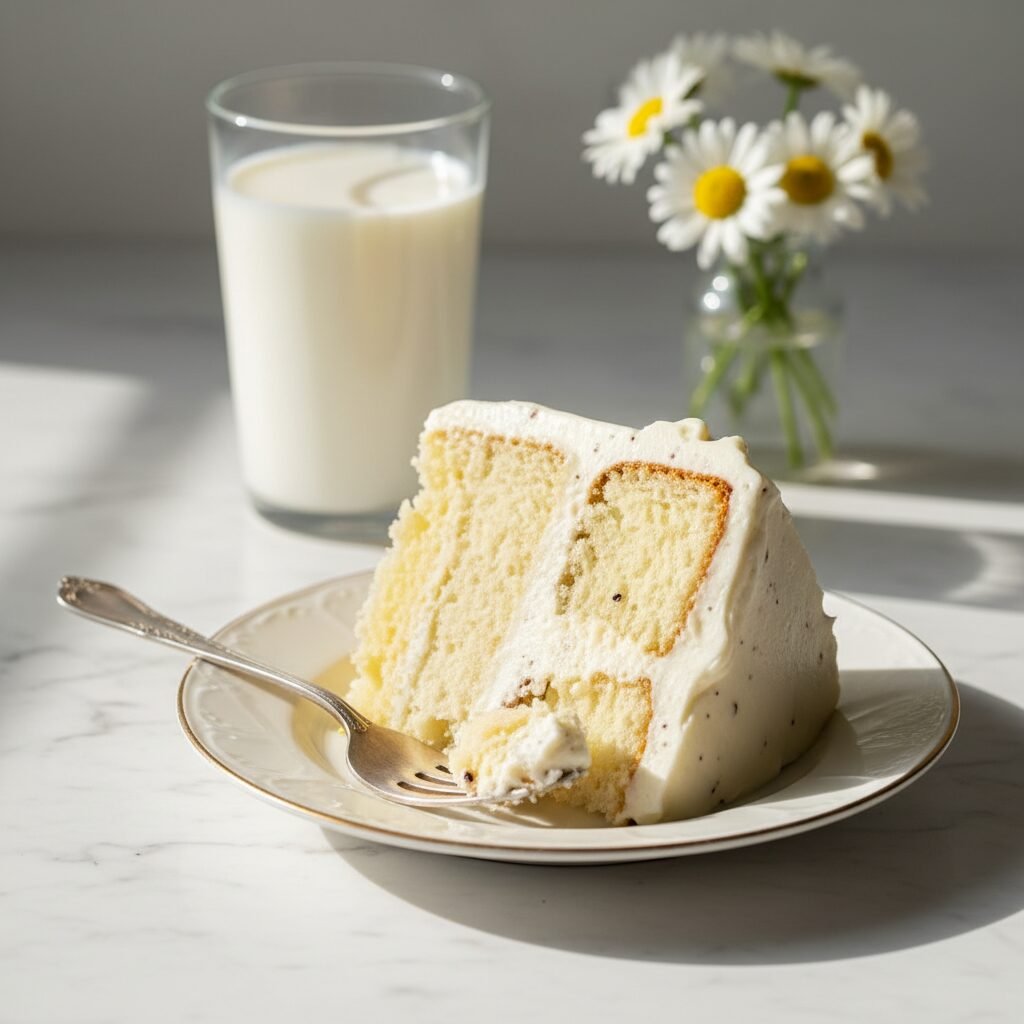
This cake is best served simply, right from the pan or sliced into squares on a platter. The classic pairing is a rich Chocolate Fudge Frosting or a silky Chocolate Buttercream. For a lighter option, try a Strawberry Cream Cheese frosting or just a dusting of powdered sugar and fresh berries. It pairs beautifully with a cold glass of milk or a hot cup of coffee. If you are feeling festive, add rainbow sprinkles to the batter before baking for a ‘funfetti’ style sheet cake.
Storage and Reheating Tips
Because this cake uses oil, it stays moist at room temperature longer than all-butter cakes. Store the frosted cake in an airtight container (or cover the pan tightly with foil) at room temperature for up to 3 days. If you live in a very hot or humid climate, you may want to store it in the refrigerator, but be sure to let it come to room temperature before eating for the best texture. To freeze, wrap unfrosted cake squares individually in plastic wrap and then foil; they will keep for up to 3 months. Thaw on the counter before frosting.
Nutrition Facts (Estimated)
| Serving Size | 1 square |
| Calories | 340 |
| Fat | 18g |
| Saturated Fat | 8g |
| Unsaturated Fat | 9g |
| Trans Fat | 0g |
| Cholesterol | 65mg |
| Sodium | 210mg |
| Carbohydrates | 42g |
| Fiber | 0.5g |
| Sugar | 28g |
| Protein | 4g |
Frequently Asked Questions
Can I double this recipe for a 9×13 pan?
Yes, you can double all the ingredients exactly to fill a standard 9×13 inch pan. The baking time will likely increase to 35-40 minutes.
Why did my cake sink in the middle?
Sinking usually happens if the oven door was opened too early, releasing heat, or if the cake was underbaked. It can also result from too much leavening (baking powder/soda).
Can I use all-purpose flour instead of cake flour?
Yes, but the texture will be slightly denser and more bread-like. Cake flour has less protein, which yields a finer, softer crumb.
Do I have to use an electric mixer?
No! This recipe is designed to be mixed by hand with a whisk. In fact, mixing by hand helps prevent overmixing.
Can I make this as cupcakes?
Yes, this batter works for cupcakes. It will yield approximately 8-10 cupcakes. Bake at 350°F for 18-22 minutes.
Why is my cake dry?
Dry cake is almost always caused by over-measuring flour (scooping with the cup instead of spooning and leveling) or overbaking.
Can I use salted butter?
Yes, just reduce the added salt in the recipe to 1/4 teaspoon to balance the flavor.
How do I get the eggs to room temperature quickly?
Place the eggs in a bowl of warm (not hot) tap water for 5-10 minutes before using.
What frosting goes best with this cake?
A classic American Chocolate Buttercream is traditional, but it also pairs well with vanilla bean frosting, caramel frosting, or a simple ganache.
Can I add mix-ins like chocolate chips?
Yes, you can fold in about 1/2 cup of chocolate chips or nuts. Toss them in a teaspoon of flour first to prevent them from sinking.
Conclusion
This Moist Yellow Sheet Cake for an 8-Inch Pan proves that you don’t need a special occasion or a massive crowd to enjoy a slice of homemade happiness. It strips away the complexity of layer cakes while retaining all the flavor and texture that makes yellow cake a timeless classic. Whether you are a novice baker looking for an easy win or a seasoned pro wanting a quick dessert fix, this recipe delivers consistent, delicious results. So grab your whisk, preheat the oven, and get ready to enjoy the perfect square of golden, buttery goodness.