Moist Strawberry Shortcake Recipe
Experience the perfect balance of tender, buttery biscuits, juicy macerated strawberries, and fluffy homemade whipped cream. This classic American dessert is the quintessential summer treat, offering a melt-in-your-mouth texture that is light, refreshing, and incredibly satisfying.
20 minutes
15 minutes
1 hour 5 minutes (includes macerating time)
6 servings
Dessert
Baking
American
Vegetarian
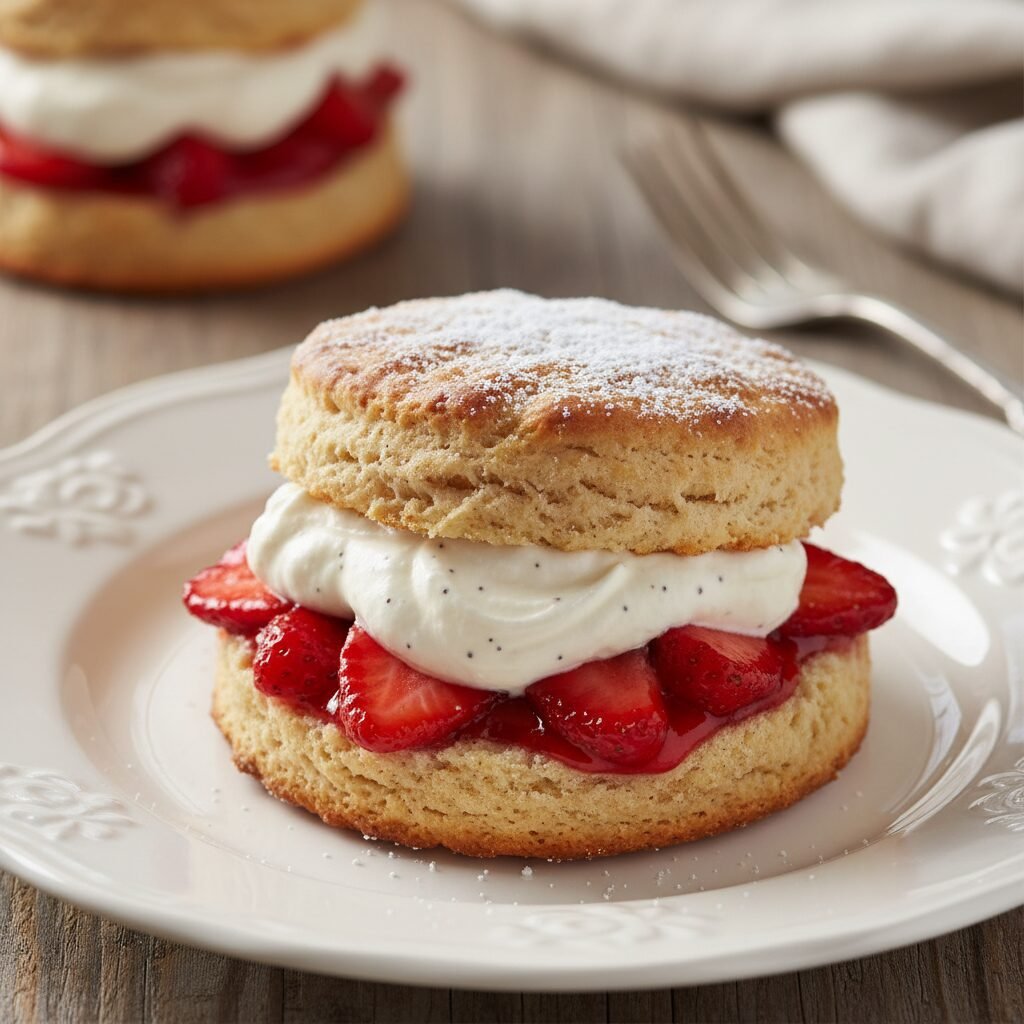
There is something undeniably magical about a classic strawberry shortcake. It is not just a dessert; it is a celebration of summer, a nod to nostalgia, and a testament to the beauty of simple, high-quality ingredients. While many store-bought versions rely on dry, sponge-like cakes, the authentic American strawberry shortcake is built upon a foundation of a sweetened baking powder biscuit. However, the challenge has always been achieving that perfect texture—a biscuit that is tall and flaky, yet incredibly moist and tender inside. That is exactly what this recipe delivers. We are moving away from the dry, crumbly pucks of the past and embracing a biscuit that is enriched with heavy cream and buttermilk, ensuring every bite melts in your mouth.
The secret lies in the technique of handling the dough and the quality of the dairy used. By keeping the butter ice-cold and gently folding the dough, we create distinct layers that rise beautifully in the oven. Paired with strawberries that have been macerated in sugar to release their natural ruby-red syrups, and topped with a cloud of vanilla-bean whipped cream, this dessert is a symphony of textures and flavors. It is rustic yet elegant, making it perfect for everything from a backyard barbecue to a sophisticated dinner party. Whether you are a seasoned baker or a novice in the kitchen, this recipe is designed to be foolproof, guiding you to the most succulent, moist, and flavorful strawberry shortcake you have ever tasted.
History & Origins
The history of strawberry shortcake is as rich and layered as the dessert itself. The term ‘shortcake’ first appeared in an English cookbook as early as 1588, in ‘The Good Huswifes Handmaid for the Kitchin.’ However, the concept of ‘short’ in culinary terms dates back even further, referring to the addition of fat (butter, lard, or shortening) to a dough to inhibit the formation of long gluten strands, resulting in a ‘short’ or crumbly texture rather than a chewy, bread-like one. Originally, these early shortcakes were more akin to unleavened cookies or biscuits.
The combination of this buttery pastry with strawberries and cream is a distinctly American innovation that gained massive popularity in the mid-19th century. As the railroad system expanded across the United States in the 1850s, shipping fresh produce like strawberries became easier, leading to a strawberry boom. This era saw the rise of ‘Strawberry Shortcake Parties’—social gatherings dedicated entirely to the consumption of this seasonal delicacy. It was during this time, specifically around June when the berry harvest peaked, that the dessert cemented its status as an American icon. By 1860, Harper’s Weekly was describing it as a dish that ‘makes the eyes sparkle and the mouth water.’ While modern variations sometimes substitute sponge cake or angel food cake, the traditional biscuit base remains the historical standard, celebrated for its ability to soak up the sweet strawberry juices without disintegrating.
Why This Recipe Works
This recipe succeeds where others fail because it meticulously addresses the science of moisture retention and texture contrast. First, we use a combination of cold unsalted butter and heavy cream in the biscuit dough. The butter creates steam pockets for flakiness, while the high fat content of the cream coats the flour proteins, preventing tough gluten formation. This results in a ‘short’ texture that is tender rather than chewy. We also incorporate a touch of buttermilk; its acidity reacts with the baking powder and baking soda to create a superior lift, while its tang cuts through the richness of the cream.
Furthermore, the method of ‘macerating’ the strawberries is non-negotiable. By tossing the sliced berries with sugar and letting them sit for at least 30 minutes, we utilize osmosis to draw moisture out of the fruit cells. This creates a natural, vibrant strawberry syrup that seeps into the warm bottom half of the biscuit, softening it slightly and infusing it with flavor. Finally, the whipped cream is stabilized with a hint of confectioners’ sugar and vanilla, providing a cool, airy counterpoint to the warm, buttery biscuit and the sweet, juicy fruit. The interplay of hot and cold, crisp and soft, sweet and tart is what makes this specific formulation a guaranteed crowd-pleaser.
Why You’ll Love This Recipe
- ✓Features a tender, biscuit-style base that is never dry.
- ✓Uses macerated strawberries to create a natural, flavorful sauce.
- ✓Requires only 20 minutes of active preparation time.
- ✓Perfect balance of sweet and tangy flavors.
- ✓Can be made ahead of time and assembled just before serving.
Equipment You’ll Need
- ✓Large mixing bowl
- ✓Pastry blender or food processor
- ✓Baking sheet
- ✓Parchment paper
- ✓Biscuit cutter (3-inch)
- ✓Electric mixer or whisk
- ✓Sharp knife
- ✓Cutting board
Ingredients
- ✓2 lbs fresh strawberries, hulled and sliced
- ✓1/2 cup granulated sugar (for strawberries), plus 3 tbsp for dough
- ✓3 cups all-purpose flour
- ✓1 tbsp baking powder
- ✓1/2 tsp baking soda
- ✓3/4 tsp salt
- ✓3/4 cup unsalted butter, frozen or very cold, cut into cubes
- ✓1 cup cold buttermilk
- ✓1/4 cup heavy cream (for brushing)
- ✓Coarse sparkling sugar (for topping)
- ✓1 1/2 cups heavy whipping cream (cold)
- ✓2 tbsp confectioners’ sugar
- ✓1 tsp pure vanilla extract
Instructions
- 1. Prepare the Strawberries: In a medium bowl, toss the sliced strawberries with 1/2 cup granulated sugar. Let them sit at room temperature for at least 30-45 minutes to macerate and release their juices.
- 2. Preheat Oven: Preheat your oven to 425°F (220°C). Line a baking sheet with parchment paper.
- 3. Mix Dry Ingredients: In a large bowl, whisk together the flour, 3 tablespoons granulated sugar, baking powder, baking soda, and salt.
- 4. Cut in Butter: Add the cold, cubed butter to the flour mixture. Use a pastry blender or your fingertips to cut the butter into the flour until the mixture resembles coarse crumbs with some pea-sized pieces of butter remaining. Alternatively, you can pulse this in a food processor.
- 5. Add Liquid: Make a well in the center of the mixture and pour in the cold buttermilk. Stir gently with a fork or spatula just until a shaggy dough forms. Do not overmix.
- 6. Fold the Dough: Turn the dough out onto a lightly floured surface. Gently pat it into a rectangle. Fold the dough over itself in thirds (like a letter). Rotate 90 degrees, pat down, and fold again. Repeat this process 2-3 times to create flaky layers.
- 7. Cut Biscuits: Pat the dough to about 1-inch thickness. Using a sharp 3-inch biscuit cutter, punch out rounds. Press straight down without twisting the cutter to ensure a proper rise. Re-roll scraps gently if necessary to get 6 biscuits.
- 8. Bake: Place biscuits on the prepared baking sheet, touching slightly for softer sides or spaced apart for crispier edges. Brush the tops with heavy cream and sprinkle generously with coarse sparkling sugar. Bake for 15-18 minutes, or until golden brown.
- 9. Make Whipped Cream: While biscuits cool, place the heavy whipping cream, confectioners’ sugar, and vanilla extract in a chilled bowl. Beat with an electric mixer until soft peaks form.
- 10. Assemble: Slice the warm biscuits in half horizontally. Spoon a generous amount of strawberries and their syrup onto the bottom half. Top with a dollop of whipped cream and the top half of the biscuit. Serve immediately.
Expert Cooking Tips
- ✓Keep ingredients cold: The secret to flaky biscuits is keeping the butter from melting before it hits the oven.
- ✓Don’t twist the cutter: When cutting biscuits, press straight down. Twisting seals the edges and prevents rising.
- ✓Macerate longer for more syrup: If you like extra sauce, let the berries sit for up to an hour.
- ✓Chill the bowl: For the fastest, fluffiest whipped cream, chill your mixing bowl and beaters in the freezer for 10 minutes beforehand.
- ✓Use fresh baking powder: Ensure your leavening agents are not expired for the best rise.
- ✓Don’t overwork the dough: Handle the dough as little as possible to avoid tough biscuits.
Substitutions and Variations
If you do not have buttermilk, you can make a quick substitute by adding 1 tablespoon of lemon juice or white vinegar to a cup of regular milk and letting it sit for 5 minutes. For a gluten-free version, swap the all-purpose flour for a high-quality 1:1 gluten-free baking flour blend that includes xanthan gum. If you prefer a different fruit, this recipe works beautifully with raspberries, blackberries, or peaches. For a lighter whipped cream, you can substitute half of the heavy cream with Greek yogurt, though the texture will be tangier and denser. You can also use salted butter in the biscuits; just reduce the added salt to 1/4 teaspoon.
Common Mistakes to Avoid
The most common mistake is overmixing the biscuit dough. Once the liquid hits the flour, gluten begins to develop. Mixing too vigorously results in a tough, chewy puck rather than a tender biscuit. Another error is using warm butter; if the butter melts into the flour during mixing, you lose the flaky layers. Always use cold butter. Additionally, slicing the strawberries too thick prevents them from releasing enough juice; aim for 1/4 inch slices. Finally, assembling the shortcakes too early leads to sogginess. Always assemble right before serving to maintain the contrast between the crisp biscuit and the juicy fruit.
Serving Suggestions
Serve these shortcakes on individual dessert plates to catch all the delicious syrup. They pair wonderfully with a glass of cold milk, iced tea, or a dessert wine like Moscato. For a brunch setting, serve them alongside a savory quiche to balance the sweetness. You can garnish with a sprig of fresh mint or a dusting of powdered sugar for a professional finish. If serving for a crowd, set up a ‘shortcake bar’ where guests can assemble their own with various toppings like chocolate shavings or lemon zest.
Storage and Reheating Tips
The baked biscuits can be stored in an airtight container at room temperature for up to 2 days. However, they are best eaten fresh. The macerated strawberries should be kept in the refrigerator and used within 24 hours, as they will continue to soften. The whipped cream is best made fresh but can be stored in the fridge for a few hours; you may need to re-whisk it slightly before serving. To reheat biscuits, place them in a 350°F oven for 5-7 minutes. Do not microwave them, as they will become rubbery.
Nutrition Facts (Estimated)
| Serving Size | 1 Shortcake |
| Calories | 580 |
| Fat | 36g |
| Saturated Fat | 22g |
| Unsaturated Fat | 12g |
| Trans Fat | 1g |
| Cholesterol | 110mg |
| Sodium | 480mg |
| Carbohydrates | 58g |
| Fiber | 3g |
| Sugar | 32g |
| Protein | 8g |
Frequently Asked Questions
Can I use frozen strawberries?
Fresh strawberries are highly recommended for the best texture and presentation. Frozen strawberries tend to become very mushy when thawed and release too much water, making the shortcake soggy. If you must use frozen, thaw and drain them well, but expect a sauce-like consistency.
Why did my biscuits turn out flat?
Flat biscuits are usually caused by expired baking powder or overworking the dough. Also, twisting the biscuit cutter seals the edges, preventing the layers from expanding upward. Ensure your oven is fully preheated to 425°F to give them a quick burst of heat for the rise.
Can I make the dough ahead of time?
Yes! You can cut the biscuits and freeze them raw on a baking sheet. Once frozen solid, transfer to a zip-top bag. Bake them directly from frozen, adding a few extra minutes to the baking time.
Is this recipe different from sponge cake shortcake?
Yes, this uses a ‘biscuit’ base, which is the traditional American style. Sponge cake is softer and more cake-like, often sold in grocery stores as yellow dessert shells. The biscuit version offers a better texture contrast and is less sweet.
How do I make the biscuits softer?
For softer sides, place the biscuits on the baking sheet so they are touching each other. This forces them to rise up rather than out and keeps the edges soft. For crispier edges, space them 2 inches apart.
Can I use milk instead of heavy cream for the biscuits?
You can, but the biscuits will be less rich and tender. The fat in the heavy cream helps shorten the gluten strands. If using milk, ensure you don’t skimp on the butter.
What if I don’t have a biscuit cutter?
You can use the rim of a glass dipped in flour, or simply use a sharp knife to cut the dough into squares. Squares actually produce no scrap waste, which prevents overworking the dough.
Why is my whipped cream runny?
Whipped cream can become runny if it’s under-whipped or if the environment is too hot. Ensure you whip it to soft or medium peaks and keep it refrigerated until the very last second.
Conclusion
Mastering this moist strawberry shortcake recipe is a rewarding experience that brings the essence of summer into your kitchen. By focusing on the technique of the biscuit and the quality of the fruit, you elevate a simple dessert into something truly memorable. The interplay of the warm, buttery pastry, the cool, sweet cream, and the bright, tangy berries is a timeless combination that never fails to delight. We hope this recipe becomes a staple in your home, creating sweet memories with friends and family for years to come. Happy baking!