Moist Lemon Snack Cake Recipe
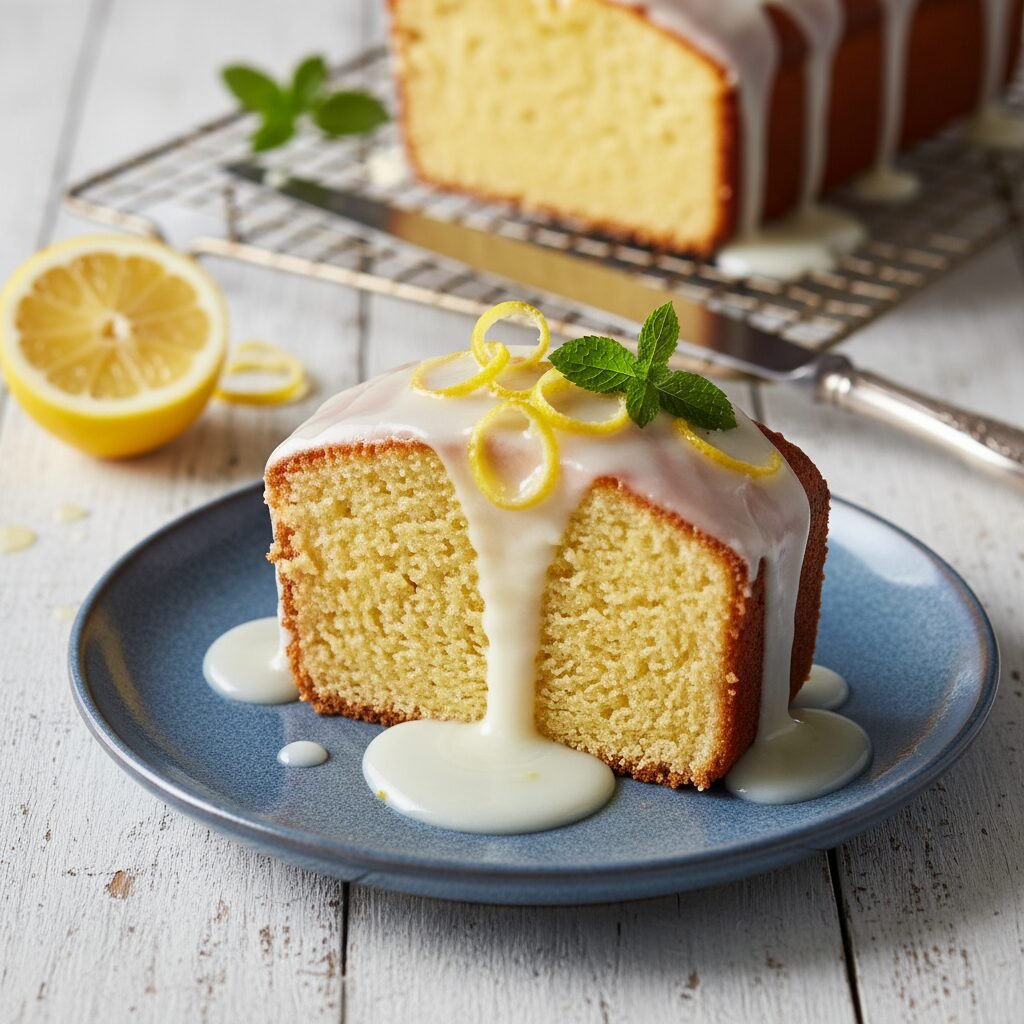
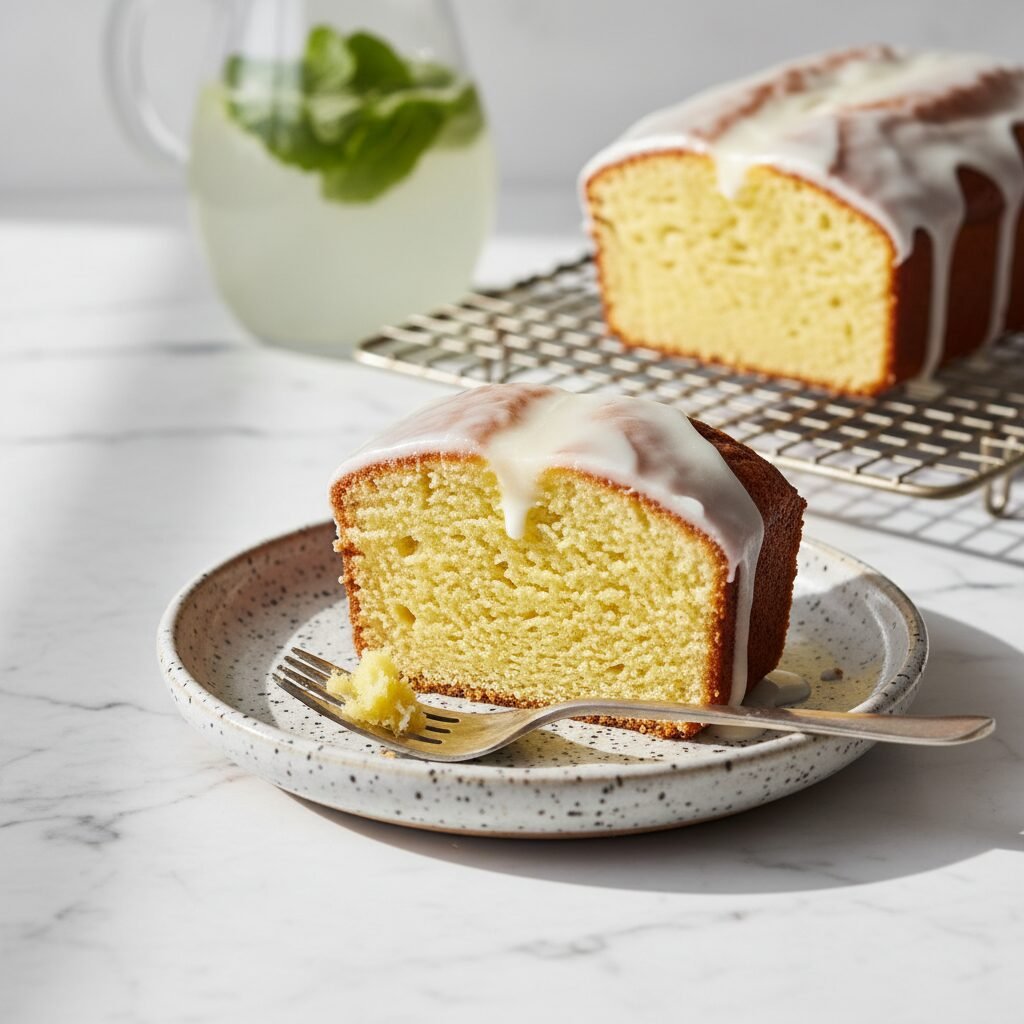
Bright, tangy, and impossibly tender, this Moist Lemon Snack Cake is the perfect pick-me-up for any time of day. Made with fresh lemon zest, sour cream, and a simple pantry-friendly method, it’s a sunshine-filled treat that comes together in one bowl and disappears in seconds.
15 minutes
35 minutes
50 minutes
9 to 12 servings
Dessert
Baking
American
Vegetarian
There is something undeniably cheerful about a lemon cake. It is the culinary equivalent of a ray of sunshine breaking through the clouds on a gray afternoon. This Moist Lemon Snack Cake is not your average dry sponge; it is a celebration of citrus, balancing the sharp, zesty punch of fresh lemons with a tender, melt-in-your-mouth crumb that stays soft for days.
The beauty of a ‘snack cake’ lies in its simplicity and approachability. Unlike an elaborate, multi-tiered layer cake that requires hours of frosting and chilling, a snack cake is humble, rustic, and designed to be eaten right out of the pan—perhaps with a cup of Earl Grey tea or a cold glass of milk. It fits just as well in a lunchbox as it does on a dessert table at a summer barbecue.
In this recipe, we focus heavily on texture. By utilizing both oil and sour cream (or Greek yogurt), we ensure a crumb that is dense enough to be satisfying but light enough to keep you coming back for a second slice. The glaze is the crowning jewel: a simple mixture of powdered sugar and fresh lemon juice that sets into a crackly, sweet-tart shell, sealing in the moisture and adding an extra pop of flavor. Whether you are a novice baker looking for a foolproof win or a seasoned pro craving a quick citrus fix, this recipe is guaranteed to become a staple in your kitchen repertoire.
History & Origins
The history of the lemon cake is a journey that spans continents and centuries, tracing the migration of the lemon itself. Lemons are believed to have originated in the foothills of the Himalayas, eventually making their way to the Middle East and the Mediterranean around 200 AD. However, they were initially used more for their ornamental value and medicinal properties than for culinary delight. It wasn’t until the Arab agricultural revolution in the Medieval period that lemons became a staple ingredient in Mediterranean cooking, eventually spreading to the rest of Europe.
The concept of the ‘cake’ evolved significantly alongside the availability of refined sugar and the invention of chemical leaveners like baking powder in the 19th century. Before this, cakes were often yeast-leavened, resembling sweetened breads. The specific iteration of the ‘snack cake’ is a distinctly American phenomenon that gained traction in the mid-20th century. Post-World War II, with the rise of convenience cooking and the suburban boom, housewives sought recipes that were quick, reliable, and could be whipped up for after-school snacks or unexpected neighbors dropping by.
The lemon snack cake, often baked in a square pan, became a symbol of effortless hospitality. It bridged the gap between the heavy, fruit-laden cakes of the Victorian era and the processed, plastic-wrapped snack cakes that began filling grocery store shelves in the 1950s and 60s. This recipe harkens back to that golden era of home baking, stripping away the preservatives of the commercial versions and returning to the roots of fresh zest, real dairy, and the timeless appeal of homemade comfort food.
Why This Recipe Works
This recipe succeeds where many others fail because it meticulously balances the ratio of fat, acid, and sugar to create the ultimate texture. Many lemon cakes suffer from being too dry or having a muffled lemon flavor. To combat dryness, we use a combination of vegetable oil and sour cream. Butter, while flavorful, contains water that evaporates during baking; oil is 100% fat and remains liquid at room temperature, coating the flour proteins and preventing gluten formation, which results in a much more tender and moist crumb that stays soft for days. The sour cream adds richness and acidity, which tenderizes the gluten strands further.
Regarding flavor, we use a two-pronged approach: zest and juice. The essential oils in lemon zest contain the potent aromatic compound limonene, which provides the deep, floral lemon scent that juice alone cannot achieve. We rub the zest directly into the granulated sugar before mixing—a technique that uses the friction of the sugar crystals to release those essential oils, infusing the entire batter with fragrance. The glaze, applied while the cake is still slightly warm, permeates the top layer of the crust, creating a fused layer of sweet and tart that ensures every bite packs a punch. This scientific approach to ingredients ensures a cake that is robust in flavor and scientifically engineered to be moist.
Why You’ll Love This Recipe
- ✓Uses both zest and juice for maximum citrus impact.
- ✓Stays moist for up to 4 days thanks to sour cream and oil.
- ✓One-bowl mixing method means minimal cleanup.
- ✓No fancy equipment required—just a whisk and a bowl.
- ✓Versatile: perfect for breakfast, brunch, or dessert.
- ✓Freezer-friendly for meal prepping treats.
Equipment You’ll Need
- ✓8×8 inch square baking pan
- ✓Large mixing bowl
- ✓Medium mixing bowl
- ✓Whisk
- ✓Rubber spatula
- ✓Microplane or zester
- ✓Citrus juicer
- ✓Measuring cups and spoons
- ✓Parchment paper
Ingredients
- ✓1 1/2 cups All-purpose flour
- ✓1 cup Granulated sugar
- ✓1 tsp Baking powder
- ✓1/4 tsp Baking soda
- ✓1/2 tsp Salt
- ✓2 large Eggs, room temperature
- ✓1/2 cup Sour cream or Greek yogurt, room temperature
- ✓1/2 cup Vegetable oil (or canola/grapeseed oil)
- ✓1 tbsp Fresh lemon zest (approx. 1 lemon)
- ✓2 tbsp Fresh lemon juice
- ✓1 tsp Pure vanilla extract
- ✓GLAZE: 1 cup Powdered sugar (confectioners’ sugar)
- ✓GLAZE: 2-3 tbsp Fresh lemon juice
Instructions
- Preheat your oven to 350°F (175°C). Grease an 8×8 inch square baking pan with butter or cooking spray and line it with parchment paper, leaving an overhang on two sides for easy removal.
- In a small bowl, combine the granulated sugar and fresh lemon zest. Use your fingertips to rub the zest into the sugar until the mixture resembles wet sand and is very fragrant. This releases the essential oils.
- In a large mixing bowl, whisk together the flour, baking powder, baking soda, and salt. Set aside.
- In a medium bowl, whisk together the lemon-sugar mixture, eggs, sour cream (or yogurt), vegetable oil, 2 tablespoons of lemon juice, and vanilla extract until the mixture is smooth and well combined.
- Pour the wet ingredients into the bowl with the dry ingredients. Use a rubber spatula to gently fold the mixture together just until the flour streaks disappear. Do not overmix.
- Pour the batter into the prepared baking pan and smooth the top with the spatula.
- Bake for 30-35 minutes, or until a toothpick inserted into the center comes out clean or with a few moist crumbs attached. The top should be golden brown.
- Remove the cake from the oven and place the pan on a wire cooling rack. Let it cool for about 15 minutes.
- While the cake cools, prepare the glaze. In a small bowl, whisk together the powdered sugar and 2 tablespoons of lemon juice. If the glaze is too thick, add more juice 1 teaspoon at a time until it reaches a pourable consistency.
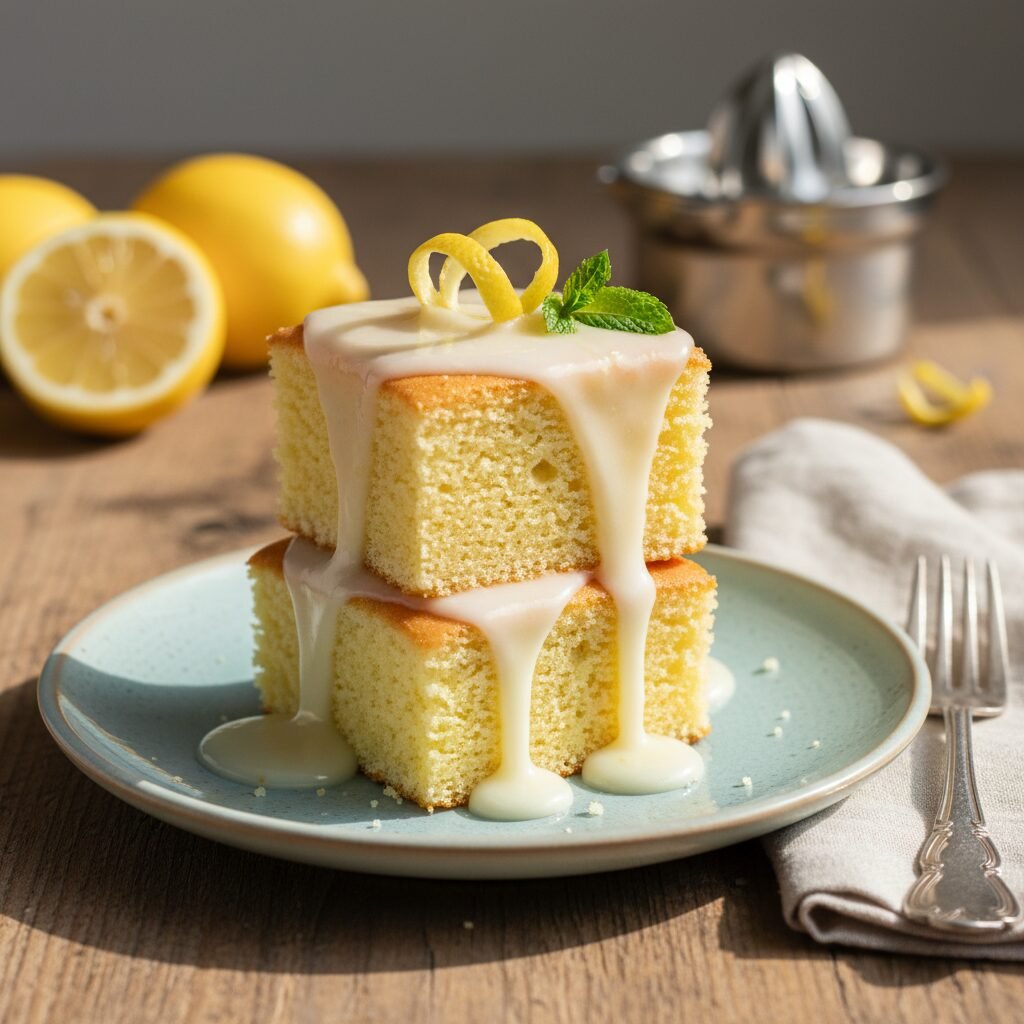
- Drizzle the glaze over the slightly warm cake, spreading it to the edges. Allow the cake to cool completely before slicing into squares.
Expert Cooking Tips
- ✓Rub the zest into the sugar first; this ‘lemon sugar’ creates a deeper flavor than just stirring zest into the batter.
- ✓Use room temperature eggs and sour cream to ensure the batter emulsifies properly, leading to a better rise.
- ✓Don’t overmix the batter once the flour is added; stop as soon as the white streaks disappear to avoid a tough cake.
- ✓Fresh lemon juice is non-negotiable; bottled juice lacks the brightness and acidity needed for this recipe.
- ✓Line your pan with parchment paper to easily lift the entire cake out for neat slicing.
- ✓If you prefer a thicker, frosting-like topping, reduce the lemon juice in the glaze to 1 tablespoon.
- ✓Tap the pan on the counter once before baking to release any large air bubbles.
Substitutions and Variations
This recipe is quite flexible. If you don’t have sour cream, full-fat plain Greek yogurt is an excellent 1:1 substitute that provides the same tang and moisture. In a pinch, you can also use buttermilk, though the batter will be slightly thinner. For the oil, any neutral oil like canola, vegetable, or grapeseed works best, but melted coconut oil or melted unsalted butter can be used for a different flavor profile (butter will make the cake slightly denser). To make this gluten-free, substitute the all-purpose flour with a high-quality 1:1 gluten-free flour blend that contains xanthan gum. If you want to reduce refined sugar, you can try using a granulated monk fruit sweetener, though the texture may be slightly less tender. For a different citrus twist, try using lime or orange zest and juice instead of lemon.
Common Mistakes to Avoid
The most common mistake is overmixing the batter. When flour meets liquid, gluten begins to form. While you want some structure, too much agitation leads to a rubbery, dense cake. Another frequent error is measuring flour incorrectly. Scooping flour directly with the measuring cup packs it down, leading to too much flour and a dry cake. Instead, spoon the flour into the cup and level it off. Finally, applying the glaze to a piping hot cake will cause it to melt entirely and soak in, disappearing visually. While this tastes good, if you want that beautiful white glaze layer, wait until the cake is just warm, not hot.
Serving Suggestions
This cake is beautiful in its simplicity and needs little adornment. Serve it as a square on a nice dessert plate with a fresh lemon slice or a sprig of mint for color. It pairs wonderfully with fresh berries—raspberries or blueberries specifically complement the tart lemon flavor. For an elevated dessert, serve a warm slice with a dollop of whipped cream or a scoop of vanilla bean ice cream. It is also fantastic served alongside a hot cup of Earl Grey tea or coffee for a mid-morning break.
Storage and Reheating Tips
Store the cake in an airtight container at room temperature for up to 3 days. The oil and sour cream help it retain moisture well. If you live in a very hot or humid climate, you may want to store it in the refrigerator for up to 5 days, but bring it to room temperature before eating for the best texture. To freeze, let the glaze set completely, then wrap individual slices tightly in plastic wrap and then in aluminum foil. Freeze for up to 3 months. Thaw on the counter for an hour before serving.
Nutrition Facts (Estimated)
| Serving Size | 1 square |
| Calories | 290 |
| Fat | 14g |
| Saturated Fat | 3g |
| Unsaturated Fat | 10g |
| Trans Fat | 0g |
| Cholesterol | 35mg |
| Sodium | 180mg |
| Carbohydrates | 38g |
| Fiber | 0.5g |
| Sugar | 22g |
| Protein | 3g |
Frequently Asked Questions
Can I double this recipe?
Yes, you can double the ingredients and bake it in a 9×13 inch pan. You will need to increase the baking time to approximately 35-45 minutes. Keep an eye on it and use the toothpick test.
Why did my cake sink in the middle?
Sinking usually happens if the oven door was opened too early, causing a temperature drop, or if there was too much leavening (baking powder/soda). Ensure your oven is fully preheated and try not to peek until the end of the baking time.
Can I make this in a loaf pan?
Absolutely. This batter fits perfectly in a standard 9×5 inch loaf pan. However, because the batter is deeper, the baking time will increase significantly to about 50-60 minutes.
Is this cake very sweet?
It has a balanced sweetness. The sugar in the cake balances the sour cream and lemon, while the glaze adds a sweet finish. It is not cloyingly sweet like some frosted layer cakes.
Can I use Meyer lemons?
Yes, Meyer lemons work beautifully! They are slightly sweeter and less acidic than standard lemons, so the cake will have a more floral, subtle lemon flavor.
Do I need an electric mixer?
No, this is a standard ‘muffin method’ cake which is best mixed by hand with a whisk and spatula to prevent overmixing.
My glaze is too runny, how do I fix it?
simply whisk in more powdered sugar, a tablespoon at a time, until it reaches your desired opacity and thickness.
Can I leave out the glaze?
You can, but the glaze provides a lot of the zesty lemon kick. If you skip it, consider dusting the top with powdered sugar before serving.
Conclusion
This Moist Lemon Snack Cake is a testament to the fact that you don’t need complicated techniques or hours in the kitchen to create something truly spectacular. It captures the essence of homemade baking: simple ingredients, comforting aromas, and a flavor that brings a smile to your face. Whether you are baking for a crowd, a family snack, or just a personal treat, this recipe delivers consistent, delicious results. So grab your lemons, preheat your oven, and get ready to enjoy a slice of sunshine. Happy baking!