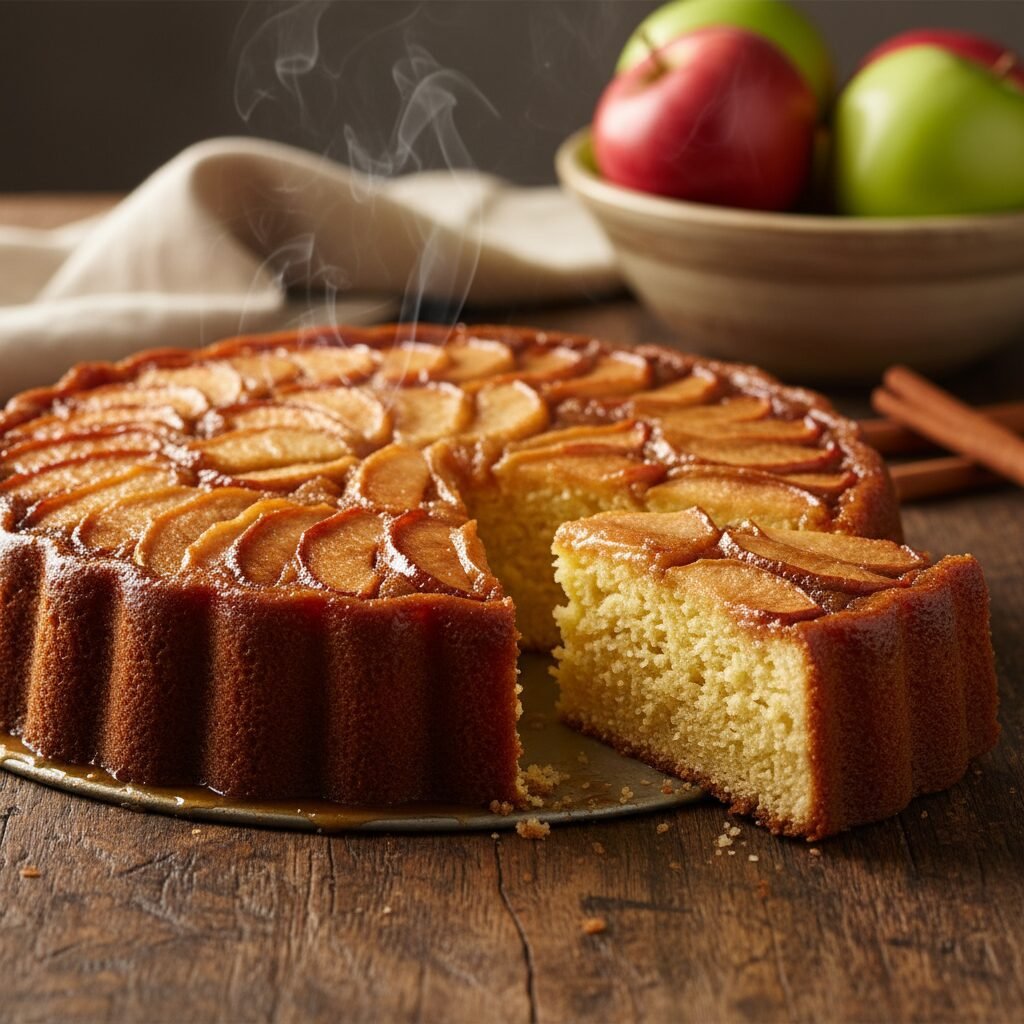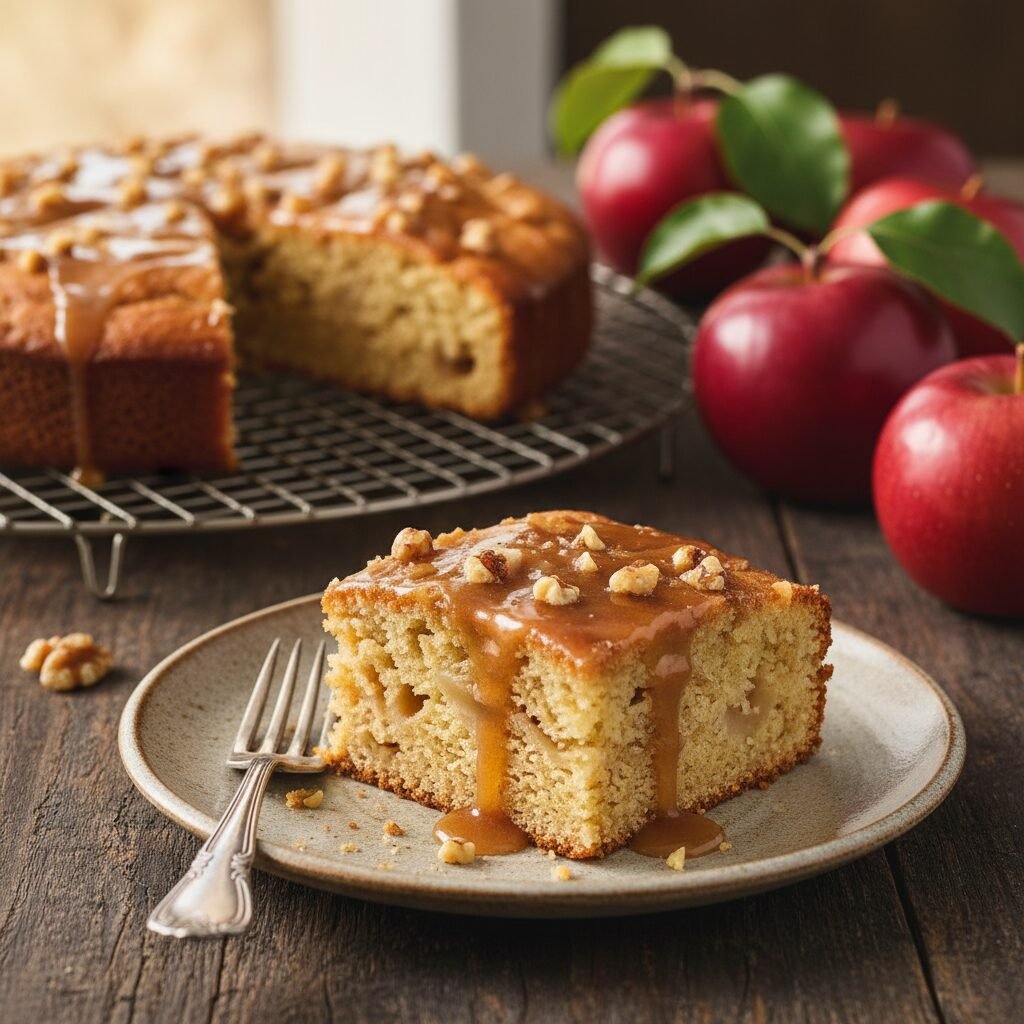
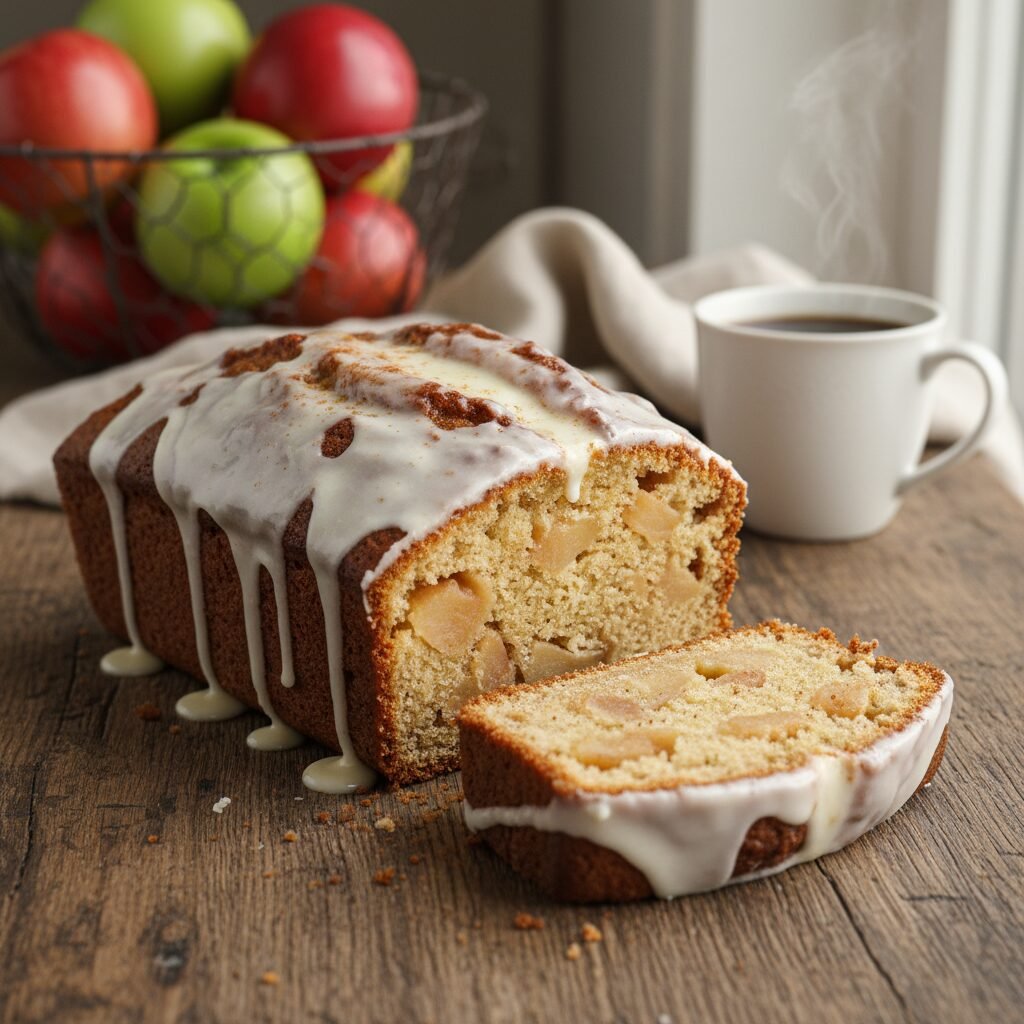
Moist Apple Loaf Cake Recipe
Embrace the cozy flavors of autumn with this incredibly moist apple loaf cake. Packed with tender chunks of fresh apples, warm cinnamon spice, and topped with a simple vanilla glaze, this easy quick bread is perfect for breakfast or dessert.
20 minutes
55 minutes
1 hour 15 minutes
1 Loaf (10 slices)
Dessert / Quick Bread
Baking
American
Vegetarian
There is something undeniably magical about the aroma of spiced apples baking in the oven. It signals a shift in the seasons, inviting a sense of comfort and warmth into the home that few other scents can achieve. This Moist Apple Loaf Cake is the physical embodiment of that feeling—a ‘hygge’ masterpiece that bridges the gap between a morning coffee companion and a decadent after-dinner treat. Unlike a traditional airy sponge cake, this loaf possesses a dense, satisfying crumb that remains incredibly tender for days, thanks to a specific balance of moisture-rich ingredients.
As a food blogger, I have tested dozens of apple recipes, from pies to crumbles, but I always come back to the humble loaf cake. Why? Because it offers the perfect ratio of crust to soft interior, and it slices beautifully for serving. The beauty of this recipe lies in its rustic simplicity; it doesn’t require fancy equipment or complicated techniques. It celebrates the apple in its purest form, suspended in a batter that is rich with brown sugar and vanilla. Whether you are looking to use up a bushel of orchard-picked apples or simply craving a slice of fall, this recipe delivers on every level. It is sweet but not cloying, spiced but not overpowering, and moist enough to eat without a drink—though a hot cup of tea is highly recommended.
History & Origins
The concept of the apple cake is as old as the cultivation of apples themselves, spanning across various cultures and centuries. While apples have been a dietary staple for thousands of years, originating in Central Asia, their incorporation into sweetened breads and cakes gained significant traction in Europe. In England, the ‘Dorset Apple Cake’ is a regional classic, traditionally rustic and often served as a tea-time treat. Meanwhile, in Jewish culinary tradition, apple cake holds a place of high honor, particularly during Rosh Hashanah, the Jewish New Year. During this holiday, it is customary to eat apples dipped in honey to symbolize a sweet new year, and dairy-free (pareve) apple cakes became a staple dessert to follow meat-based meals.
In the United States, the history of the apple loaf cake is closely tied to the evolution of ‘quick breads.’ Before the mid-19th century, most cakes were leavened with yeast, requiring long rising times. The invention of chemical leaveners like baking soda and baking powder revolutionized home baking, allowing for the creation of loaves that could be mixed and baked in under an hour. This era saw the rise of banana bread, zucchini bread, and, of course, apple bread. During the Great Depression and wartime eras, apple cakes became even more popular due to the fruit’s affordability and availability compared to imported luxuries. Today, the apple loaf cake represents a convergence of these histories—a modern quick bread that pays homage to European tea cakes and American resourcefulness.
Why This Recipe Works
This recipe succeeds where many others fail due to a precise understanding of baking science, specifically regarding moisture retention and flavor distribution. First and foremost, we use oil instead of butter as the primary fat. While butter adds flavor, it is 80% fat and 20% water; water evaporates, and butter solidifies at room temperature, which can lead to a drier texture over time. Oil, being 100% fat and liquid at room temperature, coats the flour proteins more effectively, inhibiting gluten formation and ensuring the cake stays soft and moist for days.
Secondly, the inclusion of Greek yogurt (or sour cream) is a game-changer. The acidity in the yogurt reacts with the baking soda to create a superior rise, while the protein structure adds richness without heaviness. We also use a mix of brown and white sugars; the molasses in the brown sugar is hygroscopic, meaning it attracts and holds moisture from the air, further preventing the loaf from drying out. Finally, the technique of dicing the apples rather than grating them provides pops of texture and pockets of intense fruit flavor, preventing the batter from becoming a uniform, soggy mash.
Why You’ll Love This Recipe
- ✓Stays moist for up to 5 days at room temperature.
- ✓Requires only two bowls and no electric mixer.
- ✓Versatile: works with Granny Smith, Honeycrisp, or Fuji apples.
- ✓Freezer-friendly for make-ahead breakfasts.
- ✓Perfect balance of sweet cake and tart fruit.
- ✓Fill your kitchen with the incredible scent of cinnamon and vanilla.
Equipment You’ll Need
- ✓9×5 inch Loaf Pan
- ✓Large Mixing Bowl
- ✓Medium Mixing Bowl
- ✓Whisk
- ✓Rubber Spatula
- ✓Peeler
- ✓Knife and Cutting Board
- ✓Wire Cooling Rack
Ingredients
- ✓1 1/2 cups All-Purpose Flour
- ✓1 tsp Baking Powder
- ✓1/2 tsp Baking Soda
- ✓1/2 tsp Salt
- ✓2 tsp Ground Cinnamon
- ✓1/4 tsp Ground Nutmeg
- ✓1/2 cup Vegetable Oil (or Canola Oil)
- ✓1/2 cup Granulated White Sugar
- ✓1/2 cup Light Brown Sugar, packed
- ✓2 large Eggs, room temperature
- ✓1/2 cup Greek Yogurt or Sour Cream
- ✓2 tsp Vanilla Extract
- ✓2 cups Apples, peeled, cored, and diced into 1/2 inch cubes (approx. 2 medium apples)
- ✓1/2 cup Powdered Sugar (for glaze)
- ✓1-2 tbsp Milk or Cream (for glaze)
Instructions
- Preheat your oven to 350°F (175°C). Grease a 9×5 inch loaf pan generously with non-stick spray or butter, and line the bottom with parchment paper for easy removal.
- In a medium bowl, whisk together the flour, baking powder, baking soda, salt, cinnamon, and nutmeg until well combined. Set aside.
- In a large bowl, whisk together the vegetable oil, granulated sugar, brown sugar, eggs, Greek yogurt, and vanilla extract. Whisk vigorously until the mixture is smooth and slightly emulsified.
- Pour the dry ingredients into the wet ingredients. Using a rubber spatula, gently fold the mixture together. Stop mixing just before the flour is completely incorporated; a few streaks of flour are okay at this stage.
- Add the diced apples to the batter. Continue to fold gently until the apples are evenly distributed and no flour streaks remain. Do not overmix.
- Pour the batter into the prepared loaf pan and smooth the top with the spatula. Tap the pan gently on the counter to release any large air bubbles.
- Bake for 50-60 minutes, or until a toothpick inserted into the center comes out clean or with a few moist crumbs attached. If the top creates a dome and browns too quickly, tent it loosely with aluminum foil after the 40-minute mark.
- Remove from the oven and let the cake cool in the pan for about 15 minutes. Then, run a knife around the edges and carefully transfer the loaf to a wire rack to cool completely.
- While the cake cools, prepare the glaze by whisking the powdered sugar and milk together until smooth. Drizzle over the completely cooled cake before slicing.
Expert Cooking Tips
- ✓Room Temperature Ingredients: Ensure your eggs and yogurt are at room temperature to create a smoother emulsion, which leads to a better rise.
- ✓Don’t Overmix: Once the flour hits the wet ingredients, be gentle. Overmixing develops gluten, resulting in a tough, rubbery loaf.
- ✓Apple Choice Matters: Use baking apples that hold their shape, like Granny Smith, Honeycrisp, or Braeburn. Avoid Red Delicious as they turn mushy.
- ✓Tent with Foil: Loaf cakes are thick and take time to bake. If the top looks dark but the center is raw, cover loosely with foil to prevent burning.
- ✓Cool Completely: It is tempting to slice warm, but this cake is very moist and needs to set as it cools. Slicing too early can cause it to crumble.
- ✓Flour the Fruit: If your batter seems thin, toss the apple chunks in a teaspoon of flour before adding to prevent them from sinking (though this batter is usually thick enough to hold them).
Substitutions and Variations
This recipe is quite forgiving and allows for several substitutions. For the flour, you can use a 1:1 Gluten-Free All-Purpose baking blend if you are avoiding gluten; look for one that contains xanthan gum. If you want a whole grain twist, you can replace half of the white flour with white whole wheat flour. For the oil, melted coconut oil or light olive oil works well, though coconut oil will impart a slight flavor. If you don’t have Greek yogurt, full-fat sour cream is the best alternative, but plain regular yogurt or even buttermilk can work in a pinch (though the batter will be thinner). For the sugar, you can use all white or all brown sugar, but the texture will change slightly; dark brown sugar can also be used for a deeper molasses flavor. Finally, feel free to add 1/2 cup of chopped walnuts or pecans for crunch.
Common Mistakes to Avoid
The most common mistake with this apple loaf is underbaking. Because the apples release moisture as they bake, the center takes longer to set than a standard cake. Always use the toothpick test in the very center of the loaf. Another frequent error is using mealy apples; using an eating apple that softens too much will result in a soggy texture rather than distinct tender bites. Lastly, measuring flour incorrectly by scooping the cup into the bag packs the flour down, leading to a dry cake. Always use the ‘spoon and level’ method or a kitchen scale for accuracy.
Serving Suggestions
This loaf is versatile enough for any time of day. For breakfast, serve a thick slice slightly warmed with a pat of salted butter or a dollop of ricotta cheese. It pairs exceptionally well with dark roast coffee or Earl Grey tea. For a decadent dessert, warm a slice in the microwave for 15 seconds and top it with a scoop of vanilla bean ice cream and a drizzle of caramel sauce. It also makes a fantastic addition to a holiday brunch spread alongside savory quiches and fruit salad.
Storage and Reheating Tips
Storage is where this cake shines, as the flavors often improve the next day. Store the cooled loaf in an airtight container at room temperature for up to 3 days. If you live in a very hot or humid climate, you may want to store it in the refrigerator for up to a week, but bring it to room temperature before eating for the best texture. To freeze, wrap individual slices or the whole loaf tightly in plastic wrap, then a layer of foil. It can be frozen for up to 3 months. Thaw on the counter overnight.
Nutrition Facts (Estimated)
| Serving Size | 1 slice |
| Calories | 340 |
| Fat | 14g |
| Saturated Fat | 2g |
| Unsaturated Fat | 11g |
| Trans Fat | 0g |
| Cholesterol | 35mg |
| Sodium | 180mg |
| Carbohydrates | 48g |
| Fiber | 2g |
| Sugar | 22g |
| Protein | 4g |
Frequently Asked Questions
Can I use applesauce instead of oil?
Yes, you can substitute half or all of the oil with unsweetened applesauce to reduce the fat content. However, keep in mind that the texture will be more sponge-like and slightly less moist than the oil version.
Why did my apple loaf sink in the middle?
Sinking usually happens if the cake was underbaked (the structure wasn’t set) or if there was too much leavening agent. Ensure you measure baking soda/powder accurately and bake until the toothpick is clean.
Do I have to peel the apples?
It is highly recommended. Apple skins can become tough and chewy in a soft cake, which disrupts the texture. Peeling ensures every bite is soft and tender.
Can I bake this in a muffin tin?
Absolutely! This batter makes excellent muffins. Grease a standard muffin tin and bake at 375°F for 18-22 minutes.
What are the best apples for baking?
Granny Smith are the gold standard for tartness and structure. Honeycrisp, Braeburn, and Jonagold are also excellent choices that hold their shape well.
Can I reduce the sugar?
You can reduce the sugar by about 1/4 cup without disastrous results, but remember that sugar contributes to moisture and shelf-life, not just sweetness. Reducing it too much may yield a drier cake.
Why is my batter so thick?
This is normal! Quick bread batters should be thick to support the heavy fruit mix-ins. As long as there are no dry flour pockets, it is correct.
Can I add spices like cloves or ginger?
Yes, this flavor profile welcomes spices. A 1/4 teaspoon of ground cloves, allspice, or ginger adds a lovely depth of flavor.
Conclusion
This Moist Apple Loaf Cake is more than just a recipe; it is a reliable companion for the crisp days of autumn and beyond. Whether you are an experienced baker or a novice in the kitchen, the forgiving nature of this batter ensures success. The combination of the tender, spiced crumb and the bursts of juicy apple creates a texture that is truly addictive. I hope this loaf brings as much warmth and joy to your kitchen as it does to mine. Don’t forget to pin this recipe for your next apple picking adventure!