Moist Lemon Sheet Cake Recipe
Bright, zesty, and impossibly soft, this lemon sheet cake is the ultimate crowd-pleaser for spring gatherings and summer picnics. Topped with a luscious lemon cream cheese frosting, every bite offers the perfect balance of tart citrus and sweet, buttery crumb.
20 minutes
25 minutes
45 minutes (plus cooling)
24 squares
Dessert
Baking
American
Vegetarian
There is something undeniably cheerful about a lemon cake. It is sunshine on a plate, a dessert that manages to be both comforting and invigorating all at once. This Moist Lemon Sheet Cake is the answer to every baker’s quest for the perfect balance of ease and elegance. Unlike finicky layer cakes that require leveling, stacking, and crumb-coating, a sheet cake is humble yet confident. It promises a tender, melt-in-your-mouth texture that stays soft for days, thanks to a carefully calibrated batter that utilizes both butter for flavor and oil for lasting moisture.
The magic of this recipe lies in the triple-lemon threat: fresh lemon zest rubbed into the sugar to release essential oils, fresh lemon juice in the batter, and a zesty kick in the creamy frosting. It is not just a yellow cake; it is a celebration of citrus. The texture is distinct from a pound cake or a sponge; it is velvety and dense enough to hold up to a thick layer of frosting but light enough to leave you reaching for a second slice. Whether you are hosting a large Easter brunch, a backyard barbecue, or simply need a pick-me-up on a rainy Tuesday, this cake delivers. It is the kind of recipe that gets passed around on handwritten cards at potlucks, the one that people claim is ‘too good to be homemade.’ But it is homemade, and surprisingly simple to execute. We are ditching the boxed mix for good and embracing the vibrant, fresh flavor that only real lemons can provide.
History & Origins
The concept of the ‘sheet cake’ is deeply rooted in American baking traditions, evolving significantly during the 20th century as suburban expansion and community gatherings became the norm. While Europeans had their tortes and sponges, the American sheet cake—baked in a large, shallow rectangular pan—became the darling of the potluck circuit, particularly in the South and Midwest. Its rise to fame parallels the popularity of the ‘Texas Sheet Cake,’ a chocolate version known for its boil-and-pour method, which gained traction in the 1950s and 60s.
Lemon desserts, however, have a much older lineage. Citrus was a luxury in early European baking, often preserved as candied peel. By the Victorian era, lemon curd and lemon-infused sponges were fashionable tea-time treats. The convergence of these two histories—the convenient, crowd-feeding American sheet pan format and the classic, aristocratic flavor profile of lemon—created a staple dessert. In the mid-20th century, with the advent of better refrigeration and transportation, fresh citrus became available year-round in the United States, allowing home bakers to move away from extracts and embrace the zest and juice of fresh fruit. This specific iteration of the lemon sheet cake pays homage to the ‘poke cakes’ of the 1970s, where moisture was prioritized above all else, but refines the technique for a modern palate that craves natural flavor over artificial sweetness. It represents the evolution of community baking: efficient, generous, and reliably delicious.
Why This Recipe Works
This recipe succeeds where others fail because it scientifically addresses the two biggest complaints about lemon cake: dryness and lack of flavor. First, let’s talk about moisture. Many cakes rely solely on butter, which provides excellent flavor but is solid at room temperature, often leading to a dry crumb once the cake cools. This recipe uses a hybrid fat approach: butter for that rich, dairy flavor, and neutral oil to coat the flour proteins and keep the cake soft and moist for days. We also incorporate sour cream (or full-fat Greek yogurt), which introduces acidity. This acidity does two things: it tenderizes the gluten strands for a softer bite, and it activates the baking soda for a superior rise.
Secondly, the flavor profile is maximized through the ‘reverse creaming’ of the lemon zest. By rubbing the zest into the granulated sugar before adding any wet ingredients, the abrasive sugar crystals tear open the zest’s oil cells, infusing the entire batter with a pervasive floral lemon aroma that extract simply cannot replicate. Finally, the ratio of flour to liquid is balanced to ensure the cake is sturdy enough to slice beautifully but delicate enough to melt on the tongue. The frosting acts as the final seal, locking in the moisture while providing a creamy, tangy counterpoint to the sweet sponge.
Why You’ll Love This Recipe
- ✓Stays moist for up to 4 days thanks to the oil-butter blend.
- ✓Uses fresh lemon zest and juice for authentic citrus flavor.
- ✓Feeds a crowd easily (20-24 servings), perfect for parties.
- ✓No complex decoration skills required; simply spread and serve.
- ✓The cream cheese frosting adds a tangy depth that balances the sugar.
Equipment You’ll Need
- ✓13×18 inch Half Sheet Pan or 9×13 inch Baking Pan
- ✓Stand Mixer or Hand Mixer
- ✓Large Mixing Bowls
- ✓Microplane or Zester
- ✓Rubber Spatula
- ✓Whisk
- ✓Measuring Cups and Spoons
- ✓Offset Spatula
Ingredients
- ✓3 cups All-purpose flour
- ✓2 cups Granulated sugar
- ✓1 tsp Baking powder
- ✓1/2 tsp Baking soda
- ✓1/2 tsp Salt
- ✓1 cup Unsalted butter, softened
- ✓1/2 cup Vegetable oil or Canola oil
- ✓4 large Eggs, room temperature
- ✓2 tbsp Fresh lemon zest (approx 2 lemons)
- ✓1/4 cup Fresh lemon juice
- ✓1 cup Sour cream or Full-fat Greek yogurt
- ✓1 tsp Pure vanilla extract
- ✓FROSTING: 8 oz Cream cheese, softened
- ✓FROSTING: 1/2 cup Unsalted butter, softened
- ✓FROSTING: 4 cups Powdered sugar
- ✓FROSTING: 2 tbsp Fresh lemon juice
- ✓FROSTING: 1 tbsp Fresh lemon zest
- ✓FROSTING: Pinch of salt
Instructions
- Preheat your oven to 350°F (175°C). Grease a 9×13 inch baking pan or a standard half-sheet pan generously with butter or non-stick spray. If you plan to lift the cake out, line it with parchment paper.
- In a small bowl, combine the granulated sugar and 2 tablespoons of fresh lemon zest. Use your fingertips to rub the zest into the sugar until it becomes fragrant and resembles wet sand. This releases the lemon oils.
- In a medium bowl, whisk together the flour, baking powder, baking soda, and salt. Set aside.
- In the bowl of a stand mixer fitted with the paddle attachment (or a large bowl with a hand mixer), cream the softened butter, oil, and the lemon-sugar mixture on medium-high speed for about 3-4 minutes until light and fluffy.
- Add the eggs one at a time, beating well after each addition. Scrape down the sides of the bowl.
- Mix in the vanilla extract and fresh lemon juice.
- Reduce the mixer speed to low. Add half of the flour mixture, followed by the sour cream, and then the remaining flour mixture. Mix only until just combined and no streaks of flour remain. Do not overmix.
- Pour the batter into the prepared baking pan. Use an offset spatula to smooth the top into an even layer.
- Bake for 22-28 minutes, or until a toothpick inserted into the center comes out clean or with a few moist crumbs. The edges should be lightly golden.
- Remove from the oven and place the pan on a wire rack. Let the cake cool completely before frosting. This is crucial; otherwise, the frosting will melt.
- To make the frosting: In a clean mixing bowl, beat the softened cream cheese and butter together until completely smooth and creamy (about 3 minutes).
- Gradually add the powdered sugar, one cup at a time, mixing on low speed to avoid a sugar cloud. Once incorporated, increase speed to high and beat for 2 minutes.
- Add the lemon juice, lemon zest, and a pinch of salt. Beat for another minute until light and airy.
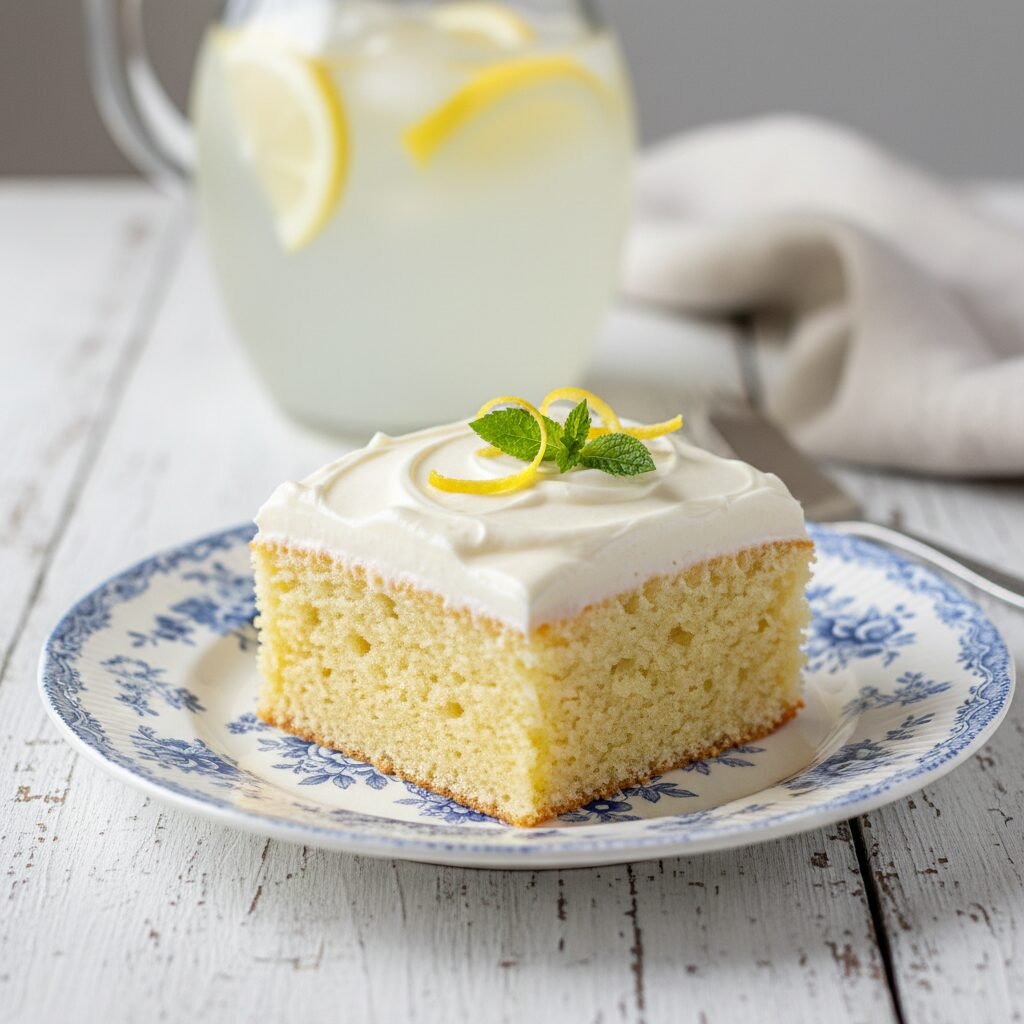
- Spread the frosting generously over the cooled cake. Garnish with extra lemon slices or zest if desired. Slice into squares and serve.
Expert Cooking Tips
- ✓Room Temperature Ingredients: Ensure your butter, eggs, and sour cream are at room temperature. This creates a smoother emulsion and a better rise.
- ✓Don’t Overmix: Once the flour is added, mix gently. Overworking the batter develops gluten, resulting in a tough, rubbery cake rather than a tender one.
- ✓Zest First: Always zest your lemons before you juice them. It is nearly impossible to zest a squeezed lemon.
- ✓Cool Completely: Do not rush the cooling process. Even a slightly warm cake will cause the butter in the cream cheese frosting to separate and slide off.
- ✓Measure Flour Correctly: Use the spoon-and-level method or a kitchen scale. Scooping the cup directly into the flour bag packs it down, leading to a dry cake.
Substitutions and Variations
If you do not have sour cream, full-fat Greek yogurt is an excellent 1:1 substitute that maintains the acidity and moisture. Buttermilk can also be used, though the batter will be slightly thinner; if using buttermilk, reduce the amount to 3/4 cup. For a gluten-free version, substitute the all-purpose flour with a high-quality 1:1 gluten-free flour blend that includes xanthan gum. If you are out of vegetable oil, melted coconut oil works well, though it may impart a slight coconut flavor. For the frosting, if you prefer a less tangy topping, you can omit the cream cheese and make a standard American buttercream using just butter, sugar, and lemon juice.
Common Mistakes to Avoid
The most common mistake with this cake is overbaking. Because sheet cakes are thinner than layer cakes, they bake faster. Start checking at the 20-minute mark. If the cake pulls away significantly from the sides of the pan, it is likely overdone. Another mistake is using bottled lemon juice. Bottled juice lacks the floral notes and brightness of fresh lemons and can give the cake a metallic or artificial aftertaste. Finally, failing to cream the butter, oil, and sugar long enough will result in a dense, heavy cake. That initial aeration step provides the structure for the lift.
Serving Suggestions
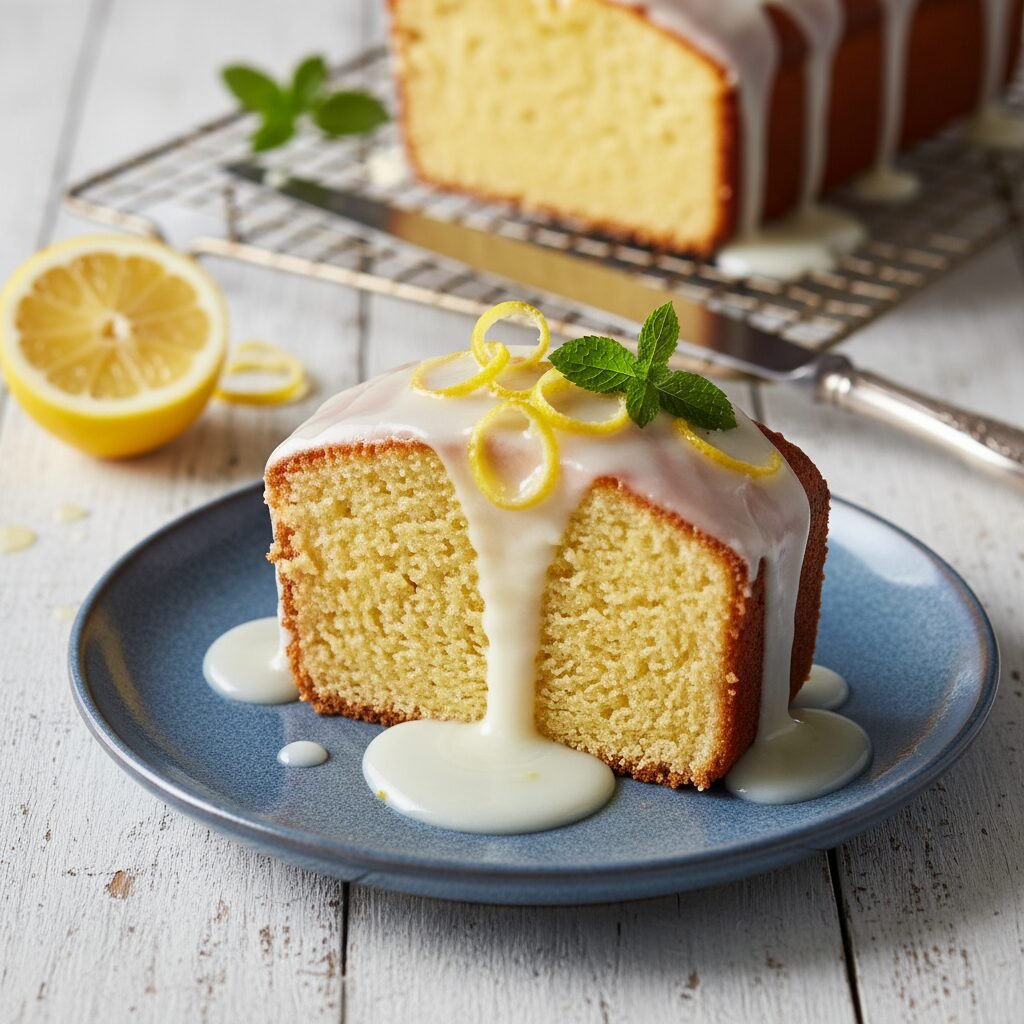
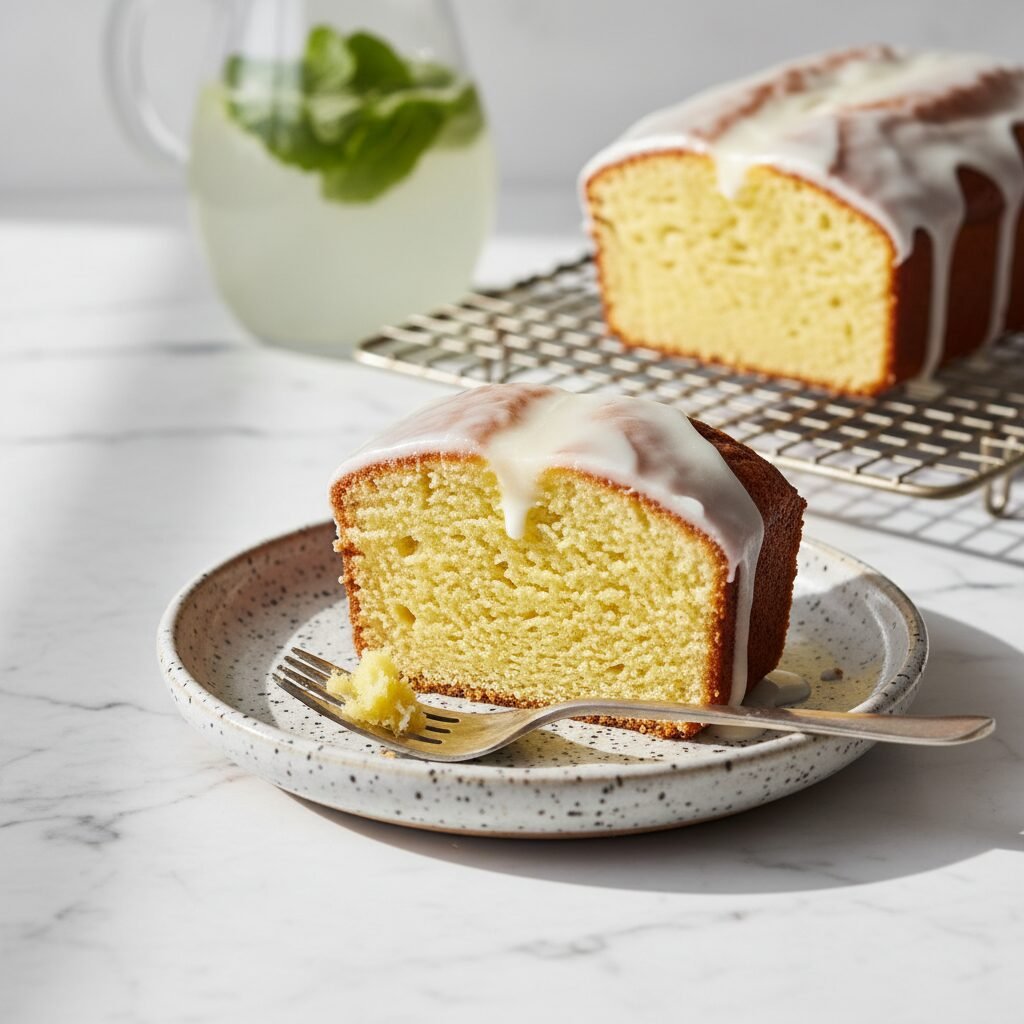
This cake is stunning on its own, but it can be dressed up for special occasions. Serve squares on dessert plates garnished with a thin slice of twisted lemon, a fresh raspberry, or a sprig of mint for color contrast. For a summer variation, serve it alongside a scoop of vanilla bean ice cream or a dollop of blueberry compote, as berries and lemon are a classic pairing. It pairs beautifully with iced tea, hot Earl Grey, or a sparkling white wine.
Storage and Reheating Tips
Because of the cream cheese frosting, this cake should ideally be stored in the refrigerator if keeping for more than 24 hours. However, it tastes best at room temperature. Store leftovers in an airtight container in the fridge for up to 5 days. To serve, remove the desired number of slices and let them sit on the counter for 20-30 minutes to take the chill off the butter. The cake can also be frozen (frosted or unfrosted). Wrap individual slices tightly in plastic wrap and then foil; freeze for up to 3 months. Thaw in the refrigerator overnight.
Nutrition Facts (Estimated)
| Serving Size | 1 square |
| Calories | 340 |
| Fat | 16g |
| Saturated Fat | 9g |
| Unsaturated Fat | 6g |
| Trans Fat | 0g |
| Cholesterol | 55mg |
| Sodium | 180mg |
| Carbohydrates | 45g |
| Fiber | 1g |
| Sugar | 28g |
| Protein | 4g |
Frequently Asked Questions
Can I make this cake ahead of time?
Yes, this cake actually tastes even better the next day as the flavors meld. You can bake the cake one day in advance, cover it tightly, and frost it the day of serving, or store the fully frosted cake in the fridge for up to 2 days before the event.
Why did my cake sink in the middle?
Sinking usually happens if the oven door was opened too early, causing a sudden temperature drop, or if the cake was underbaked. It can also result from too much leavening (baking powder/soda) or over-beating the eggs.
Can I use a different size pan?
Yes. This recipe fits a standard 9×13 pan perfectly for a thicker cake. If you use a larger 13×18 half-sheet pan (jelly roll style), the cake will be thinner and will bake much faster (check at 15-18 minutes).
Is the lemon flavor strong?
It has a distinct, bright lemon flavor without being sour. The zest in the batter and the juice in the frosting provide a nice punch. If you want it very subtle, reduce the zest.
Can I make this dairy-free?
You can use plant-based butter sticks and a dairy-free sour cream alternative for the batter. For the frosting, use vegan cream cheese and vegan butter. The texture may vary slightly depending on the brands used.
Do I have to use a mixer?
While a stand mixer or electric hand mixer makes the creaming process much easier and ensures a fluffy texture, you can mix this by hand with a whisk and a lot of elbow grease. Just ensure the sugar and fats are very well combined.
Why is my frosting runny?
Runny frosting usually means the butter or cream cheese was too warm (melted rather than softened) or not enough powdered sugar was added. You can thicken it by adding more sugar or chilling it in the fridge for 20 minutes.
Can I add poppy seeds to this recipe?
Absolutely! Add 2 tablespoons of poppy seeds with the dry ingredients to turn this into a Lemon Poppy Seed Sheet Cake.
Conclusion
This Moist Lemon Sheet Cake is more than just a recipe; it is a reliable friend in the kitchen. It proves that you do not need complicated techniques or fancy equipment to create a bakery-quality dessert that steals the show. Whether you are a novice baker looking for a foolproof win or a seasoned pro needing a quick, high-yield dessert, this cake checks all the boxes. The bright, sunny flavor is sure to bring a smile to anyone’s face. So grab those lemons, preheat your oven, and get ready to enjoy the zestiest, softest slice of cake you have ever tasted.