Moist Chocolate Layer Cake With Coffee Recipe
Discover the secret to the deepest, richest chocolate flavor imaginable: hot coffee. This incredibly moist chocolate layer cake features a tender, fudgy crumb and a velvety espresso buttercream that will undeniably be the star of your next celebration.
45 minutes
35 minutes
2 hours 30 minutes (includes cooling)
12-16 servings
Dessert
Baking
American
Vegetarian
If there is one recipe every home baker needs in their repertoire, it is a foolproof, knock-your-socks-off chocolate cake. But we aren’t just talking about any chocolate cake here; we are talking about the kind of cake that haunts your dreams—the kind that is impossibly dark, incredibly moist, and possessing a depth of flavor that boxed mixes simply cannot replicate. The secret weapon in this culinary masterpiece? Coffee. Now, before you scroll away thinking you don’t want a mocha-flavored dessert, hear me out. The goal of adding coffee to this batter isn’t to make it taste like a latte; rather, the coffee acts as a flavor amplifier. Just as salt enhances savory dishes, the bitterness and acidity of coffee elevate the cocoa, making the chocolate taste more like chocolate than you ever thought possible.
This Moist Chocolate Layer Cake with Coffee is the result of years of tweaking and testing. I wanted a crumb that was sturdy enough to stack in three glorious layers but tender enough to melt in your mouth. I wanted a frosting that was silky smooth without being gritty or overly sweet. The result is a balance of textures and flavors that feels sophisticated yet comforting. The oil-based batter ensures the cake stays soft for days, while the buttermilk provides a subtle tang that cuts through the richness. Whether you are baking for a birthday, an anniversary, or just a Tuesday night when the chocolate cravings hit hard, this recipe delivers high-impact results with surprisingly little effort. Get ready to pour yourself a glass of cold milk, because this is the chocolate cake you have been waiting for.
History & Origins
The history of chocolate cake is a journey from a beverage to the decadent dessert we know today. For centuries, chocolate was consumed primarily as a drink by the Maya and Aztecs, and later by wealthy Europeans. It wasn’t until the mid-19th century, specifically 1828, that Conrad Van Houten discovered how to mechanically press cocoa butter from the bean, creating cocoa powder. This innovation paved the way for chocolate to be used in baking. However, early ‘chocolate cakes’ were actually yellow cakes served with chocolate frosting. It wasn’t until the late 1800s and early 1900s that recipes began incorporating chocolate directly into the batter.
The specific lineage of this recipe traces back to the emergence of ‘Devil’s Food Cake’ in the United States around 1902. Unlike the mild chocolate cakes of the Victorian era, Devil’s Food was dark, rich, and moist, often using boiling water or liquid to bloom the cocoa. The addition of coffee is a more modern evolution of this technique, likely popularized in mid-20th-century American home baking as instant coffee became a pantry staple. Bakers realized that the hot liquid required to dissolve cocoa powder could be substituted with hot coffee to intensify the flavor profile. This adaptation aligns with the American culinary tradition of seeking bolder, richer flavors in comfort foods. Today, the ‘coffee trick’ is a widely respected secret among professional pastry chefs, bridging the gap between a simple sponge and a gourmet entremet.
Why This Recipe Works
This recipe succeeds where many others fail due to three critical chemical interactions: blooming, fat selection, and acidity. First and foremost is the technique of ‘blooming’ the cocoa powder. By mixing the cocoa with hot coffee at the very beginning (or adding hot coffee to the batter), we dissolve the cocoa butter and release flavor compounds that are otherwise dormant in cold liquid. This ensures every crumb is packed with intense chocolate essence. The hot liquid also helps to break down the sugar crystals, ensuring a smooth texture.
Secondly, we use vegetable oil instead of butter for the cake batter. While butter offers great flavor, it is solid at room temperature, which can lead to a drier, firmer texture in cakes. Oil remains liquid at room temperature, coating the flour proteins and preventing gluten development. This guarantees that the cake remains incredibly moist and tender, even after sitting out for a day. Finally, the combination of buttermilk, brown sugar, and coffee creates an acidic environment. This acidity reacts vigorously with the baking soda, creating carbon dioxide bubbles that lift the heavy batter, resulting in a light, airy crumb despite the cake’s richness. The coffee’s acidity also balances the alkalinity of the Dutch-process cocoa, rounding out the flavor profile perfectly.
Why You’ll Love This Recipe
- ✓Uses hot coffee to bloom cocoa for maximum chocolate intensity.
- ✓Oil-based batter ensures the cake stays moist for days.
- ✓Silky espresso buttercream creates the perfect texture contrast.
- ✓Simple mix-by-hand method; no stand mixer required for the batter.
- ✓Deep, dark color makes for a stunning visual presentation.
- ✓Perfect balance of sweetness and rich cocoa bitterness.
Equipment You’ll Need
- ✓Three 8-inch round cake pans
- ✓Large mixing bowl
- ✓Medium mixing bowl
- ✓Whisk
- ✓Rubber spatula
- ✓Measuring cups and spoons
- ✓Parchment paper
- ✓Wire cooling rack
- ✓Stand mixer or hand mixer (for frosting)
- ✓Offset spatula
Ingredients
- ✓2 cups (400g) granulated sugar
- ✓1 3/4 cups (220g) all-purpose flour
- ✓3/4 cup (65g) unsweetened dark cocoa powder (Dutch-process preferred)
- ✓1 1/2 teaspoons baking powder
- ✓1 1/2 teaspoons baking soda
- ✓1 teaspoon kosher salt
- ✓2 large eggs, room temperature
- ✓1 cup (240ml) whole milk or buttermilk, room temperature
- ✓1/2 cup (120ml) vegetable oil or canola oil
- ✓2 teaspoons pure vanilla extract
- ✓1 cup (240ml) boiling hot strong brewed coffee
- ✓1 cup (225g) unsalted butter, softened (for frosting)
- ✓3 cups (360g) powdered sugar (for frosting)
- ✓1/2 cup (45g) cocoa powder (for frosting)
- ✓1 teaspoon espresso powder (optional, for frosting)
- ✓2-3 tablespoons heavy cream (for frosting)
Instructions
- Preheat your oven to 350°F (175°C). Grease three 8-inch round cake pans with butter or cooking spray. Line the bottoms with parchment paper and grease the paper. Dust with a little cocoa powder and tap out the excess.
- In a large mixing bowl, whisk together the sugar, flour, cocoa powder, baking powder, baking soda, and salt until well combined and no lumps remain.
- In a medium bowl, whisk together the eggs, buttermilk, oil, and vanilla extract until smooth.
- Pour the wet ingredients into the dry ingredients and mix with a whisk or electric mixer on low speed for about 30 seconds, just until combined.
- Carefully pour in the boiling hot coffee. Whisk gently by hand until the batter is very smooth and runny. This thin consistency is normal and essential for moisture.
- Divide the batter evenly among the three prepared cake pans. Tap the pans gently on the counter to release any large air bubbles.
- Bake for 30-35 minutes, or until a wooden toothpick inserted into the center comes out clean or with just a few moist crumbs attached.
- Remove the cakes from the oven and let them cool in the pans for 10 minutes. Then, run a knife around the edges and carefully invert them onto a wire rack to cool completely before frosting.
- While the cakes cool, make the frosting. In a stand mixer fitted with the paddle attachment, beat the softened butter on medium-high speed for 3-4 minutes until pale and creamy.
- Sift the powdered sugar, cocoa powder, and espresso powder together. Gradually add this mixture to the butter on low speed.
- Add the vanilla and 2 tablespoons of heavy cream. Increase speed to medium-high and whip for 3-4 minutes until fluffy. Add more cream if the frosting is too stiff.
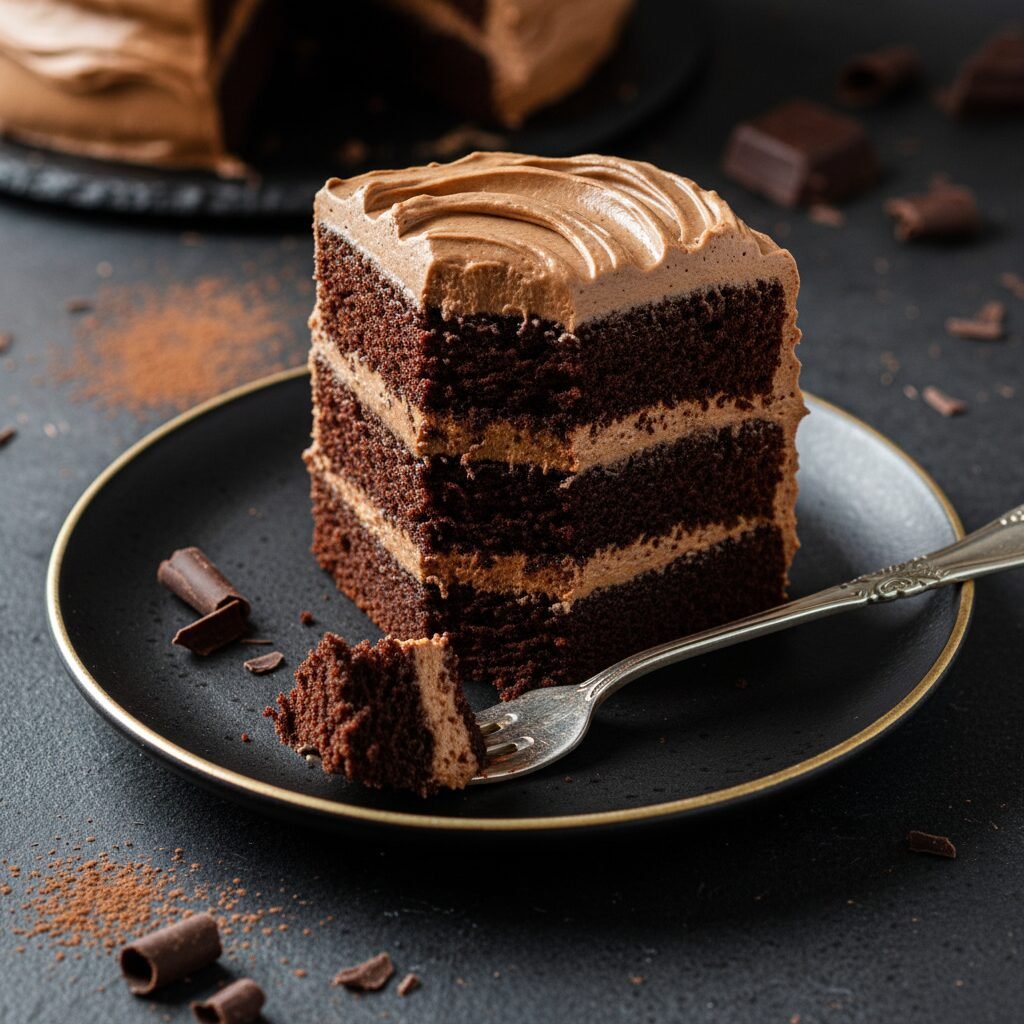
- Assemble the cake: Place one layer on a cake stand. Spread a generous layer of frosting over the top. Repeat with the second layer. Top with the third layer and frost the top and sides of the entire cake.
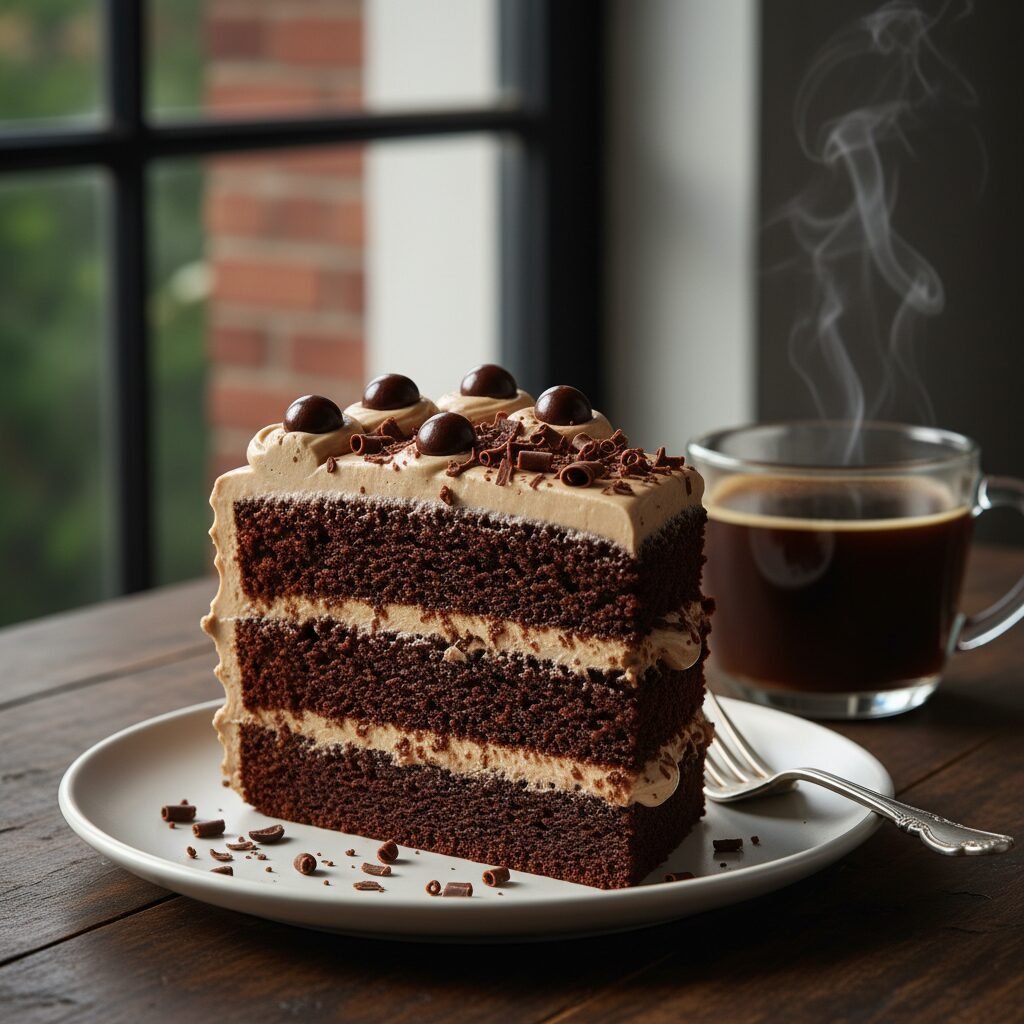
- Garnish with chocolate shavings or espresso beans if desired. Slice and serve.
Expert Cooking Tips
- ✓Use high-quality cocoa powder; Dutch-process yields a darker color and smoother flavor.
- ✓Do not over-bake. Check the cakes 5 minutes before the stated time implies.
- ✓Ensure ingredients like eggs and buttermilk are at room temperature to prevent the batter from seizing.
- ✓The boiling water/coffee is crucial; do not let the coffee cool down before adding it.
- ✓Chill the cake layers for 30 minutes before frosting to reduce crumbs in your icing.
- ✓Weigh your flour using a kitchen scale for the most accurate results; scooping can pack too much flour.
- ✓If you don’t have buttermilk, make a substitute by adding 1 tablespoon of vinegar to 1 cup of milk and letting it sit for 5 minutes.
Substitutions and Variations
Baking is a science, but there is some room for flexibility with this recipe. If you are sensitive to caffeine, decaf coffee works perfectly fine; the chemical reaction comes from the heat and acidity, not the caffeine content. If you absolutely cannot use coffee, boiling water is an acceptable substitute, though you will lose that depth of flavor. For the dairy, you can substitute the buttermilk with a mixture of plain yogurt and milk, or sour cream thinned with a little milk. To make this recipe gluten-free, swap the all-purpose flour for a high-quality 1:1 gluten-free baking flour blend that contains xanthan gum. For the oil, melted coconut oil or grapeseed oil are excellent alternatives to vegetable oil. In the frosting, you can use salted butter if you prefer a ‘salted chocolate’ profile, just omit the pinch of salt if the recipe calls for it.
Common Mistakes to Avoid
The most common mistake with this cake is over-baking. Because the batter is dark, it is hard to see visual cues like browning. Rely on the toothpick test, but remember that a clean toothpick means it might already be slightly overdone; a few moist crumbs are ideal. Another error is using cold ingredients. Cold eggs and milk don’t emulsify well with the oil, leading to a dense or greasy cake. Mixing the batter too vigorously after adding the flour can develop gluten, resulting in a tough, bread-like texture rather than a tender crumb. Finally, do not skip the parchment paper. This cake is very tender and moist, and it will stick to the bottom of the pan without parchment, causing it to break when you try to invert it.
Serving Suggestions
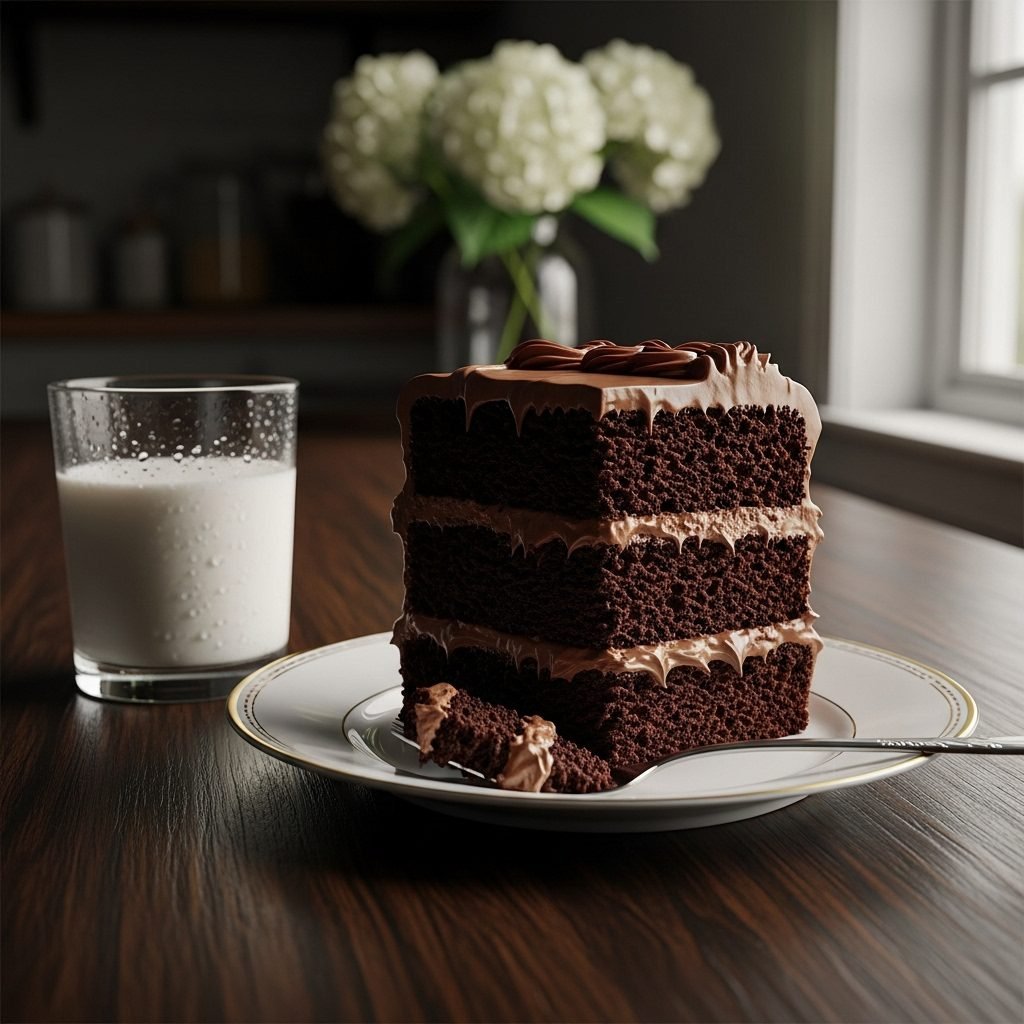
This cake is a showstopper on its own, but the right accompaniments can elevate it further. Serve slices at room temperature to ensure the frosting is soft and creamy. A scoop of high-quality vanilla bean ice cream provides a lovely temperature contrast and cuts through the richness of the chocolate. Fresh berries, particularly raspberries or strawberries, add a pop of color and a tart freshness that balances the deep cocoa notes. For a sophisticated touch, serve with a dollop of unsweetened whipped cream and a dusting of cinnamon. Beverage-wise, a cold glass of milk is classic, but a hot espresso or a glass of Cabernet Sauvignon also pairs beautifully with the dark chocolate notes.
Storage and Reheating Tips
Because this cake is oil-based, it stays moist longer than butter-based cakes. It can be stored at room temperature in an airtight cake carrier for up to 3 days. If your kitchen is particularly hot or humid, or if you have used a perishable filling, store it in the refrigerator for up to 5 days. However, always bring the cake back to room temperature before serving for the best texture and flavor. To freeze, wrap individual slices tightly in plastic wrap and then foil; they will keep for up to 3 months. Thaw unwrapped at room temperature. You can also freeze the unfrosted cake layers wrapped in plastic for up to a month before assembling.
Nutrition Facts (Estimated)
| Serving Size | 1 slice |
| Calories | 680 |
| Fat | 38g |
| Saturated Fat | 14g |
| Unsaturated Fat | 22g |
| Trans Fat | 0g |
| Cholesterol | 85mg |
| Sodium | 340mg |
| Carbohydrates | 82g |
| Fiber | 4g |
| Sugar | 55g |
| Protein | 6g |
Frequently Asked Questions
Can I taste the coffee in the final cake?
Generally, no. The coffee flavor blends with the cocoa to create a richer chocolate taste. However, if you use a very strong espresso roast, you might detect a subtle mocha undertone, which most people find delicious.
Can I use instant coffee?
Yes, absolutely. Dissolve 2 teaspoons of instant coffee granules into 1 cup of boiling water. This is often easier than brewing a fresh pot just for the cake.
Why is my batter so runny?
Don’t panic! This recipe produces a very thin, liquid batter. This is intentional and ensures the steam created during baking keeps the cake moist. Do not add extra flour to thicken it.
Can I make this as cupcakes?
Yes. This recipe will make approximately 24-30 standard cupcakes. Reduce the baking time to 18-22 minutes.
Can I use natural cocoa powder instead of Dutch-process?
You can, but the flavor will be slightly more acidic and the color lighter. Dutch-process cocoa is treated with an alkali to neutralize acidity, giving it a smoother, earthier flavor that pairs best with this recipe.
What if I don’t have three cake pans?
You can bake this in two 9-inch pans instead. The layers will be slightly thicker, so you may need to increase the baking time by 5-10 minutes.
Why did my cake sink in the middle?
This usually happens if the oven door was opened too early during baking, causing the structure to collapse, or if there was too much leavening (baking soda/powder). Ensure your oven temperature is accurate.
Can I make the cake layers ahead of time?
Yes. You can bake the layers, let them cool completely, wrap them in plastic wrap, and store them in the fridge for 2 days or freeze them for up to a month before frosting.
Conclusion
There is something truly magical about pulling a homemade chocolate cake out of the oven. The aroma that fills the kitchen is enough to lift anyone’s spirits. This Moist Chocolate Layer Cake with Coffee is more than just a dessert; it is a gesture of love and comfort. Whether you are an experienced baker or trying your hand at a layer cake for the first time, this recipe is forgiving, reliable, and utterly delicious. The addition of coffee transforms humble ingredients into a bakery-quality masterpiece that will have your friends and family begging for the recipe. So, brew that pot of coffee, preheat your oven, and get ready to bake the best chocolate cake of your life. Enjoy every single bite!