Moist Pecan Cake With Caramel Glaze Recipe
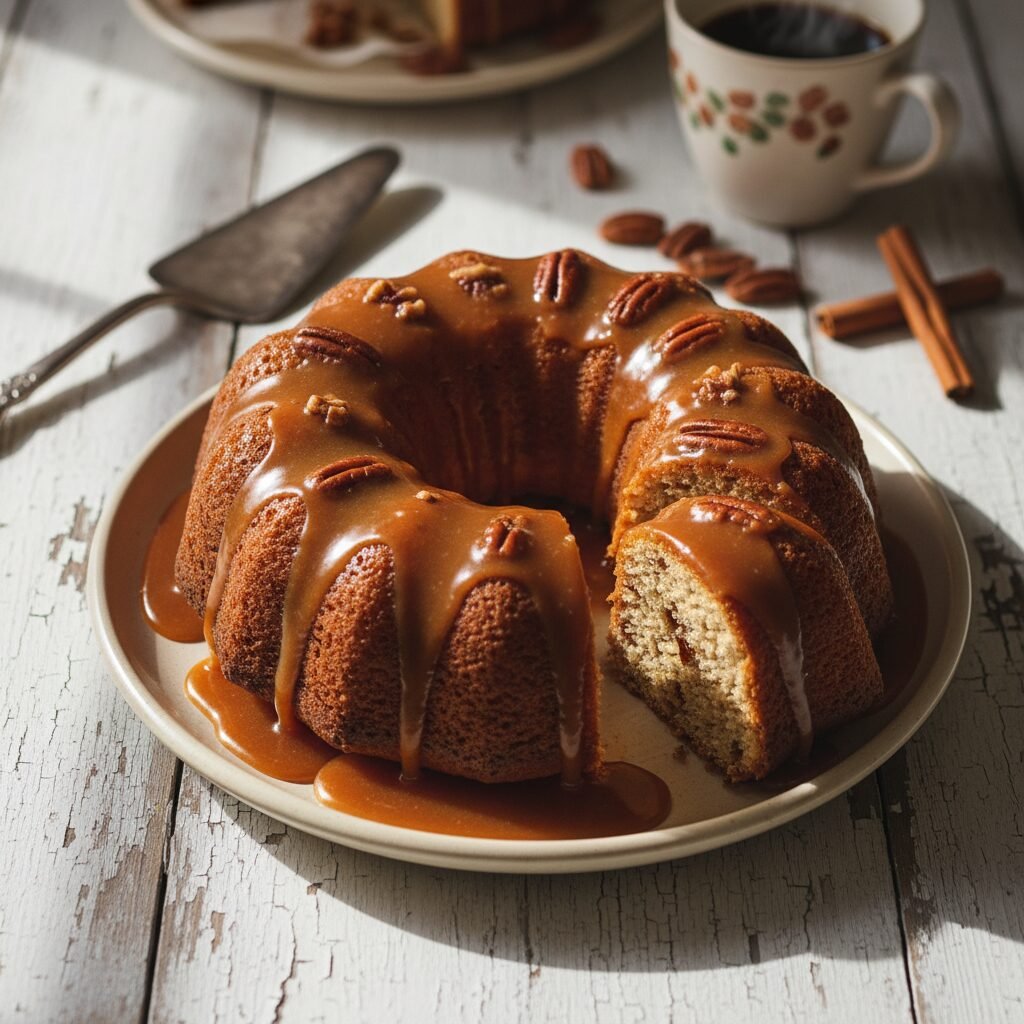
This decadent Southern-style pecan cake is the definition of comfort food, featuring a tender, buttery crumb loaded with toasted pecans and drenched in a rich, homemade salted caramel glaze. It is the perfect centerpiece for holiday tables or a luxurious Sunday brunch that practically melts in your mouth.
20 minutes
55 minutes
1 hour 15 minutes
12 servings
Dessert
Baking
Southern American
Vegetarian
There are few things in the culinary world as inviting as the aroma of toasted pecans and brown sugar wafting through a warm kitchen. This Moist Pecan Cake with Salted Caramel Glaze is not just a dessert; it is a heartfelt nod to traditional Southern baking, where flavor and texture are paramount. Imagine a cake that strikes the perfect balance between dense and fluffy, with a crumb so tender it barely requires chewing, punctuated by the satisfying crunch of butter-roasted pecans. The magic of this recipe lies in its rich foundation. We move beyond the standard sponge by incorporating sour cream and high-quality butter, ensuring that the cake remains moist for days—if it lasts that long! But the true crowning jewel is the glaze. Unlike a simple icing sugar drizzle, this is a cooked caramel glaze, robust with notes of toffee, vanilla, and a hint of sea salt to cut through the sweetness. It sets into a soft, fudge-like coating that clings to every curve of the Bundt shape. Whether you are an experienced baker looking for a reliable showstopper or a novice wanting to impress guests at a dinner party, this recipe delivers on all fronts. It pairs beautifully with a dark roast coffee in the morning or a scoop of vanilla bean ice cream in the evening. This isn’t just cake; it’s a warm hug on a plate, evoking memories of grandmother’s kitchen and slow, sweet afternoons.
History & Origins
The history of the pecan cake is deeply rooted in the agricultural and culinary traditions of the American South. The pecan tree, Carya illinoinensis, is native to North America, specifically thriving along the Mississippi River and in Mexico. Long before European settlers arrived, Native American tribes utilized pecans as a staple food source due to their high fat and protein content, pounding them into a paste or milk. The word ‘pecan’ itself is derived from an Algonquin word meaning a nut requiring a stone to crack. As settlers moved into these regions, they adopted the pecan into their baking repertoires. The concept of the dense nut cake evolved from the European fruitcake and pound cake traditions. However, the specific iteration of the ‘Pecan Cake’ gained massive popularity in the 19th and 20th centuries as pecans became a major commercial crop in states like Georgia and Texas. The introduction of chemical leaveners like baking powder in the mid-1800s allowed these heavy, nut-laden batters to rise effectively, creating a lighter texture than the solid fruitcakes of the past. The mid-20th century, particularly the 1950s and 60s, saw a resurgence of Bundt cakes thanks to the popularity of Nordic Ware pans, cementing the ring-shaped pecan cake as a staple of church potlucks and holiday spreads. Today, it remains a symbol of Southern hospitality.
Why This Recipe Works
This recipe succeeds where many others fail due to a meticulous balance of fat, acid, and technique. First, the inclusion of sour cream is non-negotiable. The acidity in the sour cream tenderizes the gluten strands in the flour, resulting in a crumb that is soft rather than chewy, while its high fat content ensures the cake stays moist long after it has cooled. Secondly, we employ the ‘creaming method’ for the butter and sugar. By beating them until pale and fluffy, we mechanically trap air into the batter, which expands in the oven to provide lift, counteracting the heavy weight of the pecans. Regarding the nuts, this recipe insists on toasting the pecans before adding them to the batter. Raw nuts can be waxy and bland; toasting releases their essential oils, amplifying the nutty flavor profile and ensuring they stay crisp within the moist batter. Finally, the glaze is a cooked caramel rather than a powdered sugar glaze. Heating the butter and brown sugar creates a depth of flavor via the Maillard reaction that simple mixing cannot achieve. The glaze is poured while warm, allowing it to permeate the outer crust of the cake slightly, bonding the frosting to the sponge for a cohesive bite.
Why You’ll Love This Recipe
- ✓Incredibly moist crumb thanks to sour cream
- ✓Rich, homemade salted caramel glaze
- ✓Packed with crunchy, toasted pecans
- ✓Perfect make-ahead dessert that improves with time
- ✓Beautiful presentation in a Bundt pan
- ✓Freezes exceptionally well for future treats
Equipment You’ll Need
- ✓10-12 cup Bundt pan
- ✓Stand mixer or electric hand mixer
- ✓Large mixing bowl
- ✓Medium mixing bowl
- ✓Small saucepan
- ✓Wire cooling rack
- ✓Rubber spatula
- ✓Measuring cups and spoons
Ingredients
- ✓1 cup unsalted butter, softened to room temperature
- ✓2 cups granulated sugar
- ✓4 large eggs, room temperature
- ✓2 teaspoons pure vanilla extract
- ✓3 cups all-purpose flour
- ✓2 teaspoons baking powder
- ✓1/2 teaspoon baking soda
- ✓1/2 teaspoon salt
- ✓1 cup full-fat sour cream
- ✓1 1/2 cups chopped pecans, toasted
- ✓For the Glaze: 1/2 cup unsalted butter
- ✓For the Glaze: 1/2 cup light brown sugar, packed
- ✓For the Glaze: 2 tablespoons heavy cream
- ✓For the Glaze: 1/2 teaspoon vanilla extract
- ✓For the Glaze: 1/4 teaspoon sea salt
Instructions
- 1. Preheat your oven to 350°F (175°C). Generously grease and flour a 10-12 cup Bundt pan, ensuring every crevice is coated to prevent sticking. Alternatively, use a baking spray containing flour.
- 2. Spread the chopped pecans on a baking sheet and toast in the preheating oven for 5-7 minutes until fragrant. Watch closely to prevent burning. Remove and let cool.
- 3. In a medium bowl, whisk together the flour, baking powder, baking soda, and salt. Set aside.
- 4. In the bowl of a stand mixer fitted with the paddle attachment, cream the softened butter and granulated sugar on medium-high speed for about 5 minutes, until the mixture is pale yellow and fluffy.
- 5. Add the eggs one at a time, beating well after each addition. Scrape down the sides of the bowl. Stir in the vanilla extract.
- 6. Reduce the mixer speed to low. Add the flour mixture in three parts, alternating with the sour cream in two parts, starting and ending with the flour. Mix only until just combined; do not overmix.
- 7. Gently fold in the toasted pecans using a rubber spatula.
- 8. Pour the batter into the prepared Bundt pan and smooth the top. Bake for 50-60 minutes, or until a toothpick inserted into the center comes out clean or with a few moist crumbs.
- 9. Allow the cake to cool in the pan for exactly 10 minutes, then invert it onto a wire rack to cool completely.
- 10. While the cake cools, make the glaze. In a small saucepan over medium heat, melt the butter, brown sugar, cream, and salt. Bring to a gentle boil, stirring constantly, and let bubble for 1 minute. Remove from heat and stir in the vanilla.
- 11. Let the glaze cool for about 5-10 minutes until it thickens slightly but is still pourable. Drizzle generously over the cooled cake.
Expert Cooking Tips
- ✓Ensure all ingredients, especially eggs and sour cream, are at room temperature to prevent the batter from curdling.
- ✓Grease the Bundt pan right before filling it so the oil doesn’t slide down the sides while you prep.
- ✓Don’t skip toasting the pecans; it adds a crucial depth of flavor and crunch.
- ✓Measure flour by spooning it into the cup and leveling it off, rather than scooping directly, to avoid a dense cake.
- ✓If the top of the cake is browning too quickly in the oven, tent it loosely with aluminum foil after 30 minutes.
- ✓Allow the glaze to cool slightly before pouring; if it’s too hot, it will run right off the cake instead of coating it.
- ✓Tap the filled cake pan on the counter a few times before baking to release any large air bubbles.
Substitutions and Variations
This recipe is quite versatile regarding substitutions, though the original ingredients yield the best results. If you don’t have sour cream, full-fat Greek yogurt is an excellent 1:1 substitute that maintains the moisture and tang. For a different nut profile, walnuts are a classic alternative to pecans, offering a slightly more bitter counterpoint to the sweet glaze. If you need to make this gluten-free, use a high-quality 1:1 gluten-free baking flour blend that contains xanthan gum; the texture will be slightly different but still delicious. You can substitute light brown sugar for dark brown sugar in the glaze for a deeper molasses flavor. If you are out of heavy cream for the glaze, half-and-half can work, though you may need to boil it slightly longer to achieve the right consistency. Do not substitute margarine for butter, as the water content in margarine can affect the cake’s structure.
Common Mistakes to Avoid
The most common mistake with Bundt cakes is improper pan preparation, leading to the cake sticking and breaking upon release. Use a baking spray with flour or grease thoroughly with shortening and dust with flour. Another error is overmixing the batter after adding the flour; this develops gluten and leads to a tough, rubbery cake. Be gentle and stop mixing as soon as the flour disappears. Opening the oven door too frequently to check on the cake can cause the temperature to fluctuate and the cake to sink in the middle; rely on your oven light instead. Finally, pouring the glaze when the cake is still hot will cause the glaze to melt and disappear into the crumb rather than sitting beautifully on top. Patience is key for the perfect finish.
Serving Suggestions
This Moist Pecan Cake is rich enough to stand on its own, but it pairs wonderfully with various accompaniments. Serve a slice slightly warmed with a dollop of unsweetened whipped cream to cut the richness. A scoop of vanilla bean or butter pecan ice cream makes for an indulgent dessert course. For a brunch setting, serve it alongside a fresh fruit salad of berries and melon to provide a fresh contrast to the heavy caramel. Beverage-wise, this cake is the perfect companion to a strong black coffee, an espresso, or a cold glass of milk. In the autumn, a hot apple cider or chai tea complements the caramel and pecan notes beautifully.
Storage and Reheating Tips
To store this cake, keep it in an airtight container or a cake dome at room temperature for up to 3 days. The high sugar and fat content act as preservatives, keeping it moist. If you live in a very hot or humid climate, you may want to store it in the refrigerator for up to 5 days, but bring it to room temperature before serving for the best texture. This cake freezes exceptionally well. You can freeze the whole unglazed cake or individual slices. Wrap tightly in plastic wrap, then a layer of aluminum foil, and freeze for up to 3 months. Thaw overnight in the refrigerator or on the counter. If freezing with the glaze, be aware the glaze may become slightly sticky upon thawing.
Nutrition Facts (Estimated)
| Serving Size | 1 slice |
| Calories | 580 |
| Fat | 34g |
| Saturated Fat | 16g |
| Unsaturated Fat | 15g |
| Trans Fat | 0.5g |
| Cholesterol | 85mg |
| Sodium | 310mg |
| Carbohydrates | 62g |
| Fiber | 2g |
| Sugar | 42g |
| Protein | 6g |
Frequently Asked Questions
Can I make this cake in a different pan?
Yes, you can bake this in two 9×5 inch loaf pans, though the baking time will need to be adjusted (start checking at 40-45 minutes). You can also use a 9×13 inch rectangular pan, which will bake faster, likely in 35-40 minutes.
Why did my pecans sink to the bottom?
This usually happens if the batter is too thin or the nuts are too heavy. To prevent this, ensure your batter is thick (don’t overmix) and toss the chopped pecans in a tablespoon of flour before folding them into the batter. This helps them suspend in the cake.
Can I use salted butter instead of unsalted?
Yes, you can use salted butter. If you do, simply reduce the added salt in the cake recipe to 1/4 teaspoon. For the glaze, you can stick with salted butter and omit the pinch of sea salt if you prefer a less salty caramel.
My glaze is too hard, what happened?
If the glaze sets too hard, it was likely boiled for too long, reaching a candy stage like soft crack. It should only boil gently for about 1 minute. To fix it, gently reheat it with an extra splash of cream to loosen it up.
How do I know when the cake is truly done?
Bundt cakes are dense, so the toothpick test is best. Insert a wooden skewer or toothpick into the deepest part of the cake. It should come out clean or with just a few moist crumbs attached. If it has raw batter, it needs more time.
Can I add alcohol to the recipe?
Absolutely! A splash of bourbon or dark rum (about 1-2 tablespoons) added to the glaze gives it a fantastic depth of flavor that complements the pecans perfectly.
Why is my cake dry?
Dry cake is usually the result of over-baking or measuring flour incorrectly. Always spoon and level your flour. Also, ensure your oven temperature is accurate; an oven thermometer is a great investment.
Can I use evaporated milk instead of sour cream?
It is not recommended to swap sour cream for evaporated milk directly, as the sour cream provides acidity and thickness that the milk lacks. Buttermilk would be a better liquid substitute, though the batter will be thinner.
Conclusion
This Moist Pecan Cake with Caramel Glaze is more than just a recipe; it’s a reliable classic that brings warmth and joy to any table. The combination of the tender, tangy crumb and the sweet, nutty crunch creates a symphony of textures that is hard to beat. Whether you are baking for the holidays, a birthday, or just because you deserve a treat, this cake is guaranteed to please. Don’t forget to share your creations on Pinterest and tag us—we love seeing how your cakes turn out! Happy baking!