Moist Cappuccino Cake Recipe
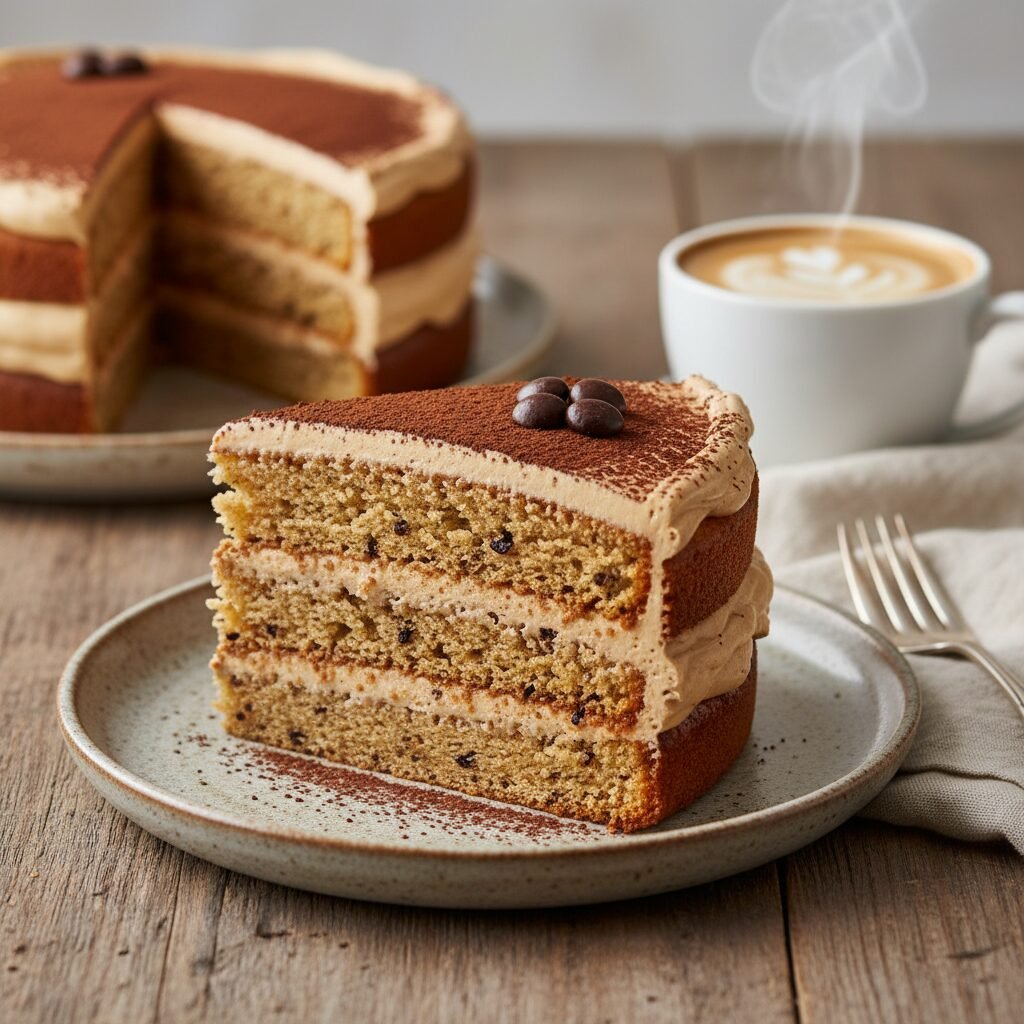
Calling all coffee lovers! This incredible Cappuccino Cake combines the rich, aromatic depth of freshly brewed espresso with a tender, buttery vanilla crumb. Topped with a silky, cloud-like espresso Swiss meringue buttercream, it is the perfect sophisticated treat for brunch or an afternoon pick-me-up.
45 minutes
35 minutes
1 hour 20 minutes
12 servings
Dessert
Baking
American / Italian Inspired
Vegetarian
If there is one flavor combination that feels like a warm hug, it is coffee and cake. But this isn’t just a coffee cake meant to be eaten alongside your morning brew; this is a cake that embodies the drink itself. Imagine the frothy, creamy, robust experience of a perfectly made cappuccino transformed into a dessert. That is exactly what we are achieving here. This Moist Cappuccino Cake is a celebration of texture and flavor balance. Often, coffee-flavored desserts can lean too bitter or, conversely, become cloyingly sweet to mask the coffee notes. This recipe walks the fine line of perfection. The cake layers are infused with dissolved instant espresso powder, which provides a punchy, authentic coffee kick without watering down the batter. We use sour cream to ensure the crumb remains incredibly moist and tender for days. The real showstopper, however, is the frosting. We are skipping the heavy, gritty powdered sugar frostings of the past and opting for a Swiss Meringue Buttercream infused with concentrated espresso. It is buttery, smooth, and not overly sweet, mimicking the milk foam on a cappuccino. Whether you are hosting a sophisticated brunch, celebrating a birthday for a caffeine addict, or simply craving a slice of luxury on a rainy Sunday, this cake delivers on all fronts.
History & Origins
To understand the soul of this cake, we have to look back at the history of the beverage that inspired it. The cappuccino dates back to the coffee houses of Vienna in the 18th century, originally known as the ‘Kapuziner.’ Its name is derived from the Capuchin friars, whose brown robes matched the color of the coffee mixed with milk. It wasn’t until the 20th century, with the invention of the modern espresso machine in Italy, that the cappuccino as we know it—espresso, steamed milk, and milk foam—became a global icon. Culinary history shows a long tradition of infusing desserts with coffee, particularly in European baking. Tiramisu is perhaps the most famous example, but the concept of a ‘coffee cake’ in America usually refers to a cinnamon-streusel sponge cake served *with* coffee, not flavored *of* it. This recipe bridges that gap, bringing the European tradition of coffee-infused patisserie into the comforting format of an American layer cake. By incorporating the actual flavor profile of the drink—the strong espresso base and the creamy dairy finish—we are paying homage to centuries of coffee culture while creating a modern classic that stands on its own in the pantheon of great desserts.
Why This Recipe Works
This recipe succeeds where others fail because of the specific attention paid to moisture retention and flavor blooming. Coffee is a volatile flavor; it can bake out or turn acidic if not handled correctly. In this recipe, we ‘bloom’ the espresso powder in a small amount of hot water before adding it to the batter. This releases the oils and intensifies the chocolatey undertones of the coffee bean, ensuring the flavor survives the heat of the oven. Furthermore, the structure of the cake relies on a combination of butter and oil. Butter provides that classic, rich flavor that we associate with high-quality baking, while a touch of neutral oil ensures the cake stays soft even when refrigerated. The addition of sour cream is the secret weapon; its acidity breaks down the gluten strands in the flour, resulting in a tender, melt-in-your-mouth crumb, while its fat content adds richness. Finally, the choice of Swiss Meringue Buttercream is crucial. American buttercream can be too heavy and sweet, overpowering the delicate coffee notes. The meringue base is lighter and airier, mimicking the foam of a cappuccino, and it carries the espresso flavor elegantly without being gritty.
Why You’ll Love This Recipe
- ✓Intense, authentic espresso flavor in every bite.
- ✓Incredibly moist crumb thanks to sour cream and a butter-oil blend.
- ✓Silky, not-too-sweet Swiss Meringue Buttercream frosting.
- ✓Beautiful presentation with a dusting of cocoa powder.
- ✓Keeps fresh and moist for several days.
- ✓Perfect balance of bitterness and sweetness.
Equipment You’ll Need
- ✓Stand mixer or electric hand mixer
- ✓Three 8-inch round cake pans
- ✓Mixing bowls
- ✓Wire cooling rack
- ✓Rubber spatula
- ✓Measuring cups and spoons
- ✓Saucepan (for the buttercream)
- ✓Candy thermometer (optional)
Ingredients
- ✓2 1/2 cups Cake flour, sifted
- ✓2 tsp Baking powder
- ✓1/2 tsp Baking soda
- ✓1/2 tsp Salt
- ✓1 cup Unsalted butter, softened
- ✓1 3/4 cups Granulated sugar
- ✓3 large Eggs, room temperature
- ✓2 tsp Pure vanilla extract
- ✓1 cup Sour cream, room temperature
- ✓1/4 cup Vegetable oil
- ✓2 tbsp Instant espresso powder dissolved in 1 tbsp hot water
- ✓1/2 cup Whole milk, room temperature
- ✓For the Frosting: 5 large Egg whites
- ✓1 1/4 cups Granulated sugar
- ✓1 1/2 cups Unsalted butter, cubed and cool
- ✓2 tbsp Instant espresso powder dissolved in 1 tsp hot water
- ✓Cocoa powder for dusting
Instructions
- Preheat your oven to 350°F (175°C). Grease three 8-inch round cake pans, line the bottoms with parchment paper, and grease the paper. Dust with flour and tap out excess.
- In a medium bowl, whisk together the sifted cake flour, baking powder, baking soda, and salt. Set aside.
- In the bowl of a stand mixer fitted with the paddle attachment, beat the softened butter and sugar on medium-high speed for about 3-5 minutes until light, fluffy, and pale in color.
- Add the eggs one at a time, beating well after each addition. Scrape down the sides of the bowl. Mix in the vanilla extract and the dissolved espresso mixture.
- In a small bowl or jug, whisk together the sour cream, vegetable oil, and milk until combined.
- Reduce the mixer speed to low. Add the flour mixture in three parts, alternating with the wet ingredients (sour cream mixture) in two parts, starting and ending with the flour. Mix only until just combined to avoid overworking the gluten.
- Divide the batter evenly among the prepared pans. Smooth the tops with a spatula.
- Bake for 30-35 minutes, or until a toothpick inserted into the center comes out clean or with just a few moist crumbs. Do not overbake.
- Cool the cakes in the pans for 10 minutes, then turn them out onto a wire rack to cool completely before frosting.
- For the frosting: Combine egg whites and sugar in a heatproof bowl over a pot of simmering water. Whisk constantly until sugar is dissolved and mixture reaches 160°F (71°C).
- Transfer to a stand mixer with the whisk attachment. Whip on high speed until stiff glossy peaks form and the bowl feels cool to the touch (about 10 minutes).
- Switch to the paddle attachment. Add the cubed butter one piece at a time, mixing on medium speed. Once all butter is incorporated, add the dissolved espresso.
- Whip on medium-high until the buttercream is smooth, silky, and creamy.
- Assemble the cake: Place one layer on a serving plate. Spread a layer of buttercream. Repeat with the second layer. Top with the third layer. Frost the top and sides. Dust generously with cocoa powder before serving.
Expert Cooking Tips
- ✓Ensure all ingredients, especially eggs, butter, and sour cream, are at room temperature to prevent the batter from curdling.
- ✓Don’t skip the parchment paper; it guarantees your cake layers come out perfectly intact.
- ✓Dissolve the espresso powder in the smallest amount of hot water possible to keep the flavor concentrated without adding too much liquid.
- ✓If your buttercream looks curdled after adding the butter, keep whipping! It will come together eventually.
- ✓Sifting the cake flour is non-negotiable for that light, airy cappuccino texture.
Substitutions and Variations
If you do not have cake flour, you can make a substitute by measuring 1 cup of all-purpose flour, removing 2 tablespoons, and replacing them with 2 tablespoons of cornstarch. Sift this mixture 3-4 times to aerate it. For the sour cream, full-fat Greek yogurt is an excellent 1:1 substitute that provides similar acidity and moisture. If you want a decaf version, simply use decaffeinated instant espresso powder; do not use regular ground coffee as it will be gritty. You can substitute the vegetable oil with melted coconut oil or canola oil. For the frosting, if you find Swiss Meringue too technical, a standard American buttercream with butter, powdered sugar, and coffee extract will also taste delicious, though it will be sweeter.
Common Mistakes to Avoid
The most common mistake is overmixing the batter after adding the flour. This develops the gluten too much and leads to a dense, rubbery cake rather than a tender one. Another error is trying to frost the cake before it is completely cool. Even a slightly warm cake will melt the butter in the frosting, causing the layers to slide apart and the decoration to droop. Regarding the espresso flavor, using generic instant coffee granules instead of ‘instant espresso powder’ results in a weaker flavor; espresso powder is much more concentrated. Finally, opening the oven door too early can cause the cakes to sink in the middle, so resist the urge to peek until at least 25 minutes have passed.
Serving Suggestions
This cake is a showstopper on its own, but it pairs beautifully with—you guessed it—a hot cup of coffee. Serve it alongside a fresh cappuccino or a dark roast pour-over to complement the flavors. For an evening dessert, it goes wonderfully with an Irish coffee or a coffee liqueur on ice. Garnish the plate with chocolate-covered espresso beans for a crunchy contrast, or drizzle a little dark chocolate ganache over the slice for added decadence. It is best served at room temperature so the buttercream is soft and creamy.
Storage and Reheating Tips
Store the frosted cake in an airtight cake keeper at room temperature for up to 2 days. If your kitchen is very warm, or for longer storage, keep it in the refrigerator for up to 5 days. However, always let the cake sit on the counter for at least an hour before serving to allow the butter in the cake and frosting to soften; cold cake can taste dry and the frosting will be hard. You can also freeze individual slices wrapped tightly in plastic wrap and foil for up to 3 months. Thaw in the fridge overnight and bring to room temperature before eating.
Nutrition Facts (Estimated)
| Serving Size | 1 slice |
| Calories | 540 |
| Fat | 28g |
| Saturated Fat | 16g |
| Unsaturated Fat | 10g |
| Trans Fat | 0g |
| Cholesterol | 85mg |
| Sodium | 210mg |
| Carbohydrates | 64g |
| Fiber | 1g |
| Sugar | 38g |
| Protein | 6g |
Frequently Asked Questions
Can I use brewed coffee instead of espresso powder?
It is not recommended. Brewed coffee adds too much liquid for the amount of flavor it provides, which can throw off the batter’s chemistry. Espresso powder is concentrated and adds intense flavor without excess moisture.
Can I make this cake in a 9×13 pan?
Yes! You can bake this in a greased 9×13 inch pan. The baking time may need to be adjusted slightly, likely around 35-40 minutes. Check with a toothpick.
Why did my buttercream curdle?
This usually happens if the butter was too cold or the meringue was too warm. Keep whipping on high speed; 99% of the time, it will emulsify and become smooth again after a few minutes.
Is this cake safe for kids?
The cake contains caffeine from the espresso powder. While the amount per slice is relatively low compared to a cup of coffee, parents may prefer to use decaf espresso powder for young children.
Can I make the cake layers ahead of time?
Absolutely. You can bake the layers, let them cool completely, wrap them tightly in plastic wrap, and freeze them for up to a month. Frost them while frozen for easier handling.
What is the difference between Swiss Meringue and American Buttercream?
Swiss Meringue is made by cooking egg whites and sugar, then whipping in butter. It is silky, less sweet, and very stable. American buttercream is just butter and powdered sugar, which is sweeter and slightly grittier.
Can I use regular flour instead of cake flour?
You can, but the cake will be slightly denser. Cake flour has less protein, which yields a finer, softer crumb ideal for this type of delicate cake.
How do I get the perfect cocoa dusting on top?
Use a small fine-mesh sieve. Hold it high above the cake and tap it gently to ensure an even, light layer of cocoa powder without clumps.
Conclusion
There is something truly special about taking the time to bake a cake from scratch, especially one as rewarding as this Moist Cappuccino Cake. It captures the essence of a cozy coffee shop afternoon in every forkful. The combination of the tender, coffee-infused sponge and the luxurious, melting texture of the espresso buttercream is a match made in heaven. Whether you are a seasoned baker or trying your hand at a layer cake for the first time, this recipe is designed to guide you to success. So, brew a fresh pot of coffee, put on your apron, and get ready to fill your kitchen with the intoxicating aroma of espresso and vanilla. We guarantee this will become a new favorite in your baking repertoire.