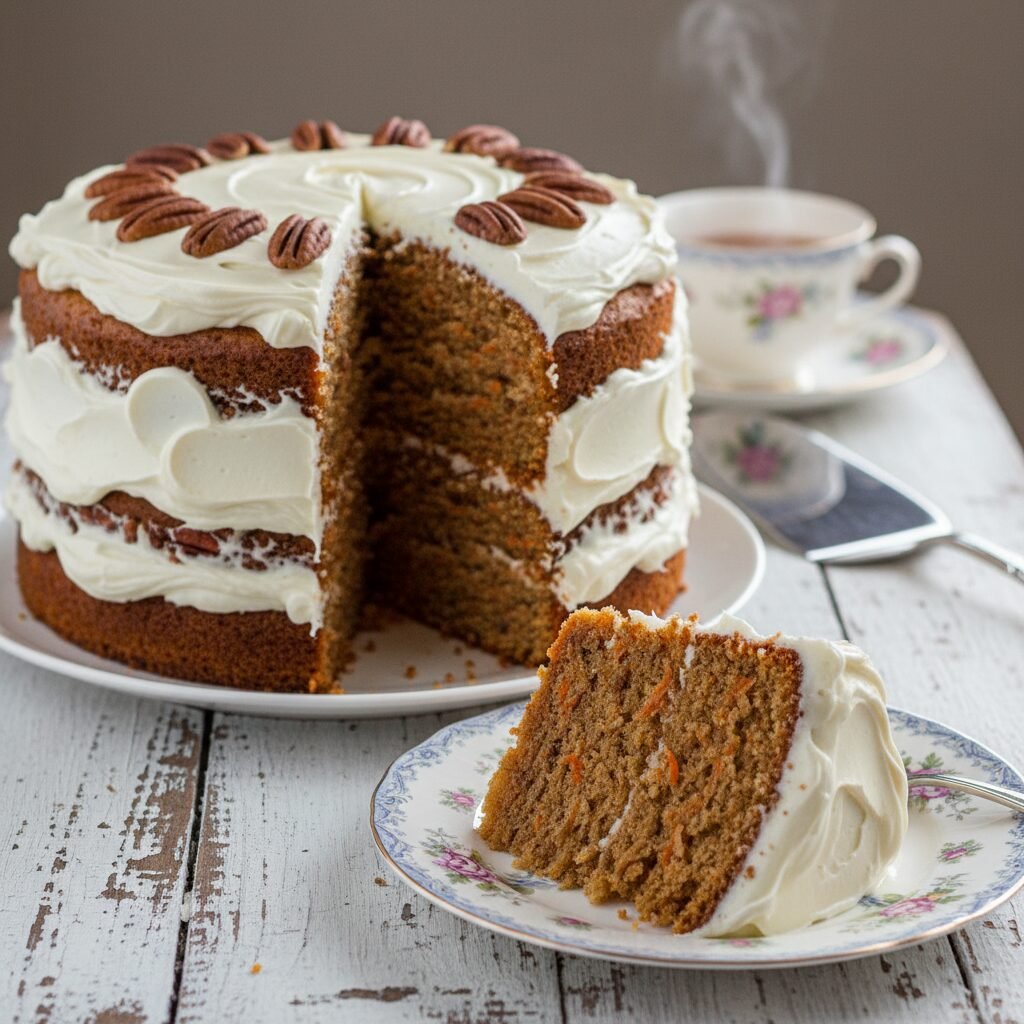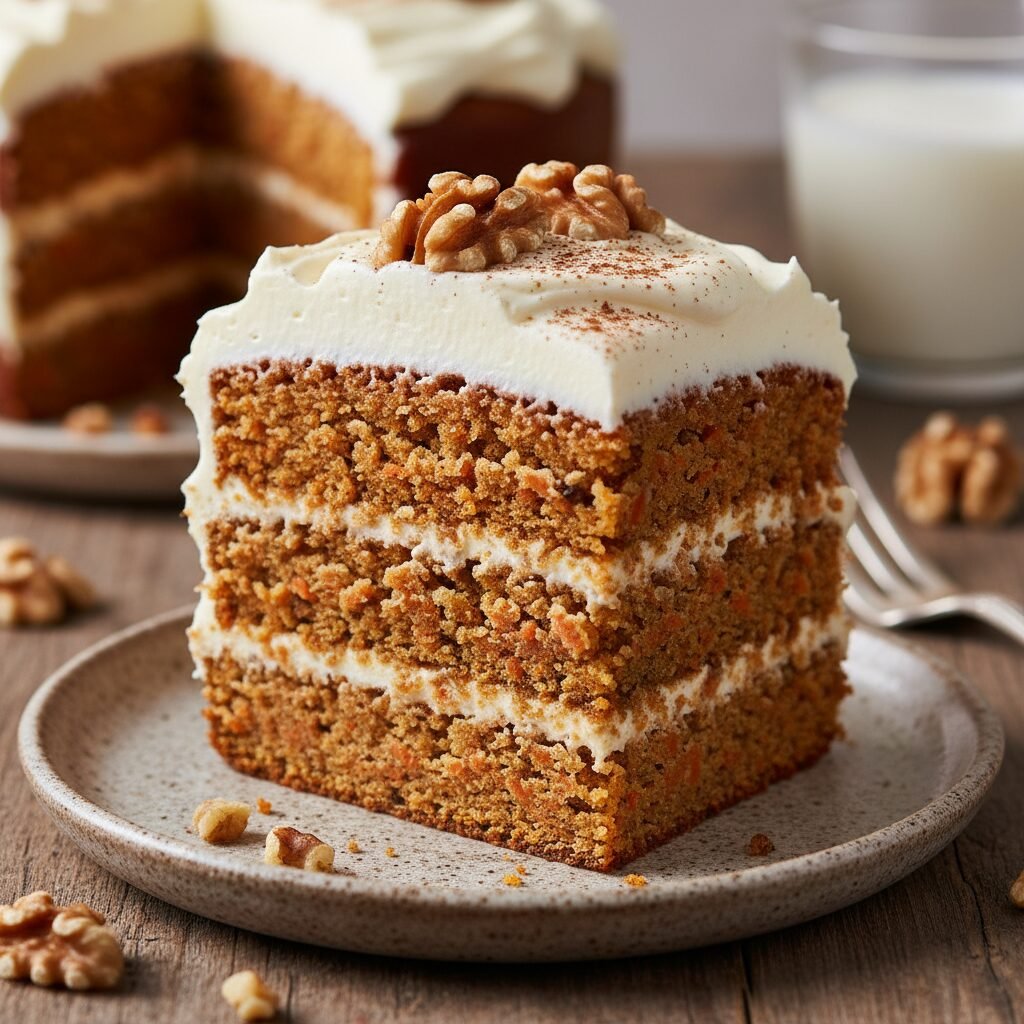
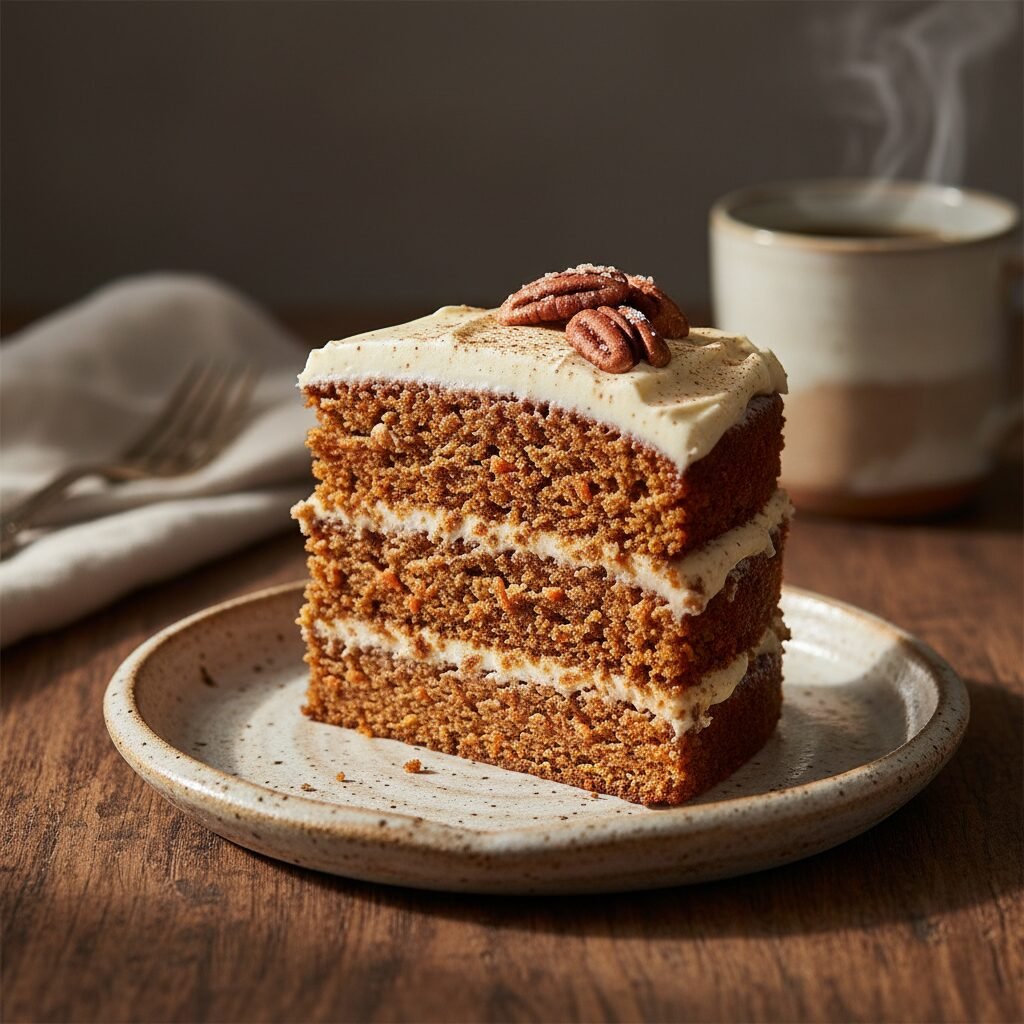
Moist Carrot Layer Cake With Brown Butter Frosting Recipe
Discover the secret to the most decadent dessert you’ll ever bake: a hyper-moist, spice-infused carrot layer cake paired with a nutty, rich brown butter cream cheese frosting. This recipe elevates the classic favorite into a gourmet masterpiece that is perfect for celebrations or a cozy weekend treat.
45 minutes
35 minutes
1 hour 20 minutes
12-16 servings
Dessert
Baking
American
Vegetarian
If there is one cake that universally signals comfort, celebration, and rustic elegance all at once, it is the carrot cake. But this isn’t just any carrot cake. We are stepping away from the dry, overly sweet squares of the past and diving into a recipe that promises a crumb so moist it practically melts in your mouth, balanced by a frosting that changes the game entirely. The magic here lies in the marriage of textures and temperatures of flavor. We use a blend of white and dark brown sugars to create a deep molasses undertone that complements the earthy sweetness of freshly grated carrots. Unlike butter-based cakes that can dry out in the fridge, this oil-based sponge remains tender for days, allowing the spices—cinnamon, ginger, nutmeg, and cloves—to bloom and intensify over time.
However, the true crown jewel of this recipe is the Brown Butter Cream Cheese Frosting. If you have never added browned butter to your frosting, prepare for a revelation. By toasting the milk solids in the butter until they reach a golden amber hue, we unlock nutty, caramel-like notes that cut through the tang of the cream cheese and the sweetness of the powdered sugar. It creates a sophisticated flavor profile that bridges the gap between a savory spice cake and a sweet confection. This cake is a labor of love, designed for those who appreciate the sensory details of baking: the crackle of spices, the nutty aroma of browning butter, and the visual appeal of a tall, majestic layer cake. Whether you are baking for Easter, a birthday, or simply to satisfy a craving for something truly spectacular, this Moist Carrot Layer Cake with Brown Butter Frosting is destined to become your new signature dessert.
History & Origins
The humble carrot cake has a lineage that stretches back far longer than the retro baking craze of the 1970s. Its origins can likely be traced to medieval Europe, where sweeteners were scarce and expensive. Carrots, which contain more natural sugar than almost any other vegetable (second only to sugar beets), were frequently used in sweet puddings and filled pastries to make desserts palatable for the common family. These early ‘carrot puddings’ were steamed or boiled, featuring spices and dried fruits, much like a traditional Christmas pudding.
Fast forward to the 20th century, and the concept of using carrots in baking saw a resurgence during World War II in Great Britain due to strict rationing of sugar and luxury ingredients. The government promoted recipes using carrots to add sweetness and moisture to cakes without depleting ration coupons. However, the modern American carrot cake we know and love—layered, spiced, and slathered in cream cheese frosting—truly exploded in popularity during the 1960s and 1970s. It was ironically marketed as a ‘health food’ due to the presence of a vegetable, appearing in hippie cafes and health food stores across the United States. Over the decades, it shed its health-food pretense and embraced its identity as a decadent comfort food. The addition of cream cheese frosting is a distinctly American innovation that likely solidified its place in the culinary hall of fame. Today, we elevate this historic dish further by incorporating brown butter, a technique rooted in French cuisine (‘beurre noisette’), bringing a modern, gourmet twist to a centuries-old tradition.
Why This Recipe Works
This recipe succeeds where many others fail because it meticulously balances moisture content and structural integrity. First, we rely on neutral oil rather than butter for the cake batter. While butter adds flavor, it contains water that evaporates during baking and solid fats that harden when chilled. Oil remains liquid at room temperature and under refrigeration, ensuring the sensation of moistness is preserved in every bite, which is crucial for a cake that is best served slightly chilled or at room temperature. Additionally, the inclusion of both crushed pineapple (drained) and freshly grated carrots provides natural pectin and fiber that hold onto water, preventing the cake from drying out even days after baking.
Secondly, the flavor architecture is built on the ‘Maillard reaction’ found in the frosting. Standard cream cheese frosting can sometimes be cloyingly sweet or one-dimensional. By browning the butter first, we toast the milk solids, creating hundreds of new flavor compounds ranging from toasted hazelnut to butterscotch. This nutty depth acts as a perfect foil to the bright tang of the cream cheese and the warming spices of the cake. We also use a high ratio of dark brown sugar in the batter, which contains molasses; this adds acidity that reacts with the baking soda for a better rise and a tender, soft crumb. Finally, toasting the pecans before adding them to the batter ensures they stay crisp and don’t become soggy, providing that essential textural contrast.
Why You’ll Love This Recipe
- ✓Unbeatable Moisture: Uses oil and brown sugar to ensure a soft, tender crumb that stays fresh for days.
- ✓Gourmet Frosting: The brown butter cream cheese frosting adds a nutty, caramel-like depth that standard frostings lack.
- ✓Perfect Spice Blend: A carefully calibrated mix of cinnamon, ginger, nutmeg, and cloves warms the palate without overpowering the carrot flavor.
- ✓Texture Contrast: Toasted pecans and raw carrots provide a satisfying crunch against the creamy frosting and soft sponge.
- ✓Make-Ahead Friendly: The flavors actually improve after sitting for 24 hours, making it perfect for event planning.
Equipment You’ll Need
- ✓Three 8-inch round cake pans
- ✓Stand mixer or handheld electric mixer
- ✓Large mixing bowls
- ✓Box grater or food processor (shredding attachment)
- ✓Saucepan (for browning butter)
- ✓Wire cooling racks
- ✓Offset spatula
- ✓Whisk
- ✓Parchment paper
Ingredients
- ✓2 1/2 cups all-purpose flour
- ✓2 tsp baking soda
- ✓1/2 tsp fine sea salt
- ✓2 tsp ground cinnamon
- ✓1 tsp ground ginger
- ✓1/4 tsp ground nutmeg
- ✓1/4 tsp ground cloves
- ✓1 1/4 cups neutral oil (canola, vegetable, or grapeseed)
- ✓1 cup granulated sugar
- ✓1 cup dark brown sugar, packed
- ✓1 tsp vanilla extract
- ✓4 large eggs, room temperature
- ✓3 cups grated carrots (approx. 5-6 medium carrots)
- ✓1 cup chopped pecans, toasted
- ✓1/2 cup crushed pineapple, drained well (optional)
- ✓For the Frosting: 1 cup (2 sticks) unsalted butter
- ✓16 oz (2 blocks) full-fat cream cheese, softened to room temperature
- ✓4 cups powdered sugar, sifted
- ✓2 tsp vanilla extract
- ✓Pinch of salt
Instructions
- 1. Preheat your oven to 350°F (175°C). Grease three 8-inch round cake pans with butter or spray, line the bottoms with parchment paper, and grease the paper. Dust with flour, tapping out excess.
- 2. In a medium bowl, whisk together the flour, baking soda, salt, cinnamon, ginger, nutmeg, and cloves until well combined. Set aside.
- 3. In a large bowl or stand mixer fitted with the paddle attachment, mix the oil, granulated sugar, brown sugar, and vanilla extract on medium speed until smooth. Add the eggs one at a time, mixing well after each addition.
- 4. Reduce the mixer speed to low. Gradually add the dry ingredients to the wet mixture in three batches, mixing just until the flour streaks disappear. Do not overmix.
- 5. Fold in the grated carrots, toasted pecans, and crushed pineapple (if using) by hand using a rubber spatula until evenly distributed.
- 6. Divide the batter evenly among the three prepared cake pans. Bake for 30-35 minutes, or until a toothpick inserted into the center comes out clean or with just a few moist crumbs.
- 7. Remove cakes from the oven and let them cool in the pans for 10 minutes. Then, carefully invert them onto wire racks to cool completely before frosting.
- 8. While the cakes cool, make the Brown Butter Frosting. Place the butter in a light-colored saucepan over medium heat. Cook, stirring constantly, until the butter foams and then subsides, revealing golden-brown specks at the bottom and a nutty aroma (about 5-8 minutes). Immediately pour into a heatproof bowl and refrigerate until it solidifies back to the consistency of softened butter (about 45-60 minutes).
- 9. Once the brown butter is solid but soft, beat it in a stand mixer with the softened cream cheese until completely smooth and creamy (about 3 minutes).
- 10. Gradually add the powdered sugar, one cup at a time, mixing on low. Add the vanilla and a pinch of salt. Whip on high speed for 2 minutes until fluffy.
- 11. Assemble the cake: Place one layer on a serving plate. Spread a generous layer of frosting. Repeat with the second and third layers. Frost the top and sides of the cake. Garnish with extra pecans if desired.
Expert Cooking Tips
- ✓Grate your own carrots: Pre-shredded carrots from the store are dry and hard. Grating them fresh ensures maximum moisture.
- ✓Room temperature ingredients: Ensure your eggs and cream cheese are at room temperature to prevent a lumpy batter or curdled frosting.
- ✓Don’t skip the browning: Browning the butter is the key flavor elevator. Watch it closely so it doesn’t burn; it goes from brown to black quickly.
- ✓Cool completely: Never frost a warm cake. The butter in the frosting will melt, and your layers will slide apart.
- ✓Weigh your flour: For the most accurate results, use a kitchen scale. If using cups, spoon and level the flour rather than scooping directly.
- ✓Toast the nuts: Toasting pecans in a dry pan for 5 minutes releases their oils and keeps them crunchy inside the cake.
Substitutions and Variations
This recipe is quite resilient, but here are some tested substitutions. If you have a nut allergy, you can simply omit the pecans or replace them with toasted pumpkin seeds for a similar crunch. For the flour, a 1:1 gluten-free all-purpose flour blend (preferably one with xanthan gum) works surprisingly well, though the texture may be slightly denser. If you don’t have dark brown sugar, light brown sugar is a fine substitute, though the molasses flavor will be subtler. You can swap the neutral oil for melted coconut oil, but be aware it will impart a slight coconut flavor. If you dislike pineapple, you can substitute it with an equal amount of applesauce or simply omit it and add an extra tablespoon of oil. For the frosting, if you find browning butter too intimidated, regular softened butter works perfectly fine for a classic cream cheese frosting.
Common Mistakes to Avoid
The most common mistake with carrot cake is overmixing the batter after adding the flour. This develops the gluten too much and results in a tough, rubbery cake rather than a tender one. Another frequent error is using pre-shredded bagged carrots; these are often treated with preservatives and are too dry to provide the necessary moisture for the cake. Regarding the frosting, failing to let the browned butter cool back down to a solid state is disastrous. If you add hot or melted brown butter to cream cheese, you will end up with a greasy soup that will not whip up. Finally, ensure your cream cheese is full-fat brick style, not the spreadable kind in a tub, which has too much water content and will lead to runny frosting.
Serving Suggestions
This cake is a showstopper on its own, but presentation is key. Serve slices on simple ceramic plates to let the layers shine. A side of unsweetened whipped cream can cut the sweetness, though it isn’t necessary. For a beverage pairing, this cake goes beautifully with a dark roast coffee or a chai tea latte, as the spices in the drink mirror the spices in the cake. If serving for a dinner party, garnish the top with candied pecans or even edible flowers like pansies or marigolds for a pop of color that contrasts with the creamy frosting.
Storage and Reheating Tips
Because of the cream cheese frosting, this cake should be stored in the refrigerator. However, carrot cake tastes best at room temperature. I recommend taking the cake (or the slices you intend to serve) out of the fridge 30 to 60 minutes before eating to soften the buttercream and relax the crumb. The cake will keep in an airtight container in the fridge for up to 5 days. For long-term storage, you can freeze individual slices wrapped tightly in plastic wrap and then foil for up to 3 months. Thaw in the fridge overnight before serving.
Nutrition Facts (Estimated)
| Serving Size | 1 slice |
| Calories | 650 |
| Fat | 38g |
| Saturated Fat | 14g |
| Unsaturated Fat | 22g |
| Trans Fat | 0g |
| Cholesterol | 85mg |
| Sodium | 320mg |
| Carbohydrates | 72g |
| Fiber | 3g |
| Sugar | 48g |
| Protein | 6g |
Frequently Asked Questions
Can I bake this in a 9×13 pan instead of layers?
Yes, absolutely. A 9×13 inch pan will take longer to bake, likely around 40-50 minutes. Keep an eye on it and use the toothpick test.
Why did my cake sink in the middle?
This usually happens if the oven door was opened too early, causing a temperature drop, or if the cake was underbaked. It can also happen if there was too much leavening agent (baking soda).
Can I make the cake layers ahead of time?
Yes! Wrap the cooled unfrosted layers in plastic wrap and store them at room temperature for 1 day, or freeze them for up to a month. Frozen layers are actually easier to frost.
Is the pineapple necessary?
It is not strictly necessary, but it adds moisture and acidity which tenderizes the crumb. You won’t distinctly taste ‘pineapple’ in the final product.
How do I know when the butter is browned enough?
The butter will stop sizzling/foaming aggressively and will smell intensely nutty. You will see brown specks (milk solids) at the bottom of the pan. Remove from heat immediately to prevent burning.
Can I use raisins instead of nuts?
Yes, you can substitute the pecans for raisins, dried cranberries, or chopped walnuts. If using raisins, soaking them in warm water for 10 minutes first helps keep them plump.
My frosting is too runny, what do I do?
This happens if the butter or cream cheese was too warm. Put the bowl in the fridge for 20 minutes to firm up, then whip again. You can also add a bit more powdered sugar to stiffen it.
Can I reduce the sugar in the recipe?
You can reduce the sugar in the cake by about 1/4 cup without ruining the structure, but reducing it too much will affect the moisture and texture. The frosting sugar can be adjusted to taste.
Conclusion
There are few things in life as satisfying as slicing into a homemade layer cake that you’ve built from scratch. This Moist Carrot Layer Cake with Brown Butter Frosting is more than just a dessert; it’s a celebration of textures and warm, comforting flavors. The extra step of browning the butter transforms a standard recipe into a bakery-quality masterpiece that will have your friends and family asking for the secret ingredient. Whether you are an experienced baker or trying your first layer cake, this recipe is forgiving, reliable, and utterly delicious. So grab your grater, toast those pecans, and get ready to fill your kitchen with the most incredible aromas. Happy baking!