Moist Carrot Layer Cake With Coconut Recipe
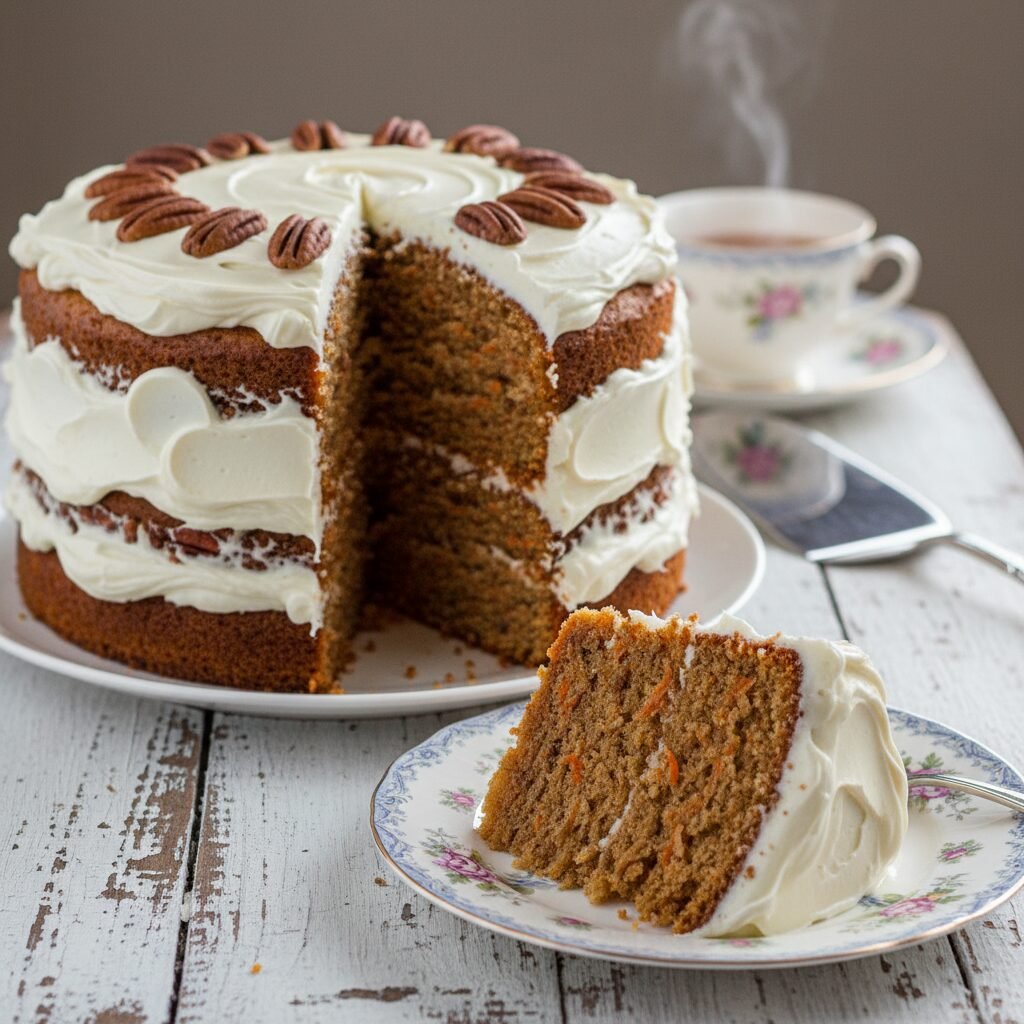
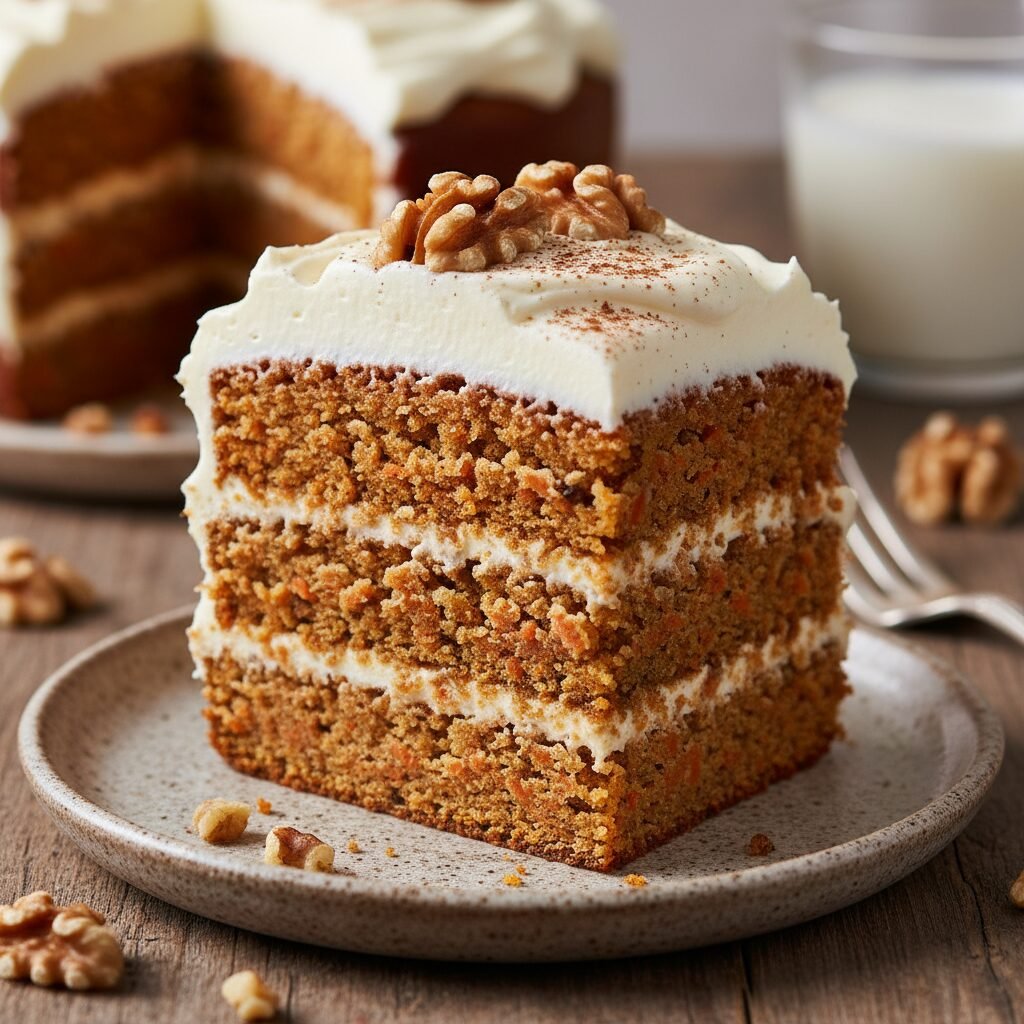
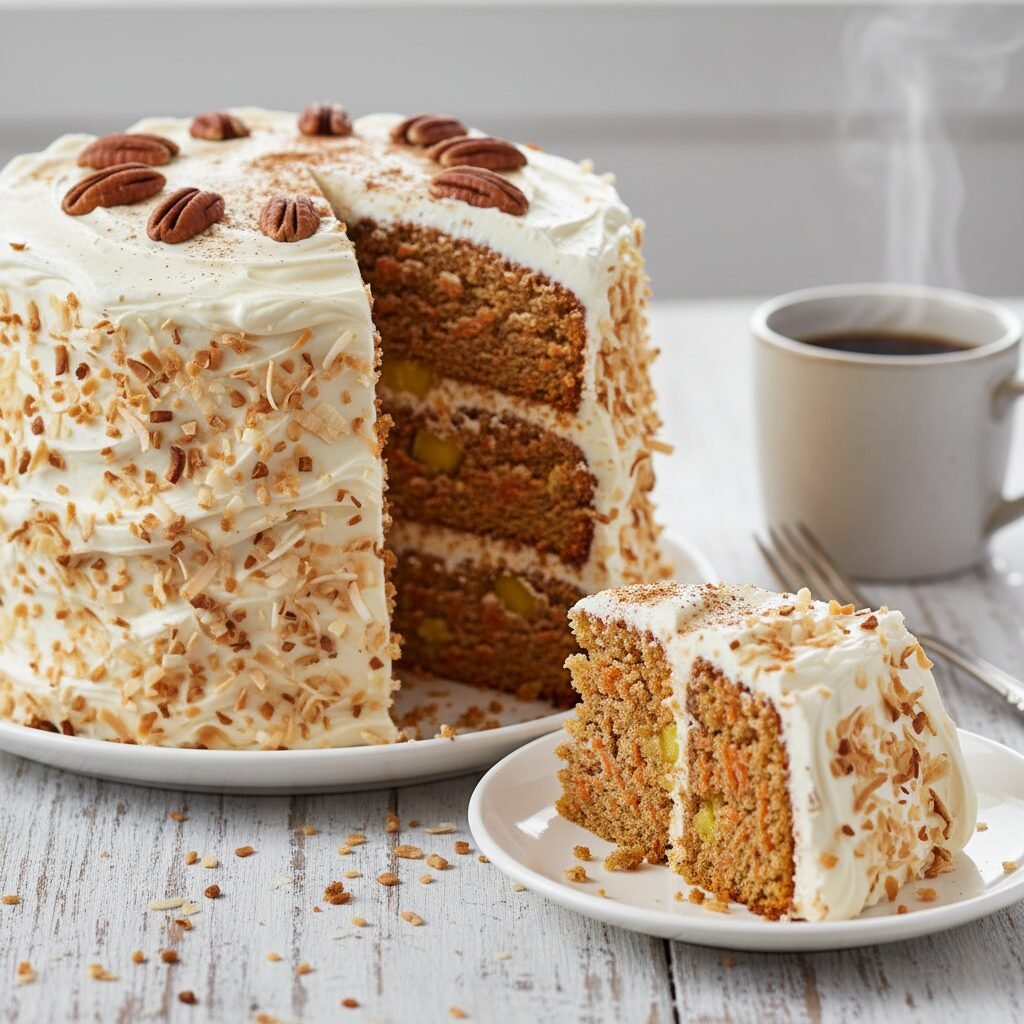
This is not just another carrot cake; it is a textural masterpiece featuring ultra-moist layers packed with fresh carrots, crushed pineapple, and sweet shredded coconut. Finished with a velvety, tangy cream cheese frosting and a crown of toasted coconut, this recipe strikes the perfect balance between warm spices and tropical sweetness.
30 minutes
35 minutes
1 hour 5 minutes (plus cooling)
12-16 Servings
Dessert
Baking
American
Vegetarian
If there is one dessert that bridges the gap between a comfort food classic and an elegant showstopper, it is the carrot cake. However, finding the perfect recipe can be a lifelong quest. Many versions suffer from being too dry, too oily, or lacking in flavor complexity. This Moist Carrot Layer Cake with Coconut is the result of years of testing to find that elusive ‘Goldilocks’ texture—dense enough to hold its shape, yet impossibly tender and moist. The secret lies not just in the generous amount of freshly grated carrots, but in the inclusion of crushed pineapple and shredded coconut within the batter itself. These ingredients do more than just add flavor; they act as moisture reservoirs that steam the cake from the inside out as it bakes. The flavor profile is a sophisticated dance of warm autumn spices—cinnamon, ginger, and nutmeg—paired with the bright, subtle sweetness of the coconut. It is a cake that appeals to the purist who loves a spice cake, but also to the adventurer looking for something with a bit more chew and character. Topping it all off is the crown jewel: a rich, slightly tangy cream cheese frosting that cuts through the sweetness of the sponge. We take it a step further by coating the sides or top with toasted coconut, adding a nutty crunch that contrasts beautifully with the creamy frosting. Whether you are baking for an Easter brunch, a birthday celebration, or simply a cozy weekend treat, this cake promises to be the centerpiece of the table. It is robust, flavorful, and arguably even better the next day as the flavors meld, making it the ultimate make-ahead dessert for busy hosts.
History & Origins
The history of carrot cake is a fascinating journey that dates back much further than the 1970s health food craze that popularized it in the United States. Historians believe the origins can be traced back to the Middle Ages in Europe. During this period, sweeteners like sugar were rare and prohibitively expensive for the average person. Carrots, which contain more natural sugar than almost any other vegetable (second only to sugar beets), became a viable alternative for sweetening puddings and baked goods. These early iterations were more akin to a ‘carrot pudding’ or a dense steamed sweetmeat than the fluffy layer cakes we recognize today. The concept evolved slowly over centuries. By the 18th and 19th centuries, recipes for ‘carrot pudding’ began appearing in cookbooks, such as in ‘The Art of Cookery Made Plain and Easy’ by Hannah Glasse in 1747. A major resurgence occurred during World War II in Great Britain, where rationing strictly limited sugar intake. The government promoted carrots as a healthy, homegrown sweetener, leading to a boom in carrot-based desserts. However, the modern American carrot cake—featuring vegetable oil, cinnamon, and cream cheese frosting—truly took shape in the mid-20th century. In the 1960s and 70s, it became a staple in American cafeterias and restaurants, often marketed as a ‘healthier’ dessert option due to the vegetable content, despite the high oil and sugar volume. The addition of coconut and pineapple is often attributed to the influence of Southern US cuisine and the popularity of hummingbird cake, blending tropical elements with the traditional spice cake format to create a denser, moister, and more complex confection.
Why This Recipe Works
This recipe succeeds where others fail primarily due to the careful balance of moisture-retaining ingredients and the specific choice of fat. First, we use neutral oil instead of butter. While butter adds flavor, it is about 80% fat and 20% water, and it solidifies at room temperature. Oil is 100% fat and remains liquid at room temperature, ensuring the cake stays sensationally moist and tender for days. Secondly, the inclusion of both brown and white sugars creates a depth of flavor; the molasses in the brown sugar is hygroscopic, meaning it attracts and holds water, further preventing dryness. The addition of crushed pineapple is a game-changer chemically; the acidity in the fruit reacts with the baking soda to create a superior rise, while the fruit fibers hold moisture without making the batter soggy. The shredded coconut adds a physical structure that prevents the dense batter from collapsing, providing a pleasant ‘chew’ that contrasts with the soft crumb. Finally, the spice blend is robust enough to stand up to the cream cheese frosting. We use a high ratio of cinnamon and a touch of nutmeg and ginger to ensure the warm flavors permeate every bite, balancing the sweetness of the coconut and the tang of the frosting perfectly.
Why You’ll Love This Recipe
- ✓Stays moist for days thanks to oil and fruit ingredients
- ✓Perfect balance of spice and tropical coconut sweetness
- ✓Robust structure that makes it easy to stack and frost
- ✓Cream cheese frosting is tangy and not overly sweet
- ✓Can be made ahead of time for better flavor development
- ✓Versatile batter that also works for cupcakes or bundt cakes
Equipment You’ll Need
- ✓Two 9-inch round cake pans
- ✓Electric stand mixer or hand mixer
- ✓Large mixing bowls
- ✓Box grater or food processor (for carrots)
- ✓Rubber spatula
- ✓Wire cooling rack
- ✓Offset spatula for frosting
- ✓Parchment paper
Ingredients
- ✓2 cups all-purpose flour
- ✓2 teaspoons baking soda
- ✓1/2 teaspoon fine sea salt
- ✓2 teaspoons ground cinnamon
- ✓1/2 teaspoon ground ginger
- ✓1/4 teaspoon ground nutmeg
- ✓3 large eggs, at room temperature
- ✓1 1/2 cups granulated sugar
- ✓1/2 cup light brown sugar, packed
- ✓3/4 cup vegetable oil or canola oil
- ✓1/2 cup unsalted butter, melted
- ✓1 teaspoon vanilla extract
- ✓3 cups grated carrots (approx. 5-6 medium carrots)
- ✓1 cup sweetened shredded coconut
- ✓1 cup crushed pineapple, well drained
- ✓1 cup pecans or walnuts, chopped (optional)
- ✓FOR THE FROSTING:
- ✓16 oz (2 blocks) cream cheese, softened to room temperature
- ✓1/2 cup unsalted butter, softened to room temperature
- ✓4 cups powdered sugar, sifted
- ✓1 teaspoon vanilla extract
- ✓1 cup toasted sweetened coconut flakes (for garnish)
Instructions
- 1. Preheat your oven to 350°F (175°C). Grease two 9-inch round cake pans with butter or cooking spray. Line the bottoms with parchment paper circles and grease the paper as well to ensure a clean release.
- 2. In a medium bowl, whisk together the flour, baking soda, salt, cinnamon, ginger, and nutmeg until well combined and no lumps remain. Set this dry mixture aside.
- 3. In the bowl of a stand mixer fitted with the paddle attachment (or a large bowl using a hand mixer), beat the eggs, granulated sugar, and brown sugar on medium-high speed until the mixture is pale and slightly thickened, about 2-3 minutes.
- 4. With the mixer running on low speed, slowly drizzle in the vegetable oil, melted butter, and vanilla extract. Mix until just combined and smooth.
- 5. Gradually add the dry flour mixture to the wet ingredients in two batches. Mix on low speed only until the flour streaks disappear. Do not overmix, or the cake will be tough.
- 6. Remove the bowl from the mixer. Using a sturdy rubber spatula, fold in the grated carrots, shredded coconut, drained crushed pineapple, and chopped nuts (if using). Fold gently until everything is evenly distributed.
- 7. Divide the batter evenly between the two prepared cake pans. Tap the pans gently on the counter to release any large air bubbles.
- 8. Bake on the center rack for 30 to 35 minutes, or until a toothpick inserted into the center comes out clean or with just a few moist crumbs attached. The tops should be golden brown and spring back when lightly touched.
- 9. Remove cakes from the oven and let them cool in the pans for 15 minutes. Then, run a knife around the edges and invert them onto a wire rack to cool completely before frosting. The cakes must be cool to the touch, or the frosting will melt.
- 10. While cakes cool, make the frosting. In a clean mixing bowl, beat the softened cream cheese and softened butter on medium-high speed until smooth and creamy (about 3 minutes).
- 11. Reduce speed to low and gradually add the sifted powdered sugar, one cup at a time. Once all sugar is incorporated, add the vanilla extract and increase speed to high. Whip for 2-3 minutes until the frosting is fluffy and white.
- 12. To assemble, place one cake layer on your serving platter. Spread a generous layer of frosting over the top. Place the second cake layer on top. Use the remaining frosting to cover the top and sides of the cake.
- 13. Press the toasted coconut flakes onto the sides of the cake or sprinkle them generously over the top for decoration. Refrigerate the cake for at least 30 minutes before slicing to set the frosting.
Expert Cooking Tips
- ✓Grate your own carrots. Pre-shredded carrots from the store are dry and hard; fresh grating releases the essential moisture needed for the cake.
- ✓Drain the pineapple well. Too much liquid from the pineapple can make the batter soupy and affect the baking time.
- ✓Room temperature ingredients are crucial. Ensure your eggs, cream cheese, and butter are at room temperature to create a smooth emulsion and prevent a lumpy frosting.
- ✓Do not overmix the batter. Once the flour is added, mix gently. Overworking the gluten will result in a rubbery texture rather than a tender crumb.
- ✓Toast the coconut garnish. Toating the coconut for the outside of the cake adds a crunch and a nutty flavor profile that contrasts beautifully with the soft cake.
- ✓Weigh your flour if possible. If using cups, use the spoon-and-level method to avoid packing the flour, which creates a dry cake.
- ✓Chill before slicing. Because this cake is so moist, chilling it for 30 minutes after frosting makes it much easier to get clean, beautiful slices.
Substitutions and Variations
This recipe is quite forgiving and allows for several substitutions based on dietary needs or pantry availability. If you have a nut allergy, you can simply omit the pecans or walnuts without altering the other quantities; consider adding extra coconut or dried raisins (soaked in warm water then drained) for texture. For the oil, you can use melted coconut oil to enhance the tropical flavor profile, though ensure all other ingredients are room temperature so the oil doesn’t seize. If you prefer a less sweet cake, you can reduce the granulated sugar by 1/4 cup, but do not reduce the brown sugar as it is vital for moisture. For a gluten-free version, swap the all-purpose flour for a high-quality 1:1 gluten-free baking flour blend that contains xanthan gum. If you don’t have crushed pineapple, applesauce can be used as a substitute for moisture, though the flavor profile will shift slightly towards a traditional spice cake. For the frosting, mascarpone cheese can be substituted for half of the cream cheese for a richer, more Italian-style topping.
Common Mistakes to Avoid
The most common mistake when baking carrot cake is using pre-bagged shredded carrots. These are often treated with preservatives and are too dry to melt into the batter properly. Always peel and grate fresh carrots. Another frequent error is frosting the cake while it is still slightly warm. This will cause the butter and cream cheese to separate and slide right off the cake; patience is key—let the layers cool completely. Over-creaming the frosting can also be an issue; while you want it fluffy, beating it for too long can introduce too many air bubbles, making it difficult to spread smoothly. Finally, avoid opening the oven door repeatedly during the first 20 minutes of baking, as the fluctuation in temperature can cause the center of the cake to sink.
Serving Suggestions
This rich and dense cake pairs wonderfully with beverages that can cut through the sweetness and creaminess. A hot cup of black coffee, an espresso, or a dark roast blend is the ideal companion. For tea drinkers, an Earl Grey or a spicy Chai latte complements the cinnamon and nutmeg notes in the cake beautifully. If serving this for a dessert course at a dinner party, a glass of dessert wine like a Late Harvest Riesling or even a tawny port can be a sophisticated pairing. Serve slices on white ceramic plates to let the golden cake and toasted coconut pop visually. It is substantial enough to be served on its own, but a side of fresh berries can add a nice acidic brightness.
Storage and Reheating Tips
Because of the cream cheese frosting and the high moisture content of the fruit, this cake should be stored in the refrigerator. It can be left out at cool room temperature for a few hours during a party, but for long-term storage, keep it in the fridge in an airtight cake carrier or covered with plastic wrap. It will stay fresh for up to 5 days. In fact, the flavor often improves on the second day. For freezing, you can freeze the unfrosted layers individually by wrapping them tightly in plastic wrap and then foil for up to 3 months. To freeze a finished slice or whole cake, place it in the freezer uncovered for an hour to harden the frosting, then wrap tightly. Thaw in the refrigerator overnight before serving.
Nutrition Facts (Estimated)
| Serving Size | 1 Slice |
| Calories | 680 |
| Fat | 42g |
| Saturated Fat | 14g |
| Unsaturated Fat | 26g |
| Trans Fat | 0g |
| Cholesterol | 85mg |
| Sodium | 340mg |
| Carbohydrates | 74g |
| Fiber | 3g |
| Sugar | 52g |
| Protein | 7g |
Frequently Asked Questions
Can I bake this cake in a 9×13 inch pan instead of layers?
Yes, absolutely. Pour the batter into a greased 9×13 inch pan and bake for approximately 40-50 minutes. Start checking at 40 minutes with a toothpick.
Why did my carrot cake sink in the middle?
Sinking usually happens if the oven door was opened too early, causing a temperature drop, or if the cake was underbaked. It can also occur if there was too much leavening (baking soda) or too much liquid (pineapple not drained enough).
Can I use sweetened coconut in the batter?
Yes, this recipe calls for sweetened shredded coconut. If you prefer to use unsweetened coconut, the cake will still be delicious but slightly less sweet and arguably more ‘nutty’ in flavor.
Do I have to include the pineapple?
While the pineapple adds immense moisture and tenderness, you can omit it. If you do, replace it with an equal amount of applesauce or increase the grated carrots by one cup to maintain the moisture balance.
Can I make this recipe into cupcakes?
Yes, this batter makes excellent cupcakes. Line muffin tins with papers and fill 2/3 full. Bake at 350°F for 18-22 minutes. It should yield about 24 cupcakes.
My frosting is too runny, how can I fix it?
If your frosting is runny, your butter or cream cheese might have been too warm (melted rather than softened). Try chilling the bowl in the fridge for 20 minutes and whipping again. You can also add more powdered sugar to stiffen it up.
Is it better to use butter or oil in carrot cake?
Oil is generally better for carrot cake because it keeps the cake moist for longer and ensures a tender crumb even when refrigerated. Butter-based cakes can become hard in the fridge.
How finely should I grate the carrots?
Use the standard holes on a box grater. You want distinct shreds of carrot. If you grate them too finely (like a puree), the cake will be heavy and wet. If too thick, they won’t cook through properly.
Conclusion
In the world of baking, few things are as rewarding as pulling a perfectly risen, aromatic carrot cake out of the oven. This Moist Carrot Layer Cake with Coconut offers a delightful twist on the traditional recipe, elevating it with tropical textures and a richness that is hard to beat. The combination of the spiced, fruit-laden sponge and the cool, tangy cream cheese frosting creates a harmony of flavors that is sure to impress anyone lucky enough to get a slice. Whether you are a seasoned baker or a novice in the kitchen, this recipe is robust and forgiving enough to ensure success. So, grab your grater, toast that coconut, and get ready to bake a cake that will likely become your new family tradition.