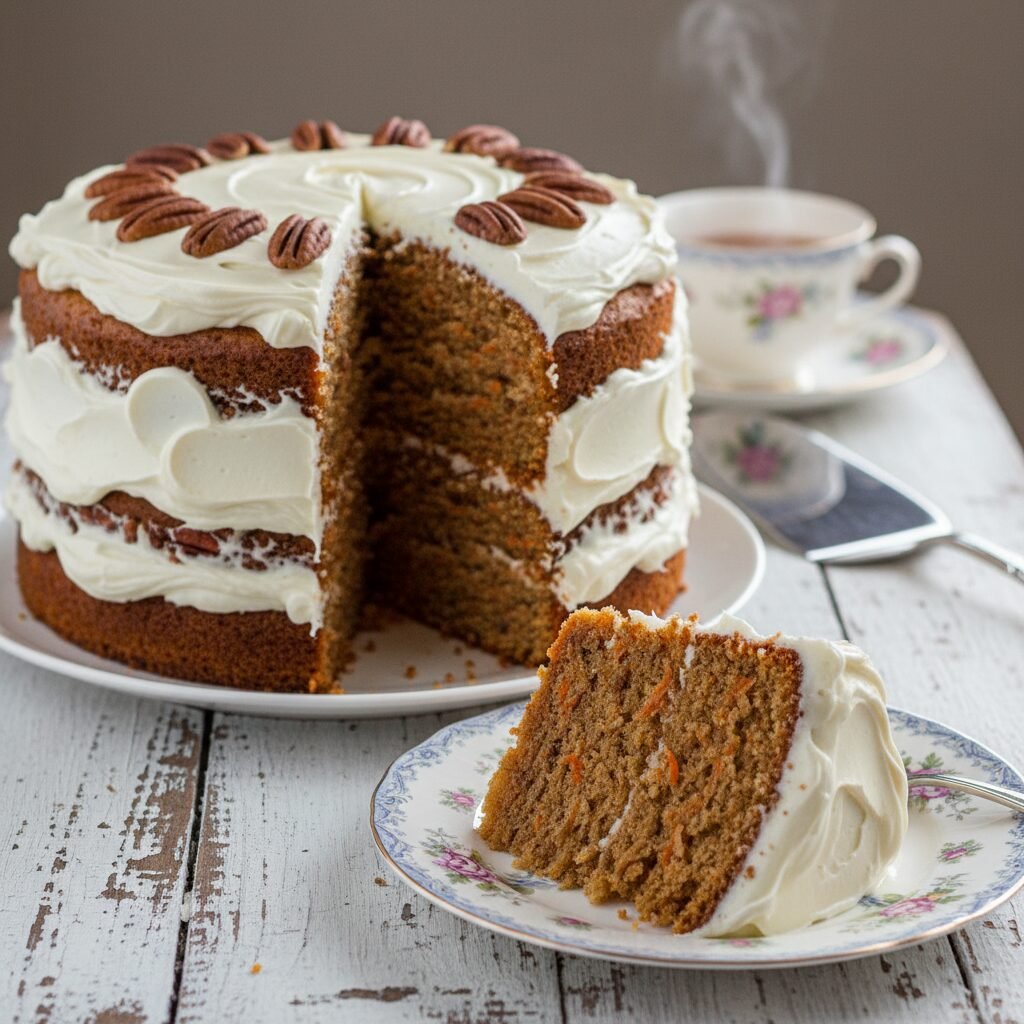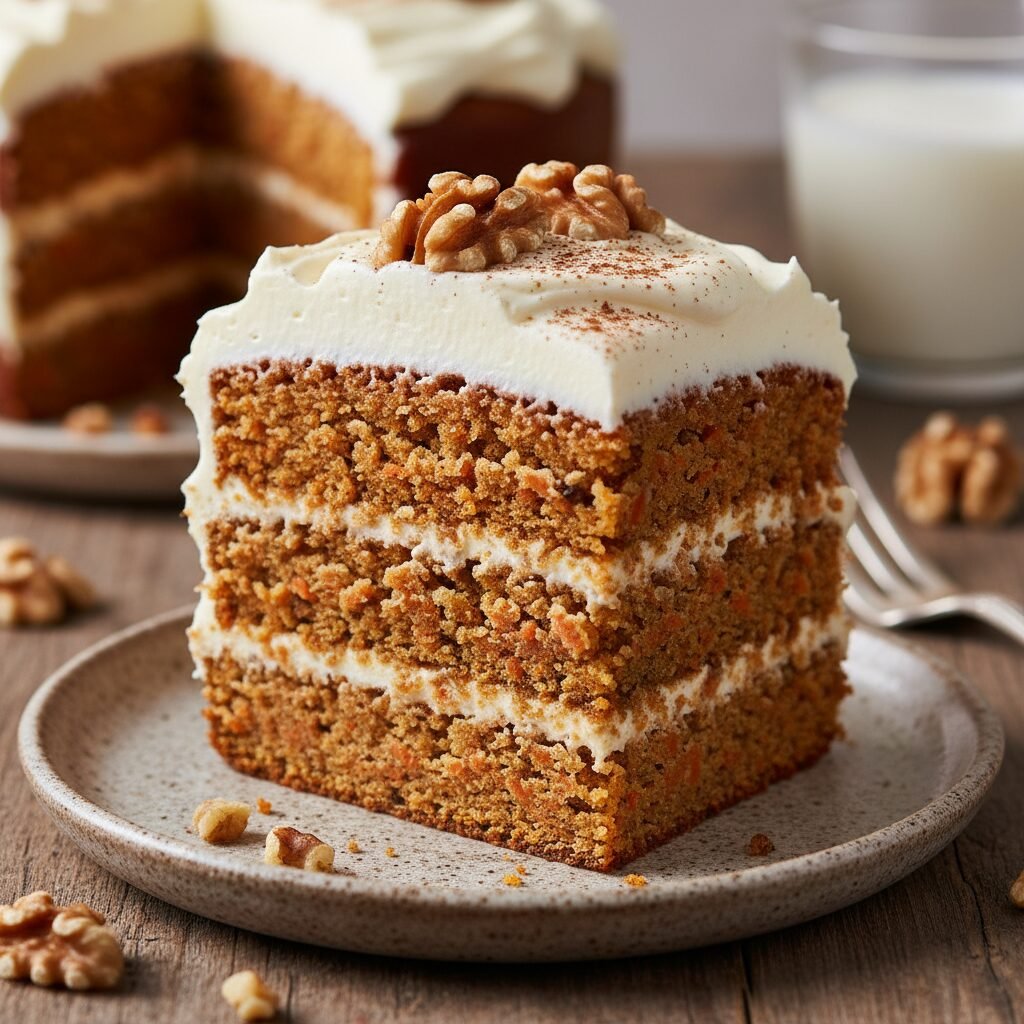
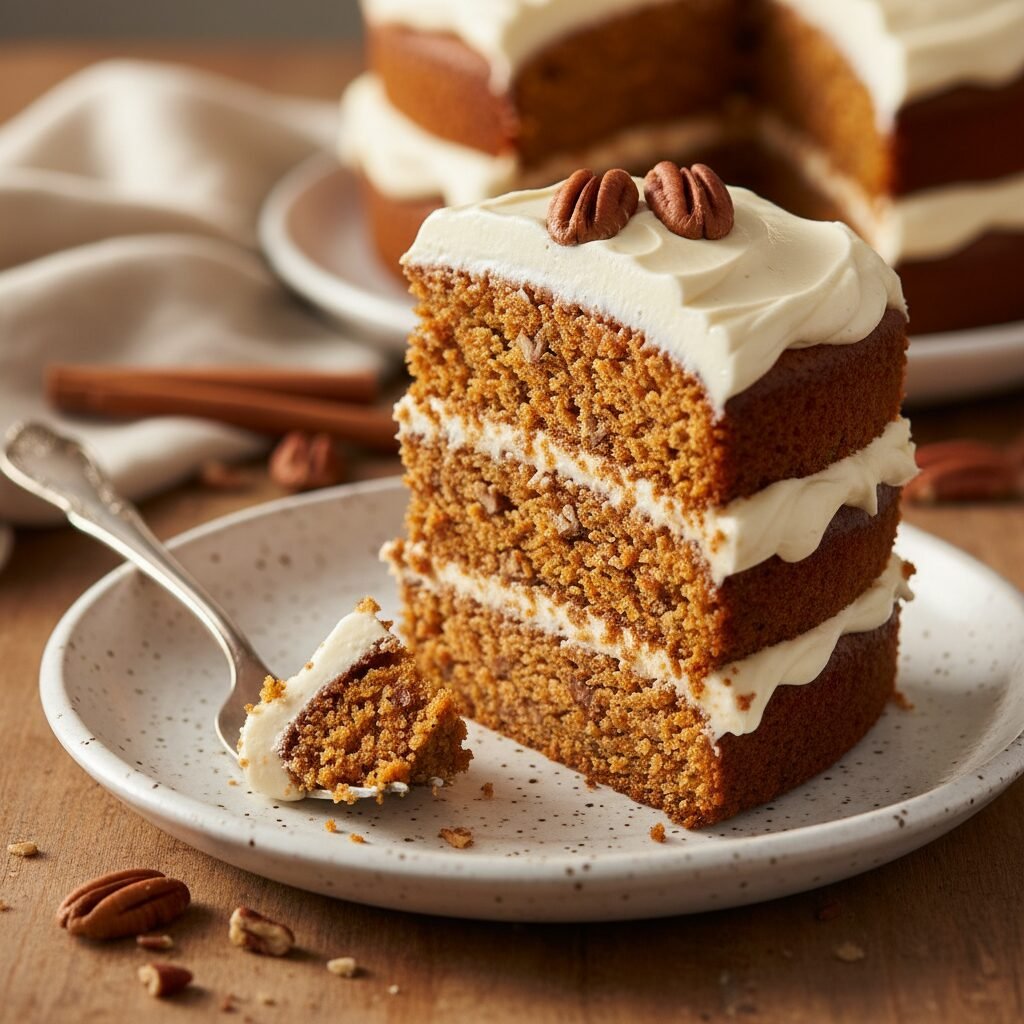
Moist Carrot Layer Cake With Pecans Recipe
Experience the perfect balance of spice and sweetness with this incredibly moist carrot layer cake. Packed with fresh carrots, toasted pecans, and smothered in a velvety cream cheese frosting, it is the quintessential dessert for celebrations.
45 minutes
35 minutes
2 hours 30 minutes
12-16 Servings
Dessert
Baking
American
Vegetarian
There is something undeniably magical about a truly great carrot cake. It sits at the intersection of comfort food and elegant dessert, managing to be both rustic and sophisticated all at once. This Moist Carrot Layer Cake with Pecans recipe is the culmination of years of testing to find that elusive texture—a crumb that is dense enough to hold up to layers of frosting but light enough to melt in your mouth. Unlike many dry or overly oily versions you might find in grocery store bakeries, this homemade masterpiece relies on a precise balance of brown sugar, oil, and fresh carrots to achieve supreme moisture. The flavor profile is a warm embrace of cinnamon, nutmeg, and ginger, spices that awaken the palate and cut through the richness of the batter. But the real star, the element that elevates this from a simple snack cake to a show-stopping centerpiece, is the generous inclusion of toasted pecans. They add a nutty, buttery crunch that contrasts beautifully with the soft cake and the smooth, tangy cream cheese frosting. This isn’t just a cake; it’s a celebration of textures and flavors that feel like home. Whether you are baking for a holiday table, a birthday, or simply because you crave a slice of happiness, this recipe delivers on every front. It is the kind of dessert that makes people close their eyes after the first bite, savoring the complex marriage of sweet carrots and aromatic spices. Get ready to bake the best carrot cake of your life.
History & Origins
The lineage of the carrot cake is as rich and textured as the dessert itself, tracing its roots back far deeper than the 1970s health food craze that popularized it in America. Historians believe that the concept originated from medieval carrot puddings eaten by Europeans. In the Middle Ages, sugar and other sweeteners were rare and prohibitively expensive for the common person. Carrots, which contain more natural sugar than almost any other vegetable (second only to sugar beets), were used as a viable substitute to sweeten desserts. These early iterations were more akin to steamed puddings than the fluffy cakes we know today. As baking technology advanced and leavening agents became more accessible in the 19th century, the pudding evolved into a baked cake. The recipe saw a significant resurgence during World War II in Great Britain, where sugar rationing forced home bakers to once again rely on the natural sweetness of the carrot. However, the modern American version—complete with cream cheese frosting—really took flight in the 1960s and 70s. It was paradoxically marketed as a ‘health food’ due to the vegetable content, despite being laden with oil and sugar. During this era, it became a staple in cafeterias and restaurants across the United States. Today, it stands as a classic American dessert, shedding its ‘health food’ pretense to be embraced purely for its decadent, spiced flavor profile and moist texture.
Why This Recipe Works
This specific recipe succeeds where many others fail due to three critical scientific factors: the fat source, the sugar type, and the carrot preparation. First, we use neutral oil instead of butter for the cake batter. While butter adds flavor, it is 20% water and solidifies at room temperature, often leading to a drier, firmer cake. Oil remains liquid at room temperature, ensuring the cake stays incredibly moist and tender for days. Second, we utilize a high ratio of dark brown sugar. The molasses in the brown sugar is hygroscopic, meaning it attracts and holds moisture from the air, further preventing the cake from drying out while adding a deep, caramel-like flavor complexity that white sugar lacks. Third, the carrots are freshly grated, not pre-shredded. Pre-shredded carrots from the store are often dry and coated in starch to prevent clumping. By grating them fresh, we release their natural juices into the batter, which steam slightly during baking to tenderize the crumb. Finally, the addition of toasted pecans provides a necessary textural contrast; toasting them beforehand releases their essential oils, amplifying their nutty flavor so they don’t get lost against the bold spices.
Why You’ll Love This Recipe
- ✓Stays moist for days thanks to oil and brown sugar
- ✓Perfectly spiced with cinnamon, nutmeg, and ginger
- ✓Rich and tangy homemade cream cheese frosting
- ✓Crunchy toasted pecans add texture
- ✓Ideal for making ahead as flavors meld over time
- ✓Stable structure perfect for layering
Equipment You’ll Need
- ✓3 9-inch round cake pans
- ✓Stand mixer or electric hand mixer
- ✓Box grater or food processor
- ✓Large mixing bowls
- ✓Wire cooling rack
- ✓Offset spatula
- ✓Parchment paper
- ✓Whisk
Ingredients
- ✓2 cups all-purpose flour
- ✓2 teaspoons baking soda
- ✓1/2 teaspoon fine sea salt
- ✓2 teaspoons ground cinnamon
- ✓1/2 teaspoon ground nutmeg
- ✓1/2 teaspoon ground ginger
- ✓1 1/4 cups neutral oil (canola, vegetable, or grapeseed)
- ✓1 cup granulated sugar
- ✓1 cup packed dark brown sugar
- ✓1 teaspoon pure vanilla extract
- ✓4 large eggs, room temperature
- ✓3 cups grated fresh carrots (approx. 5-6 medium carrots)
- ✓1 cup chopped pecans, toasted
- ✓1/2 cup raisins (optional)
- ✓16 oz full-fat block cream cheese, softened (for frosting)
- ✓1 cup unsalted butter, softened (for frosting)
- ✓4-5 cups powdered sugar (for frosting)
- ✓1 teaspoon vanilla extract (for frosting)
- ✓Pinch of salt (for frosting)
Instructions
- 1. Preheat your oven to 350°F (175°C). Grease three 9-inch round cake pans with butter or cooking spray, and line the bottoms with parchment paper rounds for easy removal.
- 2. Spread the pecans on a baking sheet and toast in the preheating oven for 5-7 minutes until fragrant. Watch closely to avoid burning. Remove and let cool, then chop roughly.
- 3. In a medium bowl, whisk together the flour, baking soda, salt, cinnamon, nutmeg, and ginger until well combined and free of lumps. Set aside.
- 4. In a large bowl (or stand mixer fitted with the paddle attachment), beat the oil, granulated sugar, brown sugar, and vanilla extract until smooth and combined.
- 5. Add the eggs one at a time, beating well after each addition to ensure the mixture is fully emulsified.
- 6. Gradually add the dry ingredients to the wet mixture. Mix on low speed just until the flour streaks disappear. Do not overmix.
- 7. Using a rubber spatula, manually fold in the grated carrots and toasted pecans (and raisins if using) until evenly distributed throughout the batter.
- 8. Divide the batter evenly among the three prepared cake pans. Smooth the tops with a spatula.
- 9. Bake for 30-35 minutes, or until a toothpick inserted into the center comes out clean or with just a few moist crumbs.
- 10. Allow the cakes to cool in the pans for 15 minutes, then carefully invert them onto a wire rack to cool completely before frosting.
- 11. To make the frosting: In a large bowl, beat the softened cream cheese and butter together on medium-high speed until smooth and creamy (about 2-3 minutes).
- 12. Reduce speed to low and gradually add the powdered sugar, one cup at a time. Once incorporated, add the vanilla and a pinch of salt. Increase speed to high and whip for 3 minutes until fluffy.
- 13. Assemble the cake: Place one cake layer on your serving plate. Spread a thick layer of frosting over the top. Repeat with the second and third layers. Frost the sides and top of the cake. Garnish with extra pecans if desired.
Expert Cooking Tips
- ✓Always grate your carrots by hand using the small holes of a box grater for the best texture; large chunks can result in an uneven bake.
- ✓Ensure your eggs, butter, and cream cheese are truly at room temperature to prevent a lumpy batter and curdled frosting.
- ✓Do not overmix the batter once the flour is added; overmixing develops gluten and leads to a tough, rubbery cake.
- ✓Toasting the pecans is a non-negotiable step that significantly deepens the flavor profile of the cake.
- ✓If the frosting feels too soft to pipe or spread, refrigerate it for 15-20 minutes to firm up.
Substitutions and Variations
This recipe is versatile enough to handle several substitutions. For the flour, you can use a 1:1 gluten-free baking flour blend to make this cake gluten-free; look for a blend that contains xanthan gum. If you have a nut allergy, the pecans can be omitted entirely, or replaced with walnuts or hazelnuts if you simply prefer a different flavor profile. For the oil, melted coconut oil adds a lovely subtle flavor, though the cake will be denser when cold. You can substitute half of the oil with unsweetened applesauce to reduce the fat content, though this will result in a slightly more cakey and less fudge-like texture. If you don’t have dark brown sugar, light brown sugar works, though the flavor will be slightly less rich. Raisins can be swapped for dried cranberries or chopped pineapple (drained well) for a fruity twist.
Common Mistakes to Avoid
The most common mistake is using pre-shredded bagged carrots; these are too dry and thick, leading to a crunchy, dry cake. Another error is frosting the cake before it is completely cool; even a slightly warm cake will melt the butter in the cream cheese frosting, causing the layers to slide apart and the frosting to become a soupy mess. Over-baking is also a risk; check the cake at the 30-minute mark. If the toothpick comes out bone dry, it’s already slightly overdone. Finally, using cold cream cheese for the frosting will result in tiny lumps that are impossible to whip out, so patience with bringing ingredients to room temperature is key.
Serving Suggestions
This cake is rich, so slice it thinly. It pairs exceptionally well with a hot cup of black coffee or an Earl Grey tea, which helps cut through the sweetness of the frosting. For a dessert table, serve it alongside fresh berries or a dollop of unsweetened whipped cream to balance the sugar. It looks stunning on a white ceramic cake stand. If serving for a birthday, garnish the top with a ring of whole pecans or piped rosettes of frosting.
Storage and Reheating Tips
Because of the cream cheese frosting, this cake must be stored in the refrigerator. It can be left out at room temperature for up to 2 hours for serving, but should be chilled thereafter. Store in an airtight cake carrier or cover the cut sections with plastic wrap to prevent drying. The cake will last for up to 5-6 days in the fridge. For freezing, you can freeze the unfrosted layers wrapped tightly in plastic wrap for up to 3 months. You can also freeze individual slices of the finished cake; place them on a baking sheet to freeze solid, then wrap tightly in plastic wrap and foil. Thaw in the fridge overnight before eating.
Nutrition Facts (Estimated)
| Serving Size | 1 Slice |
| Calories | 680 |
| Fat | 42g |
| Saturated Fat | 14g |
| Unsaturated Fat | 25g |
| Trans Fat | 0g |
| Cholesterol | 85mg |
| Sodium | 310mg |
| Carbohydrates | 72g |
| Fiber | 3g |
| Sugar | 48g |
| Protein | 7g |
Frequently Asked Questions
Can I bake this in a 9×13 pan instead?
Yes, you can bake this in a 9×13 inch rectangular pan. The baking time will likely increase to 40-50 minutes. Check with a toothpick starting at 40 minutes.
Why did my cake sink in the middle?
Sinking usually happens if the oven door was opened too early, causing a temperature drop, or if the cake was underbaked. It can also happen if there was too much leavening (baking soda) relative to the flour.
Can I reduce the sugar in this recipe?
You can reduce the granulated sugar by about 1/4 cup without affecting the structure too much, but reducing the brown sugar is risky as it provides moisture. Significant sugar reduction will result in a drier, less tender cake.
Do I have to peel the carrots before grating?
Yes, it is highly recommended to peel the carrots. The skin can be bitter and tough, which can negatively impact the texture and flavor of the cake.
Can I make this recipe into cupcakes?
Absolutely. This batter makes approximately 24-30 standard cupcakes. Bake them at 350°F for 18-22 minutes.
Why is my frosting runny?
Runny frosting is usually caused by butter or cream cheese that was too warm (melted) or by over-mixing after adding the sugar. If it’s too soft, chill it in the fridge for 20 minutes.
Can I use olive oil?
You can, but olive oil has a strong flavor. If you use it, choose a ‘light’ or ‘mild’ olive oil rather than extra virgin, unless you want that distinct savory note.
How do I get smooth sides on the cake?
Use a crumb coat first: apply a thin layer of frosting to seal in the crumbs, chill the cake for 20 minutes, and then apply the final thick layer of frosting using an offset spatula and a bench scraper.
Conclusion
This Moist Carrot Layer Cake with Pecans is more than just a recipe; it’s a reliable companion for life’s celebrations. The combination of the tender, spiced crumb and the tangy, rich frosting creates a flavor memory that guests will talk about long after the last crumb is gone. It is a labor of love that rewards you with every bite. Whether you are an experienced baker or a novice in the kitchen, following these steps will ensure a bakery-quality result. So, grab your grater, toast those pecans, and get ready to enjoy a slice of pure, homemade bliss. Happy baking!