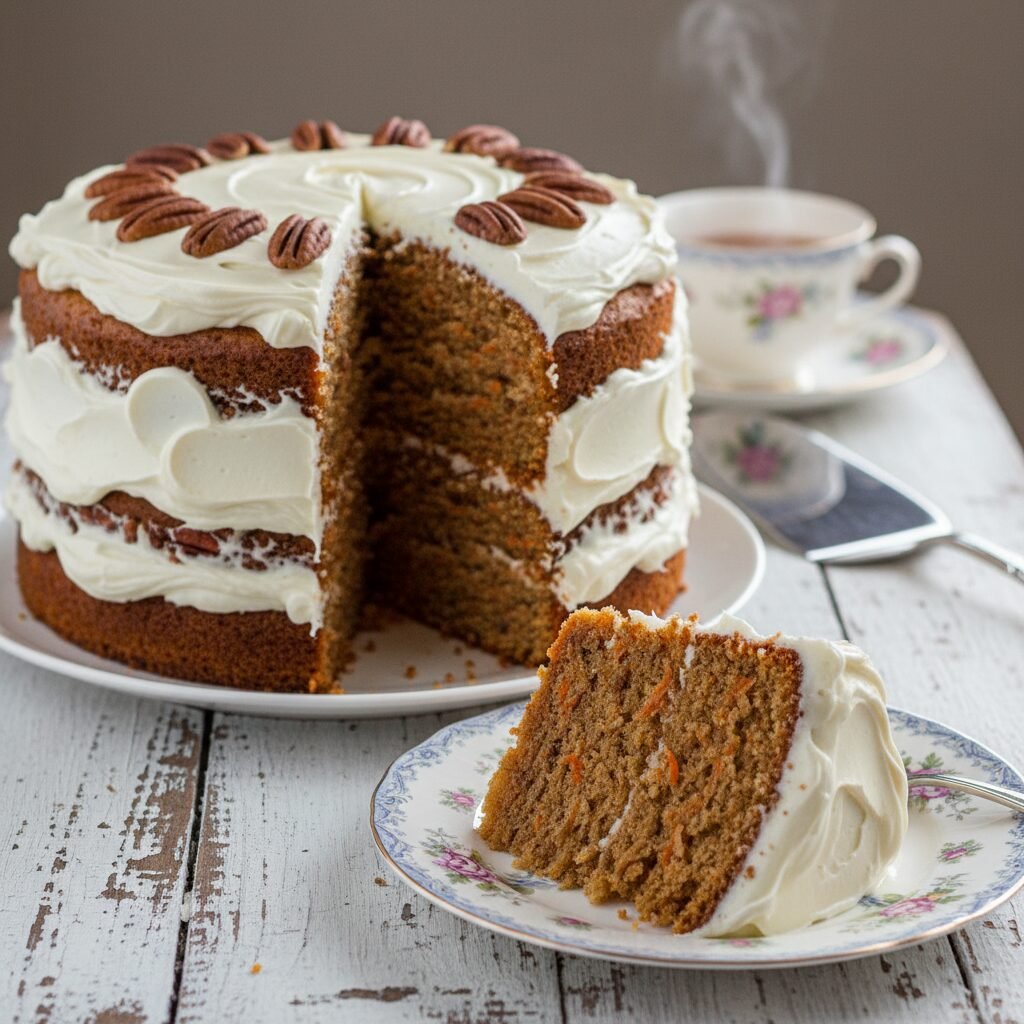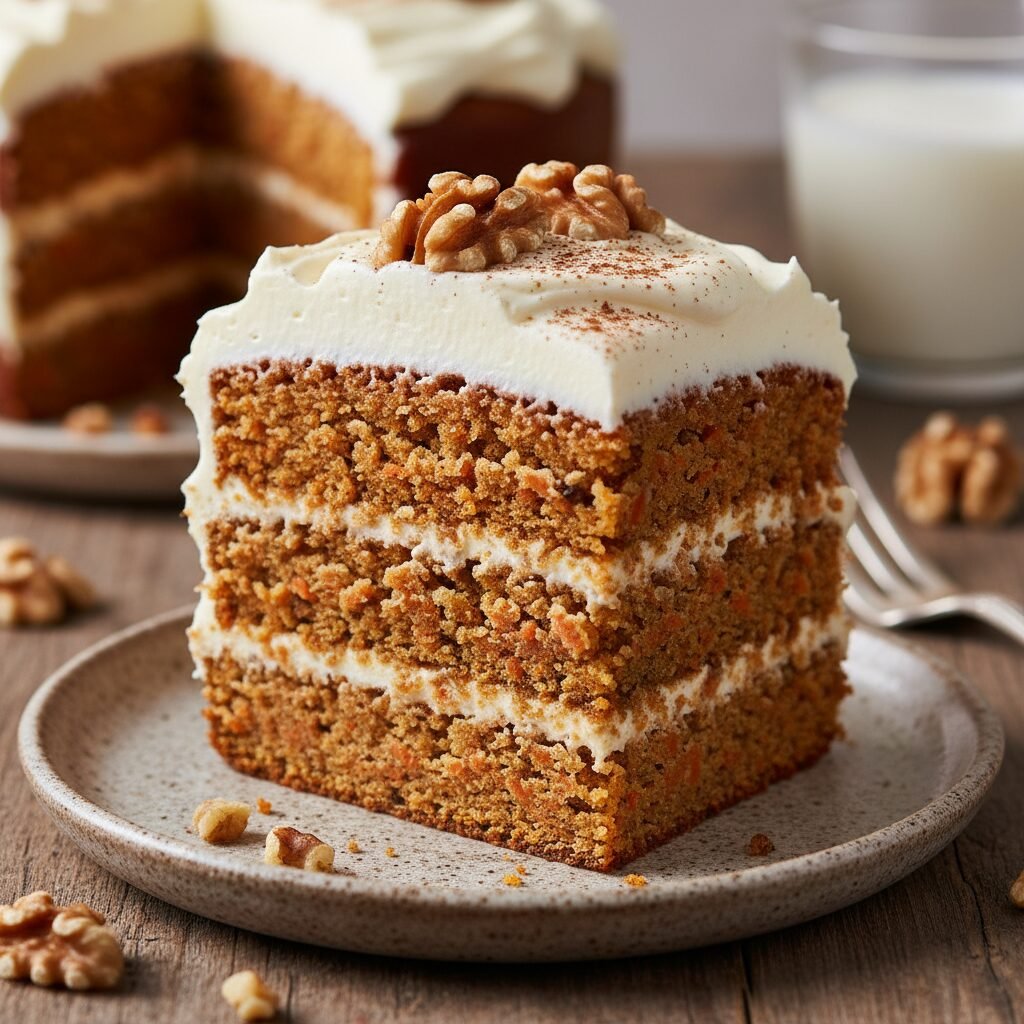
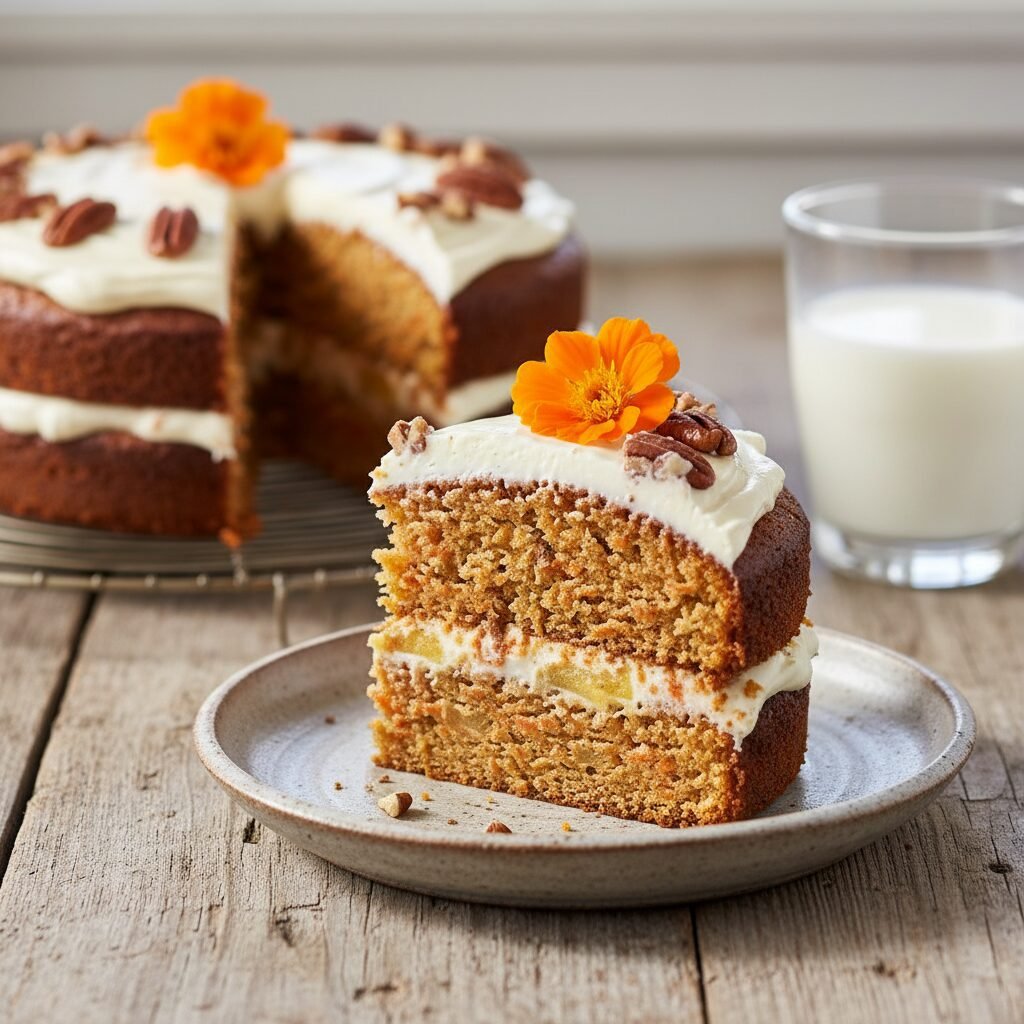
Moist Carrot Layer Cake With Pineapple Recipe
Experience the ultimate in comfort baking with this incredibly moist carrot layer cake. Secretly enhanced with crushed pineapple for unparalleled tenderness and flavor depth, this cake is enveloped in a velvety, tangy cream cheese frosting that makes it the perfect centerpiece for Easter, birthdays, or any celebration.
30 minutes
35 minutes
1 hour 5 minutes
12-16 servings
Dessert
Baking
American
Vegetarian
If there is one cake that truly bridges the gap between a humble vegetable garden and a decadent dessert table, it is the carrot cake. But not just any carrot cake—we are talking about a Moist Carrot Layer Cake with Pineapple. This recipe takes the beloved classic and elevates it to new heights of texture and flavor. Many carrot cakes suffer from being too dry or overly dense, but the addition of crushed pineapple changes the game entirely. It infuses the crumb with a subtle, tropical sweetness and, more importantly, ensures that every bite is melt-in-your-mouth tender.
Imagine slicing into three majestic layers of spiced perfection. The aroma of cinnamon, nutmeg, and ginger fills the kitchen, evoking memories of cozy afternoons and family gatherings. As you take your first bite, you are met with the crunch of toasted pecans, the sweetness of the carrots, and that undeniable moisture that only fruit can provide. And let’s not forget the crowning glory: a thick, luscious coat of homemade cream cheese frosting. It is tangy, sweet, and creamy, cutting through the spice of the cake to create a perfectly balanced bite. Whether you are a lifelong carrot cake aficionado or a skeptic, this recipe is bound to convert you. It is rustic yet elegant, simple yet sophisticated, and absolutely undeniably delicious.
History & Origins
The history of carrot cake is as rich and layered as the dessert itself. While it became a staple of American baking in the 20th century, its roots can be traced back much further to medieval Europe. In the Middle Ages, sugar was a rare and expensive luxury, often imported and difficult for the average person to obtain. Carrots, however, were abundant and possess a natural sweetness—second only to sugar beets among vegetables. Cooks of the time would use carrots to sweeten puddings and desserts, creating the early ancestors of the modern carrot cake.
Fast forward to World War II, and the concept of carrot cake saw a resurgence. With strict rationing of sugar and other baking staples in the United Kingdom, the government promoted recipes that utilized the natural sweetness of carrots to keep morale high and treats on the table. However, the carrot cake we know and love today—topped with cream cheese frosting—is largely an American innovation that exploded in popularity during the 1960s and 1970s. This era saw a growing interest in ‘health foods,’ and the inclusion of a vegetable in a cake allowed people to feel slightly more virtuous about their dessert choices. It was during this boom that variations began to appear, including the ‘hummingbird cake’ style additions of pineapple and coconut, particularly in the Southern United States. The pineapple variation stuck because it solved the age-old problem of dry cake, cementing its place in the pantheon of classic American desserts.
Why This Recipe Works
This recipe works because it fundamentally understands the science of moisture retention in baking. Traditional butter-based cakes are delicious, but they can dry out quickly. This recipe uses oil as the primary fat, which remains liquid at room temperature, ensuring the cake stays soft for days. However, the real MVP here is the crushed pineapple. Pineapple adds both acidity and water content. The acidity helps to tenderize the gluten strands in the flour, resulting in a softer crumb, while the fruit’s fiber holds onto moisture during the baking process.
Furthermore, the balance of spices is meticulously calculated. We use a blend of cinnamon, nutmeg, and ginger to provide warmth without overpowering the delicate flavor of the carrots and cream cheese. Using both white and brown sugar provides a depth of flavor; the molasses in the brown sugar adds a caramel-like undertone and contributes to the chewier, moister texture. Finally, the carrots are freshly grated, not pre-packaged. Pre-grated carrots are often dry and hard; grating them fresh releases their natural juices into the batter, steaming the cake from the inside out as it bakes.
Why You’ll Love This Recipe
- ✓Incredibly moist texture thanks to crushed pineapple and oil.
- ✓Rich, tangy, and stable cream cheese frosting.
- ✓Warm spice blend of cinnamon, nutmeg, and ginger.
- ✓Stays fresh and moist for days, making it perfect for making ahead.
- ✓Customizable with walnuts, pecans, or raisins.
- ✓High yield, perfect for parties and holiday gatherings.
Equipment You’ll Need
- ✓3 x 9-inch round cake pans
- ✓Stand mixer or electric hand mixer
- ✓Large mixing bowls
- ✓Box grater or food processor (for carrots)
- ✓Rubber spatula
- ✓Wire cooling rack
- ✓Offset spatula for frosting
- ✓Parchment paper
Ingredients
- ✓2 cups all-purpose flour
- ✓2 teaspoons baking soda
- ✓1 teaspoon baking powder
- ✓1/2 teaspoon salt
- ✓2 teaspoons ground cinnamon
- ✓1/2 teaspoon ground nutmeg
- ✓1/2 teaspoon ground ginger
- ✓3 large eggs, room temperature
- ✓3/4 cup vegetable oil or canola oil
- ✓1/2 cup buttermilk, room temperature
- ✓1 cup granulated white sugar
- ✓1 cup brown sugar, packed
- ✓2 teaspoons pure vanilla extract
- ✓3 cups freshly grated carrots (approx. 5-6 medium carrots)
- ✓1 cup crushed pineapple, drained well
- ✓1 cup chopped pecans or walnuts, toasted
- ✓1 cup unsalted butter, softened (for frosting)
- ✓16 oz cream cheese, softened (brick style, not tub)
- ✓1 teaspoon vanilla extract (for frosting)
- ✓5-6 cups powdered sugar, sifted
- ✓Pinch of salt (for frosting)
Instructions
- Preheat your oven to 350°F (175°C). Grease three 9-inch round cake pans with butter or cooking spray. Line the bottoms with parchment paper and grease the paper as well. Dust with a little flour, tapping out the excess.
- In a medium bowl, whisk together the flour, baking soda, baking powder, salt, cinnamon, nutmeg, and ginger until well combined. Set aside.
- In the bowl of a stand mixer fitted with the paddle attachment (or a large bowl using a hand mixer), beat the eggs, vegetable oil, buttermilk, granulated sugar, brown sugar, and vanilla extract on medium-high speed until smooth and slightly thickened, about 2 minutes.
- Reduce the mixer speed to low. Gradually add the dry ingredients to the wet ingredients. Mix just until the flour streaks disappear. Do not overmix.
- Remove the bowl from the mixer. Using a rubber spatula, manually fold in the grated carrots and the drained crushed pineapple until evenly distributed.
- Gently fold in the toasted pecans (or walnuts).
- Divide the batter evenly among the three prepared cake pans. (Using a kitchen scale helps ensure even layers).
- Bake for 30-35 minutes, or until a toothpick inserted into the center comes out clean or with just a few moist crumbs attached. The cakes should spring back when lightly pressed.
- Remove pans from the oven and place them on a wire rack. Let the cakes cool in the pans for about 15-20 minutes, then invert them onto the wire rack to cool completely before frosting.
- To make the frosting: In a clean mixing bowl, beat the softened butter and cream cheese on medium-high speed until completely smooth and creamy (about 3 minutes). There should be no lumps.
- Add the vanilla extract and a pinch of salt. Reduce speed to low and gradually add the powdered sugar, one cup at a time, beating well after each addition. Once all sugar is incorporated, increase speed to high and whip for 2-3 minutes until fluffy.
- To assemble: Place one cake layer on your serving platter. Spread a generous layer of frosting over the top. Repeat with the second and third layers. Use the remaining frosting to cover the top and sides of the cake. Garnish with extra chopped pecans if desired.
- Refrigerate the cake for at least 30 minutes before slicing to help the frosting set.
Expert Cooking Tips
- ✓Toast your nuts before adding them to the batter; this releases their oils and keeps them crunchy within the cake.
- ✓Drain the pineapple very well. Place it in a mesh sieve and press down with a spoon to remove excess juice, otherwise, the batter will be too wet.
- ✓Grate your own carrots. Store-bought shredded carrots are too thick and dry. Use the medium holes on a box grater for the best texture.
- ✓Ensure your cream cheese and butter are truly at room temperature before making the frosting to avoid lumps.
- ✓Don’t overmix the batter once the flour is added, or the cake will become dense and rubbery.
- ✓If you only have two cake pans, you can bake in two batches or bake two thicker layers (adjusting baking time to 40-45 minutes).
Substitutions and Variations
This recipe is quite versatile. If you are gluten-free, you can substitute the all-purpose flour with a high-quality 1:1 gluten-free baking flour blend that contains xanthan gum. For a dairy-free version, use a neutral oil (like avocado oil) and substitute the buttermilk with a mixture of almond milk and a teaspoon of vinegar. While the cream cheese frosting is traditional, a dairy-free buttercream can be used instead. If you dislike pineapple, you can replace it with an equal amount of applesauce or simply omit it and add an extra 1/4 cup of oil, though the pineapple truly provides the best texture. Raisins or dried cranberries can be substituted for nuts if you have a nut allergy, or you can omit the mix-ins entirely. Coconut lovers can add 1/2 cup of shredded sweetened coconut to the batter for an extra tropical flair.
Common Mistakes to Avoid
The most common mistake is using cold ingredients. Cold eggs and buttermilk won’t emulsify properly with the oil, leading to an uneven bake. Another error is not measuring flour correctly; scooping the measuring cup directly into the flour bag packs it down, resulting in too much flour and a dry cake. Always spoon and level your flour or use a scale. Regarding the frosting, many people try to frost the cake while it is still slightly warm. This is a disaster for cream cheese frosting, which is softer than buttercream; it will slide right off. Ensure the cake is completely cool, or even chilled, before assembling. Finally, skipping the parchment paper is risky; carrot cake is sticky and moist, and you don’t want to leave half of it stuck to the bottom of the pan.
Serving Suggestions
This cake is rich, so slice it thin! It pairs beautifully with a hot cup of black coffee or an Earl Grey tea to cut through the sweetness. For a dessert course, serve it chilled or at room temperature. If you want to be extra indulgent, a scoop of vanilla bean ice cream or a dollop of unsweetened whipped cream on the side balances the sugar. It is fantastic for brunch, Easter Sunday lunch, or as a sophisticated birthday cake.
Storage and Reheating Tips
Because of the cream cheese frosting, this cake must be stored in the refrigerator. It can be left out for 2-3 hours for serving, but should be chilled otherwise. Store it in an airtight cake carrier or cover the cut sections with plastic wrap to prevent them from drying out. The cake will last in the fridge for up to 5-7 days. This cake also freezes beautifully. You can freeze the individual baked layers (wrapped tightly in plastic wrap) for up to 3 months. Or, freeze individual slices of the frosted cake by placing them on a baking sheet to freeze solid, then wrapping them in plastic wrap and foil. Thaw in the fridge overnight before eating.
Nutrition Facts (Estimated)
| Serving Size | 1 slice |
| Calories | 650 |
| Fat | 38g |
| Saturated Fat | 12g |
| Unsaturated Fat | 24g |
| Trans Fat | 0g |
| Cholesterol | 85mg |
| Sodium | 320mg |
| Carbohydrates | 72g |
| Fiber | 3g |
| Sugar | 48g |
| Protein | 7g |
Frequently Asked Questions
Can I make this cake ahead of time?
Absolutely! In fact, carrot cake often tastes better the next day as the spices have time to meld and the moisture distributes evenly. You can bake the layers a day in advance, wrap them, and frost the day of serving, or make the whole cake and refrigerate it overnight.
Why did my carrot cake sink in the middle?
Sinking usually happens if the cake was underbaked, the oven door was opened too early (causing a temperature drop), or there was too much leavening (baking soda/powder). Ensure your oven temperature is accurate and test with a toothpick before removing.
Can I use fresh pineapple instead of canned?
It is best to use canned crushed pineapple for baking. Fresh pineapple contains an enzyme called bromelain that can break down proteins and prevent the cake from setting properly or make the frosting runny. Canned pineapple has been heated, deactivating this enzyme.
Can I make this into cupcakes?
Yes. This recipe will make approximately 24-30 standard cupcakes. Bake them at 350°F for 18-22 minutes. Watch them closely so they don’t dry out.
Do I have to use buttermilk?
Buttermilk adds a nice tang and helps tenderize the gluten, but if you don’t have it, you can make a substitute by adding 1/2 tablespoon of lemon juice or white vinegar to 1/2 cup of regular milk and letting it sit for 5 minutes.
My frosting is too runny, how do I fix it?
Cream cheese frosting can become runny if overmixed or if the butter was melted rather than softened. Try chilling the frosting in the fridge for 20 minutes. If it’s still too soft, add more sifted powdered sugar, 1/4 cup at a time.
Can I reduce the sugar in this recipe?
You can reduce the sugar in the cake batter by about 1/4 cup without drastically affecting the texture, but reducing it too much will make the cake less moist and tender. You can certainly use less sugar in the frosting to taste.
Can I bake this in a 9×13 pan?
Yes, this recipe fits a 9×13 inch rectangular pan. You will need to increase the baking time to approximately 40-50 minutes. Check for doneness starting at the 40-minute mark.
Conclusion
There you have it—the blueprint for the most succulent, flavorful, and crowd-pleasing Moist Carrot Layer Cake with Pineapple you will ever bake. It is a labor of love that rewards you with every forkful. The combination of the spiced, fruit-infused sponge and the creamy, tangy frosting is a timeless classic for a reason. Whether you are baking for a special occasion or just to treat yourself (because you deserve it!), this recipe is foolproof. Don’t forget to share your creations on social media and tag us; we love seeing your beautiful layers! Happy baking!