Moist Carrot Layer Cake With Vanilla Frosting Recipe
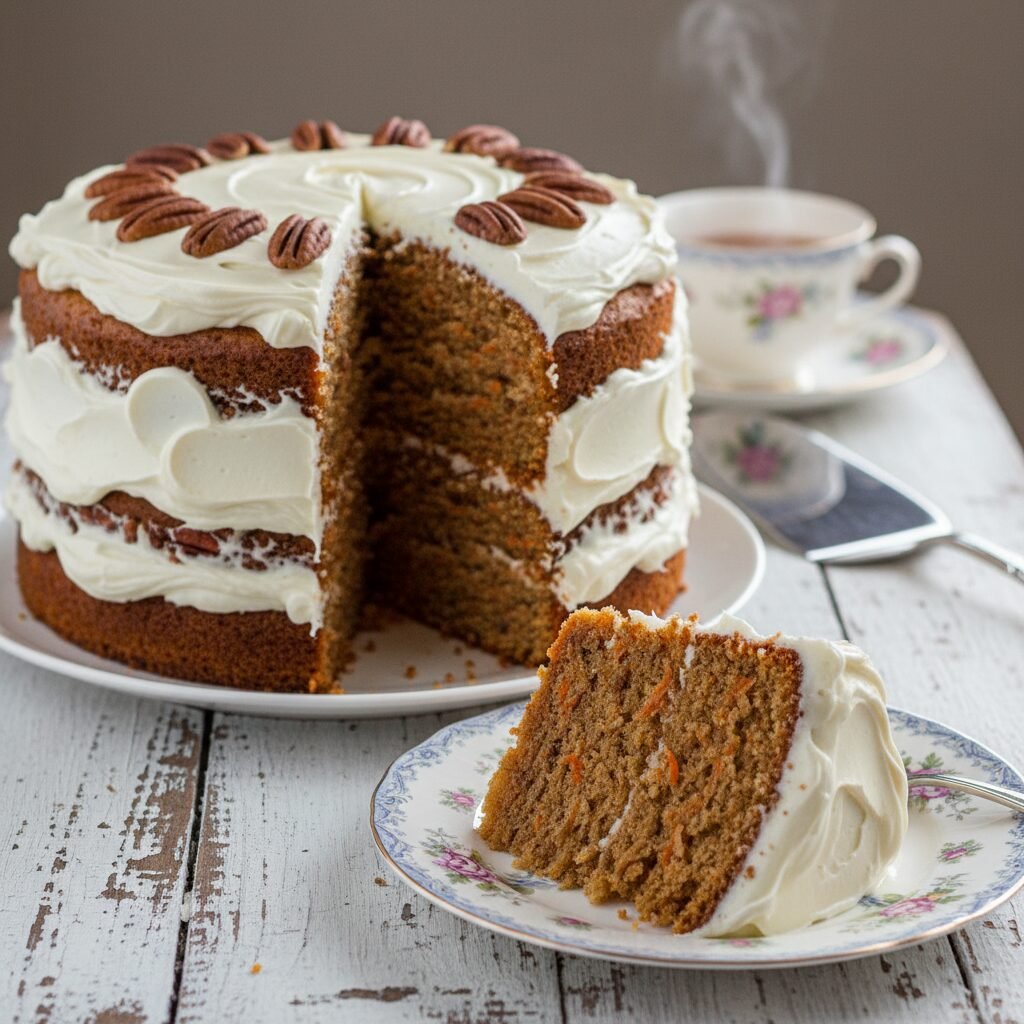
Discover the perfect balance of spice and sweetness with this incredibly moist carrot layer cake. Featuring fresh carrots, warm autumn spices, and a luscious, velvety vanilla bean buttercream, this recipe elevates a classic dessert into a show-stopping masterpiece perfect for any celebration.
45 minutes
35 minutes
1 hour 20 minutes
12-16 servings
Dessert
Baking
American
Vegetarian
There are few desserts that command the same level of comfort and nostalgia as a homemade carrot cake. It is a dessert that bridges the gap between a hearty, rustic bake and an elegant, tiered celebration cake. While many traditional recipes rely heavily on the tang of cream cheese frosting, this specific iteration pairs the spiced, dense crumb of the cake with a smooth, sweet, and airy vanilla bean buttercream. This choice allows the complex flavor profile of the cake itself—the warmth of cinnamon, the kick of ginger, and the earthiness of nutmeg—to truly shine without competing with the sour notes of cream cheese.
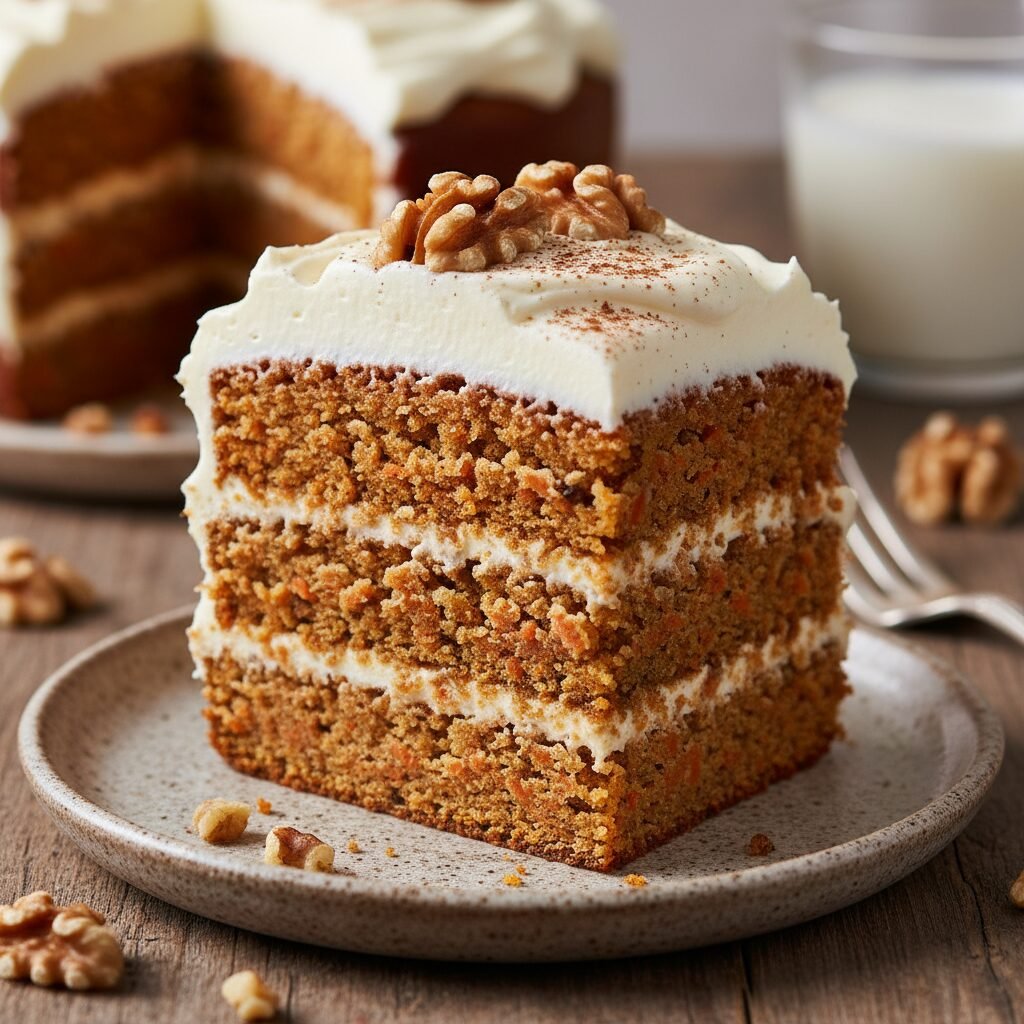
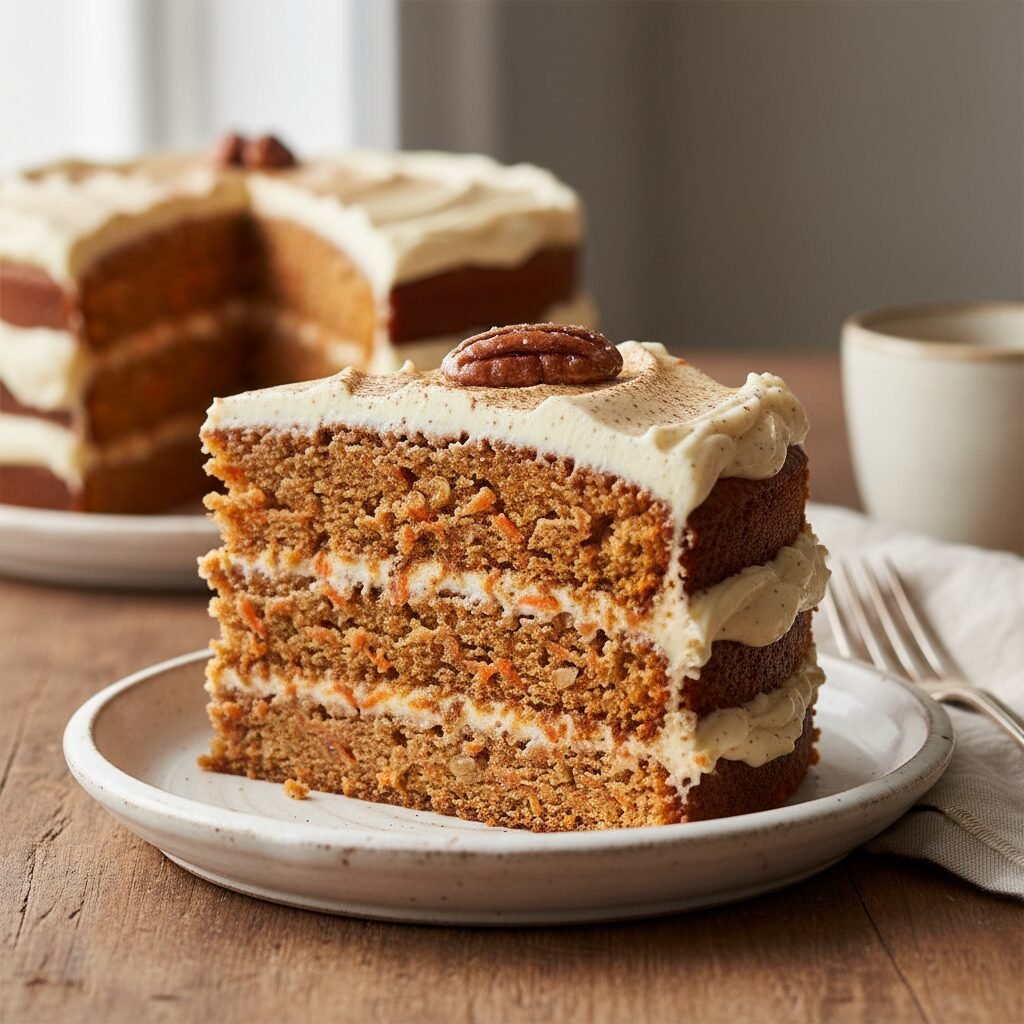
The magic of this cake lies in its texture. It is unapologetically moist, a quality achieved through a precise blend of oil, brown sugar, and freshly grated carrots. Unlike butter-based cakes that can dry out once cool, this oil-based sponge stays tender for days, making it an excellent make-ahead option for busy holidays or birthdays. As you slice into the layers, you are met with a beautiful amber-hued interior, speckled with bright orange carrot shreds and the optional crunch of toasted pecans. Whether you are a seasoned baker or a novice in the kitchen, this recipe is designed to be foolproof, delivering a bakery-quality result that looks as stunning as it tastes. It is the kind of cake that demands a second slice and becomes the requested favorite at every family gathering.
History & Origins
The lineage of the carrot cake is as rich and textured as the dessert itself, tracing its roots back much further than the 20th-century American kitchen. Historians generally agree that the concept originated from medieval carrot puddings enjoyed in Europe. During the Middle Ages, sugar was a rare and expensive luxury, making it difficult for the average household to bake sweet treats. Carrots, however, were abundant and contain more natural sugar than almost any other vegetable (second only to sugar beets). Cooks learned to utilize this natural sweetness to create steamed puddings that were the ancestors of the modern cake.
The evolution from pudding to cake likely occurred slowly, but the dessert saw a significant resurgence during World War II. In the United Kingdom, strict rationing of sugar inspired the government to disseminate recipes that utilized carrots as a sweetener. This ‘Carrot Cake’ was a symbol of resilience and ingenuity during lean times. However, the carrot cake we recognize today—lush, layered, and frosted—is largely an American phenomenon that exploded in popularity during the 1960s and 1970s. It was marketed during the health food craze of that era; after all, if it had a vegetable in it, it had to be ‘healthy.’ While we now know that a slice is definitely an indulgence, the carrot cake cemented its place in the American culinary canon, evolving from a pragmatic solution for sugar shortages into a beloved classic found in bakeries and diners across the nation.
Why This Recipe Works
This recipe succeeds where many others fail due to the careful scientific balance of moisture-retaining ingredients and flavor developers. First and foremost, the decision to use neutral oil (like vegetable or canola) instead of butter is crucial. Oil remains liquid at room temperature, whereas butter solidifies. This means an oil-based cake feels significantly moister on the palate and retains that texture even after refrigeration. We also utilize a high ratio of dark brown sugar. Brown sugar is hygroscopic, meaning it attracts and holds water molecules, further ensuring the cake never becomes dry or crumbly.
Flavor-wise, we don’t rely solely on cinnamon. By creating a triad of spices—cinnamon, nutmeg, and ground ginger—we achieve a depth of flavor that prevents the cake from tasting one-dimensional. The addition of a small amount of applesauce or crushed pineapple (optional, but recommended in variations) can also add acidity to activate the baking soda more vigorously, resulting in a better rise. Finally, the vanilla buttercream is whipped for an extended period. This incorporates air, making it light and fluffy, which provides a necessary textural contrast to the dense, heavy crumb of the carrot cake. The result is a bite that is perfectly balanced in weight, texture, and sweetness.
Why You’ll Love This Recipe
- ✓Stays incredibly moist for days thanks to the oil and brown sugar base.
- ✓Perfectly balanced spice blend of cinnamon, nutmeg, and ginger.
- ✓Silky vanilla bean buttercream offers a lighter alternative to heavy cream cheese frosting.
- ✓Sturdy crumb structure makes it easy to stack and decorate.
- ✓Can be made ahead of time, as the flavors deepen after sitting overnight.
- ✓Versatile batter that can accommodate nuts, raisins, or coconut based on preference.
Equipment You’ll Need
- ✓Two 9-inch round cake pans
- ✓Stand mixer or electric hand mixer
- ✓Large mixing bowls
- ✓Box grater or food processor (shredding disc)
- ✓Wire cooling rack
- ✓Offset spatula
- ✓Parchment paper
- ✓Whisk
Ingredients
- ✓2 cups all-purpose flour
- ✓2 teaspoons baking soda
- ✓1/2 teaspoon fine sea salt
- ✓1 1/2 teaspoons ground cinnamon
- ✓1 teaspoon ground ginger
- ✓1/4 teaspoon ground nutmeg
- ✓1 1/4 cups neutral oil (canola or vegetable)
- ✓1 cup granulated white sugar
- ✓1 cup packed dark brown sugar
- ✓1 teaspoon pure vanilla extract
- ✓4 large eggs, room temperature
- ✓3 cups grated fresh carrots (approx. 5-6 medium carrots)
- ✓1 cup chopped pecans or walnuts (optional)
- ✓1/2 cup raisins (optional)
- ✓1 1/2 cups unsalted butter, softened (for frosting)
- ✓4-5 cups powdered sugar (for frosting)
- ✓1/4 cup heavy cream (for frosting)
- ✓2 teaspoons vanilla bean paste or extract (for frosting)
- ✓Pinch of salt (for frosting)
Instructions
- Preheat your oven to 350°F (175°C). Grease two 9-inch round cake pans with butter or cooking spray, and line the bottoms with parchment paper circles. Dust the sides with flour and tap out the excess.
- In a medium bowl, whisk together the flour, baking soda, salt, cinnamon, ginger, and nutmeg until well combined. Set aside.
- In a large bowl (or the bowl of a stand mixer), beat the oil, granulated sugar, brown sugar, and vanilla extract until the mixture is smooth and combined.
- Add the eggs one at a time, beating well after each addition to ensure they are fully emulsified into the sugar-oil mixture.
- Gradually add the dry ingredients to the wet ingredients. Mix on low speed or fold by hand with a spatula just until the flour streaks disappear. Do not overmix.
- Fold in the freshly grated carrots (and nuts/raisins if using) by hand until evenly distributed throughout the batter.
- Divide the batter evenly between the two prepared cake pans. Tap the pans gently on the counter to release any large air bubbles.
- Bake for 30-35 minutes, or until a toothpick inserted into the center comes out clean or with just a few moist crumbs attached.
- Remove cakes from the oven and let them cool in the pans for 10-15 minutes. Then, carefully invert them onto a wire rack to cool completely. They must be 100% cool before frosting.
- To make the frosting: In a stand mixer fitted with the paddle attachment, beat the softened butter on medium-high speed for about 5 minutes until it is pale and creamy.
- Reduce speed to low and gradually add the powdered sugar, one cup at a time. Once incorporated, add the heavy cream, vanilla bean paste, and salt.
- Increase speed to high and whip for another 3-4 minutes until the frosting is light, airy, and fluffy.
- To assemble: Place one cake layer on your serving plate. Spread a thick layer of frosting over the top. Place the second cake layer on top. Use the remaining frosting to cover the top and sides of the cake.
- Garnish with extra chopped nuts or carrot curls if desired. Slice and serve.
Expert Cooking Tips
- ✓Grate your own carrots. Pre-shredded store-bought carrots are dry and hard; fresh grating releases the moisture needed for the cake.
- ✓Room temperature ingredients are key. Ensure your eggs and butter (for the frosting) are at room temp for the best emulsion.
- ✓Don’t overmix the batter once the flour is added, or the gluten will develop too much, leading to a tough, rubbery cake.
- ✓Use a kitchen scale to divide the batter between pans to ensure even layers.
- ✓Chill the cake layers for 20 minutes before frosting to reduce crumbs getting caught in the icing (crumb coat).
- ✓If the frosting is too soft, refrigerate it for 10 minutes; if too stiff, add a teaspoon more heavy cream.
Substitutions and Variations
This recipe is quite forgiving and allows for several substitutions. For a gluten-free version, substitute the all-purpose flour with a high-quality 1:1 gluten-free baking flour blend that includes xanthan gum. If you want to reduce the fat content slightly, you can substitute half of the oil with unsweetened applesauce, though this will change the texture slightly to be more sponge-like and less dense. For the nuts, pecans and walnuts are traditional, but pistachios offer a unique twist. If you have a nut allergy, simply omit them or replace them with pumpkin seeds (pepitas) for crunch. While this recipe calls for vanilla frosting, you can easily swap it for a traditional cream cheese frosting by replacing half the butter with block cream cheese. For a dairy-free cake, the sponge itself is already dairy-free; you would just need to use a vegan butter stick and plant-based milk for the frosting.
Common Mistakes to Avoid
The most common mistake people make with carrot cake is using pre-packaged shredded carrots from the grocery store. These carrots are often treated with preservatives to keep them crisp and are too dry to melt into the cake batter, resulting in crunchy vegetable bits in your dessert. Another error is not measuring flour correctly; scooping the flour directly with the measuring cup packs it down, adding too much flour and drying out the cake. Always spoon and level your flour or use a scale. Finally, impatience often ruins the frosting process. If the cake is even slightly warm, the butter-based frosting will melt and slide right off the layers. Ensure the cakes are cool to the touch before assembly.
Serving Suggestions
This moist carrot layer cake is rich and flavorful, so it pairs beautifully with beverages that cut through the sweetness. Serve a slice with a hot cup of black coffee, an unsweetened latte, or a spiced chai tea to echo the cinnamon and ginger notes in the cake. For a cold option, a tall glass of cold milk is classic. If you are serving this for a dinner party, plating it with a small dollop of lightly sweetened whipped cream and a garnish of candied ginger or a cinnamon stick adds an elegant touch. It is substantial enough to stand alone but light enough to follow a heavy meal.
Storage and Reheating Tips
Because this cake uses a buttercream frosting (unlike cream cheese frosting which strictly requires refrigeration), it can be stored at cool room temperature for up to 2 days in an airtight cake carrier. However, for longer storage or in warm climates, keep it in the refrigerator for up to 5 days. The oil-based cake will not dry out in the fridge like butter cakes do. Allow the slice to come to room temperature for 15-20 minutes before eating for the best flavor and texture. You can also freeze the unfrosted cake layers for up to 3 months. Wrap them tightly in plastic wrap and then foil. Thaw overnight in the fridge before frosting.
Nutrition Facts (Estimated)
| Serving Size | 1 slice |
| Calories | 650 |
| Fat | 38g |
| Saturated Fat | 14g |
| Unsaturated Fat | 22g |
| Trans Fat | 0g |
| Cholesterol | 85mg |
| Sodium | 320mg |
| Carbohydrates | 78g |
| Fiber | 2g |
| Sugar | 55g |
| Protein | 6g |
Frequently Asked Questions
Can I make this cake ahead of time?
Absolutely. In fact, carrot cake is one of the few cakes that tastes better the next day as the spices have time to meld and the moisture distributes evenly. You can bake the layers a day in advance, wrap them, and frost the day of serving.
Why did my carrot cake sink in the middle?
Sinking usually happens if the oven door was opened too early during baking, causing a temperature drop, or if the cake was underbaked. It can also happen if there is too much leavening (baking soda) or liquid in the batter.
Can I bake this in a 9×13 pan instead of layers?
Yes, you can bake this in a standard 9×13 inch rectangular pan. You will need to adjust the baking time, likely adding 5-10 minutes. Check for doneness around the 40-minute mark.
Do I really need to peel the carrots?
Yes, peeling is recommended. The skin of the carrot can sometimes be bitter and tough, which can affect the delicate texture and flavor of the cake.
Can I use olive oil instead of vegetable oil?
You can, but be aware that extra virgin olive oil has a strong flavor that might clash with the spices. If you want to use olive oil, use a ‘light’ or ‘refined’ olive oil which has a neutral taste.
How do I make the frosting less sweet?
American buttercream is naturally sweet. To balance it, ensure you add the pinch of salt. You can also add a tiny splash of lemon juice to cut the sugar, or opt for a Swiss Meringue Buttercream recipe which is significantly less sweet and very silky.
Can I turn this recipe into cupcakes?
Yes! This batter makes excellent cupcakes. Line a muffin tin with papers and fill 2/3 full. Bake at 350°F for approximately 18-22 minutes. This recipe yields about 24 cupcakes.
Why is my frosting gritty?
Gritty frosting is usually caused by powdered sugar that wasn’t sifted, or butter that was too cold and didn’t integrate properly. Always sift your sugar and use room temperature butter.
Can I add pineapple to this recipe?
Yes, crushed pineapple is a popular addition. If you add 1/2 cup of drained crushed pineapple, you may want to slightly reduce the oil (by about 1/4 cup) to prevent the batter from becoming too wet.
Conclusion
There you have it—the blueprint for the ultimate Moist Carrot Layer Cake with Vanilla Frosting. This recipe moves beyond the standard expectations of carrot cake, offering a sophisticated interplay of textures and flavors that is sure to impress. By skipping the heavy cream cheese and opting for a fragrant vanilla bean buttercream, you allow the spices and the natural sweetness of the carrots to take center stage. Whether it is for a birthday, a holiday feast, or just a Tuesday when you need a little comfort, this cake delivers joy in every forkful. Don’t forget to pin this recipe to your favorite dessert board on Pinterest so you can easily find it whenever the craving strikes. Happy baking!