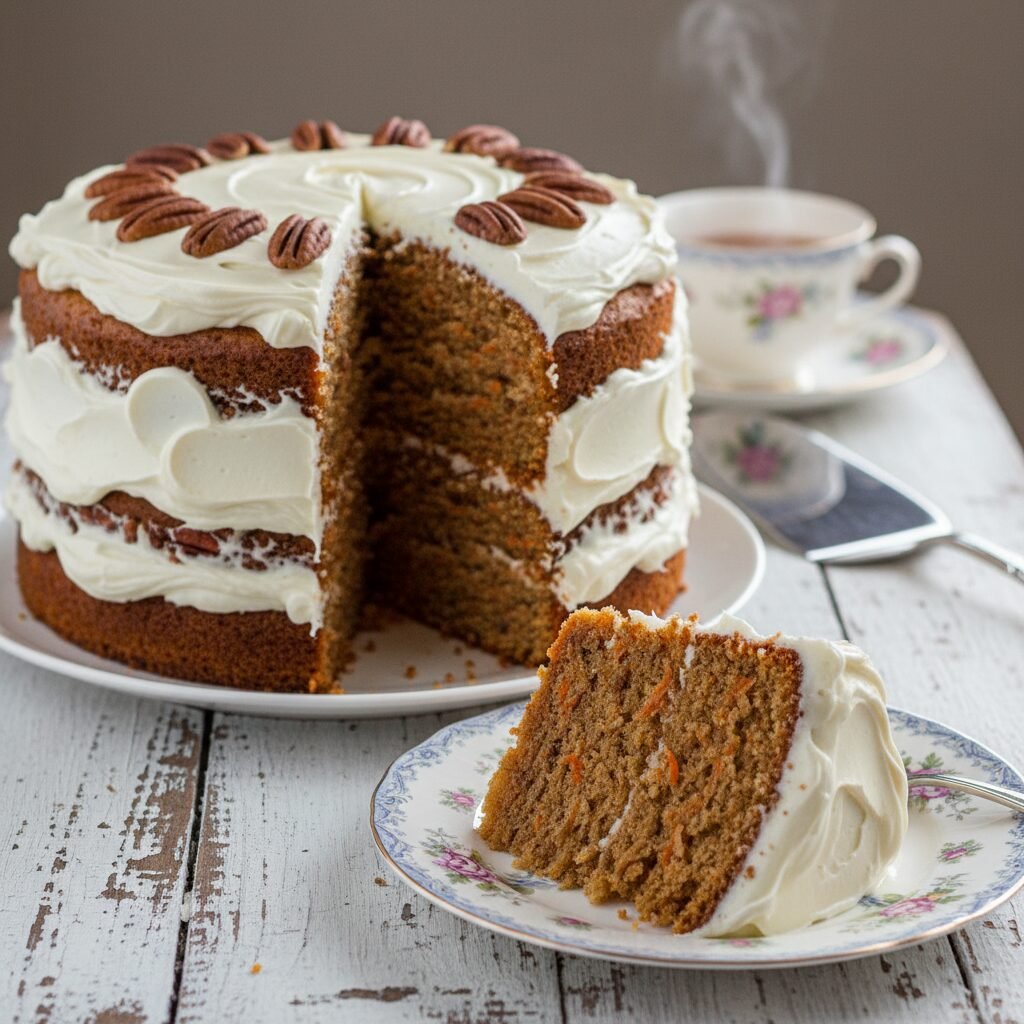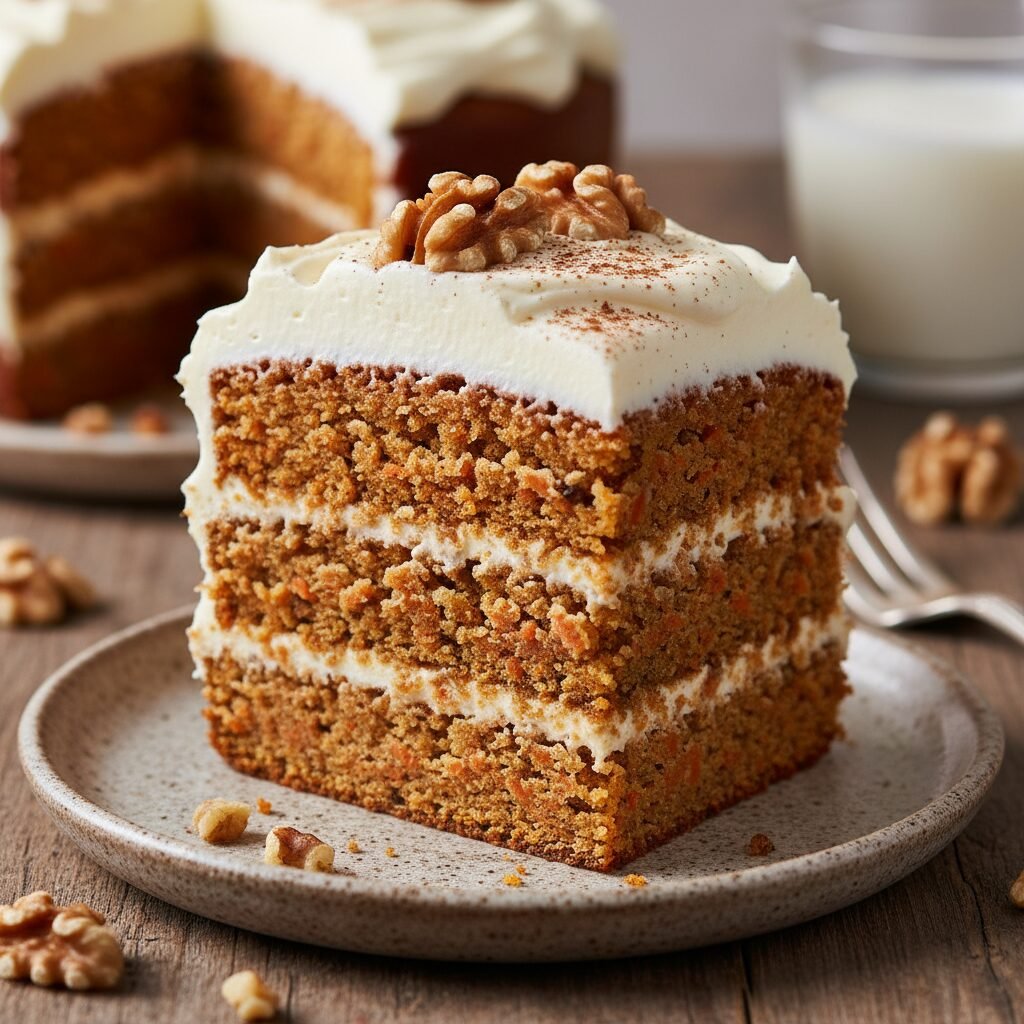
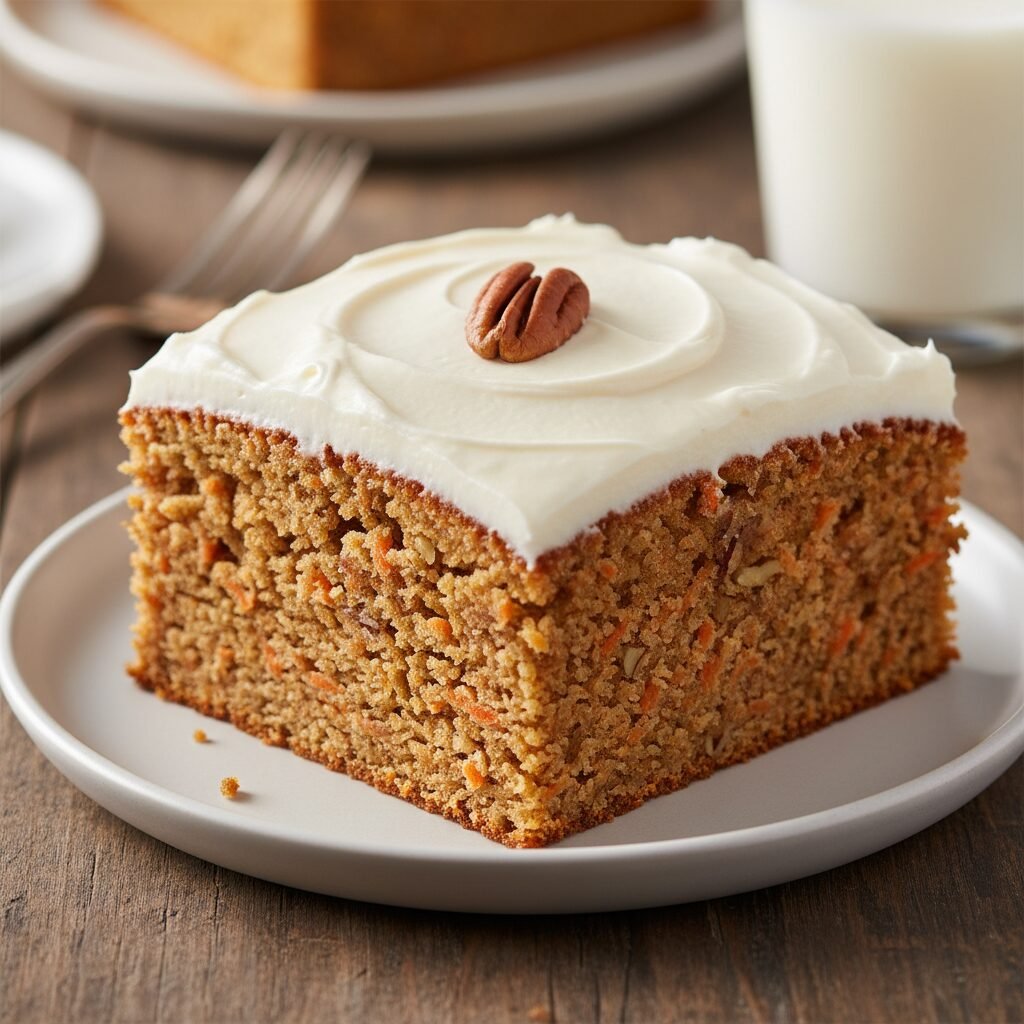
Moist Carrot Sheet Cake With Pecans Recipe
Discover the perfect balance of spice and sweetness with this incredibly moist carrot sheet cake. Loaded with fresh carrots, toasted pecans, and topped with a tangy, velvety cream cheese frosting, this recipe is an effortless crowd-pleaser that stays soft for days.
25 minutes
35 minutes
1 hour 15 minutes
15 servings
Dessert
Baking
American
Vegetarian
There is something undeniably comforting about a classic carrot cake. It bridges the gap between a humble vegetable garden harvest and a decadent dessert course with effortless grace. While layer cakes have their place in the world of patisserie, there is a rustic, home-style elegance to a sheet cake that cannot be beaten. This Moist Carrot Sheet Cake with Toasted Pecans is the culmination of years of testing to find the perfect crumb—one that is dense enough to hold its shape but tender enough to melt in your mouth. The magic lies in the balance of premium ingredients: the earthiness of freshly grated carrots, the warmth of cinnamon, ginger, and nutmeg, and the buttery crunch of pecans that have been toasted to perfection before entering the batter. Unlike towering layer cakes that require structural integrity and precise leveling, this sheet cake invites you to relax. It is baked in a single pan, retaining maximum moisture, and offers the ideal surface area for a generous, swooping layer of homemade cream cheese frosting. Whether you are hosting a large Easter brunch, a cozy autumn gathering, or simply craving a slice of nostalgia with your afternoon coffee, this recipe delivers on every front. It is not just a cake; it is a celebration of texture and flavor, where the subtle tang of the frosting cuts through the spiced sweetness of the sponge, creating a bite that is nothing short of perfection.
History & Origins
The origins of carrot cake are deeply rooted in European history, tracing back to the Middle Ages. During times when sugar was scarce and prohibitively expensive, medieval cooks looked to the natural sweetness of vegetables to flavor their puddings and desserts. Carrots, which contain more natural sugar than almost any other vegetable (second only to sugar beets), became a logical choice for sweet treats. These early iterations were more akin to steamed puddings than the fluffy cakes we know today. The concept traveled across Europe and eventually made its way to the New World. However, the modern carrot cake saw a significant resurgence during World War II in Great Britain. With strict rationing of sugar in place, the government promoted recipes using carrots to provide sweetness and moisture to baked goods. Following the war, the recipe crossed the Atlantic to the United States, where it found a new identity in the 1960s and 1970s. During this era, a growing interest in ‘health foods’ ironically propelled the carrot cake to stardom; despite its high oil and sugar content, the presence of a vegetable gave it a ‘healthy’ halo. It was during this American boom that the now-inseparable cream cheese frosting became the standard pairing, solidifying the dessert’s place in the culinary hall of fame. Today, carrot cake is a staple of American baking, beloved for its complex history and even more complex flavor profile.
Why This Recipe Works
This recipe succeeds where many others fail due to a few critical food science principles. First and foremost is the choice of fat. While butter adds flavor, it contains water and milk solids which can lead to a drier crumb in dense cakes. This recipe uses neutral oil, which is 100% fat and remains liquid at room temperature, ensuring the cake stays incredibly moist and tender for days. Secondly, the use of both granulated and brown sugar is intentional; brown sugar introduces molasses, which adds depth of flavor and acidity. This acidity reacts with the baking soda to create a superior rise and a soft, airy texture. We also insist on freshly grated carrots rather than pre-shredded ones. Pre-packaged carrots are often dry and coated in starch to prevent clumping, which robs the cake of essential moisture. By grating them fresh, we release the cellular water within the carrot, which steams the cake from the inside out as it bakes. Finally, the sheet pan format is superior for moisture retention. By spreading the batter out, the cake bakes more evenly and quickly than a deep round cake, preventing the edges from drying out before the center is cooked. The ratio of frosting to cake in a sheet pan ensures that every single bite has the perfect mix of spice and tang.
Why You’ll Love This Recipe
- ✓Stays moist for up to 5 days thanks to the oil-based batter.
- ✓Feeds a crowd easily, yielding 15-18 generous servings.
- ✓Requires no complicated layering or leveling—just bake and frost.
- ✓Features toasted pecans for a superior depth of nutty flavor.
- ✓The cream cheese frosting is whipped to a light, cloud-like consistency.
Equipment You’ll Need
- ✓9×13 inch baking pan
- ✓Large mixing bowl
- ✓Medium mixing bowl
- ✓Box grater or food processor
- ✓Electric hand mixer or stand mixer
- ✓Rubber spatula
- ✓Wire cooling rack
- ✓Measuring cups and spoons
Ingredients
- ✓2 cups all-purpose flour
- ✓2 teaspoons baking soda
- ✓1 teaspoon baking powder
- ✓1/2 teaspoon salt
- ✓2 teaspoons ground cinnamon
- ✓1/2 teaspoon ground nutmeg
- ✓1/2 teaspoon ground ginger
- ✓1 1/4 cups neutral oil (vegetable or canola)
- ✓1 cup granulated sugar
- ✓1 cup packed light brown sugar
- ✓4 large eggs, room temperature
- ✓1 tablespoon pure vanilla extract
- ✓3 cups freshly grated carrots (approx. 5-6 medium carrots)
- ✓1 cup pecans, chopped and toasted
- ✓8 oz cream cheese, softened (for frosting)
- ✓1/2 cup unsalted butter, softened (for frosting)
- ✓3 cups powdered sugar (for frosting)
- ✓1 teaspoon vanilla extract (for frosting)
- ✓Pinch of salt (for frosting)
Instructions
- Preheat your oven to 350°F (175°C). Grease a 9×13 inch baking pan with non-stick spray or butter, and line the bottom with parchment paper for easy removal.
- Spread the chopped pecans on a small baking sheet and toast in the preheating oven for 5-7 minutes until fragrant. Watch them closely so they do not burn. Remove and let cool completely.
- In a medium bowl, whisk together the flour, baking soda, baking powder, salt, cinnamon, nutmeg, and ginger until well combined and no lumps remain. Set aside.
- In a large bowl, whisk together the oil, granulated sugar, and brown sugar until the mixture is smooth and combined. It will look like wet sand.
- Add the eggs one at a time, whisking well after each addition. Stir in the vanilla extract.
- Gradually add the dry flour mixture to the wet ingredients. Use a rubber spatula to mix just until the flour streaks disappear. Do not overmix.
- Gently fold in the freshly grated carrots and the cooled toasted pecans until evenly distributed throughout the batter.
- Pour the batter into the prepared baking pan and smooth the top with a spatula. Tap the pan gently on the counter to release any large air bubbles.
- Bake for 30-35 minutes, or until a toothpick inserted into the center comes out clean or with just a few moist crumbs attached.
- Remove the cake from the oven and place the pan on a wire rack. Allow the cake to cool completely in the pan. This is crucial; frosting a warm cake will cause the frosting to melt.
- While the cake cools, make the frosting. In a large bowl using a handheld or stand mixer, beat the softened cream cheese and butter together on medium-high speed until smooth and creamy (about 2-3 minutes).
- Reduce the mixer speed to low and gradually add the powdered sugar, one cup at a time. Add the vanilla and pinch of salt. Once incorporated, increase speed to high and whip for 2 minutes until fluffy.
- Once the cake is fully cool, spread the frosting generously over the top. Garnish with extra pecan halves or a dusting of cinnamon if desired. Slice and serve.
Expert Cooking Tips
- ✓Always grate your carrots fresh using the medium holes of a box grater. Pre-shredded carrots are too dry and hard.
- ✓Ensure your eggs, cream cheese, and butter are at room temperature. This ensures a smooth batter and a lump-free frosting.
- ✓Do not skip toasting the pecans. It releases their natural oils and keeps them crunchy inside the soft cake.
- ✓Be careful not to overmix the batter once the flour is added, as this can develop gluten and make the cake tough.
- ✓If the top of the cake is browning too quickly in the oven, loosely tent it with aluminum foil for the last 10 minutes.
- ✓For a flatter cake surface, you can use cake strips around the pan, though the rustic slight dome is typical for sheet cakes.
Substitutions and Variations
This recipe is quite versatile if you need to make swaps. For the flour, you can use a 1:1 gluten-free baking flour blend with excellent results; just ensure the blend contains xanthan gum. If you have a nut allergy, simply omit the pecans or substitute them with raisins or dried cranberries for texture. Walnuts are a classic alternative to pecans if you prefer their slightly more bitter profile. For the oil, you can substitute half of the oil with unsweetened applesauce to reduce the fat content, though the cake will be slightly denser. If you are out of brown sugar, you can use all white sugar mixed with 1 tablespoon of molasses. For a dairy-free version, use a high-quality plant-based cream cheese and butter stick alternative for the frosting, ensuring they are stable enough to whip.
Common Mistakes to Avoid
The most common mistake people make is using pre-bagged shredded carrots. These are often thick, dry, and do not soften enough during baking, leading to a crunchy texture and a dry cake. Another error is measuring flour incorrectly; scooping directly into the bag packs the flour down, leading to too much flour and a dry cake. Always spoon the flour into the cup and level it off. Regarding the frosting, a common pitfall is using cold cream cheese or butter, which results in lumpy frosting that won’t smooth out. Conversely, if the butter is melted or too soft, the frosting will be soupy and won’t hold its shape. Finally, impatience is the enemy—frosting the cake before it is 100% cool will result in a melted, sliding mess.
Serving Suggestions
This sheet cake is rich and flavorful, so it pairs beautifully with beverages that cut through the sweetness. Serve a square with a hot cup of black coffee or an Earl Grey tea to balance the spices. For an extra indulgent dessert, serve the cake slightly chilled with a scoop of vanilla bean ice cream or a dollop of unsweetened whipped cream. It is perfect for potlucks as it can be sliced into smaller squares for a crowd. If serving for a holiday brunch, garnish with edible flowers or candied carrot strips for a festive touch.
Storage and Reheating Tips
Because of the cream cheese frosting, this cake must be stored in the refrigerator. However, it is best eaten at room temperature. Store leftovers in the baking pan covered tightly with plastic wrap or transfer slices to an airtight container. It will keep well in the fridge for up to 5 days. When ready to eat, let the slice sit on the counter for 15-20 minutes to take the chill off. This cake also freezes beautifully. You can freeze the unfrosted cake wrapped in plastic wrap and foil for up to 3 months. You can also freeze frosted slices: place them on a baking sheet to freeze solid, then wrap them individually in plastic wrap and place in a freezer bag. Thaw in the fridge overnight before serving.
Nutrition Facts (Estimated)
| Serving Size | 1 slice |
| Calories | 480 |
| Fat | 28g |
| Saturated Fat | 8g |
| Unsaturated Fat | 18g |
| Trans Fat | 0g |
| Cholesterol | 45mg |
| Sodium | 310mg |
| Carbohydrates | 54g |
| Fiber | 2g |
| Sugar | 38g |
| Protein | 5g |
Frequently Asked Questions
Can I make this cake ahead of time?
Yes, this cake actually tastes better the next day as the spices have time to meld. You can bake it one day in advance, frost it, and store it in the fridge.
Why did my carrot cake sink in the middle?
Sinking usually happens if the cake was underbaked or if the oven door was opened too early, causing the temperature to drop. It can also result from too much leavening (baking soda/powder).
Can I add pineapple or coconut?
Absolutely. You can add 1/2 cup of crushed pineapple (drained well) or sweetened shredded coconut. If adding pineapple, you may need to bake it for an extra 5 minutes due to the added moisture.
Do I have to peel the carrots?
It is recommended to peel the carrots for the best texture and color. Unpeeled carrots can sometimes add a bitter taste and the skin can be tough.
Can I bake this in round pans instead?
Yes, this batter will fit into two 9-inch round cake pans. Reduce the baking time to roughly 25-30 minutes and check for doneness early.
Why is my frosting runny?
Runny frosting usually means the butter was too warm or melted, or the cream cheese was the tub variety (which has more water) instead of the brick variety. Use full-fat brick cream cheese.
Can I reduce the sugar in the cake?
You can reduce the sugar by about 1/4 cup without ruining the structure, but reducing it too much will affect the moisture and texture of the cake.
Is this cake suitable for cupcakes?
Yes, this recipe makes excellent cupcakes. It will yield about 24 cupcakes. Bake at 350°F for 18-22 minutes.
Conclusion
In a world of complicated desserts and fleeting food trends, this Moist Carrot Sheet Cake with Pecans stands as a testament to the power of classic, honest baking. It is a recipe that rewards you with minimal effort and maximum flavor, filling your kitchen with the intoxicating aroma of warm spices. Whether you are a novice baker or a seasoned pro, this sheet cake is forgiving, reliable, and utterly delicious. So grab your box grater, toast those pecans, and get ready to bake a dessert that your friends and family will be requesting for years to come. Enjoy the process and every single bite!