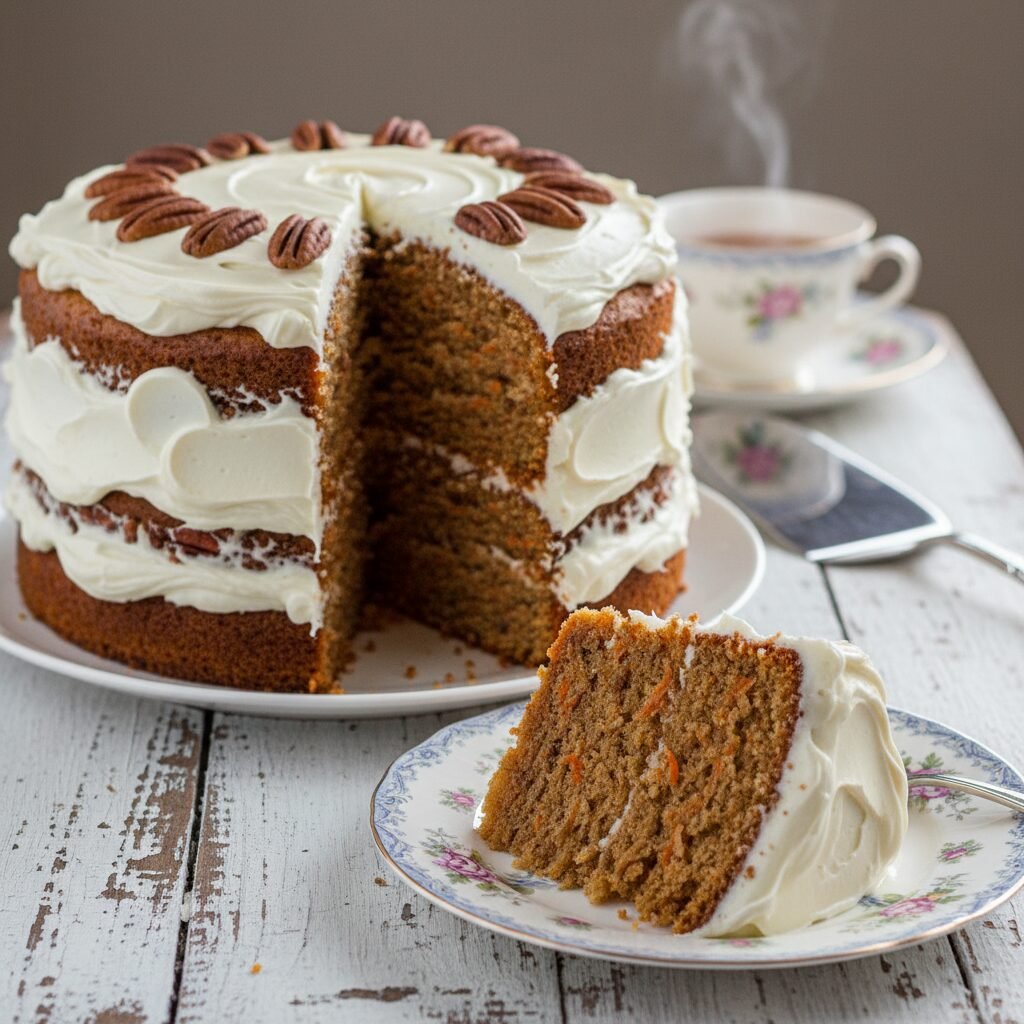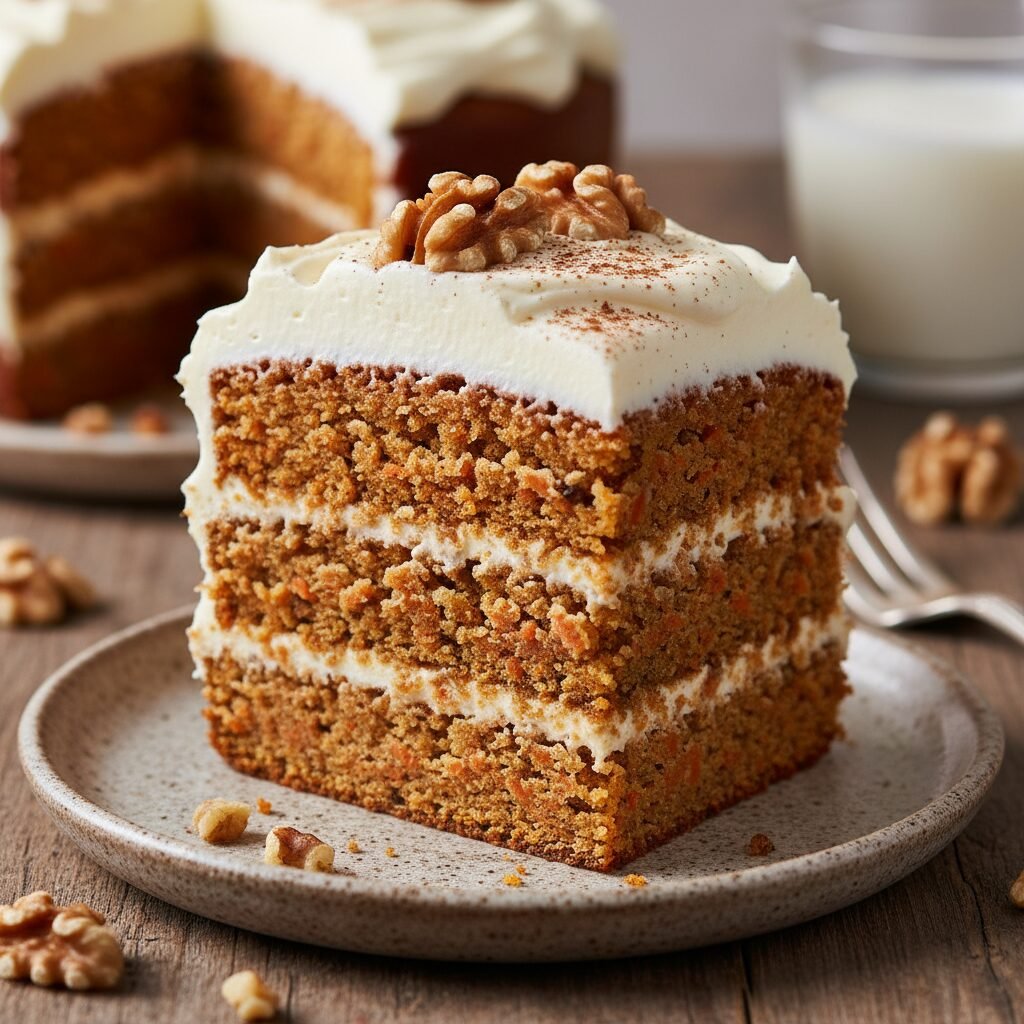
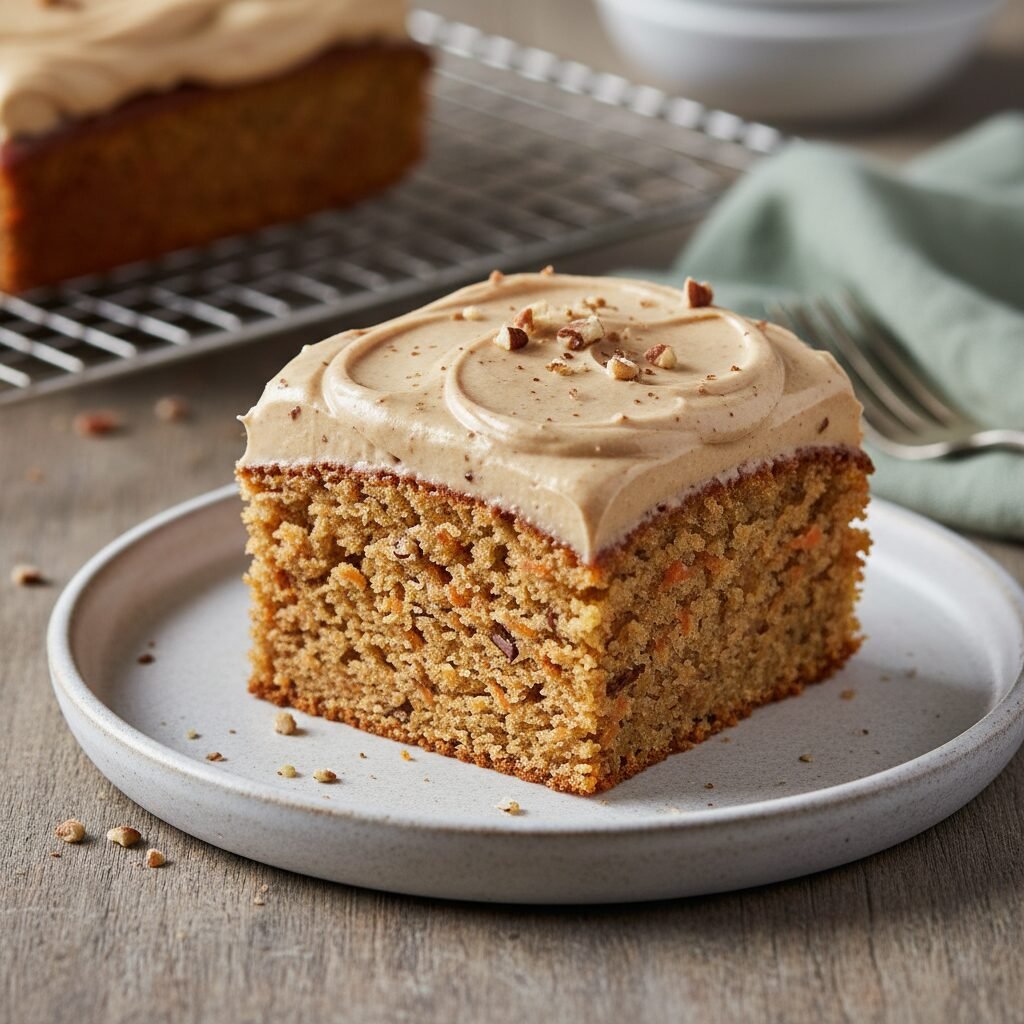
Moist Carrot Snack Cake With Brown Butter Frosting Recipe
This incredibly moist carrot snack cake is spiced to perfection and topped with a nutty, rich brown butter frosting that steals the show. It’s an easy, one-layer dessert that requires no fancy equipment but delivers gourmet flavor in every bite.
20 minutes
35 minutes
55 minutes
9-12 servings
Dessert
Baking
American
Vegetarian
There is something undeniably comforting about a snack cake. Unlike their towering, multi-layered cousins that require hours of assembly and decoration, a snack cake is humble, accessible, and ready to be devoured straight from the pan. This Moist Carrot Snack Cake with Brown Butter Frosting is the epitome of rustic elegance. It takes the classic, beloved flavors of traditional carrot cake—warm cinnamon, fresh sweet carrots, and a hint of vanilla—and simplifies them into a tender, single-layer treat that stays moist for days.
The secret to this cake’s incredible texture lies in the balance of oil and brown sugar, which ensures a soft, plush crumb that never dries out. But the real magic happens with the frosting. Instead of a standard cream cheese topping, we elevate the experience with a brown butter frosting. By cooking the butter until the milk solids toast to a golden hazelnut color, we unlock deep, toffee-like notes that perfectly complement the earthy sweetness of the carrots and pecans. This recipe is designed for both the novice baker and the seasoned pro, proving that you don’t need a special occasion to bake something truly spectacular. Whether enjoyed with a morning cup of coffee or served as a cozy after-dinner dessert, this cake is guaranteed to become a permanent fixture in your baking rotation.
History & Origins
The history of carrot cake is a fascinating journey that dates back much further than the 1970s health food craze often associated with it. Historians believe the origins can be traced to the Middle Ages in Europe, where sweeteners were scarce and expensive. Carrots, which contain more natural sugar than almost any other vegetable (second only to sugar beets), were frequently used in sweet puddings and desserts as a substitute for sugar. These early ‘carrot puddings’ were often steamed and served with sauces, bearing little resemblance to the fluffy cakes we know today.
The concept evolved significantly over the centuries. During World War II, when rationing limited the availability of luxury ingredients like sugar and butter in the UK, the Ministry of Food disseminated recipes for carrot cake to encourage the use of the widely available vegetable. However, the modern American version—rich, dense, and slathered in frosting—really took off in the 1960s and 70s. It was during this era that carrot cake became a bistro staple, often perceived as a ‘healthier’ alternative to chocolate cake due to its vegetable content, despite being laden with oil and sugar.
The ‘snack cake’ format itself is a nod to mid-century American baking culture, where convenience and ease were paramount. Housewives sought recipes that could be mixed in one bowl and baked in a square pan, ready for lunchboxes or after-school treats. This recipe honors that lineage, blending the medieval ingenuity of using carrots for sweetness with the mid-century practicality of the snack cake, all updated with the modern, gourmet twist of browned butter.
Why This Recipe Works
This recipe succeeds because it meticulously balances moisture content and flavor complexity. First, the choice of oil over butter in the cake batter is crucial. Oil is 100% fat and remains liquid at room temperature, which coats the flour proteins more effectively than butter (which contains water). This prevents excessive gluten formation, resulting in a tender, soft crumb that stays moist even after sitting out. We also use a high ratio of brown sugar, which is hygroscopic; it draws moisture from the air, further ensuring the cake doesn’t dry out.
Secondly, the flavor profile is built on contrast. The cake itself is moderately spiced with cinnamon, ginger, and nutmeg, providing a warm backdrop for the sweet carrots. However, the game-changer is the brown butter frosting. Science tells us that the Maillard reaction—the chemical reaction between amino acids and reducing sugars that gives browned food its distinctive flavor—adds complex, nutty, and toasted notes to the butter. When this savory-sweet butter is whipped with powdered sugar, it cuts through the sweetness of the cake, offering a sophisticated flavor profile that standard sugary frostings simply cannot match. The addition of toasted pecans adds a necessary textural crunch to break up the softness of the cake and creamy frosting.
Why You’ll Love This Recipe
- ✓Requires only one bowl for the batter—no stand mixer needed.
- ✓Brown butter frosting adds a gourmet, nutty depth that elevates the simple cake.
- ✓Stays incredibly moist for up to 4-5 days due to the oil-based batter.
- ✓Versatile recipe that allows for mix-ins like raisins, coconut, or pineapple.
- ✓Perfect ratio of spice to sweet, ensuring it’s not cloying.
Equipment You’ll Need
- ✓8×8 or 9×9 inch square baking pan
- ✓Large mixing bowl
- ✓Whisk
- ✓Rubber spatula
- ✓Box grater or food processor
- ✓Small saucepan (light-colored bottom preferred for browning butter)
- ✓Measuring cups and spoons
Ingredients
- ✓1 1/2 cups all-purpose flour
- ✓1 tsp baking powder
- ✓1/2 tsp baking soda
- ✓1/2 tsp salt
- ✓1 1/2 tsp ground cinnamon
- ✓1/2 tsp ground ginger
- ✓1/4 tsp ground nutmeg
- ✓3/4 cup vegetable or canola oil
- ✓1 cup packed light brown sugar
- ✓1/4 cup granulated sugar
- ✓2 large eggs, room temperature
- ✓1 tsp pure vanilla extract
- ✓1 1/2 cups freshly grated carrots (approx. 3-4 medium carrots)
- ✓1/2 cup chopped pecans or walnuts (optional)
- ✓FOR THE FROSTING:
- ✓1/2 cup (1 stick) unsalted butter
- ✓1 1/2 cups powdered sugar, sifted
- ✓1-2 tbsp milk or heavy cream
- ✓1 tsp vanilla extract
- ✓Pinch of salt
Instructions
- 1. Preheat your oven to 350°F (175°C). Grease an 8×8 or 9×9 inch square baking pan with non-stick spray or line it with parchment paper for easy removal.
- 2. In a medium bowl, whisk together the flour, baking powder, baking soda, salt, cinnamon, ginger, and nutmeg until well combined. Set aside.
- 3. In a large mixing bowl, whisk together the oil, brown sugar, granulated sugar, eggs, and vanilla extract. Whisk vigorously for about 1-2 minutes until the mixture is smooth and slightly emulsified.
- 4. Gently fold the freshly grated carrots into the wet ingredients using a rubber spatula.
- 5. Add the dry ingredients to the wet mixture. Stir gently until just combined and no streaks of flour remain. Be careful not to overmix. Fold in the chopped nuts if using.
- 6. Pour the batter into the prepared baking pan and smooth the top with your spatula. Bake for 30-35 minutes, or until a toothpick inserted into the center comes out clean or with just a few moist crumbs.
- 7. While the cake bakes, prepare the brown butter. Place the butter in a small, light-colored saucepan over medium heat. Melt the butter, swirling the pan occasionally. It will foam, then the foam will subside, and you will see milk solids forming at the bottom. Continue cooking until the solids turn a golden amber color and the butter smells nutty and fragrant (about 5-8 minutes). Remove from heat immediately and pour into a heat-proof bowl to stop the cooking. Let it cool until it solidifies but is still soft (about 20-30 minutes in the fridge or longer at room temp).
- 8. Once the cake is done, remove it from the oven and let it cool completely in the pan on a wire rack. Frosting a warm cake will cause the frosting to melt.
- 9. To make the frosting, take the cooled (softened) brown butter and whisk it with the powdered sugar, vanilla, salt, and 1 tablespoon of milk. If the frosting is too stiff, add more milk one teaspoon at a time until it reaches a spreadable consistency.
- 10. Spread the frosting generously over the cooled cake. Top with extra chopped pecans if desired. Slice into squares and serve.
Expert Cooking Tips
- ✓Always grate your own carrots. Pre-packaged shredded carrots are too dry and thick, which will result in a dry cake with crunchy vegetable bits.
- ✓Use a light-colored saucepan when browning butter. This allows you to see the color change of the milk solids so you don’t accidentally burn them.
- ✓Don’t overmix the batter once the flour is added. Overmixing develops gluten and can make the cake tough instead of tender.
- ✓Room temperature eggs incorporate better into the batter, creating a more uniform emulsion and a better rise.
- ✓Let the brown butter cool back to a solid (but soft) state before making the frosting. If it’s liquid, you’ll end up with a glaze rather than a fluffy frosting.
Substitutions and Variations
This recipe is quite forgiving and adaptable to various dietary needs and pantries. For the flour, you can easily substitute a 1:1 gluten-free all-purpose baking flour blend; look for one that contains xanthan gum for the best structure. If you want a heartier texture, you can replace half of the all-purpose flour with whole wheat pastry flour. For the oil, melted coconut oil or applesauce can be used, though applesauce will make the cake denser and less rich. If you are out of brown sugar, you can make your own by mixing 1 cup of white sugar with 1 tablespoon of molasses. For the nuts, walnuts are a classic alternative to pecans, but you can also omit them entirely for a nut-free version or swap them for raisins or dried cranberries. If you need a dairy-free frosting, you can use a vegan butter stick (though browning it may not yield the same results as dairy butter solids) or simply use a standard dairy-free cream cheese frosting.
Common Mistakes to Avoid
The most common mistake with carrot cake is using pre-shredded carrots from the grocery store. These are often treated with preservatives to keep them crisp and lack the moisture necessary for the cake’s chemistry. Another frequent error is burning the brown butter. The transition from ‘perfectly nutty’ to ‘burnt’ happens in seconds, so never walk away from the stove while browning butter. Additionally, impatience often leads to frosting the cake while it is still warm. This will cause the fat in the frosting to melt, resulting in a greasy, sliding mess rather than a fluffy layer. Lastly, be careful with measuring flour; scooping directly with the cup can pack the flour down, leading to a dry cake. Instead, spoon the flour into the cup and level it off.
Serving Suggestions
This snack cake is versatile enough to be served at various times of the day. It pairs beautifully with a hot cup of coffee or tea for a mid-morning break. For a more decadent dessert presentation, serve a slightly larger square with a scoop of vanilla bean ice cream or a dollop of lightly sweetened whipped cream. The contrast between the cold ice cream and the spiced cake is delightful. If you are serving this at a brunch or potluck, consider cutting the cake into smaller, bite-sized squares and placing a single candied pecan half on top of each for an elegant finish. It also travels exceptionally well, making it a perfect candidate for picnics or office parties.
Storage and Reheating Tips
Because this cake is oil-based and contains carrots, it stays moist for a long time. It can be stored in an airtight container at room temperature for up to 3 days. However, if your kitchen is particularly warm, or if you want to extend its shelf life, store it in the refrigerator for up to a week. The frosting will firm up in the fridge, so it is best to let the slices sit at room temperature for 15-20 minutes before eating to allow the frosting to soften and the flavors to open up. For long-term storage, you can freeze the unfrosted cake or even the frosted slices. Wrap individual slices tightly in plastic wrap and then foil. They will keep in the freezer for up to 3 months. Thaw overnight in the refrigerator or on the counter for a few hours.
Nutrition Facts (Estimated)
| Serving Size | 1 square |
| Calories | 420 |
| Fat | 24g |
| Saturated Fat | 8g |
| Unsaturated Fat | 15g |
| Trans Fat | 0g |
| Cholesterol | 45mg |
| Sodium | 210mg |
| Carbohydrates | 48g |
| Fiber | 2g |
| Sugar | 32g |
| Protein | 4g |
Frequently Asked Questions
Can I bake this in a round cake pan?
Yes, you can use a 9-inch round cake pan. The baking time will be similar, but keep an eye on it around the 30-minute mark.
Why did my cake sink in the middle?
Sinking usually happens if the oven door was opened too early, causing a temperature drop, or if the cake was underbaked. It can also result from over-leavening (too much baking powder/soda).
Can I reduce the sugar in this recipe?
You can reduce the sugar by about 1/4 cup without drastically affecting the texture, but keep in mind that sugar provides moisture and structure, not just sweetness.
Do I have to use brown butter?
No, you can use regular softened butter for a standard buttercream, or use a cream cheese frosting. However, the brown butter adds a unique depth of flavor.
Can I make this recipe into cupcakes?
Absolutely. This batter works well for cupcakes. Line a muffin tin with liners and bake for approximately 18-22 minutes at 350°F.
How do I know when the butter is browned enough?
Look for a medium amber color and a strong nutty aroma. The sizzling sound will also quiet down significantly when the water has evaporated and the browning begins.
Can I add pineapple to this cake?
Yes, crushed pineapple is a popular addition. Drain it very well before adding, or the excess liquid may make the cake soggy.
Is it necessary to sift the powdered sugar?
Yes, sifting is highly recommended for frostings to ensure there are no gritty lumps, resulting in a silky smooth texture.
Conclusion
This Moist Carrot Snack Cake with Brown Butter Frosting is the kind of recipe that reminds us why we love to bake. It transforms humble ingredients into something deeply satisfying and luxurious. The warmth of the spices, the tenderness of the crumb, and the nutty richness of the frosting create a harmony of flavors that is hard to beat. Whether you are an experienced baker looking for a reliable go-to or a beginner wanting to impress, this cake delivers on all fronts. We hope this recipe brings a little slice of comfort to your kitchen. Don’t forget to share your creations and tag us on social media—we love seeing how you make these recipes your own!