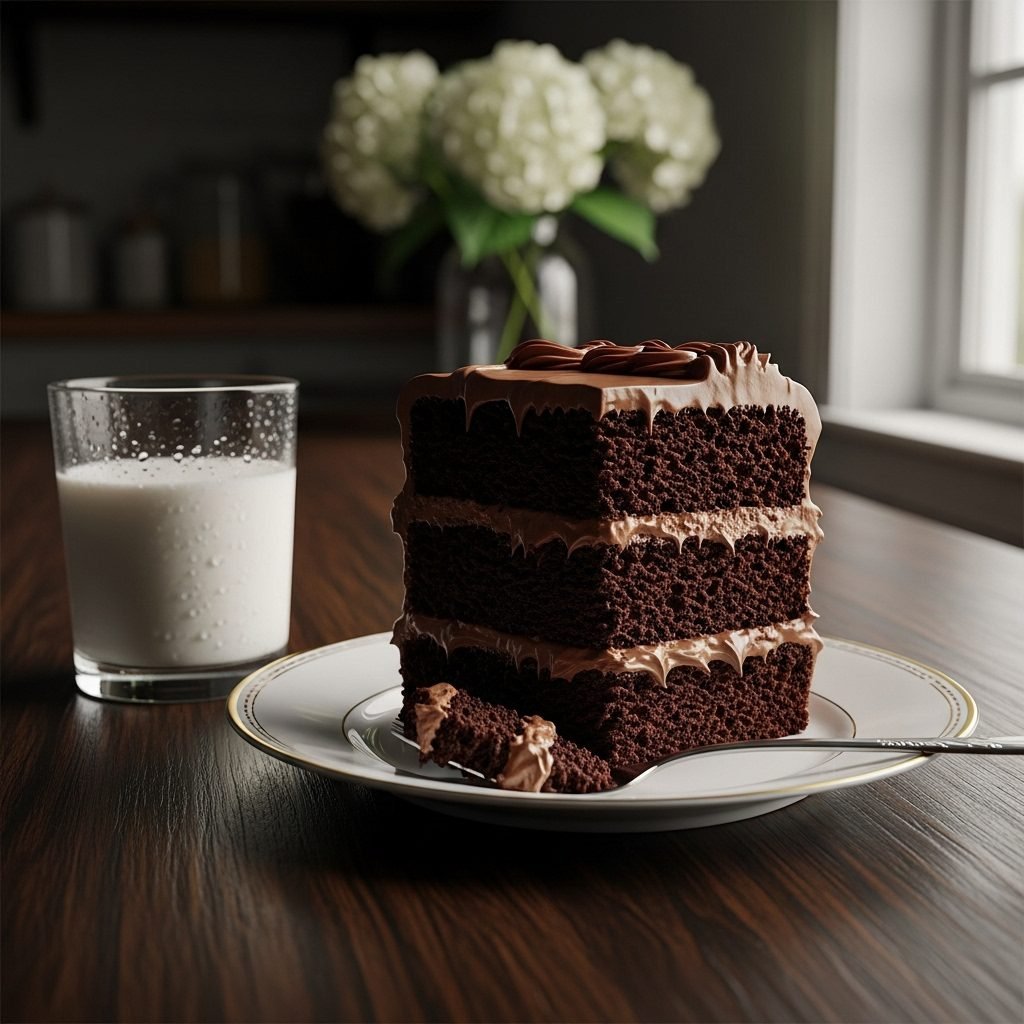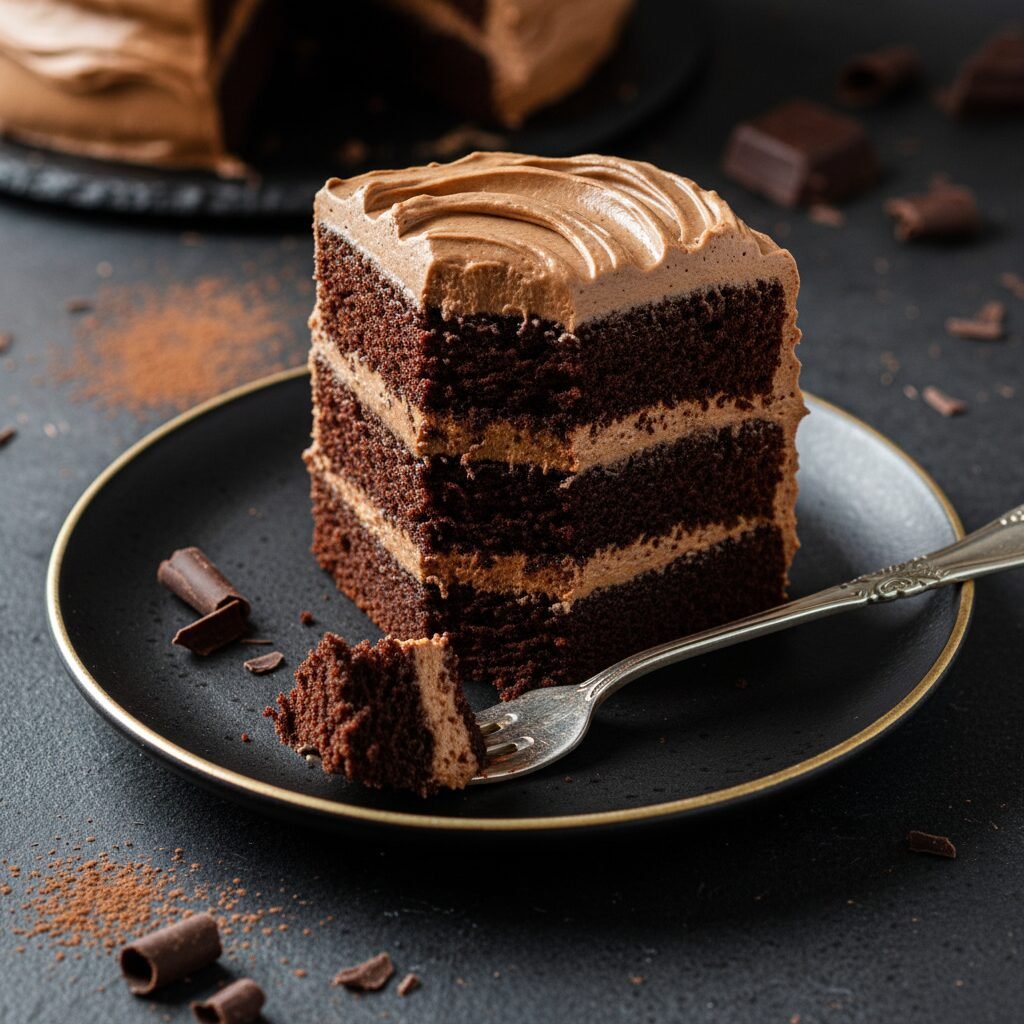
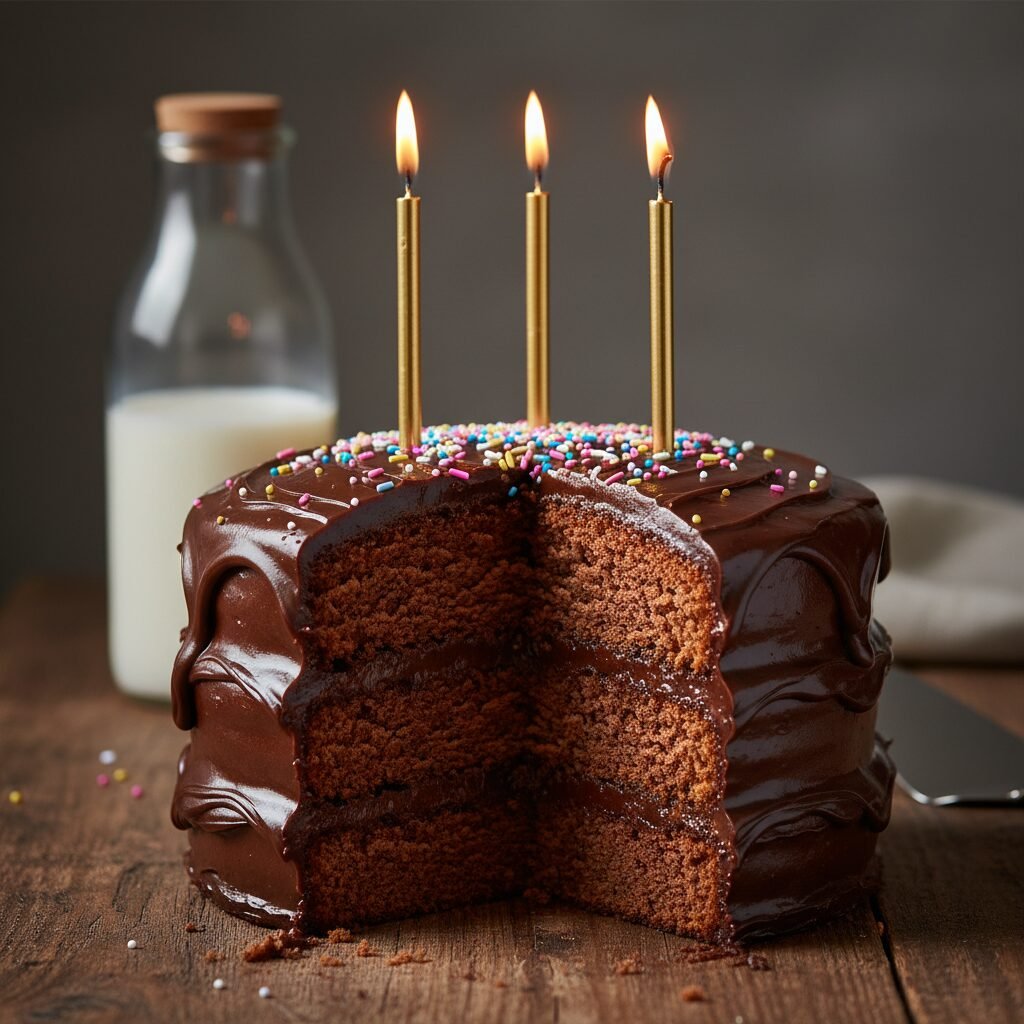
Moist Chocolate Birthday Cake For Three Layers Recipe
Stop searching for the perfect birthday treat because this is the only chocolate cake recipe you will ever need. Featuring three towering layers of impossibly moist, dark chocolate sponge smothered in a silky ganache buttercream, this cake is the definition of celebration.
30 minutes
35 minutes
1 hour 5 minutes
12-16 servings
Dessert
Baking
American
Vegetarian
There is something undeniably magical about a homemade birthday cake. It is the centerpiece of the celebration, the moment everyone waits for, and the vessel for our fondest wishes as we blow out the candles. But let’s be honest: we have all suffered through dry, crumbly, or lackluster chocolate cakes that look better than they taste. That ends today. This recipe for a Moist Chocolate Birthday Cake For Three Layers is the result of years of testing, tweaking, and tasting to achieve the holy grail of baking: a crumb that is tender but sturdy, a flavor that is deeply chocolatey without being bitter, and a texture that stays moist for days.
What sets this cake apart is its reliance on specific chemical reactions within the batter. We aren’t just mixing ingredients; we are engineering a masterpiece. The inclusion of hot coffee blooms the cocoa powder, awakening its complex notes, while the use of oil instead of butter ensures the cake remains soft even straight from the fridge. Whether you are baking for a child’s superhero party, a sophisticated adult dinner, or just because you survived a long week, this cake delivers. It is decadent, rich, and unapologetically indulgent. Prepare to become the designated family baker, because once your friends and family taste a slice of this three-layer wonder, they will never accept a store-bought substitute again.
History & Origins
The history of the chocolate cake is a fascinating journey that mirrors the evolution of baking technology and the availability of ingredients. While chocolate has been consumed as a beverage for millennia, dating back to the Aztecs and Mayans, its incorporation into solid cakes is a relatively modern phenomenon. In the 18th and early 19th centuries, ‘chocolate cake’ usually referred to a yellow or white cake meant to be enjoyed alongside a cup of hot chocolate. It wasn’t until 1828, when Coenraad van Houten invented the cocoa press, that cocoa powder became accessible and affordable, paving the way for chocolate to be mixed directly into the batter.
By the late 1800s, recipes for ‘Devil’s Food Cake’ began appearing in American cookbooks. These early versions were revolutionary, using baking soda to react with the natural acidity of cocoa powder, creating a reddish hue and a lighter texture. The concept of the multi-layered birthday cake, however, has roots in the German ‘Kinderfest’ celebrations of the Middle Ages, though those cakes were more bread-like. The convergence of the American love for rich chocolate cake and the European tradition of layered tortes solidified in the mid-20th century with the advent of reliable baking powders and standardized oven temperatures. Today, the three-layer chocolate cake stands as an icon of American confectionery, symbolizing abundance, joy, and the ultimate gesture of love on a birthday.
Why This Recipe Works
This recipe succeeds where others fail due to a few key scientific principles that guarantee moisture and flavor depth. First and foremost is the use of vegetable oil rather than butter. While butter provides flavor, it is 80% fat and 20% water, and it solidifies at room temperature. Oil is 100% fat and remains liquid at room temperature, which translates directly to a moist cake sensation on the palate. We compensate for the lack of butter flavor by using buttermilk, which adds a tangy complexity and helps tenderize the gluten strands for a softer crumb.
Secondly, the addition of boiling water (or hot coffee) is non-negotiable. Pouring boiling liquid over the batter at the very end does two things: it ‘blooms’ the cocoa powder, dissolving the particles completely to release their full flavor potential, and it creates a very thin batter. This high liquid content turns into steam during baking, which provides lift and keeps the crumb incredibly hydrated. Finally, the combination of both baking powder and baking soda ensures the cake rises despite the heavy, wet batter, resulting in three perfectly flat, stackable layers that don’t require excessive trimming.
Why You’ll Love This Recipe
- ✓Stays moist for up to 5 days thanks to the oil-based batter.
- ✓Deep, intense chocolate flavor enhanced by hot coffee.
- ✓Three impressive layers create a bakery-style presentation.
- ✓Forgiving batter that doesn’t require a stand mixer.
- ✓Pairs perfectly with buttercream, ganache, or cream cheese frosting.
Equipment You’ll Need
- ✓Three 8-inch round cake pans
- ✓Large mixing bowl
- ✓Whisk
- ✓Sifter or fine-mesh sieve
- ✓Parchment paper
- ✓Wire cooling racks
- ✓Offset spatula
- ✓Measuring cups and spoons
Ingredients
- ✓3 cups all-purpose flour
- ✓3 cups granulated sugar
- ✓1 1/2 cups unsweetened cocoa powder (natural or Dutch-process)
- ✓1 tablespoon baking soda
- ✓1 1/2 teaspoons baking powder
- ✓1 1/2 teaspoons salt
- ✓4 large eggs, room temperature
- ✓1 1/2 cups buttermilk, room temperature
- ✓1 1/2 cups warm water
- ✓1/2 cup vegetable oil or canola oil
- ✓2 teaspoons pure vanilla extract
- ✓1 cup boiling water (or boiling hot coffee for deeper flavor)
Instructions
- Preheat your oven to 350°F (175°C). Grease three 8-inch round cake pans with butter or cooking spray. Line the bottoms with parchment paper and dust the sides with cocoa powder to prevent sticking.
- In a large mixing bowl, sift together the flour, sugar, cocoa powder, baking soda, baking powder, and salt. Whisk well to ensure all dry ingredients are evenly distributed.
- In a separate medium bowl, whisk together the eggs, buttermilk, warm water, oil, and vanilla extract until combined.
- Pour the wet ingredients into the dry ingredients. Beat on medium speed with a hand mixer or stand mixer (or whisk vigorously by hand) for about 2 minutes. The batter should be smooth.
- Carefully pour the boiling water (or hot coffee) into the batter. Stir by hand with a whisk or spatula until combined. The batter will be very thin and liquidy; this is normal and essential for moisture.
- Divide the batter evenly among the three prepared cake pans. If you have a kitchen scale, weigh the pans to ensure even layers.
- Bake for 30-35 minutes, or until a wooden toothpick inserted into the center comes out clean or with just a few moist crumbs attached.
- Remove the cakes from the oven and let them cool in the pans for 10 minutes. This allows them to set slightly so they don’t break when turned out.
- Run a knife around the edges of the cakes to loosen them, then invert them onto wire racks to cool completely before frosting. Do not attempt to frost warm cakes.
- Once cooled, level the tops with a serrated knife if necessary, stack with your favorite frosting, and coat the exterior.
Expert Cooking Tips
- ✓Use room temperature ingredients (eggs and buttermilk) to ensure the batter emulsifies properly.
- ✓Do not overmix the batter once the flour is added, except for the 2-minute beat, to avoid a tough cake.
- ✓Using hot coffee instead of water amplifies the chocolate flavor without making the cake taste like coffee.
- ✓Invest in good quality cocoa powder; the higher the fat content in the cocoa, the richer the cake.
- ✓Tap the pans on the counter before baking to release any large air bubbles.
- ✓If you only have two pans, you can bake in batches, but the batter should be baked as soon as possible once the baking soda is activated.
Substitutions and Variations
Baking is a science, but there is some room for flexibility in this recipe. If you do not have buttermilk, you can make a ‘sour milk’ substitute by adding 1 tablespoon of white vinegar or lemon juice to 1.5 cups of whole milk and letting it sit for 5 minutes. For the oil, melted coconut oil or melted butter can be used, though vegetable oil provides the moistest texture. Gluten-free 1:1 baking flour blends work surprisingly well in this recipe due to the high moisture content; just ensure your blend contains xanthan gum. If you want to reduce the sugar, you can cut it by about 1/2 cup, but note that sugar also contributes to the moisture and structure, not just sweetness.
Common Mistakes to Avoid
The most common mistake is over-baking the cake. Because dark chocolate cakes don’t show ‘browning’ visually, you must rely on the toothpick test. If the toothpick comes out bone dry, the cake is already overdone. Another frequent error is using cold ingredients; cold eggs and buttermilk can shock the batter and prevent proper rising. Additionally, skipping the parchment paper is a recipe for disaster; chocolate cakes are sticky, and you risk tearing the layers when removing them from the pans. Finally, do not skip the boiling water step—it may seem odd to add water to a cake, but it is the secret weapon for that fudgy texture.
Serving Suggestions
This cake is a showstopper on its own, but presentation is key. Serve it on a pedestal cake stand to heighten the drama. It pairs beautifully with fresh berries—raspberries or strawberries cut through the richness of the chocolate. A dollop of lightly sweetened whipped cream or a scoop of vanilla bean ice cream provides a temperature and texture contrast that guests love. For a birthday, use tall, metallic candles and perhaps some edible gold leaf or chocolate shavings for an elegant finish.
Storage and Reheating Tips
This cake stores exceptionally well thanks to the oil content. It can be kept at room temperature in an airtight cake carrier for up to 3 days. If you are in a hot or humid climate, or if you use a perishable filling like cream cheese frosting or custard, store it in the refrigerator for up to 5 days. Allow the cake to come to room temperature before serving for the best flavor and texture. The unfrosted cake layers can be wrapped tightly in plastic wrap, then foil, and frozen for up to 3 months. Thaw in the refrigerator overnight before assembling.
Nutrition Facts (Estimated)
| Serving Size | 1 slice |
| Calories | 680 |
| Fat | 38g |
| Saturated Fat | 12g |
| Unsaturated Fat | 24g |
| Trans Fat | 0g |
| Cholesterol | 85mg |
| Sodium | 340mg |
| Carbohydrates | 88g |
| Fiber | 4g |
| Sugar | 55g |
| Protein | 8g |
Frequently Asked Questions
Can I make this cake ahead of time?
Yes, absolutely. In fact, the flavor often improves the next day as the moisture redistributes. You can bake the layers, wrap them tightly, and store them in the fridge for up to 2 days before frosting.
Can I use 9-inch pans instead of 8-inch pans?
Yes, you can use two 9-inch pans for slightly thicker layers, or three 9-inch pans for thinner layers. If using three 9-inch pans, reduce the baking time by about 5-8 minutes.
Why is the batter so runny?
The batter is intentionally thin because of the high liquid content (buttermilk, oil, boiling water). This ensures the cocoa hydrates fully and the cake steams as it bakes, resulting in a super moist crumb.
Can I use Dutch-process cocoa powder?
Yes, you can use either natural or Dutch-process cocoa. Dutch-process will give you a darker color and a smoother, less acidic flavor, while natural cocoa provides a lighter color and more complex, fruity chocolate notes.
How do I prevent the cake from doming in the middle?
You can use ‘cake strips’ soaked in water wrapped around the outside of the pan to ensure even baking. However, this recipe usually bakes quite flat. If it does dome, simply trim the top with a serrated knife.
What is the best frosting for this cake?
A classic chocolate buttercream, Swiss meringue buttercream, or a dark chocolate ganache are excellent choices. For a contrast, try a vanilla bean or raspberry buttercream.
Can I make this into cupcakes?
Yes! This recipe makes approximately 30-36 standard cupcakes. Bake them at 350°F for 18-22 minutes.
My cake sank in the middle, what happened?
This usually happens if the oven door was opened too early during baking, causing the structure to collapse before it set, or if the baking powder/soda was expired.
Conclusion
Creating the perfect Moist Chocolate Birthday Cake For Three Layers is an act of love that pays off with every single bite. By following the science behind the ingredients and adhering to the tips provided, you are guaranteed a dessert that rivals any high-end bakery. Whether you are celebrating a milestone birthday or simply satisfying a Tuesday night chocolate craving, this recipe is your new loyal companion in the kitchen. So, preheat that oven, brew some strong coffee, and get ready to accept the compliments that are sure to come your way. Happy baking!