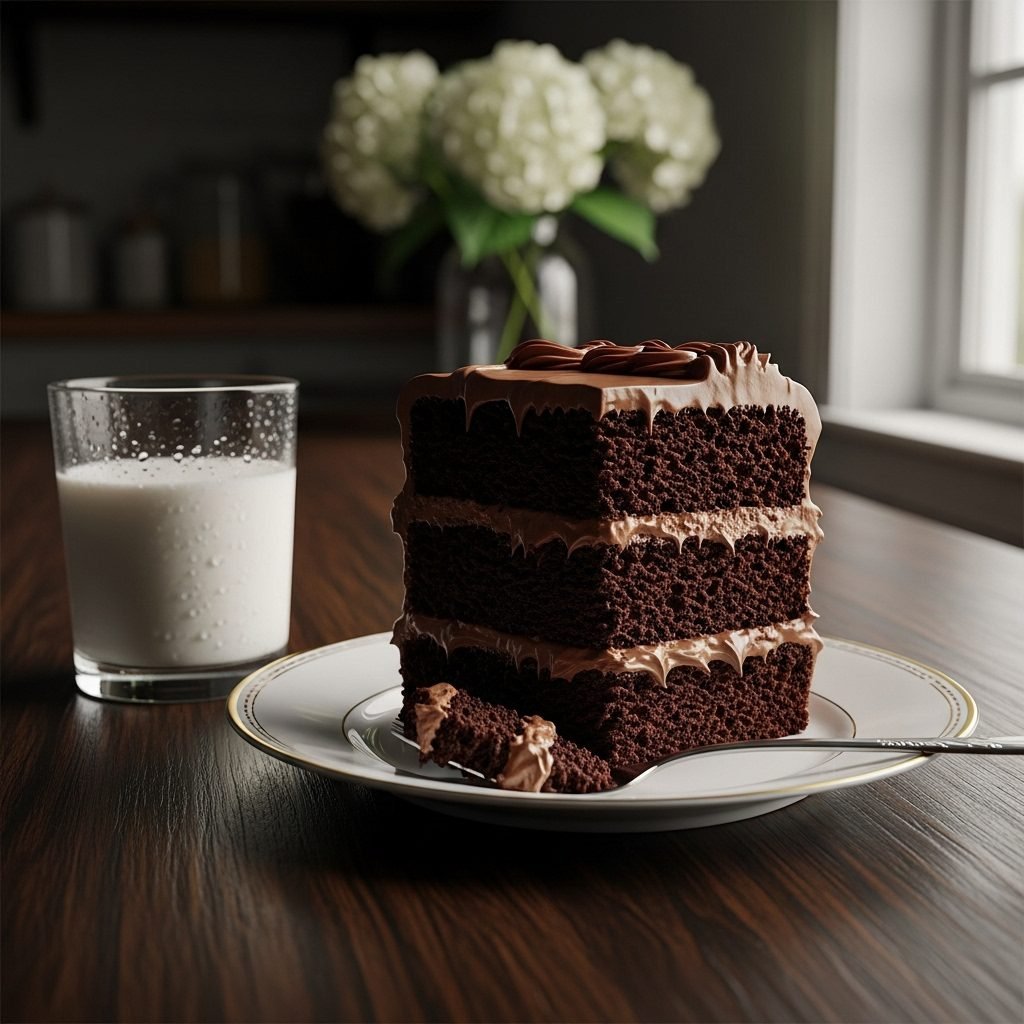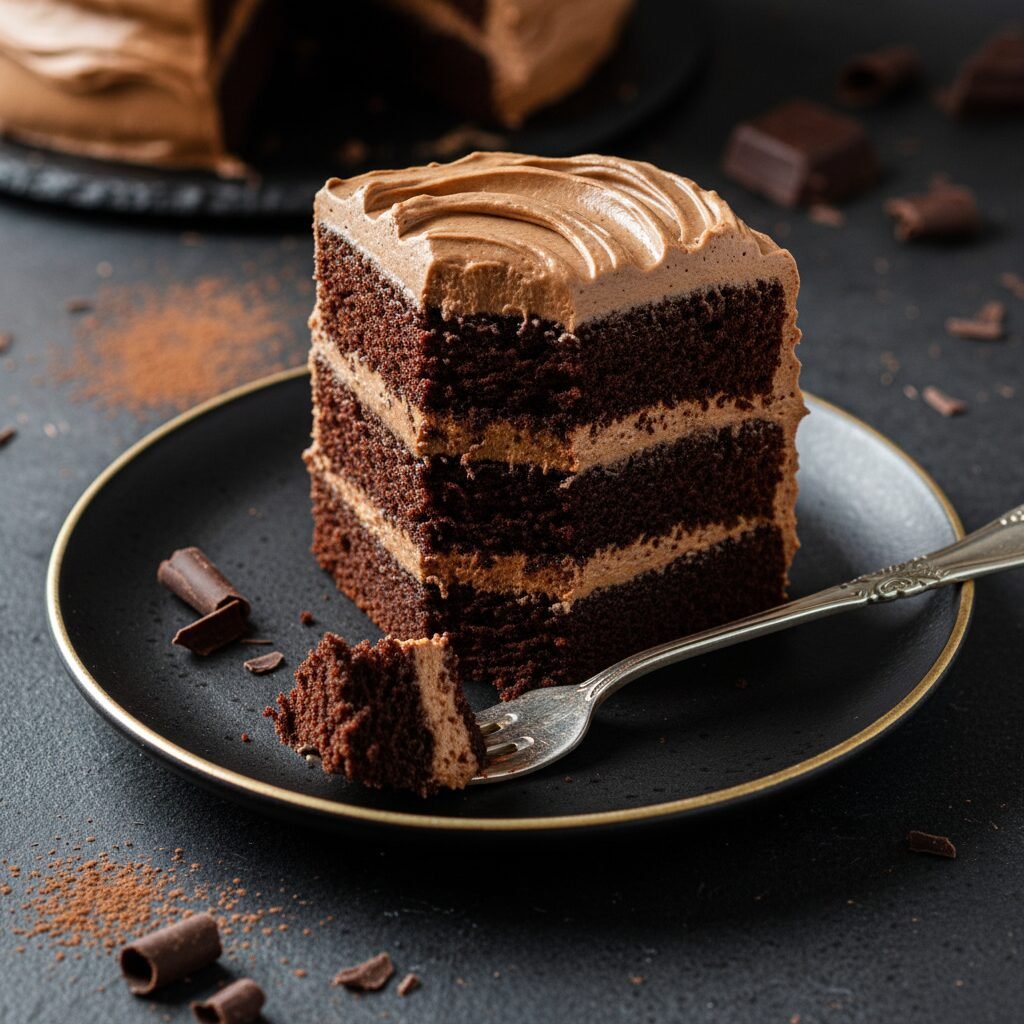
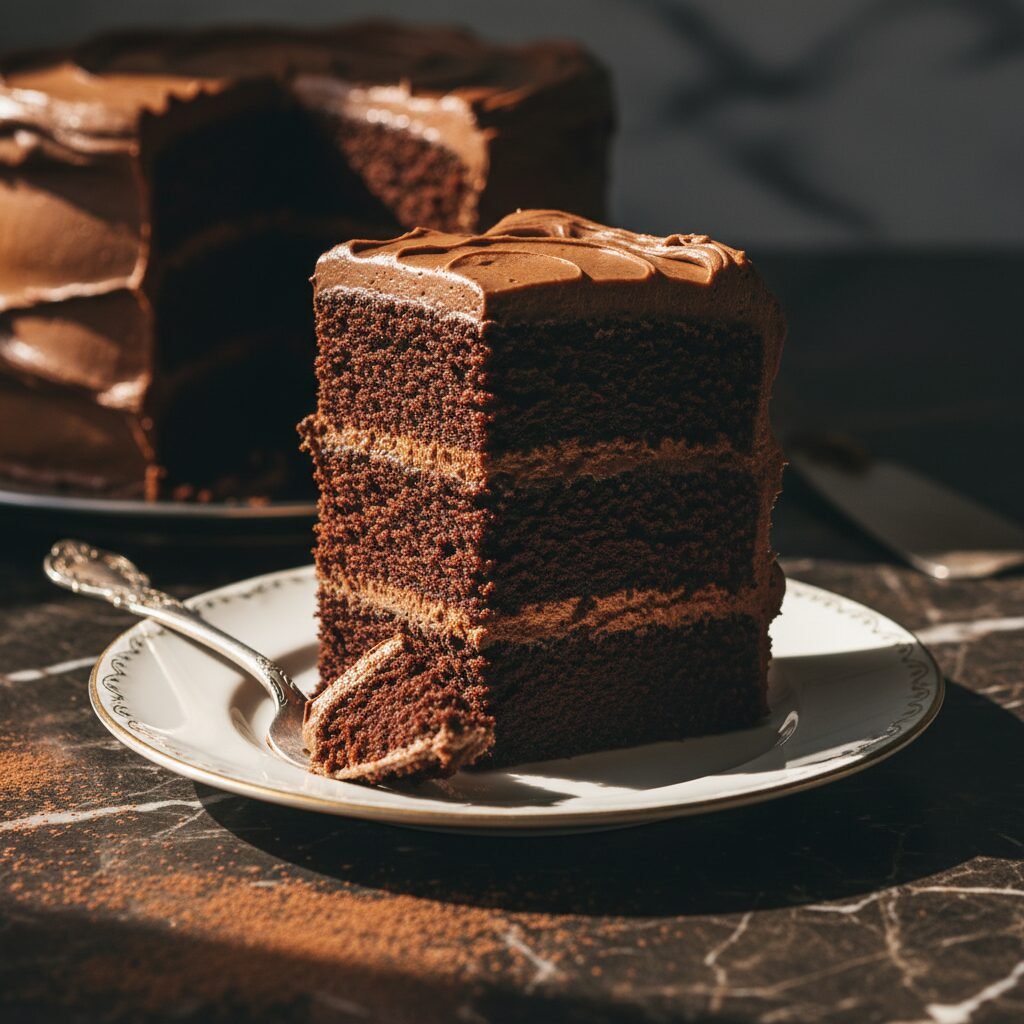
Moist Chocolate Birthday Cake With Chocolate Buttercream Recipe
Stop searching for the perfect birthday treat; this is the only chocolate cake recipe you will ever need. Featuring an incredibly tender, fudgy crumb and a silky, decadent chocolate buttercream, this cake stays moist for days and delivers an intense chocolate punch that bakery cakes simply cannot match.
30 minutes
35 minutes
1 hour 30 minutes
12-14 servings
Dessert
Baking
American
Vegetarian
For many home bakers, the quest for the perfect chocolate cake is a lifelong journey filled with dry sponges, lackluster flavor, and sinking centers. We have all been there—cutting into a beautiful looking cake only to find it tastes like cardboard or relies entirely on the frosting for moisture. This recipe changes everything. This Moist Chocolate Birthday Cake is the ‘Holy Grail’ of desserts, specifically engineered to deliver that melt-in-your-mouth texture that we all crave but rarely find outside of high-end bakeries. The secret lies not just in the quality of cocoa, but in the chemistry of the batter. By utilizing a specific blend of fat sources and liquid temperatures, we create an emulsion that traps moisture inside the crumb, resulting in a cake that is actually better on the second day than the first. The accompanying Chocolate Buttercream is not your average sugary grit; it is whipped to an airy, cloud-like consistency that perfectly complements the density of the sponge. Whether you are celebrating a milestone birthday, a holiday, or just the fact that it is Friday, this cake commands attention. It is rich without being cloying, sophisticated yet nostalgic, and robust enough to support tiers while remaining delicate on the palate. Prepare to ruin all other chocolate cakes for your friends and family, because once they taste this, nothing else will compare.
History & Origins
The history of chocolate cake is a fascinating evolution of culinary science and global trade. While chocolate itself has been consumed for millennia, originating with the Maya and Aztecs who drank it as a bitter, spiced beverage, the concept of a ‘chocolate cake’ is relatively modern. Until the mid-19th century, chocolate was primarily a drink for the wealthy in Europe. The game-changer arrived in 1828 when Coenraad van Houten of the Netherlands invented the cocoa press, which separated cocoa butter from roasted cocoa beans to make a dry powder. This powder could be easily mixed into batters, paving the way for chocolate baking. However, the first ‘chocolate cakes’ were actually yellow or white cakes served with chocolate frosting. It wasn’t until 1886 that cooks began adding chocolate directly into the batter, creating what we now recognize as chocolate cake. The specific tradition of the birthday cake traces back even further to the German ‘Kinderfest’ in the Middle Ages, though those cakes were more bread-like. The confluence of these histories—the industrialization of cocoa and the cultural ritual of birthday celebrations—exploded in the United States in the 1930s and 40s with the advent of chemical leaveners (baking soda and powder) and the marketing of ‘Devil’s Food’ cake mixes. This specific recipe pays homage to that mid-century American classic, returning to scratch ingredients to recapture the authentic, deep cocoa flavor that convenience mixes often stripped away in favor of shelf stability.
Why This Recipe Works
The science behind this cake’s incredible moisture content comes down to three critical components: oil, buttermilk, and hot coffee. First, unlike butter, which contains water and milk solids and solidifies at room temperature, vegetable oil remains liquid. This ensures the cake feels moist on the palate even when cool. While butter provides flavor, oil provides the texture; we compensate for the butter flavor by using a high-fat buttercream frosting. Second, the buttermilk is essential. Its acidity reacts with the baking soda, creating carbon dioxide bubbles that lift the cake, but more importantly, the acid breaks down the long strands of gluten in the flour. This results in a ‘tender’ crumb rather than a chewy, bread-like texture. Finally, the hot coffee is the secret weapon. It does not make the cake taste like a mocha latte; rather, the boiling liquid ‘blooms’ the cocoa powder. Cocoa is essentially dried starch, and adding hot liquid dissolves the cocoa butter and releases flavor compounds that are otherwise dormant. This creates a profound, deep chocolate intensity that room-temperature milk or water simply cannot achieve. The combination of these elements creates a batter that is thin and liquidy going into the oven but bakes up into a structurally sound yet impossibly soft masterpiece.
Why You’ll Love This Recipe
- ✓Stays moist for up to 5 days at room temperature.
- ✓Deep, intense chocolate flavor enhanced by hot coffee.
- ✓Foolproof batter that requires no mixer for the cake part.
- ✓Silky, whipped buttercream that isn’t overly gritty.
- ✓Perfect structure for layering and decorating.
- ✓Crowd-pleasing texture that is soft but holds its shape.
Equipment You’ll Need
- ✓Two 8-inch or 9-inch round cake pans
- ✓Large mixing bowl
- ✓Medium mixing bowl
- ✓Whisk
- ✓Electric stand mixer or hand mixer (for frosting)
- ✓Rubber spatula
- ✓Wire cooling rack
- ✓Measuring cups and spoons
- ✓Parchment paper
- ✓Offset spatula
Ingredients
- ✓2 cups granulated sugar
- ✓1 3/4 cups all-purpose flour
- ✓3/4 cup unsweetened cocoa powder (good quality)
- ✓1 1/2 teaspoons baking powder
- ✓1 1/2 teaspoons baking soda
- ✓1 teaspoon salt
- ✓2 large eggs, room temperature
- ✓1 cup whole milk or buttermilk, room temperature
- ✓1/2 cup vegetable oil or canola oil
- ✓2 teaspoons pure vanilla extract
- ✓1 cup boiling hot coffee (or boiling water)
- ✓1 cup unsalted butter, softened (for frosting)
- ✓3 1/2 cups powdered sugar (for frosting)
- ✓1/2 cup unsweetened cocoa powder (for frosting)
- ✓3-4 tablespoons heavy cream or milk (for frosting)
- ✓1/4 teaspoon salt (for frosting)
- ✓1 teaspoon vanilla extract (for frosting)
Instructions
- Preheat oven to 350°F (175°C). Grease two 8-inch or 9-inch round cake pans with butter and dust with cocoa powder, or line the bottoms with parchment paper for easy removal.
- In a large bowl, whisk together the sugar, flour, cocoa, baking powder, baking soda, and salt. Ensure there are no large lumps of cocoa powder.
- Add the eggs, buttermilk, oil, and vanilla to the dry ingredients. Beat on medium speed with a hand mixer or whisk vigorously by hand for about 2 minutes. The batter should be smooth and well-combined.
- Stir in the boiling hot coffee by hand. Pour it in slowly so you do not scramble the eggs. The batter will be very thin and liquidy; this is normal and expected.
- Pour the batter evenly into the prepared pans. Tap the pans gently on the counter to release any large air bubbles.
- Bake for 30 to 35 minutes. Test for doneness by inserting a wooden toothpick into the center of the cake. It should come out clean or with just a few moist crumbs attached.
- Cool the cakes in the pans for 10 minutes, then run a knife around the edge to loosen them. Invert onto a wire rack to cool completely before frosting. Do not attempt to frost warm cakes.
- To make the frosting: In a stand mixer fitted with the paddle attachment, beat the softened butter on medium-high speed for 3-4 minutes until it is pale and creamy.
- Add the powdered sugar and cocoa powder. Mix on low speed initially to avoid a sugar cloud, then increase to high speed and beat for 2 minutes.
- Add the vanilla, salt, and 3 tablespoons of heavy cream. Beat on medium-high for another 2-3 minutes until fluffy. If the frosting is too stiff, add the remaining tablespoon of cream.
- Assemble the cake: Place one layer on your serving plate. Spread a generous layer of frosting over the top. Place the second cake layer on top. Frost the top and sides of the cake with the remaining buttercream.
- Garnish with sprinkles, chocolate shavings, or fresh berries if desired. Slice and serve.
Expert Cooking Tips
- ✓Use room temperature ingredients (eggs, buttermilk) to ensure the batter emulsifies properly.
- ✓Do not skip the parchment paper; chocolate cake is tender and can stick to the bottom of pans easily.
- ✓Weigh your flour if possible (approx. 120g per cup) to avoid a dense, dry cake.
- ✓Use high-quality cocoa powder; the flavor of the cake depends entirely on it.
- ✓Do not over-bake. Check the cake 5 minutes before the timer goes off.
- ✓If you don’t have buttermilk, make a substitute by adding 1 tablespoon of vinegar or lemon juice to 1 cup of whole milk and letting it sit for 5 minutes.
- ✓For a flat top, use ‘cake strips’ around your pans or slice the domes off the cooled cakes with a serrated knife.
Substitutions and Variations
This recipe is quite forgiving with certain substitutions. If you do not consume caffeine or coffee, you can substitute the hot coffee with boiling water; the chocolate flavor will be slightly less intense but still delicious. For a dairy-free version, use almond milk mixed with vinegar in place of buttermilk, and use a high-quality plant-based butter stick for the frosting. You can substitute the vegetable oil with melted coconut oil or melted butter, though melted butter will result in a slightly denser, more pound-cake-like texture. Gluten-free 1-to-1 baking flour blends usually work very well in this recipe because the cocoa and moisture content mask the texture differences often found in GF baking. For the frosting, you can use half shortening and half butter if you need it to withstand hotter temperatures, as shortening has a higher melting point.
Common Mistakes to Avoid
The most common mistake is over-measuring the flour. If you scoop the measuring cup directly into the flour bag, you compress the flour and can end up with 20-30% more than needed, leading to a dry cake. Always spoon the flour into the cup and level it off. Another mistake is rushing the cooling process. If you frost the cake while it is even slightly warm, the butter in the frosting will melt, causing the layers to slide and the frosting to become greasy. Also, do not be alarmed by the thin batter. Many bakers panic and add more flour, thinking they made a mistake. Trust the recipe; the liquid evaporates during baking to create steam, which lifts the cake. Finally, ensure your baking powder and baking soda are fresh. If they are expired, the cake will not rise and will be dense and gummy.
Serving Suggestions
This cake is rich, so it pairs beautifully with something that cuts through the sweetness. A scoop of vanilla bean ice cream is the classic choice. Fresh raspberries or strawberries add a tart brightness that contrasts perfectly with the deep cocoa. For a sophisticated touch, serve with a dollop of unsweetened whipped cream and a dusting of espresso powder. If serving for a birthday, colorful sprinkles pop beautifully against the dark chocolate frosting. For beverages, a tall glass of cold milk is traditional, but a hot espresso or a glass of Cabernet Sauvignon also pairs wonderfully with the dark chocolate notes.
Storage and Reheating Tips
This cake has excellent keeping qualities thanks to the oil. It can be stored at room temperature in an airtight cake carrier or under a glass dome for up to 4 days. In fact, the flavor often improves on the second day. If you live in a very hot or humid climate, you may need to store it in the refrigerator to prevent the buttercream from melting. If refrigerating, let the slices come to room temperature for 20-30 minutes before eating to restore the soft texture of the sponge and frosting. The cake layers can also be baked ahead of time, wrapped tightly in plastic wrap, and frozen for up to 3 months. Thaw the layers in the fridge overnight before assembling and frosting.
Nutrition Facts (Estimated)
| Serving Size | 1 slice |
| Calories | 680 |
| Fat | 38g |
| Saturated Fat | 18g |
| Unsaturated Fat | 18g |
| Trans Fat | 0g |
| Cholesterol | 95mg |
| Sodium | 340mg |
| Carbohydrates | 82g |
| Fiber | 4g |
| Sugar | 55g |
| Protein | 6g |
Frequently Asked Questions
Can I make this cake ahead of time?
Yes, absolutely. You can bake the layers up to 2 days in advance and keep them wrapped in plastic at room temperature. You can also make the frosting a week in advance and store it in the fridge; just let it come to room temperature and re-whip it before using.
Why did my cake sink in the middle?
Sinking usually happens if the oven door was opened too early during baking, causing the structure to collapse before it set. It can also be caused by too much leavening (baking soda/powder) or over-mixing the batter.
Can I use this recipe for cupcakes?
Yes! This batter makes excellent cupcakes. Fill standard cupcake liners about 2/3 full and bake at 350°F for 18-22 minutes. It should yield about 24-30 cupcakes.
Do I have to use coffee?
No, you don’t have to, but it is highly recommended. The coffee enhances the chocolate flavor without adding a coffee taste. If you prefer not to use it, boiling water works as a direct substitute.
Why is my frosting grainy?
Grainy frosting is usually caused by powdered sugar that wasn’t sifted, or butter that was too cold or melted. Ensure your butter is softened to room temperature and beat it well before adding sugar.
Can I use Dutch-processed cocoa?
This recipe relies on baking soda, which requires acid to activate. Natural cocoa powder is acidic. If you use Dutch-processed (alkalized) cocoa, the rise might be affected. However, since the recipe also uses buttermilk (acidic) and baking powder, you can usually get away with it, but natural cocoa is safer.
How do I get flat cake layers?
You can use ‘cake strips’—fabric strips soaked in water and wrapped around the pan—to insulate the edges. This helps the cake bake evenly so the center doesn’t dome as much. Alternatively, just trim the dome off with a serrated knife.
Can I use a 9×13 pan instead?
Yes, this recipe fits perfectly in a standard 9×13 inch rectangular pan. You will likely need to increase the baking time to 35-40 minutes.
Why is my cake dry?
Dry cake is almost always the result of over-baking or over-measuring flour. Check the cake early, and use the spoon-and-level method for flour.
Can I reduce the sugar?
Sugar provides moisture and structure, not just sweetness. Reducing the sugar significantly will alter the texture, making the cake denser and drier. We recommend sticking to the recipe for the best texture.
Conclusion
There is something undeniably magical about a homemade chocolate cake. It signals celebration, comfort, and love in a way that few other foods can. This Moist Chocolate Birthday Cake with Chocolate Buttercream is more than just a recipe; it is a reliable companion for your family’s most cherished moments. The deep, fudgy flavor profile combined with the ease of preparation makes it a standout winner in the world of baking. Whether you are a novice baker attempting your first layer cake or a seasoned pro looking for a new standard, this recipe delivers consistent, spectacular results. So, boil that water, sift that cocoa, and get ready to enjoy a slice of pure chocolate heaven. Happy baking!