Moist Chocolate Birthday Cake With Sour Cream Recipe
Say goodbye to dry, crumbly cakes forever. This Ultimate Moist Chocolate Birthday Cake uses the magic of sour cream and hot coffee to create a deeply fudgy, tender crumb that stays fresh for days. It is the only recipe you will ever need for celebrations.
30 minutes
35 minutes
1 hour 5 minutes
12-14 Servings
Dessert
Baking
American
Vegetarian
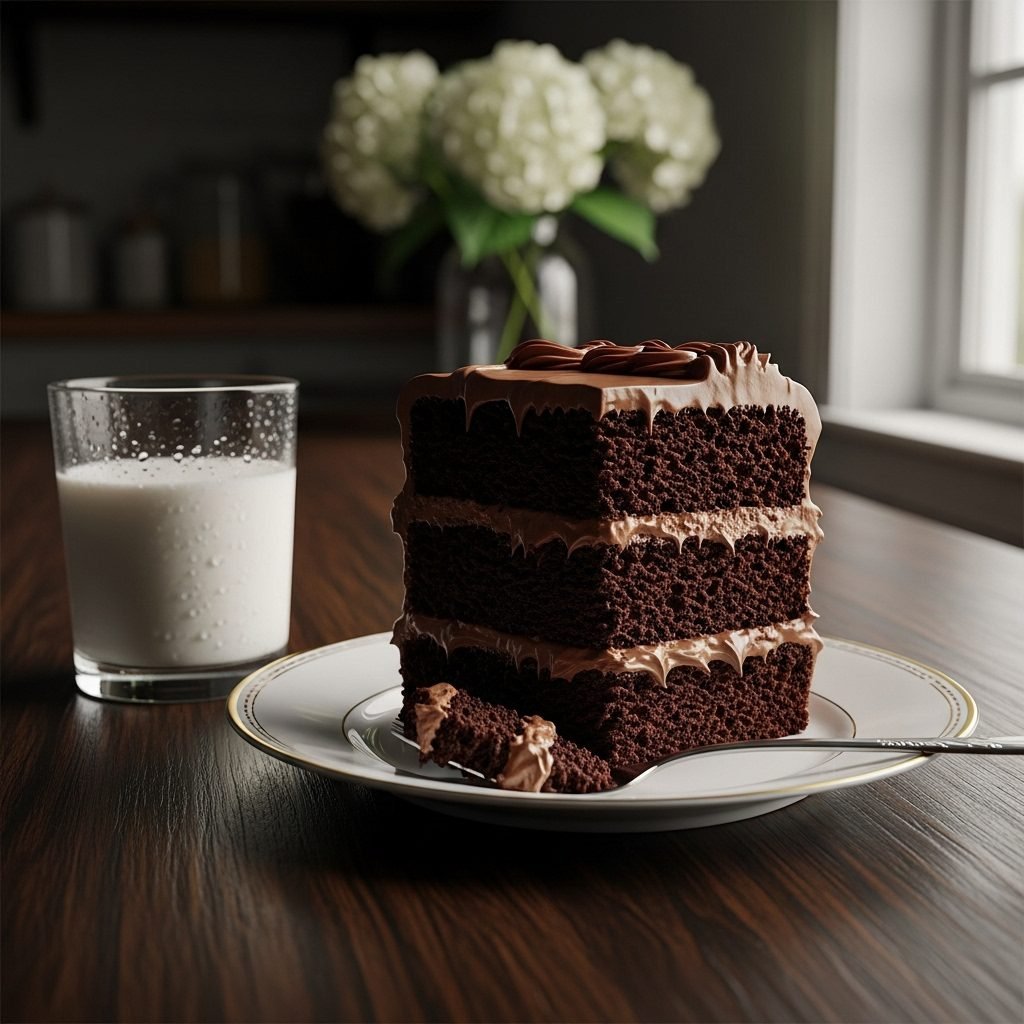
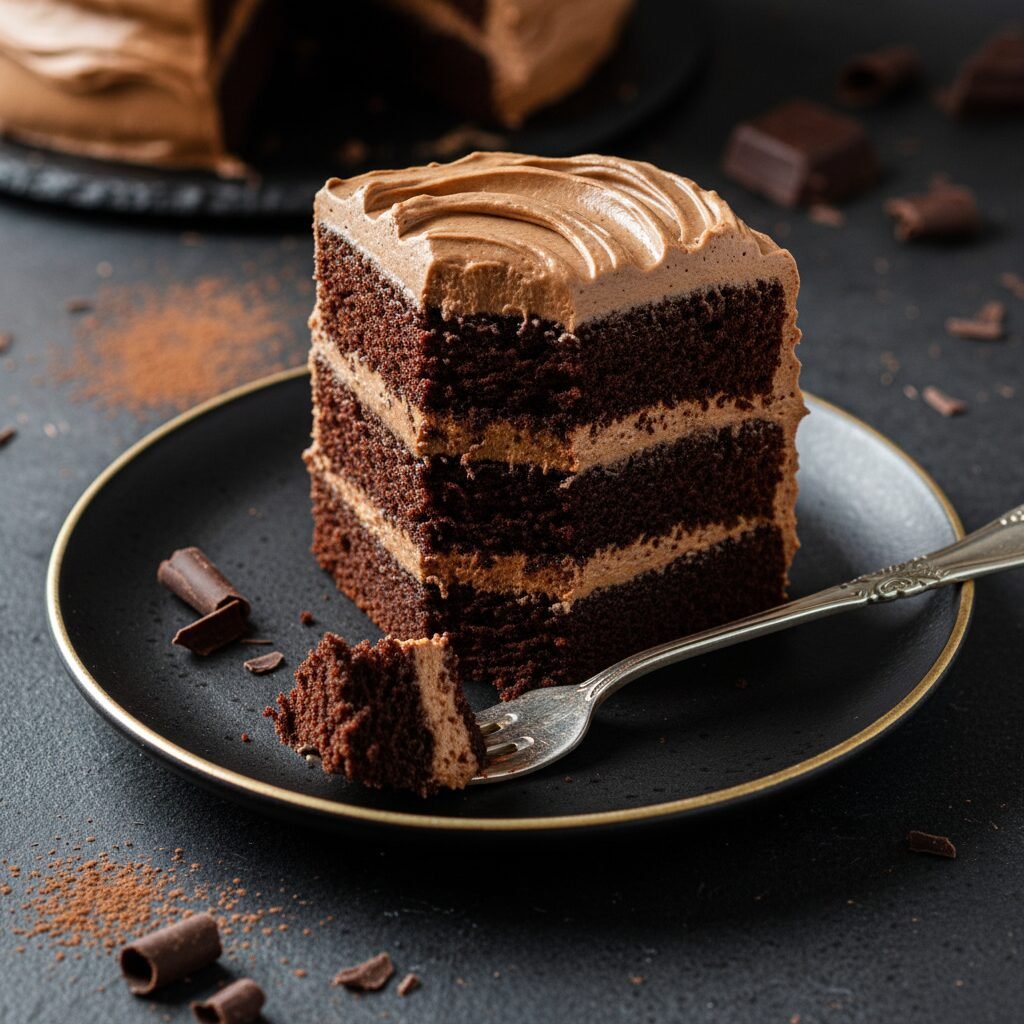
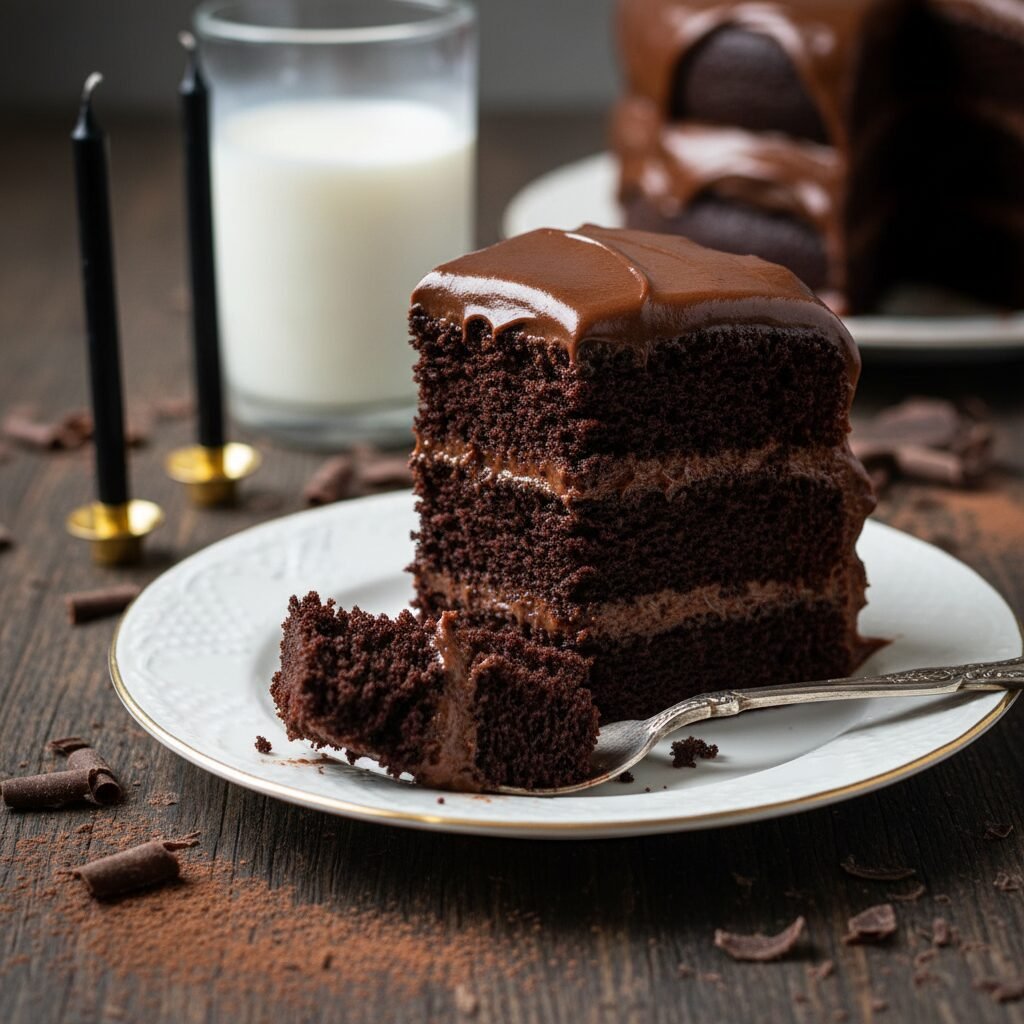
There is a specific kind of heartbreak reserved for cutting into a stunning, beautifully decorated birthday cake, only to find that the inside is as dry as the Sahara. We have all been there—politely chewing through a crumbly sponge, frantically searching for a sip of milk to wash it down. But today, that narrative ends. This Moist Chocolate Birthday Cake with Sour Cream is the antidote to dry baking. It is the kind of cake that pauses conversation; a cake so dark, rich, and impossibly tender that it feels less like a dessert and more like an event.
Why is this recipe different? While many chocolate cakes rely heavily on butter for flavor, they often sacrifice texture, becoming firm and dense once cooled. This recipe utilizes a strategic combination of vegetable oil and full-fat sour cream. The oil ensures the crumb remains soft and plush even straight out of the refrigerator, while the sour cream provides a heavy hit of moisture and a subtle tang that cuts through the sweetness of the sugar. Furthermore, the addition of hot coffee blooms the cocoa powder, waking up the chocolate notes and transforming them from flat to three-dimensional. You won’t taste the coffee, but you will definitely taste a bolder, more luxurious chocolate.
Whether you are a novice baker looking to impress a crowd or a seasoned pro searching for a reliable ‘house’ chocolate cake, this recipe delivers. It is sturdy enough to stack for tiered birthday masterpieces yet delicate enough to melt in your mouth. Paired with a silky chocolate fudge buttercream, this is the quintessential celebration cake that memories are made of. Get your mixer ready, because this is about to become your most requested recipe.
History & Origins
The history of the chocolate cake is a fascinating journey of culinary evolution. While chocolate itself has been consumed for millennia, primarily as a bitter beverage in Mesoamerica and later as a luxury drink in Europe, the concept of a ‘chocolate cake’ is relatively modern. Until the mid-19th century, chocolate was too expensive and gritty to be used effectively in baking. Early versions of ‘chocolate cake’ were actually yellow or white cakes served with a chocolate beverage on the side, or simply spiced cakes that didn’t contain chocolate at all.
The game changed in 1828 when Coenraad van Houten invented a hydraulic press that could separate cocoa butter from roasted cacao beans, leaving behind a fine powder. This ‘Dutching’ process made chocolate affordable and bakeable. However, the first verifiable recipe for a chocolate cake didn’t appear until 1886 in the United States. As baking powder and baking soda replaced yeast as the primary leavening agents, cakes became lighter and easier to produce at home.
The specific inclusion of sour cream or buttermilk in chocolate cake—often associated with ‘Devil’s Food’ varieties—gained traction in the early to mid-20th century in American farm kitchens. Home bakers realized that acidic dairy products reacted vigorously with baking soda, creating a darker color (hence the ‘Devil’ moniker) and a significantly more tender crumb. During the Great Depression and World War II, when butter was rationed, oil and sour cream (or mayonnaise, which is essentially oil and egg) became ingenious substitutes to keep cakes moist. This recipe honors that tradition, utilizing the science of the past to create the perfect modern birthday cake.
Why This Recipe Works
This recipe succeeds where others fail due to a precise balance of fat, acidity, and temperature. First, let’s talk about the **sour cream**. Sour cream is an acidic ingredient. When it interacts with baking soda, it creates carbon dioxide gas, which helps the cake rise and gives it a light, airy lift despite the heavy batter. More importantly, the protein and fat in the sour cream shorten the gluten strands in the flour. Long gluten strands make bread chewy; short gluten strands make cake tender. This results in that velvety ‘melt-in-your-mouth’ texture.
Secondly, the use of **vegetable oil instead of butter** is crucial for moisture retention. Butter is roughly 80% fat and 20% water, and it is solid at room temperature. When a butter-based cake cools, the fat resolidifies, which can make the cake feel dry or dense. Vegetable oil remains liquid at room temperature, meaning your cake stays perceptibly moist and soft on the palate for days after baking.
Finally, the **blooming technique**. The instructions call for pouring boiling hot coffee into the batter at the very end. Cocoa powder is full of flavor compounds that are encapsulated in cocoa butter. The heat from the liquid dissolves these compounds instantly, ‘blooming’ the cocoa and releasing a much more intense chocolate flavor than if you had simply whisked it with cold milk. The coffee itself adds depth and earthiness that mirrors the complexity of high-quality chocolate, without imparting a distinct espresso taste.
Why You’ll Love This Recipe
- ✓Incredible Moisture: Stays soft for 4-5 days without drying out.
- ✓Deep Chocolate Flavor: Enhanced by the hot coffee blooming method.
- ✓Foolproof Texture: The sour cream ensures a tender, non-crumbly crumb.
- ✓Versatile: Can be made as a layer cake, sheet cake, or cupcakes.
- ✓Perfect for Stacking: Sturdy enough to hold heavy frostings and decorations.
Equipment You’ll Need
- ✓Two 9-inch round cake pans (or three 8-inch pans)
- ✓Stand mixer or electric hand mixer
- ✓Large mixing bowl
- ✓Whisk
- ✓Rubber spatula
- ✓Parchment paper
- ✓Wire cooling rack
- ✓Offset spatula (for frosting)
Ingredients
- ✓2 cups (400g) granulated sugar
- ✓1 3/4 cups (220g) all-purpose flour
- ✓3/4 cup (65g) unsweetened cocoa powder (natural or Dutch-process)
- ✓2 teaspoons baking soda
- ✓1 teaspoon baking powder
- ✓1 teaspoon kosher salt
- ✓2 large eggs, room temperature
- ✓1 cup (240g) full-fat sour cream, room temperature
- ✓1/2 cup (120ml) vegetable oil or canola oil
- ✓2 teaspoons pure vanilla extract
- ✓1 cup (240ml) freshly brewed hot coffee (strong)
Instructions
- 1. Preheat your oven to 350°F (175°C). Grease two 9-inch round cake pans with butter or cooking spray. Line the bottoms with parchment paper rounds and grease the paper. Dust with a little cocoa powder and tap out the excess.
- 2. In the bowl of a stand mixer fitted with the paddle attachment (or a large bowl using a hand mixer), combine the sugar, flour, cocoa powder, baking soda, baking powder, and salt. Mix on low speed for 30 seconds just to combine the dry ingredients.
- 3. In a separate medium bowl, whisk together the eggs, sour cream, vegetable oil, and vanilla extract until smooth and well combined.
- 4. With the mixer on low speed, slowly pour the wet ingredient mixture into the dry ingredients. Beat on medium speed for about 2 minutes. The batter will be thick at this stage.
- 5. Reduce the mixer speed to the lowest setting. Carefully pour in the hot coffee in a steady stream. Be careful of splashing. Mix just until combined. The batter will be very thin and liquidy—this is normal.
- 6. Pour the batter evenly between the prepared cake pans. Use a kitchen scale to ensure even layers if desired.
- 7. Bake for 30-35 minutes, or until a wooden toothpick inserted into the center comes out clean or with just a few moist crumbs attached. Do not overbake.
- 8. Remove the pans from the oven and place them on a wire rack. Allow the cakes to cool in the pans for about 15-20 minutes.
- 9. Run a thin knife around the edges of the cakes to loosen them, then invert them onto the wire rack to cool completely before frosting. Remove the parchment paper.
- 10. Once completely cool, frost with your favorite chocolate buttercream or ganache.
Expert Cooking Tips
- ✓Room Temperature Ingredients: Ensure your eggs and sour cream are at room temperature. This creates an emulsion that traps air, leading to a fluffier cake.
- ✓Weigh Your Flour: For the most accurate results, use a kitchen scale. If using cups, spoon the flour into the cup and level it off; never scoop directly from the bag.
- ✓Don’t Fear the Thin Batter: The batter will look surprisingly runny after adding the coffee. Do not add more flour; this liquid is necessary for the moist texture.
- ✓Quality Cocoa: Use a high-quality cocoa powder like Ghirardelli or Valrhona for the best flavor payoff.
- ✓Cool Completely: Never attempt to frost a cake that is even slightly warm, or your frosting will slide right off.
- ✓Tap the Pans: Before putting the pans in the oven, tap them gently on the counter 2-3 times to release large air bubbles.
Substitutions and Variations
Baking is a science, but there is some room for flexibility if you find yourself missing an ingredient. If you do not have **sour cream**, full-fat plain Greek yogurt is the best 1:1 substitute as it has a similar consistency and acidity. You can also use full-fat buttermilk; the batter will be slightly thinner, but the result will be very similar. Regarding the **coffee**, if you want to avoid caffeine or coffee flavor entirely, you can substitute it with boiling water. However, the chocolate flavor will be slightly less intense. For the **oil**, you can use melted butter, but be aware that the cake may be slightly denser and will dry out faster than the oil version. Coconut oil (melted) also works well but may impart a slight coconut flavor. For a **gluten-free** version, substitute the all-purpose flour with a high-quality 1:1 Gluten-Free Baking Flour blend that contains xanthan gum.
Common Mistakes to Avoid
The most common mistake with this cake is **overbaking**. Because the batter is dark, it is hard to see visual cues of browning. Rely on the toothpick test and start checking at the 30-minute mark. If the toothpick comes out bone dry, it’s already slightly overdone. You want a few moist crumbs. Another mistake is **overmixing the batter** after adding the flour. Once the wet and dry ingredients meet, gluten begins to form. Mixing too vigorously will result in a tough, rubbery cake rather than a tender one. Finally, **skipping the parchment paper** is a risk not worth taking. Even with greased pans, the moisture in this cake can make it stick. Parchment rounds guarantee a perfect release every time.
Serving Suggestions
This cake is rich, so it pairs beautifully with elements that cut through the sweetness. A scoop of high-quality vanilla bean ice cream is a classic choice, providing a temperature and texture contrast. Fresh berries—particularly raspberries or strawberries—add a tart brightness that complements the deep chocolate notes. For a sophisticated finish, serve with a dollop of unsweetened whipped cream and a dusting of flaky sea salt. If you are serving this for a birthday, it pairs perfectly with a cold glass of milk or a hot espresso.
Storage and Reheating Tips
Because this cake is oil-based, it stays moist for a long time. You can store the frosted cake at room temperature, covered with a cake dome, for up to 3 days. If your kitchen is particularly hot or if you used a perishable filling (like cream cheese frosting or custard), store it in the refrigerator for up to 5 days. Allow the cake to come to room temperature before serving for the best texture. To freeze, wrap individual unfrosted layers tightly in plastic wrap, followed by a layer of aluminum foil. They can be frozen for up to 3 months. Thaw in the refrigerator overnight before frosting.
Nutrition Facts (Estimated)
| Serving Size | 1 slice (with frosting) |
| Calories | 680 |
| Fat | 36g |
| Saturated Fat | 14g |
| Unsaturated Fat | 20g |
| Trans Fat | 0g |
| Cholesterol | 85mg |
| Sodium | 380mg |
| Carbohydrates | 85g |
| Fiber | 4g |
| Sugar | 52g |
| Protein | 7g |
Frequently Asked Questions
Can I make this recipe into cupcakes?
Yes! This batter makes excellent cupcakes. Line a muffin tin with liners and fill them about 2/3 full. Bake at 350°F for 18-22 minutes. This recipe yields approximately 24-28 standard cupcakes.
Does this cake taste like coffee?
No, it does not taste like a mocha cake. The hot coffee serves to enhance and deepen the chocolate flavor, making it richer. If you are very sensitive to coffee, you can use hot water instead, but we highly recommend the coffee for the best flavor profile.
Can I use natural cocoa powder instead of Dutch-process?
Yes, this recipe works with both. Natural cocoa powder is more acidic, which reacts well with the baking soda. Dutch-process is more neutral but darker. Because this recipe contains both baking soda and baking powder, plus acidic sour cream, you can safely use either type.
Why did my cake sink in the middle?
Cakes usually sink for two reasons: the oven door was opened too early, causing a temperature drop that collapsed the structure, or the cake was underbaked. Avoid opening the oven until at least 80% of the baking time has passed.
Can I prepare the cake layers ahead of time?
Absolutely. In fact, chilled or frozen cake layers are easier to frost. You can bake the layers, cool them completely, wrap them in plastic wrap, and store them in the fridge for 2 days or freeze them for up to a month before assembling.
Can I use low-fat sour cream?
Technically yes, but we don’t recommend it. The fat content in regular sour cream contributes significantly to the tenderness and richness of the cake. Using low-fat or fat-free versions may result in a slightly rubberier texture.
My batter is very liquid, did I do something wrong?
Not at all! This specific recipe produces a very thin, pourable batter, especially after adding the hot coffee. It is much thinner than a standard yellow cake batter. Trust the process—it bakes up perfectly.
How do I get flat layers for stacking?
You can use ‘cake strips’ (damp fabric strips wrapped around the pan) to encourage even baking. Alternatively, once the cakes are baked and cooled, simply use a large serrated knife to trim off the domed tops before stacking.
Can I bake this in a 9×13 inch pan?
Yes, this makes a fantastic sheet cake. Grease a 9×13 inch pan and bake at 350°F. You will likely need to increase the baking time to 35-45 minutes. Check with a toothpick.
What is the best frosting for this cake?
This cake is very versatile. A classic Chocolate Fudge Buttercream is the traditional choice. However, it also pairs wonderfully with Cream Cheese Frosting, Swiss Meringue Buttercream, or a simple Chocolate Ganache.
Conclusion
There is something truly special about placing a homemade cake on the table, especially one that tastes as incredible as it looks. This Moist Chocolate Birthday Cake with Sour Cream is more than just a recipe; it is a reliable companion for your most cherished celebrations. The combination of ease, texture, and profound chocolate flavor makes it a winner every single time. Whether it’s a first birthday or a fiftieth, this cake is sure to be the highlight of the party. So, preheat your oven, brew that coffee, and get ready to bake the best chocolate cake of your life. Don’t forget to pin this recipe for your next event!