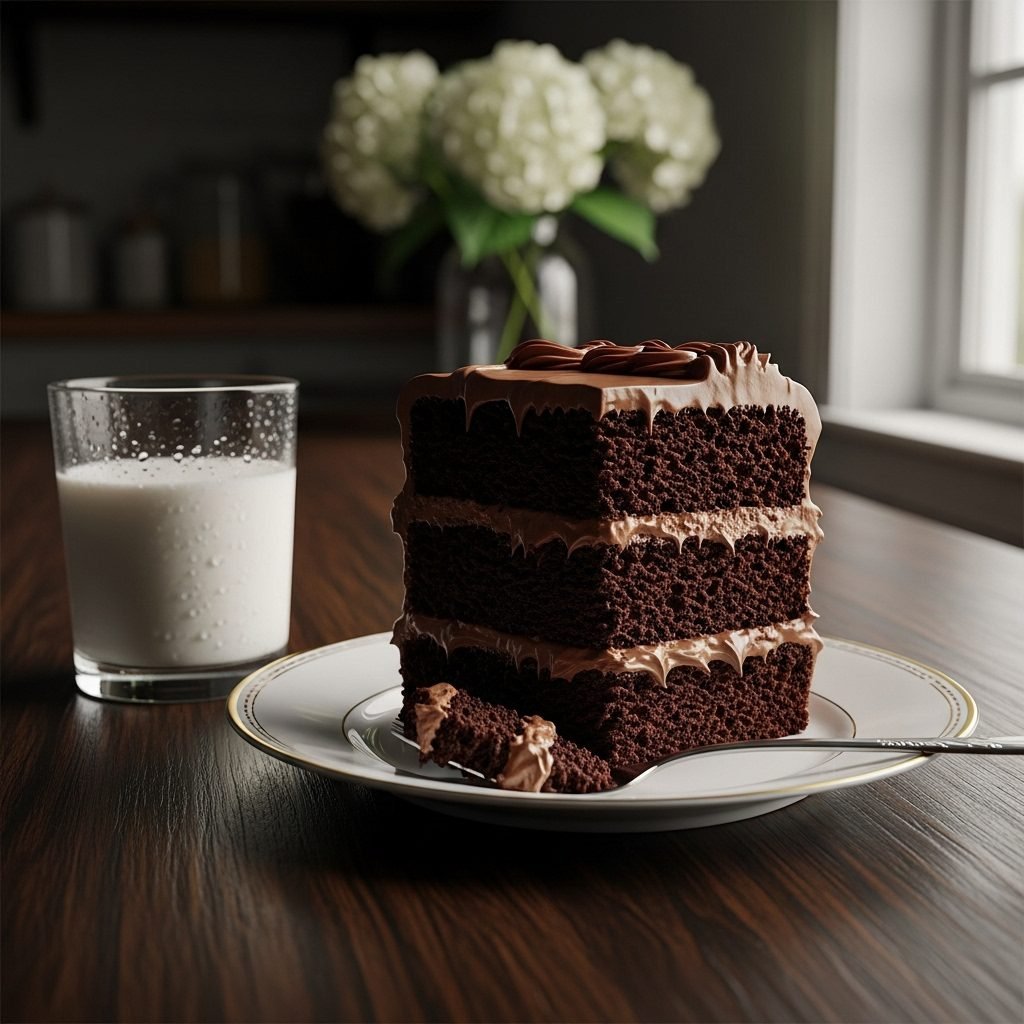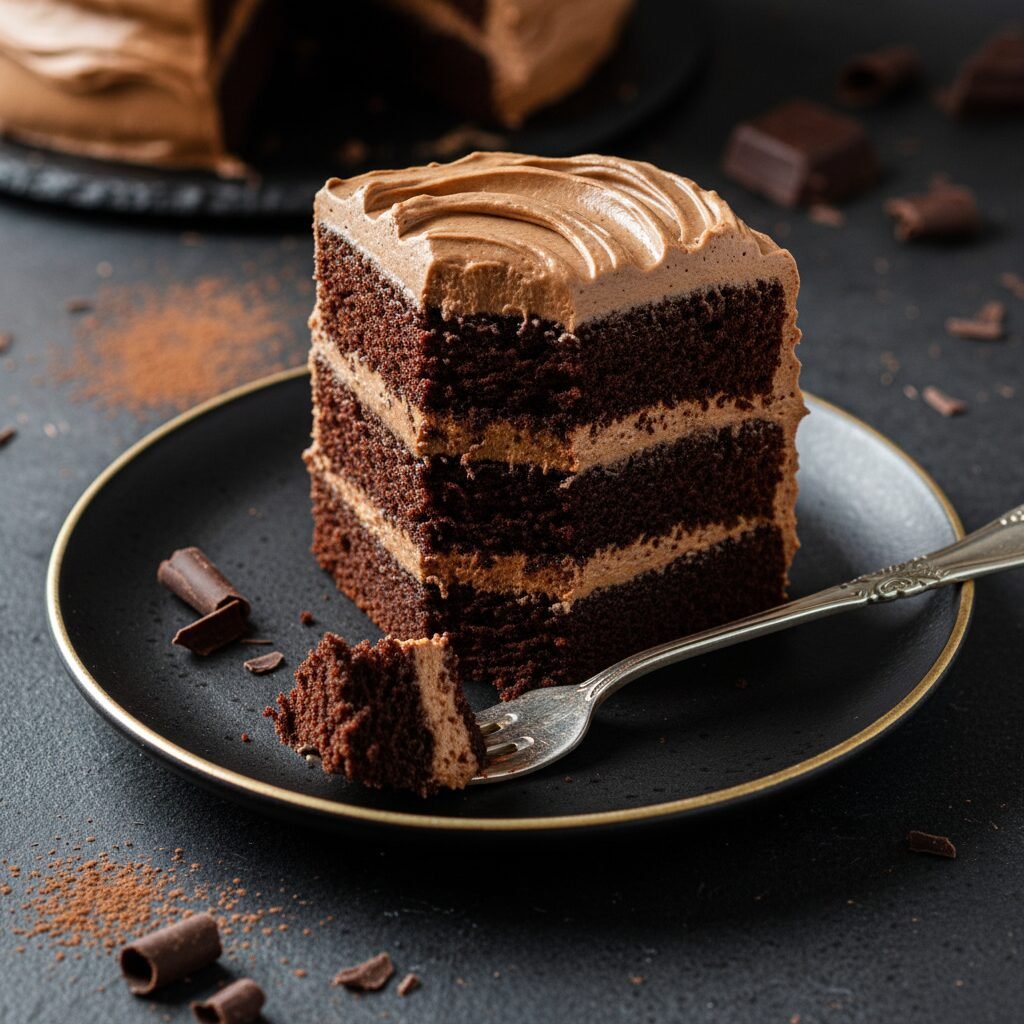
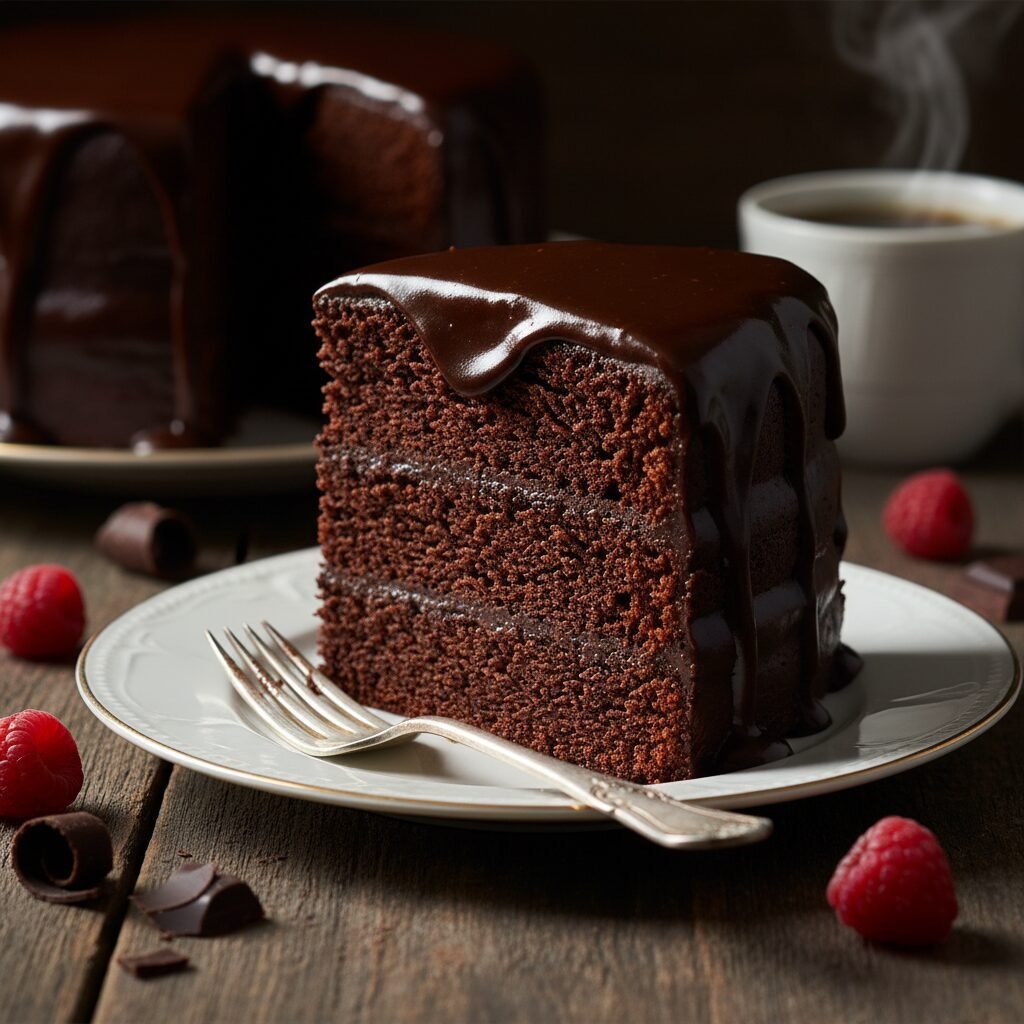
Moist Chocolate Fudge Cake Recipe
Discover the secret to the moistest, richest chocolate fudge cake you will ever taste. This foolproof, one-bowl recipe combines deep cocoa flavors with a silky ganache frosting for a dessert that melts in your mouth and stays soft for days.
20 minutes
35 minutes
1 hour 15 minutes (includes cooling)
12-16 Servings
Dessert
Baking
American
Vegetarian
If there is one recipe that every home baker needs in their repertoire, it is the perfect chocolate cake. But not just any chocolate cake—we are talking about a Moist Chocolate Fudge Cake that stands miles apart from the dry, crumbly sponges often found at grocery store bakeries. This cake is the definition of decadence. Imagine a crumb that is incredibly dark, velvety, and tender, possessing a density that sits perfectly on the fence between a fluffy cake and a fudgy brownie.
What makes this specific recipe a viral sensation on Pinterest and food blogs alike is its unapologetic richness paired with surprising simplicity. There is no creaming of butter and sugar required; it is a straightforward, old-fashioned method that yields professional bakery-quality results every single time. The flavor profile is complex and deep, thanks to a specific technique of blooming the cocoa powder, which unlocks the full potential of the chocolate notes. Topped with a glossy, luxurious chocolate ganache that sets into a soft fudge-like consistency, this cake is a showstopper for birthdays, anniversaries, or those Friday nights when only chocolate will do.
Whether you are a novice baker intimidated by layer cakes or a seasoned pro looking for a reliable ‘go-to’ recipe, this guide will walk you through the science and steps to achieve chocolate nirvana. Prepare your taste buds for a dessert that is intensely chocolatey, impossibly moist, and utterly unforgettable.
History & Origins
The history of chocolate cake is a fascinating journey that mirrors the evolution of chocolate processing itself. For centuries, chocolate was primarily consumed as a beverage. It wasn’t until the mid-19th century, specifically around 1828 when Coenraad van Houten invented the cocoa press, that extracting cocoa butter and creating a fine cocoa powder became possible. This innovation paved the way for chocolate to be used as a baking ingredient rather than just a drink.
However, the earliest ‘chocolate cakes’ were actually yellow or white cakes served with chocolate frosting. It wasn’t until 1886 that cooks began adding chocolate directly into the batter. The term ‘Devil’s Food Cake’ emerged in the early 20th century, allegedly as a playful antithesis to the popular ‘Angel Food Cake.’ The name also referenced the reddish hue the cake would take on; a chemical reaction occurred when natural cocoa powder interacted with high amounts of baking soda, turning the crumb a deep mahogany red.
During the Great Depression and World War II, when ingredients like butter and eggs were rationed, bakers became inventive, using oil and vinegar to keep cakes moist, which inadvertently led to the super-moist textures we adore today. The ‘Fudge Cake’ distinction gained popularity in the mid-20th century, distinguishing itself from standard chocolate cake by its density. While a standard cake is aerated and fluffy, a fudge cake relies on a higher fat-to-flour ratio and often includes melted chocolate or brown sugar to create a heavier, tighter crumb that mimics the texture of confectionery fudge. This recipe pays homage to that rich history, combining the convenience of modern baking with the classic, dense texture of the 1950s fudge cakes.
Why This Recipe Works
This recipe succeeds where many others fail due to a few key chemical interactions and ingredient choices. First and foremost is the use of **oil instead of butter**. While butter provides a lovely flavor, it contains water and milk solids that can lead to a drier crumb once the cake cools. Oil is 100% fat and remains liquid at room temperature, coating the flour proteins (gluten) more effectively. This prevents tough gluten networks from forming and ensures the cake remains sensationally moist for days after baking.
Secondly, the addition of **hot coffee** is the secret weapon. You will not taste the coffee in the final product; rather, the hot liquid serves two purposes. It ‘blooms’ the cocoa powder, dissolving the particles completely to release robust chocolate flavor that cold milk or water simply cannot extract. Physically, the heat also begins to dissolve the sugar before the cake even hits the oven, leading to a smoother batter.
Finally, the combination of **buttermilk and baking soda** creates an immediate leavening reaction. Buttermilk is acidic, which tenderizes the gluten and reacts vigorously with the baking soda to create carbon dioxide bubbles. This lift is crucial to counterbalance the heavy, wet ingredients, ensuring the cake is dense and fudgy but not heavy or gummy. The result is a perfect equilibrium of structure and softness.
Why You’ll Love This Recipe
- ✓Stays moist for 4-5 days without drying out.
- ✓Intense chocolate flavor enhanced by hot coffee.
- ✓No mixer required – just a whisk and two bowls.
- ✓Versatile batter that works for layers, sheet cakes, or cupcakes.
- ✓Includes a foolproof 2-ingredient ganache frosting.
Equipment You’ll Need
- ✓Two 9-inch round cake pans
- ✓Large mixing bowl
- ✓Medium mixing bowl
- ✓Whisk
- ✓Rubber spatula
- ✓Measuring cups and spoons
- ✓Wire cooling rack
- ✓Parchment paper
Ingredients
- ✓2 cups granulated white sugar
- ✓1 3/4 cups all-purpose flour
- ✓3/4 cup unsweetened cocoa powder (good quality)
- ✓1 1/2 teaspoons baking powder
- ✓1 1/2 teaspoons baking soda
- ✓1 teaspoon salt
- ✓2 large eggs, room temperature
- ✓1 cup whole milk or buttermilk
- ✓1/2 cup vegetable oil or canola oil
- ✓2 teaspoons pure vanilla extract
- ✓1 cup boiling hot coffee (or boiling water)
- ✓For the Ganache: 10 oz semi-sweet chocolate chips
- ✓For the Ganache: 1 cup heavy whipping cream
Instructions
- Preheat oven to 350°F (175°C). Grease and flour two 9-inch round baking pans. For extra security, line the bottoms with parchment paper.
- In a large bowl, whisk together the sugar, flour, cocoa, baking powder, baking soda, and salt until well combined and no lumps remain.
- Add the eggs, buttermilk (or milk), oil, and vanilla extract to the dry ingredients. Beat on medium speed with a hand mixer or whisk vigorously by hand for about 2 minutes. The batter should look smooth and creamy.
- Stir in the boiling hot coffee by hand using a spatula or whisk. Pour it in slowly to avoid splashing. CAUTION: The batter will be very thin and watery. This is completely normal and essential for the moist texture.
- Pour the batter evenly into the prepared pans.
- Bake for 30 to 35 minutes. Test for doneness by inserting a wooden toothpick into the center of the cake. If it comes out clean or with just a few moist crumbs, it is done.
- Cool the cakes in the pans for 10 minutes, then remove them from the pans to wire racks to cool completely.
- To make the Ganache Frosting: Place chocolate chips in a heat-proof glass bowl. Heat the heavy cream in a small saucepan until it begins to gently simmer (do not let it come to a rolling boil).
- Pour the hot cream over the chocolate chips. Let it sit for 5 minutes without touching it. Then, gently whisk starting from the center until the mixture is smooth, glossy, and dark.
- Let the ganache sit at room temperature for 15-20 minutes to thicken slightly before pouring over the cooled cakes. Spread evenly and enjoy.
Expert Cooking Tips
- ✓Do not overbake. This is the number one killer of moist cake. Check it at the 30-minute mark.
- ✓Use room temperature eggs and buttermilk. This helps the batter emulsify properly, leading to a better rise.
- ✓Weigh your flour if possible (approx 120g per cup). Scooping directly with the measuring cup often packs the flour down, leading to a dry cake.
- ✓Don’t skip the parchment paper. Fudge cakes are tender and can stick to the bottom of pans easily.
- ✓If using black coffee, choose a strong brew. It enhances the chocolate depth without making the cake taste like espresso.
- ✓Allow the cakes to cool completely before frosting. The ganache will melt and slide right off if the cake is even slightly warm.
- ✓Tap the pans on the counter before baking to release any large air bubbles trapped in the batter.
Substitutions and Variations
This recipe is quite robust, but careful substitutions are key to maintaining texture.
**Flour:** You can use a 1:1 Gluten-Free All-Purpose baking flour blend (look for one with xanthan gum) to make this gluten-free. The texture changes slightly but remains delicious.
**Dairy:** If you don’t have buttermilk, make a sour milk substitute by adding 1 tablespoon of white vinegar or lemon juice to a cup of regular milk and letting it sit for 5 minutes. For a dairy-free version, use almond or soy milk combined with the vinegar trick, and swap the heavy cream in the frosting for full-fat coconut milk (canned).
**Oil:** Melted coconut oil or light olive oil can be used instead of vegetable oil. Melted butter can be used, but the cake will be slightly denser and dry out faster.
**Coffee:** If you are sensitive to caffeine or baking for kids, you can use boiling water. The chocolate flavor won’t be quite as ‘dark,’ but it will still be excellent. Decaf coffee is also a perfect compromise.
Common Mistakes to Avoid
The most common mistake with this specific recipe is panicking when the batter is thin. Because we add a full cup of hot liquid at the end, the batter resembles chocolate soup more than traditional cake batter. Do not add more flour to thicken it; trust the process! Another frequent error is using old baking soda or baking powder. Since this cake relies heavily on chemical leavening for lift, expired agents will result in a dense, flat puck. Always check your expiration dates. Lastly, avoid opening the oven door repeatedly during the first 20 minutes of baking. This cake needs consistent heat to set its structure; a rush of cold air can cause the center to collapse.
Serving Suggestions
This rich cake pairs beautifully with elements that cut through the sweetness. A scoop of vanilla bean ice cream is classic, creating a hot-cold contrast if the cake is slightly warmed. Fresh raspberries or strawberries add a tart brightness that balances the heavy chocolate. For a sophisticated touch, serve with a dollop of unsweetened whipped cream and a dusting of sea salt on top of the ganache. It is also excellent served with a hot espresso or a cold glass of milk.
Storage and Reheating Tips
Because this cake is oil-based, it stays moist at room temperature for longer than butter cakes. Store it in an airtight cake carrier or cover tightly with plastic wrap for up to 3-4 days on the counter. If you live in a very hot or humid climate, store it in the refrigerator for up to a week, but let it come to room temperature before serving for the best texture and flavor.
**Freezing:** The unfrosted cake layers freeze beautifully. Wrap each cooled layer in two layers of plastic wrap and one layer of foil. They can be frozen for up to 3 months. Thaw in the fridge overnight before assembling.
Nutrition Facts (Estimated)
| Serving Size | 1 slice |
| Calories | 580 |
| Fat | 32g |
| Saturated Fat | 10g |
| Unsaturated Fat | 20g |
| Trans Fat | 0g |
| Cholesterol | 65mg |
| Sodium | 320mg |
| Carbohydrates | 72g |
| Fiber | 4g |
| Sugar | 45g |
| Protein | 6g |
Frequently Asked Questions
Can I turn this recipe into cupcakes?
Yes! This batter makes excellent cupcakes. Line a muffin tin with papers and fill them about 2/3 full. Bake at 350°F for 18-22 minutes. It typically yields 24-30 cupcakes.
Why did my cake sink in the middle?
Sinking usually happens for one of three reasons: the oven door was opened too early, the cake was underbaked, or there was too much leavener (baking soda/powder). Ensure your oven temperature is accurate using an oven thermometer.
Can I use Dutch-process cocoa powder?
Natural unsweetened cocoa powder is best for this recipe because its acidity reacts with the baking soda to help the cake rise. However, because there is also baking powder, Dutch-process will work, but the cake might be slightly denser and darker.
Do I have to use coffee?
No, you can use boiling water. However, the coffee enhances the chocolate flavor significantly without imparting a coffee taste. It makes the chocolate taste ‘more chocolatey.’
Can I use a bundt pan?
Yes, but grease it extremely well. Bake at 350°F for about 45-55 minutes. The thin batter can sometimes stick to intricate bundt designs, so use a high-quality baking spray with flour.
My ganache is too runny, how do I fix it?
If the ganache is too thin, let it sit at room temperature longer; it thickens as it cools. You can also refrigerate it for 10-minute intervals, stirring in between, until it reaches a spreadable consistency.
Can I use self-rising flour?
It is not recommended. This recipe has specific ratios of baking powder, baking soda, and salt tailored to the acidity of the buttermilk and cocoa. Using self-rising flour throws off these ratios.
Is this cake sweet?
It is a rich dessert, but the unsweetened cocoa powder and the bitterness of the coffee help balance the two cups of sugar. It is sweet, but deep and dark rather than cloying.
Conclusion
There you have it—the blueprint for the most incredible Moist Chocolate Fudge Cake you will ever bake. It is a recipe that defies the notion that great baking requires complicated techniques or fancy equipment. With its deep, dark color, tender crumb, and luxurious ganache finish, this cake is bound to become a family tradition. Whether you are celebrating a milestone or just treating yourself to a slice of comfort, this cake delivers on every promise. Don’t forget to pin this recipe for later and leave a comment below telling us how yours turned out!