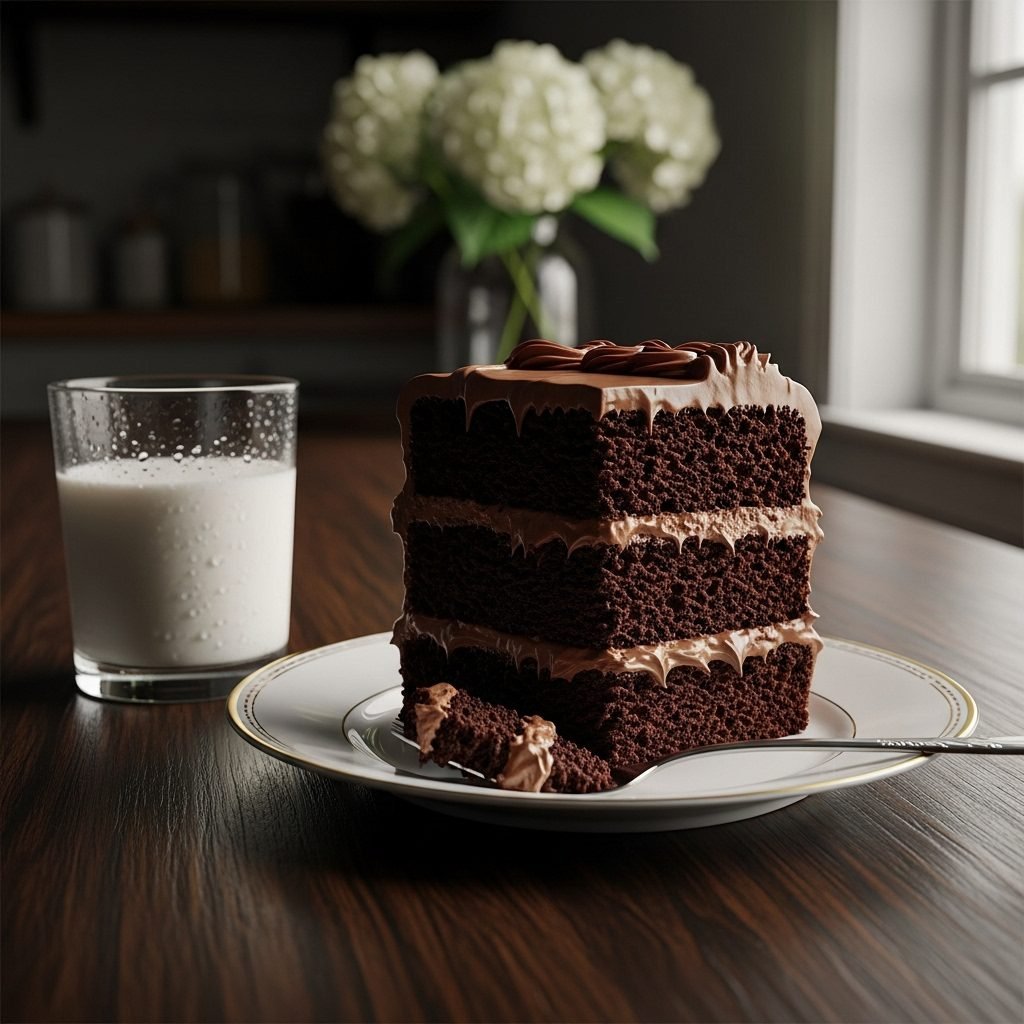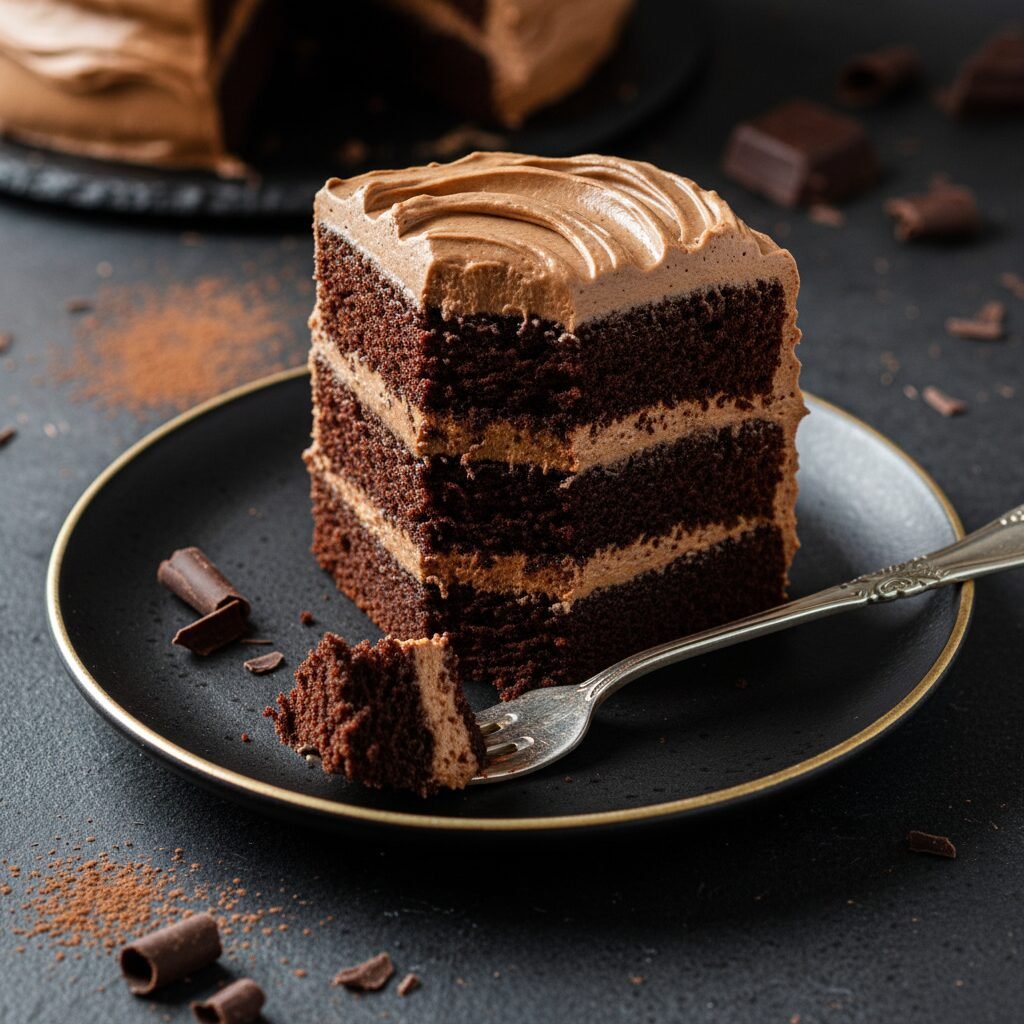
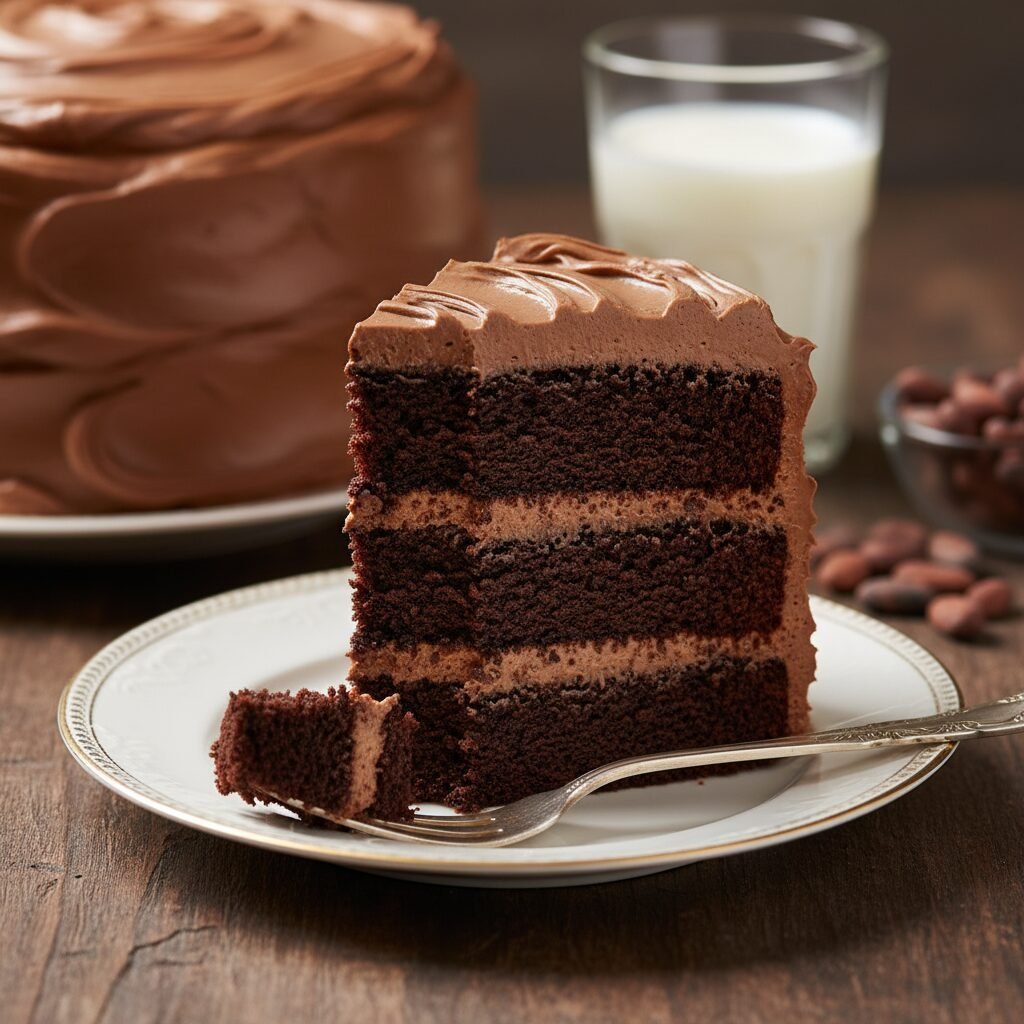
Moist Chocolate Fudge Cake With Chocolate Buttercream Recipe
This is the definitive recipe for the chocolate lover in your life. Featuring an incredibly moist, dark chocolate sponge that stays soft for days, paired with a silky, decadent chocolate buttercream, it is the perfect balance of sweetness and deep cocoa flavor.
25 minutes
35 minutes
1 hour 15 minutes
12-14 Servings
Dessert
Baking
American
Vegetarian
If there is one recipe that every home baker needs in their repertoire, it is a foolproof chocolate cake. We aren’t talking about a dry, crumbly sponge that requires a gallon of milk to wash down. We are talking about the kind of cake that haunts your dreams—dark, fudgy, incredibly moist, and topped with a buttercream so smooth it feels like velvet on the tongue. This Moist Chocolate Fudge Cake recipe is the result of years of testing, tweaking, and tasting to find the perfect equilibrium between a light crumb and a dense, brownie-like richness.
The secret lies in the method and the ingredients. Unlike standard yellow cakes that simply add cocoa powder, this recipe treats chocolate as the main event. The batter is thin, almost liquid, which might scare novice bakers, but trust the process. This high liquid content ensures that the cake bakes up with a tender texture that defies logic. As it bakes, the kitchen fills with the intoxicating aroma of warm cocoa and vanilla, a scent that screams ‘comfort’ and ‘celebration’ simultaneously.
Then, there is the frosting. A chocolate cake is only as good as its frosting, and this Chocolate Buttercream is the crown jewel. It is whipped to perfection, using a high ratio of heavy cream to butter to create an airy yet stable topping that pipes beautifully and melts in your mouth. Whether you are baking for a birthday, an anniversary, or simply because it is a Tuesday and you deserve a treat, this cake delivers on every promise. It is sophisticated enough for a dinner party but accessible enough for a weekend project with the kids. Prepare yourself for the inevitable request for a second slice.
History & Origins
The history of chocolate cake is a fascinating journey through the evolution of baking technology and ingredient availability. While chocolate has been consumed as a beverage for thousands of years, starting with Mesoamerican civilizations, its transition into a solid cake form is a relatively recent phenomenon in the grand timeline of culinary history. Until the mid-19th century, chocolate was primarily a drink for the wealthy. It wasn’t until 1828, when Coenraad van Houten discovered a way to mechanically extract fat from cacao liquor to produce cocoa powder, that baking with chocolate became feasible.
The earliest ‘chocolate cakes’ were actually yellow or white cakes served with a chocolate glaze or drink on the side. The first recipes incorporating chocolate into the batter appeared in American cookbooks around the 1880s. However, these early versions were often pale and lacked the deep flavor we crave today. The real game-changer came with the introduction of ‘Devil’s Food Cake’ in the early 20th century. This name was likely given to contrast with the popular, snowy-white ‘Angel Food Cake,’ suggesting that the dark, rich chocolate cake was sinfully delicious.
During the Great Depression and World War II, when ingredients like butter and eggs were rationed, bakers became inventive. This era popularized the use of oil and vinegar (or buttermilk) in cakes to keep them moist without relying heavily on dairy. This necessity-born innovation is actually the ancestor of the modern ‘fudge’ cake style. The addition of boiling water or coffee, a technique popularized in the mid-20th century by major cocoa manufacturers on the back of tin cans, further evolved the texture, moving away from a bread-like consistency to the damp, dense crumb we associate with high-quality fudge cakes today. This recipe pays homage to that century of innovation, combining the best historical techniques for a modern masterpiece.
Why This Recipe Works
This recipe succeeds where many others fail due to three specific scientific principles: the blooming of cocoa, the fat source, and the acidity. First, the inclusion of boiling hot coffee is not a gimmick. When you pour boiling liquid over cocoa powder, you ‘bloom’ it. This process dissolves the cocoa solids and releases flavor compounds that are otherwise trapped, resulting in a significantly more intense chocolate taste without adding more sugar. The coffee itself enhances the chocolate notes without making the cake taste like a latte.
Secondly, we use oil instead of butter for the cake sponge. While butter provides great flavor, it is about 20% water and solidifies at room temperature. Vegetable oil is 100% fat and remains liquid at room temperature. This means the cake stays incredibly soft and moist on the counter for days, whereas butter-based cakes can dry out and firm up quickly. We rely on the frosting to provide that buttery flavor profile, getting the best of both worlds.
Finally, the use of buttermilk and brown sugar creates an acidic environment. This acidity reacts vigorously with the baking soda, creating carbon dioxide gas that lifts the heavy, wet batter. This reaction is crucial because it allows us to have a dense, fudgy texture that is still light enough to eat. The brown sugar also adds moisture due to its molasses content, contributing to that ‘fudge’ consistency that distinguishes this cake from a standard sponge.
Why You’ll Love This Recipe
- ✓Uses the ‘blooming’ technique for intense chocolate flavor.
- ✓Oil-based batter ensures the cake stays moist for 4-5 days.
- ✓One-bowl mixing method for the cake batter reduces cleanup.
- ✓The buttercream is whipped for 5 minutes for maximum fluffiness.
- ✓Perfect balance of sweet and salty to prevent flavor fatigue.
Equipment You’ll Need
- ✓Two 8-inch or 9-inch round cake pans
- ✓Stand mixer or handheld electric mixer
- ✓Large mixing bowl
- ✓Whisk
- ✓Sifter or fine-mesh strainer
- ✓Wire cooling rack
- ✓Parchment paper
- ✓Offset spatula
Ingredients
- ✓2 cups Granulated Sugar
- ✓1 3/4 cups All-Purpose Flour
- ✓3/4 cup Unsweetened Cocoa Powder (high quality)
- ✓1 1/2 tsp Baking Powder
- ✓1 1/2 tsp Baking Soda
- ✓1 tsp Fine Sea Salt
- ✓2 large Eggs (room temperature)
- ✓1 cup Whole Milk or Buttermilk (room temperature)
- ✓1/2 cup Vegetable Oil (or Canola Oil)
- ✓2 tsp Pure Vanilla Extract
- ✓1 cup Boiling Hot Strong Coffee (or boiling water)
- ✓1 cup Unsalted Butter (softened, for frosting)
- ✓3 1/2 cups Powdered Sugar
- ✓1/2 cup Cocoa Powder (for frosting)
- ✓1/4 cup Heavy Cream
- ✓1 tsp Vanilla Extract (for frosting)
- ✓Pinch of Salt (for frosting)
Instructions
- Preheat oven to 350°F (175°C). Grease two 8-inch or 9-inch round cake pans with butter and dust with cocoa powder. Line the bottoms with parchment paper for easy removal.
- In a large mixing bowl, sift together the flour, sugar, 3/4 cup cocoa powder, baking powder, baking soda, and 1 tsp salt. Whisk to ensure everything is evenly combined.
- Add the eggs, buttermilk, vegetable oil, and 2 tsp vanilla extract to the dry ingredients. Beat with a mixer on medium speed for about 2 minutes. The batter should look well-combined.
- Turn the mixer to the lowest speed and carefully pour in the boiling hot coffee. Mix just until combined. The batter will be very thin and liquid—this is normal! Do not overmix.
- Divide the batter evenly between the two prepared cake pans.
- Bake for 30 to 35 minutes. Test for doneness by inserting a wooden toothpick into the center; it should come out clean or with just a few moist crumbs attached.
- Remove from the oven and let the cakes cool in the pans for 10 minutes. Then, run a knife around the edges and carefully invert them onto a wire rack to cool completely.
- While the cakes cool, make the buttercream. In a stand mixer fitted with the paddle attachment, beat the softened butter on medium-high speed for 3-4 minutes until pale and creamy.
- Sift the powdered sugar and 1/2 cup cocoa powder together. Gradually add this to the butter on low speed.
- Once the sugar is incorporated, increase the speed to medium. Add the vanilla extract, pinch of salt, and heavy cream. Beat on high speed for 3-5 minutes until the frosting is light, airy, and fluffy.
- Assemble the cake: Place one cake layer on your serving plate. Spread a generous layer of frosting over the top. Place the second cake layer on top. Cover the top and sides of the entire cake with the remaining frosting.
- Slice and serve immediately, or store for later.
Expert Cooking Tips
- ✓Use room temperature eggs and buttermilk to ensure the batter emulsifies properly.
- ✓Do not skip the parchment paper; this cake is moist and can stick to the pan bottom without it.
- ✓Weigh your flour using a kitchen scale (approx 120g per cup) to avoid a dense cake.
- ✓Use high-quality cocoa powder (like Valrhona or Ghirardelli) for the best flavor payoff.
- ✓Let the cakes cool completely before frosting, or the butter in the frosting will melt and slide off.
- ✓If you don’t drink coffee, you can use boiling water, but coffee enhances the chocolate flavor without adding coffee taste.
- ✓Tap the pans on the counter before baking to release large air bubbles.
Substitutions and Variations
Baking is chemistry, so substitutions should be made with care. If you do not have buttermilk, you can make a ‘sour milk’ substitute by adding 1 tablespoon of white vinegar or lemon juice to a cup of regular whole milk and letting it sit for 5 minutes. For a gluten-free version, swap the all-purpose flour for a high-quality 1:1 Gluten-Free Baking Flour blend (one that contains xanthan gum). If you are out of vegetable oil, melted coconut oil or canola oil works perfectly; melted butter can be used but will result in a slightly denser crumb that dries out faster. For the frosting, if you don’t have heavy cream, whole milk works, but add it teaspoon by teaspoon to avoid making the frosting too runny. You can also substitute the hot coffee with hot water or even hot Earl Grey tea for a unique flavor twist.
Common Mistakes to Avoid
The most common mistake with this cake is overbaking. Because the batter is dark, it is hard to see visual cues like browning. Rely on the toothpick test; if it comes out bone dry, you’ve gone too far. It should have a few moist crumbs. Another error is opening the oven door too frequently during the first 20 minutes of baking. This causes a drop in temperature that can make the cake collapse in the center. Regarding the frosting, a common mistake is not beating the butter long enough before adding sugar. You want the butter to be nearly white and very aerated to avoid a heavy, greasy buttercream. Finally, do not try to frost a warm cake—patience is key, or you will end up with a sliding, melted mess.
Serving Suggestions
This cake is rich, so it pairs beautifully with elements that cut through the sweetness. A scoop of high-quality vanilla bean ice cream is a classic choice, providing a temperature and texture contrast. Fresh berries, particularly raspberries or strawberries, add a tart freshness that brightens the deep chocolate notes. For a sophisticated finish, serve with a dollop of unsweetened whipped cream and a dusting of espresso powder. If serving for a holiday, crushed peppermint candies or a drizzle of salted caramel sauce can elevate the presentation.
Storage and Reheating Tips
Because this cake is oil-based, it stores exceptionally well. It can be kept at room temperature, covered in a cake dome or airtight container, for up to 4 days without drying out. In fact, many find it tastes even better on the second day as the flavors meld. If you live in a very hot or humid climate, store it in the refrigerator, but allow it to come to room temperature for an hour before serving for the best texture. The cake layers can also be frozen (unfrosted) for up to 3 months. Wrap them tightly in plastic wrap and then foil. Thaw in the fridge overnight before frosting.
Nutrition Facts (Estimated)
| Serving Size | 1 slice |
| Calories | 580 |
| Fat | 32g |
| Saturated Fat | 12g |
| Unsaturated Fat | 18g |
| Trans Fat | 0g |
| Cholesterol | 85mg |
| Sodium | 310mg |
| Carbohydrates | 72g |
| Fiber | 4g |
| Sugar | 48g |
| Protein | 6g |
Frequently Asked Questions
Can I use Dutch-processed cocoa powder?
Yes, but be careful. This recipe uses baking soda, which requires acid to activate. Natural cocoa is acidic, while Dutch-processed is neutral. If you use Dutch-processed, ensure you are using buttermilk (acidic) to activate the soda, or replace the baking soda with baking powder.
Will the cake taste like coffee?
No. The coffee acts as a flavor enhancer for the chocolate. It deepens the cocoa profile but does not impart a distinct coffee flavor. If you are very sensitive, use boiling water instead.
Why is my batter so runny?
This is completely normal for this specific recipe! The high liquid content ensures a moist cake. Do not add more flour to thicken it, or you will end up with a dry, bready cake.
Can I make this into cupcakes?
Absolutely. This recipe makes about 24-30 standard cupcakes. Bake them at 350°F for 18-22 minutes.
How do I get flat cake layers?
You can use ‘cake strips’ (damp fabric strips wrapped around the pan) to insulate the edges, preventing them from cooking faster than the center. Alternatively, just trim the domes off with a serrated knife before frosting—and eat the scraps!
Can I reduce the sugar?
Reducing sugar affects not just sweetness but also moisture and texture. You can reduce it by about 1/4 cup without disaster, but any more than that and the cake may become tough and dry.
Why did my cake sink in the middle?
This usually happens if the oven door was opened too early, the oven wasn’t fully preheated, or the leavening agents (baking soda/powder) were expired.
Can I use salted butter for the frosting?
Yes, you can. If you use salted butter, omit the additional pinch of salt in the frosting recipe. Sweet and salty is a great combination for chocolate.
Conclusion
There you have it—the blueprint for the perfect Moist Chocolate Fudge Cake. Whether you are an experienced pastry chef or a home baker trying to impress guests, this recipe is forgiving, reliable, and utterly delicious. The combination of the tender, dark crumb and the fluffy, cloud-like buttercream creates a dessert experience that feels truly special. Don’t be surprised if this becomes the most requested item in your kitchen. Happy baking, and enjoy every decadent bite!