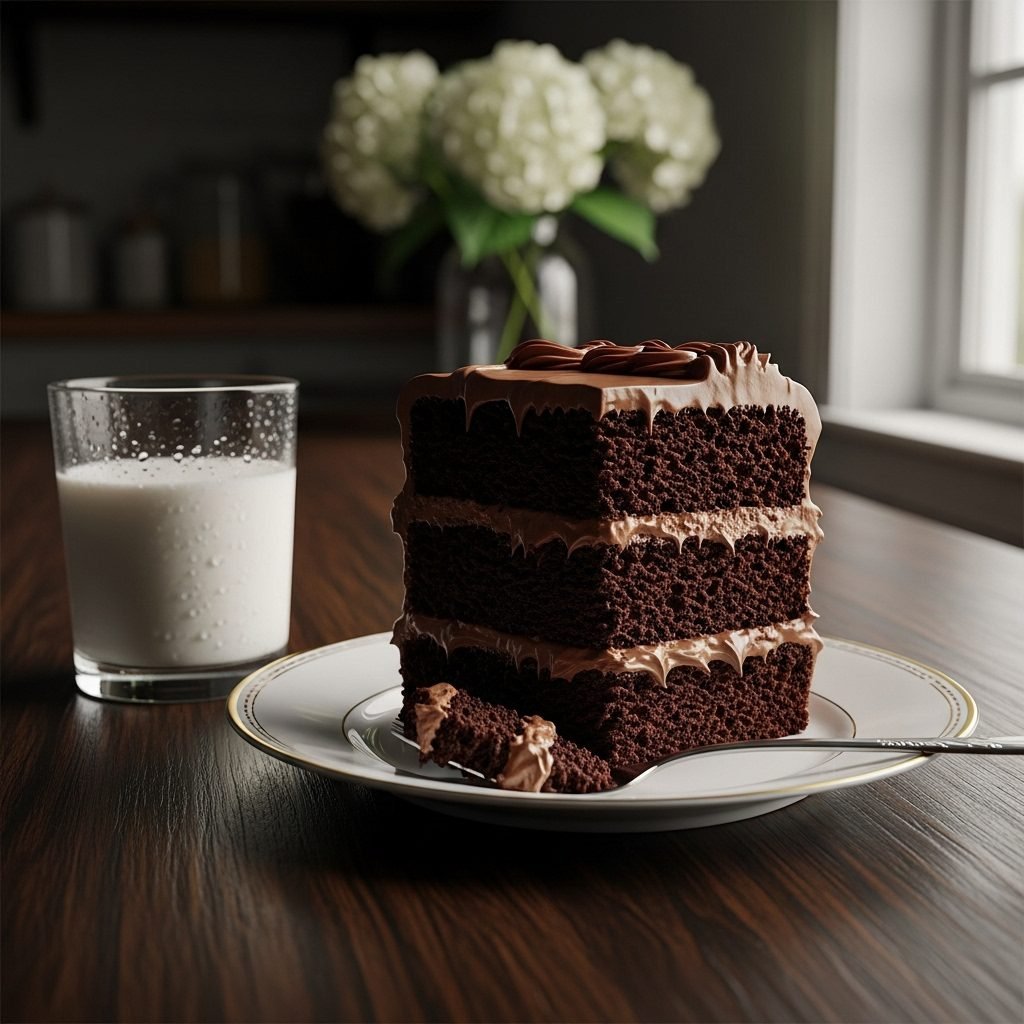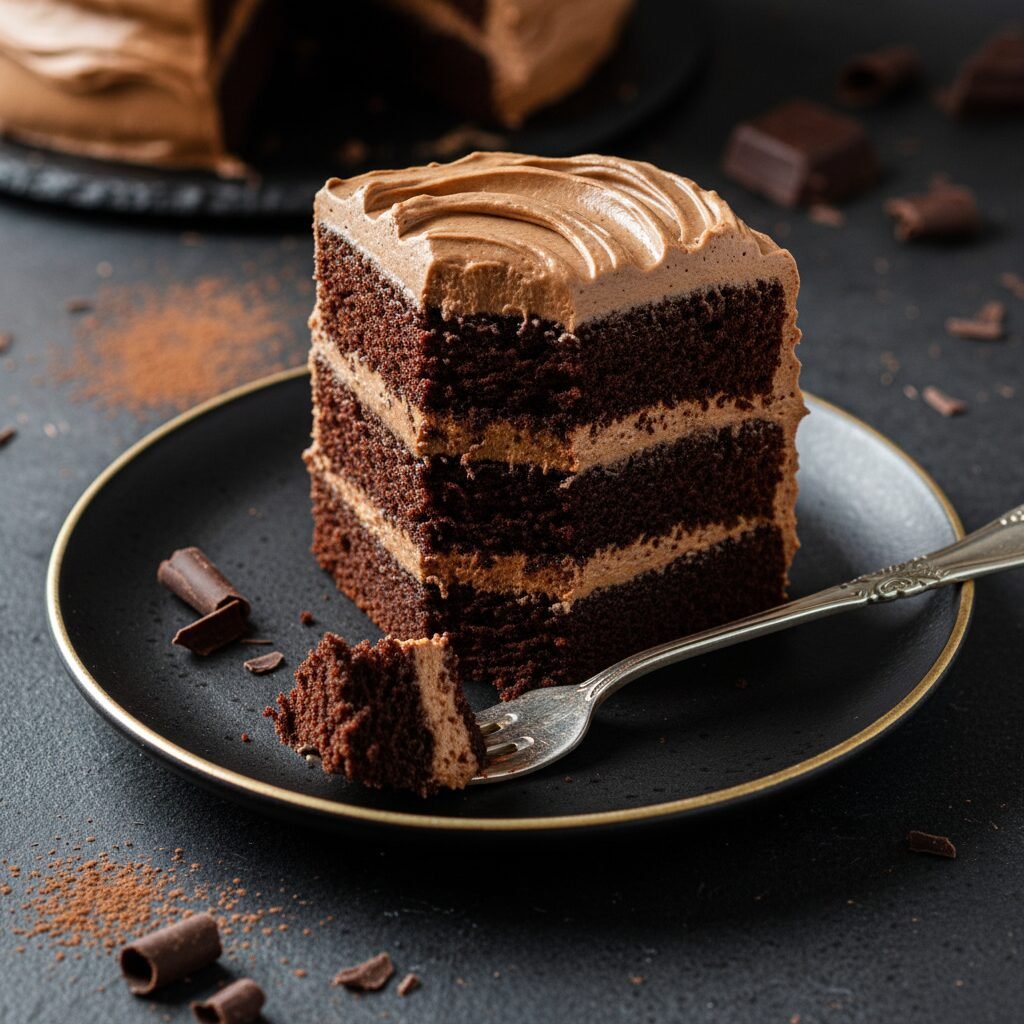
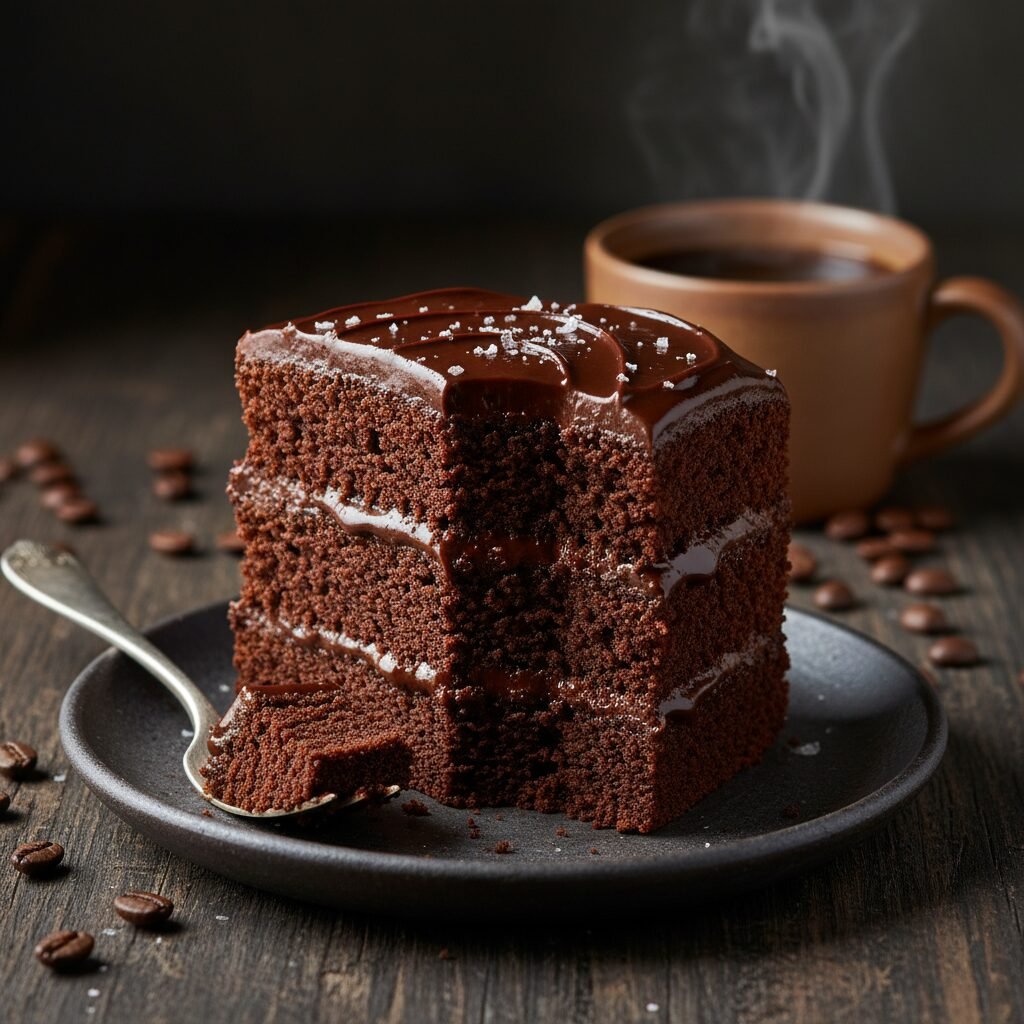
Moist Chocolate Fudge Cake With Coffee Recipe
This is the only chocolate cake recipe you will ever need. Infused with hot coffee to bloom the cocoa, this cake is impossibly moist, deeply fudgy, and covered in a decadent ganache. It’s a foolproof dessert that tastes better the next day.
20 minutes
35 minutes
55 minutes
12-14 Servings
Dessert
Baking
American
Vegetarian
If there is one dessert that has the power to stop time, cure a bad day, and bring people together, it is undeniably a slice of rich, homemade chocolate cake. But not just any chocolate cake—we are talking about the kind that sticks to your fork, melts in your mouth, and boasts a depth of flavor that boxed mixes simply cannot replicate. This Moist Chocolate Fudge Cake with Coffee is the culmination of years of baking experiments to find the perfect balance between a light crumb and a dense, fudgy texture.
The secret weapon here is coffee. Many home bakers hesitate when they see coffee listed in a chocolate recipe, fearing the result will taste like a mocha latte. However, in this specific ratio, the coffee acts purely as a flavor enhancer. Much like salt brings out the sweetness in caramel, the bitterness and acidity of hot coffee bloom the cocoa powder, intensifying the chocolate notes and making them taste more like ‘chocolate’ than you thought possible.
Beyond the flavor, the texture of this cake is what truly sets it apart. By utilizing oil instead of butter for the batter, we ensure the cake remains soft and moist for days, even when refrigerated. Butter contains water which evaporates during baking, and milk solids which can dry out the crumb, whereas oil remains liquid at room temperature, coating the flour proteins and preventing tough gluten formation. Whether you are baking for a birthday, a holiday celebration, or just a Tuesday night craving, this recipe delivers a bakery-quality result with surprisingly minimal effort. Prepare to ruin yourself for all other chocolate cakes.
History & Origins
The history of chocolate cake is a journey that mirrors the evolution of chocolate processing itself. Before the mid-19th century, chocolate was primarily consumed as a beverage. It wasn’t until 1828, when Coenraad van Houten of the Netherlands developed a mechanical extraction method to separate cocoa butter from cacao liquor, that we got ‘cocoa powder.’ This invention was pivotal, making chocolate affordable and available in a dry form suitable for baking.
However, the ‘chocolate cake’ as we know it didn’t appear immediately. Early versions in the mid-1800s were actually yellow or white cakes served with chocolate frosting. It wasn’t until 1886 that American cooks began adding chocolate directly into the batter. The first recipes were often called ‘Devil’s Food Cake,’ a name that emerged in the early 20th century to contrast the light and airy ‘Angel Food Cake.’ The ‘Devil’s’ moniker likely referred to the cake’s dark, reddish hue—caused by the reaction between natural cocoa powder and baking soda—and its sinful richness.
The addition of coffee to chocolate cake is a more modern refinement, gaining popularity in the mid-to-late 20th century as culinary science became more accessible to home cooks. Bakers realized that the hot liquid not only helped dissolve the cocoa powder to prevent clumps but also unlocked specific flavor compounds. Today, the combination of coffee and chocolate is a standard in high-end pastry kitchens, bridging the gap between a simple sweet treat and a complex, gourmet dessert.
Why This Recipe Works
This recipe succeeds where many others fail due to three key chemical interactions: the blooming of cocoa, the choice of fat, and the acidity balance. First, the ‘blooming’ process involves mixing the cocoa powder with hot coffee. Cocoa powder is essentially dried starch and fiber; adding hot liquid hydrates these starches immediately and releases flavor oils that are otherwise trapped. This results in a more profound, three-dimensional chocolate taste compared to sifting cocoa with flour.
Second, the fat source is crucial. While butter offers a lovely flavor, it is roughly 80% fat and 20% water. In a cake meant to be ‘fudgy,’ we want pure fat to coat the flour particles and inhibit gluten development. Vegetable oil is 100% fat and stays liquid at room temperature. This means your cake stays tender and moist on the counter, whereas a butter-based cake might firm up and feel dry as it cools.
Finally, the leavening agents are carefully balanced. We use both baking powder and baking soda. The baking soda requires an acid to activate, which is provided by the buttermilk and the natural acidity of the coffee and cocoa. This reaction creates carbon dioxide bubbles that lift the heavy, wet batter, ensuring that while the cake is dense and fudgy, it isn’t heavy or gummy. The result is a perfect structural integrity that supports rich frosting without collapsing.
Why You’ll Love This Recipe
- ✓Uses hot coffee to intensify chocolate flavor without adding coffee taste.
- ✓Oil-based batter ensures the cake stays moist for 4-5 days.
- ✓Simple one-bowl mixing method (no stand mixer required).
- ✓Deep, dark color and fudgy texture similar to ‘Matilda’ cake.
- ✓Versatile: works as a layer cake, sheet cake, or cupcakes.
Equipment You’ll Need
- ✓Two 9-inch round cake pans
- ✓Large mixing bowl
- ✓Whisk
- ✓Sifter or fine-mesh sieve
- ✓Measuring cups and spoons
- ✓Parchment paper
- ✓Wire cooling rack
Ingredients
- ✓2 cups all-purpose flour
- ✓2 cups granulated sugar
- ✓3/4 cup unsweetened cocoa powder (Dutch-processed preferred)
- ✓2 teaspoons baking powder
- ✓1 1/2 teaspoons baking soda
- ✓1 teaspoon kosher salt
- ✓1 cup buttermilk, room temperature
- ✓1/2 cup vegetable oil (or canola oil)
- ✓2 large eggs, room temperature
- ✓2 teaspoons pure vanilla extract
- ✓1 cup freshly brewed strong hot coffee
Instructions
- Preheat your oven to 350°F (175°C). Grease two 9-inch round cake pans with butter or cooking spray and line the bottoms with parchment paper. Dust the sides with a little cocoa powder to prevent sticking.
- In a large mixing bowl, sift together the flour, sugar, cocoa powder, baking powder, baking soda, and salt. Whisk well to ensure all dry ingredients are evenly distributed.
- In a separate medium bowl, whisk together the buttermilk, vegetable oil, eggs, and vanilla extract until combined.
- Pour the wet ingredients into the dry ingredients. Mix with a whisk or electric mixer on low speed until just combined. Do not overmix.
- Slowly pour the hot coffee into the batter while whisking gently. The batter will be very thin and liquid—this is completely normal and ensures a moist cake.
- Divide the batter evenly between the two prepared cake pans. Tap the pans gently on the counter to release any large air bubbles.
- Bake for 30-35 minutes, or until a wooden toothpick inserted into the center comes out clean or with just a few moist crumbs attached.
- Remove from the oven and let the cakes cool in the pans for about 15 minutes. Then, run a knife around the edges and invert them onto a wire rack to cool completely before frosting.
Expert Cooking Tips
- ✓Do not skip the parchment paper; this cake is very moist and can stick to the bottom of the pan without it.
- ✓Ensure your baking powder and baking soda are fresh. Old leavening agents will result in a flat, dense cake.
- ✓Room temperature ingredients (eggs and buttermilk) emulsify better, leading to a more uniform crumb.
- ✓If you don’t have buttermilk, make a substitute by adding 1 tablespoon of vinegar or lemon juice to 1 cup of whole milk and letting it sit for 5 minutes.
- ✓Don’t overbake! Start checking at the 30-minute mark. Overbaking is the number one cause of dry chocolate cake.
- ✓Use high-quality cocoa powder. Since chocolate is the main flavor, a premium brand like Valrhona or Guittard makes a huge difference.
- ✓Let the cake cool completely before frosting, otherwise, your frosting will melt and slide off.
Substitutions and Variations
This recipe is quite robust, but careful substitutions are key to maintaining the texture. For the flour, you can use a 1:1 Gluten-Free baking flour blend (one that contains xanthan gum) with excellent results. If you are avoiding caffeine, decaf coffee works perfectly fine; the chemical reaction relies on the heat and acidity, not the caffeine content. If you absolutely cannot use coffee, boiling water is an acceptable substitute, though the chocolate flavor will be slightly less intense. For the oil, melted coconut oil or light olive oil can be used, though olive oil may impart a slight fruity flavor. Do not substitute butter for the oil in the batter, as it changes the moisture content. Greek yogurt or sour cream thinned with a little milk can replace buttermilk in a pinch.
Common Mistakes to Avoid
The most common mistake with this recipe is panicking when the batter looks like soup. The hot liquid makes the batter extremely thin, but this is necessary for the hydration of the cocoa. Do not add more flour to thicken it. Another mistake is opening the oven door too early. This cake relies on steam and chemical leavening to rise; opening the door before the structure sets (around 20-25 minutes) can cause the center to collapse. Finally, using ‘natural’ cocoa powder when the recipe might benefit from ‘Dutch-process’ (or vice versa) can affect the rise. This recipe contains both baking soda and powder, so it works with either, but Dutch-process yields a darker, fudgier result.
Serving Suggestions
This rich cake pairs beautifully with something to cut through the intensity. A scoop of high-quality vanilla bean ice cream is classic. For a fruitier contrast, serve with fresh raspberries or a raspberry coulis, as the tartness balances the deep chocolate and coffee notes. A dollop of lightly sweetened whipped cream and a dusting of espresso powder makes for an elegant presentation. If you want to go all out, drizzle warm salted caramel sauce over the slice just before serving.
Storage and Reheating Tips
Because this cake is oil-based, it stores incredibly well. It can be kept at room temperature in an airtight container or cake dome for up to 3 days. In fact, the flavor often improves on the second day. If you live in a hot or humid climate, or if you use a perishable frosting (like cream cheese or ganache), store the cake in the refrigerator for up to 5 days. Allow the cake to come to room temperature before eating for the best texture. The cake layers can also be frozen (unfrosted) for up to 3 months. Wrap each layer tightly in plastic wrap and then aluminum foil.
Nutrition Facts (Estimated)
| Serving Size | 1 Slice |
| Calories | 480 |
| Fat | 24g |
| Saturated Fat | 6g |
| Unsaturated Fat | 16g |
| Trans Fat | 0g |
| Cholesterol | 45mg |
| Sodium | 320mg |
| Carbohydrates | 62g |
| Fiber | 4g |
| Sugar | 35g |
| Protein | 6g |
Frequently Asked Questions
Will this cake taste like coffee?
No, it will not taste like a mocha cake. The coffee flavor essentially disappears during baking, serving only to enhance the richness and depth of the chocolate.
Can I use instant coffee?
Absolutely. Dissolve 2 teaspoons of instant coffee granules in 1 cup of boiling water. This is a very common and effective method.
Why is my cake dry?
Dryness is usually caused by overbaking or measuring flour incorrectly. Be sure to ‘spoon and level’ your flour rather than scooping the cup directly into the bag, which packs the flour down.
Can I make this into cupcakes?
Yes! This recipe yields about 24-28 cupcakes. Bake them at 350°F for 18-22 minutes.
Can I use milk instead of buttermilk?
Regular milk lacks the acidity needed to react with the baking soda properly. If you don’t have buttermilk, use the milk-and-vinegar substitute mentioned in the cooking tips.
Why did my cake sink in the middle?
This can happen if the oven door was opened too early, if the oven temperature was too low, or if there was too much leavening (baking soda/powder).
Do I need a stand mixer?
No. In fact, a hand whisk is better for this recipe to prevent overmixing. You want to mix just until the ingredients are combined.
What is the best frosting for this cake?
A dark chocolate ganache or a chocolate Swiss meringue buttercream are excellent choices. A simple cream cheese frosting also provides a nice tang to balance the sweetness.
Can I bake this in a 9×13 pan?
Yes, you can bake this as a sheet cake. The baking time will likely need to be adjusted to 35-45 minutes.
Conclusion
There are thousands of chocolate cake recipes on the internet, but this Moist Chocolate Fudge Cake with Coffee stands in a league of its own. It balances scientific precision with home-baking simplicity to create a dessert that is truly memorable. Whether you are an experienced baker or a novice in the kitchen, this recipe is forgiving, reliable, and guaranteed to impress. The dark, velvety crumb and the intense chocolate flavor make it the perfect centerpiece for any celebration. So brew that pot of coffee, preheat your oven, and get ready to enjoy the best chocolate cake you’ve ever had.