Moist Chocolate Fudge Cake With Salted Caramel Frosting Recipe
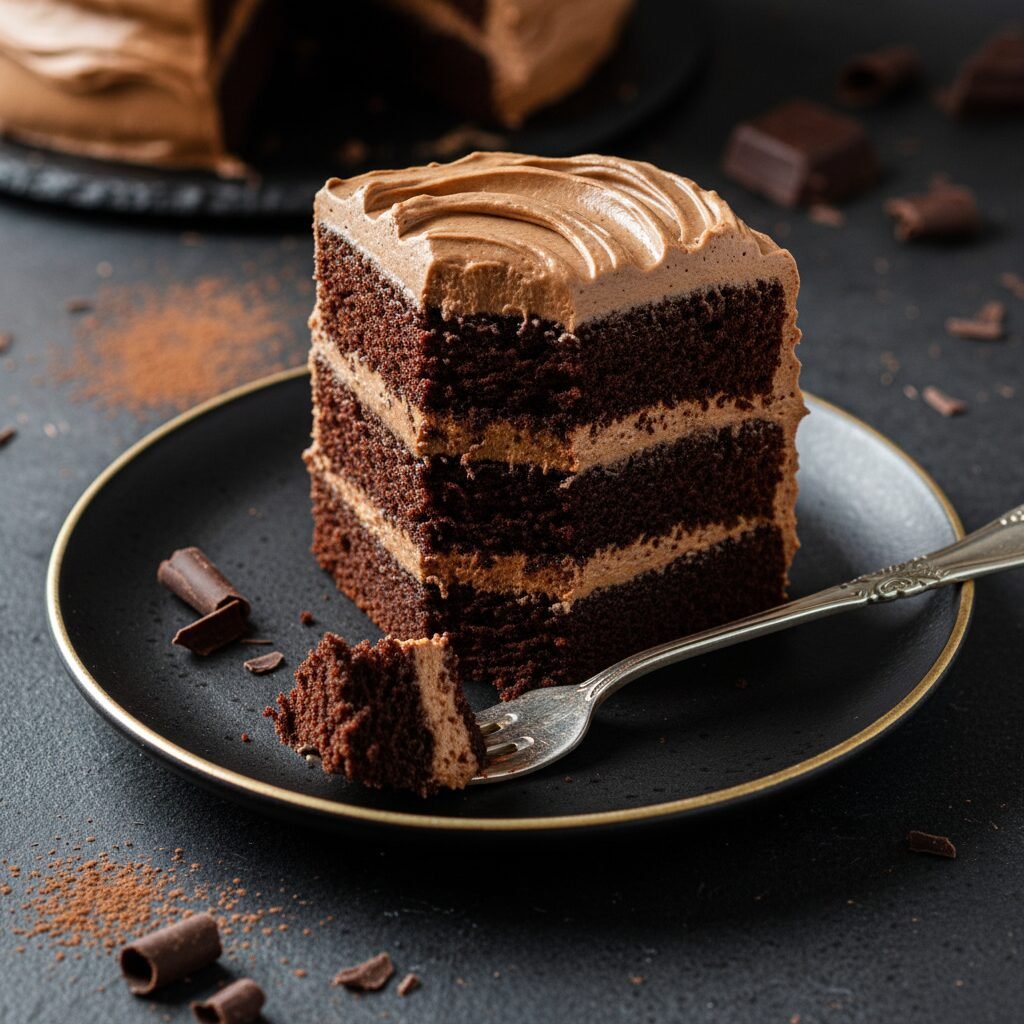
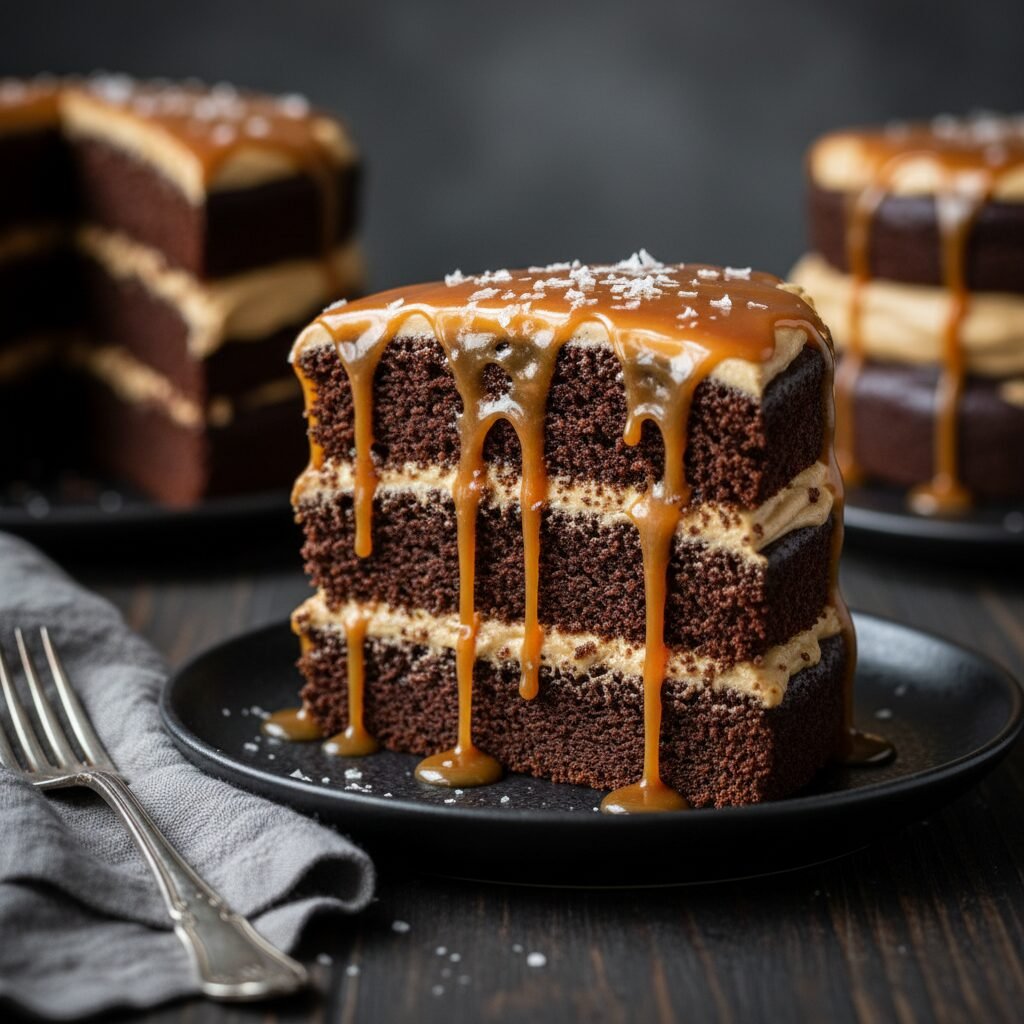
This decadent masterpiece features incredibly moist, deep-dark chocolate layers paired with a luxurious, velvety salted caramel buttercream. It is the perfect balance of sweet and salty flavors, making it the ultimate showstopper for birthdays, holidays, or any occasion requiring a serious chocolate fix.
45 minutes
35 minutes
1 hour 20 minutes
12-16 servings
Dessert
Baking
American / French Fusion
Vegetarian
There are chocolate cakes, and then there is this Moist Chocolate Fudge Cake with Salted Caramel Frosting—a dessert that redefines indulgence. If you have ever been disappointed by dry, crumbly chocolate sponges or overly sweet, one-dimensional frostings, this recipe is your culinary salvation. We are talking about a cake crumb so tender and moist that it practically melts on your tongue, boasting a profound chocolate intensity that only comes from high-quality cocoa bloomed in hot liquid. But the magic doesn’t stop at the sponge. The crowning glory is the salted caramel frosting, a whipped masterpiece that marries the deep, buttery notes of homemade caramel with the sharp, savory bite of flaky sea salt.
This recipe was born out of a desire to create the perfect contrast. Chocolate on its own is magnificent, but when paired with salted caramel, it sings. The slight bitterness of the dark cocoa cuts through the richness of the caramel, while the salt elevates every single flavor molecule, making the chocolate taste more chocolatey and the butter more buttery. It is a sensory experience designed to trigger every pleasure center in the brain. Whether you are a seasoned baker looking for a reliable go-to recipe or a novice wanting to impress guests with a bakery-quality creation, this guide covers every detail. From the science behind the moisture to the art of the perfect caramel drip, prepare to fall in love with what might just be the best cake you will ever eat.
History & Origins
The journey of the chocolate cake is a fascinating evolution of culinary history. While chocolate itself has been consumed for millennia, primarily as a beverage in Mesoamerica, chocolate cake as we know it is a relatively modern invention. Until the mid-19th century, chocolate was too expensive and gritty to be used effectively in baking. It wasn’t until 1828, when Coenraad van Houten discovered a way to treat cocoa beans with alkaline salts and extract the butter, that we got ‘Dutch cocoa’ and a powder capable of being easily mixed into batters. The earliest chocolate cakes were actually yellow cakes with chocolate frosting, or ‘Mahogany cakes’ made with boiled cocoa. The 20th century saw the rise of the Devil’s Food Cake, a darker, richer variant that relied on the reaction between cocoa and baking soda to achieve its reddish-black hue and tender crumb.
Parallel to this is the story of salted caramel. While caramel itself is ancient, the specific combination of ‘caramel au beurre salé’ (salted butter caramel) is a proud export of Brittany, France. In a country obsessed with unsalted butter, Brittany was unique for its high-quality salted butter. In the late 1970s, French chocolatier Henri Le Roux popularized the flavor with his salted caramel candies, winning the title of ‘Best Sweet in France’ in 1980. However, it wasn’t until the late 1990s and early 2000s that salted caramel exploded onto the American culinary scene, led by high-end pastry chefs and eventually trickling down to Starbucks lattes and home baking. This cake represents the beautiful collision of these two historical heavyweights: the American tradition of moist, oil-based chocolate cake and the French mastery of salty-sweet balance.
Why This Recipe Works
This recipe succeeds where many others fail due to a few key chemical interactions and ingredient choices. First and foremost is the use of oil instead of butter in the cake batter. While butter provides flavor, it contains water and milk solids that can lead to a drier texture once the cake cools. Oil is 100% fat and remains liquid at room temperature, ensuring the sensation of moistness lasts for days. We supplement the flavor profile with buttermilk, which not only adds a tang that balances the sugar but also breaks down the long strands of gluten, resulting in a significantly more tender crumb.
Another critical technique employed here is ‘blooming’ the cocoa powder. By whisking the cocoa powder into hot coffee or boiling water before adding it to the batter, we dissolve the cocoa butter and release flavor compounds that are otherwise locked away. This results in a chocolate flavor that is robust and deep rather than mild and dusty. The coffee doesn’t make the cake taste like a mocha latte; rather, it enhances the earthiness of the chocolate. Finally, the frosting uses a brown sugar base rather than just powdered sugar. The molasses in the brown sugar mimics the complexity of a true caramel sauce, providing a depth of flavor that standard American buttercream simply cannot achieve. The addition of sea salt is the final variable, acting as a flavor potentiator that prevents the sweetness from becoming cloying.
Why You’ll Love This Recipe
- ✓Incredibly moist crumb that stays soft for days.
- ✓Deep, intense chocolate flavor enhanced by hot coffee.
- ✓Luxurious salted caramel buttercream that is fluffy yet rich.
- ✓Perfect balance of sweet and salty notes.
- ✓Ideal for layering and holds up well to decoration.
- ✓No mixer required for the cake batter—just a whisk and a bowl.
Equipment You’ll Need
- ✓Two 8-inch or 9-inch round cake pans
- ✓Large mixing bowl
- ✓Medium mixing bowl
- ✓Whisk
- ✓Electric stand mixer or hand mixer (for frosting)
- ✓Saucepan (for caramel)
- ✓Wire cooling rack
- ✓Offset spatula
- ✓Parchment paper
- ✓Measuring cups and spoons
Ingredients
- ✓2 cups granulated sugar
- ✓1 3/4 cups all-purpose flour
- ✓3/4 cup unsweetened cocoa powder (Dutch-processed preferred)
- ✓1 1/2 tsp baking powder
- ✓1 1/2 tsp baking soda
- ✓1 tsp salt
- ✓2 large eggs, room temperature
- ✓1 cup whole milk or buttermilk
- ✓1/2 cup vegetable oil or canola oil
- ✓2 tsp vanilla extract
- ✓1 cup boiling water or hot brewed coffee
- ✓1 cup unsalted butter, room temperature (for frosting)
- ✓1/2 cup brown sugar, packed (for frosting base)
- ✓1/4 cup heavy cream (for frosting base)
- ✓3-4 cups powdered sugar
- ✓1 tsp sea salt or kosher salt (plus more for garnish)
- ✓1/3 cup homemade or store-bought thick caramel sauce (for drip)
Instructions
- Preheat your oven to 350°F (175°C). Grease two 9-inch round cake pans with butter and dust with cocoa powder, or line the bottoms with parchment paper for easy release.
- In a large bowl, whisk together the sugar, flour, cocoa, baking powder, baking soda, and 1 teaspoon of salt. Ensure there are no large lumps of cocoa powder.
- Add the eggs, milk (or buttermilk), oil, and vanilla extract to the dry ingredients. Whisk by hand or beat on medium speed for about 2 minutes until well combined and smooth.
- Stir in the boiling water (or hot coffee) by hand. The batter will be very thin and liquid; this is normal and essential for the moist texture.
- Pour the batter evenly into the prepared pans. Tap the pans gently on the counter to release any large air bubbles.
- Bake for 30 to 35 minutes. Test for doneness by inserting a wooden toothpick into the center; it should come out clean or with just a few moist crumbs attached.
- Cool the cakes in the pans for 10 minutes, then remove them from the pans to wire racks to cool completely. They must be completely cool before frosting.
- While cakes cool, make the frosting base: In a small saucepan, melt 1/4 cup butter with the brown sugar and heavy cream. Bring to a gentle bubble, stirring constantly for 1-2 minutes until sugar is dissolved. Remove from heat and let cool completely to room temperature.
- In a stand mixer, beat the remaining 3/4 cup softened butter until pale and creamy (about 3-4 minutes).
- Slowly add the cooled brown sugar mixture to the beaten butter and mix until combined.
- Gradually add powdered sugar, one cup at a time, beating on low speed. Once incorporated, increase to high speed and whip for 3 minutes until fluffy.
- Stir in the sea salt and vanilla. Taste and add more salt if desired.
- Assemble the cake: Place one layer on your serving plate. Spread a generous layer of frosting. Top with the second cake layer. Frost the top and sides with the remaining frosting.
- Chill the cake for 20 minutes, then pour the thick caramel sauce over the top, letting it drip down the sides. Sprinkle with flaky sea salt before serving.
Expert Cooking Tips
- ✓Do not overmix the batter once the flour is added, as this can develop gluten and make the cake tough.
- ✓Use room temperature eggs and buttermilk to ensure the batter emulsifies properly.
- ✓If using coffee, choose a strong brew; the coffee flavor won’t be detectable but will intensify the chocolate.
- ✓Allow the brown sugar caramel base for the frosting to cool completely; if it’s warm, it will melt the butter and ruin the frosting consistency.
- ✓For flat cake layers, use ‘cake strips’ soaked in water wrapped around the outside of your pans during baking.
- ✓Sift your powdered sugar and cocoa powder to avoid gritty frosting or lumps in your cake.
- ✓Freeze your cake layers for 20 minutes before frosting to reduce crumbs getting into the icing.
Substitutions and Variations
This recipe is quite versatile if you need to make swaps. For the dairy in the cake, you can substitute the buttermilk with a mixture of 1 cup whole milk and 1 tablespoon of lemon juice or white vinegar (let sit for 5 minutes). If you need a dairy-free cake sponge, almond milk or soy milk works well, though the texture may be slightly less tender. The vegetable oil can be replaced with melted coconut oil or even light olive oil, though olive oil may impart a slight flavor. For the gluten-free version, use a high-quality 1:1 gluten-free flour blend that contains xanthan gum; the moisture in this recipe accommodates gluten-free flours very well. In the frosting, if you don’t have brown sugar, you can use regular white sugar, but you will lose some of that caramel depth. You can also skip the homemade caramel base step and simply beat 1/3 cup of store-bought caramel sauce into the buttercream, though the stability might be slightly softer.
Common Mistakes to Avoid
The most common mistake with this recipe is over-baking. Because the batter is dark, it is hard to see when it is browning. Rely on the toothpick test and start checking at the 30-minute mark. If you bake it until it looks dry on top, it may be overdone inside. Another frequent error is frosting the cake while it is still slightly warm. This will cause the butter in the frosting to melt, resulting in layers that slide off one another and a greasy puddle at the bottom. Regarding the batter, do not be alarmed by how liquid it is; many bakers panic and add more flour, which results in a dense, dry brick. Trust the recipe. Finally, when making the caramel frosting base, do not boil the sugar mixture vigorously for too long, or it may turn into hard candy as it cools instead of a syrup.
Serving Suggestions
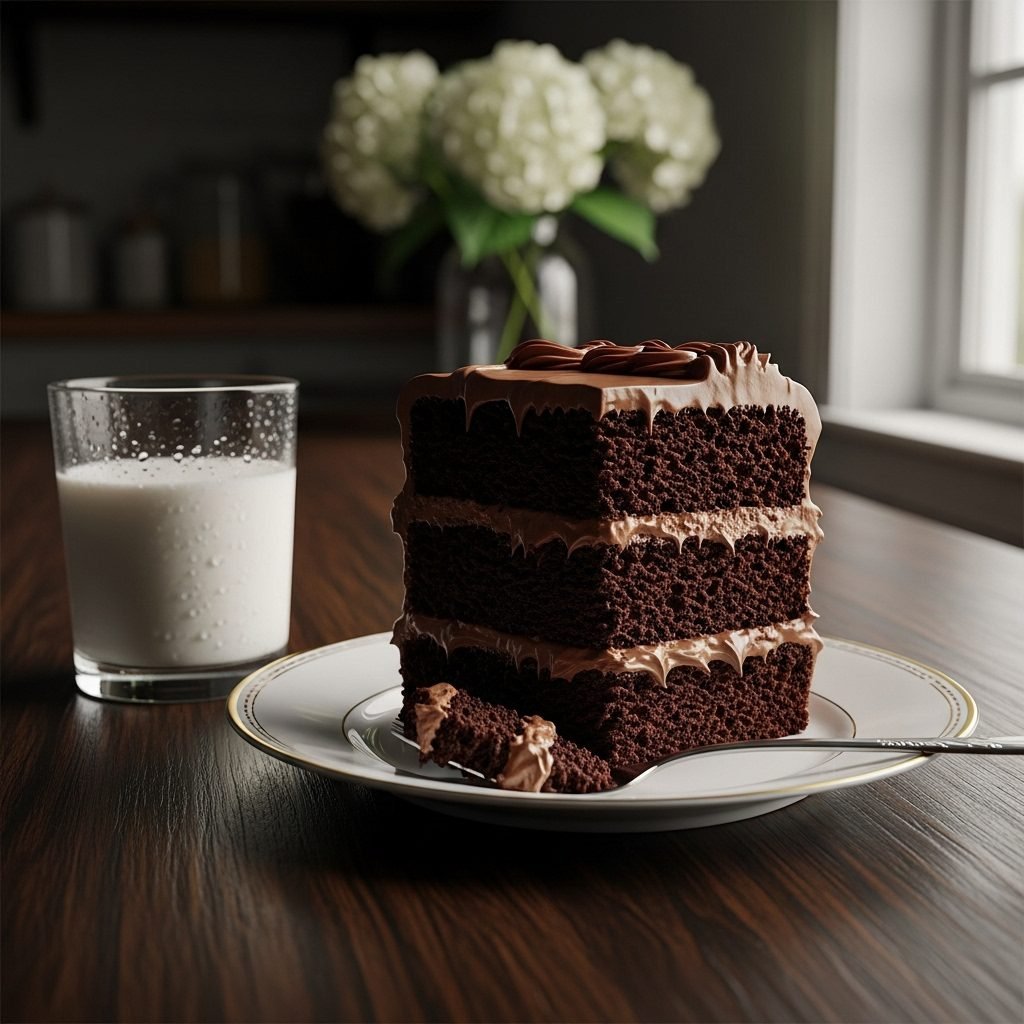
This rich cake is best served in thin slices, as it is quite dense and filling. It pairs beautifully with a glass of cold milk to cut through the sweetness, or a hot cup of black coffee to echo the coffee notes in the sponge. For an elegant dinner party, serve a slice with a dollop of unsweetened whipped cream and a few fresh raspberries or strawberries on the side; the tartness of the fruit provides a wonderful counterpoint to the caramel. If you are feeling particularly indulgent, warm a slice in the microwave for 10 seconds and serve it with a scoop of vanilla bean ice cream. The frosting will melt slightly, creating a sauce-like consistency that is truly divine.
Storage and Reheating Tips
Because of the butter and cream in the frosting, this cake is best stored in the refrigerator, especially in warm climates. However, buttercream hardens when cold, so it is imperative to remove the cake from the fridge at least 30 to 60 minutes before serving to allow the frosting to soften and the cake to relax. The cake can be stored in an airtight container in the fridge for up to 5 days. The high oil content ensures it remains moist. For long-term storage, you can freeze individual slices wrapped tightly in plastic wrap and then foil for up to 3 months. Thaw overnight in the refrigerator or on the counter for a few hours before eating. Unfrosted cake layers can be wrapped and frozen for up to a month.
Nutrition Facts (Estimated)
| Serving Size | 1 slice (1/14th of cake) |
| Calories | 650 |
| Fat | 35g |
| Saturated Fat | 18g |
| Unsaturated Fat | 15g |
| Trans Fat | 0.5g |
| Cholesterol | 85mg |
| Sodium | 380mg |
| Carbohydrates | 80g |
| Fiber | 4g |
| Sugar | 55g |
| Protein | 6g |
Frequently Asked Questions
Can I use natural cocoa powder instead of Dutch-processed?
Yes, you can. This recipe uses both baking powder and baking soda, so it has enough leavening power to handle natural cocoa. However, Dutch-processed cocoa will give you a darker color and a smoother, less acidic chocolate flavor.
Why do I need to use boiling water?
Boiling water (or hot coffee) serves two purposes: it blooms the cocoa powder to release more flavor, and it helps emulsify the ingredients, creating a very smooth, liquid batter that bakes into a soft, moist cake.
Can I make this as cupcakes?
Absolutely. This batter makes excellent cupcakes. Fill liners about 2/3 full and bake at 350°F for 18-22 minutes. The yield will be approximately 24-30 cupcakes.
My frosting is too soft, what should I do?
If your kitchen is warm or the caramel base wasn’t cooled enough, the frosting might be soft. Place the bowl in the fridge for 10-15 minutes, then whip it again. You can also add a bit more powdered sugar to stiffen it.
Can I leave the coffee out?
Yes, you can substitute the hot coffee with hot water. The cake will still be delicious, though the chocolate flavor might be slightly less intense.
How do I get the caramel drip to look perfect?
Ensure your cake is chilled so the frosting is cold. Make sure your caramel sauce is fluid but not hot. Use a spoon or squeeze bottle to gently push drips over the edge, then fill in the center.
Can I use salted butter for the frosting?
You can, but you will have less control over the saltiness. If you use salted butter, omit the added teaspoon of salt initially, taste the frosting, and then add more salt only if needed.
Is this cake suitable for stacking tiers?
This is a very moist and tender cake. While it works for a standard 2-layer cake, it may be too soft for very tall, heavy fondant-covered wedding cakes without proper doweling and support.
Conclusion
In the world of desserts, few things compare to the satisfaction of a perfectly executed chocolate cake. This Moist Chocolate Fudge Cake with Salted Caramel Frosting is more than just a recipe; it is a celebration of texture and flavor. The contrast between the deep, dark sponge and the golden, buttery sweetness of the frosting creates a harmony that keeps you coming back for ‘just one more bite.’ Whether you are baking for a special birthday, a holiday gathering, or simply to treat yourself after a long week, this cake delivers on every promise. It is robust, elegant, and unapologetically indulgent. So, preheat your oven, brew that coffee, and get ready to bake a masterpiece that your friends and family will be talking about for years to come.