Moist Chocolate Fudge Cake With Vanilla Frosting Recipe
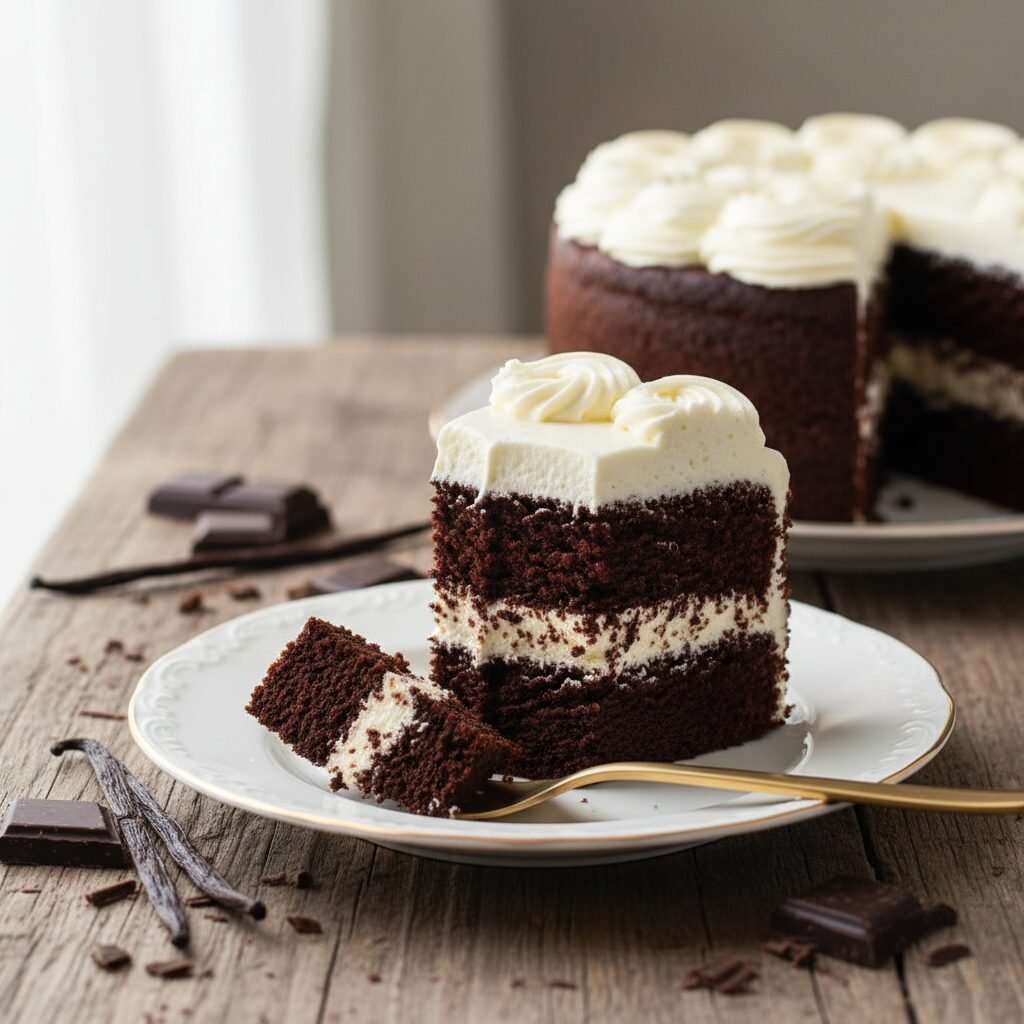
Say goodbye to dry, crumbly cakes forever. This incredibly moist Chocolate Fudge Cake features a deep, dark chocolate crumb paired with a velvety, cloud-like vanilla buttercream that creates the perfect nostalgic flavor contrast.
25 minutes
35 minutes
1 hour 30 minutes
12-14 Servings
Dessert
Baking
American
Vegetarian
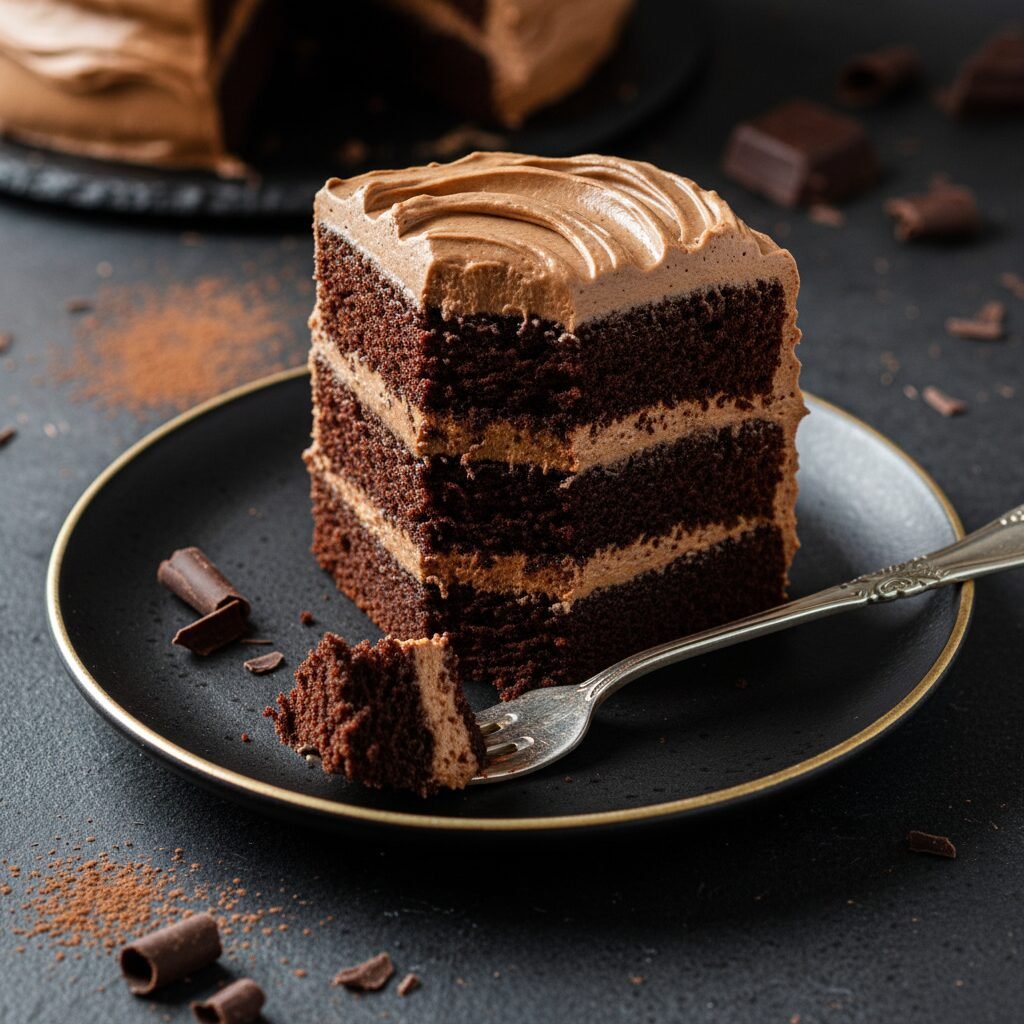
There is a universal tragedy in the world of baking: the beautiful, towering chocolate cake that looks like a dream but tastes like dry sponge. We have all been there. You take a bite, expecting a rush of endorphins, and instead, you are reaching for a glass of milk just to wash it down. This recipe is the antidote to that disappointment. This is the chocolate cake that will ruin you for all other chocolate cakes. It is unapologetically rich, intensely chocolatey, and stays moist for days on end. The texture is somewhere between a classic sponge and a dense fudge brownie, offering a ‘melt-in-your-mouth’ experience that feels incredibly luxurious. But a dark, brooding chocolate cake needs a light, uplifting partner. Enter the classic Vanilla Frosting. While many recipes opt for a ganache or a chocolate buttercream, I firmly believe that the contrast of a stark white, sweet, and buttery vanilla frosting against the black cocoa crumb is the pinnacle of dessert perfection. It is reminiscent of the best birthday cakes from your childhood, but elevated with high-quality ingredients and a fail-proof technique. Whether you are celebrating a milestone or just need to cure a Tuesday night chocolate craving, this cake delivers on every level.
History & Origins
The history of chocolate cake is a fascinating journey through culinary innovation. Before the mid-19th century, chocolate was primarily consumed as a beverage. It wasn’t until 1828, when Conrad Van Houten discovered a way to mechanically extract fat from cacao liquor (creating cocoa butter and cocoa powder), that baking with chocolate became accessible. However, early ‘chocolate cakes’ were actually yellow cakes served with chocolate frosting. The first recipes for batter containing chocolate didn’t appear until the late 1800s. This specific style of ‘Fudge Cake’ traces its lineage back to the early 20th-century ‘Devil’s Food Cake.’ The name was likely a playful contrast to the light-as-air ‘Angel Food Cake,’ referencing the cake’s dark, reddish-black hue and sinful richness. In the American South and Midwest, the addition of boiling water and buttermilk became popular in the 1930s and 40s, distinct from the butter-heavy pound cakes of Europe. The concept of pairing it with a stark white vanilla frosting gained massive popularity in the post-WWII era, becoming a staple of American diners and birthday parties, symbolizing a return to comfort and abundance.
Why This Recipe Works
This recipe succeeds where others fail due to three critical scientific principles: the fat source, the liquid temperature, and the acidity. First, we use vegetable oil instead of butter for the cake batter. While butter provides flavor, it is about 20% water and solidifies at room temperature, which can lead to a drier texture once the cake cools. Oil remains liquid at room temperature, ensuring the cake stays incredibly soft and moist for days. Second, the inclusion of boiling hot water (or hot coffee) is non-negotiable. Pouring hot liquid over the cocoa powder ‘blooms’ it, dissolving the cocoa solids and releasing the intense flavor compounds that are often locked away, resulting in a deeper chocolate taste. The heat also begins to gelatinize the starches in the flour immediately, contributing to that fudgy texture. Finally, the reaction between the acidic buttermilk and the baking soda creates carbon dioxide bubbles, which gives this dense batter the lift it needs to be fluffy rather than heavy. The vanilla frosting uses a high ratio of heavy cream to butter, whipped for an extended period, to incorporate air and remove the ‘gritty’ texture often found in powdered sugar frostings.
Why You’ll Love This Recipe
- ✓Uses the ‘blooming’ technique for intense chocolate flavor.
- ✓Oil-based batter ensures the cake never dries out.
- ✓Simple one-bowl mixing method for the cake layers.
- ✓Perfect balance of bitter cocoa and sweet vanilla.
- ✓Stays fresh and moist for up to 4 days.
Equipment You’ll Need
- ✓Two 9-inch round cake pans
- ✓Stand mixer or electric hand mixer
- ✓Large mixing bowl
- ✓Wire whisk
- ✓Parchment paper
- ✓Wire cooling rack
- ✓Offset spatula
- ✓Measuring cups and spoons
Ingredients
- ✓2 cups all-purpose flour
- ✓2 cups granulated sugar
- ✓3/4 cup unsweetened cocoa powder (preferably Dutch-processed)
- ✓2 teaspoons baking powder
- ✓1 1/2 teaspoons baking soda
- ✓1 teaspoon salt
- ✓1 cup buttermilk, room temperature
- ✓1/2 cup vegetable oil or canola oil
- ✓2 large eggs, room temperature
- ✓2 teaspoons vanilla extract
- ✓1 cup boiling water (or boiling hot coffee)
- ✓1 cup unsalted butter, softened (for frosting)
- ✓4-5 cups powdered sugar, sifted (for frosting)
- ✓1/4 cup heavy cream (for frosting)
- ✓2 teaspoons vanilla bean paste or clear vanilla extract (for frosting)
- ✓Pinch of salt (for frosting)
Instructions
- Preheat oven to 350°F (175°C). Grease two 9-inch cake pans with butter or cooking spray and line the bottoms with parchment paper. Dust the sides with a little cocoa powder.
- In a large mixing bowl (or the bowl of a stand mixer), sift together the flour, sugar, cocoa powder, baking powder, baking soda, and salt. Whisk by hand to ensure everything is evenly distributed.
- Add the buttermilk, vegetable oil, eggs, and vanilla extract to the dry ingredients. Mix on medium speed for about 1-2 minutes until the batter is well combined and smooth. Scrape down the sides of the bowl.
- Reduce the mixer speed to the lowest setting. Carefully pour in the boiling water (or hot coffee). The batter will become very thin and liquidy; this is normal. Mix just until combined.
- Divide the batter evenly between the two prepared cake pans. Tap the pans gently on the counter to release any large air bubbles.
- Bake for 30-35 minutes, or until a wooden toothpick inserted into the center comes out clean or with just a few moist crumbs attached. Do not overbake.
- Remove pans from the oven and let them cool on a wire rack for 10-15 minutes. Then, carefully run a knife around the edges and invert the cakes onto the rack to cool completely before frosting.
- To make the frosting: In a stand mixer fitted with the paddle attachment, beat the softened butter on medium-high speed for 5 minutes until it is pale and creamy.
- Gradually add the powdered sugar, one cup at a time, mixing on low speed until incorporated. Scrape down the bowl as needed.
- Add the heavy cream, vanilla bean paste, and a pinch of salt. Increase the speed to high and whip for another 3-4 minutes until the frosting is light, fluffy, and aerated.
- Assemble the cake: Place one cooled cake layer on your serving plate. Spread a generous layer of frosting over the top. Place the second cake layer on top. Frost the top and sides of the cake with the remaining frosting.
- Garnish with chocolate shavings or sprinkles if desired. Slice and serve.
Expert Cooking Tips
- ✓Use room temperature eggs and buttermilk to ensure the batter emulsifies properly.
- ✓Do not skip the parchment paper; this cake is very moist and can stick to the bottom of pans easily.
- ✓If you want a deeper chocolate flavor, substitute the boiling water with strong, hot brewed coffee. You won’t taste the coffee, but it enhances the cocoa.
- ✓Weigh your flour using a kitchen scale (120g per cup) to avoid a dense cake caused by packing flour into the cup.
- ✓Cool the cakes completely before frosting. Even a slightly warm cake will melt the butter in the frosting and cause the layers to slide.
- ✓Sifting the cocoa powder is crucial to prevent bitter lumps of dry cocoa in your batter.
Substitutions and Variations
If you are out of buttermilk, you can make a quick substitute by adding 1 tablespoon of lemon juice or white vinegar to a cup of whole milk and letting it sit for 5 minutes. For a gluten-free version, use a high-quality 1:1 gluten-free baking flour blend that contains xanthan gum. If you prefer not to use vegetable oil, melted coconut oil works well, though it may impart a slight coconut flavor. For the frosting, if you don’t have heavy cream, whole milk will work, but use less of it as it is thinner. You can also swap the vanilla frosting for a cream cheese frosting or a chocolate ganache if you prefer different flavor profiles.
Common Mistakes to Avoid
The most common mistake is overbaking the cake. Because the batter is dark, it is hard to see it browning. Rely on the toothpick test and start checking at the 30-minute mark. Another mistake is opening the oven door too frequently during the first 20 minutes of baking, which can cause the cake to sink in the middle due to temperature fluctuation. Finally, mixing the boiling water in too fast can splash hot liquid and scramble the eggs if you aren’t careful; mix on low speed and pour slowly.
Serving Suggestions
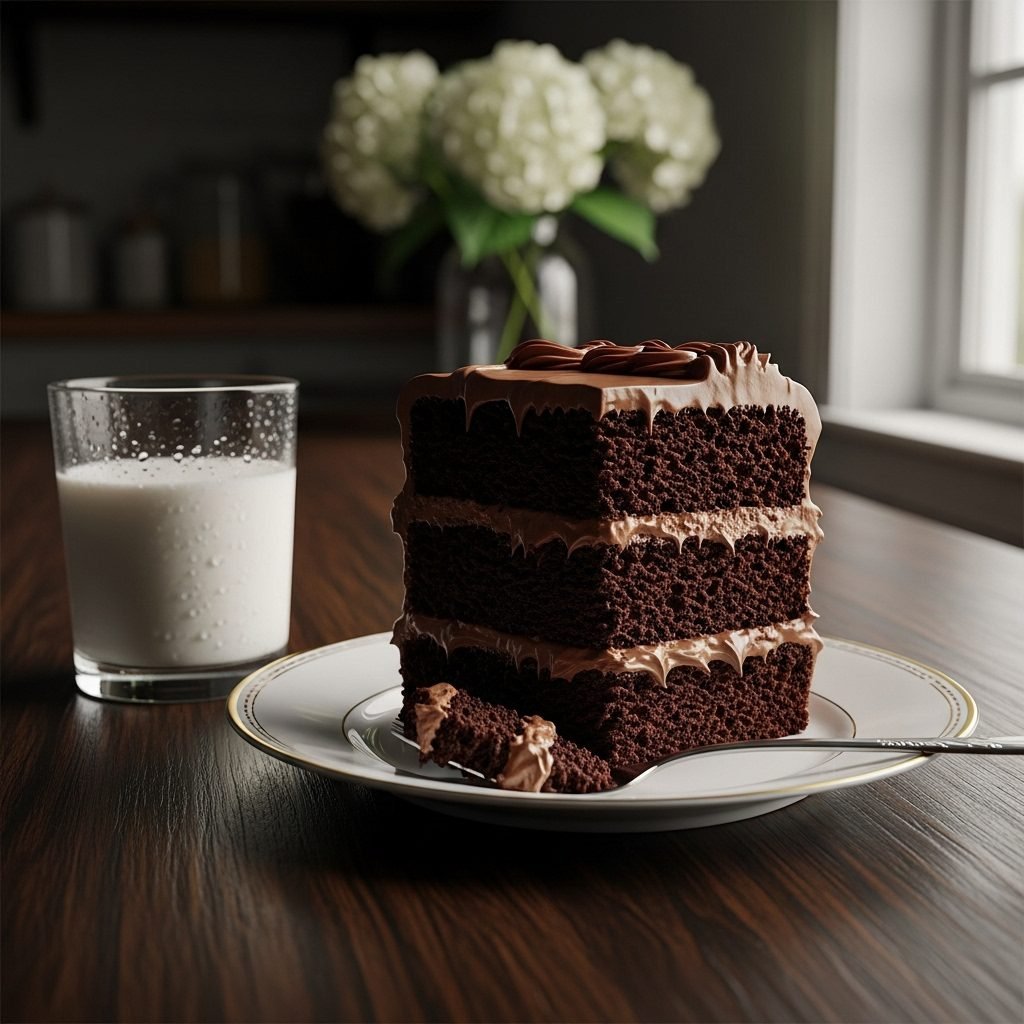
This cake is rich, so it pairs beautifully with something to cut the sweetness. A cold glass of milk is the classic choice. For a more sophisticated plating, serve a slice with a handful of fresh raspberries or strawberries, as the tartness of the fruit balances the sugar. A dollop of unsweetened whipped cream or a scoop of vanilla bean ice cream is also excellent. If serving at a dinner party, a shot of espresso alongside the cake makes for a wonderful digestif.
Storage and Reheating Tips
This cake stores exceptionally well. It can be kept at room temperature in an airtight cake carrier for up to 3 days. In fact, the flavor often improves on the second day. If you live in a very hot or humid climate, store it in the refrigerator for up to 5 days, but let it come to room temperature before serving for the best texture. The baked, unfrosted cake layers can be wrapped tightly in plastic wrap and frozen for up to 3 months. Thaw overnight in the fridge before assembling.
Nutrition Facts (Estimated)
| Serving Size | 1 slice |
| Calories | 580 |
| Fat | 28g |
| Saturated Fat | 12g |
| Unsaturated Fat | 14g |
| Trans Fat | 0g |
| Cholesterol | 85mg |
| Sodium | 320mg |
| Carbohydrates | 78g |
| Fiber | 4g |
| Sugar | 45g |
| Protein | 6g |
Frequently Asked Questions
Can I use this recipe to make cupcakes?
Yes, absolutely. This batter makes excellent cupcakes. Line a muffin tin with papers and fill them about 2/3 full. Bake at 350°F for 18-22 minutes.
Why is my batter so runny?
Don’t panic! This is exactly how it should be. The high liquid content (buttermilk, oil, boiling water) ensures the cake stays moist. It will set perfectly in the oven.
Can I reduce the sugar in the recipe?
I do not recommend reducing the sugar significantly. Sugar provides moisture and structure, not just sweetness. Reducing it too much can lead to a dry, rubbery cake.
Why did my cake sink in the middle?
This usually happens if the oven door was opened too early, or if the leavening agents (baking soda/powder) were expired. It can also happen if the cake was underbaked.
Do I have to use Dutch-processed cocoa?
While you can use natural cocoa powder, Dutch-processed cocoa is less acidic and has a darker color and smoother flavor that works best in this fudge-style cake.
Can I make this cake ahead of time?
Yes, this is actually one of the best cakes to make ahead because the oil keeps it moist. You can bake the layers a day before serving.
My frosting is too stiff, what do I do?
Add more heavy cream or milk, one teaspoon at a time, and whip until it reaches your desired consistency.
My frosting is too runny, how do I fix it?
Add more sifted powdered sugar, about 1/4 cup at a time, or chill the frosting in the fridge for 10-15 minutes if the butter has become too warm.
Conclusion
There are few things in life as comforting as a homemade chocolate cake. This Moist Chocolate Fudge Cake with Vanilla Frosting is more than just a recipe; it is a reliable friend that you can turn to for birthdays, anniversaries, or bad days that need a little sweetness. The magic lies in its simplicity and the scientific balance of ingredients that guarantee a moist, decadent result every single time. I hope this cake becomes a staple in your kitchen just as it has in mine. Don’t forget to share your baking triumph with friends and family—though be warned, once they taste it, they will expect you to bring it to every gathering!