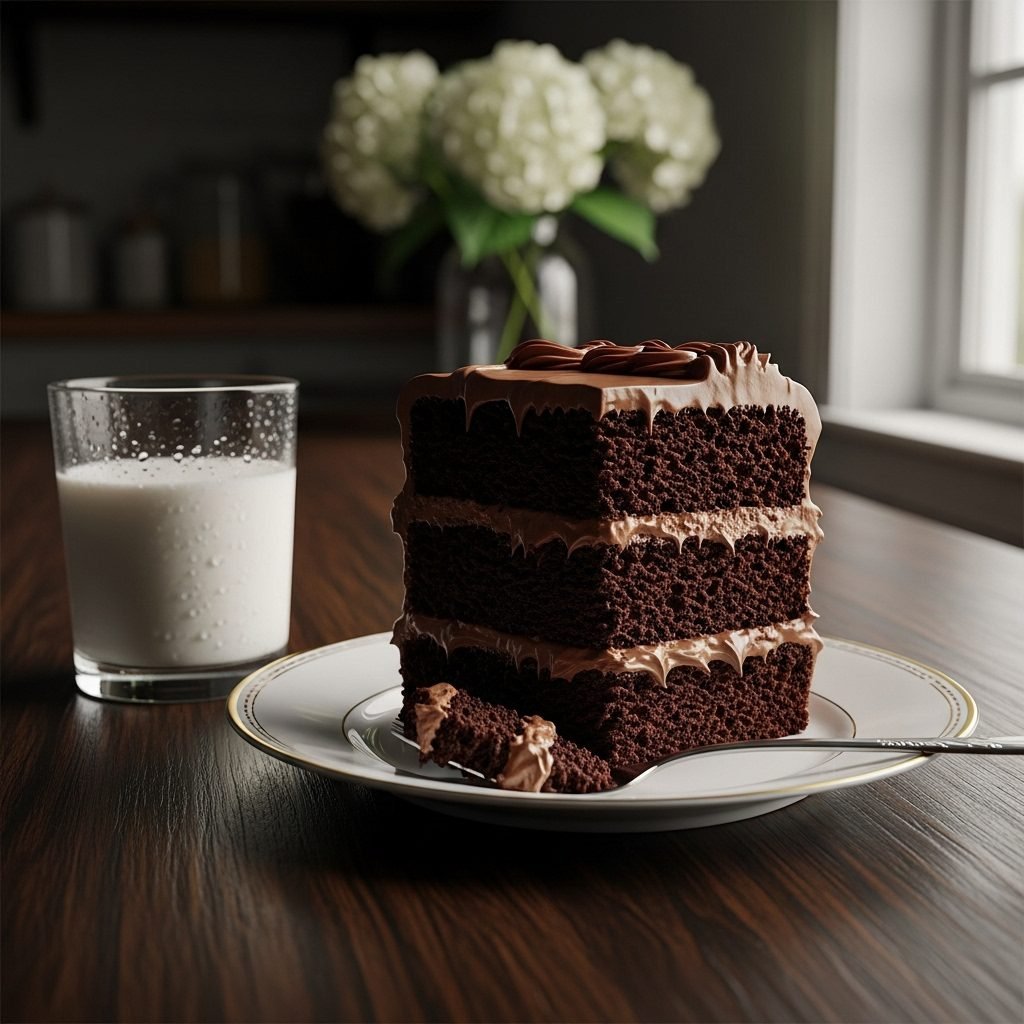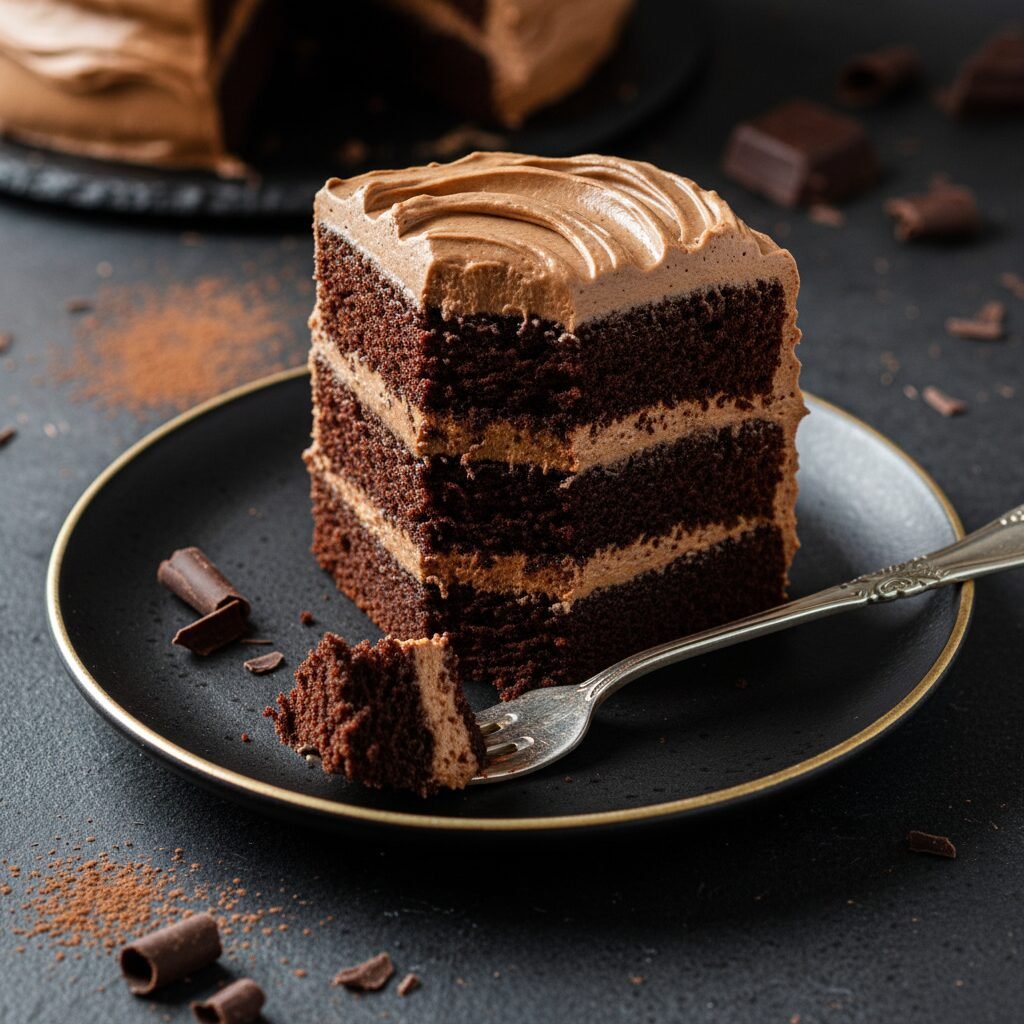
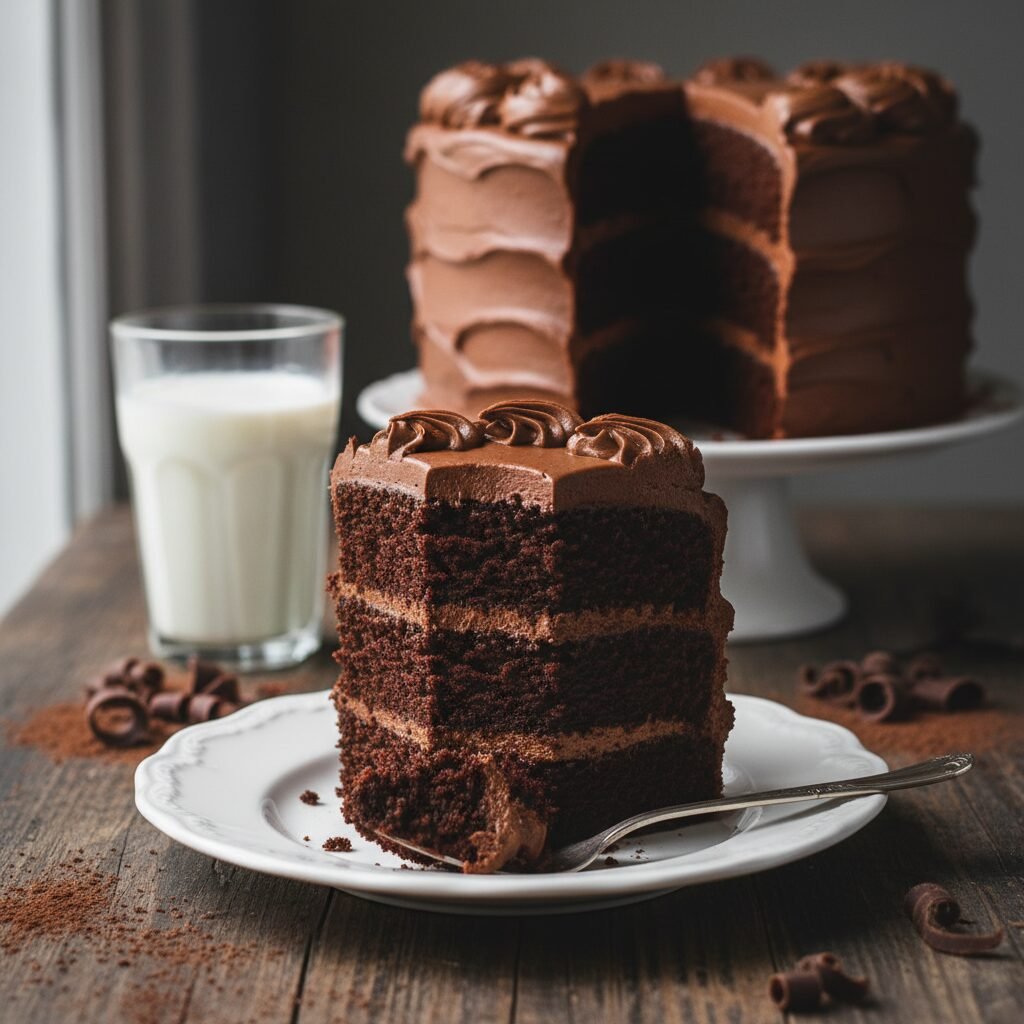
Moist Chocolate Layer Cake For Three Layers Recipe
Discover the secret to the moistest, most decadent chocolate cake you will ever bake. This fail-proof recipe creates three towering layers of rich, fudgy sponge coated in a silky chocolate buttercream, making it the ultimate centerpiece for birthdays and celebrations.
30 minutes
35 minutes
1 hour 15 minutes
12-16 servings
Dessert
Baking
American
Vegetarian
For any home baker, the quest for the perfect chocolate cake is a journey often paved with dry crumbs and lackluster flavor. We have all been there: slicing into a beautiful looking cake only to find it parched and needing a gallon of milk to wash it down. This recipe ends that search once and for all. We are talking about a cake so incredibly moist, so deeply chocolatey, and so structurally sound that it begs to be stacked three layers high. This isn’t just a dessert; it is an experience. The crumb is tender and velvety, possessing that elusive ‘fudgy yet fluffy’ texture that bakery cakes often promise but rarely deliver at home.
What sets this recipe apart is the careful balance of fat, acidity, and temperature. It moves away from the traditional creaming method of butter and sugar, favoring oil and buttermilk to ensure the cake stays soft for days, not just hours. The addition of boiling hot coffee—the secret weapon of professional pastry chefs—blooms the cocoa powder, intensifying the chocolate notes without imparting a coffee flavor. Whether you are a novice baker looking to impress your family or a seasoned pro needing a reliable go-to for clients, this Moist Chocolate Layer Cake is the gold standard. It serves as the perfect canvas for our whipped chocolate buttercream, but it is flavorful enough to stand on its own with nothing more than a dusting of powdered sugar. Prepare your tastebuds for a chocolate overload that strikes the perfect balance between sweet, rich, and absolutely unforgettable.
History & Origins
The history of chocolate cake is a fascinating evolution of culinary innovation that mirrors the industrialization of chocolate itself. While chocolate has been consumed as a beverage in Mesoamerica for millennia, its journey into cake form is relatively recent in the grand timeline of food history. Until the mid-19th century, chocolate was primarily a drink for the wealthy in Europe and the Americas. It wasn’t until 1828, when Coenraad van Houten invented the hydraulic press to separate cocoa butter from cocoa solids, that ‘cocoa powder’ became accessible and affordable.
Even then, early ‘chocolate cakes’ were actually yellow or white cakes served with chocolate frosting. It wasn’t until the late 1800s that bakers began incorporating the chocolate directly into the batter. The first verified recipe for a chocolate cake appeared in an 1847 cookbook, but the real explosion in popularity came with the introduction of chemical leaveners like baking soda and baking powder. Before this, cakes relied on yeast or beaten eggs for lift. The specific style of ‘Devil’s Food Cake,’ which is the ancestor of this moist layer cake, emerged in the United States around 1902. The name was likely a playful contrast to the light and airy ‘Angel Food Cake,’ referring to the dark, dense, and rich nature of the chocolate batter. Over the 20th century, the American layer cake became a cultural icon of celebration, evolving from simple single-layer squares to the towering, multi-layered spectacles we adore today. This recipe honors that heritage while utilizing modern food science to perfect the texture.
Why This Recipe Works
The science behind this cake is what guarantees its success and differentiates it from dry, crumbly alternatives. First and foremost is the use of oil instead of butter. While butter provides flavor, it is about 20% water and solidifies at room temperature. Oil is 100% fat and remains liquid at room temperature, which translates directly to a sensation of moistness on the palate that lasts for days.
Secondly, the inclusion of buttermilk is non-negotiable. The acidity in buttermilk reacts with the baking soda (sodium bicarbonate) to create carbon dioxide bubbles, giving the cake a tremendous lift and a tender crumb by breaking down long gluten strands.
Third, and perhaps most critically, is the blooming of the cocoa powder. By whisking boiling hot coffee into the batter at the very end, we achieve two things: the heat dissolves the cocoa butter and sugar completely, ensuring a smooth texture, and the liquid ‘blooms’ the cocoa, releasing flavor compounds that are otherwise locked away. This results in a profound, complex chocolate profile rather than a flat, sugary one. Finally, the use of both baking powder and baking soda ensures the heavy, wet batter rises sufficiently to support three layers without collapsing.
Why You’ll Love This Recipe
- ✓Stays incredibly moist for up to 5 days at room temperature.
- ✓Deep, intense chocolate flavor enhanced by hot coffee.
- ✓Sturdy structure perfect for stacking three impressive layers.
- ✓Simple one-bowl mixing method—no electric mixer required for the batter.
- ✓Versatile batter that can also be used for cupcakes or sheet cakes.
Equipment You’ll Need
- ✓Three 8-inch round cake pans
- ✓Large mixing bowl
- ✓Whisk
- ✓Electric Stand Mixer or Hand Mixer (for frosting)
- ✓Parchment paper
- ✓Wire cooling rack
- ✓Offset spatula
- ✓Measuring cups and spoons
- ✓Kitchen scale (recommended)
Ingredients
- ✓3 cups (375g) All-purpose flour
- ✓3 cups (600g) Granulated sugar
- ✓1 1/2 cups (130g) Unsweetened cocoa powder (natural or Dutch-process)
- ✓1 tablespoon Baking soda
- ✓1 1/2 teaspoons Baking powder
- ✓1 1/2 teaspoons Fine sea salt
- ✓4 large Eggs, room temperature
- ✓1 1/2 cups (360ml) Buttermilk, room temperature
- ✓1 1/2 cups (360ml) Warm water mixed with instant coffee OR strong brewed hot coffee
- ✓1/2 cup (120ml) Vegetable oil or canola oil
- ✓2 teaspoons Vanilla extract
- ✓1 1/2 cups (340g) Unsalted butter, softened (for frosting)
- ✓1 cup (90g) Unsweetened cocoa powder (for frosting)
- ✓5 cups (600g) Powdered sugar (for frosting)
- ✓1/2 cup (120ml) Heavy cream or whole milk (for frosting)
- ✓2 teaspoons Vanilla extract (for frosting)
- ✓Pinch of salt (for frosting)
Instructions
- Preheat oven to 350°F (175°C). Grease three 8-inch round cake pans with butter or cooking spray. Line the bottoms with parchment paper rounds and grease the paper. Dust the sides with cocoa powder and tap out excess.
- In a large mixing bowl, whisk together the flour, sugar, cocoa powder, baking soda, baking powder, and salt until fully combined and no lumps remain.
- Add the eggs, buttermilk, oil, and vanilla extract to the dry ingredients.
- Mix on medium-low speed (or whisk vigorously by hand) until the batter is smooth. Do not overmix, but ensure the eggs are fully incorporated.
- Carefully pour in the hot coffee (or hot water). Whisk gently by hand until combined. Note: The batter will be very thin and liquid; this is normal and essential for the moist texture.
- Divide the batter evenly among the three prepared cake pans. Using a kitchen scale helps ensure even layers (approx. 550g-600g per pan).
- Bake for 30-35 minutes, or until a wooden toothpick inserted into the center comes out clean or with just a few moist crumbs attached.
- Remove from the oven and let the cakes cool in the pans for about 20 minutes. Then, carefully run a knife around the edges and invert them onto a wire rack to cool completely before frosting.
- To make the frosting: In a stand mixer fitted with the paddle attachment, beat the softened butter on medium-high speed for 3 minutes until creamy and pale.
- Sift the cocoa powder and powdered sugar to remove lumps. Gradually add the cocoa powder to the butter, mixing on low speed.
- Alternating with the heavy cream, add the powdered sugar one cup at a time. Add the vanilla and salt.
- Once all ingredients are incorporated, increase speed to high and whip for 2-3 minutes until the frosting is fluffy and creamy. Add more cream if it’s too stiff, or more sugar if it’s too loose.
- To assemble: Place one cake layer on your serving stand. Spread a generous layer of frosting over the top. Repeat with the second and third layers. Use the remaining frosting to coat the top and sides of the cake.
Expert Cooking Tips
- ✓Room Temperature Ingredients: Ensure your eggs and buttermilk are at room temperature. Cold ingredients can shock the batter and lead to uneven baking or curdling.
- ✓Weigh Your Flour: For the most accurate results, use a kitchen scale. If using cups, spoon the flour into the cup and level it off; scooping directly packs the flour and leads to a dry cake.
- ✓Don’t Skip the Parchment: This cake is very moist and tender. Parchment paper guarantees the layers won’t stick to the bottom of the pan.
- ✓Hot Liquid is Key: Do not let the coffee cool down too much. The heat is necessary to bloom the cocoa powder.
- ✓Cool Completely: Do not attempt to frost the cake if it is even slightly warm, or the buttercream will melt and slide off.
- ✓Crumb Coat: Apply a thin layer of frosting first and chill the cake for 20 minutes to lock in crumbs before applying the final layer of frosting.
Substitutions and Variations
This recipe is quite resilient, but here are some tested substitutions. If you don’t have buttermilk, you can make a ‘sour milk’ substitute by adding 1 tablespoon of white vinegar or lemon juice to a measuring cup and filling it to the 1 1/2 cup line with whole milk; let it sit for 5 minutes before using. For the vegetable oil, you can use melted coconut oil or melted butter, though melted butter will result in a slightly denser and drier crumb compared to oil. If you want to avoid caffeine, simply use boiling water instead of coffee; the chocolate flavor will be slightly less intense but still delicious. For a gluten-free version, substitute the all-purpose flour with a high-quality 1:1 Gluten-Free Baking Flour blend that contains xanthan gum. For the frosting, you can substitute the butter with a plant-based butter stick for a dairy-free option, provided you also use plant-based milk instead of heavy cream.
Common Mistakes to Avoid
The most common mistake is overbaking. Because the batter is dark, it’s hard to see when it’s browning. Rely on the toothpick test; if it comes out bone dry, you’ve gone too far. It should have a few moist crumbs. Another error is using cold ingredients; if your buttermilk or eggs are cold, the batter won’t emulsify properly. Many bakers also rush the cooling process; putting warm cakes in the fridge to cool faster can sometimes make them sticky or gummy. Let them cool at room temperature. Finally, failing to level the cakes: if your cakes dome in the oven, use a serrated knife to slice off the rounded top before stacking to prevent a leaning tower of cake.
Serving Suggestions
This rich cake pairs beautifully with contrast. Serve a slice with a cold glass of milk to cut through the richness. A scoop of high-quality vanilla bean ice cream is a classic accompaniment. For a fresher take, serve with tart fresh raspberries or strawberries, which provide a nice acidic counterpoint to the sweet chocolate. A dollop of unsweetened whipped cream and a dusting of espresso powder also makes for an elegant presentation.
Storage and Reheating Tips
Due to the oil content, this cake stays moist at room temperature for longer than butter-based cakes. Store it in an airtight cake carrier at room temperature for up to 3 days. If you live in a very hot or humid climate, or if you want to keep it longer, store it in the refrigerator for up to 1 week. Allow the cake to come to room temperature before serving for the best texture and flavor. To freeze, wrap individual slices or the whole cake tightly in plastic wrap, followed by a layer of aluminum foil. It can be frozen for up to 3 months. Thaw in the refrigerator overnight.
Nutrition Facts (Estimated)
| Serving Size | 1 Slice |
| Calories | 680 |
| Fat | 34g |
| Saturated Fat | 12g |
| Unsaturated Fat | 20g |
| Trans Fat | 0g |
| Cholesterol | 85mg |
| Sodium | 380mg |
| Carbohydrates | 88g |
| Fiber | 4g |
| Sugar | 55g |
| Protein | 7g |
Frequently Asked Questions
Can I use this recipe to make cupcakes?
Yes! This batter makes excellent cupcakes. It will yield approximately 24-30 cupcakes. Bake them at 350°F for 18-22 minutes.
Will the cake taste like coffee?
No, it will not taste like a mocha cake. The coffee serves to enhance and deepen the chocolate flavor. If you are serving this to people who strictly dislike coffee, you can use hot water, but the chocolate won’t be quite as punchy.
Why is my batter so runny?
Do not panic! This is exactly how it should be. The high liquid content (buttermilk, oil, coffee) ensures the moisture remains after baking. Just pour it carefully into the pans.
Can I use two 9-inch pans instead of three 8-inch pans?
Yes, you can. The layers will be slightly thicker and may require an additional 5-10 minutes of baking time. Keep an eye on them.
Should I use Dutch-process or natural cocoa powder?
This recipe uses both baking soda and baking powder, so it is versatile enough to handle either. Natural cocoa powder is more acidic and reacts vigorously with the soda, while Dutch-process is darker and smoother. For the darkest color and fudgiest taste, many prefer Dutch-process or a blend.
Can I reduce the sugar in the recipe?
Baking is chemistry, and sugar provides moisture and tenderness, not just sweetness. Reducing the sugar significantly will alter the texture, making the cake drier and more bread-like. We do not recommend reducing it by more than 1/2 cup.
How do I prevent the cake from sticking to the pan?
Greasing the pan, lining the bottom with parchment paper, and then greasing and dusting the paper and sides with cocoa powder is the fail-safe method.
Can I make the cake layers ahead of time?
Absolutely. In fact, the flavor often improves the next day. Bake the layers, let them cool completely, wrap them tightly in plastic wrap, and store them at room temperature for a day or freeze them if making them further in advance.
Conclusion
There are few things in the culinary world as satisfying as mastering the perfect chocolate cake. This Moist Chocolate Layer Cake recipe is more than just a list of ingredients; it is a ticket to becoming the hero of any birthday party, potluck, or Friday night craving. The combination of the deeply rich sponge and the airy, creamy frosting creates a harmony of textures and flavors that store-bought cakes simply cannot replicate. We hope this recipe becomes a cherished staple in your kitchen, stained with cocoa powder and memories of happy celebrations. Happy baking!