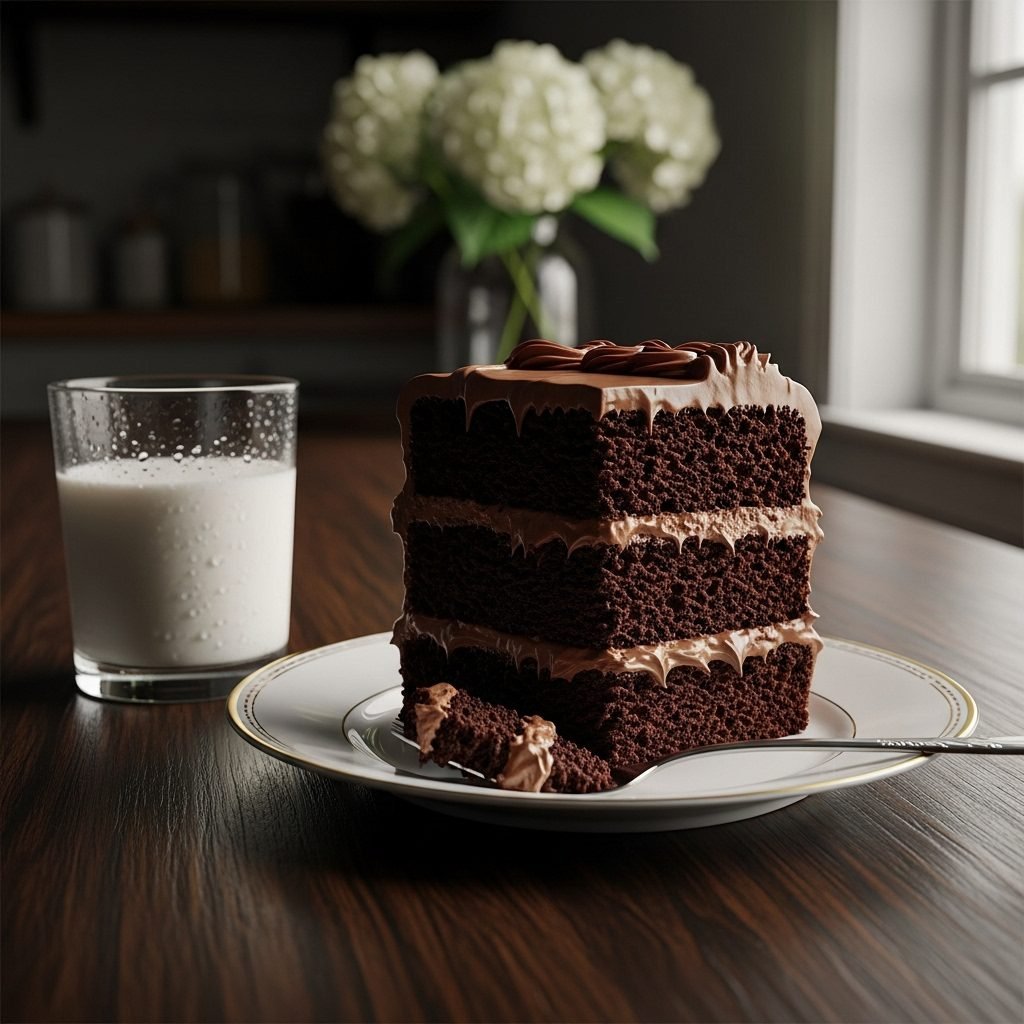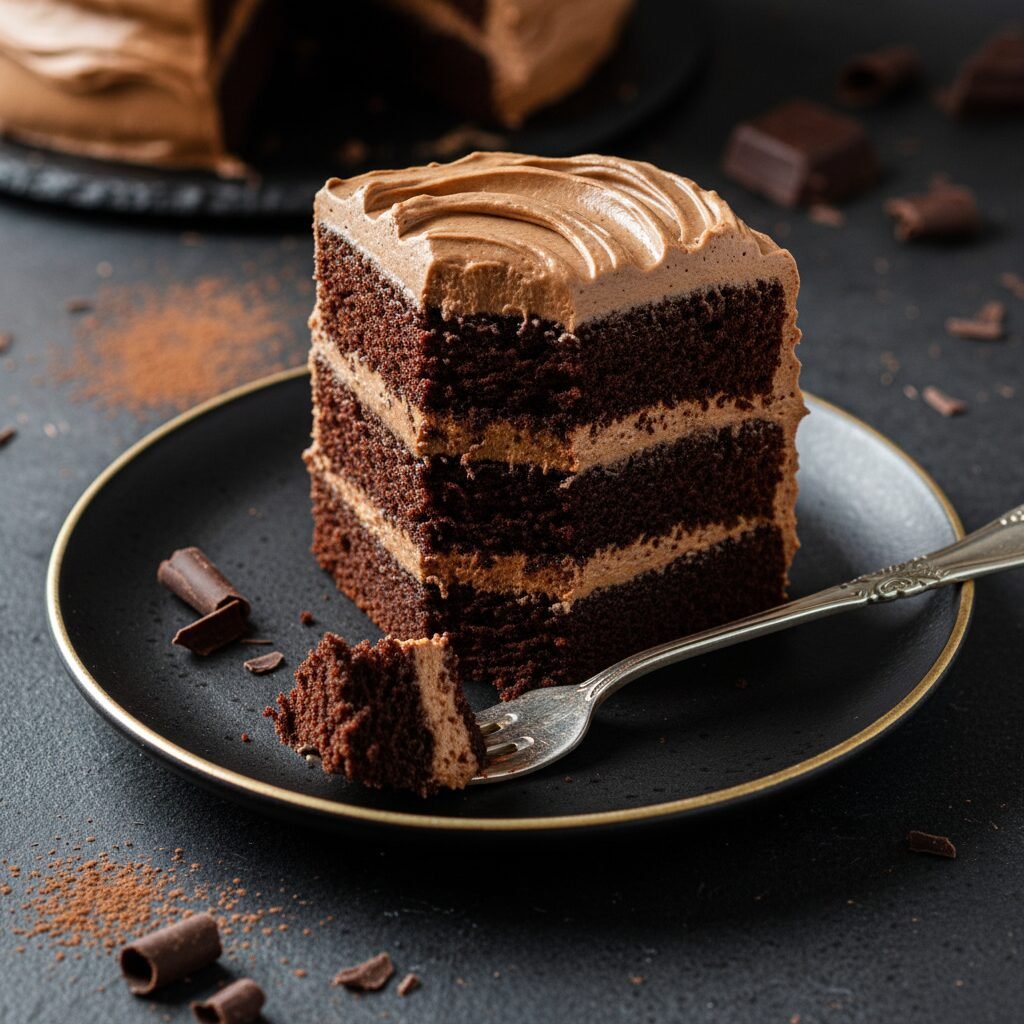
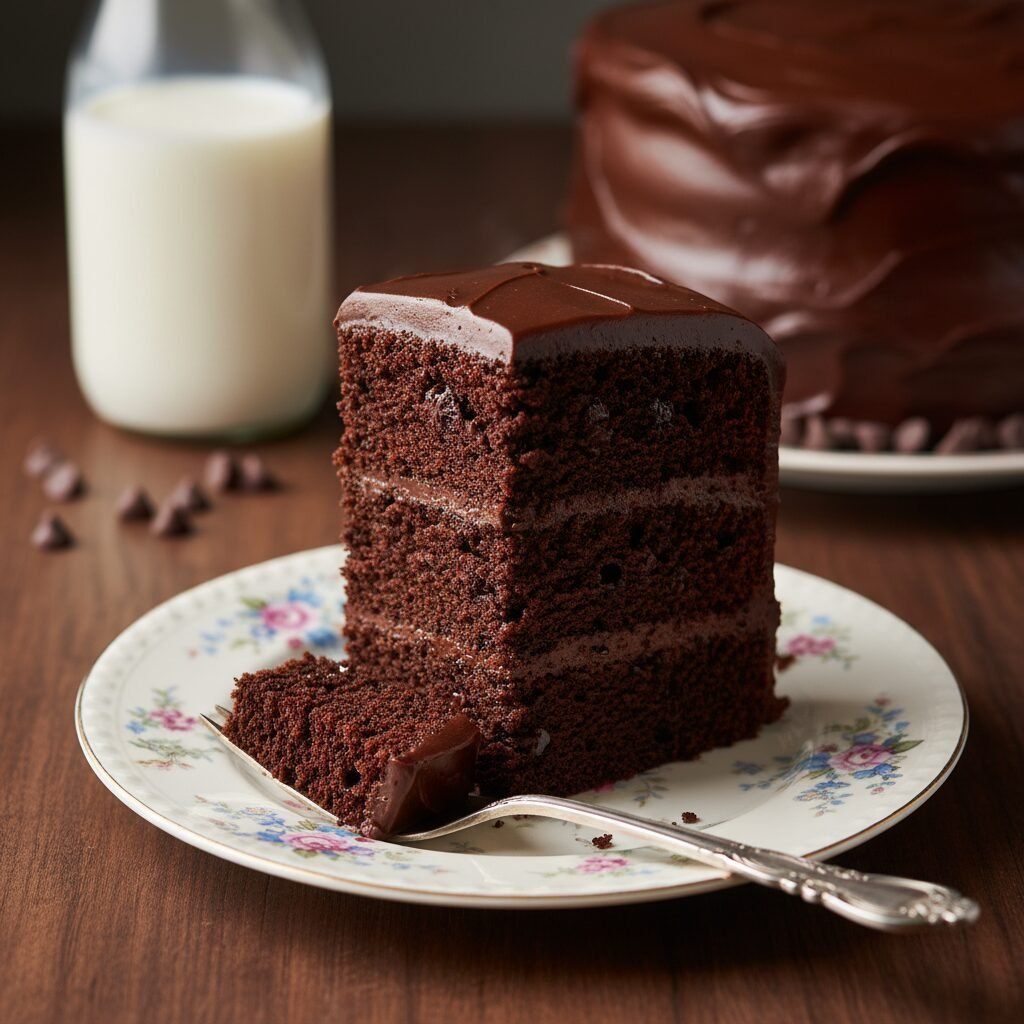
Moist Chocolate Layer Cake With Chocolate Chips Recipe
This isn’t just another chocolate cake; it is a decadent symphony of deep cocoa flavor and melting chocolate chips in every bite. Perfectly moist, incredibly tender, and layered with a velvety fudge frosting, this recipe is the guaranteed showstopper your dessert table has been waiting for.
30 minutes
35 minutes
1 hour 45 minutes
12-14 servings
Dessert
Baking
American
Vegetarian
If you have ever been disappointed by a dry, crumbly chocolate cake that promises the world but delivers nothing but thirst, your search ends here. This Moist Chocolate Layer Cake with Chocolate Chips is the result of years of kitchen testing to find the absolute perfect balance between structural integrity and melt-in-your-mouth tenderness. There is something primal and comforting about a slice of chocolate cake, but elevating it to a gourmet standard requires attention to detail. This recipe goes beyond the standard cocoa batter by incorporating semi-sweet chocolate chips directly into the sponge, providing a textural contrast that surprises and delights with every forkful. As you slice into the cake, the knife glides through layers of rich, dark sponge and creamy frosting, hitting little pockets of chocolate that add a luxurious density to the experience. The flavor profile is complex, marrying the slight tang of buttermilk with the deep, earthy notes of bloomed cocoa powder, while the chocolate chips offer a burst of concentrated sweetness. Whether you are celebrating a milestone birthday, hosting a holiday gathering, or simply curing a Tuesday night craving, this cake stands as a testament to the power of high-quality ingredients and proper baking science. It is robust enough to stack high but soft enough to dissolve on the tongue, making it the definitive chocolate cake recipe for serious home bakers.
History & Origins
The history of the chocolate cake is a fascinating journey that mirrors the evolution of baking technology and the availability of ingredients in the Western world. Before the mid-19th century, chocolate was primarily consumed as a beverage. It wasn’t until 1828, when Coenraad van Houten of the Netherlands invented a mechanical extraction method to separate cocoa butter from cacao liquor, that cocoa powder became widely available. This innovation paved the way for chocolate to be used as a flavoring agent in baked goods. However, the earliest ‘chocolate cakes’ were actually yellow or white cakes with chocolate frosting; it wasn’t until the late 1800s that cooks began mixing chocolate directly into the batter. The famous ‘Devil’s Food Cake’ emerged around 1900, named for its dark, reddish hue—a result of the chemical reaction between baking soda and natural cocoa powder. The addition of chocolate chips is a more modern American twist. Chocolate chips themselves were popularized in the late 1930s following Ruth Wakefield’s invention of the Toll House Cookie. For decades, chocolate chips were relegated to cookies and blondies, as they often sank to the bottom of lighter cake batters. It was only in the latter half of the 20th century, as food science improved and batter densities were adjusted, that bakers began successfully suspending chocolate morsels within layer cakes, creating the double-chocolate phenomenon we adore today. This recipe pays homage to that rich lineage, combining the old-world technique of blooming cocoa with the modern indulgence of chocolate chips.
Why This Recipe Works
This recipe succeeds where many others fail due to a few critical chemical reactions and ingredient choices. First and foremost is the use of oil instead of butter for the cake batter. While butter offers flavor, it contains water and milk solids that can lead to a drier texture once the cake cools. Oil remains liquid at room temperature, ensuring the cake stays moist and soft for days. Secondly, the inclusion of buttermilk is non-negotiable. The acidity in the buttermilk reacts vigorously with the baking soda, creating carbon dioxide bubbles that lift the heavy batter, resulting in a tender crumb despite the density of the ingredients. Furthermore, this recipe utilizes the ‘blooming’ technique, where boiling hot coffee is poured over the cocoa powder and sugar mixture. This heat dissolves the cocoa solids and releases flavor compounds that are otherwise locked away, intensifying the chocolatey taste without adding bitterness. Finally, the issue of sinking chocolate chips is addressed by coating them in a dusting of flour before folding them into the batter. This creates friction between the chips and the batter, holding them in suspension so they are distributed evenly throughout the layers rather than forming a heavy crust at the bottom of the pan.
Why You’ll Love This Recipe
- ✓Stays moist for days thanks to the oil-based batter.
- ✓Double chocolate flavor from bloomed cocoa and semi-sweet chips.
- ✓Sturdy structure perfect for stacking and frosting.
- ✓Deep, complex flavor profile enhanced by hot coffee.
- ✓Versatile batter that can be adapted for cupcakes.
Equipment You’ll Need
- ✓Two 9-inch round cake pans
- ✓Stand mixer or electric hand mixer
- ✓Large mixing bowls
- ✓Wire whisk
- ✓Rubber spatula
- ✓Parchment paper
- ✓Wire cooling rack
- ✓Offset spatula for frosting
Ingredients
- ✓2 cups all-purpose flour
- ✓2 cups granulated sugar
- ✓3/4 cup unsweetened cocoa powder
- ✓2 teaspoons baking powder
- ✓1 1/2 teaspoons baking soda
- ✓1 teaspoon salt
- ✓1 cup buttermilk, room temperature
- ✓1/2 cup vegetable oil or canola oil
- ✓2 large eggs, room temperature
- ✓2 teaspoons pure vanilla extract
- ✓1 cup boiling hot coffee (or boiling water)
- ✓1 1/2 cups semi-sweet chocolate chips, tossed in 1 tablespoon flour
- ✓1 cup unsalted butter, softened (for frosting)
- ✓1/2 cup cocoa powder (for frosting)
- ✓4 cups powdered sugar (for frosting)
- ✓1/4 cup heavy cream (for frosting)
Instructions
- Preheat your oven to 350°F (175°C). Grease two 9-inch round cake pans with butter or cooking spray and line the bottoms with parchment paper. Dust the sides with cocoa powder to prevent sticking.
- In the bowl of a stand mixer or a large mixing bowl, whisk together the flour, sugar, 3/4 cup cocoa powder, baking powder, baking soda, and salt until fully combined and no lumps remain.
- Add the buttermilk, vegetable oil, eggs, and vanilla extract to the dry ingredients. Mix on medium speed for about 2 minutes until the batter is smooth and well-incorporated.
- Reduce the mixer speed to the lowest setting. Carefully pour in the boiling hot coffee. The batter will become very thin and liquid; this is normal. Mix gently until just combined.
- In a small separate bowl, toss the chocolate chips with 1 tablespoon of flour until they are lightly coated. This prevents them from sinking to the bottom of the cake.
- Using a rubber spatula, gently fold the flour-dusted chocolate chips into the batter by hand. Do not overmix.
- Divide the batter evenly between the two prepared cake pans. Tap the pans gently on the counter to release any large air bubbles.
- Bake in the preheated oven for 30 to 35 minutes, or until a wooden toothpick inserted into the center comes out clean or with just a few moist crumbs attached.
- Remove the cakes from the oven and allow them to cool in the pans for 10 minutes. Then, carefully run a knife around the edges and invert them onto a wire cooling rack to cool completely before frosting.
- While the cakes cool, make the frosting. Beat the softened butter in a large bowl until creamy. Add the 1/2 cup cocoa powder and mix well.
- Gradually add the powdered sugar, alternating with the heavy cream and vanilla, beating on low speed until combined. Increase to high speed and whip for 3 minutes until fluffy.
- Once the cakes are completely cool, place one layer on a serving plate. Spread a generous layer of frosting over the top. Place the second cake layer on top and frost the top and sides of the entire cake.
Expert Cooking Tips
- ✓Ensure all refrigerated ingredients (eggs, buttermilk) are at room temperature to prevent the batter from curdling.
- ✓Do not skip the parchment paper; chocolate cakes are tender and can stick easily to metal pans.
- ✓When testing for doneness, try to poke a spot without a chocolate chip to get an accurate read on the crumb.
- ✓If the frosting is too stiff, add more heavy cream one teaspoon at a time. If too soft, add more powdered sugar.
- ✓Let the boiling coffee sit for 30 seconds after brewing before adding it to ensure it doesn’t scramble the eggs, though adding it slowly usually prevents this.
- ✓Use high-quality cocoa powder (like Dutch-process) for a darker color and smoother flavor.
Substitutions and Variations
This recipe is quite adaptable, but careful substitutions are needed to maintain the texture. If you do not have buttermilk, you can make a DIY version by adding one tablespoon of white vinegar or lemon juice to a cup of whole milk and letting it sit for 5 minutes. For the vegetable oil, melted coconut oil or melted butter can be used, though butter will result in a slightly denser and drier crumb over time. If you want to make this gluten-free, use a high-quality 1:1 gluten-free baking flour blend that contains xanthan gum. The boiling coffee can be replaced with boiling water if you want to avoid caffeine, though the coffee truly enhances the chocolate flavor without making the cake taste like coffee. For the chocolate chips, you can swap semi-sweet for milk chocolate, dark chocolate chunks, or even white chocolate chips for a visual contrast.
Common Mistakes to Avoid
The most common mistake with this cake is overbaking. Because the batter is dark, it is hard to see visual cues of browning. Rely strictly on the toothpick test and start checking 5 minutes before the timer goes off. Another error is adding the chocolate chips without dusting them in flour; they will almost certainly sink to the bottom, creating a gummy crust and leaving the top of the cake plain. Additionally, frosting the cake before it is 100% cool is a disaster waiting to happen; the butter in the frosting will melt, causing the layers to slide apart. Finally, do not overmix the batter once the flour is added (before the coffee step), as this develops too much gluten and leads to a tough, rubbery cake.
Serving Suggestions
This rich cake pairs beautifully with a cold glass of milk to cut through the sweetness. For a more elegant presentation, serve slices with a dollop of unsweetened whipped cream and a handful of fresh raspberries or strawberries, as the acidity of the fruit balances the heavy chocolate. A scoop of vanilla bean ice cream is also a classic accompaniment, especially if the cake is slightly warmed. For coffee lovers, serve alongside a shot of hot espresso.
Storage and Reheating Tips
This cake stores exceptionally well due to its oil content. It can be kept at room temperature in an airtight cake carrier for up to 3 days. If you live in a very hot or humid climate, store it in the refrigerator for up to 1 week, but allow slices to come to room temperature before eating for the best texture. To freeze, wrap individual slices or the entire unfrosted cake layers tightly in plastic wrap, followed by a layer of aluminum foil. They can be frozen for up to 3 months. Thaw in the refrigerator overnight before serving.
Nutrition Facts (Estimated)
| Serving Size | 1 slice |
| Calories | 650 |
| Fat | 34g |
| Saturated Fat | 12g |
| Unsaturated Fat | 20g |
| Trans Fat | 0g |
| Cholesterol | 65mg |
| Sodium | 320mg |
| Carbohydrates | 82g |
| Fiber | 4g |
| Sugar | 48g |
| Protein | 7g |
Frequently Asked Questions
Why do I need to use boiling liquid?
The boiling liquid serves two purposes: it blooms the cocoa powder to release more flavor, and it helps dissolve the sugar completely, ensuring a smooth texture.
Can I bake this in a 9×13 pan instead?
Yes, this recipe fits perfectly in a standard 9×13 inch rectangular pan. You will likely need to increase the baking time to 35-40 minutes.
Why did my chocolate chips sink?
The batter is quite thin, which offers little resistance to heavy chips. If you forgot to coat them in flour, or if the cake was underbaked, they will sink.
Can I use natural cocoa instead of Dutch-process?
Yes, natural cocoa works fine here because the recipe uses baking soda, which neutralizes the acidity of natural cocoa. Dutch-process will just give a darker color.
How do I stop crumbs from getting in the frosting?
Apply a ‘crumb coat’ first. Spread a very thin layer of frosting over the cake to seal in the crumbs, refrigerate for 20 minutes, and then apply the final thick layer of frosting.
Can I make this cake ahead of time?
Absolutely. The cake layers can be baked, cooled, wrapped, and frozen up to a month in advance. Frozen layers are actually easier to frost.
Is the coffee flavor strong?
No, the coffee acts as a flavor enhancer for the chocolate. You will not taste distinct coffee notes in the final product.
Can I use olive oil?
You can, but olive oil has a strong flavor. If you use it, choose a ‘light’ or ‘mild’ olive oil so it doesn’t clash with the chocolate.
Why is my cake sinking in the middle?
This usually happens if the oven door was opened too early during baking, causing a temperature drop, or if there was too much leavening agent (baking soda/powder).
Can I turn this into cupcakes?
Yes, this batter makes excellent cupcakes. It will yield about 24-28 cupcakes. Bake them for 18-22 minutes.
Conclusion
Creating the perfect chocolate layer cake is a skill that rewards you with every bite, and this recipe is designed to be foolproof. By combining the richness of cocoa, the moisture of buttermilk and oil, and the surprise texture of chocolate chips, you are creating a dessert that is memorable and deeply satisfying. Whether you are a novice baker or a seasoned pro, this Moist Chocolate Layer Cake with Chocolate Chips is sure to become a requested favorite in your household. So preheat that oven, brew some strong coffee, and get ready to bake the best chocolate cake you have ever tasted. Don’t forget to share your results and leave a review!