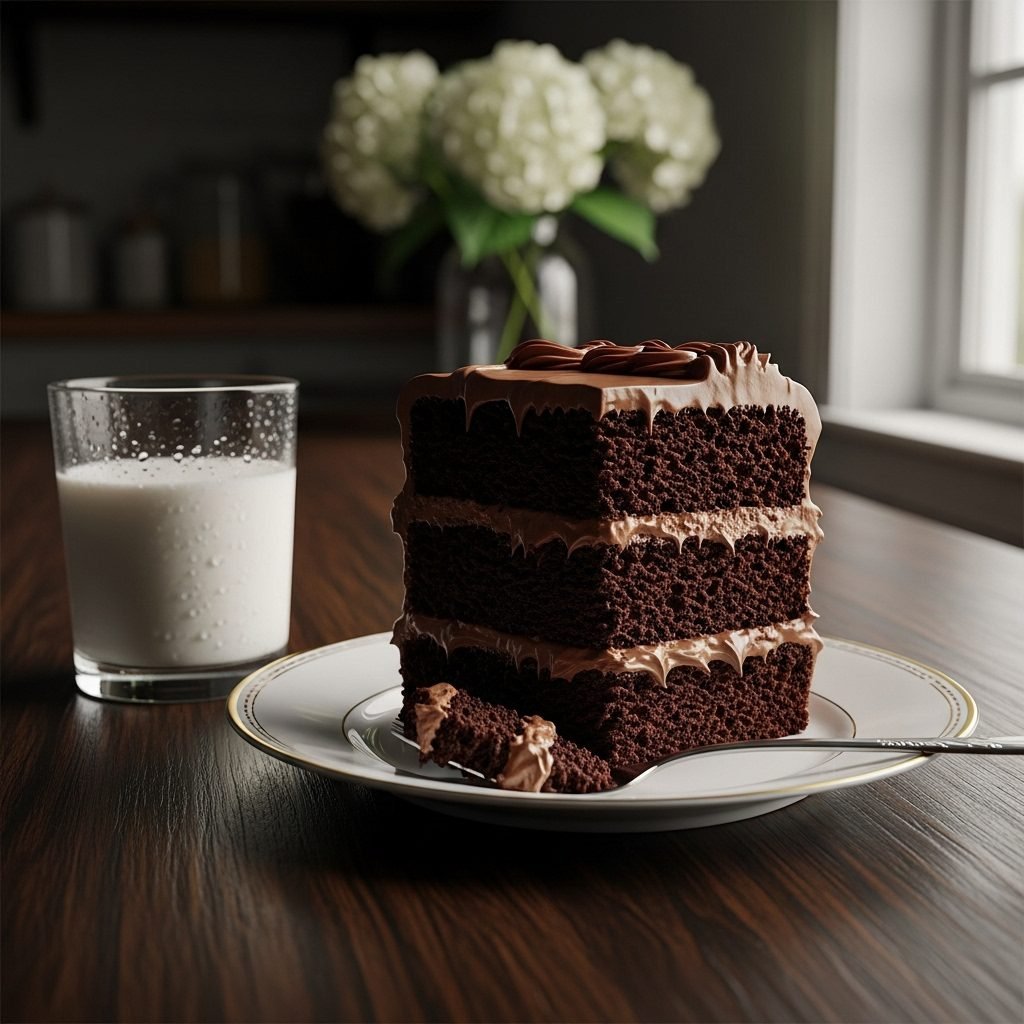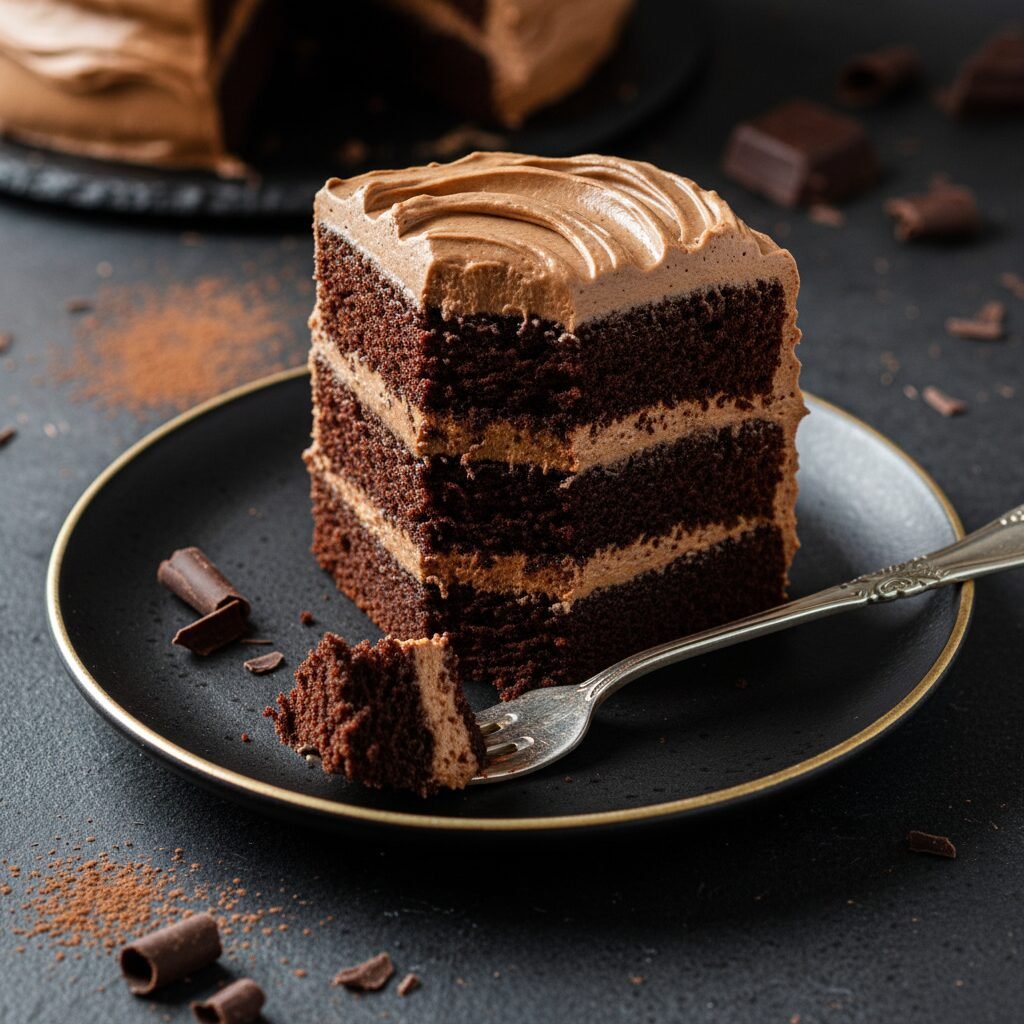
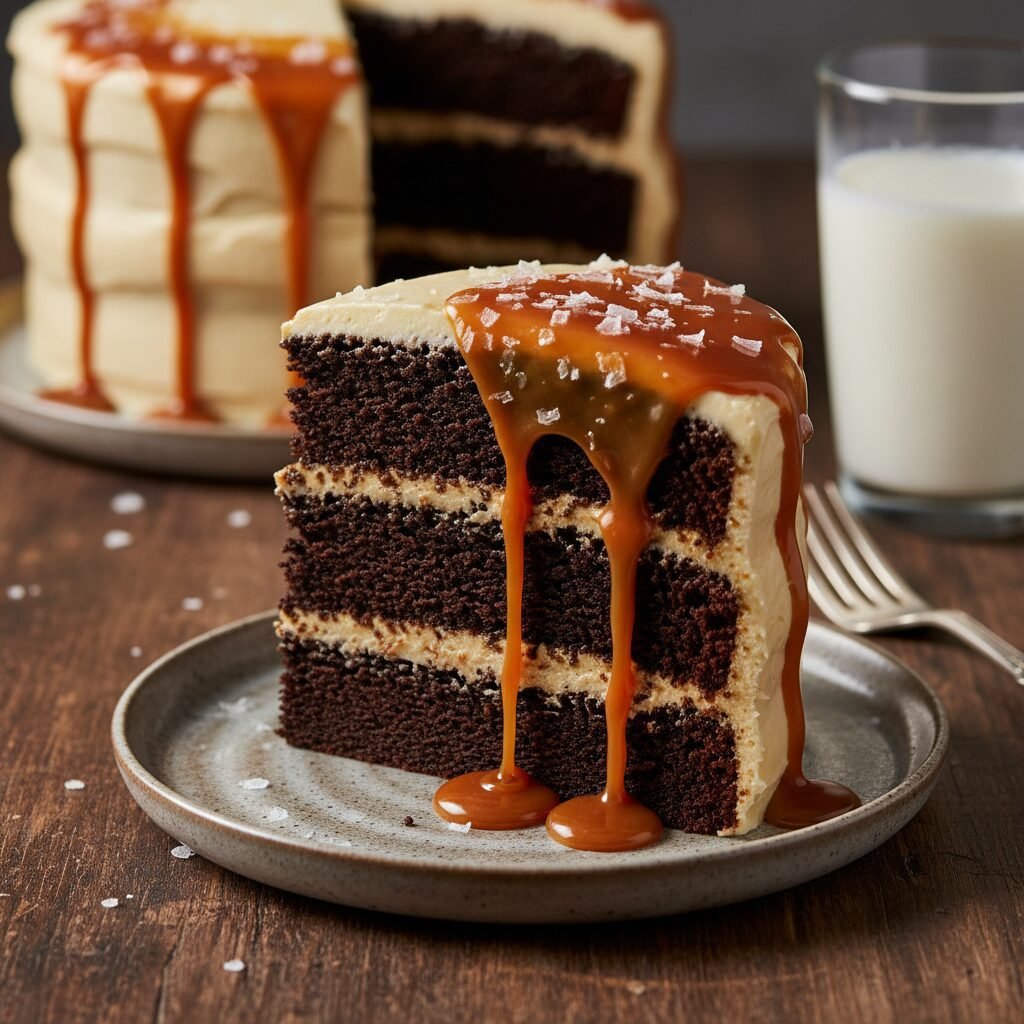
Moist Chocolate Layer Cake With Salted Caramel Frosting Recipe
Discover the perfect marriage of deep, dark chocolate and rich, buttery sweetness with this showstopping layer cake. Featuring an impossibly moist crumb and a luxurious homemade salted caramel buttercream, this recipe is the ultimate indulgence for birthdays, holidays, or any day that requires a serious treat.
45 minutes
35 minutes
1 hour 20 minutes
12-14 servings
Dessert
Baking
American / French Inspired
Vegetarian
If you have been searching for the holy grail of chocolate cakes, your quest ends here. This Moist Chocolate Layer Cake with Salted Caramel Frosting is not just a dessert; it is a masterclass in texture and flavor balance. We start with a chocolate cake base that defies the laws of baking physics—it is incredibly sturdy enough to stack, yet so tender it practically melts on your tongue. The secret lies in the balance of fats and the blooming of the cocoa powder, ensuring a depth of chocolate flavor that is robust rather than sugary sweet.
But a cake is only as good as its frosting, and this is where the magic truly happens. We aren’t using a generic store-bought caramel flavor here. We are making a liquid gold salted caramel sauce from scratch—a process that sounds intimidating but is actually quite simple—and whipping it into a cloud-like buttercream. The slight bitterness of the burnt sugar and the sharp bite of sea salt cut through the richness of the chocolate, creating a sophisticated flavor profile that keeps you coming back for ‘just one more sliver.’ Whether you are a seasoned baker looking to impress a crowd or a novice wanting to tackle your first layer cake, this recipe guides you through every step. From the chemistry of the batter to the art of the perfect drip, get ready to create a bakery-quality masterpiece right in your own kitchen.
History & Origins
The history of chocolate cake is a fascinating journey through culinary evolution. While chocolate itself has been consumed for millennia, primarily as a beverage by Mesoamerican civilizations, the concept of a ‘chocolate cake’ is relatively modern. Until the mid-19th century, chocolate was too expensive and gritty to be used effectively in baking. It wasn’t until 1828, when Coenraad van Houten learned how to mechanically extract fat from cacao liquor (creating cocoa butter and cocoa powder), that chocolate became affordable and accessible for home bakers. The first recipes for chocolate cake as we know it appeared in the late 1800s, with the famous ‘Devil’s Food Cake’ emerging in the early 20th century as a richer, darker alternative to the standard yellow cakes of the time.
Salted caramel, the crowning glory of this recipe, has a distinct and celebrated lineage. While caramel candies have existed for centuries, the specific combination of ‘caramel au beurre salé’ (salted butter caramel) was popularized by French chocolatier Henri Le Roux in Brittany, France, in the late 1970s. Brittany is famous for its high-quality salted butter, and Le Roux’s creation won the ‘Best Sweet in France’ award in 1980. However, it wasn’t until the late 1990s and early 2000s that the flavor profile exploded in the United States, moving from high-end French bistros to mainstream coffee shops and bakeries. Today, the combination of dark chocolate and salted caramel is considered a modern classic, representing the perfect interplay between the Old World baking traditions of the chocolate sponge and the sophisticated, savory-sweet innovation of French confectionery.
Why This Recipe Works
This recipe succeeds where many others fail due to a few key scientific principles that guarantee moisture and flavor depth. First, we use a combination of oil and buttermilk in the batter. While butter offers great flavor, it contains water that evaporates during baking, sometimes leading to a dry crumb. Vegetable oil is 100% fat and remains liquid at room temperature, coating the flour proteins and ensuring the cake stays moist for days. The acidity in the buttermilk tenderizes the gluten and reacts with the baking soda for a superior rise.
Secondly, the ‘blooming’ technique is non-negotiable. By whisking boiling hot coffee or water into the cocoa powder, we dissolve the cocoa solids and release flavor compounds that are otherwise trapped. This results in a chocolate intensity that simply sifting dry cocoa with flour cannot achieve. Finally, the salted caramel frosting works because of the temperature management. By adding cooled, thick caramel sauce to the whipped butter before adding powdered sugar, we emulsify the caramel fat with the butter fat, creating a stable structure that doesn’t separate. The addition of sea salt is the final hook; it suppresses bitterness and enhances sweetness, making the chocolate taste more ‘chocolatey’ and the caramel more distinct.
Why You’ll Love This Recipe
- ✓Incredibly moist crumb that stays fresh for days
- ✓Deep, intense chocolate flavor enhanced by hot coffee
- ✓Luxurious, homemade salted caramel sauce
- ✓Perfect balance of sweet and savory notes
- ✓Stable buttercream that pipes beautifully
- ✓Ideal for birthdays, anniversaries, and holidays
Equipment You’ll Need
- ✓Three 8-inch round cake pans
- ✓Stand mixer or electric hand mixer
- ✓Large mixing bowls
- ✓Whisk and rubber spatula
- ✓Saucepan (for caramel)
- ✓Wire cooling racks
- ✓Offset spatula
- ✓Cake turntable (optional but recommended)
- ✓Piping bag and tips
Ingredients
- ✓FOR THE CAKE:
- ✓2 cups all-purpose flour
- ✓2 cups granulated sugar
- ✓3/4 cup unsweetened cocoa powder (Dutch-processed preferred)
- ✓2 teaspoons baking soda
- ✓1 teaspoon baking powder
- ✓1 teaspoon salt
- ✓2 large eggs, room temperature
- ✓1 cup buttermilk, room temperature
- ✓1/2 cup vegetable oil (or canola oil)
- ✓2 teaspoons pure vanilla extract
- ✓1 cup boiling hot strong coffee (or boiling water)
- ✓FOR THE SALTED CARAMEL SAUCE:
- ✓1 cup granulated sugar
- ✓6 tablespoons salted butter, cubed, room temperature
- ✓1/2 cup heavy cream, room temperature
- ✓1 teaspoon sea salt (or fleur de sel)
- ✓FOR THE FROSTING:
- ✓1 1/2 cups unsalted butter, softened
- ✓3-4 cups powdered sugar, sifted
- ✓1/2 cup homemade salted caramel sauce (cooled)
- ✓1 teaspoon vanilla extract
- ✓1-2 tablespoons heavy cream (if needed for consistency)
- ✓Extra sea salt flakes for garnish
Instructions
- 1. PREHEAT & PREP: Preheat oven to 350°F (175°C). Grease three 8-inch cake pans with butter or cooking spray, line the bottoms with parchment paper, and dust the sides with cocoa powder. Tap out excess.
- 2. MIX DRY INGREDIENTS: In the bowl of a stand mixer or a large bowl, whisk together flour, sugar, cocoa, baking soda, baking powder, and salt until fully combined.
- 3. MIX WET INGREDIENTS: In a separate medium bowl, whisk together the eggs, buttermilk, oil, and vanilla extract.
- 4. COMBINE: Pour the wet ingredients into the dry ingredients. Mix on low speed until just combined. Do not overmix.
- 5. ADD BOILING LIQUID: With the mixer on low, carefully pour in the boiling hot coffee (or water) in a steady stream. Mix until combined. The batter will be very thin and liquidy; this is normal.
- 6. BAKE: Divide batter evenly between the three prepared pans. Bake for 30-35 minutes, or until a wooden toothpick inserted into the center comes out clean or with just a few moist crumbs. Avoid opening the oven door too early.
- 7. COOL: Remove cakes from the oven and let them cool in the pans for about 15 minutes. Then, turn them out onto wire racks to cool completely before frosting.
- 8. MAKE CARAMEL: While cakes bake, make the caramel. Heat sugar in a medium saucepan over medium heat, stirring constantly with a rubber spatula (or whisking). It will clump and turn into a golden-brown liquid. Be careful not to burn it. Once completely melted, add the butter (careful, it will bubble violently). Stir until melted (about 2 mins). Slowly pour in the heavy cream while stirring. Boil for 1 minute. Remove from heat and stir in salt. Let cool completely before using in frosting.
- 9. MAKE FROSTING: Beat softened butter on medium-high speed for 5 minutes until pale and creamy. Reduce speed to low and gradually add powdered sugar. Once incorporated, add 1/2 cup of the cooled salted caramel sauce and vanilla. Increase speed to high and whip for 3 minutes until fluffy. Add cream if needed for texture.
- 10. ASSEMBLE: Level the tops of the cooled cakes if they are domed. Place one layer on a cake stand. Spread a thick layer of frosting. Drizzle extra caramel sauce if desired. Repeat with the second layer. Top with the third layer. Frost the outside and top of the cake. Use an offset spatula to smooth.
- 11. DECORATE: Drizzle remaining salted caramel over the top, allowing it to drip down the sides. Sprinkle with sea salt flakes. Slice and serve.
Expert Cooking Tips
- ✓Use room temperature ingredients (eggs, buttermilk, butter) to ensure the batter emulsifies properly.
- ✓Don’t skip the parchment paper; it guarantees your cakes won’t stick to the bottom of the pan.
- ✓Using hot coffee enhances the chocolate flavor without making the cake taste like coffee; boiling water works too, but coffee is better.
- ✓Watch the caramel closely; sugar can go from amber to burnt in seconds.
- ✓Cool the caramel completely before adding it to the buttercream, or it will melt the butter and ruin the frosting texture.
- ✓If the frosting is too soft to pipe, refrigerate it for 10-15 minutes to firm up.
- ✓Weigh your flour if possible (approx 120-125g per cup) to avoid a dense cake.
Substitutions and Variations
Baking is chemistry, but there is some room for flexibility if you find yourself missing an ingredient. For the buttermilk, you can make a quick DIY version by adding 1 tablespoon of white vinegar or lemon juice to a cup of regular milk and letting it sit for 5 minutes until it curdles. If you need to make the cake dairy-free, swap the buttermilk for a plant-based milk mixed with vinegar, and use a neutral oil; however, the frosting relies heavily on butter and heavy cream, so you would need high-quality vegan butter sticks and a coconut cream alternative for the caramel. For the coffee, decaf works perfectly fine if you are sensitive to caffeine, or simply use boiling water. If you don’t have Dutch-processed cocoa, regular unsweetened cocoa powder is acceptable, though the color of the cake will be lighter and the flavor slightly more acidic. For the oil, melted coconut oil or melted butter can be used, though vegetable or canola oil yields the moistest texture.
Common Mistakes to Avoid
The most common mistake with chocolate cake is over-baking. Because the cake is dark, you can’t rely on visual browning cues. Trust the toothpick test and check it 5 minutes before the recipe says. If you bake it until it feels firm to the touch, it might already be dry inside. Another frequent error is adding the boiling water too quickly or while the mixer is on high speed, which can cook the eggs or splash hot liquid on you; always stream it in slowly on low speed. With the caramel, the biggest pitfall is impatience. If you turn the heat up too high, the sugar will burn before it melts evenly. Also, adding hot caramel to the buttercream will result in a soupy mess that cannot be saved. Ensure your cake layers are completely cool—not even slightly warm—before frosting, or the layers will slide off one another.
Serving Suggestions
This cake is a centerpiece all on its own, but you can elevate the experience with a few simple additions. Serve each slice with a dollop of unsweetened whipped cream to cut through the sweetness, or a scoop of premium vanilla bean ice cream for a classic à la mode experience. A garnish of fresh berries, such as raspberries or strawberries, adds a pop of color and a tart contrast to the rich chocolate and caramel. For a beverage pairing, a dark roast coffee or a shot of espresso is ideal to mirror the coffee notes in the batter. If serving at an evening dinner party, a glass of port wine or a stout beer pairs wonderfully with the deep chocolate notes. To get the cleanest slices, dip a sharp chef’s knife in hot water and wipe it dry between each cut.
Storage and Reheating Tips
Because this cake contains dairy in the frosting and caramel, it is best stored in the refrigerator if you aren’t serving it within 24 hours. However, buttercream tastes best at room temperature. I recommend keeping the cake in an airtight cake carrier at room temperature for up to 2 days. If you refrigerate it (up to 5 days), be sure to take it out 1-2 hours before serving to allow the frosting and cake crumb to soften. Cold chocolate cake can taste dry and waxy even if it isn’t. You can also freeze individual slices wrapped tightly in plastic wrap and foil for up to 3 months. To freeze the whole cake, flash freeze it uncovered for an hour to set the frosting, then wrap tightly in multiple layers of plastic wrap.
Nutrition Facts (Estimated)
| Serving Size | 1 slice |
| Calories | 680 |
| Fat | 38g |
| Saturated Fat | 18g |
| Unsaturated Fat | 18g |
| Trans Fat | 0.5g |
| Cholesterol | 95mg |
| Sodium | 340mg |
| Carbohydrates | 82g |
| Fiber | 4g |
| Sugar | 55g |
| Protein | 6g |
Frequently Asked Questions
Can I make this cake ahead of time?
Yes! The cake layers can be baked, cooled, wrapped tightly in plastic wrap, and stored at room temperature for 1 day or frozen for up to a month. The caramel sauce can be made up to 2 weeks in advance and stored in the fridge.
Why is my caramel sauce grainy?
Grainy caramel happens when sugar crystals don’t dissolve properly or recrystallize. To prevent this, avoid stirring the sugar until it starts to melt, and use a wet pastry brush to wash down any sugar crystals stuck to the side of the pot.
Can I use store-bought caramel sauce?
Technically yes, but store-bought sauces are often thinner and made with corn syrup, which may affect the stability of the frosting. If you must, choose a thick, high-quality jarred caramel.
My batter is very runny, did I do something wrong?
No, that is exactly how it should be! The high liquid content (buttermilk, oil, coffee) ensures a super moist cake. Do not add more flour.
Can I bake this in two 9-inch pans instead?
Yes, you can use two 9-inch pans. The baking time may need to be increased slightly by 3-5 minutes since the layers will be thicker.
How do I stop the cake layers from doming?
You can use ‘cake strips’ wrapped around the pans to insulate the edges, or simply trim the domes off with a serrated knife before stacking to ensure a flat, stable cake.
Do I have to use coffee?
Coffee enhances chocolate flavor without imparting a coffee taste. However, if you are strictly opposed, boiling water is a perfectly acceptable substitute.
Why did my cake sink in the middle?
This usually happens if the oven door was opened too early during baking, causing a temperature drop, or if the leavening agents (baking soda/powder) were expired.
Conclusion
There are recipes you bake to feed a hunger, and then there are recipes you bake to feed the soul. This Moist Chocolate Layer Cake with Salted Caramel Frosting is undoubtedly the latter. It requires a little bit of effort, particularly with the homemade caramel, but the payoff is a dessert that rivals any high-end bakery. The contrast between the dark, tender sponge and the creamy, salty-sweet frosting is a flavor memory your guests won’t soon forget. So preheat that oven, brew some strong coffee, and get ready to accept the title of ‘Best Baker’ among your friends and family. Happy baking!